
Updated: April 2026
TL;DR
Ranking on page one of Google no longer guarantees visibility. Buyers are getting answers from ChatGPT, Perplexity, and Gemini — and your brand may not appear in any of them.
AI citation tracking tools monitor where and how your brand gets mentioned and cited across AI answer engines, so you know exactly where you stand and what to do about it.
Traditional SEO tools track rankings and clicks. They cannot tell you whether Perplexity cited your blog post or whether Google's AI Overview recommended a competitor instead.
The right tool depends on your team size, content volume, and whether you need monitoring only or a full insight-to-execution system.
Why AI Citation Tracking Matters Now
Your brand can rank on page one of Google and still be invisible in ChatGPT, Perplexity, and Gemini. AI citation tracking tools monitor where your brand appears across AI answer engines, separate mentions from citations, and surface competitive gaps you can act on.
Traditional SEO tools track SERP rankings and click-through rates. They can't tell you whether Perplexity cited your content or whether Google's AI Overview, Gemini, and Perplexity recommended a competitor. Buyers increasingly start research inside AI assistants. Brands absent from AI-generated answers lose demos, trials, and pipeline.
This guide is for B2B Marketing teams and agencies that need a reliable way to track brand citations across AI engines, benchmark against competitors, and turn insights into content that ships.
Read: What Are AI Citations? How to Find Which Pages ChatGPT and Perplexity Cite
AI Citation Tracking Tools Comparison
Read: AI Citations Made Easy: A Guide to Tracking Sources
The 11 Best AI Citation Tracking Tools
1. Indexly — Best AI Citation Tracking Tool for Agencies and Brands
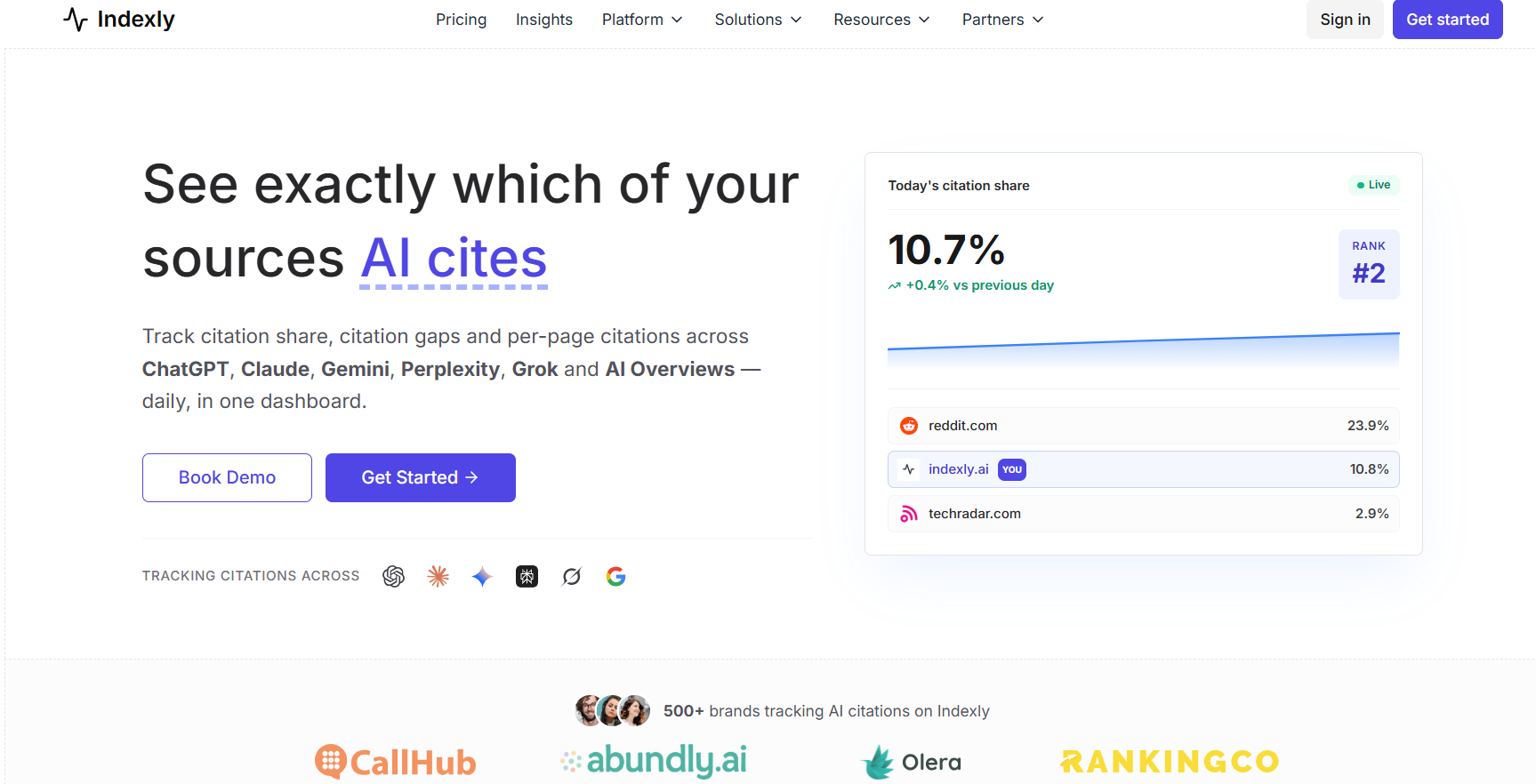
Best for: Digital marketing agencies, SEO professionals, and brands who need multi-LLM brand visibility monitoring with competitive benchmarking built in from day one.
Indexly is an AI search visibility platform built for brands and agencies that want to understand how they appear in AI-generated answers. It helps teams track where they are cited, how AI models describe their brand, and which competitors are gaining visibility across AI search.
Indexly monitors brand visibility across ChatGPT, Claude, Google AI Overviews, AI Mode, Gemini, and Perplexity by tracking brand mentions, citations, prompts, and competitor appearances in AI responses.
Unlike basic AI citation trackers that only show where your brand appears, Indexly helps teams understand the bigger picture — why competitors are being cited, which sources AI engines trust, and what content opportunities can improve your visibility.
With AI Traffic Analytics, Competitor Analysis, Content Agents, and Reddit Signal Monitoring, Indexly gives brands a complete view of their AI search presence in one platform.
Key features
| Feature | What It Does |
|---|---|
| AI Citation Tracker | Monitors brand mentions and citations across ChatGPT, Claude, Gemini, Google AI Mode, and Perplexity |
| Competitor AI Analysis | Shows which competitors appear in AI answers and which sources are being cited instead of yours |
| AI Search Analytics | Tracks AI visibility trends, share of voice, and performance changes |
| Citation Source Tracking | Reveals which pages and domains AI engines use when mentioning brands |
| Sentiment Analysis | Shows how AI models describe your brand |
| AI Bot Analytics | Tracks AI crawler activity and AI-driven traffic patterns |
| Reddit Signal Monitoring | Tracks Reddit discussions, community mentions, and conversations that may influence AI visibility and brand discovery |
| LinkedIn Presence Tracking | Monitors LinkedIn brand presence and signals that contribute to overall digital visibility |
| AI Traffic Analytics | Measures AI-driven referral traffic and helps identify how users discover your brand through AI platforms |
| Content Opportunities | Identifies topics and pages that can improve citation chances |
| Multi-Brand Reporting | Helps agencies manage and report AI visibility for multiple clients |
Research from Indexly Insights shows that AI visibility is becoming a key consideration for modern marketing teams. Understanding which sources AI engines trust, how competitors earn citations, and where citation opportunities exist is becoming essential for brands adapting to AI search.
Pros
- Purpose-built for AI visibility and AI search analytics
- Multi-LLM monitoring included without requiring enterprise upgrades
- Combines citation tracking, sentiment analysis, and AI traffic attribution
- Content Agents and Reddit signal tracking extend beyond basic monitoring
- Clean UI suited for agency reporting and competitive analysis
Cons
- Still a newer platform compared to legacy enterprise SEO suites
- Advanced workflow automation and CMS integrations are still evolving
- Some enterprise-level customization features may still be rolling out
2.Akii
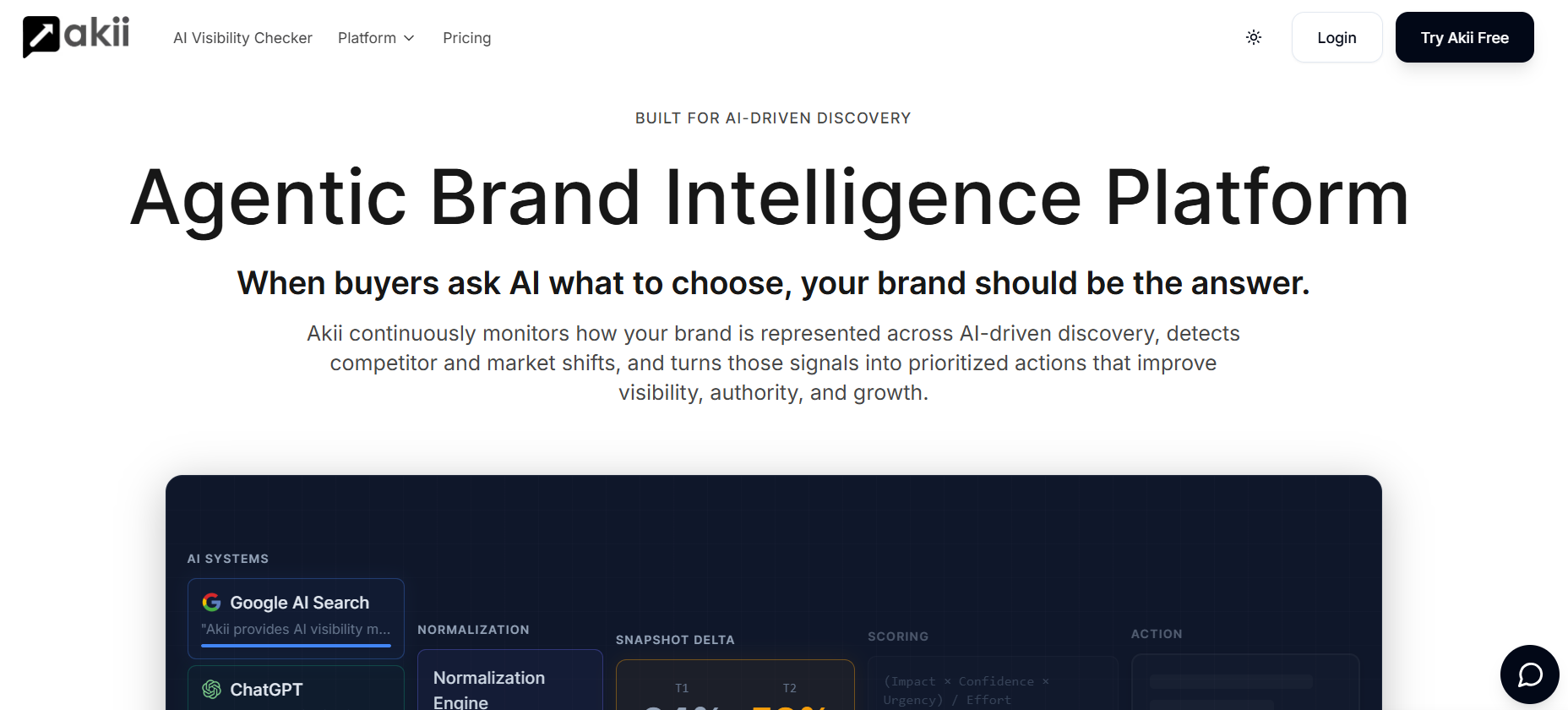
Best for: Agencies, SEO teams, and growth-driven brands that want to understand and improve how they show up in AI-generated search results, while also acting on those insights to boost performance.
It tracks when brands appear or are referenced in AI-generated answers, surfaces the sources behind those responses, and evaluates visibility across platforms such as ChatGPT, Gemini, Claude, and Perplexity.
This functionality is included as part of a wider AI search intelligence platform rather than a dedicated citation-only tool.
Key Features
| Key Feature | Description |
|---|---|
| AI Brand Audit | Analyzes how AI systems understand, describe, and position your brand |
| AI Prompt Intelligence | Examines prompts to identify what drives visibility in AI-generated responses |
| AI Search Tracking | Monitors brand presence across AI search engines and answer platforms |
| AI Visibility Activation | Helps increase brand exposure within AI-generated results through targeted actions |
| AI Competitor Intelligence | Tracks competitor performance and reveals visibility advantages or gaps |
| AI Website Optimization | Provides recommendations to improve how easily AI systems interpret your website |
| AI Reddit Engagement | Identifies relevant Reddit discussions and supports strategic participation |
Pros
- Combines visibility tracking with actionable improvement insights
- Works across multiple major AI search platforms
- Strong competitor and prompt-level intelligence
- Supports both monitoring and optimization in one system
Cons
- Not focused solely on citation tracking
- May require setup time to fully utilize advanced features
- Less granular than dedicated AI citation-specific tools
3. Getcited
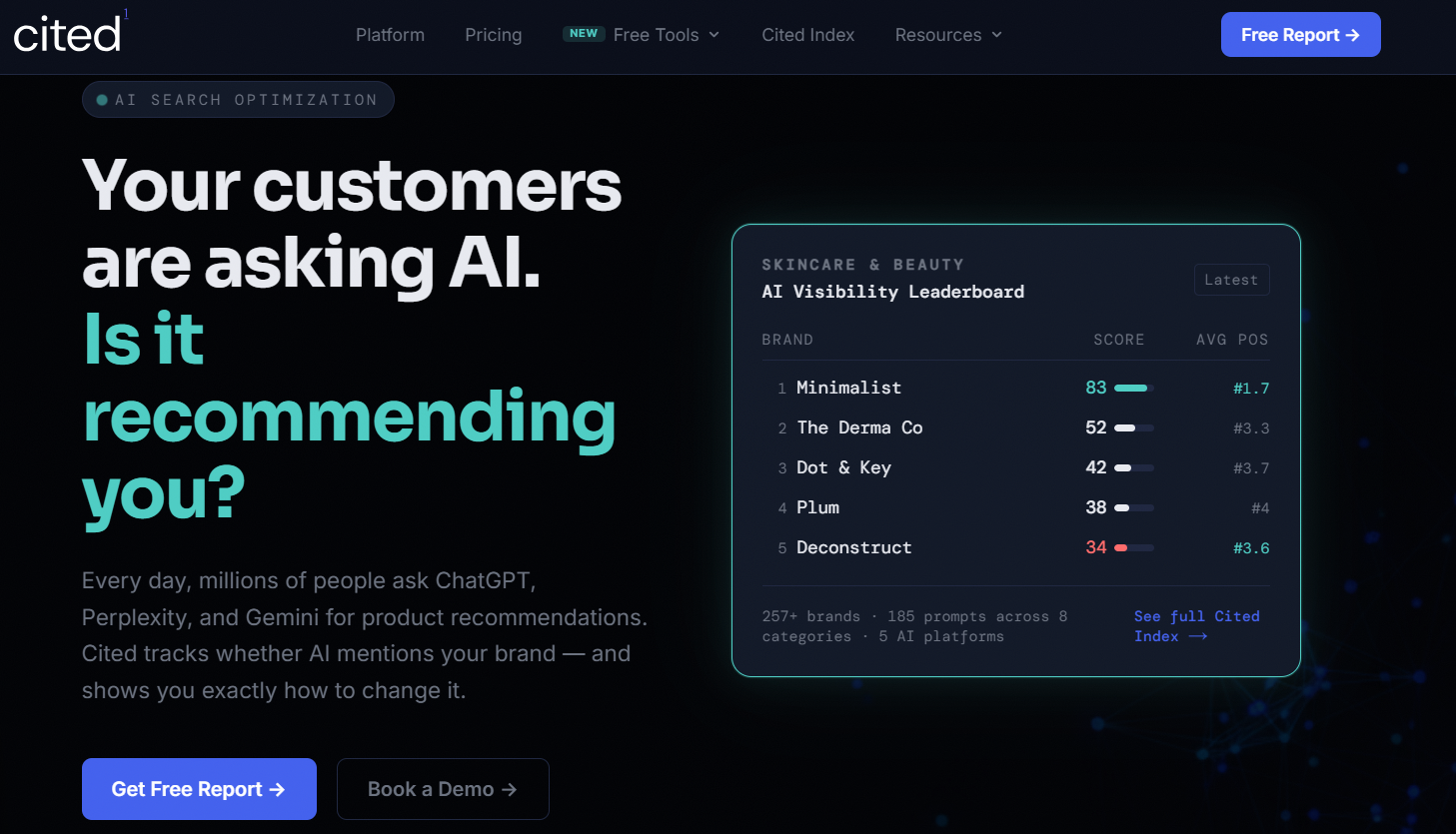
Best for: Small businesses, startups, and agencies that want a lightweight platform for tracking AI citations and brand visibility.
GetCited is an AI visibility tracking platform built to help brands understand how they appear across AI-driven search and answer engines. Instead of relying on complex enterprise SEO systems, GetCited focuses on delivering straightforward AI citation monitoring, visibility tracking, and competitor insights in a simpler, more accessible format.
Key Features
| Key Feature | Description |
|---|---|
| AI Citation Tracking | Monitors where and how your brand is cited across AI-powered search platforms |
| Brand Visibility Monitoring | Measures your presence in AI-generated answers and conversational search results |
| Competitor Analysis | Compares your AI visibility performance against competing brands |
| Citation Source Discovery | Identifies the sources and webpages AI systems reference most often |
| AI Search Insights | Tracks prompt-level trends and visibility performance across AI engines |
| Alerts & Notifications | Provides updates when brand mentions or citations change |
| Simplified Reporting Dashboard | Offers an easy-to-use dashboard for tracking AI visibility over time |
Pros
- Fast setup with a beginner-friendly interface
- Affordable for startups and smaller marketing teams
- Focused specifically on AI citation and visibility monitoring
- Simple reporting designed for quick insights
Cons
- Limited automation and third-party integrations
- Fewer advanced SEO and workflow capabilities
- Less suitable for large enterprise-scale operations
4. Citescope AI
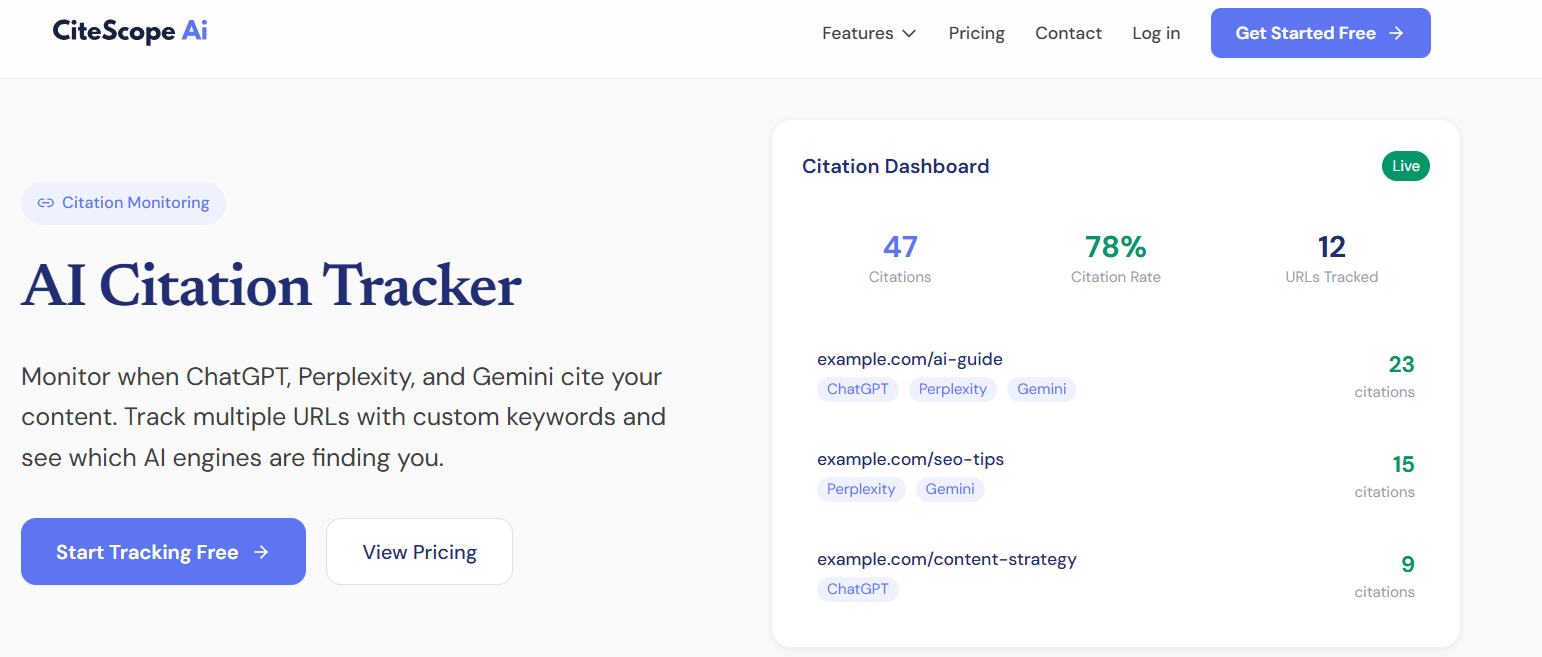
Best for: Businesses, agencies, and SEO teams aiming to strengthen their presence in AI-generated search results and conversational discovery platforms.
CiteScope AI is an AI search visibility and Generative Engine Optimization (GEO) platform that helps brands monitor citations, track AI visibility, and compare performance across ChatGPT, Gemini, Claude, Perplexity, and Google AI Overviews.
The platform also provides competitor insights, AI-powered research, and content optimization tools to help teams improve visibility and increase citation opportunities in AI-generated answers.
Key Features
| Key Feature | Description |
|---|---|
| AI Citation Monitoring | Tracks where your brand and content are referenced across AI platforms |
| AI Visibility Scoring | Measures how often and how prominently your content appears in AI-generated responses |
| Competitor Analysis | Identifies which competitors are outperforming your brand in AI search visibility |
| Citation Alerts | Sends updates when citations are gained, lost, or changed |
| GEO Readiness Analysis | Evaluates how effectively your content is optimized for AI search engines |
| AI Content Optimization | Helps improve content for stronger AI visibility and citation potential |
| AI-Powered Research Tools | Supports topic research, planning, and content discovery workflows |
| Visibility Trend Tracking | Monitors citation and visibility performance over time |
| Optimization Recommendations | Provides actionable suggestions to improve AI search performance |
| Impact & Performance Insights | Helps teams connect AI visibility improvements with business outcomes |
Pros
- Designed specifically for AI visibility and GEO optimization
- Combines citation tracking with AI-focused content improvement tools
- Covers multiple AI answer engines and conversational platforms
- Provides practical optimization and competitor insights
- More affordable than many enterprise-focused alternatives
Cons
- Newer platform compared to established SEO ecosystems
- Limited traditional SEO capabilities outside AI-focused features
- Some advanced automation and integration options are still developing
5.Genrank
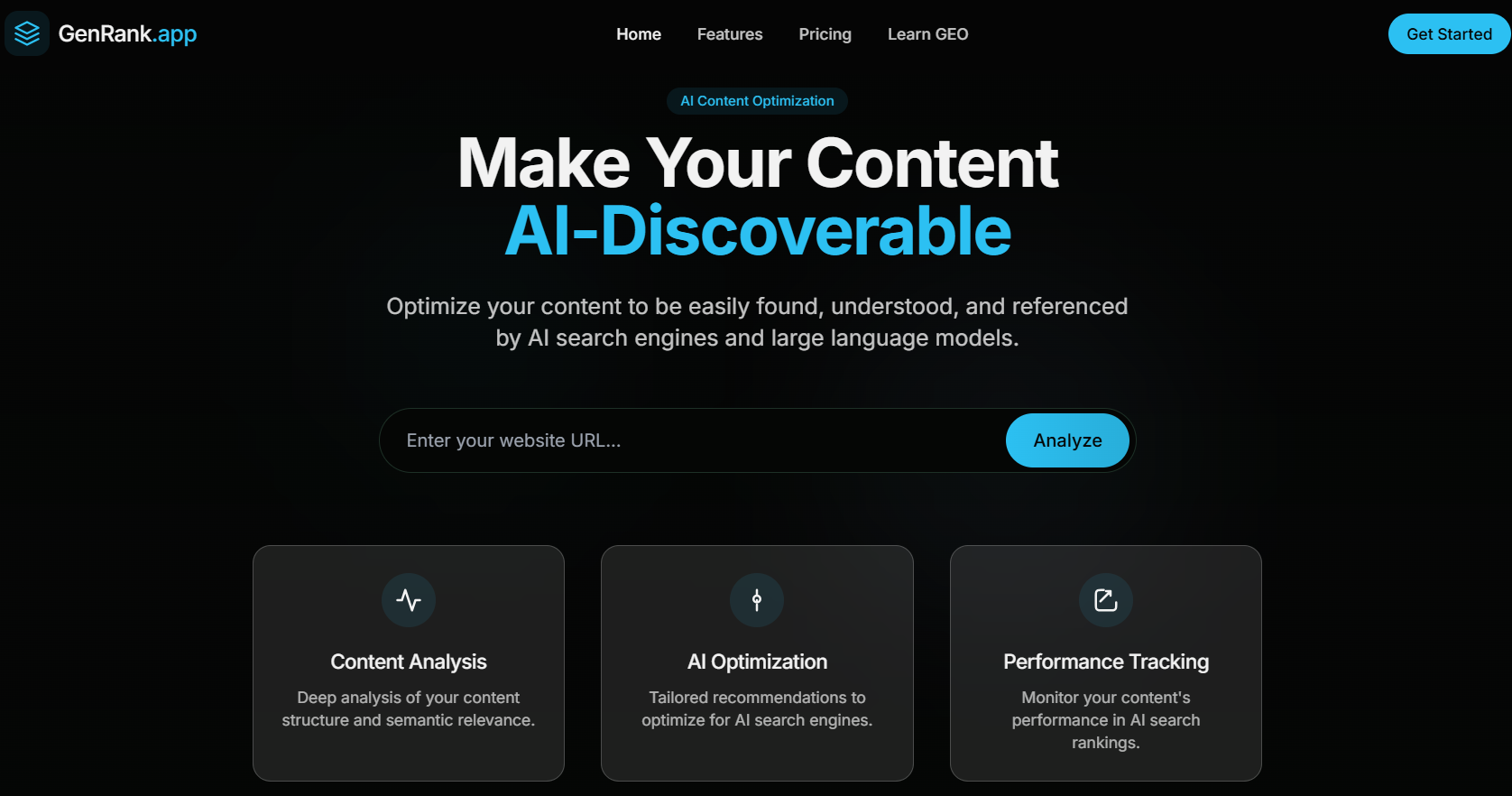
Best for: SEO teams, agencies, and brands looking to measure and improve visibility across AI-generated search experiences.
Genrank is an AI search visibility platform that helps brands monitor how they appear across conversational AI engines.
It gives teams insight into brand recommendations, competitor positioning, and shifts in AI-generated responses, helping businesses strengthen their visibility in AI-driven search experiences.
Key Features
| Key Feature | Description |
|---|---|
| AI Visibility Tracking | Tracks how frequently brands appear in AI-generated answers and recommendations |
| Prompt & Query Insights | Identifies the prompts and search patterns influencing AI visibility |
| AI Response Analysis | Monitors real AI-generated outputs to evaluate brand presence |
| Competitor Comparison | Benchmarks your AI visibility against competing brands |
| Brand Sentiment Tracking | Measures how AI systems describe and interpret your brand |
| Citation Source Monitoring | Highlights the websites and sources referenced by AI platforms |
| Content Optimization Support | Helps improve content for stronger AI discoverability and citations |
| Entity Recognition Insights | Evaluates how accurately AI systems understand your brand |
| Visibility Trend Analysis | Tracks changes in citations and AI exposure over time |
| API & Integration Support | Connects visibility data with external reporting and workflow tools |
Pros
- Designed specifically for AI search visibility monitoring
- Uses real AI-generated responses for tracking and analysis
- Strong competitor visibility and sentiment insights
- Includes optimization-focused recommendations alongside monitoring
Cons
- Limited traditional SEO tooling
- Smaller ecosystem than enterprise SEO platforms
- Some advanced workflow capabilities are still developing
6. Snezzi
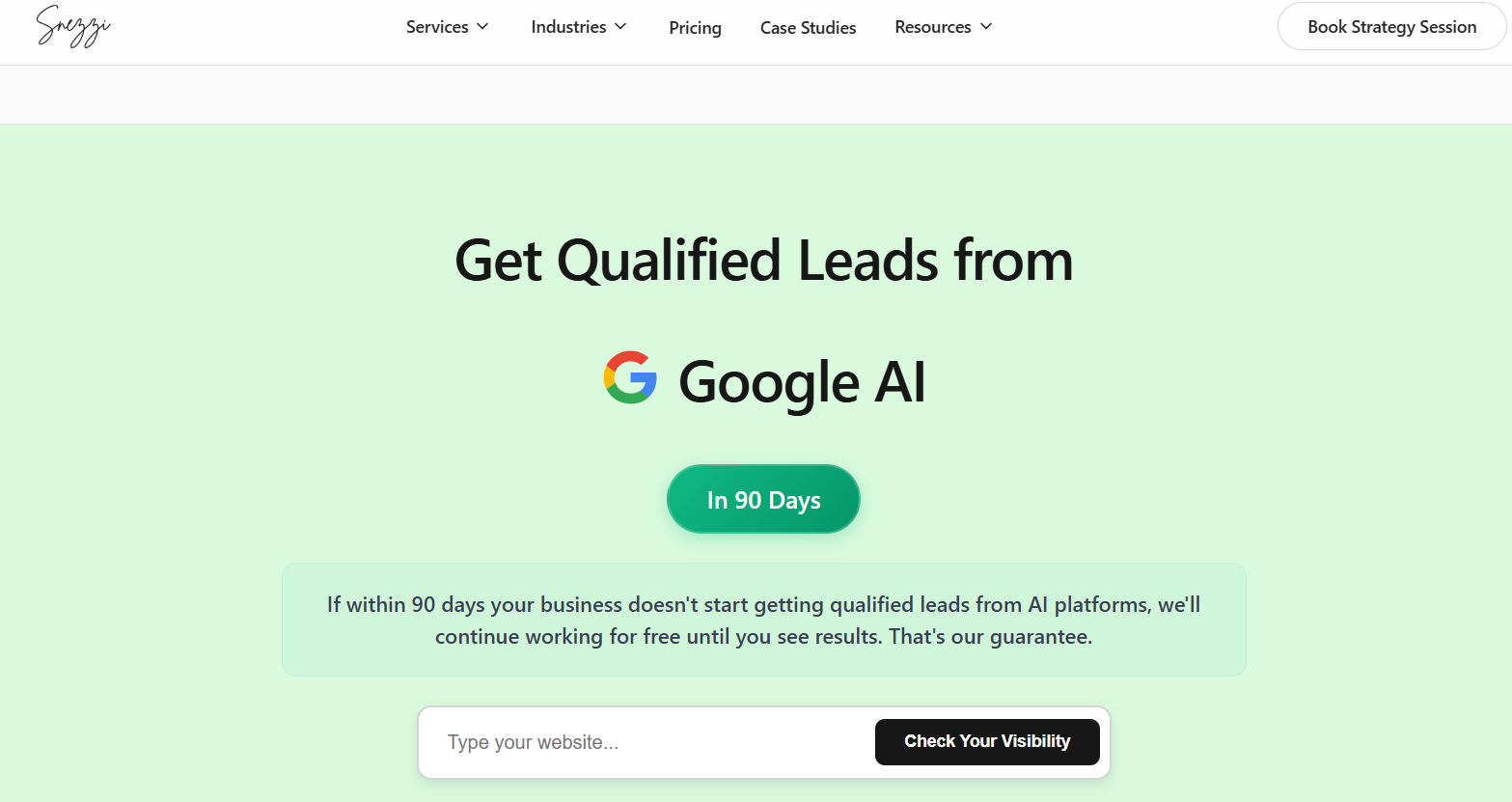
Best for: Brands wanting fully managed, done-for-you AI SEO services.
Snezzi is an AI visibility and optimization platform that helps brands improve how they appear across AI-powered search and conversational discovery platforms.
Along with tracking AI visibility, the platform supports content enhancement, technical optimization, citation growth, and authority-building efforts to help businesses increase their presence in AI-generated search experiences.
Key Features
| Key Feature | Description |
|---|---|
| AI Presence Monitoring | Tracks brand visibility and mentions across major AI-driven platforms |
| AI Agent Framework | Leverages AI agents for auditing, monitoring, optimization, and reporting tasks |
| Brand Citation Analysis | Monitors how brands are referenced within AI-generated responses |
| Technical GEO & SEO Auditing | Identifies optimization issues that may reduce AI search visibility |
| AI-Ready Content Creation | Produces content designed to improve AI discoverability and citations |
| Competitor Visibility Tracking | Highlights competitor strengths and visibility gaps in AI search |
| Authority Signal Monitoring | Tracks external discussions and trust signals that influence AI engines |
| AI Traffic & Performance Insights | Analyzes AI-driven traffic and overall visibility impact |
| Automated Content Scaling | Supports scalable workflows for content production and optimization |
| Cross-Platform AI Monitoring | Tracks visibility across ChatGPT, Gemini, Claude, Perplexity, Copilot, Grok, and similar platforms |
Pros
- Offers complete AI visibility and optimization support as a managed service
- Integrates monitoring, optimization workflows, and reporting in a unified platform
- Strong focus on improving AI citations and conversational search presence
- Includes both technical SEO improvements and AI-focused content support
- Supports tracking across a wide variety of AI search platforms
Cons
- Not built for teams looking for a purely self-serve experience
- Ongoing engagement is typically required for best results
- Traditional SEO capabilities are less comprehensive than enterprise SEO suites
7.Yext Scout
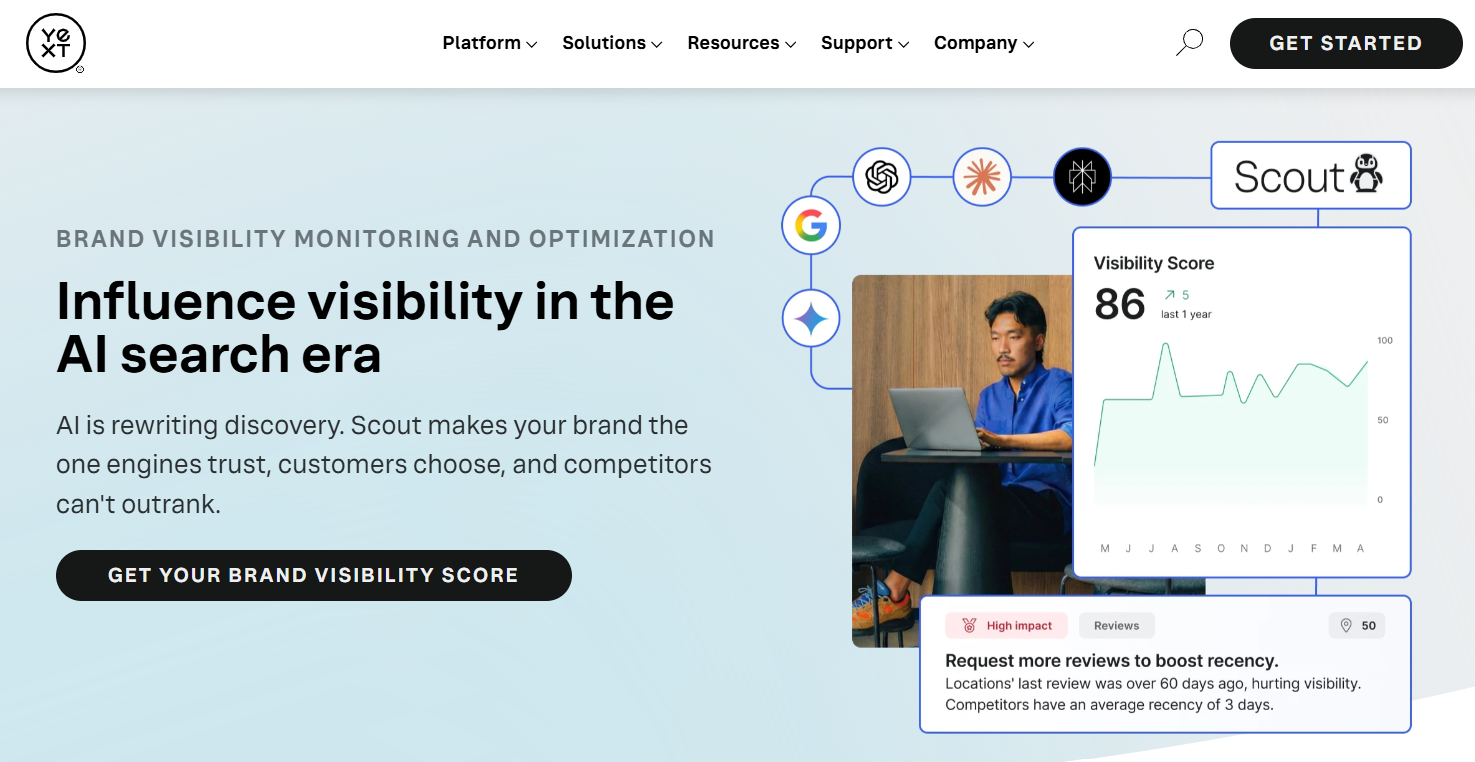
Best for: Large enterprises, franchises, and multi-location companies seeking a comprehensive platform for managing AI visibility, local search presence, reputation, and customer engagement across digital ecosystems.
Key Features
| Key Feature | Description |
|---|---|
| AI Search Presence Tracking | Measures how brands appear across AI-powered search and answer engines |
| Competitive Visibility Monitoring | Analyzes competitor performance and exposure in AI search results |
| Directory & Listings Control | Manages consistent business information across online listings |
| Knowledge Organization System | Structures brand data for better search engine and AI interpretation |
| Online Reputation Management | Monitors and manages customer reviews and brand perception |
| Multi-Location Social Tools | Supports social media management for businesses with multiple locations |
| Optimized Local Landing Pages | Creates search-friendly pages designed to improve local discoverability |
| AI-Driven Website Search | Delivers smarter on-site search experiences powered by AI |
| Regulated Social Engagement | Enables compliant communication workflows for regulated industries |
| Enterprise Communication Management | Supports secure customer interaction and engagement across teams |
Pros
- Integrates AI visibility tracking with broader digital presence and reputation management tools
- Built to support large organizations and businesses with multiple locations
- Enhances AI discoverability through structured brand and entity data management
- Includes capabilities for local search optimization, reviews, and engagement management
- Delivers a unified platform for managing online visibility across search and AI experiences
Cons
- Primarily tailored for enterprise-level businesses
- Can be more costly than lightweight AI monitoring solutions
- Some advanced functionality depends on adoption of the wider Yext platform
- Not as focused on detailed AI citation analytics as specialized GEO tools
8. Profound — Best for Maximum AI Engine Coverage
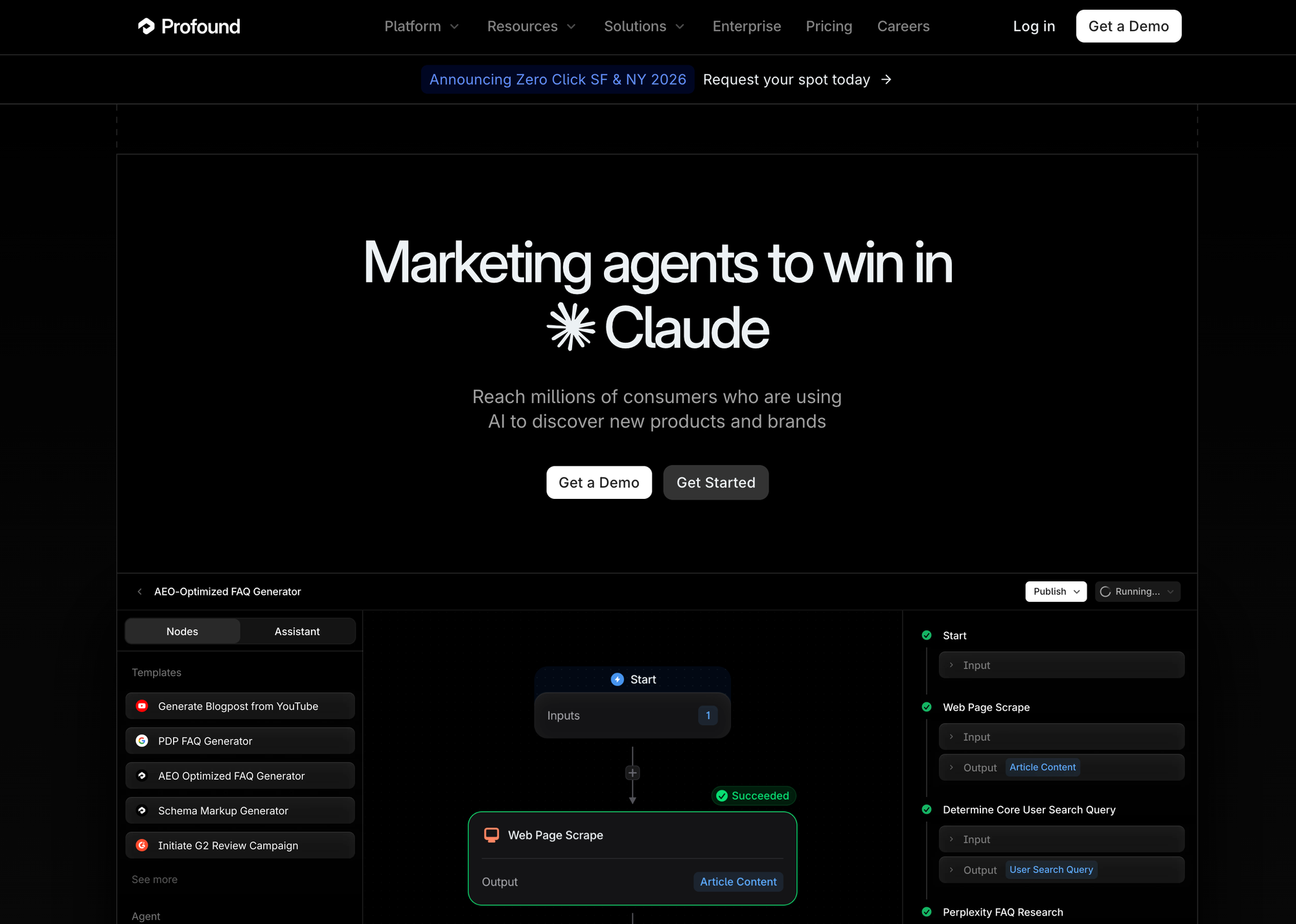
Best for: Enterprise brands needing comprehensive AI platform coverage who can handle content execution through separate tools.
Profound monitors brand presence across 10+ AI platforms at the Enterprise tier — including ChatGPT, Perplexity, Claude, Gemini, Grok, Meta AI, and DeepSeek — while providing content optimization guidance and proprietary prompt volume data.
Key features
| Key Feature | What It Does |
|---|---|
| Daily Structured Prompt Monitoring | Runs consistent prompts across AI platforms to track citations, sentiment, and competitor visibility over time |
| Proprietary Prompt Volume Data | Provides estimated prompt demand and usage insights across AI platforms |
| AI Traffic Attribution | Connects AI-generated traffic data through GA4 and CDN integrations to measure impact |
| Citation Authority Scoring | Evaluates the quality and authority of sources cited by AI engines |
Pros
- Widest AI engine coverage of any tool in the category (10+ platforms at Enterprise)
- Exclusive prompt volume data you won't find elsewhere
- G2 AEO category leader
Cons
- Growth plan limited to 3 platforms only
- 3-seat cap on standard tiers
- Pricing approximately 48% above market average
- No integrated execution tools
Pricing: Contact for Enterprise. Growth plan available at lower price points but with significant platform limitations.
9. Otterly AI
Best for: Marketing teams and agencies needing affordable, reliable AI search monitoring.
Otterly AI focuses exclusively on AI search monitoring using a "real-human-like monitoring" approach that replicates actual AI interfaces, serving over 20,000 marketing professionals across six AI platforms.
Key Features
| Key Feature | What It Does |
|---|---|
| Search Prompt Monitoring | Tracks brand visibility across ChatGPT, Perplexity, Google AI Overviews, AI Mode, Gemini, and Copilot using monitored prompts |
| Brand Visibility Index | Provides a single KPI to measure overall brand visibility across AI search platforms |
| AI Keyword Research Tool | Converts traditional SEO keywords into AI-relevant prompts and conversational search queries |
Pros
- Six-platform coverage
- Lowest barrier to entry in the category starting at $29/month
- Early adopters report cutting monitoring time by up to 80%.
Cons
- No content execution tools
- Limited integrations
- Prompt-based pricing can escalate
10. Scrunch AI
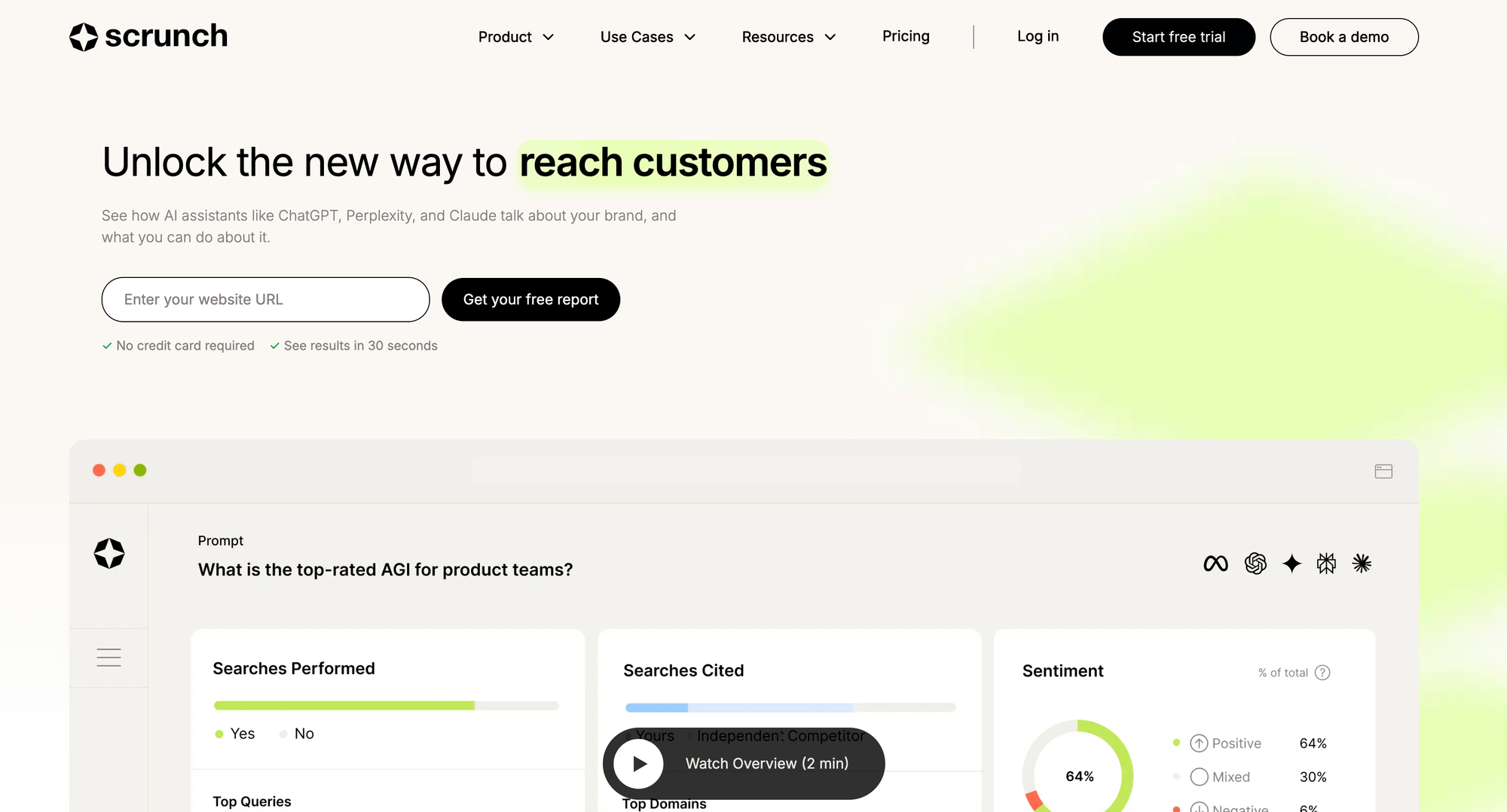
Best for: Enterprises needing SOC 2 compliance with deeply segmented multi-brand AI monitoring.
Scrunch monitors seven major AI platforms — ChatGPT, Claude, Perplexity, Meta AI, Google AI Mode, Google AI Overviews, and Gemini — with prompt-level tracking organized by topics, personas, customer journey stages, and geographic regions.
Key Features
| Key Feature | What It Does |
|---|---|
| Agent Experience Platform (AXP) | Optimizes your website and content experience for AI agents and AI-driven discovery systems |
| Agent Traffic Analytics | Tracks and analyzes AI-generated traffic visiting your website |
| AI Site Maps | Helps understand how AI systems crawl, interpret, and consume your site content |
| Monitoring & Citations | Monitors brand mentions, citations, and visibility across AI platforms |
| Insights & Recommendations | Provides actionable suggestions to improve AI visibility and citation performance |
| AI Search Trends | Identifies emerging AI search behaviors, trends, and conversational query patterns |
Pros
- Most extensive AI platform coverage with production-ready data quality
- SOC 2 compliance
- Strong filtering capabilities
Cons
- Optimization insights in beta
- No content editor
- Prompt credit system can be confusing
- No free trial
11. Nightwatch
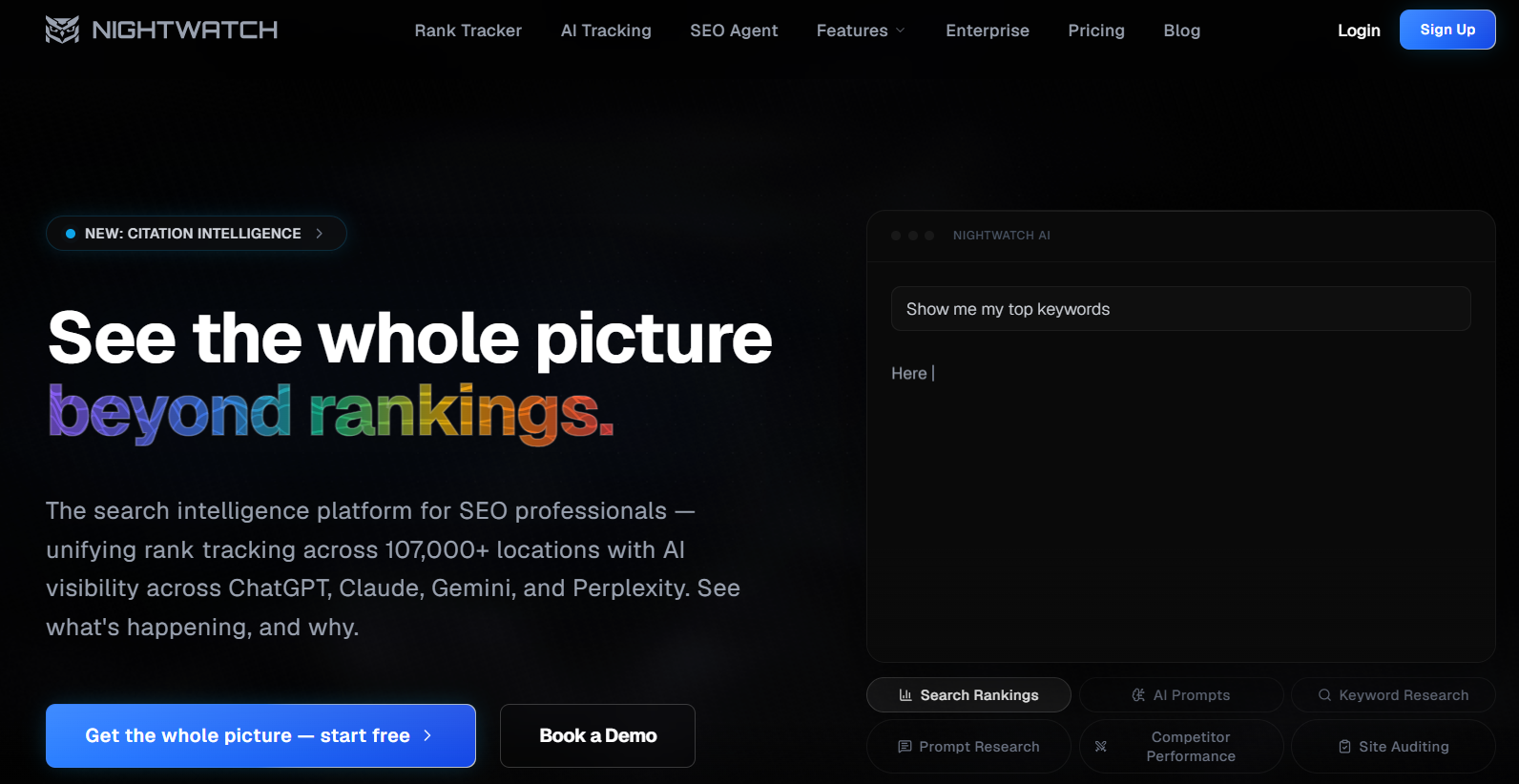
Best for: SEO teams wanting unified traditional rank tracking and AI visibility monitoring.
Nightwatch bridges traditional SEO rank tracking with AI visibility monitoring across ChatGPT, Claude, Gemini, and Perplexity, while simultaneously tracking rankings across Google, Bing, YouTube, and DuckDuckGo.
Key Features
| Key Feature | Description |
|---|---|
| AI & LLM Tracking | Monitors brand visibility across ChatGPT, Claude, Gemini, and Perplexity |
| Unified Search + AI Visibility | Combines traditional SEO rankings with AI-generated answer visibility in one dashboard |
| AI Visibility Score | Measures how frequently your brand appears in AI-generated responses |
| Share of Voice Analysis | Tracks brand mentions versus competitors across AI platforms |
| Sentiment Analysis | Analyzes the tone and perception of your brand in AI-generated answers |
| Active Citation Tracking | Identifies sources and citations referencing your brand in AI systems |
| AI Overview Tracking | Monitors visibility in Google AI Overviews and AI-generated SERP snippets |
| Prompt Research | Analyzes AI prompt performance and conversational query trends |
| Global Rank Tracking | Tracks rankings across major search engines and locations worldwide |
| Advanced Segmentation & Reporting | Supports white-label reports, segmentation, customizable dashboards, and analytics |
Pros
- Dual-layer tracking covers both AI responses and the web searches AI models perform
- Granular geographic tracking across 190,000+ locations
Cons
- Limited documentation on AI citation methodology
- API access restricted to accounts tracking 1,000+ keywords
- Real-time updates reserved for enterprise plans
Best AI Citation Tracking Tools vs. SEO Tools: Core Differences
Here’s a simple comparison.
| Feature | AI Citation Tracking Tools | SEO Tools |
|---|---|---|
| Main Purpose | Track AI mentions and citations | Improve search engine rankings |
| Focus Platforms | ChatGPT, Gemini, Claude, Perplexity | Google, Bing, Yahoo |
| Tracks Keywords | Limited | Yes |
| Tracks AI Mentions | Yes | Usually No |
| Competitor AI Visibility | Yes | Limited |
| SERP Monitoring | No | Yes |
| Backlink Analysis | Rarely | Yes |
| Technical SEO Audits | No | Yes |
| Prompt Monitoring | Yes | No |
| AI Brand Sentiment | Sometimes | Rarely |
| Search Ranking Optimization | No | Yes |
In simple terms:
SEO tools optimize websites for search engines. AI citation tracking tools optimize visibility inside AI-generated answers.
Final Thoughts
AI citation tracking is no longer optional for brands serious about search visibility. Buyers are forming opinions and making shortlists inside ChatGPT, Perplexity, and Gemini — often before they ever visit your site. The tools in this list give you the visibility to understand where you stand, identify what's driving competitor citations, and build a strategy to improve your presence across AI answer engines.
If you're an agency or brand looking for a purpose-built AI visibility platform with multi-LLM coverage and competitive benchmarking, Indexly is worth exploring first.
FAQs
What are the Best AI Citation Tools?
The best AI citation tools help track how often and where a brand appears in AI-generated answers across platforms like ChatGPT, Perplexity, Gemini, and Claude. Popular options include platforms such as Indexly, Profound, Otterly AI, AirOps, GetCited, and Scrunch AI, which offer varying levels of citation tracking, competitor analysis, and AI visibility monitoring.
What is the main difference between GetCited vs CiteScope AI vs Genrank vs Indexly?
GetCited focuses on basic AI citation tracking, CiteScope AI focuses on citation tracking plus GEO optimization, Genrank focuses on AI visibility intelligence and sentiment, and Indexly provides a full AI visibility + analytics + execution system.
What is a Software for Tracking AI-Generated Citations?
A software for tracking AI-generated citations tracks whether AI tools like ChatGPT, Gemini, Claude, and Perplexity cite your brand in their answers.
One example is Indexly, which monitors AI citations and brand visibility across multiple AI engines.
What is AI Citation tools vs SEO?
AI citation tools measure brand presence inside AI-generated answers, including mentions, citations, and recommendations across LLMs. Traditional SEO tools focus on Google rankings, backlinks, and organic traffic. In simple terms, SEO shows where you rank on search engines, while AI citation tools show whether AI systems are actually referencing or recommending your brand in responses.
What are Free AI Citation Tracking Tools?
Free AI citation tracking tools are limited platforms or basic versions that let you check if your brand appears in AI answers without advanced analytics. These tools usually offer manual or lightweight tracking across a few prompts or AI engines, but lack deep competitor analysis, sentiment tracking, or continuous monitoring found in paid tools.
What are the Tools with Real Time AI Citation Tracking?
Tools with real-time AI citation tracking continuously monitor AI-generated responses and update when your brand is mentioned or cited. These platforms track changes across models like ChatGPT, Perplexity, Gemini, and Claude, helping teams see live shifts in visibility, competitor movement, and citation updates as they happen.
How to get Cited by AI Consistently?
Create high-authority, well-structured content that directly answers user questions, build strong brand mentions across trusted websites, improve technical SEO and schema markup, and publish comparison, definition, and research-style content AI systems can easily reference. Consistent authority signals improve AI citation frequency.
What is the best AI Citation Checker for Website?
Popular AI citation checker include Indexly, Profound, Otterly AI, and Scrunch AI. The best choice depends on whether you need lightweight monitoring, enterprise analytics, or full AI visibility optimization workflows.