

Google AI Overviews are changing what shows up first when you search on Google.
Instead of users scrolling through a list of blue links, search now often begins with a single AI-generated response that highlights only a small set of selected sources. This means visibility is no longer just about ranking on the first page—it’s about whether your content is chosen, surfaced, and referenced within that response.
For many websites, this creates a gap between ranking and actual visibility. A page can still perform well in traditional search results but remain unseen if it isn’t included in the AI Overview. At the same time, content that is clear, well-structured, and contextually strong has a higher chance of being picked up and displayed.
This guide explains how AI Overviews work, how they differ from traditional search, and what they mean for SEO and content strategy. You’ll also learn how to optimise your content for better inclusion and how tools like Indexly help track and improve visibility in AI-driven search results.
What Google AI Overviews Are
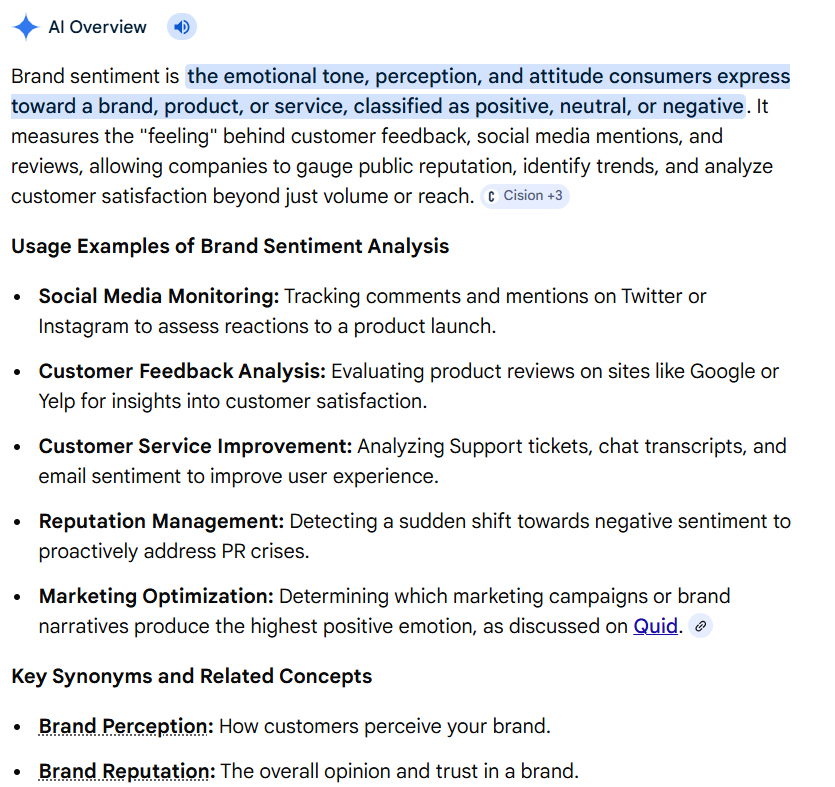
Google AI Overviews are automated summaries displayed at the top of the search results page (SERP) that deliver immediate answers to user queries. Built using large language models (LLMs) like Gemini, they gather and merge information from multiple sources into a single, clear response.
These summaries feature source citations and source links, enabling users to check the original information or dive deeper into specific topics. AI Overviews compile and interpret content from across the web to provide a complete answer in one place.
In essence, they reduce the need to visit multiple websites by offering a unified, AI-driven response at Position Zero, reshaping both user search behaviour and how brands achieve visibility online.
Read: Google AI Overviews Optimisation Tools Guide 2026
How Google AI Overviews Work in Search Results
Google AI Overviews operate by blending generative AI, established search ranking systems, and continuously updated web indexing to present AI-driven summaries directly within the search results page (SERP).
At a high level, this process goes through several key stages:
1. Query Interpretation and Intent Recognition
When a user enters a search query, Google evaluates its meaning and intent using large language models (LLMs). AI Overviews are not direct copies; they are contextual, conversational, and synthesised responses generally triggered for informational searches and long-tail keywords, especially when answering the query requires combining insights from multiple sources rather than extracting a single direct response.
This approach sets AI Overviews apart from featured snippets, which typically highlight content from just one source.
Read: Top 10 Best LLM Brand Visibility Tools to Dominate AI Search in 2026
2. Identification of High-Quality Sources
Instead of generating content in isolation, AI Overviews rely on Google’s search index to identify relevant information. Long-standing ranking systems assess and select authoritative and trustworthy pages, using signals such as on-page SEO, backlinks, and overall content quality.
A critical part of this step is validating information across multiple sources to improve reliability and reduce inaccuracies.
3. Inclusion of Source Citations and Links
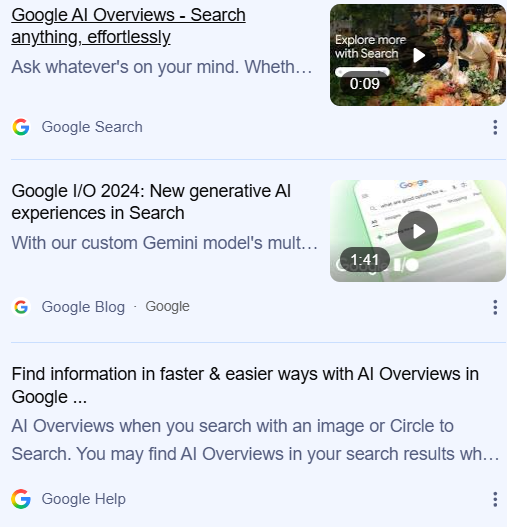
The generated summary is accompanied by source citations and source links, allowing users to verify details or explore additional information. These citations introduce a new layer of visibility within the SERP, where brand mentions become increasingly important alongside traditional ranking factors.
Read: 11 Best AI Citation Tracking Tools for B2B Marketing Teams (UPDATED 2026)
4. Display on the SERP (Position Zero)
The final AI Overview is presented at the top of the search results page, often occupying Position Zero above standard listings. While traditional organic results, ads, and other features remain visible below, the AI summary frequently becomes the primary focus for users seeking quick answers.
AI Overviews vs Traditional Search Results
How AI Overviews Impact SEO and Content Strategy
AI Overviews shift SEO from traditional ranking-based visibility to AI-generated summaries on the SERP, where users receive direct answers without opening multiple results, so content performance now depends on how clearly and reliably it can be interpreted, selected, and reused by AI systems.
Reduced Organic Clicks for Informational Queries
When AI Overviews fully address a query, users are less likely to click through to external pages. This leads to lower organic traffic for informational searches, where the SERP itself often satisfies the user’s intent.
Growing Importance of Entity-Based Optimization
Modern search relies more on understanding relationships between entities such as brands, people, and topics. As a result, strong entity signals, consistent brand context, and topical authority are becoming critical for visibility in AI-driven results.
New Visibility Through AI Summaries
Search visibility is no longer limited to ranking positions alone. Content can appear within AI Overviews when it is selected as part of the source set, making inclusion in AI-generated summaries an additional layer of exposure.
Stronger Role of Authority Signals
Trust factors like backlinks, domain strength, and content reliability still play a major role in selection. Pages with stronger authority are more likely to be referenced in AI-generated responses due to higher credibility.
Need for Structured, AI-Friendly Content
Well-structured and clearly organized content is easier for AI systems to interpret and extract. This increases the chances of content being reused in AI-generated summaries across search experiences.
Overall Strategic Impact
AI Overviews are pushing SEO toward an AI-first discovery model where visibility depends more on alignment with user intent and machine interpretability than on traditional ranking positions.
How to Optimise Content for AI Overview Visibility
Optimising for Google AI Overviews builds on standard SEO practices rather than introducing a separate system. Google emphasises that content performance in AI-driven search is largely based on usefulness, relevance, clarity, and overall quality, similar to traditional search evaluation methods.
Align Content with User Intent
Content performs better when it directly addresses what users are looking for. Pages that provide clear, immediate answers and explain topics in a simple, structured way are easier for both search systems and AI models to extract and use.
Develop Comprehensive Topic Coverage
Search systems tend to prioritise sites that cover topics in depth rather than those with isolated pages. Building interconnected content around a subject strengthens topical relevance and improves visibility in both traditional search and AI-based results.
Organize Content for Easy Processing
Well-structured content with logical flow and clear sections improves how easily information can be interpreted. This makes it more likely that search systems can extract relevant portions for AI-generated summaries.
Emphasize Semantic Meaning and Entities
Modern search focuses more on meaning and relationships than exact keyword repetition. Including relevant concepts, entities, and contextual explanations helps search systems better understand the content’s intent and relevance.
Strengthen Trust and Authority Signals
Factors such as backlinks, content accuracy, and overall credibility continue to influence visibility. Content that demonstrates expertise and reliability is more likely to be selected for inclusion in search results and AI-generated outputs.
Maintain Strong Technical SEO Foundations
Content must be properly indexed and accessible to search engines to appear in AI-driven features. Clean site architecture, fast performance, and effective internal linking help ensure pages can be discovered and evaluated.
Leverage SEO Insights for Content Planning
SEO tools can help identify content gaps, keyword opportunities, and areas of weak competition. These insights support a better content strategy for both traditional search and AI-powered visibility, though AI Overview inclusion cannot be directly controlled.
Structure Content for Multi-Source Extraction
AI Overviews are generated by combining information from several sources. Content that is clear, factual, and well-explained is more likely to be selected as part of this aggregated information set.
How to Track AI Overview Mentions and Citations

Indexly helps brands manage AI-driven search visibility by combining keyword tracking, SERP feature monitoring, and content intelligence into a unified system. It enables teams to understand how their content appears in traditional search results as well as AI-generated experiences like AI Overviews.
Instead of only tracking rankings, Indexly focuses on search visibility across modern SERP features, including detection of when a brand or page is referenced or cited within AI-generated summaries.
Core Modules Supporting AI Visibility
| Module | What It Does | Purpose |
|---|---|---|
| Brand Hub | Stores brand information like audience, competitors, and messaging | Keeps all content aligned with brand identity |
| Overview | Shows publishing activity, performance, and content output | Tracks consistency and content growth |
| Content Opportunities | Identifies SEO keywords, AI queries, and topic ideas | Helps prioritize high-impact content opportunities |
| Integrations | Connects with WordPress.org, WordPress.com, and Ghost | Enables seamless publishing workflows |
| Autopilot Engine | Automates content planning, creation, and publishing | Scales content production efficiently |
| Content Writer | Generates SEO-optimized articles and marketing content | Speeds up content creation with consistency |
How do AI Overviews influence Brand Perception?
AI Overviews affect brand perception by determining which brands are surfaced in AI-generated summaries at the top of search results. Because users often rely on these summaries as quick, trusted answers, the brands included gain immediate visibility and credibility.
Frequent inclusion in AI Overviews can strengthen a brand’s authority and recognition, while absence from these summaries may reduce exposure even when a brand ranks well organically.
In this way, brand perception is increasingly driven not just by traditional SEO or marketing efforts, but by how AI systems interpret, select, and present brand information across the web.
Conclusion
Google AI Overviews are redefining search by prioritising AI-generated, multi-source answers over traditional ranked listings. This shift is pushing SEO toward a more semantic, intent-driven, and entity-focused approach where content clarity, authority, and structure matter more than keyword repetition alone.
For brands and marketers, visibility is no longer limited to ranking positions but extends to being referenced within AI-generated summaries. This makes content quality, topical depth, and trust signals essential for inclusion in AI-driven search experiences.
Platforms like Indexly support this transition by helping teams identify opportunities, structure content strategies, and manage AI-focused visibility workflows.
FAQs
1. What are Google AI Overviews?
Google AI Overviews are AI-generated summaries that appear at the top of search results, combining multiple sources into a single direct answer for user queries.
2. How do Google AI Overviews work?
They use large language models, Google’s index, and machine learning systems to retrieve, evaluate, and synthesize information into contextual summaries.
3. How do AI Overviews impact SEO?
AI Overviews reduce dependency on traditional rankings by giving direct answers on the SERP, making semantic SEO, entity optimization, and content clarity more important.
4. Can websites appear in AI Overviews?
Yes. Websites can be included as source references if their content is relevant, authoritative, and structured in a way that AI systems can interpret easily.
5. How does Indexly help with AI Overviews and GEO?
Indexly helps brands improve visibility in AI-driven search by identifying content opportunities, tracking AI queries, and organizing content strategy through modules like Brand Hub, Overview, Content Opportunities, Integrations, and Autopilot. This supports better alignment with both SEO and Generative Engine Optimization (GEO) workflows.