
Most people still don’t clearly understand how ChatGPT citations work or how accurate they actually are. Systems like ChatGPT generate responses in real time and may include supporting references based on relevance, retrieval signals, and available web data rather than showing a fixed list of verified sources.
Because of this, citation accuracy can vary depending on the model, the prompt, and whether browsing or retrieval features are enabled. Some citations are precise and traceable, while others may be incomplete, outdated, or incorrectly matched to the content.
Research from institutions like Stanford HAI (Human-Centered AI Institute) highlights that large language models can produce highly fluent outputs while still making factual or attribution errors. This makes verification an important step when using AI-generated information for research, publishing, or decision-making.
In this blog, we will discuss what ChatGPT citations are, where they come from, how accurate they are, why fake citations happen, and why some websites are not cited by AI systems in the first place.
What Are ChatGPT Citations?
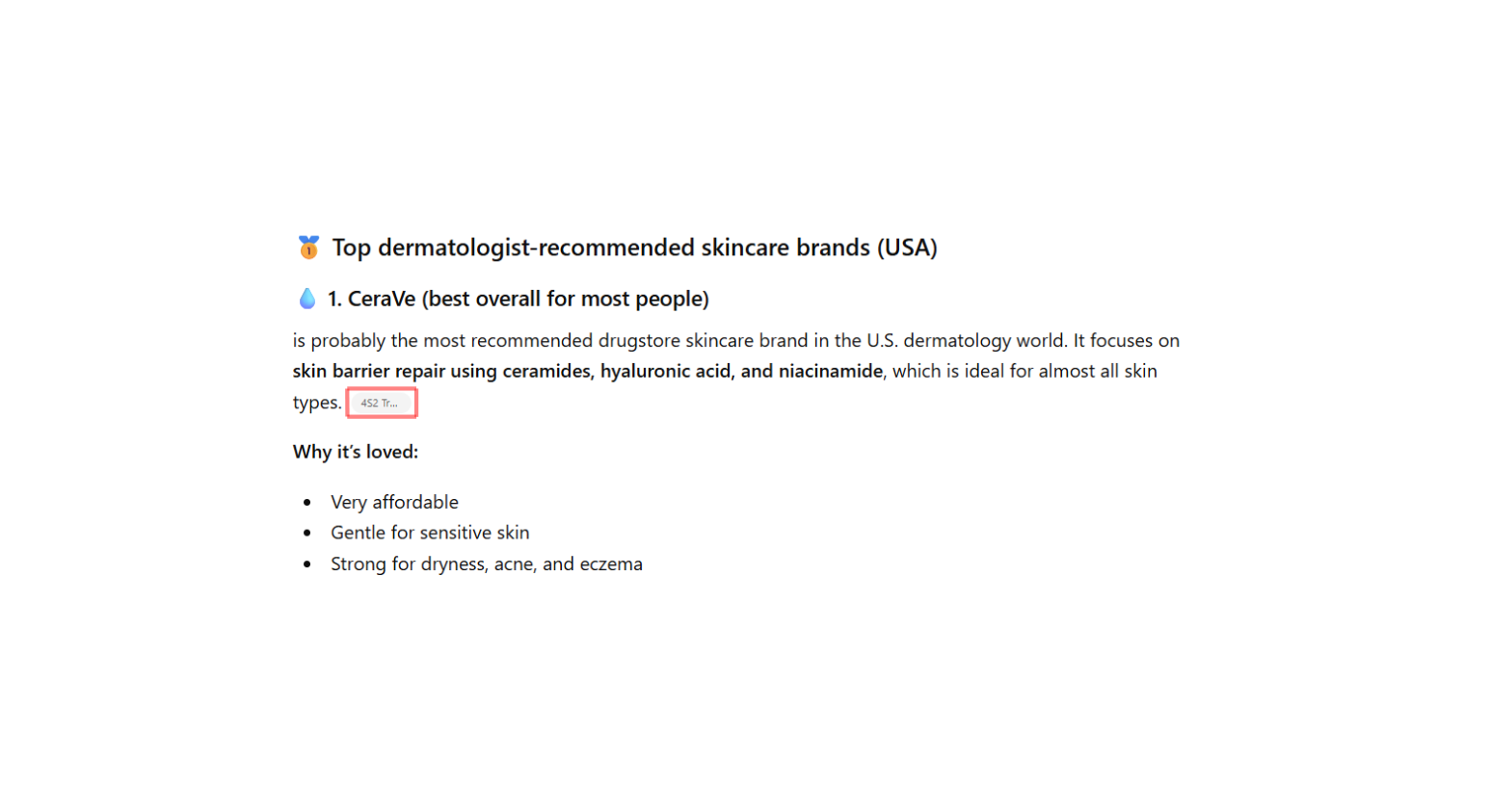
A ChatGPT citation is a source reference shown in ChatGPT responses that indicates where the information was obtained, allowing users to check and confirm the original material.
In services such as OpenAI ChatGPT, citation behaviour can vary depending on the AI model, web browsing capabilities, and the type of request submitted by the user.
An analysis of about 1.2 million ChatGPT citations found that 44.2% come from the first 30% of the content, 31.1% from the middle section (30–70%), and only 24.7% from the final third, with a sharp drop‑off near footers. - Search Engine LandRead: Gemini vs ChatGPT vs Perplexity Citations: How AI Citations are generated in 2026
Different Ways ChatGPT Can Reference Information
| Reference Type | Meaning |
|---|---|
| Source Mentions | The AI directly refers to a website, publisher, or organization in the response |
| Clickable References | Linked citations are included to support facts, summaries, or statements |
| Summarized External Content | Information from external webpages is analyzed and rewritten without direct quoting |
| Live Web Retrieval | Real-time internet content is fetched and used during response generation |
| Knowledge From Training Data | The model answers using information learned during training without displaying visible references |
AI systems powered by Large Language Models (LLMs), including ChatGPT, focus on understanding context and generating complete answers instead of simply listing webpages like conventional search engines.
Because of this shift from “link-based search” to “answer-based AI responses,” understanding where ChatGPT gets its information and how it cites sources has become increasingly important for website owners, publishers, SEO professionals, and digital brands.
ChatGPT Citation Sources
ChatGPT uses a combination of online resources, indexed data, and retrieval systems to generate responses. When browsing or live search capabilities are enabled, the model can pull information from various web sources before creating a conversational answer.
Common Types of Sources Used by ChatGPT
| Source Category | Examples |
|---|---|
| News Outlets | Reuters, BBC |
| Information Platforms | Wikipedia |
| Discussion Communities | Reddit, Stack Overflow |
| Research Databases | Google Scholar, PubMed |
| Technical Documentation | Software guides, APIs, and developer resources |
| Institutional Websites | Government and university domains such as .gov and .edu |
| Live Search Results | Real-time information retrieved from the web |
The AI selects sources based on several factors, including:
- semantic relevance,
- authority signals,
- information quality,
- search intent,
- and retrieval reliability.
Because of this, websites with strong topical authority and well-structured content are more likely to appear in AI-generated citations.
Now that we understand where ChatGPT gets its information from, the next important question is: how accurate are these AI-generated citations, and can they always be trusted?
ChatGPT Citation Accuracy
ChatGPT citations are intended to provide transparency about where information may have originated. However, AI-generated references are not always fully accurate.
Since Large Language Models rely on predictive text generation, citation systems can occasionally connect facts to incorrect sources, misunderstand webpage context, or produce incomplete references.
Common Citation Accuracy Problems
| Problem | Explanation |
|---|---|
| Incorrect Source Attribution | Information is linked to the wrong website or publication |
| Outdated Information | Older content is treated as current |
| Contextual Misinterpretation | The AI misunderstands the meaning of the source |
| Broken References | URLs may be invalid or incomplete |
| Fabricated Citations | The model generates sources that do not exist |
These citation issues are commonly referred to as AI hallucinations, fabricated references, fake citations, or synthetic source generation.
“In one dataset of over 2 million AI responses, only 72.4% of cited posts contained a clear answer capsule, underscoring why AI often struggles to match facts to precise snippets and can default to fabricated or vague references.”- ALM Corp
Why Fake Citations Happen in ChatGPT

One of the biggest concerns around ChatGPT citations is the issue of “fake citations ChatGPT” — a term commonly used to describe AI-generated references that appear real but do not actually exist.
This happens because Large Language Models are built to predict and generate natural language responses based on patterns in data, rather than verify every citation through a live fact-checking system. As a result, the AI can sometimes produce sources that sound authentic even when they are inaccurate or fictional.
Why ChatGPT doesn’t cite my website?
Many site owners assume that ranking well on search engines should naturally lead to visibility in AI-generated answers. But ChatGPT evaluates websites differently from traditional search engines.
Instead of focusing only on backlinks and keyword rankings, AI systems analyse factors such as trustworthiness, semantic relevance, topical expertise, and how easily content can be retrieved and understood.
Your Website Does Not Have Strong Entity Signals
One of the biggest reasons ChatGPT may not reference your website is weak entity authority. Large Language Models tend to favour websites and brands that are already widely recognised online.
Platforms such as Wikipedia, Reddit, Stack Overflow, GitHub, and Forbes are cited frequently because they have built strong authority through years of backlinks, mentions, and online trust.
If your website has limited brand recognition or very few mentions across external sources, AI systems may not consider it authoritative enough to include in citations.
“In one analysis of 485,000+ ChatGPT citations, just the top 50 domains captured nearly half of all references, which explains why broad, low‑authority sites rarely appear even if they rank well in classic search.”-Wellows
Your Content Is Not Easily Readable for AI Systems
AI retrieval models work best with content that is structured clearly and easy to interpret. Websites that use proper headings, organised layouts, schema markup, semantic HTML, and concise explanations are generally easier for AI systems to process.
In comparison, webpages overloaded with popups, excessive scripts, cluttered formatting, or poor structure may be difficult for AI models to analyse. Even informative content can be overlooked if the page is not optimised for machine readability.
Your Content Does Not Stand Out
A significant amount of web content today is created primarily for SEO purposes. However, LLMs are increasingly designed to prioritise high-value information such as:
- original research,
- expert insights,
- detailed topic explanations,
- statistical analysis,
- and unique perspectives.
Content that simply repeats existing information without adding anything new is less likely to become a reliable AI citation source. Websites offering deeper expertise and original value have a much higher chance of being referenced.
Your Brand Has Limited Mentions Across the Web
AI systems also evaluate how frequently your brand appears in external discussions and trusted sources. If your business is rarely mentioned in articles, interviews, podcasts, forums, or industry conversations, the model may interpret your authority as weak.
This is why digital PR, industry visibility, and community engagement are becoming increasingly important for AI search optimisation. Consistent mentions across reputable platforms help strengthen your entity's authority.
Your Website Is Still Too New
Another common reason your site may not appear in ChatGPT citations is that the AI system has not processed or encountered your content frequently enough. Many AI retrieval systems depend on cached indexes, pretrained datasets, search APIs, and third-party retrieval providers.
Because of this, newer websites may take time to gain visibility in AI-generated responses. Even high-quality content might not be referenced immediately if the domain lacks historical trust and retrieval signals.
Read: What Are AI Citations? How to Find Which Pages ChatGPT and Perplexity Cite
Conclusion
ChatGPT citations reflect the shift from traditional search to AI-generated answers. Instead of ranking links, systems like ChatGPT select sources based on relevance, authority, structure, and retrievability.
Citation visibility depends on content clarity, entity strength, and topical authority—explaining why some websites are frequently referenced while others are not.
AI citations are also not always fully reliable, with issues like incorrect attribution and hallucinated sources making verification important.
Overall, AI search rewards content that is structured, original, and widely trusted across the web.
To track and improve your AI visibility, Indexly helps monitor ChatGPT citations and measure how your brand appears across AI search systems.
FAQs
What are ChatGPT citations?
ChatGPT citations are references or sources that AI tools mention when generating answers. These may include websites, articles, or datasets used to support responses, although they are not always directly linked or accurate.
How to track if ChatGPT cites my Website?
You can track ChatGPT citations using AI visibility tools like Indexly or Profound, which show when your website appears in AI-generated responses. You can also confirm it through prompt testing, manual searches, and server log analysis to check whether your content is being referenced in ChatGPT outputs.
Why doesn’t ChatGPT always cite sources?
ChatGPT does not consistently pull from a live database. Instead, it generates responses based on learned patterns, which means it may summarise information without providing real or verifiable citations in some cases.
Are ChatGPT citations always accurate?
No. AI-generated citations can sometimes be incomplete, incorrect, or even entirely fabricated. This is why it’s important to verify any source manually before using it in research or decision-making.
Do traditional SEO rankings affect ChatGPT citations?
Not always. High Google rankings don’t guarantee AI visibility. ChatGPT and other AI tools often rely on different signals such as content structure, authority mentions, and data clarity rather than just search rankings.
What are the tools to track ChatGPT citations?
Tools like Indexly and Profound help track ChatGPT citations by monitoring when and how your brand appears in AI-generated answers across different AI platforms.