
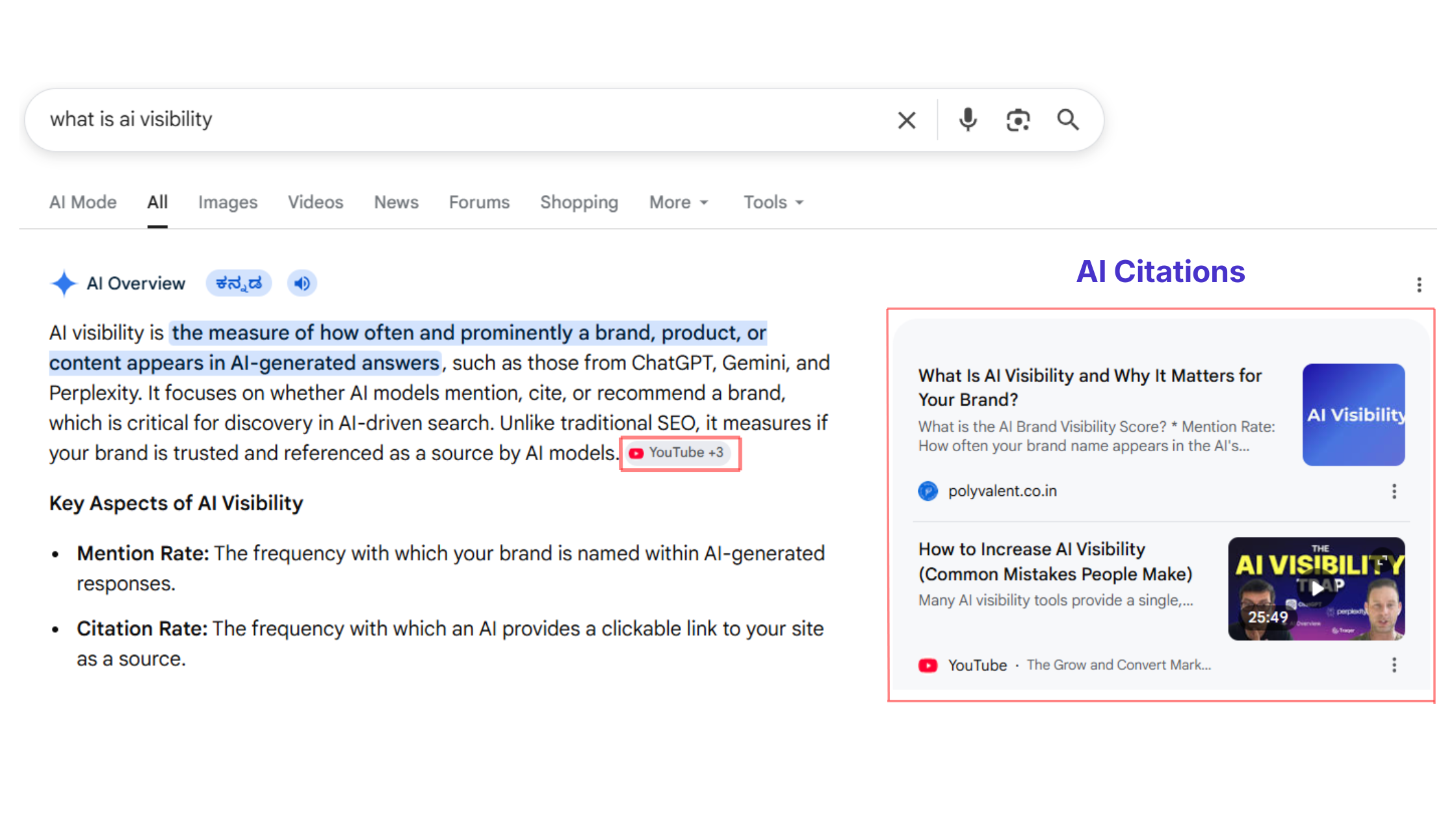
When you ask an AI a question, it doesn’t pull up one website — it builds an answer by combining small pieces of information from many different pages.
Think of it like a chef who doesn’t serve you five different meals. Instead, they take a pinch of salt from one jar, a vegetable from another, and a spice from a third to create a brand-new dish.
These individual ingredients are what we call AI citations — the small pieces of content AI systems pull from different sources to generate answers.
Some of those pages get used, others don’t, and most of the time you never see which ones influenced the final response. That’s why certain websites appear again and again in AI-generated answers, while others are left out completely.
In this blog, we will discuss what AI citations are, how they work, and different ways you can track and analyse them for your own website.
What are AI Citations?
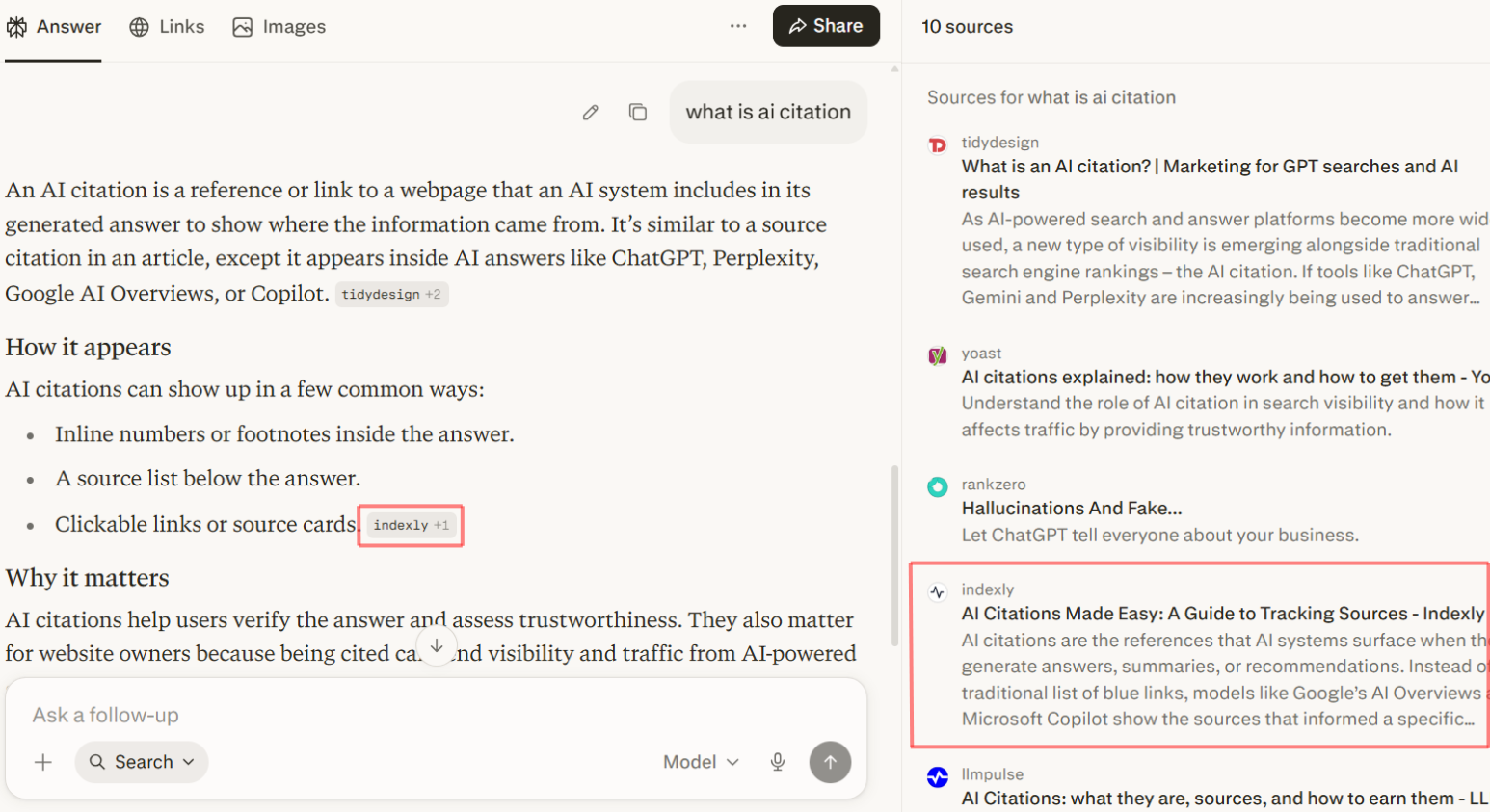
AI citations are references to web pages or online sources that AI systems use when generating answers. These references act as the underlying material the AI draws from to build and support its response.
In some cases, the AI presents these sources as clickable links or references, while in others, they remain unseen even though they still influence the output. Whether visible or not, they help shape the final response generated by the system.
AI citations help you understand:
- Which websites do AI systems rely on
- How often your content is used (AI citation rate)
- Your overall content authority in AI search
Read more about AI Citations: AI Citations Made Easy: A Guide to Tracking Sources
Types of AI Citations
| Type of AI Citation | Meaning | Source Type | How AI Uses It |
|---|---|---|---|
| Informational Citations | References taken from content that explains ideas or provides knowledge | Blogs, articles, guides, educational pages | Used to answer questions, clarify concepts, and support factual explanations |
| Product / Service Citations | References linked to tools, products, or services | Product pages, SaaS websites, service listings, review/comparison pages | Used for suggestions, comparisons, and decision-making responses |
| Multimedia Citations | References based on visual or media content | Images, videos, infographics, charts | Used to strengthen answers with visual context or illustrative examples |
How Important are AI Citations in 2026
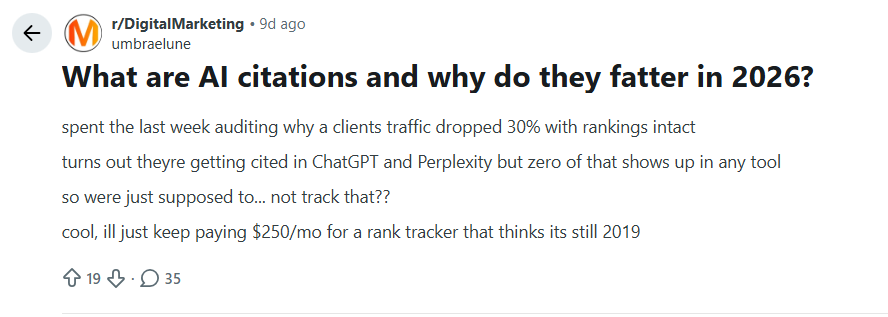
People asking about AI citations highlight their growing importance in AI-driven search and discovery.
AI citations influence how content is surfaced, referenced, and trusted in AI search systems such as Perplexity and other retrieval-based AI tools.
In some systems, they directly determine which sources are shown to users, while in others, they reflect patterns of relevance and content quality learned or retrieved by the model.
Impact on Content Authority
AI systems prioritise content based on relevance, clarity, structure, and usefulness. This means that content that is not highly ranked in traditional SEO may still appear in AI responses if it better answers a query.
AI Citation Rate and Visibility
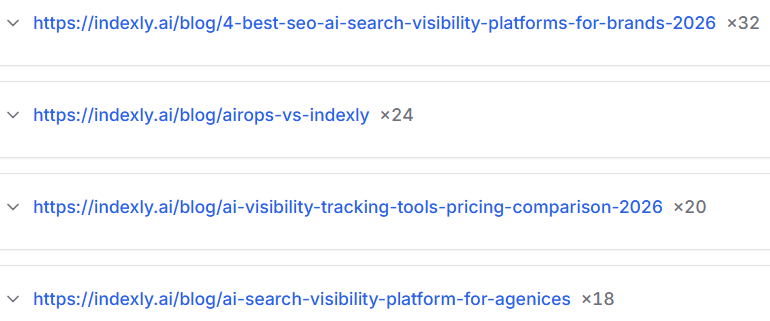
AI citation rate refers to how often a page is referenced or included in AI-generated answers. Higher citation frequency generally indicates stronger visibility in AI-driven search environments, even if the page does not rank highly in traditional search engines.
Risks of Misinformation
AI systems may sometimes use outdated or low-quality sources, which can lead to inaccurate answers. Because of this, maintaining accurate and regularly updated content is important.
How AI Models Generate Citations
AI models create citations by combining learned knowledge with real-time information retrieval, depending on the system design and the mode being used.
In practice, AI does not always “search the web” for every answer. It first relies on patterns and knowledge learned during training, which is built from large-scale datasets collected from websites, books, and other digital sources. This allows the model to respond based on general understanding without needing live access every time.
When real-time retrieval is available, the system can also access live web pages, databases, or indexed content. This enables it to include more recent information and, in some cases, point back to the original sources used in generating the response.
Different AI tools handle this differently. For example, ChatGPT may show citations depending on the mode or browsing features enabled, while Perplexity is built to retrieve and display sources alongside answers by default.
Also Read: AI Citation Analysis: Boosting Search Visibility with Data
5 Methods to Find Which Pages ChatGPT and Perplexity Cite
Understanding which pages are used by AI systems like ChatGPT and Perplexity requires multiple methods because AI platforms do not consistently show all their sources in a direct or complete way.
Perplexity tends to rely more heavily on institutional, government, medical, and publisher sources, accounting for roughly 30% of its citations. - Search Engine Journal
Method 1 – Using Indexly
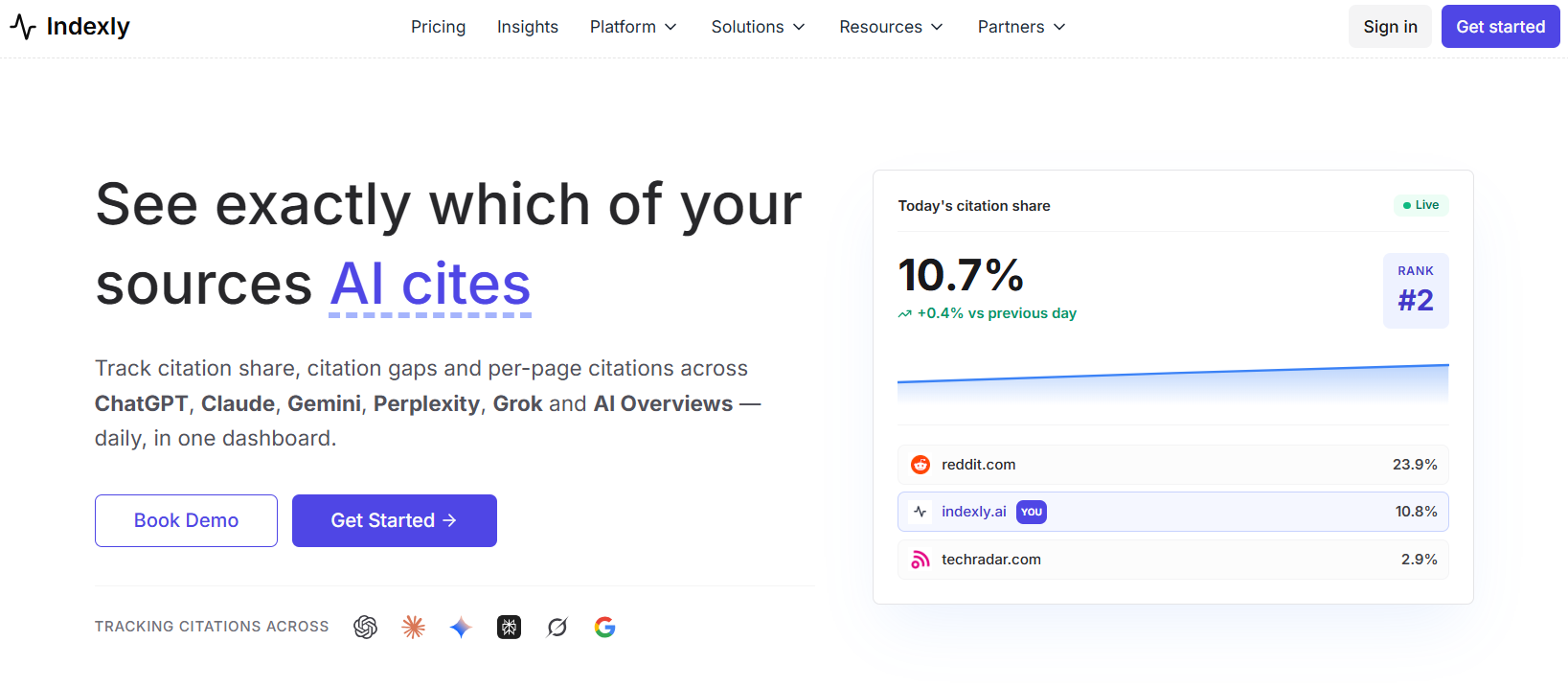
Indexly is an SEO & AI Search Visibility platform that helps you analyse your presence and sentiment with AI Search Analytics, influence AI-generated answers through Content Agents and Reddit signals, and measure real impact with SEO and AI Traffic Analytics.
The AI citation tracker analyses citation data at both domain and URL levels to show which websites are being referenced in AI-generated responses and which pages from your site are being picked up. It is also one of the platforms with AI citation scoring.
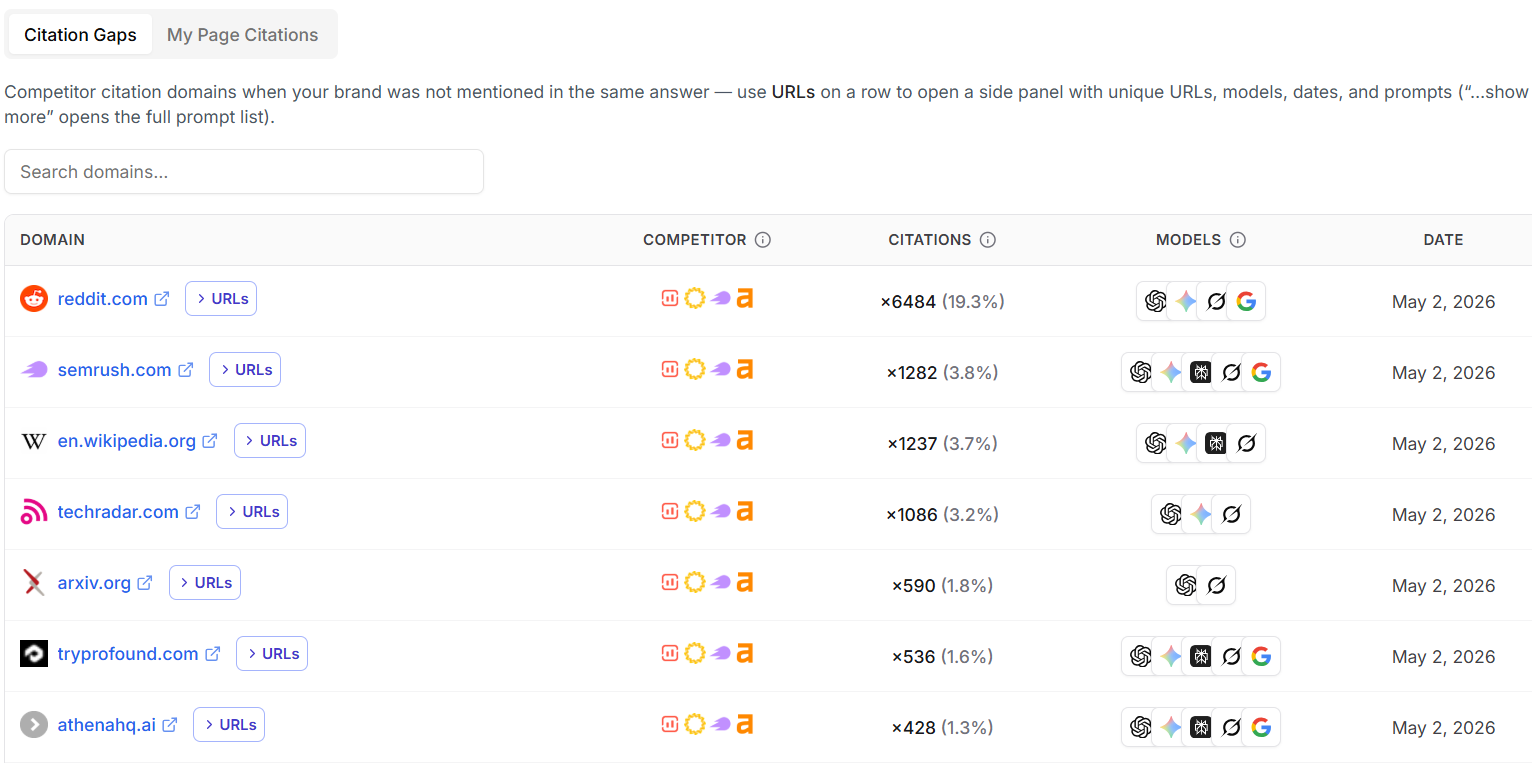
It also highlights competitor domains that appear when your brand is missing, helping you identify content gaps and missed visibility opportunities.
A key feature of Indexly is Citation Gaps, which shows competitor websites being cited instead of your content. It helps you understand which external sources AI systems prefer. You can also view My Page Citations to see exactly which of your URLs are being used across different AI models and time periods.
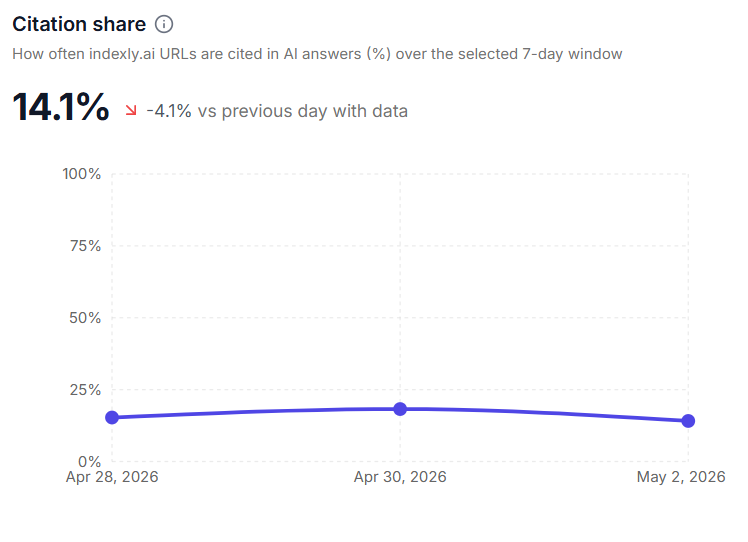
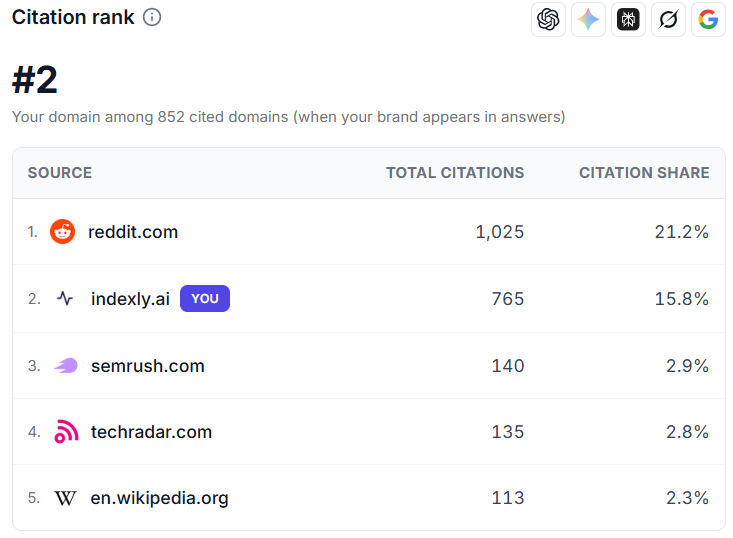
Indexly further breaks down performance using metrics like citation share, citation rank, and model-wise visibility, helping you compare your domain with competitors and track changes in AI visibility over time.
How to Track AI Citations Step by Step
- Open Indexly AI and connect your website or brand
- Navigate to the AI Citation Tracker section
- Explore citation data across AI models such as ChatGPT, Perplexity, and Gemini
- Check “Citation Share” to see how often your domain appears in AI answers
- Use “Citation Rank” to understand your position among all cited domains
- Review “Citation Gaps” to find competitor domains being cited instead of yours
- Open “My Page Citations” to identify which of your URLs are being referenced
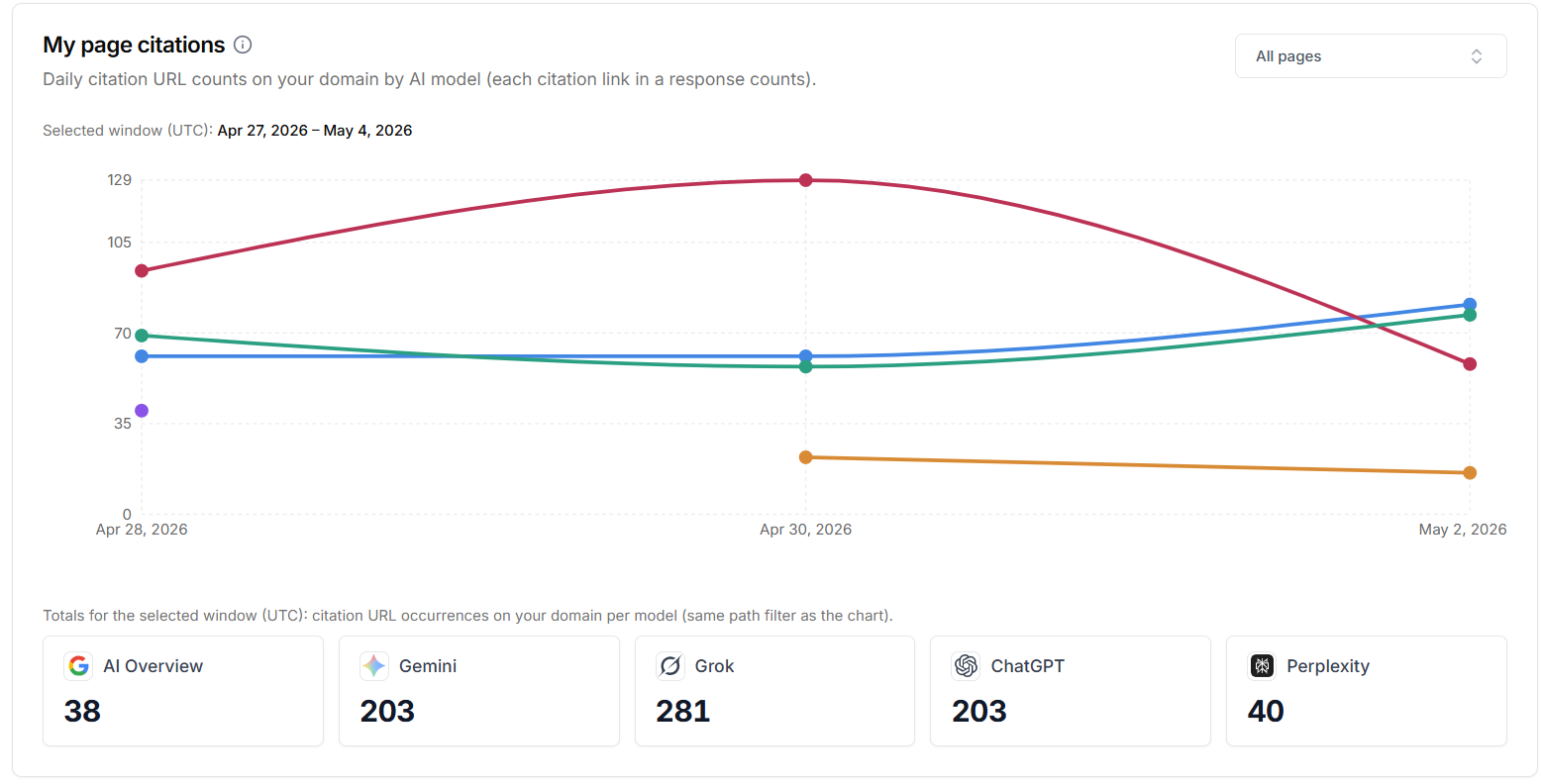
- Apply filters like date range, AI model, and page-level views for deeper analysis
- Use these insights to refine content and improve AI search visibility
Method 2 – Manual AI Search Testing
Manual AI search testing is the process of directly interacting with AI tools to analyse how they respond to specific keywords and what sources influence their answers.
It helps you study real AI behaviour by checking whether citations appear, whether websites are mentioned, or whether certain pages are indirectly used to generate responses.
How to test AI Citations Manually
- Open an AI tool such as ChatGPT or Perplexity and input your target keyword or topic as a real user search query
- Review the full response carefully and check for any links, domains, or source mentions
- Notice if the same websites or references appear repeatedly across different answers
- Ask follow-up questions like “Where did this information come from?” or “What sources support this?” to try to surface citations
- Test different variations of the same query, including short phrases, long-tail keywords, and question formats
- Track and record any recurring domains or pages, as they are likely being used as AI citation sources
Method 3 – Using Server Logs
Server log analysis is a backend-level approach used to understand how AI systems interact with your website in real conditions. Instead of relying on what AI shows in responses, this method focuses on tracking actual visits made by automated systems (AI crawlers) that access your pages for reading, indexing, or retrieval purposes.
While it doesn’t directly confirm whether a page was cited in an AI answer, it provides strong signals about which content is being accessed and potentially used in AI training or response generation.
This method becomes valuable because systems like ChatGPT and Perplexity depend on content retrieval mechanisms that often begin with crawling or structured data access.
Server logs allow you to observe this activity from your own infrastructure instead of guessing from external outputs.
How to do it:
- Access raw server logs from your hosting panel, CDN dashboard, or analytics system
- Identify bot traffic by filtering user-agent strings linked to known AI crawlers or automated systems
- Focus on patterns where specific pages are repeatedly accessed within short time intervals
- Compare which content types (blogs, guides, landing pages) receive the most bot activity
- Cross-check crawl frequency against your top-performing content topics
- Track changes over time to see which pages gradually attract more AI-related visits
Method 4 – Prompt-Based Citation Discovery
Prompt-based citation discovery is a behavioural analysis method where you use structured prompts inside AI tools to indirectly map which sources are most frequently surfaced.
Instead of inspecting backend systems, you observe how AI responds to carefully designed questions and extract patterns from repeated outputs. This helps reveal which types of content AI systems naturally prefer when generating answers.
This approach works particularly well with tools like ChatGPT and Perplexity because their responses shift depending on query framing, wording, and intent signals.
How to do it:
- Build a consistent set of intent-based prompts such as “most reliable resources for [topic]” or “best expert websites on [keyword]”
- Run these prompts multiple times over different sessions to reduce randomness
- Record which domains, blogs, or platforms repeatedly appear across responses
- Organise prompts into categories to form a structured testing library for your niche
- Compare results across different wording styles (question, list, problem-based queries)
- Use recurring patterns to understand which content formats are more likely to be surfaced in AI answers
Method 5 – Competitor and Trend Tracking
Competitor and trend tracking is a strategic method used to understand how visibility is distributed across your niche in AI-generated answers.
Instead of focusing only on your own website, you analyse which competitor pages consistently appear in AI responses and why they are being preferred. This helps you reverse-engineer the content patterns that influence AI citation behaviour.
In systems like ChatGPT and Perplexity, content selection often favours clarity, structure, and topical authority, which makes competitor analysis a powerful optimisation signal.
How to do it:
- Search your core topics inside AI tools and document which competitor domains appear repeatedly
- Break down competitor content formats such as guides, comparison posts, or FAQ-driven pages
- Identify structural patterns like headings, depth, formatting style, and clarity of explanations
- Monitor how competitor visibility changes when you modify prompts or query styles
- Build a tracking system to log consistently appearing domains across multiple topics
- Use insights to refine your own content architecture for stronger AI search visibility
Read: Where AI Cites Reddit for Fintech & B2B Research — April 2026
The Future of AI Citations
AI citations are expected to become more structured and transparent as AI search continues to advance. With the rapid rise of AI-driven search experiences, citations will play a larger role in how information is selected and presented.
As AI search grows, the focus is shifting from showing links to directly generating answers. This makes understanding citation behaviour more important for visibility and influence.
In the coming years, we are likely to see more transparent citation systems, where AI tools clearly show which sources were used in generating responses.
At the same time, new tools and standards will emerge to track AI visibility and measure how often content is referenced across different AI platforms.
Overall, AI citations are becoming an essential part of digital visibility, similar to how rankings work in traditional SEO.
Read: 11 Best AI Citation Tracking Tools for B2B Marketing Teams (UPDATED 2026)
Conclusion
AI citations describe how AI systems use external content to generate responses in search results. They determine which sources influence answers and how information is selected across different platforms.
Understanding them involves learning how citations are formed, how they can be tracked, and why they matter for visibility in AI-powered search.
As AI search continues to grow, tracking and optimising for AI citations will become increasingly important for maintaining strong visibility and authority.
FAQs
What are AI citations?
AI citations happen when AI systems use information from external websites to generate answers for user queries. Sometimes the source is shown directly, and other times the information is used without explicit attribution. In simple terms, it refers to how AI systems draw from web content to build their responses.
How to Verify AI Citations?
AI citations can be validated by reviewing visible source references in AI responses, using AI citation monitoring tools, analysing server logs for AI crawler behaviour, conducting structured prompt testing, and tracking which competitor domains consistently appear across AI-generated answers.
Does ChatGPT cite sources?
It varies based on how it is being used. In some cases, especially with browsing or retrieval-enabled modes, ChatGPT may include links or mention sources. However, in many standard responses, it does not display direct citations even though external information may have influenced the output.
How does Perplexity show citations?
Perplexity AI usually provides direct source links along with its answers. These citations appear as clickable references, allowing users to see exactly where the information came from and verify the original content easily.
How can I track AI citations for my website?
Tracking AI citations typically involves using AI visibility tools, running structured prompt tests, and analysing server logs for bot activity. Platforms like Indexly AI can also help by showing which pages are being referenced in AI-generated responses, making it easier to monitor visibility across AI systems.
What is AI citation rate?
AI citation rate refers to how often a website or specific page is used as a reference in AI-generated answers. It helps measure visibility in AI search environments and shows how frequently your content is being selected compared to other sources.
How often am I cited by AI?
Your AI citation frequency is shaped by factors like content quality, structure, relevance, and how often AI systems retrieve your pages. You can measure it using AI visibility tools such as Indexly, along with prompt testing and server log analysis to see how frequently your content appears in AI-generated responses.