
Last updated: August 3, 2026 | Author: Deepti Masurkar | Tools evaluated: 10
The best Answer Engine Optimization (AEO) tools in 2026 are Indexly, Similarweb, Profound, Peec AI, Scrunch AI, Semrush AI Toolkit, AIclicks, BrightEdge, AthenaHQ, and Otterly.ai. These platforms help businesses improve AI visibility across ChatGPT, Gemini, Claude, Perplexity, and Google AI Overviews through prompt tracking, citation monitoring, content optimization, and AI search analytics. This guide compares their features, pricing, strengths, and ideal use cases to help you choose the right platform.
| Tool | Best For | Key Strength |
|---|---|---|
| Indexly | Marketing teams, agencies, and SaaS | AI visibility tracking, citation monitoring, prompt tracking, content optimization, Content creation, Content refresh, LinkdeIn presence, AI Traffic analytics, Reddit monitoring, |
| Similarweb | Enterprise analytics | AI traffic analytics, competitive intelligence, and AI visibility insights |
| Profound | Large enterprises | Deep AI visibility analytics, prompt intelligence, and enterprise reporting |
| Peec AI | AI search monitoring | Prompt tracking, citation analysis, and competitor benchmarking |
| Scrunch AI | Technical SEO teams | AI agent optimization and AI crawler intelligence |
| Semrush AI Toolkit | Existing Semrush users | AI visibility integrated with SEO workflows |
| AIclicks | SMBs and lean teams | AI content generation and prompt monitoring |
| BrightEdge | Enterprise SEO | Google AI Overviews tracking and entity optimization |
| AthenaHQ | Revenue-focused teams | AI visibility, attribution, and automated recommendations |
| Otterly.ai | Beginners and small businesses | Affordable AI visibility and citation tracking |
"Answer Engine Optimization is not the future of search — it is the present. In 2026, the businesses that understand how AI answer engines work and invest in optimizing for them will enjoy a growing share of visibility, authority, and traffic." - Rand Fishkin | Founder, SparkToro & Co-founder, Moz
How We Evaluated These AEO Tools
We compared each AEO platform using the factors that matter most for improving AI search visibility:
- AI visibility tracking
- Prompt tracking
- Citation tracking
- AI traffic analytics
- Content optimization capabilities
- Supported AI models
- Ease of use
- Pricing and scalability
- Integrations and reporting
Our recommendations are based on each platform's features, capabilities, and best-fit use cases for marketers, agencies, and enterprise teams.
Why Trust This Comparison
We regularly research AI search platforms, publish comparisons and reviews, and track AI visibility, citations, prompt performance, and AI traffic across major AI search engines. This comparison is updated regularly to reflect new features and market changes.
Best Answer Engine Optimization (AEO) Tools in 2026
1. Indexly
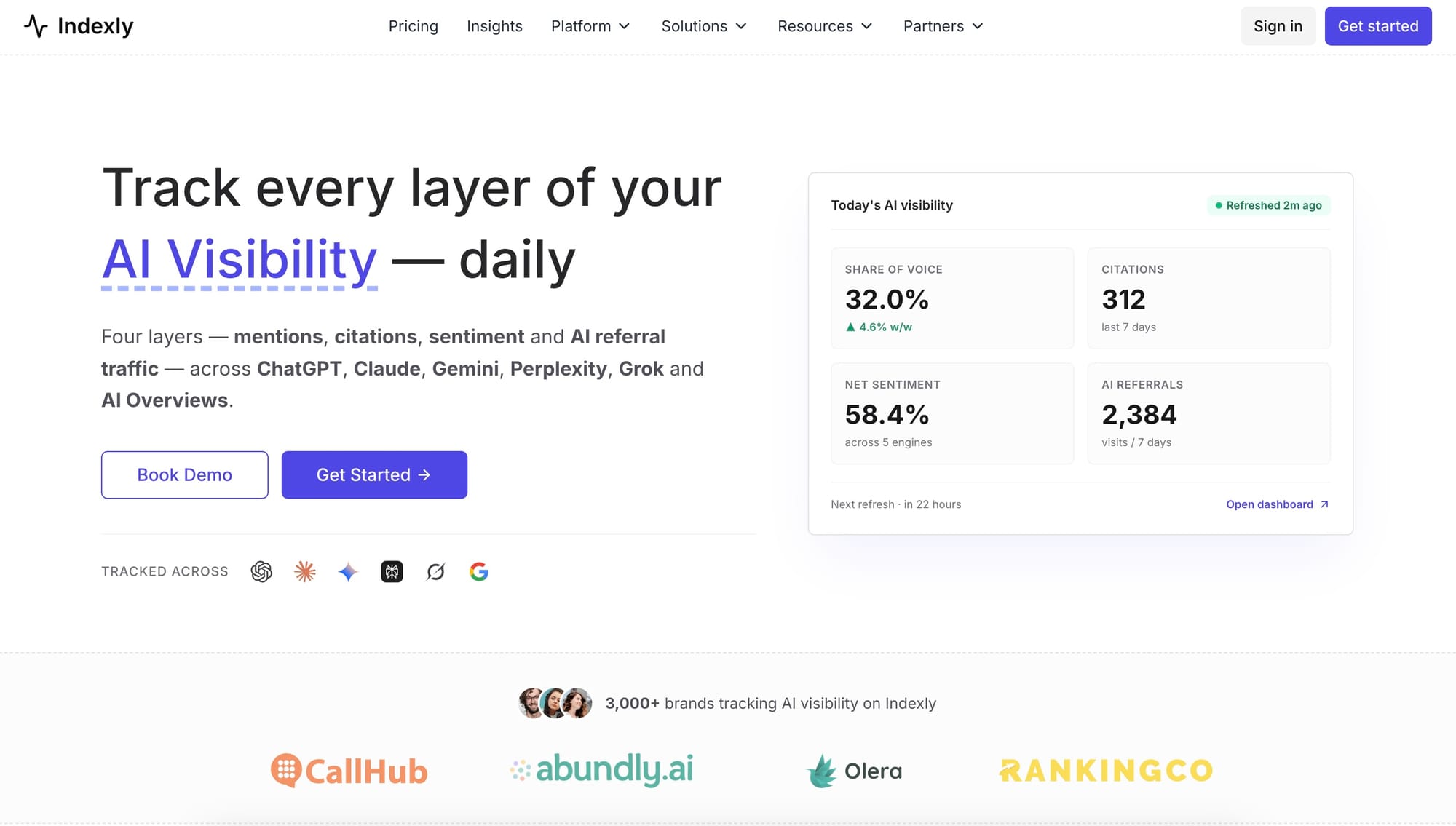
Indexly unifies real-time insights from search engines, AI platforms, and competitive data to identify visibility gaps and convert them into actionable growth opportunities.
It tracks AI visibility, prompts, citations, and brand sentiment across ChatGPT, Claude, Gemini, Grok, and Perplexity to show how brands appear in AI-generated responses.
For AEO, it strengthens AI answer inclusion by identifying missing prompt coverage, mapping citation patterns that shape LLM outputs, and surfacing content gaps that reduce visibility.
Its Content Agents support GEO/AEO workflows by generating and optimising content designed for both search engines and AI systems.
The platform also tracks AI-driven referral traffic, evaluates site crawlability and indexing readiness for AI systems.
Reddit monitoring and LinkedIn tracking provide external influence signals that affect how AI models interpret and surface brand information.
Key strengths
- AI visibility tracking across major AI engines (ChatGPT, Gemini, Perplexity, Grok, Claude)
- Prompt-level monitoring, brand sentiment, and URL citation analysis
- Content Agents for GEO/AEO execution
- LLM text structure analysis and AI readiness audits
- AI traffic analyser for attribution of assistant-driven referrals
- LinkedIn presence tracking to capture thought-leadership influence signals
- Reddit monitoring for community-driven mentions that influence AI citations
- White-label capabilities and flexible pricing suited for agencies
Pros
- All-in-one AI search visibility platform
- AI traffic and citation analytics
- Reddit and LinkedIn monitoring
- Content generation and optimization
- Agency-friendly reporting
Cons
- Some advanced AI features are available on higher-tier plans
- Best suited for teams focused on AI search
AI Models Supported: ChatGPT, Gemini, Claude, Perplexity, Grok, Google AI Overviews
Pricing: Starts at $99/month
Best for: Brands, agencies, and marketing teams looking for an all-in-one platform to track AI visibility, citations, prompts, competitors, and optimise content for AI search.
2. Similarweb
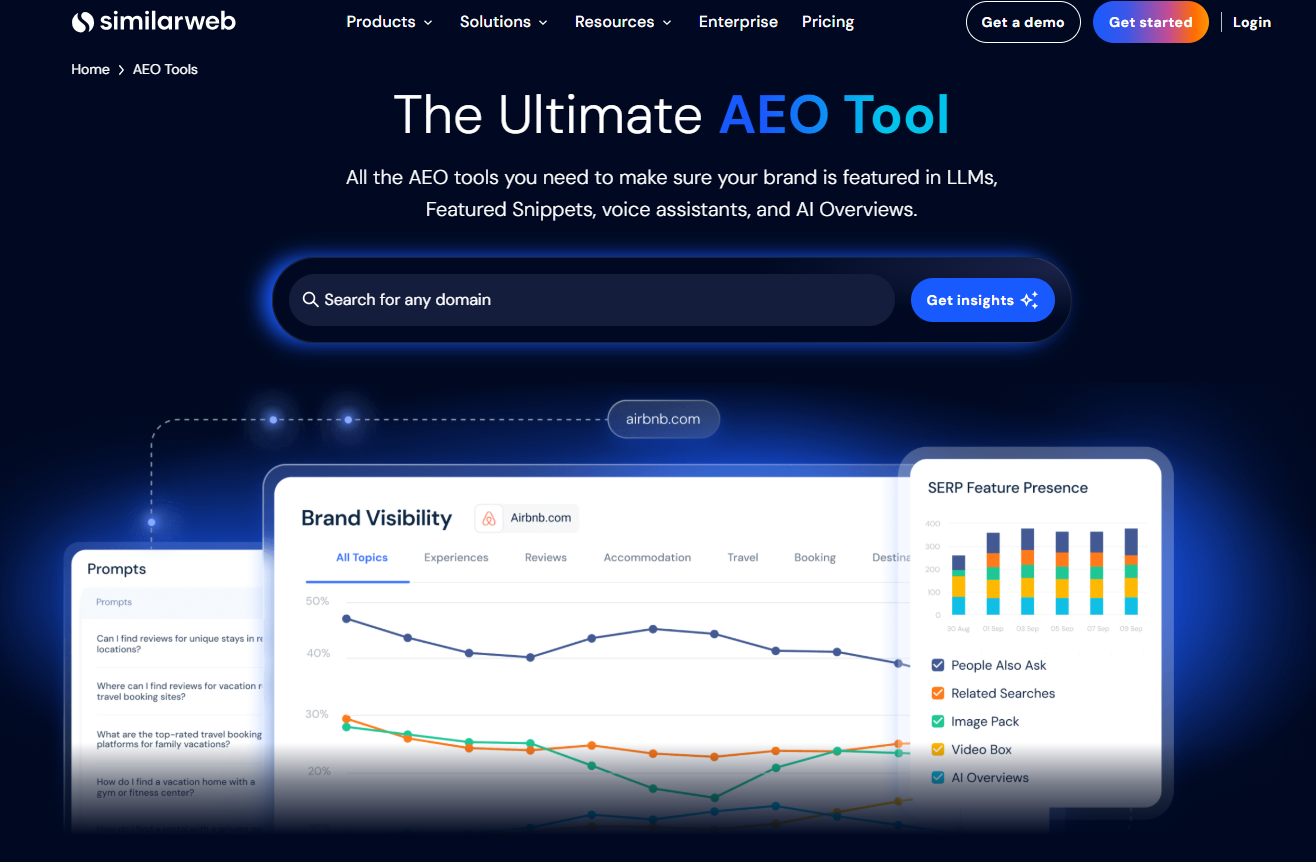
Similarweb AEO tools focus on visibility measurement and competitive intelligence. It enables the brands to track how they appear in AI-generated answers, identify which sources influence those responses, and analyze traffic driven by AI platforms. The platform combines prompt tracking, citation analysis, sentiment monitoring, and competitor benchmarking to evaluate performance across answer engines.
Key strengths
- Coverage across ChatGPT, Gemini, Perplexity, Claude, DeepSeek, Copilot, AI Overviews, and AI Mode
- Prompt-level visibility and share-of-voice tracking
- Citation-source analysis to identify domains shaping AI answers
- Brand sentiment monitoring
- AI referral traffic insights
- Competitive benchmarking powered by Similarweb’s search and traffic intelligence
- Focus on analytics rather than content creation or workflow execution
Pros
- Excellent competitive benchmarking
- AI traffic analytics
- Strong reporting
- Enterprise-ready
Cons
- Limited content optimization
- Premium pricing
AI Models Supported: ChatGPT, Gemini, Claude, Perplexity, Copilot, DeepSeek, Google AI Overviews
Pricing: Custom pricing
Best for: SEO, content, and digital intelligence teams that need AI visibility tracking and competitive insights, especially larger organizations with established content operations.
"Companies should absolutely be experimenting with AEO visibility, but they shouldn't neglect SEO to do so."
3. Profound
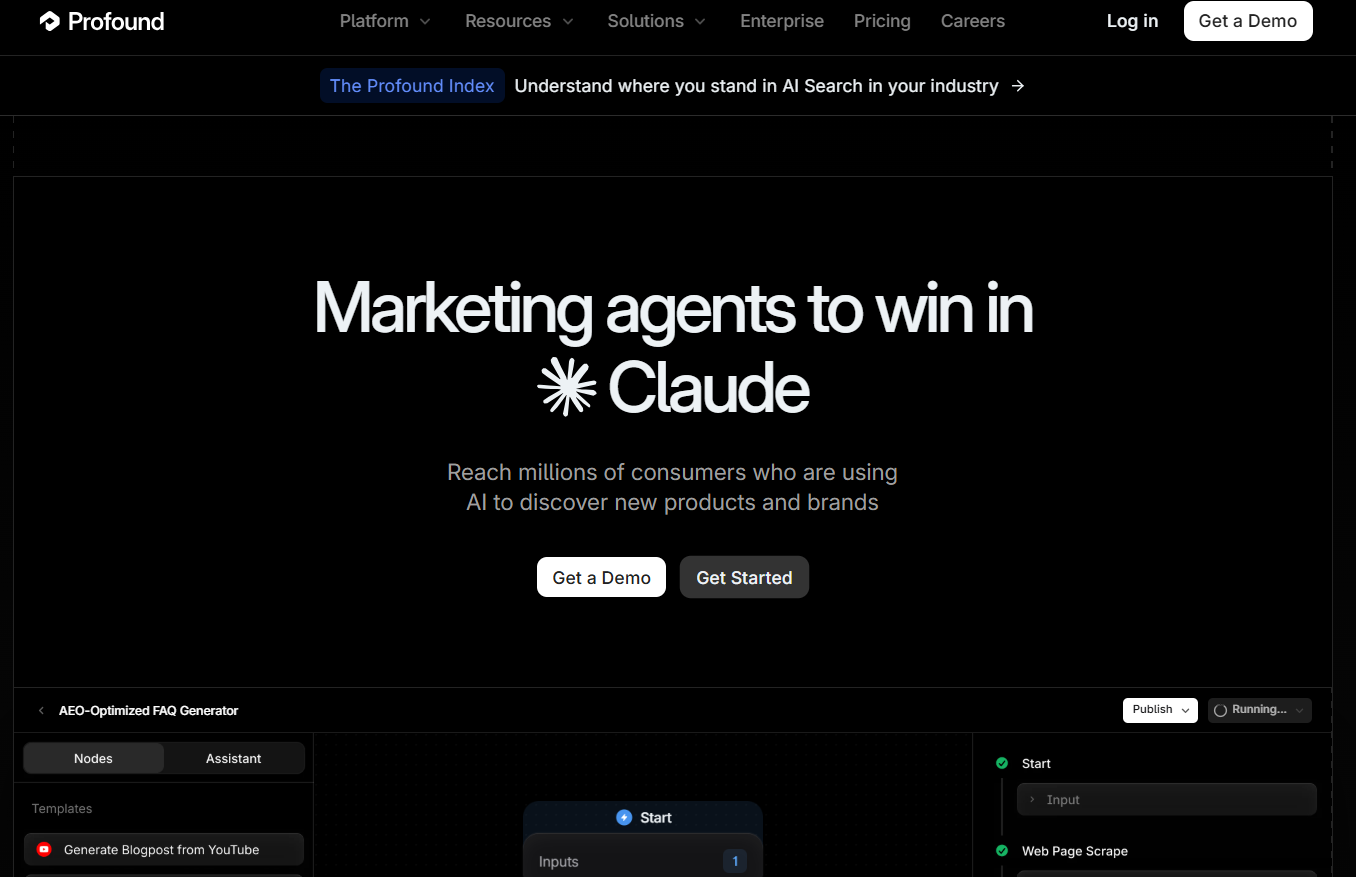
Profound AI is built for teams that want depth over simplicity. It processes large volumes of real prompt data across multiple AI engines to reconstruct how models are actually answering users in the wild. The platform is less about surface-level dashboards and more about structured intelligence, designed for teams that treat AI search as a core data problem.
Key strengths
- Tracks and monitors brand mentions, citations, and recommendations
- Real prompt data sourced from panel-based user behaviour, reflecting genuine queries used in AI search environments
- Agent-driven workflows that support building and automating multi-step AI processes without code
- Structured content briefs (Profound Actions) that translate AI conversations and citation data into actionable content plans
- Enterprise-ready architecture with integrations like GA4, BigQuery, and Tableau, designed for secure, large-scale, compliant deployment
Pros
- Deep AI visibility and prompt intelligence across multiple AI search engines
- Real user prompt data for more accurate insights
- Strong competitor and citation analysis
- Enterprise-grade integrations (GA4, BigQuery, Tableau)
- Workflow automation with AI agents and structured content briefs
Cons
- Premium enterprise pricing
- Steeper learning curve for new users
- Primarily focused on analytics rather than content creation
- Better suited for larger organizations than small businesses
- Limited transparency around pricing without contacting sales
AI Models Supported: ChatGPT, Gemini, Claude, Perplexity, Copilot, DeepSeek, Google AI Overviews
Pricing: Custom (See our detailed pricing review)
Best for: Enterprises and serious growth teams that already track SEO and want rigorous AI visibility intelligence.
"The way people discover, evaluate, and trust software has fundamentally changed. As buyers turn to answer engines for fast, direct guidance, there's a rising demand from companies for software solutions that power their AEO strategies. At Profound, we've built our platform around the real questions customers ask and how AI interprets and cites brands. The recent recognition as a Leader in G2's Winter 2026 Grid® Report for this emerging category reflects both the momentum of AEO innovation and the results our customers are seeing as they gain greater visibility, accuracy, and control in the age of AI." - Trevor Pyle | Head of Marketing, Profound
4. Peec AI
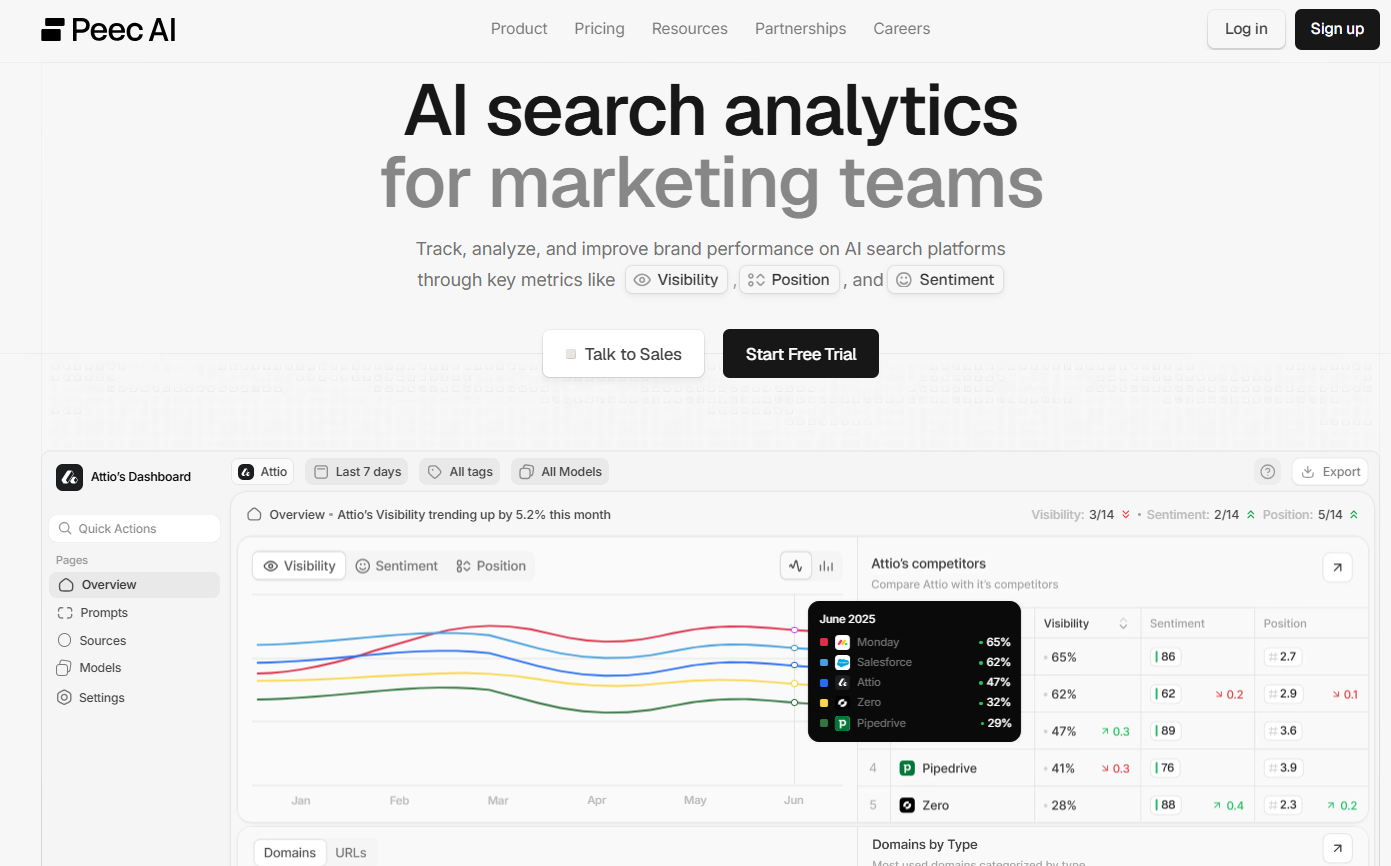
Peec AI focuses on clarity in AI visibility measurement. It helps teams see when and how their brand appears inside AI-generated answers, alongside competitor presence and citation patterns across major AI engines. The emphasis is on clean reporting, consistent tracking, and making AI search performance easy to understand without heavy setup or complexity.
Key strengths
- Prompt-level visibility tracking across ChatGPT, Perplexity, Gemini, and DeepSeek
- Competitor benchmarking and domain/URL-level citation source analysis
- Multi-market and multi-language comparisons for global brands
- Native reporting integrations, including Looker Studio, CSV exports, and API access
- Actions feature that surfaces prioritized owned and earned media opportunities to help bridge insights and execution
Pros
- Easy-to-use dashboard
- Prompt tracking
- Competitor analysis
- Multi-market support
Cons
- Limited content optimization
- Pricing scales with usage
AI Models Supported: ChatGPT, Gemini, Perplexity, DeepSeek
Pricing: Custom (See our detailed pricing review)
Best for: SEO, content, brand, and agency teams that already know they need AI search monitoring and value analytics depth plus regional breakdowns.
5. Scrunch AI
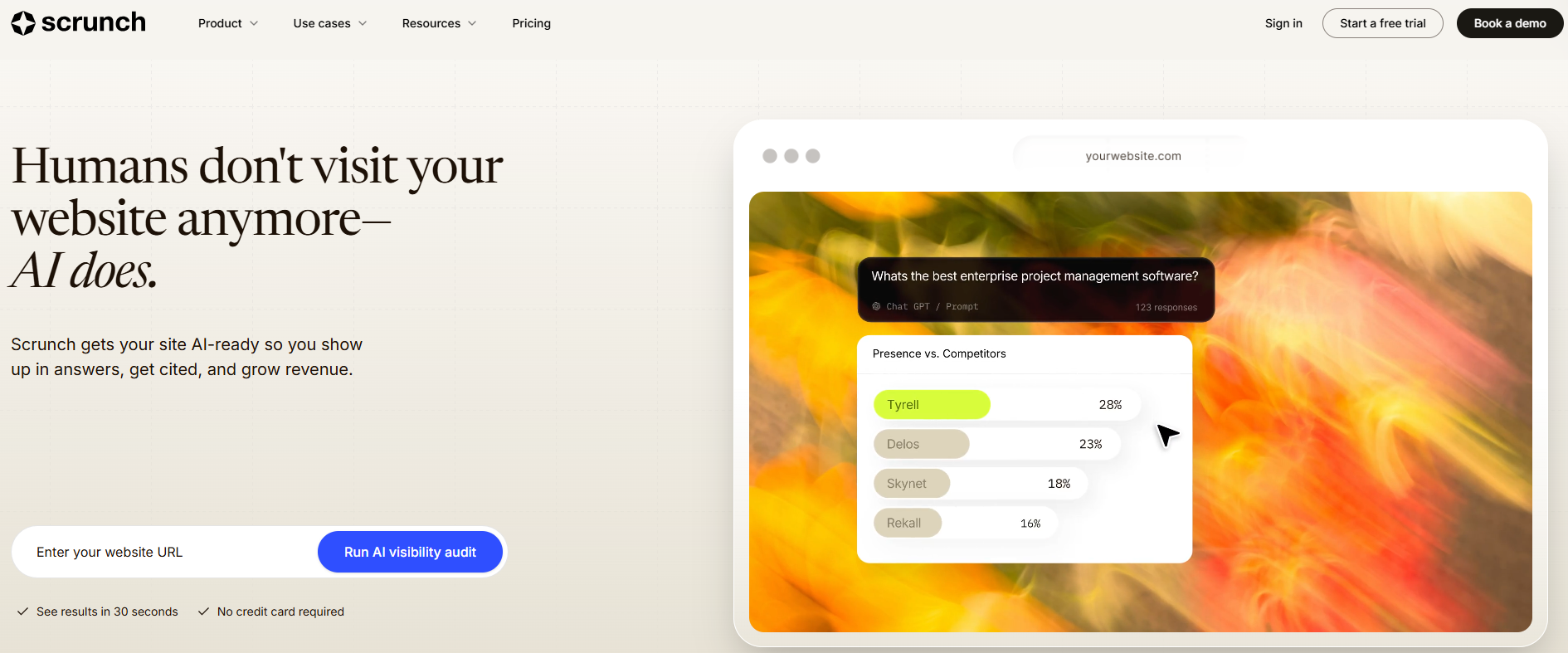
Scrunch AI approaches AEO from the perspective of AI agent accessibility and visibility, helping brands understand how AI systems consume, interpret, and reference their content. In addition to monitoring and citation analysis, it offers site intelligence, AI search insights, and optimization capabilities aimed at improving presence across AI-driven search experiences. Its Agent Experience Platform (AXP) focuses on delivering content in a format that is easier for AI agents to process while maintaining the user experience.
Key strengths
- Agent Experience Platform (AXP) to optimize how AI agents access and interpret website content
- AI agent traffic analysis to understand how AI systems interact with digital properties
- Site maps and content intelligence to reveal how AI models consume website content
- Monitoring and citation tracking to measure brand visibility across AI-generated responses
- Actionable insights to improve AI search performance and presence
- Product-level visibility tracking for AI-driven shopping experiences
- AI search trend analysis to identify emerging patterns and behaviors across AI platforms
Pros
- AI agent optimization
- Crawler intelligence
- Enterprise features
- Site intelligence
Cons
- Enterprise-focused
- No built-in content generation
AI Models Supported: Supports major AI search platforms including ChatGPT, Gemini, Claude, and Perplexity
Pricing: Custom (See our detailed pricing review)
Best for: Enterprise organizations, agencies, and technical SEO teams that need advanced visibility into AI agent interactions and tools to optimize content for AI-driven discovery at scale.
6. Semrush (AI Visibility Toolkit)
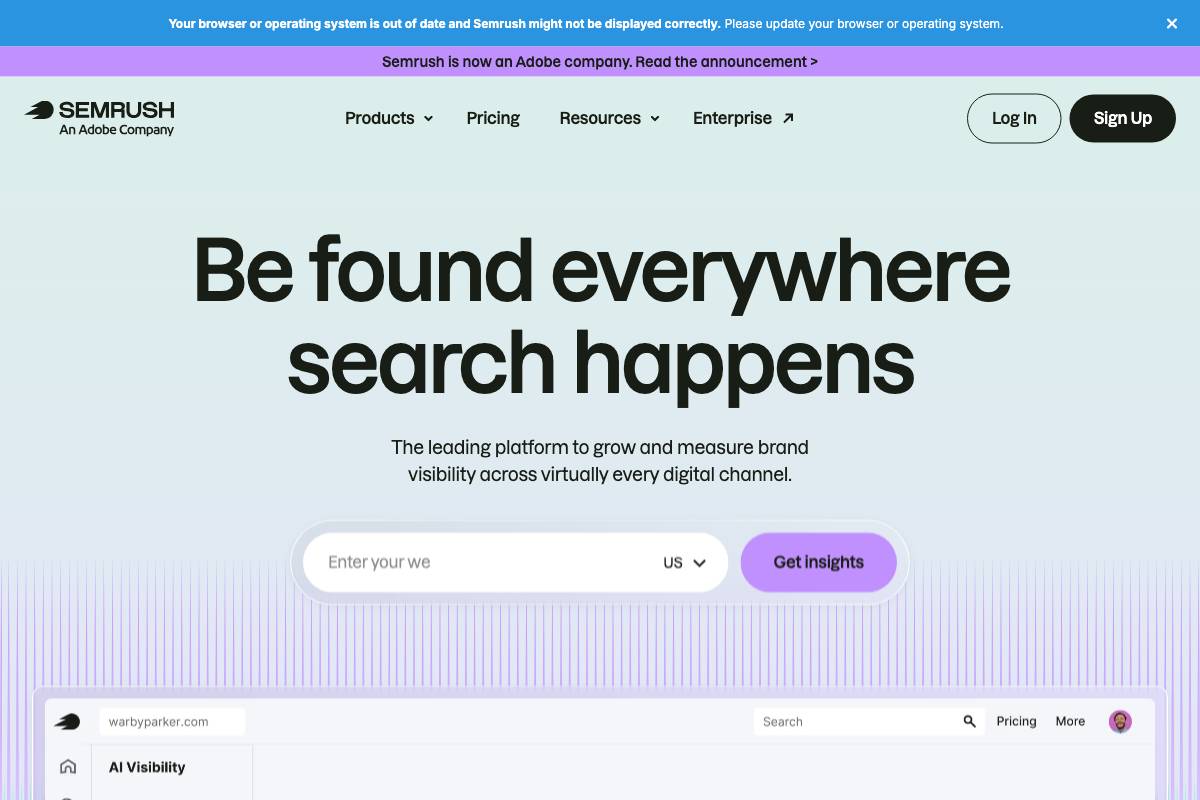
Semrush extended its established SEO suite into AI search with the AI Visibility Toolkit, launched in late 2025 and folded into the "Semrush One" subscription. For the millions of teams already living in Semrush, it's the path of least resistance into AEO, one place to see traditional rankings and AI presence side by side.
Key strengths
- AI Visibility Score benchmark to measure brand presence across AI search platforms
- Prompt Research that brings keyword-style analysis to AI search, including topic volume, difficulty, and intent
- Brand Performance reports covering share of voice, sentiment, competitor positioning, and AI-driven recommendations
- AI Search Health checks that identify issues such as blocked AI bots, and crawlability limitations
Pros
- Familiar interface
- AI visibility score
- Prompt research
- Strong SEO integrations
Cons
- Requires Semrush subscription
- AI Toolkit is an add-on
AI Models Supported: Google AI Overviews, AI Mode, ChatGPT, Gemini, Perplexity
Pricing: Semrush subscription + AI Toolkit add-on
Best for: Existing Semrush customers and SEO-led teams that want AI visibility integrated into a familiar workflow rather than a standalone tool.
7. AIclicks
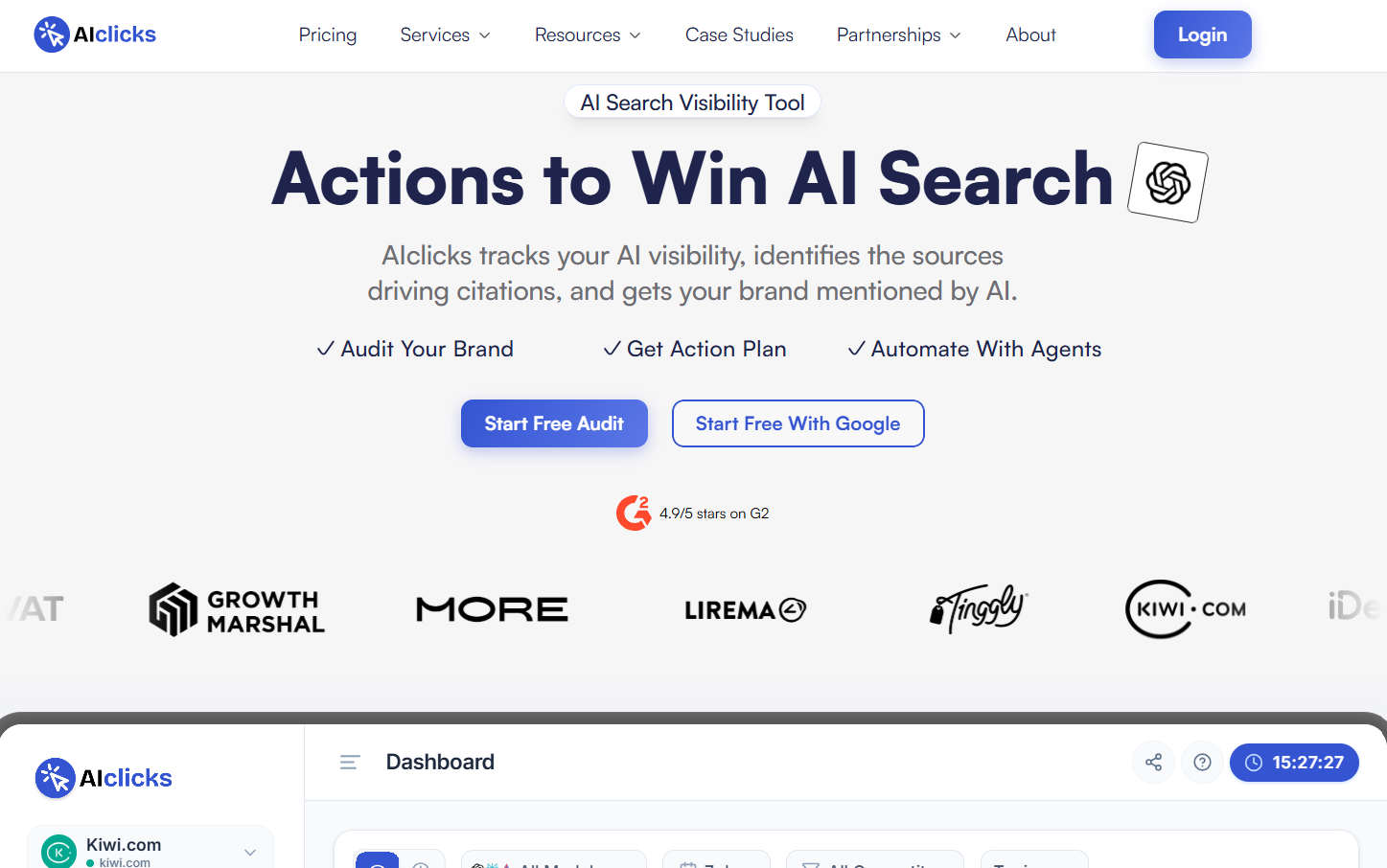
AIclicks blends monitoring with execution — it doesn't just tell you where you're cited, it deploys AI agents to generate content aimed at improving answer visibility. That combination, at an accessible price point with unlimited seats, makes it a pragmatic pick for lean teams that need to act, not just observe.
Key strengths
- Prompt-level visibility tracking across ChatGPT, Perplexity, and Gemini
- GEO audits and competitor benchmarking to identify visibility gaps
- Source intelligence to understand which domains and references influence AI-generated answers
- AI-assisted content recommendations to improve answer visibility
- Agent-driven content generation that connects insights with execution
- Prompt-level insights showing where brands surface and why specific sources are cited
Pros
- Content generation
- Prompt tracking
- GEO audits
- Unlimited seats
Cons
- Smaller ecosystem
- Limited enterprise reporting
AI Models Supported: ChatGPT, Gemini, Perplexity
Pricing: Starts around $59/month
Best for: SMBs, in-house teams, and smaller agencies that want monitoring and content execution in one affordable platform, with seat counts that don't penalise collaboration.
8. BrightEdge
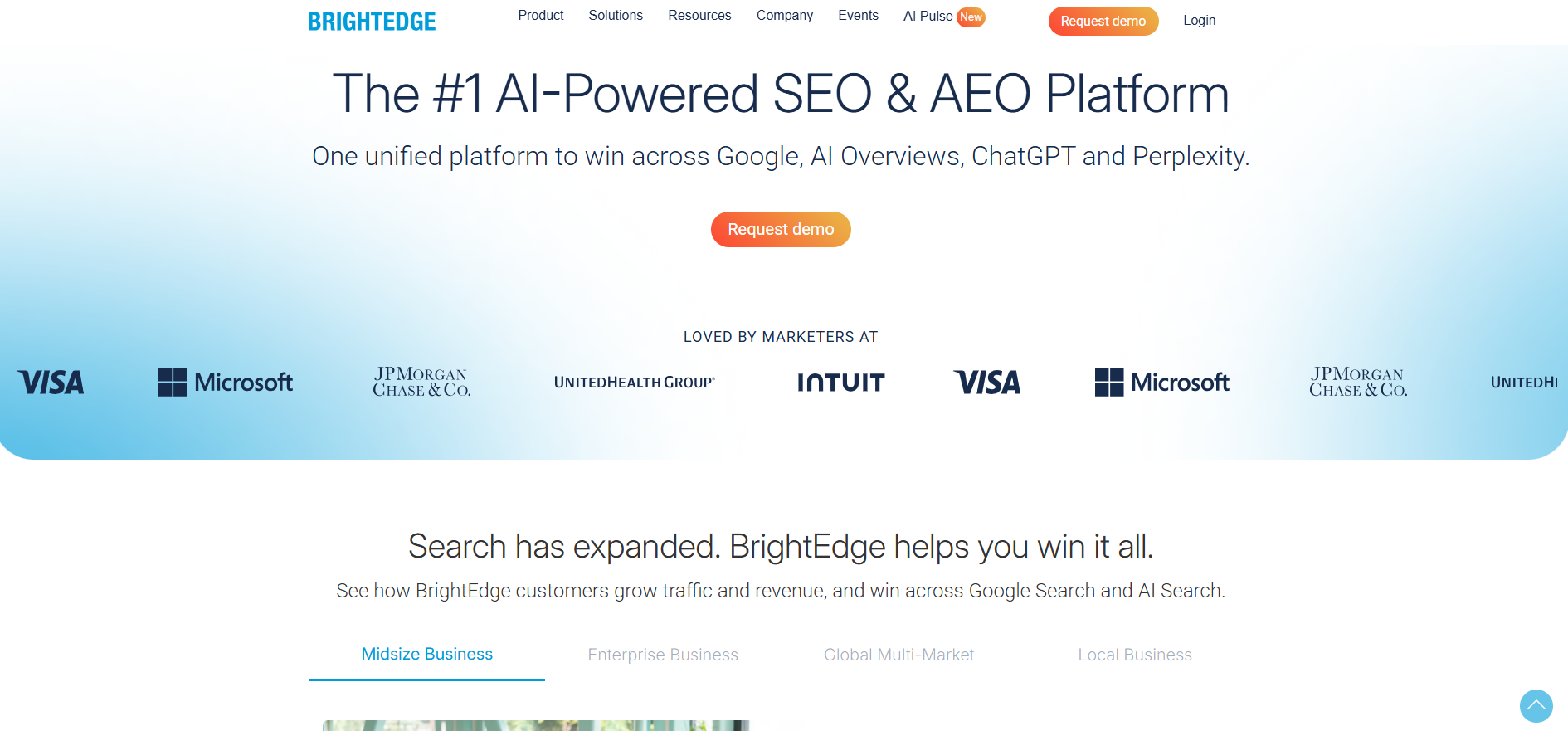
BrightEdge is the veteran enterprise SEO platform that has leaned hard into the technical architecture of AI search. Its proprietary Generative Parser (BGP) delivers granular, daily intelligence on Google AI Overviews — including which queries trigger them and how your content gets synthesised — backed by some of the most-cited industry research on AIO behaviour.
Key strengths
- AI Overview tracking with industry-level visibility insights
- Entity optimization and knowledge graph alignment for AI and search interpretation
- AI Catalyst with strategic recommendations for content and SEO actions
- Integration with enterprise CMS platforms like Adobe Experience Manager and Sitecore
- Insights into AI Overview citations, including signals beyond top-ranking result
Pros
- Enterprise SEO
- AI Overview insights
- Entity optimization
- CMS integrations
Cons
- Enterprise pricing
- Less suitable for SMBs
AI Models Supported: Google AI Overviews and enterprise AI search insights
Pricing: Custom Pricing
Best for: Large enterprises with sophisticated, process-mature search teams that want to dominate the knowledge graphs and AI Overviews feeding generative answers, while extending existing SEO operations rather than replacing them.
9. AthenaHQ
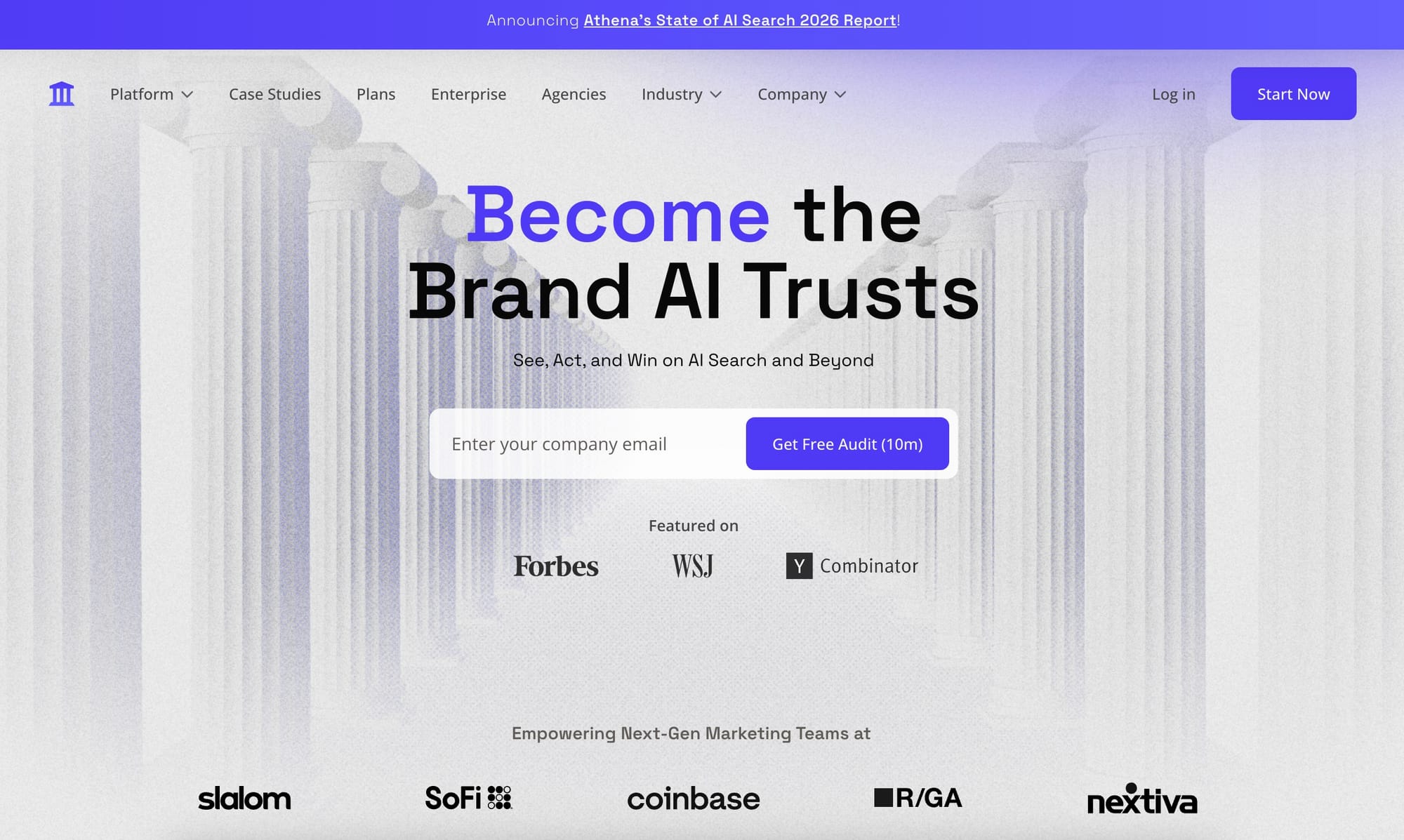
AthenaHQ is a Y Combinator–backed GEO platform founded by alumni of Google Search and DeepMind, built to connect AI visibility to business outcomes. It moves past passive rank tracking toward automated execution and ROI measurement, which makes it stand out among monitoring-only peers.
Key strengths
- Multi-engine tracking across ChatGPT, Claude, Perplexity, and Gemini with share of voice, citation, and sentiment insights
- Action Center with autonomous agents that identify content gaps and suggest optimisations at scale
- Citation prediction engine (ACE) to estimate likelihood of being referenced based on on-page and off-page signals
- Revenue attribution through integrations with Shopify and Google Analytics
- Regional and geographic breakdowns of AI visibility performance
- “Ask Athena” interface that converts visibility data into actionable, board-ready insights
Pros
- Revenue attribution
- AI visibility tracking
- Action Center
- Regional insights
Cons
- Enterprise pricing
- Newer platform
AI Models Supported: ChatGPT, Claude, Gemini, Perplexity
Pricing: Starts at $95/ month
Best for: Marketing and SEO teams adapting to AI search that want execution and financial attribution baked in — especially global brands needing region-by-region visibility and e-commerce teams tying AI presence to sales.
10. Otterly.ai
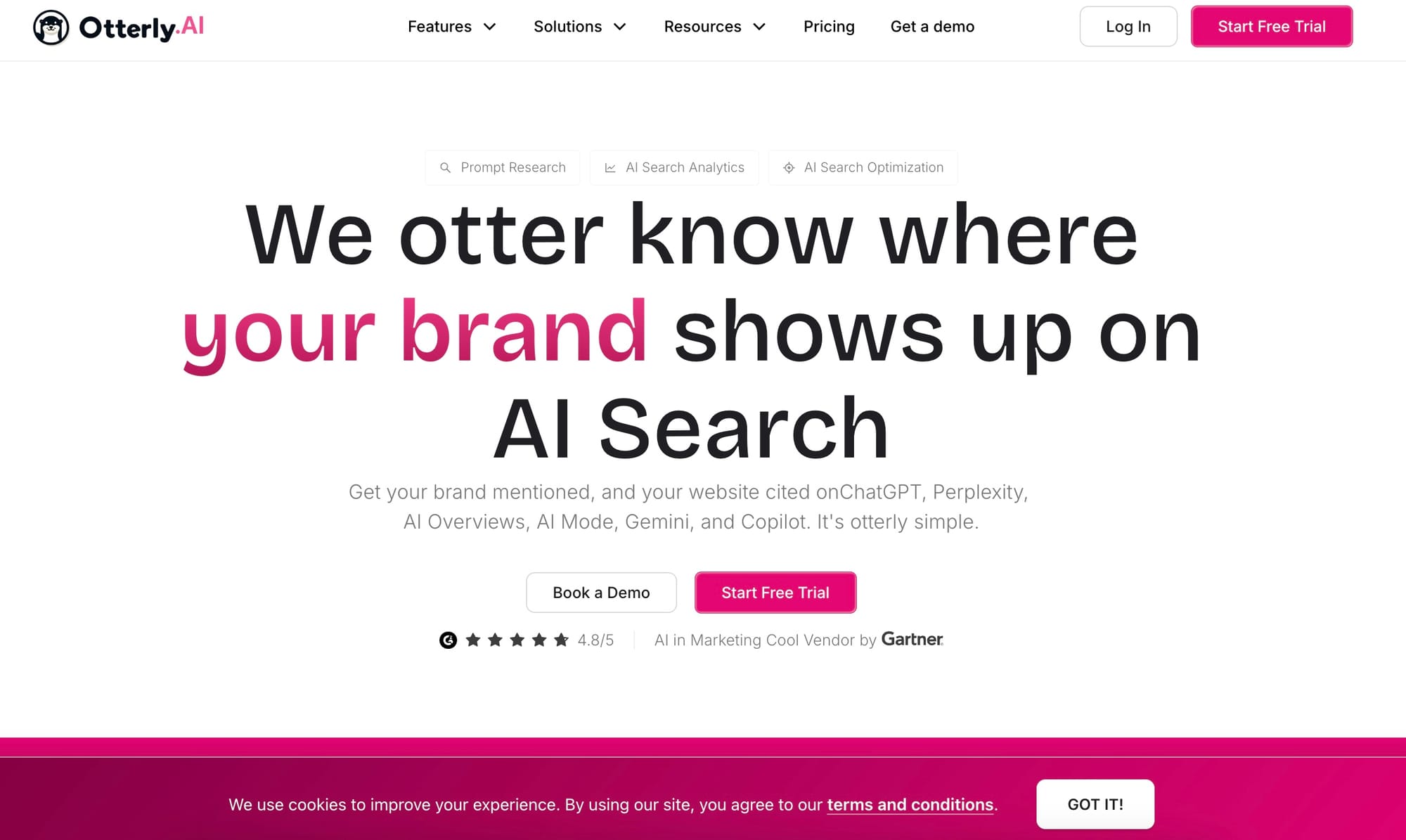
Otterly is the friendliest on-ramp in the category — a clean, self-serve AI search monitor with the lowest entry price in the market and a real free trial. It won't out-depth the enterprise platforms, but it's one of the easiest tools to adopt and show value fast.
Key strengths
- Daily prompt monitoring across Google AI Overviews, AI Mode, ChatGPT, Perplexity, Gemini, and Copilot
- Brand Visibility Index with citation and link analysis
- GEO audits with SWOT-style insights
- Keyword-style prompt discovery for AI search research
- Looker Studio export for reporting and dashboards
- Multi-brand workspaces designed for agencies
- Integration via Semrush App Center with scalable pricing tiers and add-ons
Pros
- Easy setup
- Affordable
- Prompt monitoring
- Agency workspaces
Cons
- Fewer advanced analytics
- Limited optimization features
AI Models Supported: Google AI Overviews, AI Mode, ChatGPT, Gemini, Perplexity, Copilot
Pricing: Starts at $29/month
Best for: Solo marketers, budget-conscious teams, and agencies that want a low-friction way to start measuring mentions, citations, and GEO performance — particularly anyone already in the Semrush ecosystem.
Conclusion
Answer Engine Optimization (AEO) is becoming essential as more buyers rely on ChatGPT, Gemini, Claude, Perplexity, and Google AI Overviews to discover products and services. The right AEO tool can help you understand where your brand appears, identify missed opportunities, track citations, monitor AI visibility, and optimize content for AI search.
If you need an all-in-one platform that combines AI visibility tracking, prompt monitoring, citation analytics, AI traffic analytics, content optimization, and external influence signals, Indexly is a strong choice. Enterprise organizations may prefer platforms like Profound, BrightEdge, or Similarweb for deeper analytics, while smaller teams can start with Otterly.ai or AIclicks.
Ultimately, the best AEO tool depends on your goals, budget, and workflow. Choose a platform that not only measures your AI search performance but also helps you improve it over time through better content, stronger citations, and broader prompt coverage.
FAQs
1. What is an Answer Engine Optimization (AEO) tool?
An Answer Engine Optimization (AEO) tool helps brands monitor and improve their visibility across AI-powered search platforms such as ChatGPT, Gemini, Claude, Perplexity, and Google AI Overviews. These tools track prompts, citations, AI traffic, and brand mentions to help businesses increase their presence in AI-generated answers.
2. Which is the best AEO tool in 2026?
The best AEO tool depends on your needs. Indexly is a strong choice for all-in-one AI visibility tracking and content optimization, while Profound and BrightEdge are better suited for enterprise teams. Otterly.ai is a good option for smaller businesses and beginners.
3. How is AEO different from traditional SEO?
SEO focuses on improving rankings in traditional search engines, while AEO focuses on increasing a brand's visibility in AI-generated answers by optimizing content, authority, and citation potential.
4. Which AI platforms do AEO tools support?
Most leading AEO platforms support ChatGPT, Gemini, Claude, Perplexity, Google AI Overviews, and, in some cases, Grok, Copilot, and DeepSeek.
5. Do AEO tools improve AI rankings?
AEO tools don't directly control AI rankings. Instead, they help identify content gaps, monitor citations, track prompt visibility, and recommend optimizations that can improve the likelihood of being cited in AI-generated responses.
6. What features should I look for in an AEO tool?
Look for AI visibility tracking, prompt monitoring, citation tracking, AI traffic analytics, content optimization, competitor analysis, integrations, and reporting capabilities.
7. Which AEO tool is best for agencies?
Agencies typically benefit from platforms that offer multi-client management, white-label reporting, and AI visibility tracking. Indexly is a strong option because it combines monitoring, content optimization, and reporting in one platform.
8. Which AEO tool is best for enterprise businesses?
Enterprise organizations often choose platforms like Profound, BrightEdge, Similarweb, or Scrunch AI because they provide advanced analytics, integrations, and large-scale reporting.
9. Can I track AI citations across multiple AI models?
Yes. Many AEO platforms allow you to monitor citations across ChatGPT, Gemini, Claude, Perplexity, Google AI Overviews, and other supported AI search platforms.
10. What metrics should I track for AEO?
The most important metrics include AI visibility, Share of Voice, prompt coverage, citation frequency, AI referral traffic, sentiment, and competitor visibility.
11. Are AEO tools suitable for small businesses?
Yes. Many AEO platforms offer plans designed for startups and small businesses. Tools like Indexly, AIclicks, and Otterly.ai provide features that help smaller teams improve AI search visibility without enterprise-level complexity.
12. How do I choose the right AEO tool?
Choose a platform based on your goals, budget, supported AI models, reporting needs, content optimization capabilities, and whether you need features such as prompt tracking, citation monitoring, AI traffic analytics, or competitor benchmarking.