
Looking for a Semrush review? Today’s marketing teams use multiple tools for SEO, keyword research, content, backlinks, and AI visibility, making it harder to connect everything into a single strategy.
Semrush is one of the leading platforms addressing this. It positions itself as an all-in-one digital marketing suite, combining SEO, keyword research, competitor analysis, content marketing, paid campaigns, and AI visibility tracking in one ecosystem. It is widely used by agencies and enterprises for its depth and scale. The key question is whether it truly simplifies marketing or brings everything into one complex system.
This review goes beyond features to explore where Semrush delivers value, where its modular structure can feel heavy, and how effectively it supports modern needs like AI-driven search visibility and content performance.
By the end, you’ll understand whether Semrush fits your workflow or if a more streamlined approach would be a better match.
What stands out most is how Semrush is evolving beyond traditional SEO into AI visibility. The AI Visibility toolkit gives us a clearer picture of how our content is being surfaced in emerging search experiences, which is critical right now. It’s helped us stay proactive instead of reactive as search behavior shifts.
-Louis R.Director, Web
What is Semrush?
Semrush is a brand visibility platform that helps businesses enhance and control their presence across search engines, content platforms, social media, and other digital channels. It combines tools for SEO, competitor insights, advertising, and content optimisation, enabling marketers to manage, execute, and track their digital growth more effectively.
Read: 10 Best AI Search Visibility Platforms for Brands 2026
Who is Semrush for?
Semrush is ideal for SEO specialists, marketers, agencies, and in-house teams who rely on detailed insights for keyword research, technical SEO, competitor tracking, and content marketing. It works especially well for managing multiple projects or client accounts.
Overall, it suits users who prefer a comprehensive, data-focused marketing platform and are comfortable using a feature-rich tool.
Semrush Features
Semrush provides a comprehensive suite of tools aimed at enhancing brand visibility, improving organic performance, and driving better digital marketing results across both traditional search engines and AI-powered platforms.
AI SEO (Brand Performance)
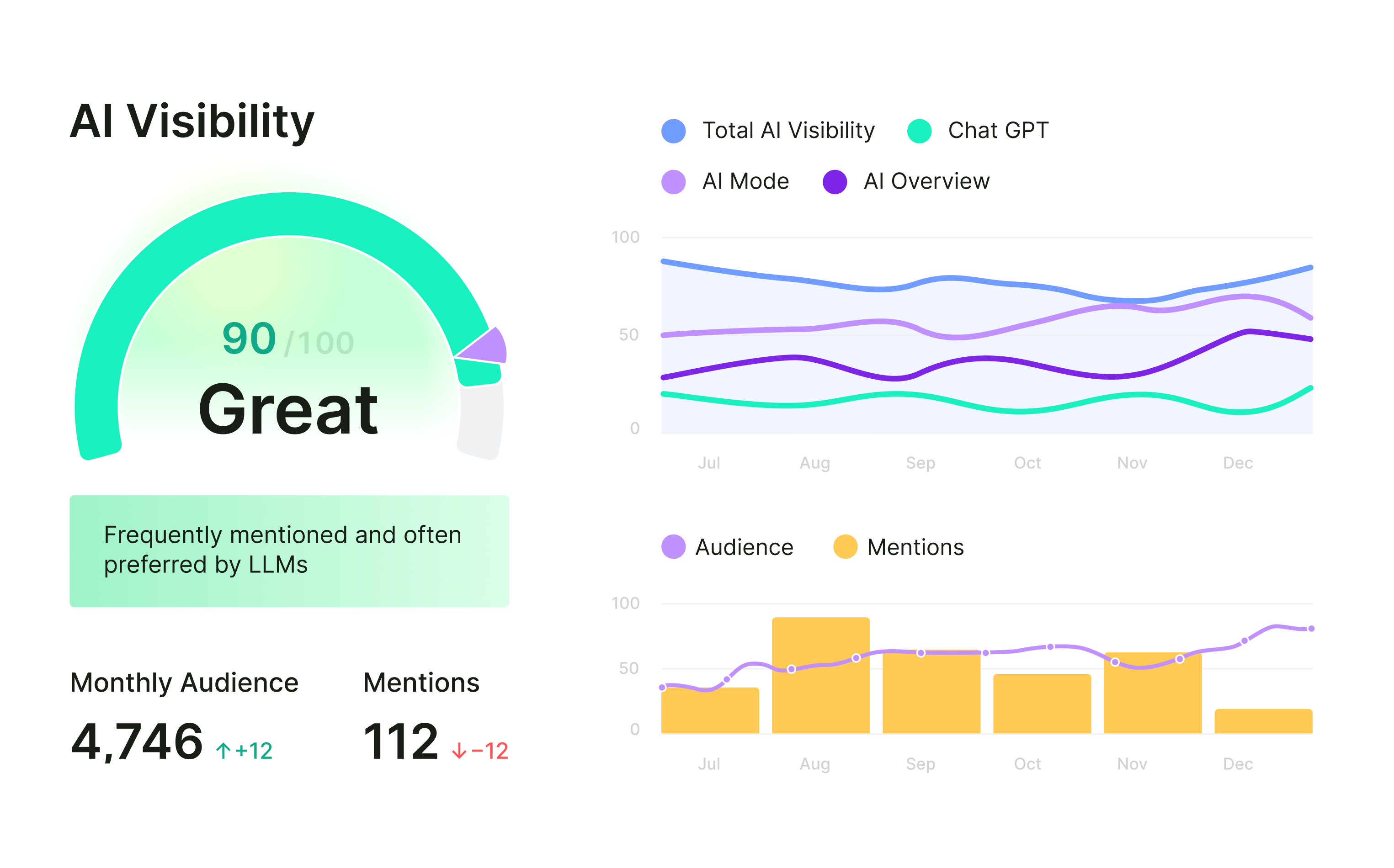
Semrush’s AI SEO tools help businesses track and improve visibility across AI-driven search environments like ChatGPT and Google AI Mode. It analyses how brands appear in AI-generated responses, monitors mentions, and evaluates performance.
It also includes AI site health and technical SEO auditing features that identify issues affecting crawlability, performance, and content quality. This helps marketers understand how AI systems interpret their content, compare visibility with competitors, and improve presence in AI answers while strengthening overall SEO health.
Keyword Research
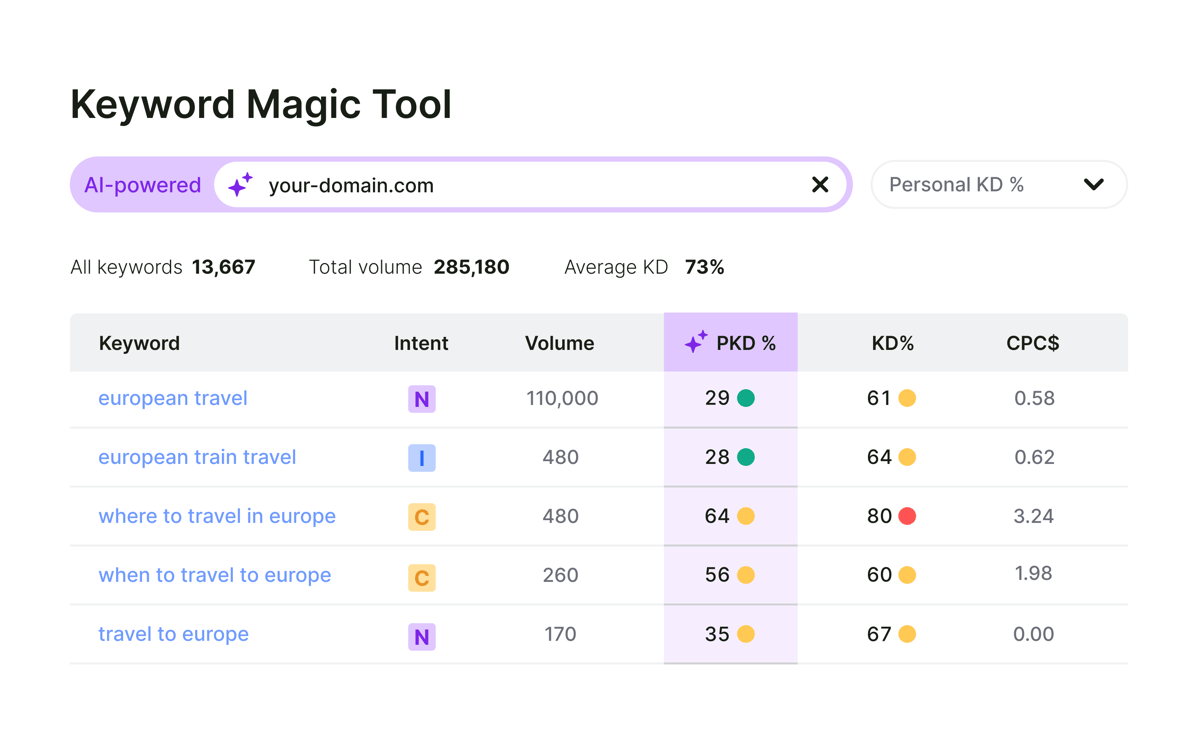
The keyword research toolkit helps users discover high-impact keywords based on search demand, competition, and user intent. It identifies keyword opportunities that can drive targeted traffic and improve rankings. By focusing on both short-tail and long-tail keywords, businesses can create content aligned with what users are actively searching for.
Enterprise SEO Solutions
Semrush Enterprise provides advanced SEO capabilities for large organisations that require scalability and deeper insights. It includes customised data solutions, automation, and integration with internal systems. This makes it suitable for enterprises managing multiple websites, large datasets, and complex marketing strategies.
Link Building
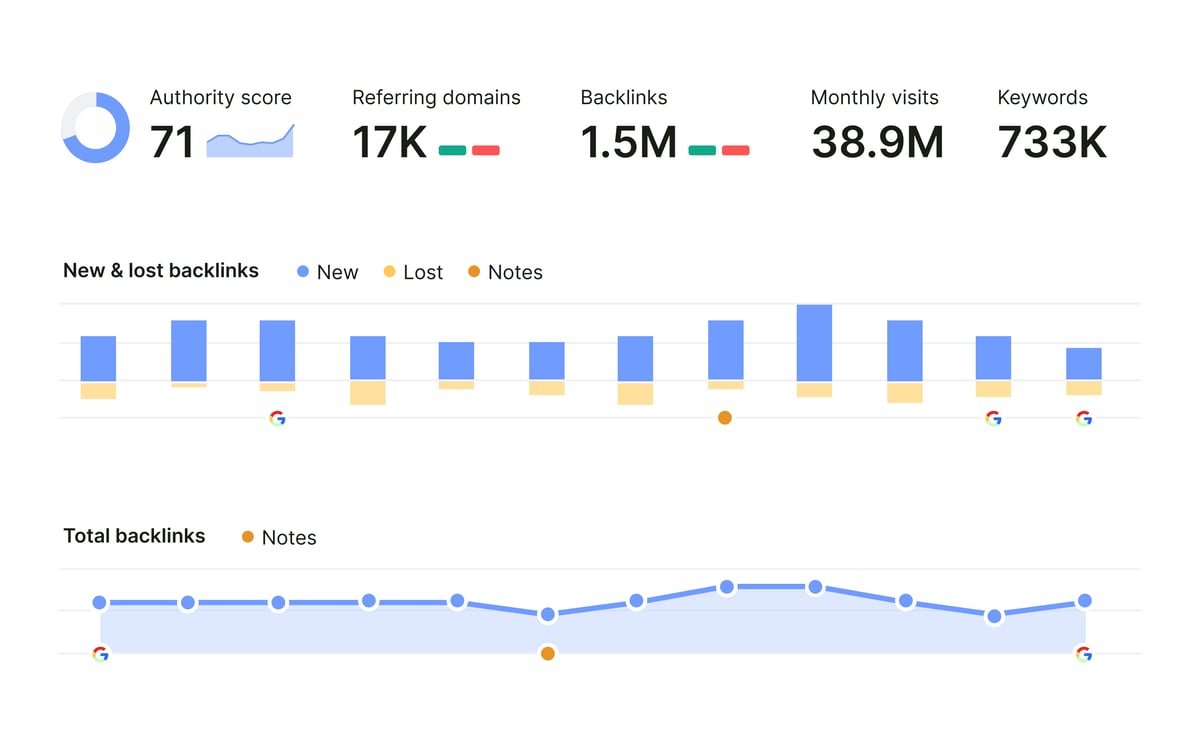
The link building toolkit helps businesses acquire high-quality backlinks to strengthen domain authority and improve organic performance. It identifies backlink opportunities, manages outreach campaigns, and monitors existing links to ensure a strong and healthy backlink profile.
Rank Tracking
Semrush’s rank tracking feature monitors keyword positions across search engines. It provides daily updates on rankings, allowing businesses to measure performance trends and identify areas for improvement. This helps marketers understand which strategies are working and where adjustments are needed.
Technical SEO
The technical SEO tools scan websites to identify issues that may impact search performance. These include crawl errors, broken links, site speed issues, and indexing problems. By fixing these technical barriers, businesses can improve website accessibility and search engine rankings.
Competitive Analysis
Semrush enables businesses to analyse competitor strategies, including keywords, backlinks, and traffic sources. This helps marketers understand what competitors are doing successfully and uncover gaps they can leverage to gain a competitive advantage.
Market Analysis and Traffic Insights
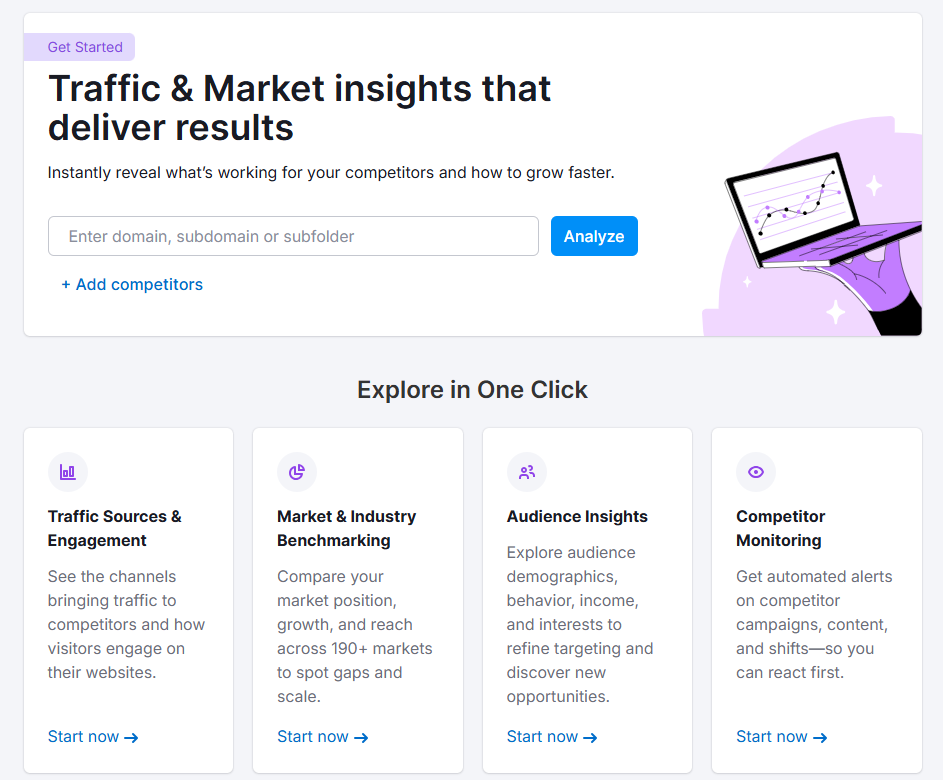
This feature provides insights into website traffic data, audience behavior, and market trends. Businesses can analyse where their traffic comes from, how users interact with their site, and how they compare with competitors. These insights support better decision-making and audience targeting.
Competitor SEO Analysis
Semrush allows detailed benchmarking against top competitors in search results. It compares keyword rankings, backlink profiles, and overall SEO performance, helping businesses refine their strategies to outperform others in their niche.
Local SEO
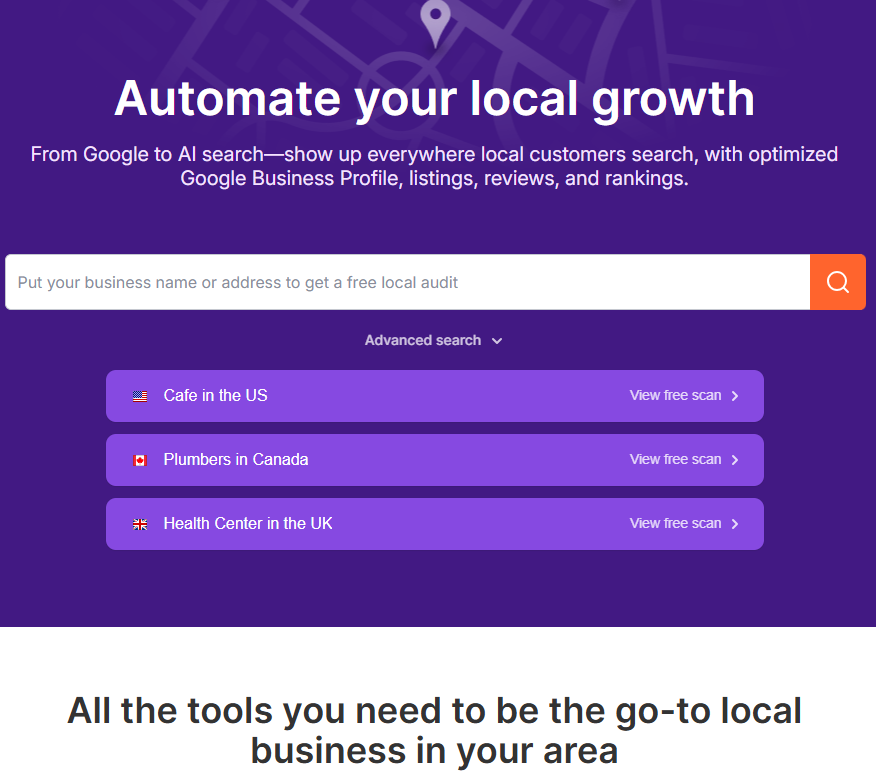
The local SEO tools help businesses improve visibility in location-based searches. This includes managing local listings, optimizing for map results, and ensuring accurate business information across directories. It helps attract nearby customers and improve local search rankings.
Advertising (PPC Tools)
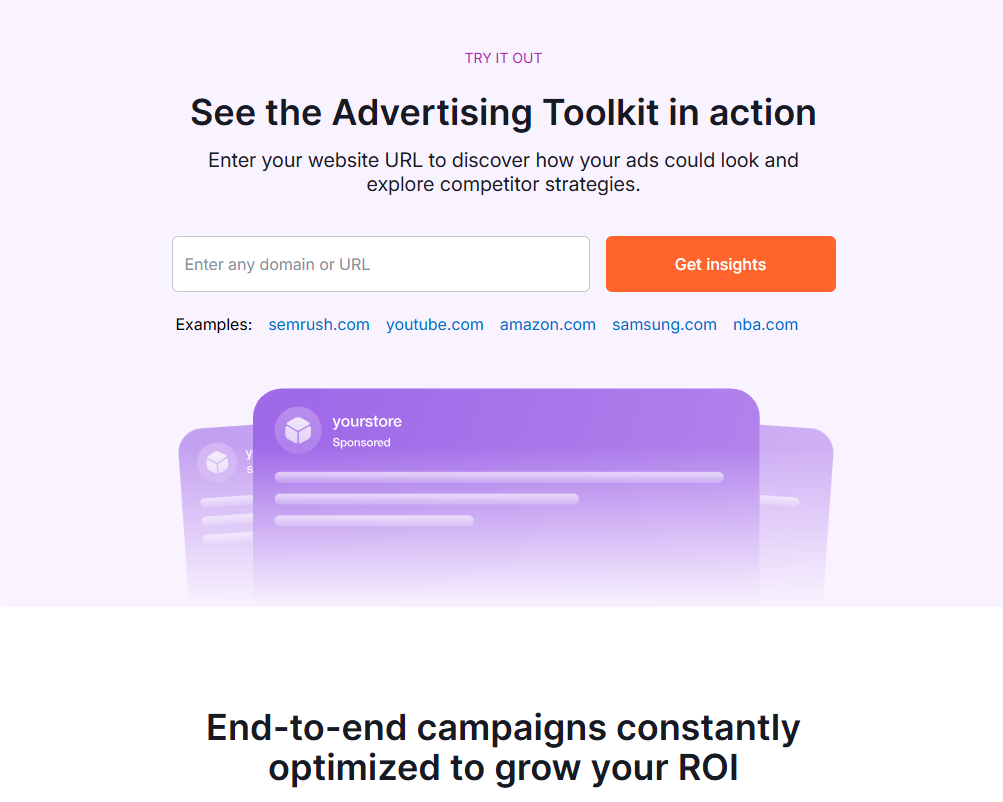
Semrush provides tools for managing paid campaigns, including keyword research for ads, competitor ad analysis, and performance tracking. These tools help businesses create effective paid campaigns that generate leads and maximise return on investment.
Content Marketing
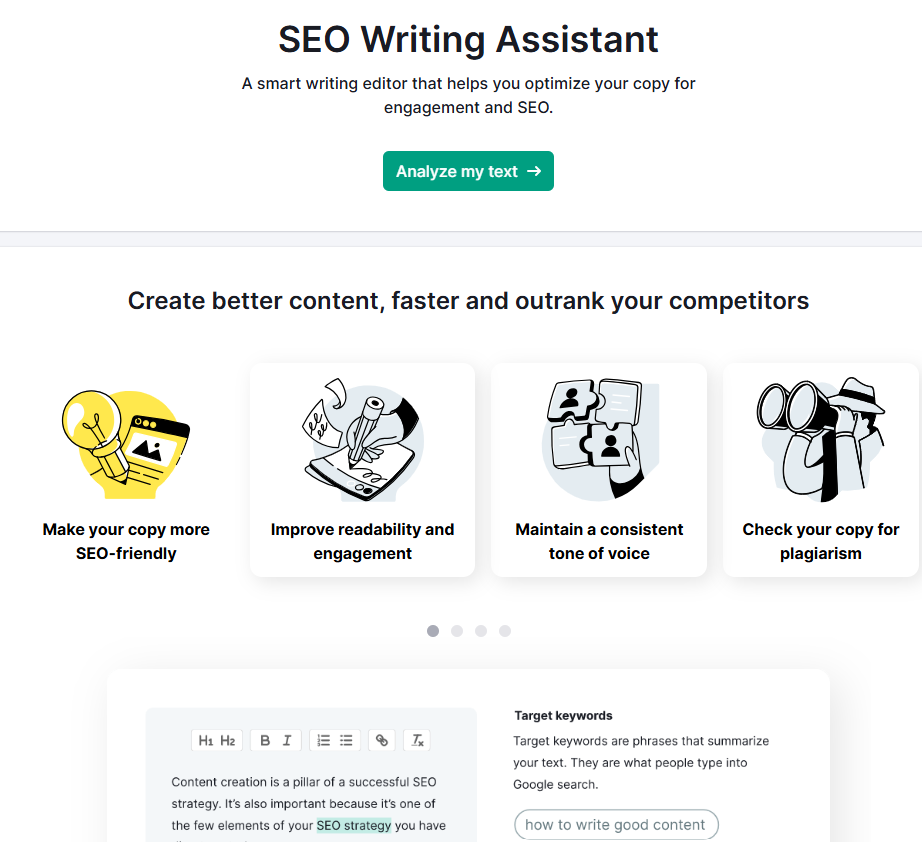
The content marketing toolkit supports content creation, planning, and optimisation. It includes topic research, SEO writing assistant, SEO content template, content ideas, and AI-powered suggestions to create high-performing content that resonates with target audiences and drives traffic.
Social Media Management
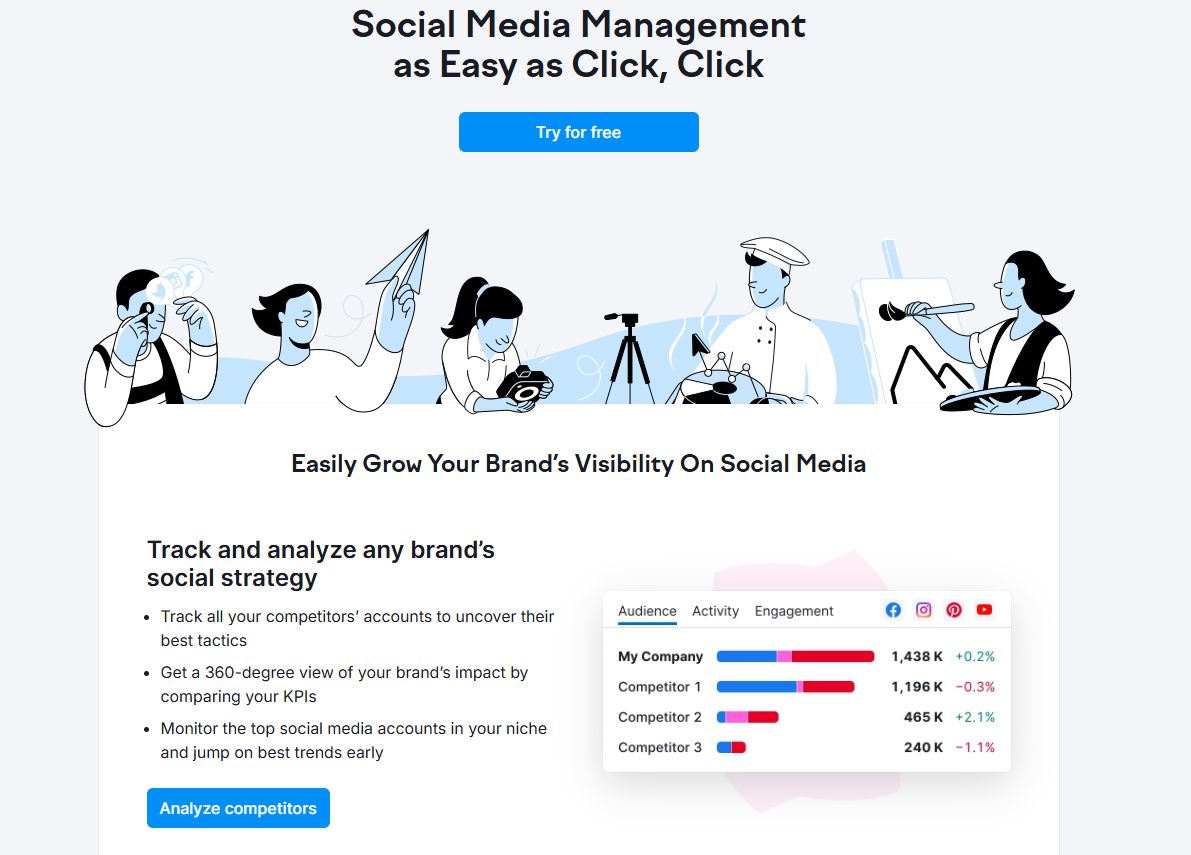
Semrush helps businesses plan, schedule, and analyse social media content. It provides insights into engagement, audience behaviour, and content performance across platforms, helping brands maintain a strong social presence. Semrush also has influencer analytics.
AI PR (Public Relations)
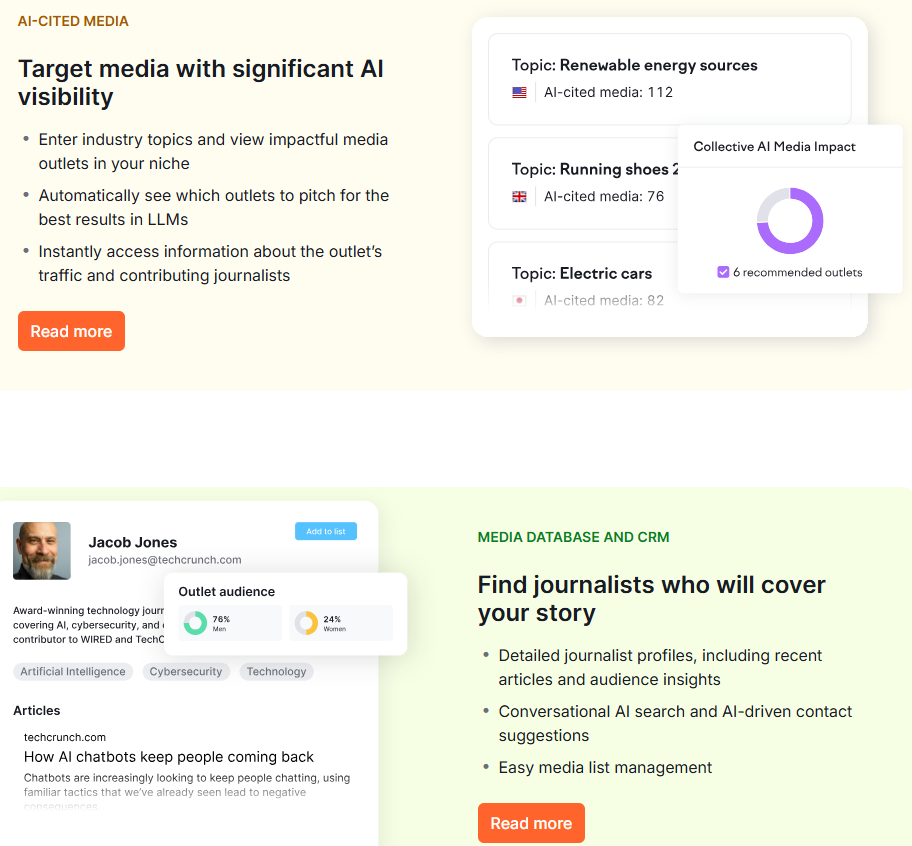
The AI PR toolkit helps brands gain visibility in media sources that are often cited by AI systems. It identifies opportunities for media coverage and helps improve brand perception by securing placements in authoritative publications, which can influence both search engines and AI-generated responses.
Pros of Semrush
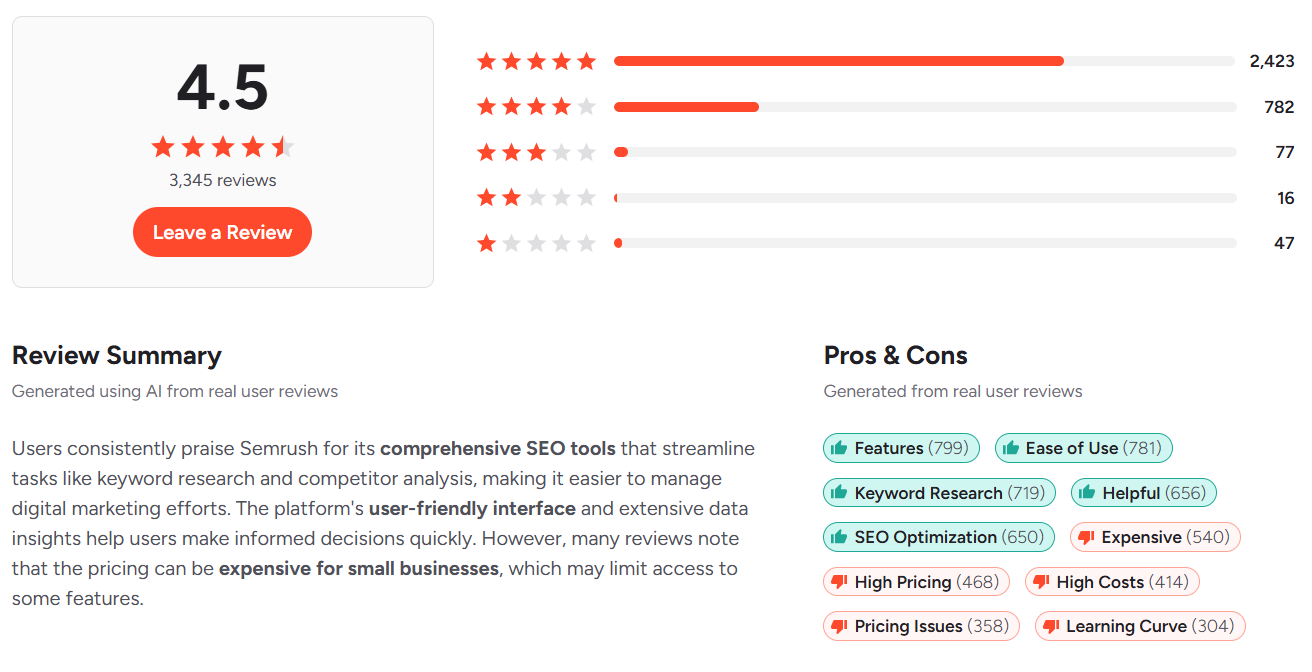
Semrush is widely used among U.S. marketers and holds an average rating of around 4.5/5 on G2 based on thousands of reviews, reflecting generally strong user satisfaction.
- Integrated Marketing Platform: Combines SEO, PPC, content, social media, and competitive research into one system, allowing teams and agencies to manage multiple marketing activities from a single dashboard.
- Detailed Keyword & Competitor Analysis: Provides in-depth keyword research with search volume, difficulty, SERP data, and competitor insights to identify keyword opportunities and improve SEO strategy.
- Technical SEO & Site Health Monitoring: Includes a Site Audit tool that detects issues like broken links, crawl errors, slow pages, and missing metadata, with recommendations to improve site performance and rankings.
- AI Visibility Tracking: Tracks brand mentions, citations, and visibility in AI-generated search results, helping businesses understand and adapt to AI-driven search behaviour.
- Agency-Friendly Reporting Tools: Offers customizable reporting features to track SEO performance, traffic changes, and campaign results across multiple clients in a clear and structured format.
Cons of Semrush
- Pricing Structure: Can feel expensive compared to other SEO tools, with costs increasing when additional toolkits or advanced features are added.
- Learning Curve: The wide range of tools can make the platform complex for beginners, requiring time to fully understand and use effectively.
- AI Data Coverage: AI visibility tracking is useful but may not capture every mention across all AI platforms, making insights partially limited.
- Interface Complexity: The large number of tools and dashboards can make navigation feel overwhelming at first.
- Add-on Costs: Many advanced features are available only as paid add-ons, which can significantly increase overall pricing.
What I dislike about Semrush is that it can feel a bit overwhelming at first because there are so many tools and features. The pricing can also be a bit high for beginners or small creators who are just starting out. Once you get used to it, though, it becomes much easier to navigate and use effectively.
-Marc A. Manager
Read: Best AI Search Visibility Tools in 2026 You Need to Know
Is Semrush Worth It?
Semrush is worth considering if you need a comprehensive, data-driven marketing platform that brings SEO, keyword research, competitor analysis, content marketing, and AI visibility tracking into one system. It is especially useful for agencies, enterprises, and marketing teams that rely on detailed insights and manage multiple campaigns or clients.
However, it may not be ideal for everyone. The platform offers a wide range of tools, which can feel complex at first and require time to learn and configure properly. It is best suited for users who need depth, scale, and advanced marketing capabilities rather than a simple plug-and-play solution.
Conclusion
Semrush is a powerful and established digital marketing platform that brings SEO, content marketing, competitor analysis, and AI visibility tracking into one ecosystem. It is best suited for teams and organisations that need deep data, advanced tools, and structured workflows across multiple marketing areas.
At the same time, its depth also adds complexity. The platform requires time to learn and manage, which may feel heavy for smaller teams or users who prefer faster execution and simpler workflows.
In contrast, Indexly takes a more unified approach by combining SEO, content, and AI visibility into a connected system. It focuses on turning insights into action quickly, making it suitable for users who want clarity, speed, and a more streamlined workflow for modern AI-driven search environments.
FAQs
1. What is Semrush mainly used for?
Semrush is mainly used for SEO, keyword research, competitor analysis, technical site audits, content marketing, and tracking online visibility. It also supports paid campaigns and provides insights into AI-driven search performance.
2. Is Semrush good for beginners?
Semrush can be used by beginners, but it may feel overwhelming at first due to its large number of tools and dashboards. Most users need some time to learn how to navigate and use it effectively.
3. Does Semrush support AI visibility tracking?
Yes, Semrush includes AI visibility features that help track brand mentions, prompts, and presence in AI-generated search results. However, these capabilities are still evolving as AI search continues to develop.
4. How much does Semrush cost?
Semrush offers tiered pricing plans, typically starting around entry-level SEO plans and increasing with advanced features and add-ons. The final cost depends on the tools and modules a user chooses.
5. Who should use Semrush?
Semrush is best suited for SEO professionals, agencies, and businesses that need detailed data, competitive insights, and a full-scale marketing platform for long-term digital growth.