
TL;DR
AI search visibility is becoming essential as users increasingly rely on AI assistants like ChatGPT, Gemini, and Perplexity to discover information and brands.
AI search visibility tools help businesses track mentions, citations, rankings, and competitor presence across AI-generated answers, revealing where they appear and where they are missing.
Unlike traditional SEO platforms, these tools focus on AI-driven discovery and help teams improve their chances of being referenced in generative search results.
Choosing the right platform depends on your business goals, content scale, and whether you need basic monitoring or an end-to-end AI visibility workflow.
Read: The 10 Best AI Search Visibility Tracking Platforms in 2026
Why AI Search Visibility Tools Matter Now
AI search engines are constantly evolving, and your brand visibility across platforms like ChatGPT, Gemini, Perplexity, and Google AI Overviews can change quickly.
A brand that ranks well on Google may still be missing from AI-generated answers, limiting its chances of being discovered by users researching through AI assistants.
Traditional SEO tools track rankings, traffic, and keywords, but they cannot show whether AI platforms mention your brand, cite your content, or recommend competitors instead. Without AI search visibility tools, businesses may miss citation opportunities, lose share of voice, or remain unaware of how they are represented in AI responses.
This guide helps marketing teams, SaaS companies, and agencies compare the best AI search visibility tools to monitor citations, analyze competitors, identify visibility gaps, and improve their presence across AI-driven search experiences.
How We Evaluated AI Search Visibility Tools
We evaluated each platform based on key factors that impact AI search performance, including AI platform coverage, citation tracking, prompt-level insights, competitor analysis, optimization capabilities, reporting features, and overall usability.
The rankings consider each tool’s strengths, target audience, and ability to help businesses monitor, analyze, and improve their visibility across AI-generated search results.
AI Search Visibility Tools Comparison
| Tool | Best For | Core Strength | AI Coverage | Key Advantage | Main Limitation |
|---|---|---|---|---|---|
| Indexly | Agencies, SaaS companies & growth teams | AI visibility tracking + optimization workflows | ChatGPT, Gemini, Claude, Perplexity, Grok, Google AI Mode | Combines tracking, AI audits, content recommendations, and execution workflows in one platform | Newer platform with fewer enterprise integrations |
| Peec AI | Mid-sized businesses & enterprises | AI analytics and competitive benchmarking | ChatGPT, Gemini, Claude, Perplexity, DeepSeek, Qwen | Strong prompt tracking, competitor insights, and source attribution | Limited action-based optimization features |
| Otterly.ai | Startups, SMBs & beginners | Simple AI visibility monitoring | ChatGPT, Gemini, Perplexity, Google AI Overviews, Copilot | Affordable pricing, easy setup, and clear reporting | Limited execution and content optimization capabilities |
| Profound | Enterprises & global brands | Enterprise AI search intelligence | ChatGPT, Gemini, Claude, Perplexity, Google AI Overviews | Advanced analytics, attribution, and large-scale AI visibility reporting | Higher pricing and complex setup |
| SE Ranking | SEO teams & agencies | SEO + AI visibility tracking | Major AI search platforms | Combines existing SEO workflows with AI visibility insights | AI features are less specialized than dedicated AI platforms |
| Ziptie | SaaS companies & developer-focused teams | AI observability and technical content visibility | Google AI Overviews, ChatGPT, Perplexity | Strong focus on technical documentation and AI discoverability | Limited platform coverage and no full SEO replacement |
| Frase | Content marketers & publishers | AI content optimization | AI-assisted search workflows | Helps create AI-friendly content with research and optimization tools | Not primarily an AI visibility tracking platform |
The 7 Top AI Search Visibility Tools
1. Indexly
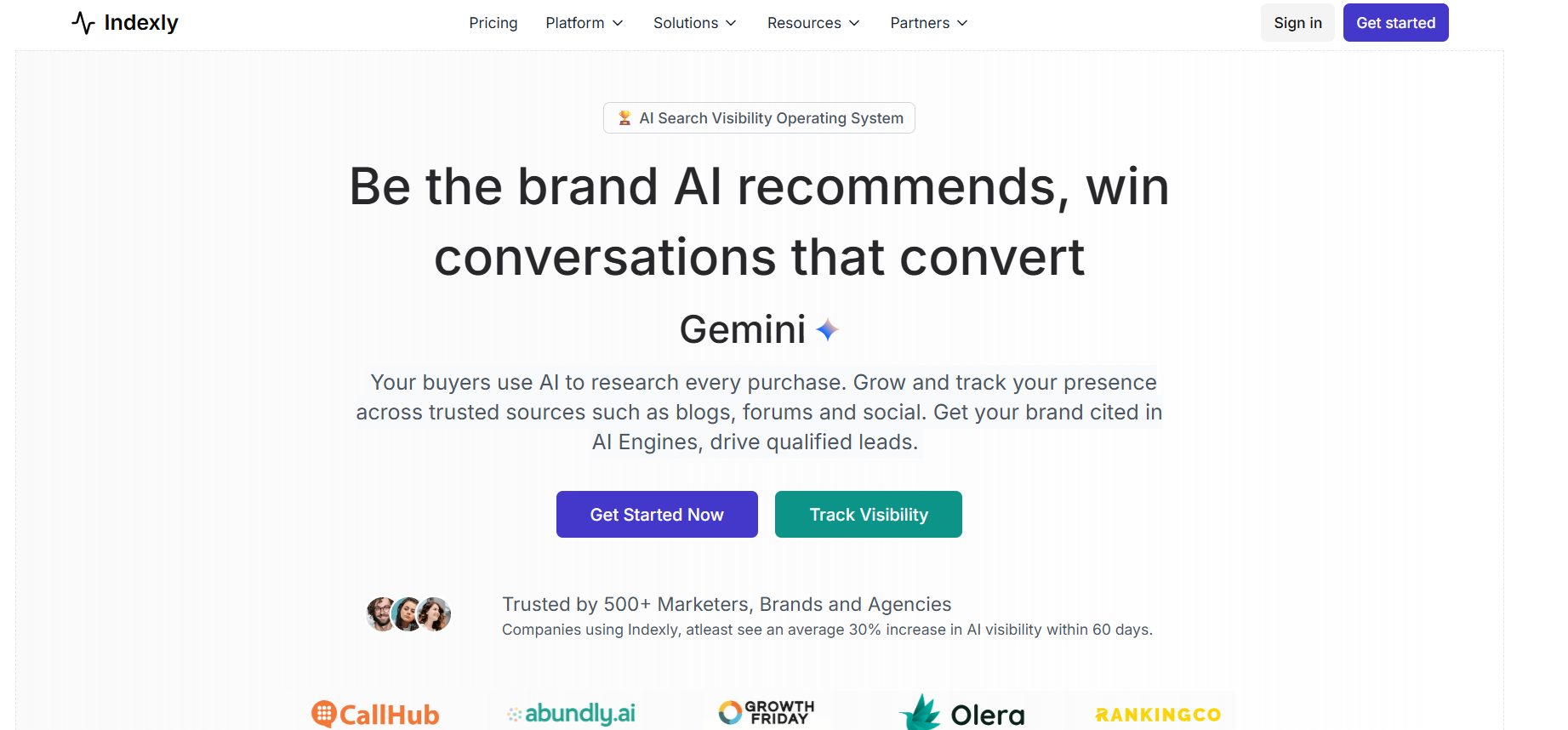
Best for: Agencies, marketing teams, SaaS companies, and businesses that want an all-in-one platform to monitor AI visibility, track citations, and improve their chances of appearing in AI-generated answers.
Indexly is an AI search visibility platform built around both measurement and execution. Unlike tools that mainly focus on tracking AI mentions, citations, and visibility metrics, Indexly helps teams turn those insights into actions through AI audits, content recommendations, and optimization workflows.
It tracks brand mentions, citations, prompts, sentiment, and AI performance across platforms such as ChatGPT, Gemini, Claude, Perplexity, Grok, Google AI Mode, and AI Overviews.
Beyond monitoring, Indexly provides actionable recommendations, content optimization insights, and AI-powered workflows to help businesses improve their chances of being discovered and cited by AI systems.
Key Features
| Key Feature | Description |
|---|---|
| AI Prompt Tracking | Identifies prompts that influence brand visibility across AI assistants |
| AI Mention & Citation Tracking | Monitors brand references, citations, and AI-generated mentions |
| AI Visibility Analytics | Measures visibility trends, sentiment, and AI search performance |
| Actionable AI Recommendations | Converts visibility insights into specific optimization actions |
| AI Content Audits | Finds content gaps and improvements to increase AI citation opportunities |
| AI Optimization Workflows | Helps teams execute changes needed to improve AI search presence |
| Content Agents | Automates AI search optimization tasks and content workflows |
| AI Traffic Insights | Provides insights into AI-driven discovery and performance |
| Reddit Monitoring | Tracks community discussions and brand mentions on Reddit |
| LinkedIn Visibility Monitoring | Measures brand presence and engagement signals on LinkedIn |
| White-Label Reporting | Enables agencies to deliver customized client reports |
| GEO & AEO Workflows | Combines generative and answer engine optimization processes in one platform |
Pros
- Combines AI visibility tracking with actionable execution workflows
- Helps teams identify problems and provides recommendations to improve visibility
- Tracks citations, mentions, prompts, and sentiment across major AI platforms
- Provides AI audits and content optimization guidance
- Includes Reddit and LinkedIn monitoring for broader brand insights
- Strong fit for agencies with white-label reporting needs
Cons
- Newer platform compared with some established AI visibility solutions
- Wide feature coverage may require time to fully adopt
- May offer more capabilities than teams needing only basic AI monitoring
- Advanced workflows may require setup before delivering maximum value
Read: AI Brand Mentions: What They Are and How to Track Them in 2026
2. Peec AI
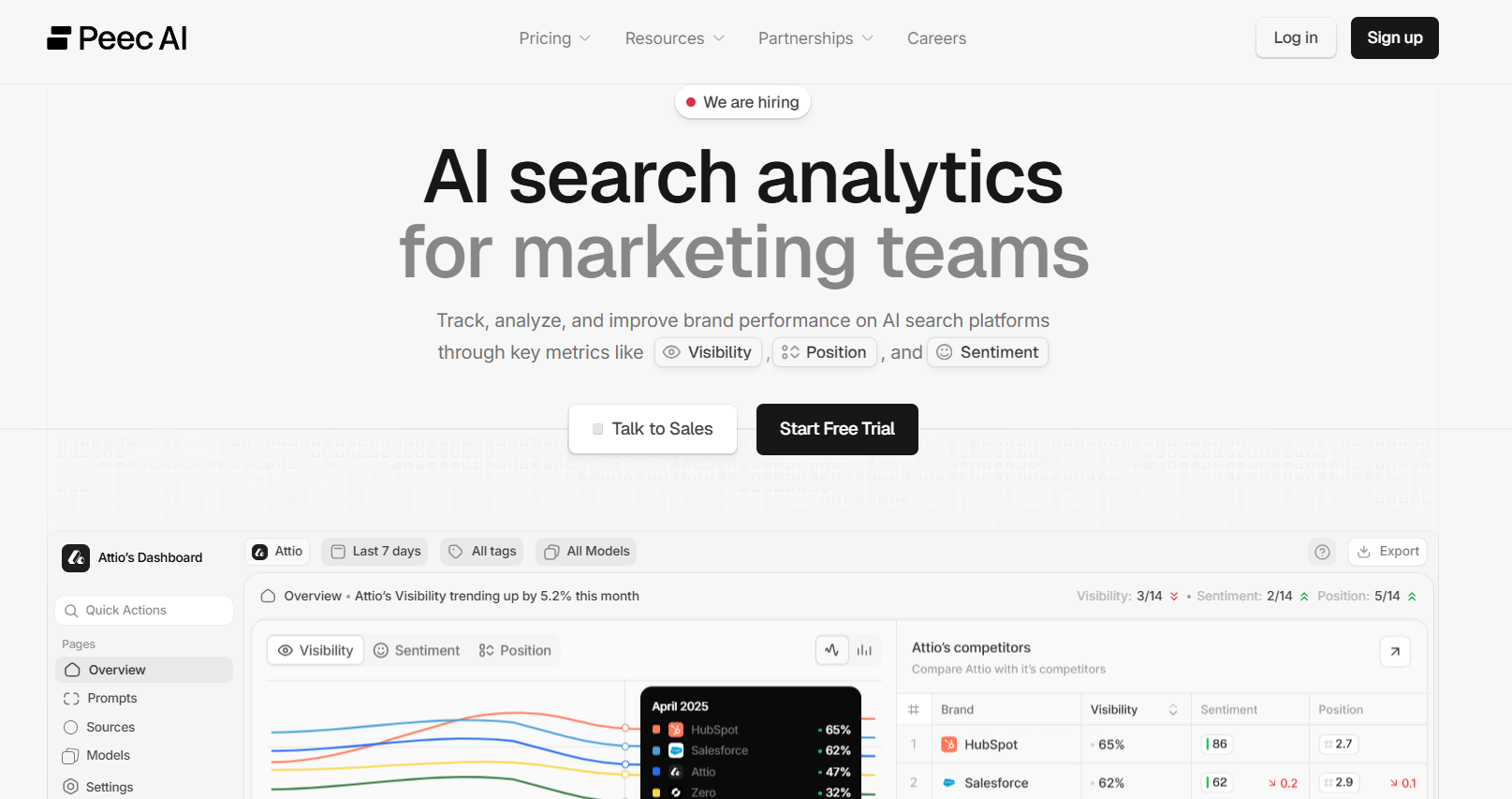
Best for: Mid-sized businesses, enterprises, and agencies that want deep competitive intelligence into how brands appear, compete, and get cited across AI-generated search results.
Peec AI focuses on AI search analytics and competitive intelligence, helping businesses understand how brands appear across AI-generated responses.
The platform provides detailed insights into prompts, citations, competitors, and source attribution, making it useful for teams that want deeper visibility analysis.
Key Features
| Key Feature | Description |
|---|---|
| Multi-Platform AI Tracking | Monitors brand visibility across major AI assistants and search platforms |
| Prompt-Level Analytics | Tracks user prompts and queries that influence AI-generated brand mentions |
| AI Mention & Citation Tracking | Measures brand references, citations, and visibility in AI responses |
| Competitor Benchmarking | Compares AI search performance against competing brands |
| Source Attribution | Identifies websites and sources influencing AI-generated answers |
| AI Sentiment Analysis | Analyzes how AI platforms describe and position brands |
| Earned Media Tracking | Monitors brand presence across platforms like Reddit, YouTube, and review sites |
| ChatGPT Query Analysis | Examines query patterns and fan-out behavior in ChatGPT searches |
| AI Shopping Analytics | Tracks product visibility and performance in AI shopping experiences |
| Multilingual Monitoring | Supports AI visibility tracking across different languages |
| Reporting & API Support | Provides automated reports, integrations, and historical performance insights |
Pros
- Clean and easy-to-use dashboard for tracking AI visibility
- Strong prompt-level tracking focused on real user queries
- Provides detailed source attribution and citation insights
- Supports unlimited users for better team collaboration
- Strong competitor benchmarking capabilities
Cons
- Limited recommendations for improving AI visibility performance
- Fewer integrations with analytics platforms may require manual reporting
- May lack some enterprise features such as advanced compliance controls
- Primarily focused on monitoring rather than content optimization
Read: Peec AI Review: Features, Pricing, Pros, and Cons
3. Otterly.ai
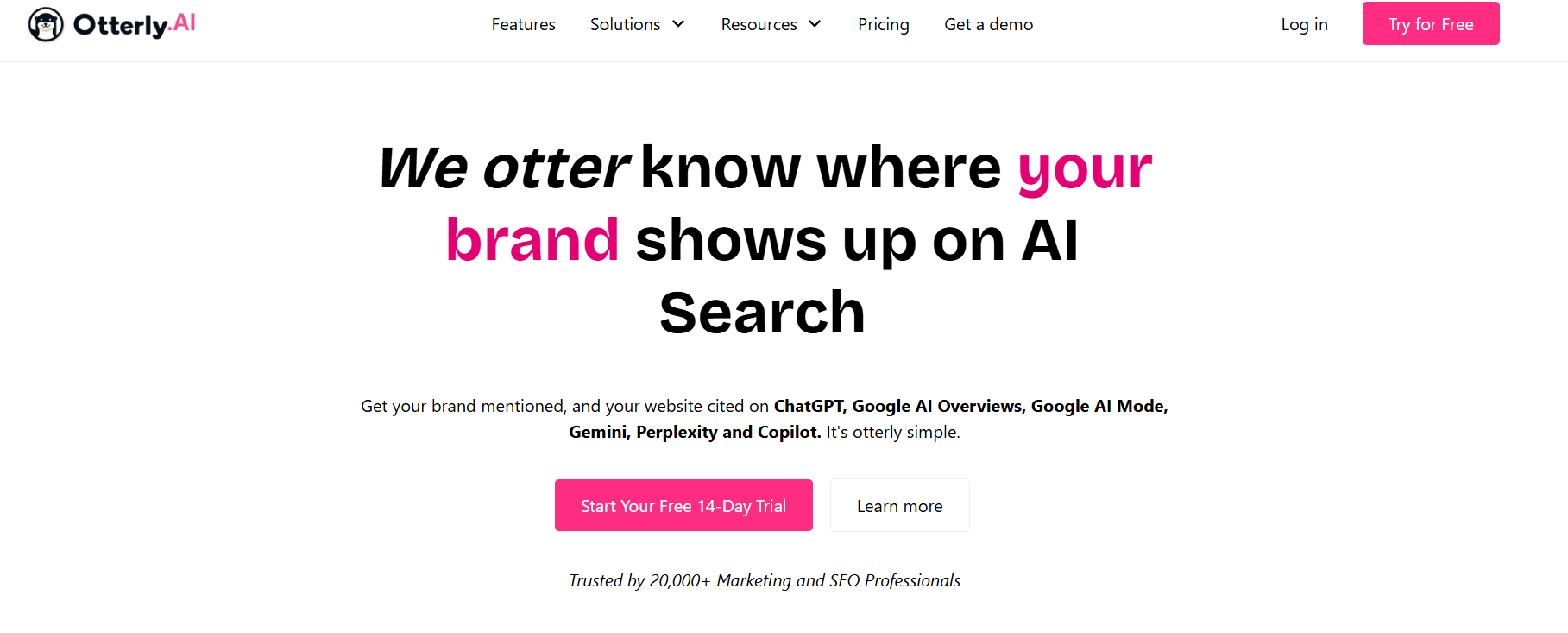
Best for: Startups, agencies, marketers, and businesses that want an affordable and easy-to-use platform for monitoring AI search visibility, tracking citations, and improving their presence across AI-generated results.
Otterly AIOtterly.ai is a user-friendly AI visibility monitoring platform focused on tracking brand mentions, citations, sentiment, and competitor presence across AI-generated answers.
Unlike enterprise-focused platforms, it prioritizes quick setup, GEO audits, and easy-to-understand reporting for teams improving their AI search visibility.
Key Features
| Key Feature | Description |
|---|---|
| AI Visibility Tracking | Monitors brand presence across multiple AI search platforms and assistants |
| AI Citation Monitoring | Tracks when AI platforms reference or cite brand content in responses |
| GEO Audits | Provides content evaluations and recommendations to improve AI search visibility |
| Competitor Tracking | Compares brand visibility and performance against competitors in AI results |
| Brand Monitoring | Identifies inaccurate, outdated, or unwanted AI-generated brand information |
| Visibility Reporting | Provides dashboards, automated reports, and export options for tracking performance |
| Multi-Platform Monitoring | Tracks AI visibility across ChatGPT, Gemini, Perplexity, Google AI Overviews, and Copilot |
| Historical Insights | Helps analyze visibility trends and changes over time |
Pros
- Tracks visibility across multiple AI platforms in one dashboard
- Provides actionable GEO audits and content improvement recommendations
- Helps monitor brand accuracy and AI-generated mentions
- Affordable option for startups and smaller teams
- Offers clear reporting features suitable for agencies and clients
Cons
- Prompt-based pricing can become expensive as tracking requirements increase
- Understanding AI visibility metrics may require time and experience
- Large reports and historical data may experience slower performance
- Does not directly track AI crawler activity or website crawling behavior
- Dashboards may become difficult to manage with many tracked brands and prompts
Read: Which AI Search Visibility Platform has the Best Analytics?
4. Profound
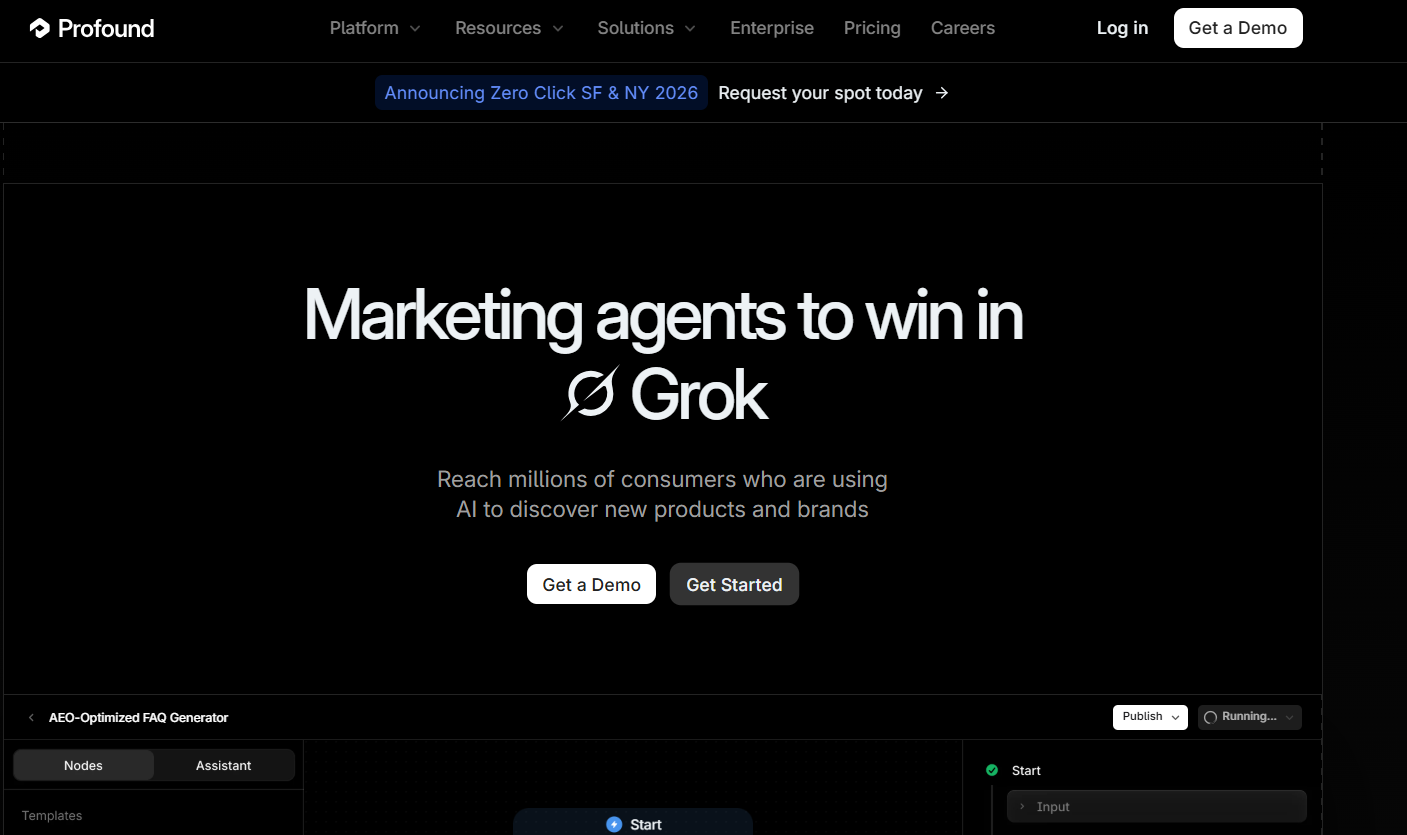
Best for: Enterprises, global brands, and large marketing teams that need advanced AI search visibility tracking, competitive intelligence, and enterprise-level reporting across multiple AI platforms.
ProfoundProfound is an enterprise-focused AI search visibility and Generative Engine Optimization (GEO) platform that helps organizations understand how their brands appear across AI assistants and generative search experiences.
It captures AI-generated responses, tracks brand mentions, citations, share of voice, product visibility, and attribution across platforms such as ChatGPT, Gemini, Perplexity, and Google AI Overviews.
Key Features
| Key Feature | Description |
|---|---|
| AI Visibility Tracking | Monitors brand presence across major AI assistants and generative search platforms |
| Prompt Intelligence | Analyzes real-world AI prompts to understand user search behavior and visibility trends |
| AI Mention & Citation Tracking | Tracks brand references, citations, and how AI platforms describe businesses |
| Share of Voice Analysis | Measures brand visibility compared with competitors across AI-generated results |
| Competitor Benchmarking | Compares AI search performance and identifies competitive opportunities |
| AI Sentiment Analysis | Evaluates the context and perception of brand mentions in AI responses |
| AI Crawler Monitoring | Tracks how AI systems discover, access, and reference website content |
| Enterprise Reporting | Provides detailed analytics, dashboards, and reports for large teams |
| Attribution Insights | Identifies sources and content influencing AI-generated answers |
Pros
- Provides actionable insights into AI visibility, prompts, and citations
- User-friendly interface with clear and visual reporting dashboards
- Strong customer support for onboarding and platform adoption
- Offers detailed competitor analysis and AI search performance insights
Cons
- Premium pricing may be expensive for smaller teams and agencies
- Fewer integrations with existing SEO and marketing platforms
- Usage limits may make large-scale monitoring more challenging
Read: Profound AI Review: Features, Pricing, Pros, and Cons
5. SE Ranking
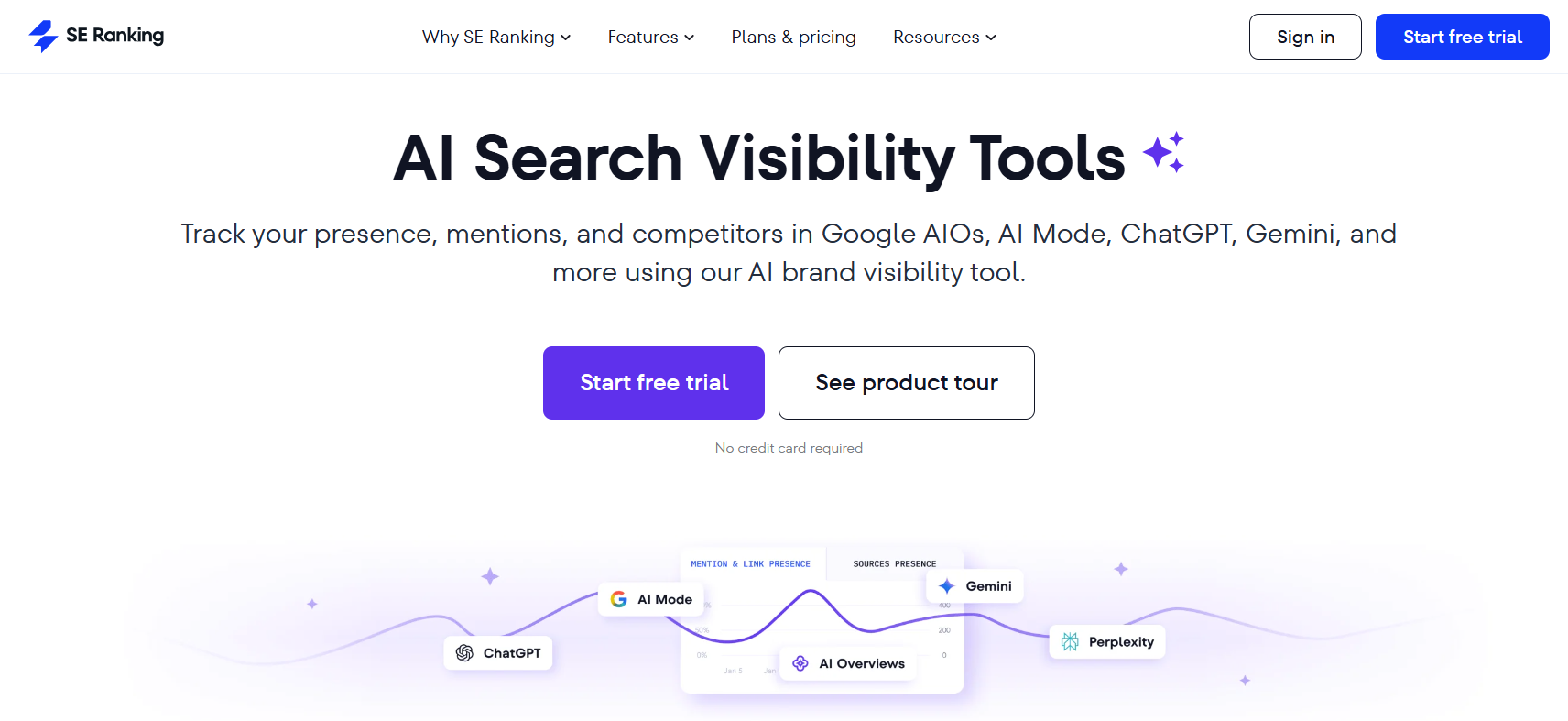
Best for: SEO teams, agencies, and businesses that want to combine traditional SEO workflows with AI search visibility tracking in a single platform.
SE Ranking is an SEO platform that combines traditional search optimization with AI visibility tracking capabilities. It helps SEO teams and agencies monitor brand mentions, citations, competitor visibility, and AI search performance alongside existing SEO workflows.
Key Features
| Key Feature | Description |
|---|---|
| AI Visibility Tracking | Measures brand presence across AI-generated search results and platforms |
| AI Mention & Citation Monitoring | Tracks when brands are mentioned or referenced in AI responses |
| Prompt-Level Analytics | Analyzes prompts to understand what influences AI search visibility |
| Competitor Benchmarking | Compares AI search performance against competing brands |
| Citation Source Analysis | Identifies sources used by AI platforms to generate responses |
| Share of Voice Tracking | Measures brand visibility compared with competitors in AI results |
| Historical Reporting | Tracks AI visibility trends and performance changes over time |
| SEO Platform Integration | Combines AI visibility insights with existing SEO tools and workflows |
| Team Collaboration & API Support | Supports reporting, integrations, and team-based workflows |
Pros
- Easy-to-use interface for managing SEO and AI visibility tasks
- Affordable all-in-one SEO and AI search platform
- Reliable tracking and competitive analysis features
- Provides useful ranking and visibility insights
- Combines multiple optimization tools in one place
Cons
- Limited features for large-scale projects
- Extra add-ons can increase costs
- Usage limits may affect bigger campaigns
- Learning curve for new users
6.Ziptie
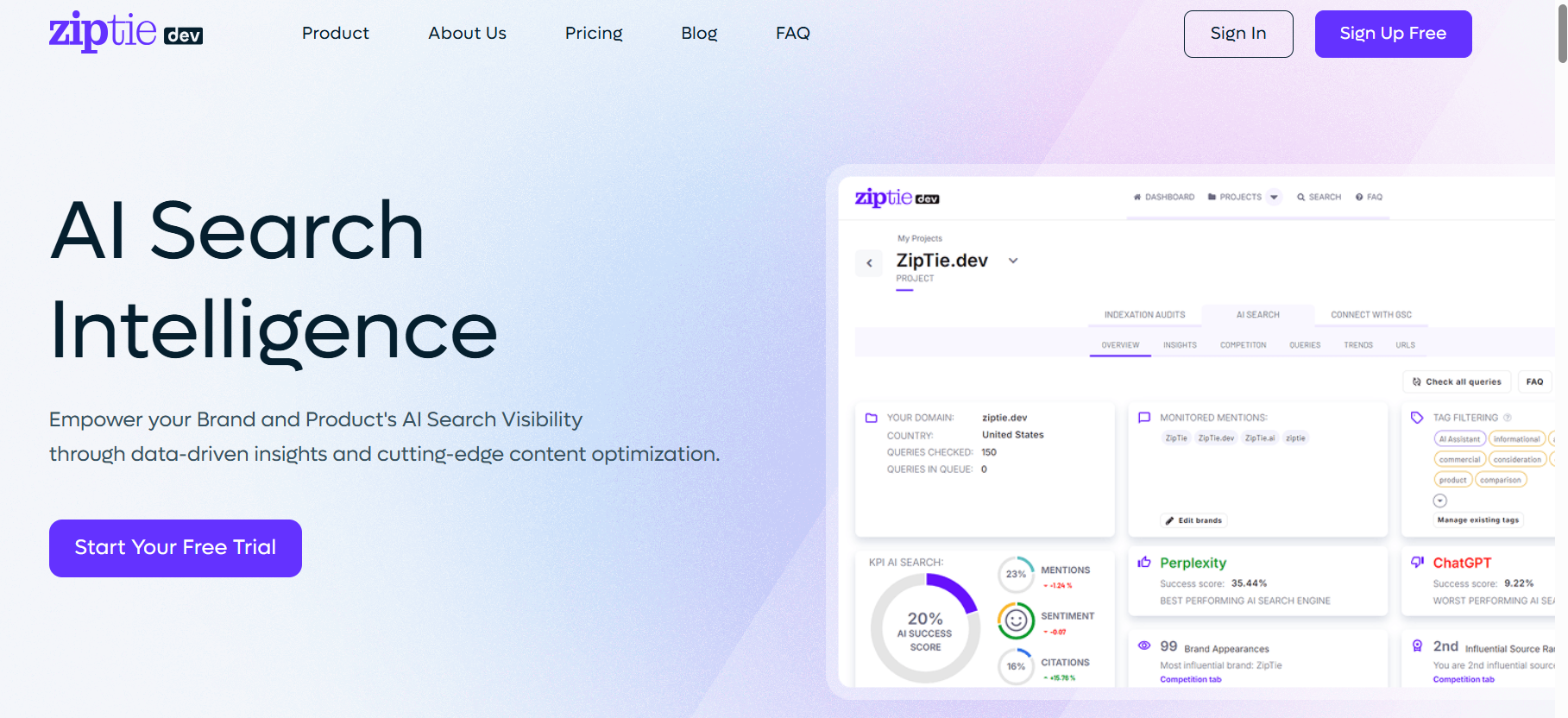
Best for: SaaS companies, developer-focused teams, AI startups, DevRel teams, and organizations that want to monitor how their brand, products, and technical content appear across AI-powered search platforms.
ZiptieZiptie helps businesses understand their AI search presence by tracking brand mentions, AI-generated responses, and citation sources across platforms like Google AI Overviews, ChatGPT, and Perplexity.
It provides insights into how AI systems discover and reference content, helping teams identify visibility gaps and improve their chances of appearing in AI-generated answers.
The platform combines AI search monitoring, content analysis, and optimization recommendations to help organizations strengthen their presence in generative search experiences.
Key Features
| Key Feature | Description |
|---|---|
| AI Visibility Tracking | Monitors how brands, products, and content appear across AI-generated search results |
| AI Citation Monitoring | Tracks the sources and references used by AI platforms when generating answers |
| Cross-Platform Tracking | Measures visibility across Google AI Overviews, ChatGPT, and Perplexity |
| AI Content Insights | Identifies content gaps and provides recommendations to improve AI discoverability |
| AI Success Scoring | Evaluates content performance and provides actionable optimization guidance |
| Competitor Visibility Analysis | Helps compare AI search presence against competitors |
| Historical Reporting | Tracks visibility trends and changes over time |
| Google Search Console Integration | Enables quick setup and baseline analysis using existing search data |
| Technical Content Monitoring | Helps developer-focused teams understand how AI systems access and interpret documentation |
Pros
- Strong AI visibility tracking through simulated user-based detection methods
- Provides actionable content recommendations to improve AI search performance
- Tracks brand mentions across multiple AI platforms in a single dashboard
- Easy setup with Google Search Console integration
- Helps identify content opportunities and visibility gaps
Cons
- Limited AI platform coverage compared with broader AI visibility tools
- Credit-based usage may become expensive when monitoring large numbers of prompts or competitors
- Does not replace traditional SEO tools for keyword tracking, backlinks, or conversion analytics
- AI-generated answers may still contain inaccurate information about brands despite optimization efforts
7.Frase
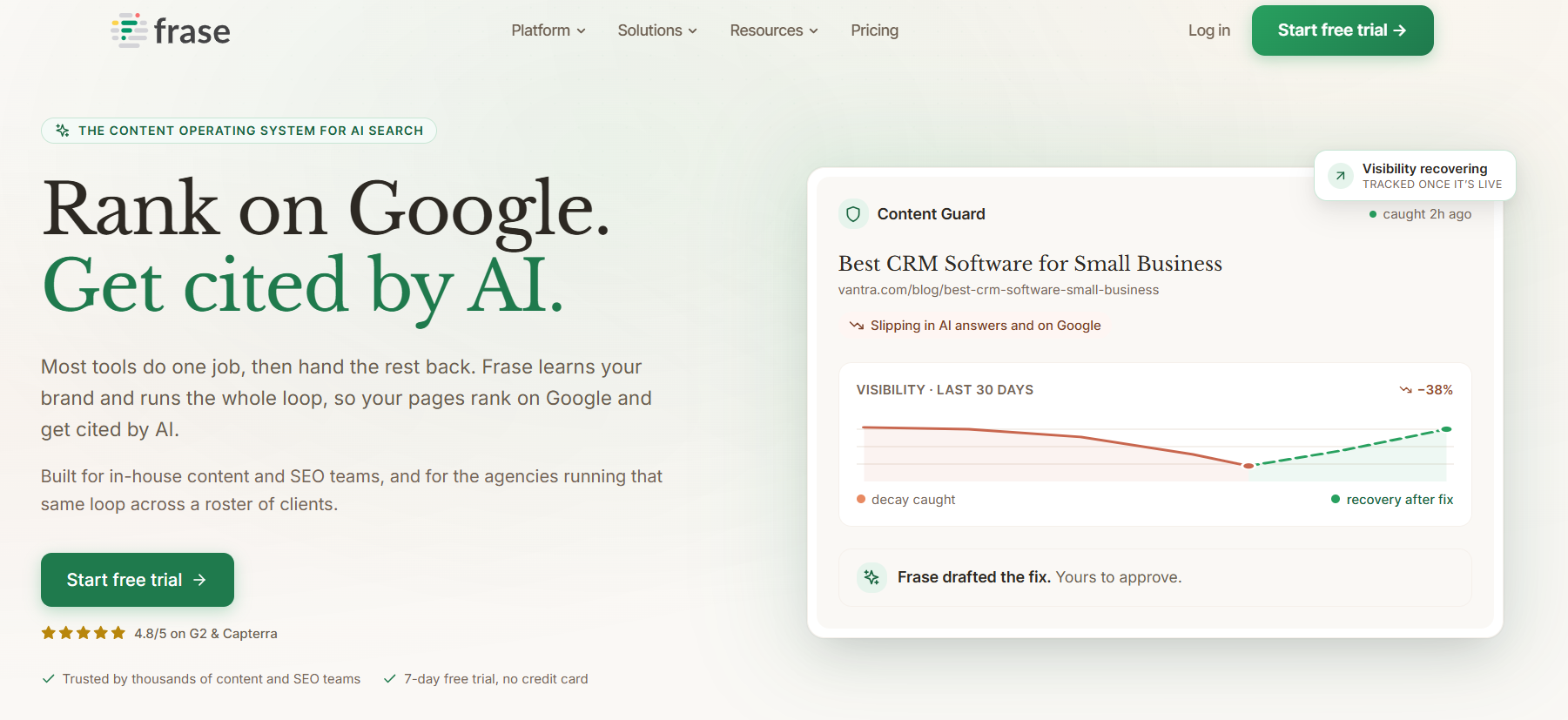
Best for: Content marketers, SEO teams, agencies, publishers, and businesses that want to create search-friendly and AI-ready content while improving their visibility across traditional and AI-powered search platforms.
Frase helps teams research, plan, create, and optimize content by combining SERP analysis, AI writing assistance, content briefs, keyword research, and search intent insights.
It focuses on improving content quality, topical relevance, and semantic coverage to make content more effective for search engines and easier for AI systems to understand.
This functionality is part of a broader content optimization platform rather than a dedicated AI search visibility tracking tool.
Key Features
| Key Feature | Description |
|---|---|
| AI Visibility | Tracks and helps improve how content appears and performs across AI-driven search platforms |
| GEO Optimization | Helps optimize content for better visibility and relevance in generative AI results |
| AI Agent | Provides AI-powered support for content workflows, analysis, and optimization activities |
| Brand Voice | Helps maintain a consistent brand identity and tone across AI-assisted content creation |
| Frase Answers | Uses AI-powered responses and insights to support research and content planning |
| Topic Research | Helps discover relevant ideas, themes, and information to create more comprehensive content |
| AI Content Creation | Assists with generating, editing, and enhancing content using AI capabilities |
Pros
- Advanced AI tools for creating, researching, and improving content
- Simple setup process with an accessible interface for new users
- Helps teams build effective content strategies using actionable insights
- Speeds up content research by analyzing relevant information quickly
- Enables more efficient content workflows from research to creation
Cons
- Some customers have concerns about changes to subscription policies
- The pricing structure may be costly for smaller teams and creators
- Updates to pricing have created dissatisfaction among some long-term users
- Content outputs may need additional manual refinement and formatting
Top AI Search Visibility Tools vs. SEO Tools: Core Differences
| Feature | AI Search Visibility Tools | SEO Tools |
|---|---|---|
| Main Purpose | Track and improve brand visibility in AI-generated answers | Improve website rankings and organic search performance |
| Focus Platforms | ChatGPT, Gemini, Claude, Perplexity, Google AI Overviews, AI Mode | Google, Bing, Yahoo |
| Tracks Keywords | Limited | Yes |
| Tracks AI Mentions | Yes | Usually No |
| Tracks AI Citations | Yes | No |
| Competitor Visibility | Tracks competitor presence in AI responses | Tracks competitor rankings, keywords, and backlinks |
| Prompt Monitoring | Yes | No |
| SERP Monitoring | No | Yes |
| Backlink Analysis | Limited | Yes |
| Technical SEO Audits | No | Yes |
| AI Brand Sentiment | Yes | No |
| Source Analysis | Shows which sources AI platforms use for answers | Analyzes backlinks and ranking factors |
| Content Optimization | Helps optimize content for AI visibility and citations | Helps optimize content for search rankings |
| Reporting Metrics | AI mentions, citations, visibility score, share of voice | Rankings, traffic, keywords, backlinks |
| Best For | Businesses tracking visibility across AI search platforms | Businesses improving traditional search performance |
Final Thoughts
AI search visibility is becoming a critical part of modern digital strategy as more users rely on ChatGPT, Gemini, Perplexity, and other AI assistants to discover information, compare options, and make decisions.
The right AI visibility tools help brands track mentions, citations, competitor presence, and content opportunities across AI answer engines — turning visibility gaps into actionable growth opportunities.
For teams looking for an all-in-one platform that combines AI tracking, citation analysis, audits, and optimization workflows, Indexly offers a complete solution to improve and scale your AI search presence.
Explore Indexly to understand where your brand appears, uncover opportunities, and build a stronger foundation for AI-driven discovery.
FAQs
1. What are the top AI Search Visibility Tools?
Leading AI search visibility tools in 2026 include Indexly, Profound, Peec AI, Otterly.ai, SE Ranking, Ziptie, and Frase. The right platform depends on whether you need AI monitoring, competitor insights, content optimization, or enterprise analytics.
2.What is the main difference between Profound vs Peec AI vs Otterly AI vs Indexly?
Each platform serves a different purpose. Profound focuses on enterprise-level AI search intelligence, Peec AI specializes in AI analytics and competitor benchmarking, Otterly.ai offers simple AI visibility monitoring, and Indexly combines tracking with AI audits, recommendations, and optimization workflows.
3. How do AI visibility tools work?
AI visibility platforms monitor how brands appear across AI-generated responses from platforms such as ChatGPT, Gemini, Claude, and Perplexity. They track mentions, citations, prompts, competitor visibility, and content sources to identify opportunities for improving AI search presence.
4.What is AI Search Visibility tool vs SEO?
SEO tools focus on improving website rankings, keywords, organic traffic, and backlinks. AI search visibility tools focus on how brands appear inside AI-generated answers by tracking citations, mentions, sentiment, and share of voice across AI platforms.
5.What are Free AI Search Visibility Tools?
Free options usually provide basic monitoring through manual checks or limited visibility reports. However, advanced capabilities such as citation tracking, competitor analysis, historical data, and AI performance insights typically require paid platforms.
6.What is the best AI Search Visibility Checker for Website?
The best AI search visibility checker depends on your business needs. Indexly is suitable for teams looking for AI tracking combined with audits, recommendations, and optimization workflows. Smaller teams looking for simple monitoring may prefer tools like Otterly.ai.