
When a user asks ChatGPT, “What’s the best tool for X?” and your brand isn’t mentioned, you don’t exist in that decision moment. That’s the shift happening in 2026 and exactly why LLM brand visibility tools are becoming essential. AI platforms like ChatGPT and Google AI Overviews are replacing search for discovery, comparison, and recommendations.
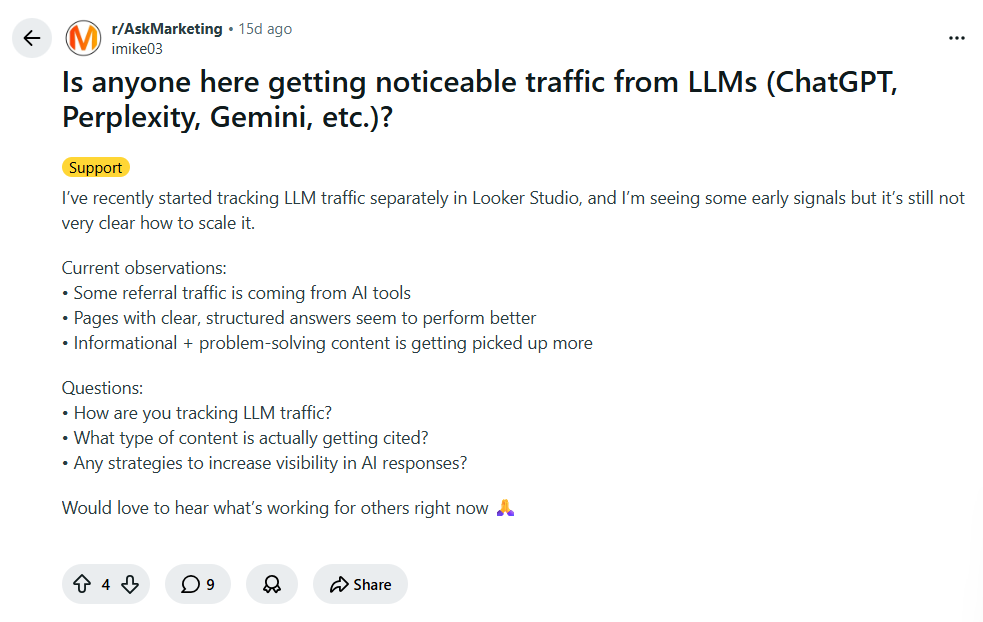
At the same time, LLM visibility tools help you understand which prompts trigger your brand, where you are missing, which sources are being cited, and how competitors are being positioned instead of you.
For brands, this is not a future trend — it’s already happening. Those who track and optimise their presence in AI search early will control how they are discovered, compared, and recommended in this new layer of the internet.
In this blog, we’ll break down what LLM brand visibility tools are and explore a curated list of the top 10 tools to help you track, analyse, and improve your presence across AI search platforms.
What Are LLM Brand Visibility Tools?
LLM brand visibility tools are modern platforms that help businesses measure and improve how their brand shows up in AI-generated answers across large language models like ChatGPT, Google AI Overviews, and Perplexity AI.
Unlike traditional SEO tools that focus on search rankings and website clicks, these tools are built for a new environment where users get instant answers from AI instead of browsing multiple web pages.
Their main purpose is to help brands understand how they are represented in AI systems through:
- Prompt tracking – analysing which questions or queries bring up your brand
- Citation tracking – identifying whether AI models use your content as a source
- Brand monitoring – evaluating how your brand is described or recommended
- AI visibility scoring – measuring how often and how strongly your brand appears
- LLM text insights – understanding tone, relevance, and positioning
In simple terms, these tools reveal whether your brand is visible, trusted, and recommended in AI-generated responses.
According to Search Engine Journal, traffic referrals from LLM platforms increased 72.7% year-over-year, with ChatGPT leading as the primary source of real-time AI-generated answer traffic.
LLM Brand Visibility Tools Comparison
List of top LLM Brand Visibility Platforms
Indexly
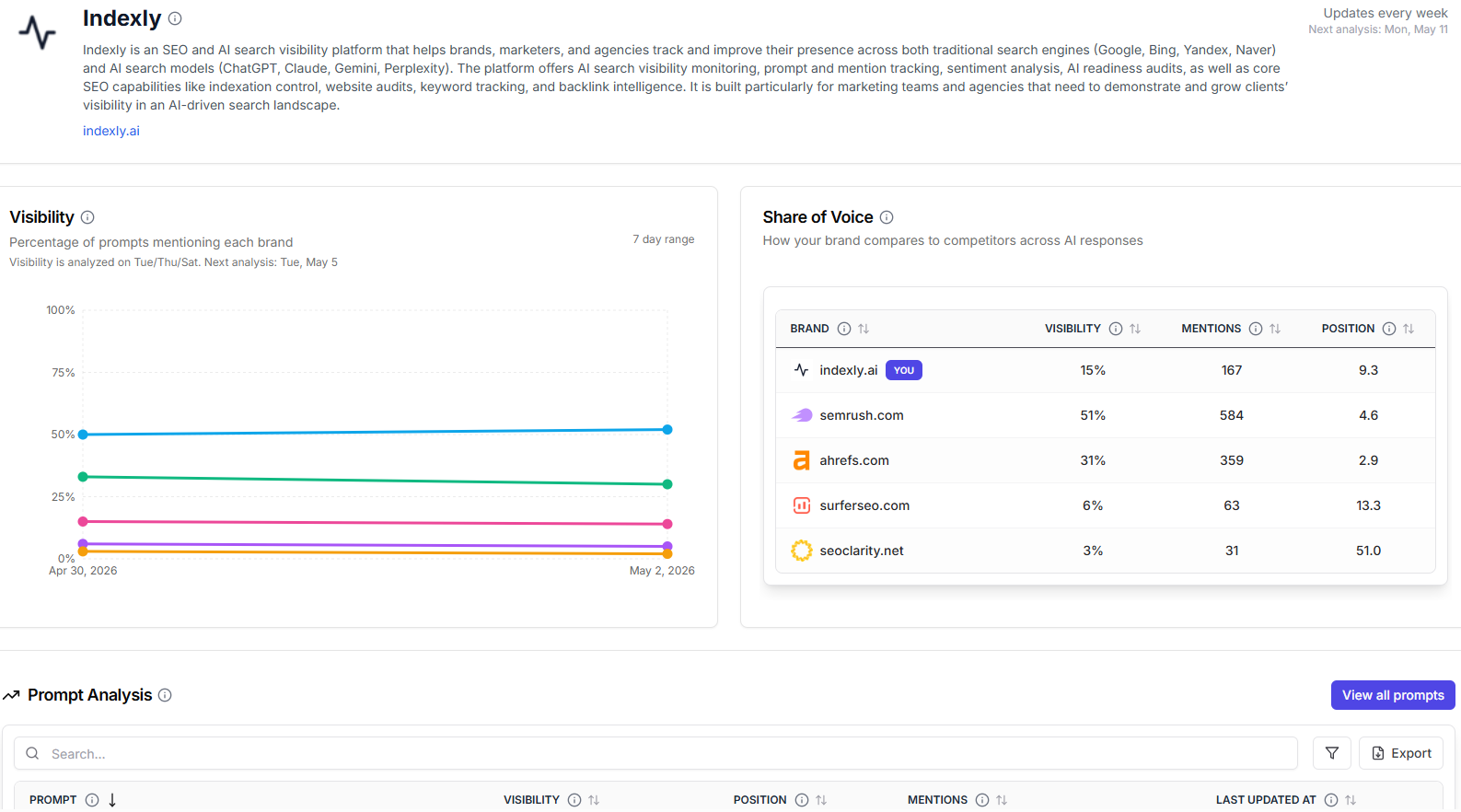
Indexly is a brand visibility platform that helps you analyze your presence and sentiment with AI Search Analytics, influence AI-generated answers through Content Agents and Reddit signals, and measure real impact with AI Bot Analytics. It is also best way to monitor brand visibility in generative AI by combining prompt tracking, citation monitoring, AI visibility analysis, and AI bot analytics in a single platform.
Key Features
| Feature | Description |
|---|---|
| LLM visibility tracking | Tracks how often your brand and pages appear in AI-generated answers across LLMs like ChatGPT, Gemini, and Perplexity. |
| Brand sentiment analysis | Shows whether your brand is perceived as positive, negative, or neutral in AI-generated responses. |
| AI brand mention tracking | Monitors where and how your brand is mentioned across AI search engines and generative models. |
| AI citation tracking | Identifies whether your content is being used as a source in LLM-generated answers. |
| URL-level retrieval insights | Provides page-level data on how effectively individual URLs are retrieved by AI systems. |
| Content gap detection (GEO) | Finds missing topics or pages that reduce your visibility in generative engine optimisation (GEO). |
| AI crawlability analysis | Analyses technical and structural issues affecting how AI systems access and understand your content. |
| Prompt visibility insights | Helps improve visibility in prompt-based AI queries by identifying optimization opportunities. |
| AI content writer | Writes content that is GEO/SEO optimised. |
| Reddit agent | Tracks cited Reddit threads where competitors are mentioned and helps generate AI-assisted reply drafts to engage in discussions influencing AI-generated answers. |
Why it fits
Indexly is ideal for brands that want to ensure their content is actually reachable by LLM systems. It strengthens the foundation of GEO by improving AI crawlability, which directly impacts whether a brand can appear in AI-generated answers.
Why is it not a fit
Indexly is not well-suited for small teams, as it is built more for structured SEO/GEO operations and larger content ecosystems. It also lacks lightweight usability features for solo marketers or early-stage startups.
Read: 10 Best AI Search Visibility Platforms for Brands 2026
Nightwatch
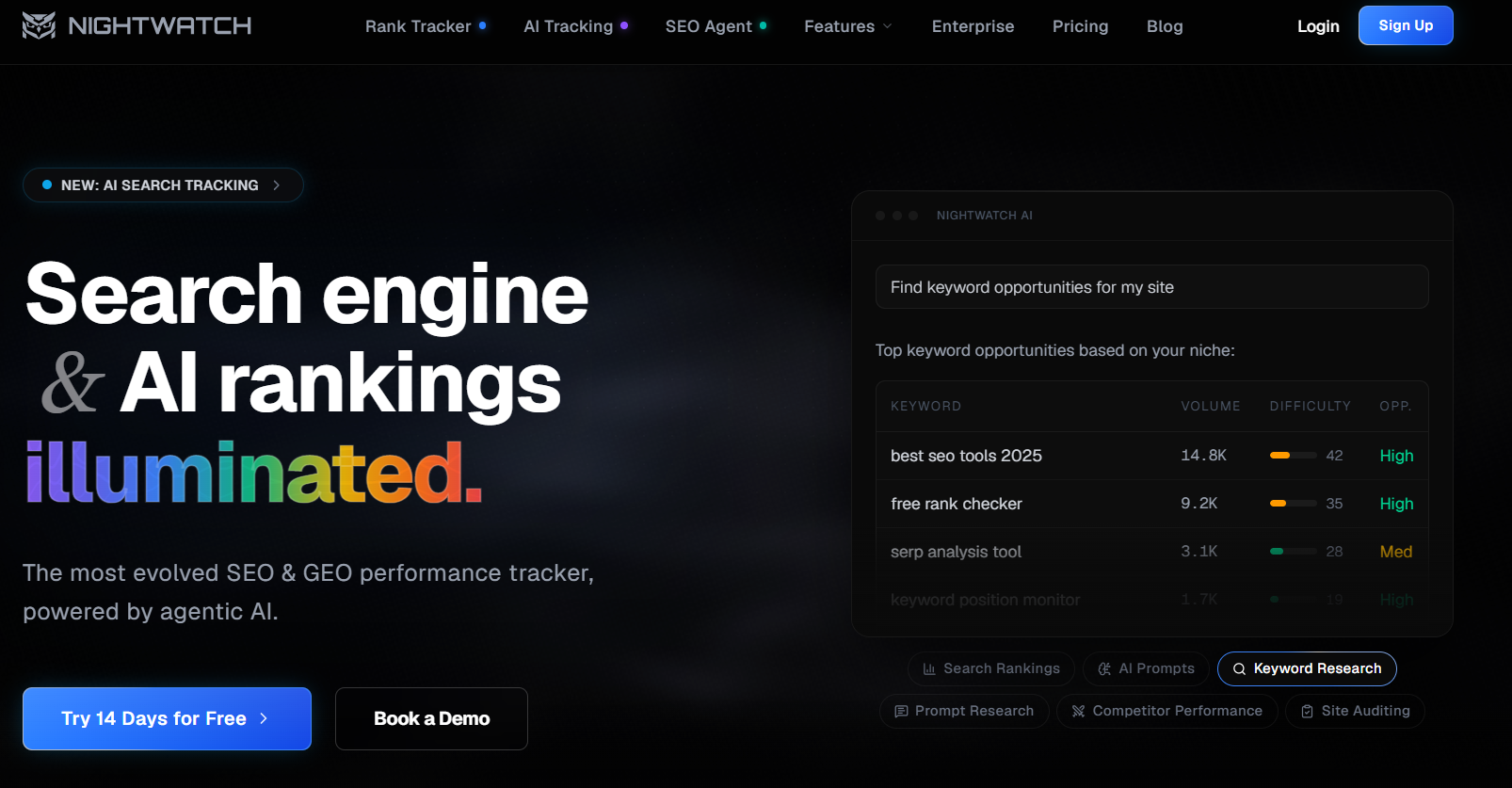
Nightwatch is a search visibility platform that combines SEO rank tracking with early AI search visibility insights. It helps brands monitor keyword performance across search engines and observe how visibility is shifting in AI-influenced search environments.
Nightwatch is designed to track ranking changes, brand presence, and visibility trends across both traditional search and emerging AI-driven search experiences.
Key Features
| Feature | Description |
|---|---|
| Share of Voice reporting | Automates branded and non-branded visibility reporting across keywords and search presence. |
| Keyword research | Identifies high-volume keyword opportunities for SEO growth. |
| Prompt research | Analyzes AI prompt performance and how queries influence visibility. |
| Site audit | Detects technical SEO issues such as crawlability, indexing, and on-page errors. |
| Looker Studio integration | Visualizes SEO and visibility data using Looker Studio dashboards. |
| Search simulator | Simulates unbiased search results to analyze ranking behavior across locations and conditions. |
Why it fits
Nightwatch fits well for teams looking to understand how SEO performance is evolving alongside early AI search visibility. It helps track ranking shifts and brand presence across both traditional search results and emerging AI-influenced environments.
Why it is not a fit
It is not a dedicated GEO or LLM-first platform, so it lacks deep AI citation tracking, generative engine optimisation workflows, and advanced LLM response analysis required for full AI visibility strategies.
Scrunch AI
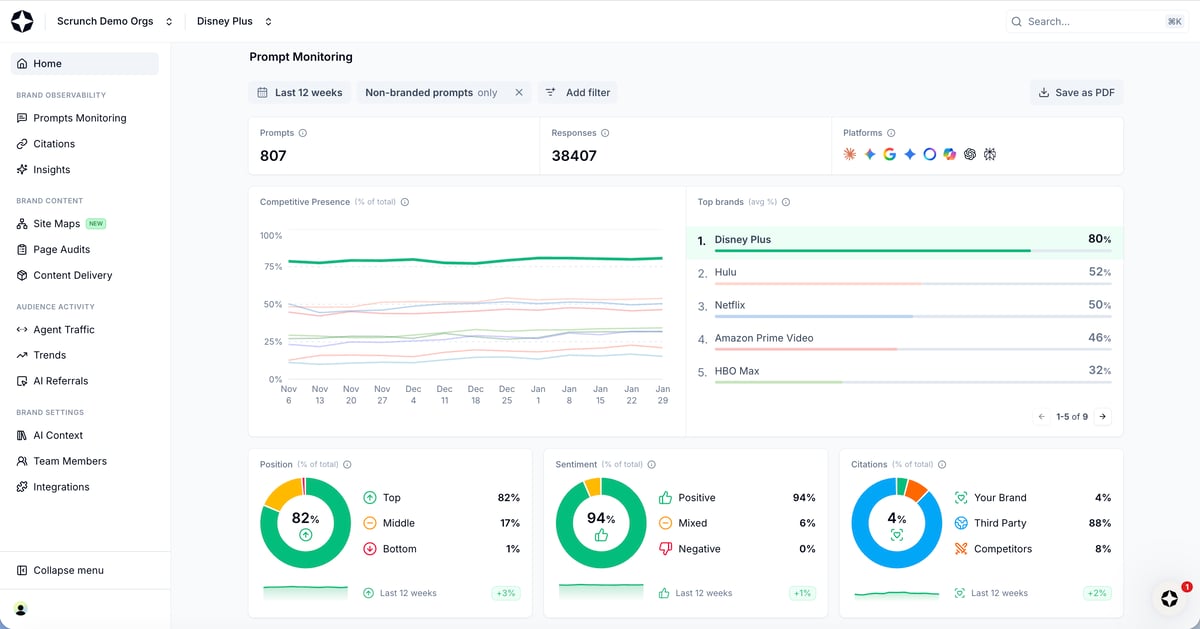
Scrunch AI is an AI search visibility platform that helps brands track how they appear in LLM systems like ChatGPT, Gemini, Perplexity, Grok, and other AI search engines. It focuses on monitoring brand mentions, prompt performance, citation data, sentiment, and competitor positioning in AI-generated responses.
Scrunch AI helps brands understand how they are represented in AI answers and how visibility changes across prompts and platforms, supporting generative engine optimisation (GEO).
Key Features
| Feature | Description |
|---|---|
| AI brand visibility tracking | Tracks how your brand appears across AI platforms like ChatGPT, Gemini, Perplexity, and Grok. |
| Prompt & citation analytics | Shows whether your brand or content appears in AI responses and which sources are cited. |
| AI brand sentiment analysis | Evaluates whether AI describes your brand as positive, neutral, or negative. |
| AI search trend analysis | Tracks trending topics and prompt behavior across AI platforms. |
| Content comparison | Compares your content against competitors based on AI citation frequency. |
| AI bot traffic attribution | Tracks traffic from AI bots and generative engines. |
| Performance segmentation | Filters data by persona, topic, geography, or competitors. |
| Page audit | Identifies technical and structural issues affecting AI visibility. |
| Sitemap creation | Generates AI-friendly sitemaps for better discoverability. |
Why it fits
Scrunch AI fits well because it provides strong AI visibility insights across multiple platforms, helping track how brands appear in AI-generated responses. It offers detailed citation tracking and advanced segmentation capabilities based on topics, personas, and competitors. It also supports enterprise-level needs with API access, SOC 2 compliance, RBAC, and a simple user-friendly interface.
Why it is not a fit
Scrunch AI is not suitable for smaller teams due to its relatively expensive pricing structure compared to other AI visibility tools.
Read: 10 Best Scrunch Alternatives in 2026 you must know
Authoritas
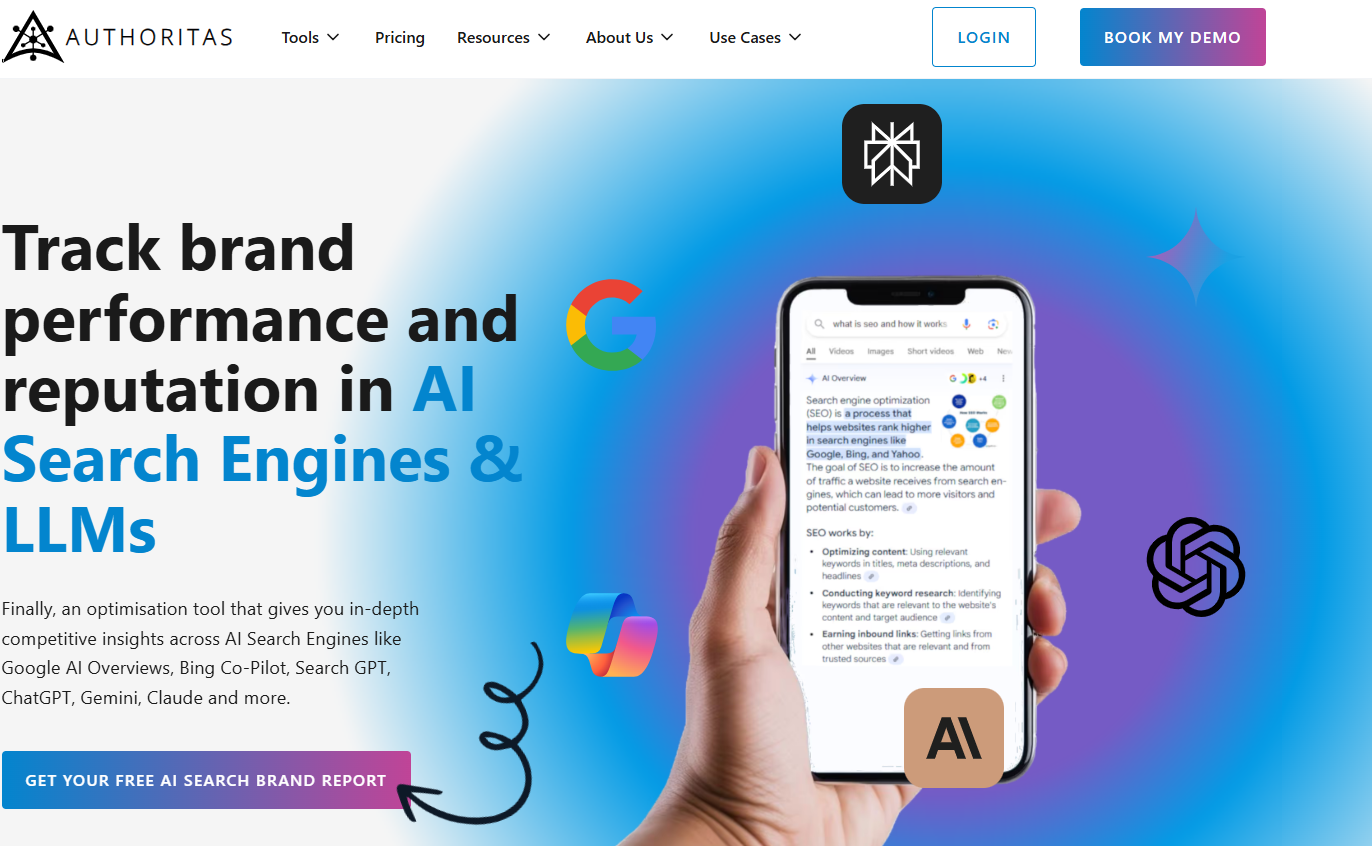
Authoritas is a platform that measures brand performance across AI search engines and LLM systems such as Google AI Overviews, Bing Copilot, SearchGPT, ChatGPT, Gemini, and Claude.
The platform analyses AI Share of Voice, citation sources, and visibility across branded and unbranded queries, helping teams see how their brand compares within AI search results and how it is represented across different contexts.
Key Features
| Feature | Description |
|---|---|
| LLM brand visibility tracking | Tracks how often a brand appears across AI search engines and LLM-generated responses. |
| AI citation tracking | Identifies which sources are cited by LLMs when generating answers about a brand or topic. |
| Share of Voice tracking | Measures a brand’s visibility compared to competitors in AI-generated responses. |
| Sentiment analysis | Analyzes how AI systems describe a brand across responses. |
| Competitor benchmarking | Compares brand visibility and citations against competitors across AI systems. |
| Prompt & persona analysis | Evaluates how different prompts and user personas affect brand visibility in AI responses. |
| Multi-model AI coverage | Tracks brand presence across multiple AI systems like ChatGPT, Gemini, Perplexity, Bing Copilot, and AI Overviews. |
| Branded vs unbranded query separation | Separates brand-specific and generic queries to give clearer visibility analysis. |
Why it fits
Authoritas fits well when the requirement is structured comparison of brand performance across AI systems and competitors, rather than just tracking mentions in isolation. It is especially useful when teams need Share of Voice visibility, competitor benchmarking, and multi-model comparison across different AI engines in a single structured view.
Why it is not a fit
Authoritas is not a fit for lightweight or simple monitoring use cases where the goal is only basic brand mention tracking, because its structure is built around comparative analysis across multiple AI systems, competitors, and query types, which requires consistent data interpretation and deeper workflow usage.
Profound
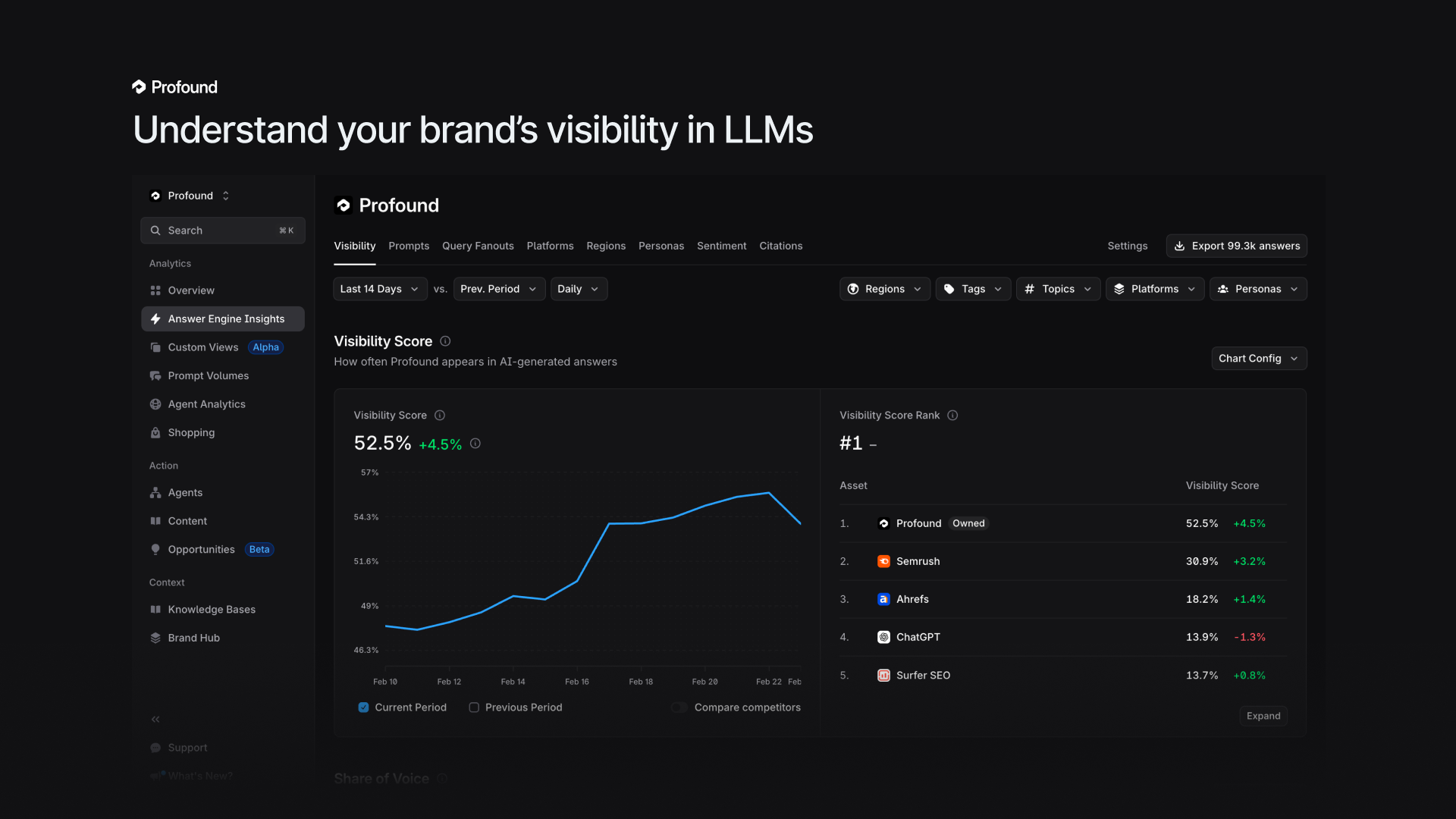
Profound is an LLM visibility platform designed to help brands track how they are mentioned, cited, and positioned within AI-generated responses across tools like ChatGPT, Gemini, Perplexity, and Google AI Overviews. It places strong emphasis on prompt-level tracking and competitive visibility across different AI systems.
Rather than combining multiple workflows like SEO or content creation, Profound focuses on core monitoring and benchmarking, giving teams a clear understanding of how their brand performs in AI-driven conversations over time.
Key Features
| Feature | Description |
|---|---|
| Brand visibility tracking | Monitors how frequently your brand appears in AI-generated answers. |
| Citation tracking | Reveals which sources are used by AI models when generating responses. |
| Share of Voice | Evaluates your brand’s presence compared to competitors. |
| Prompt tracking | Tracks performance across relevant user queries. |
| Competitive benchmarking | Analyses how your brand is positioned against competitors. |
| Trend analytics | Measures visibility changes over time across AI platforms. |
Why it fits
Profound is a strong choice for teams that need highly focused visibility tracking, particularly for analysing brand presence across prompts and competitors. It is well-suited for organisations that rely on clear benchmarking and trend insights to understand performance across multiple AI platforms.
Why is it not a fit
Profound may not be the best option for teams seeking hands-on optimisation or execution capabilities, as its core strength lies in monitoring rather than improvement. It is also not suitable for those who need integrated content workflows or AI readiness features within the same platform.
Read: Profound Alternatives for AI Search Optimization in 2026
Waikay
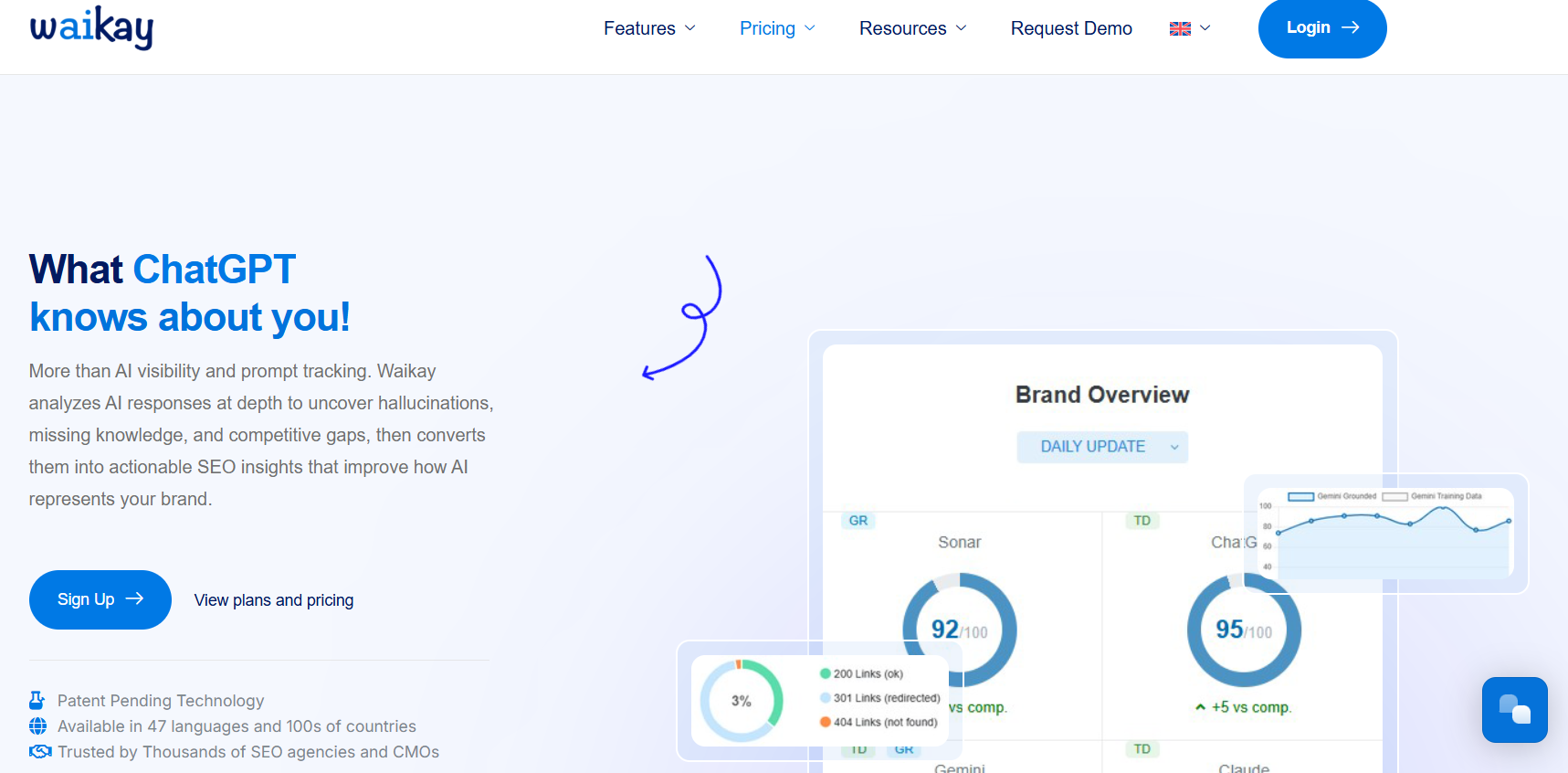
Waikay is an AI brand visibility and perception analysis platform that helps companies understand how large language models such as ChatGPT, Gemini, Claude, and Sonar describe and reference their brand.
The platform highlights differences in how various AI models describe the same brand and identifies issues such as missing information, inconsistencies, or incorrect outputs. It helps teams see how brand knowledge is formed inside AI systems and how it evolves.
Waikay is designed to improve the accuracy and consistency of brand representation in AI-generated responses by exposing perception gaps across models and prompts.
Key Features
| Feature | Description |
|---|---|
| AI brand mention tracking | Monitors where and how often a brand appears in AI-generated responses across LLMs. |
| AI search ranking insights | Analyses how AI models surface and position a brand in responses. |
| AI sentiment monitoring | Evaluates how AI systems describe a brand across different contexts. |
| Model-specific insights | Shows how different AI models interpret the same brand differently. |
| AI knowledge gap analysis | Detects missing or inconsistent information about a brand across AI systems. |
| Prompt-based tracking | Tracks brand visibility across selected prompts and user queries. |
| Competitive comparison | Compares how AI models represent your brand versus competitors. |
Why it fits
Waikay fits well when the goal is to identify inconsistencies and inaccuracies in how AI models describe a brand, especially across different LLM systems. It is useful for teams that need to detect incorrect outputs, missing context, or conflicting brand interpretations generated by AI tools.
Why is it not a fit
Waikay may not be suitable for teams that expect a fully mature platform, as it is still evolving with ongoing feature updates. Some find the interface less intuitive, which can require additional time to get used to. In addition, limitations such as restricted competitor tracking on lower plans, usage-based credits, and slower report generation can make it less efficient for large-scale or high-frequency monitoring needs.
Writesonic GEO
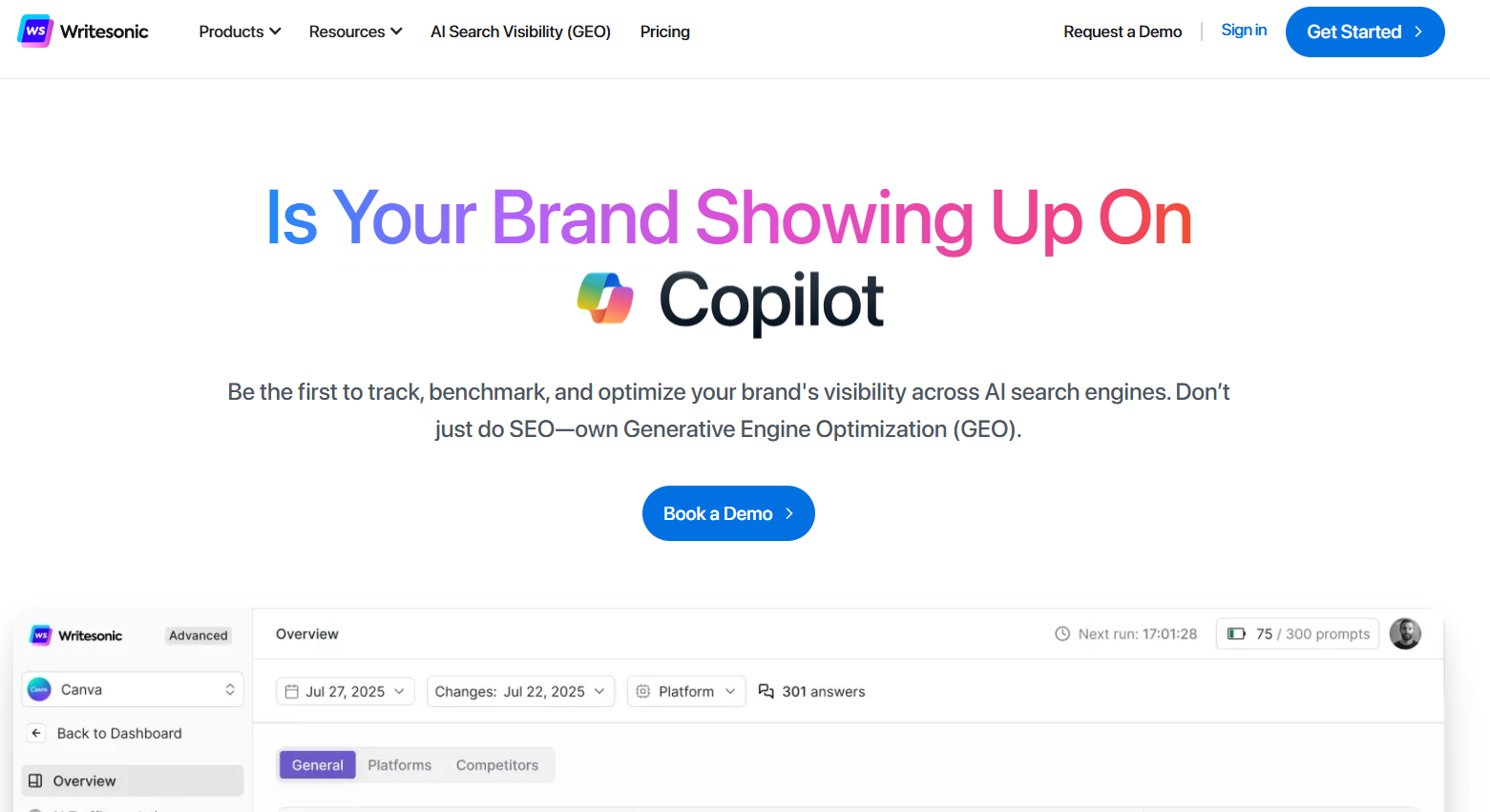
Writesonic GEO is a generative engine optimisation platform that enables brands to monitor how they appear in AI-generated responses across platforms like ChatGPT, Google AI Overviews, Gemini, and Perplexity. It helps you understand how frequently your brand is mentioned, how it is represented, and how your visibility compares with competitors in AI search.
In addition to tracking, the platform focuses on improving that visibility through content recommendations, citation insights, and optimisation workflows. By bringing together monitoring and execution, Writesonic GEO helps teams not only analyse their AI presence but also take steps to increase mentions, citations, and overall brand visibility.
Key Features
| Feature | Description |
|---|---|
| LLM visibility tracking | Tracks how your brand appears across AI-generated responses. |
| Share of Voice tracking | Shows how often your brand appears compared to competitors. |
| AI citation tracking | Identifies which sources AI uses when mentioning your brand. |
| Prompt tracking | Lets you track specific queries, topics, and competitors. |
| AI conversation analysis | Shows real AI answers to understand brand positioning. |
| AI traffic analytics | Tracks AI crawler visits and which pages they access. |
| Content optimisation suggestions | Recommends how to improve visibility in AI answers. |
| Multi-platform tracking | Covers ChatGPT, Gemini, Claude, Perplexity, and more. |
Why it fits
Writesonic GEO fits well because it combines tracking and action in one place, helping teams not only see where they lack visibility but also improve it through content. It is especially useful for quick insights, competitor comparison, and execution without switching tools.
Why is it not a fit
Writesonic GEO is not ideal for teams that need very deep analytics or highly customised reporting, as it focuses more on usability than advanced data depth. It also requires manual content refinement, since AI-generated outputs may lack strong brand voice.
Athena HQ
AthenaHQ combines AI visibility tracking with content-driven optimisation, helping brands understand how they appear in AI-generated answers while actively improving that presence through GEO-ready content and integrations. It analyses how your brand is positioned across platforms, including competitor comparisons, and visibility trends.
Beyond tracking, AthenaHQ connects these insights to real business outcomes, enabling teams to measure how AI visibility influences traffic, leads, and conversions—making it a more performance-focused solution for AI search.
Key Features
| Feature | Description |
|---|---|
| Prompt tracking | Tracks high-value prompts relevant to your brand and monitors performance across AI search. |
| LLM visibility monitoring | Measures brand mentions, positioning, and perception across AI-generated responses. |
| Content optimisation | Provides actionable steps to improve and protect brand visibility in AI answers. |
| Pitch workspace (Agencies) | Enables agencies to present AI visibility insights and win new clients. |
| E-commerce integration | Supports GEO-ready content and tracks AI-driven impact through platforms like Shopify. |
| Revenue attribution | Connects AI visibility data with traffic, leads, and conversions. |
Why it fits
AthenaHQ fits well for teams that need a strong focus on revenue and measurable outcomes, not just visibility tracking. It is especially useful for agencies and e-commerce teams managing multi-platform AI visibility at scale.
Why is it not a fit
AthenaHQ may not be ideal for teams looking for a simple or quick setup, as it requires structured implementation and ongoing management. Its pricing can increase with usage, which may not suit smaller teams or limited budgets. It is also less suited for those who only need lightweight or basic AI visibility tracking.
Read: 10 Best AthenaHQ Alternatives you should know in 2026
Rankscale
Rankscale provides a wide, data-driven perspective on brand visibility across a large range of AI systems, instead of focusing on just a few major platforms. It tracks mentions, sentiment, and citations across 17+ AI engines, helping teams see how different models represent and position their brand.
Key Features
| Feature | Description |
|---|---|
| Brand visibility tracking | Tracks how often your brand appears across multiple AI search engines and models. |
| Multi-model AI tracking | Covers AI engines including ChatGPT, Gemini, Claude, and more. |
| Citation tracking | Identifies which sources AI models reference in responses. |
| Sentiment analysis | Shows how AI systems describe your brand across different topics. |
| Share of Voice | Measures visibility compared to competitors in AI responses. |
| Competitor analysis | Compares brand presence, citations, and positioning against competitors. |
| AI readiness audit | Evaluates pages and highlights improvements to increase AI citations. |
| Shopping/product analysis | Tracks how products or offerings appear in AI-generated recommendations. |
| Flexible prompt tracking | Allows custom prompt frequency and tracking intervals. |
Why it fits
Rankscale fits well for teams that want maximum AI coverage at an affordable cost, especially those looking to track visibility across many models. It provides strong analytical depth with sentiment and readiness insights, helping identify gaps in how AI systems interpret your brand.
Why it is not a fit
Rankscale may not be ideal for teams looking for a simple or beginner-friendly experience, as the data-rich interface can feel complex. Some features, like prompt organisation and filtering, are less mature, which can impact workflow efficiency. It is also less suited for teams needing built-in content creation or execution tools alongside tracking.
Hall
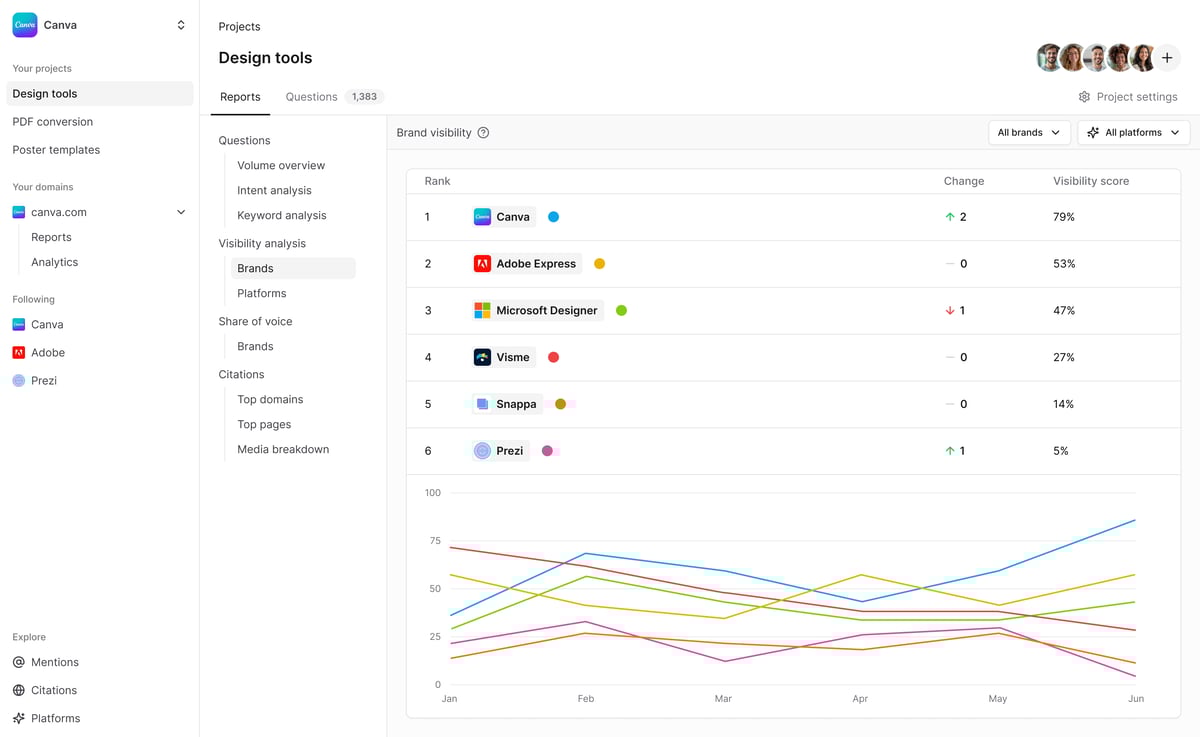
Hall takes a focused and simplified approach to AI visibility. Instead of broad analytics, it prioritises clarity at the page level, showing which specific URLs are being cited and how your brand is represented in AI conversations.
It is designed as an accessible entry point into GEO, giving teams a straightforward way to monitor brand presence, sentiment, and share of voice without the complexity of larger, data-heavy platforms.
Key Features
| Feature | Description |
|---|---|
| Generative answer insights | Tracks how your brand appears and is positioned in AI-generated conversations. |
| Website citation insights | Shows which pages from your website are cited in AI responses. |
| Agent analytics | Monitors how AI agents and crawlers interact with and access your website. |
| Conversational commerce tracking | Tracks how products or ecommerce elements perform within AI-generated conversations. |
Why it fits
Hall is a good fit for teams that need clear and actionable visibility into how their brand shows up in AI-generated conversations. It provides strong insights into mentions, trends, and platform-level performance, making it useful for shaping content strategy. Its responsive support and focused approach also make it helpful for teams starting with AI visibility tracking.
Why is it not a fit
Hall may not work well for teams looking for a simple, plug-and-play experience, as setup and usage can feel technical. The limitations in the free version and still-developing features like sentiment analysis may restrict deeper insights. It is also less suitable for teams that need a highly advanced or fully mature GEO platform.
Conclusion
For large enterprises, Scrunch AI, Authoritas, and AthenaHQ are best suited due to their scalability, advanced multi-model tracking, and strong reporting that ties AI visibility to business outcomes. For brands and growth teams, Indexly, Writesonic GEO, and Rankscale work well as they combine visibility tracking with optimisation and competitor insights for managing multiple brands.
SEO teams transitioning into AI search can use Nightwatch and Authoritas to bridge traditional SEO with GEO through keyword tracking and early AI visibility signals. For simple monitoring, Profound and Hall are ideal for clear benchmarking and citation insights, while Hall or Nightwatch are easiest for small teams or beginners with lightweight setup and essential tracking.
FAQs
What are LLM brand visibility tools?
They are platforms that track how often and how accurately your brand appears in AI-generated responses from tools like ChatGPT, Gemini, and Perplexity, focusing on visibility, citations, and positioning.
Which tools are best for enterprises?
Scrunch AI, Authoritas, and AthenaHQ are best for large enterprises due to their scalability, advanced analytics, and business-focused reporting.
How are you tracking your brand visibility inside ChatGPT and other LLMs?
Businesses track brand visibility inside ChatGPT and other LLMs by analysing which prompts mention their brand, how competitors are positioned, and which sources AI systems cite. Platforms like Indexly, Scrunch AI, Authoritas, and Waikay help monitor visibility across multiple AI models.
How does generative engine optimization GEO improve your brand's visibility in AI search results?
Generative Engine Optimization (GEO) improves your brand’s presence in AI search by making your content more accessible and relevant for AI systems like OpenAI ChatGPT and Google Gemini to surface and reference in generated answers.