
By 2028, AI search could be influencing nearly $750B in US revenue—reshaping how buying decisions happen before a user even clicks a website, according to McKinsey. As discovery shifts away from traditional search journeys, brands are being evaluated, compared, and recommended directly inside AI systems. In this new environment, choosing the right AthenaHQ alternatives has become essential for modern marketing teams.
This blog explores the 10 best AthenaHQ alternatives in 2026, evaluated across visibility tracking, execution capability, usability, AI coverage, and analytics depth. While some tools focus on monitoring or content, the strongest platforms combine insight with execution—helping teams not just track AI visibility, but actively improve it.
Why look for AthenaHQ Alternatives?
Although AthenaHQ is a strong AI visibility platform, it may not fit every team’s needs.
Key limitations include:
- Credit-based pricing that can become unpredictable at scale
- A steeper onboarding process requiring technical setup
- Limited historical benchmarking for long-term analysis
- Advanced features restricted to higher-tier plans
- A focus on insights, with less emphasis on execution workflows
As a result, many teams prefer alternatives that offer clearer pricing, faster onboarding, and stronger end-to-end workflows.
Read: AthenaHQ Review 2026: Features, Pros, and Cons
AthenaHQ Alternatives
1. Indexly — Best for AI Search Visibility & SEO
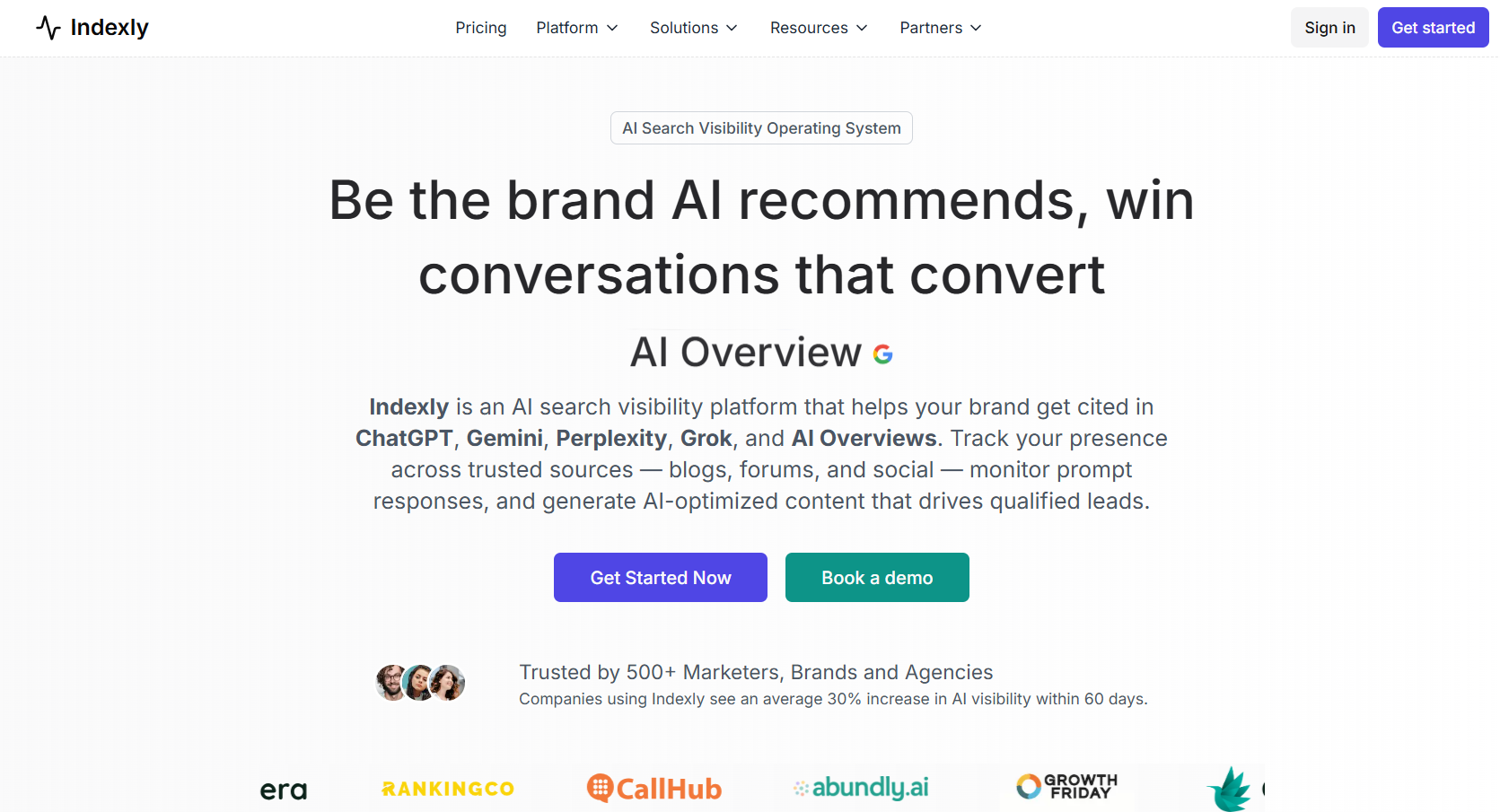
Indexly is an AI visibility platform built for teams that want to understand and actively improve how their brand appears across AI-driven search systems. It tracks visibility across tools like ChatGPT, Perplexity, and Google AI Overviews, while translating that data into actionable SEO and GEO opportunities.
Unlike tools that stop at reporting, Indexly connects insights directly to execution. It identifies prompt gaps, content opportunities, and sentiment shifts, then helps teams act on them through structured workflows. This makes it useful not just for monitoring AI visibility, but for improving it at scale.
Key Features
| Feature | Description |
|---|---|
| AI Readiness Audit | Evaluates how prepared a brand's website is for discovery across AI-powered platforms. |
| Brand Visibility Tracking | Measures how often and in what contexts a brand appears in AI-generated responses. |
| Brand Sentiment | Assesses the tone AI systems use when referencing a brand, such as positive, neutral, or negative. |
| Prompt Opportunities | Highlights high-intent queries where a brand can potentially gain visibility in AI search. |
| Citation Tracking | Analyses where content is cited in AI answers and identifies gaps versus competitors. |
| Website Audit | Detects technical SEO issues that may impact site performance and discoverability. |
| Keyword Opportunities | Identifies keyword gaps and growth opportunities to improve organic reach. |
| Backlink Opportunities | Surfaces potential link-building sources to strengthen domain authority. |
| Indexation Tracking | Monitors how effectively web pages are being discovered and indexed by search engines. |
| Brand Hub | Serves as a centralized workspace for managing all brand visibility insights. |
| Content Dashboard | Provides a consolidated view of content performance and optimisation insights. |
| Integrations | Connects with external tools to support workflows and publishing automation. |
| Autopilot System | Automates content creation, optimisation, and publishing based on data signals. |
| Content Opportunities (SEO + AEO) | Suggests topics optimized for both traditional SEO and AI-driven answer engines. |
| LinkedIn Content Engine (Upcoming) | Generates and refines LinkedIn content based on engagement and visibility data. |
| YouTube Content Engine (Upcoming) | Produces video ideas aligned with search demand and AI trend signals. |
| PR & Outreach Module (Upcoming) | Identifies media and outreach opportunities to build brand authority and visibility. |
Pros
Indexly combines AI content, content optimisation, and knowledge gap analysis in one platform, enabling both insights and execution.
Cons
Indexly can feel complex for beginners due to its wide focus on SEO, and GEO workflows. Teams needing only basic brand monitoring or prompt volume tracking may find it more advanced than required.
2. Semrush AI Visibility Toolkit — Best for Existing Semrush Users
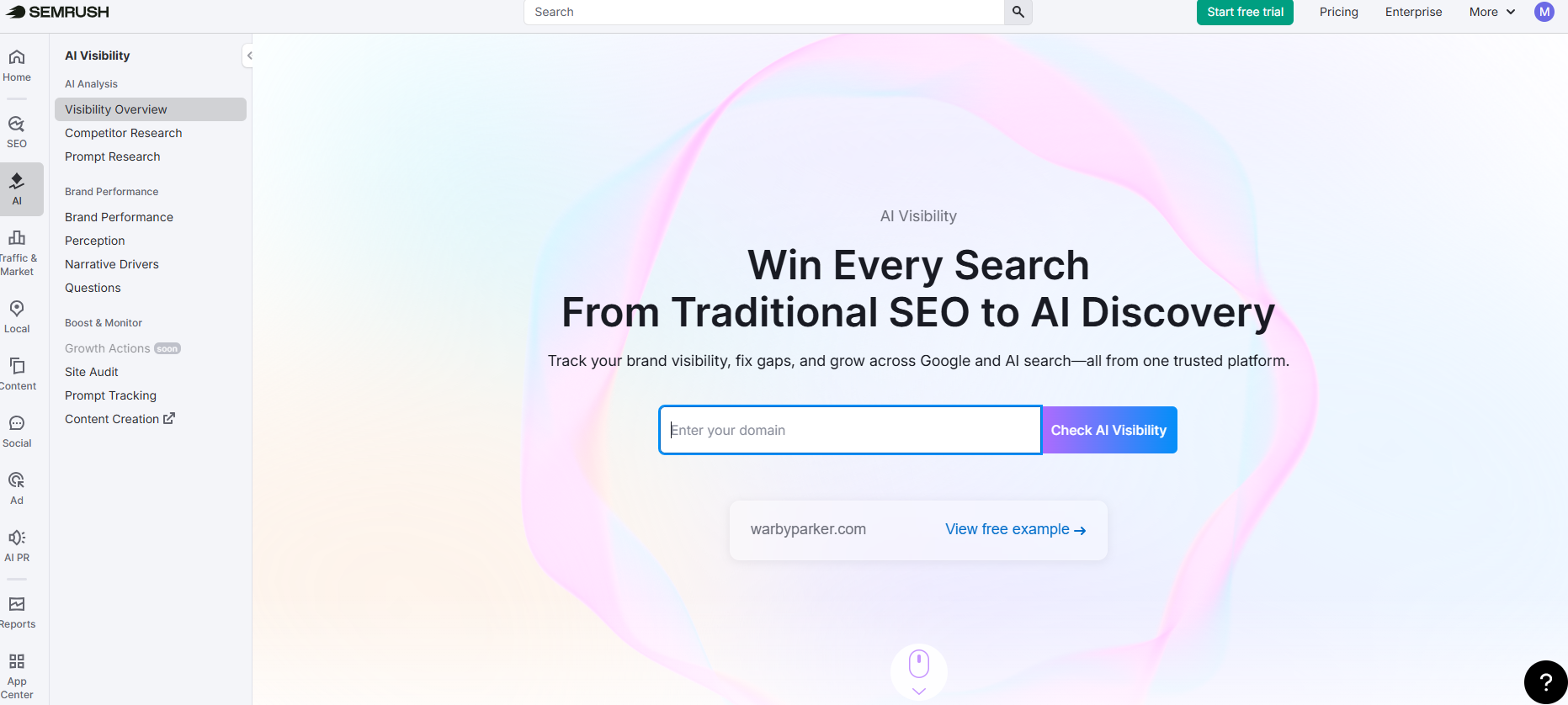
The Semrush AI Visibility Toolkit extends into AI search by adding visibility insights on top of existing SEO data. It tracks mentions, sentiment, and competitor presence within familiar Semrush dashboards.
Rather than introducing a new workflow, it enhances traditional SEO reporting with AI-related signals. It’s best for teams already using Semrush who want AI visibility layered into their SEO stack.
Key Features
| Feature | Description |
|---|---|
| AI Visibility Overview | Provides a snapshot of how a brand appears across AI platforms like ChatGPT, Gemini, Perplexity, and Google AI Overviews, including frequency and context of mentions. |
| Brand Performance Analysis | Evaluates how AI systems represent a brand by measuring share of voice, sentiment, and overall narrative positioning versus competitors. |
| Prompt Research | Discovers valuable AI-driven queries and topics that reveal opportunities to improve visibility in generative search results. |
| Prompt Tracking | Tracks selected prompts over time to see how often a brand is included in AI-generated answers and measure performance changes. |
| Competitor Research | Compares brand visibility against competitors and highlights areas where rivals are appearing in AI responses but your brand is missing. |
| AI Search Site Audit | Identifies technical SEO issues that may limit how effectively AI systems crawl and interpret website content. |
| Reporting & Insights | Converts AI visibility data into structured reports for marketing teams, SEO workflows, and client reporting. |
Pros
Semrush AI Visibility Toolkit brings together AI search visibility, brand monitoring, and SEO insights in a single integrated system. It
Cons
The toolkit is primarily built for existing Semrush users, limiting its usefulness as a standalone AI search optimisation solution. It also lacks more advanced execution features like AI content generation and in-depth prompt-level optimisation found in dedicated GEO platforms.
3. Orchly — Best for Content Optimization & AI Agents
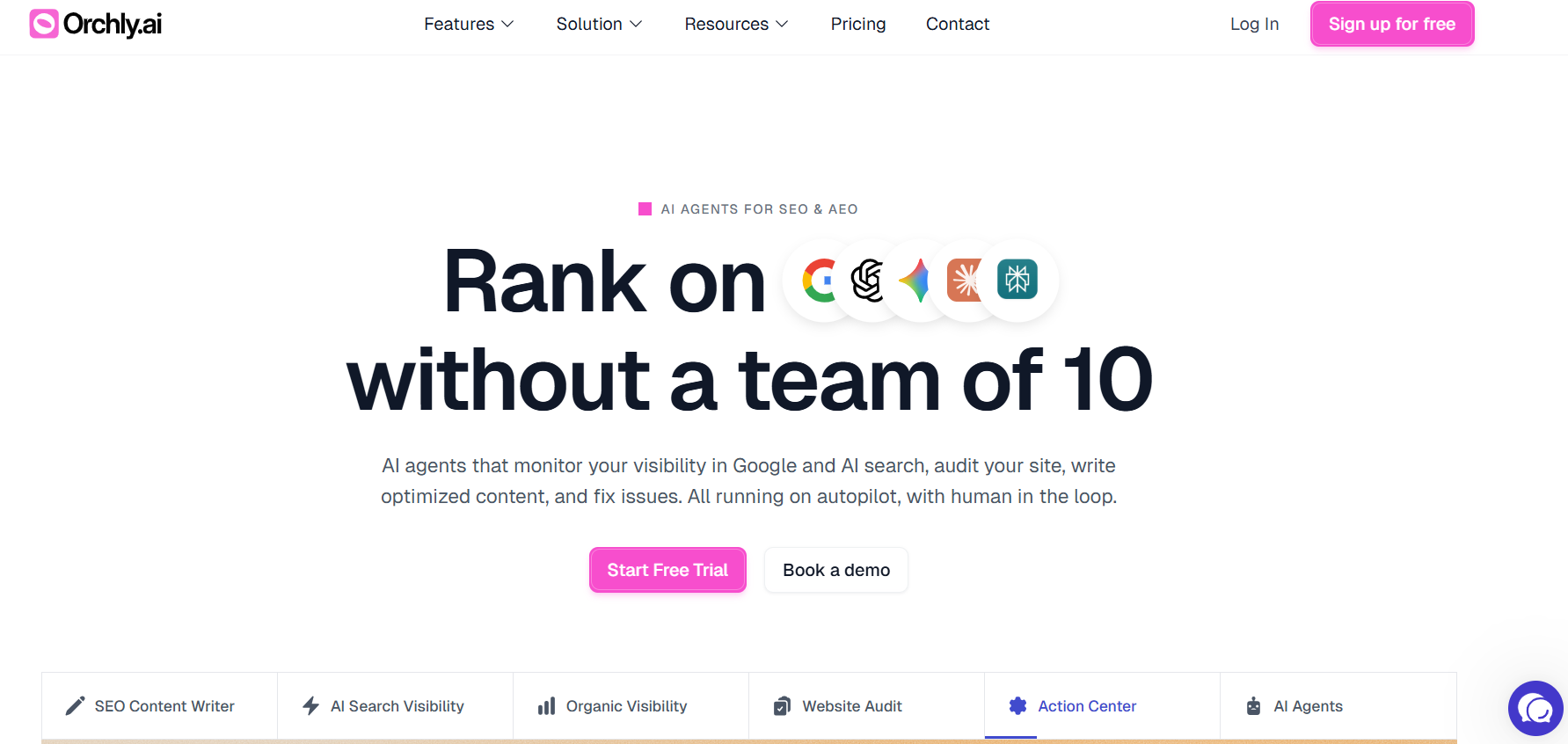
Orchly focuses on turning AI visibility insights into content actions. structured content creation and optimisation workflows. It identifies gaps in AI answers and converts them into SEO and GEO content tasks.
The platform is built around continuous content improvement driven by AI search signals. It’s best for teams focused on active content production and optimisation.
Key Features
| Feature | Description |
|---|---|
| AI Search Monitoring | Tracks how a brand appears across AI platforms like ChatGPT and other LLM-based search systems. |
| SEO & GEO Optimizer | Enhances content for both traditional search engines and generative AI visibility. |
| Website SEO & GEO Audit | Assesses webpages for SEO performance and readiness for AI-driven search. |
| AI Traffic Analytics | Analyzes traffic patterns generated by AI crawlers and AI-based referrals. |
| Query Fan-Out Analysis | Examines how user prompts expand and influence AI-generated results. |
| AEO & GEO Report Builder | Creates structured reports showcasing AI search visibility and optimisation performance. |
Pros
Orchly supports faster content decision-making by linking AI search signals with optimisation workflows, reducing the gap between insight and execution.
Cons
Orchly may feel less suitable for teams focused only on AI visibility monitoring, as it also includes content creation and GEO workflows. Its effectiveness depends on active use of its tools, which may require more effort and consistency from smaller teams.
4. Profound — Best for Enterprise AI Intelligence
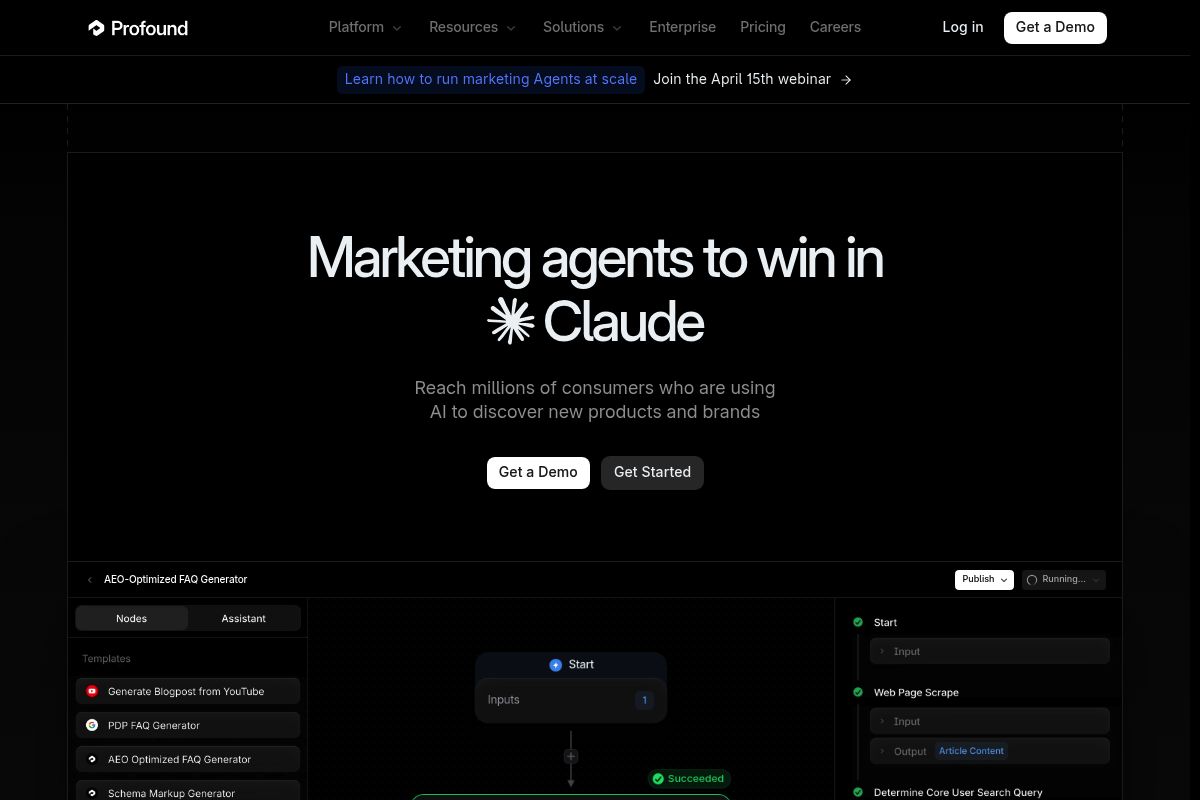
Profound analyses how AI systems represent brands across multiple models at a high level. It focuses on benchmarking, narrative insights, and enterprise reporting rather than execution.
The platform helps organisations understand brand perception across AI ecosystems. It’s best for large enterprises needing deep AI visibility intelligence and analysis.
Read: Profound AI Review: Features, Pricing, Pros, and Cons
Key Features
| Feature | Description |
|---|---|
| AI Visibility Monitoring | Tracks how brands appear across AI search engines and LLM outputs |
| Answer Engine Optimisation (AEO) Analytics | Evaluates brand presence in AI-generated answers |
| Knowledge Gap Detection | Identifies missing or incomplete brand information in AI responses |
| Competitive AI Benchmarking | Compares visibility against competitors in AI systems |
| Enterprise Reporting | Delivers structured, compliance-focused reports for large teams |
| Multi-Model Coverage | Supports tracking across multiple generative AI platforms |
Pros
Profound provides advanced enterprise-grade AI visibility insights, strong brand intelligence tools, and detailed AEO analytics designed for large organisations. It is particularly effective for competitive analysis and structured reporting at scale.
Cons
Profound is mainly built for enterprise use, making it expensive and less practical for smaller teams. It also focuses more on monitoring and analytics, with limited capabilities for content creation or execution workflows.
Read: Profound Alternatives for AI Search Optimization in 2026
5. Otterly AI — Best for Budget AI Visibility Tracking
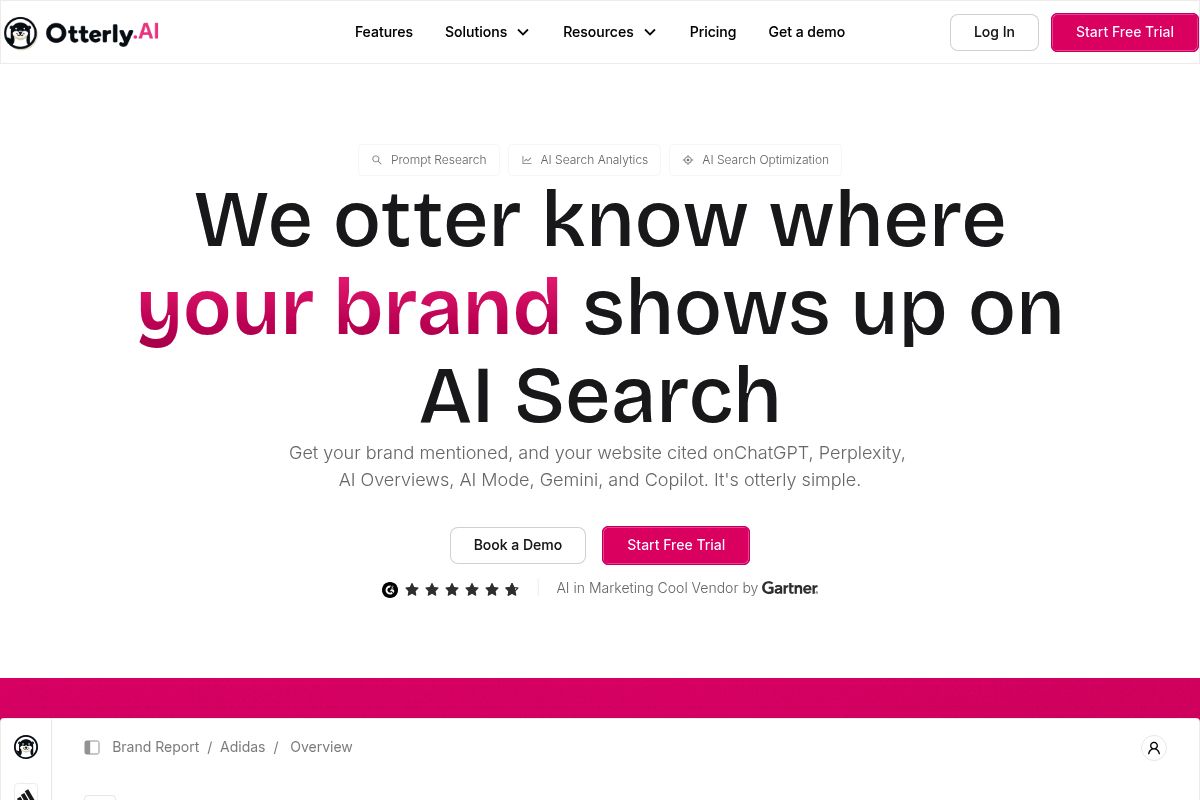
Otterly AI provides a simple snapshot of how often your brand appears in AI-generated responses. It focuses on basic tracking of mentions, sentiment, and visibility trends. The tool avoids complex workflows and is designed purely for monitoring purposes. It’s best for teams that need quick and lightweight AI visibility tracking.
Key Features
| Feature | Description |
|---|---|
| AI Visibility Tracking | Tracks brand mentions within AI-generated answers |
| Brand Monitoring | Shows how AI models portray a brand |
| Knowledge Gap Detection | Highlights missing or incomplete brand information in AI outputs |
| Multi-Platform Coverage | Supports major AI tools like ChatGPT and Perplexity |
| Simple Dashboard | Provides an easy interface for quick insights and reporting |
Pros
Otterly AI is cost-effective, simple, and beginner-friendly, making it ideal for startups exploring AI search visibility and brand tracking.
Cons
It does not provide advanced features like AI content generation, GEO workflows, or deeper optimisation capabilities, making it better suited for monitoring rather than full-scale execution or strategy.
6. SE Ranking Visible — Best for SEO + AI Hybrid Tracking
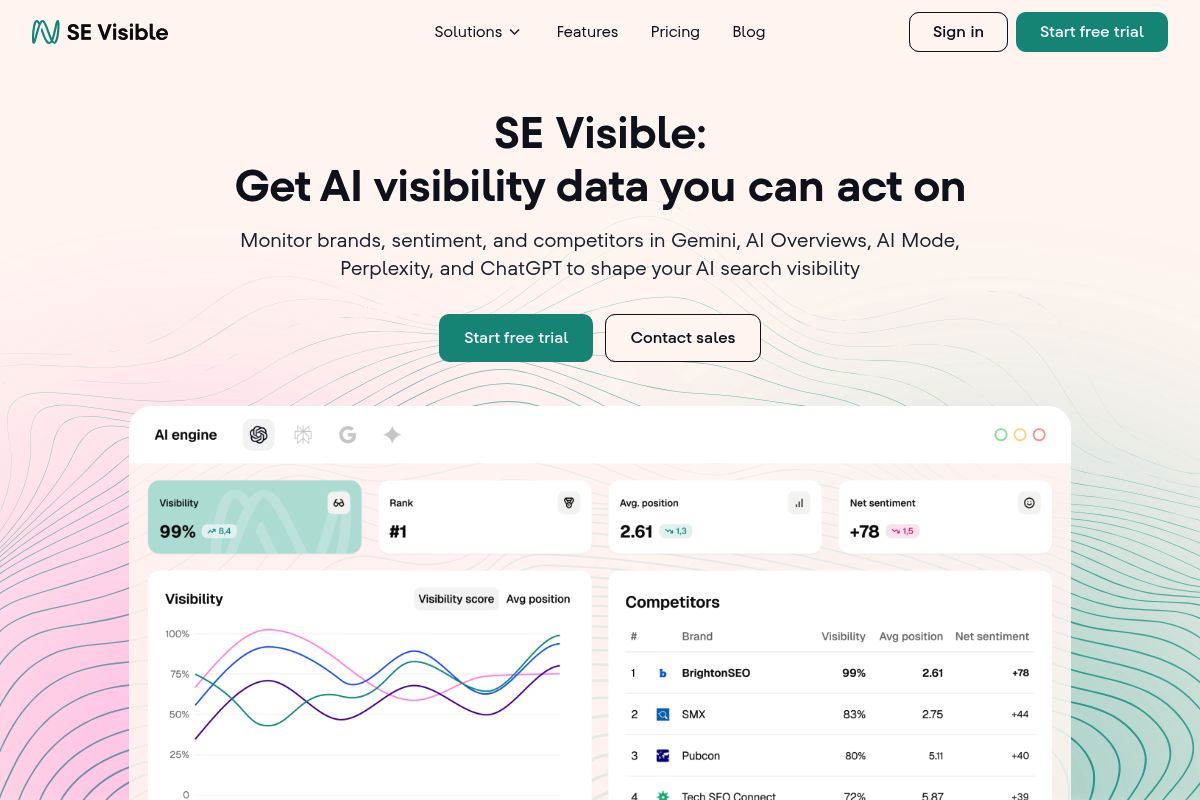
SE Ranking Visible extends traditional SEO workflows into AI visibility tracking. It helps teams understand performance across both search engines and AI-generated answers.
Key Features
| Feature | Description |
|---|---|
| AI Search Visibility Tracking | Tracks brand presence in AI-generated responses |
| SEO Integration | Blends AI insights with traditional SEO data |
| Keyword Rank Tracking | Monitors keyword positions across search engines |
| Content Optimization Tools | Supports SEO-focused content improvement workflows |
| Sentiment Analysis | Evaluates the tone of brand mentions in AI outputs |
| Unified Dashboard | Consolidates SEO and AI visibility reporting in one view |
Pros
SE Ranking Visible strength is unifying keyword tracking, SEO audits, and AI insights within one system.
Cons
It is still largely SEO-centric, so its AI-native execution and generative optimisation features are less advanced compared to specialised AI-first GEO tools.
7. ContentMonk — Best for AI Content Creation & Citations
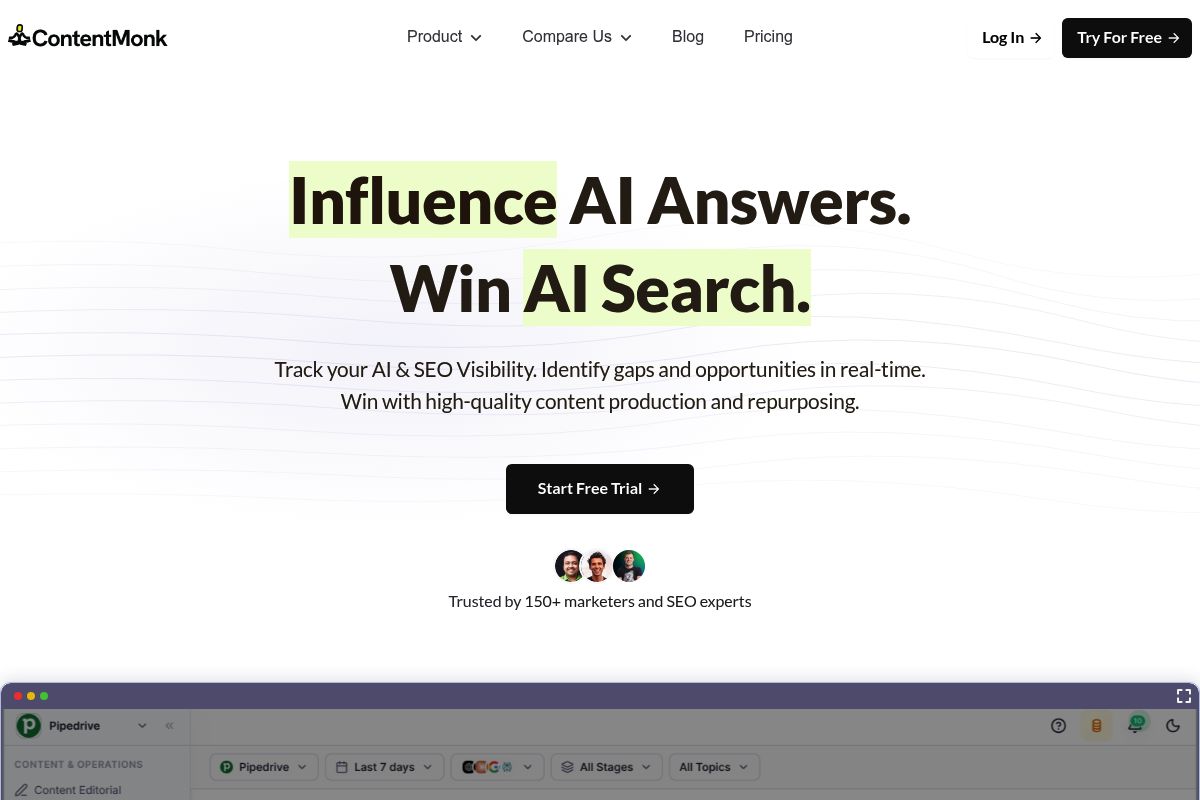
ContentMonk generates structured, AI-optimised content designed to increase citation chances in search engines. It turns knowledge gaps into publishable content at scale. The platform focuses more on execution and content creation than visibility tracking. It’s best for teams prioritising fast, scalable AI-friendly content production.
Key Features
| Feature | Description |
|---|---|
| AI Content Generation | Creates structured, AI-optimised articles in minutes |
| AEO Optimisation | Formats content for improved AI search visibility |
| Knowledge Base Integration | Uses verified internal data for accuracy and citations |
| Brand Voice Control | Maintains consistent tone across content |
| Fast Draft Creation | Produces near-finished content in under 2 minutes |
Pros
ContentMonk is highly effective for teams focused on fast, scalable AI content creation and citation-driven visibility, supporting strong AEO execution and rapid knowledge gap coverage.
Cons
It is primarily content-focused, making it less suitable for users who need only AI visibility tracking or brand monitoring without content execution tools.
8. Peec AI — Best for Multi-Platform Brand Monitoring
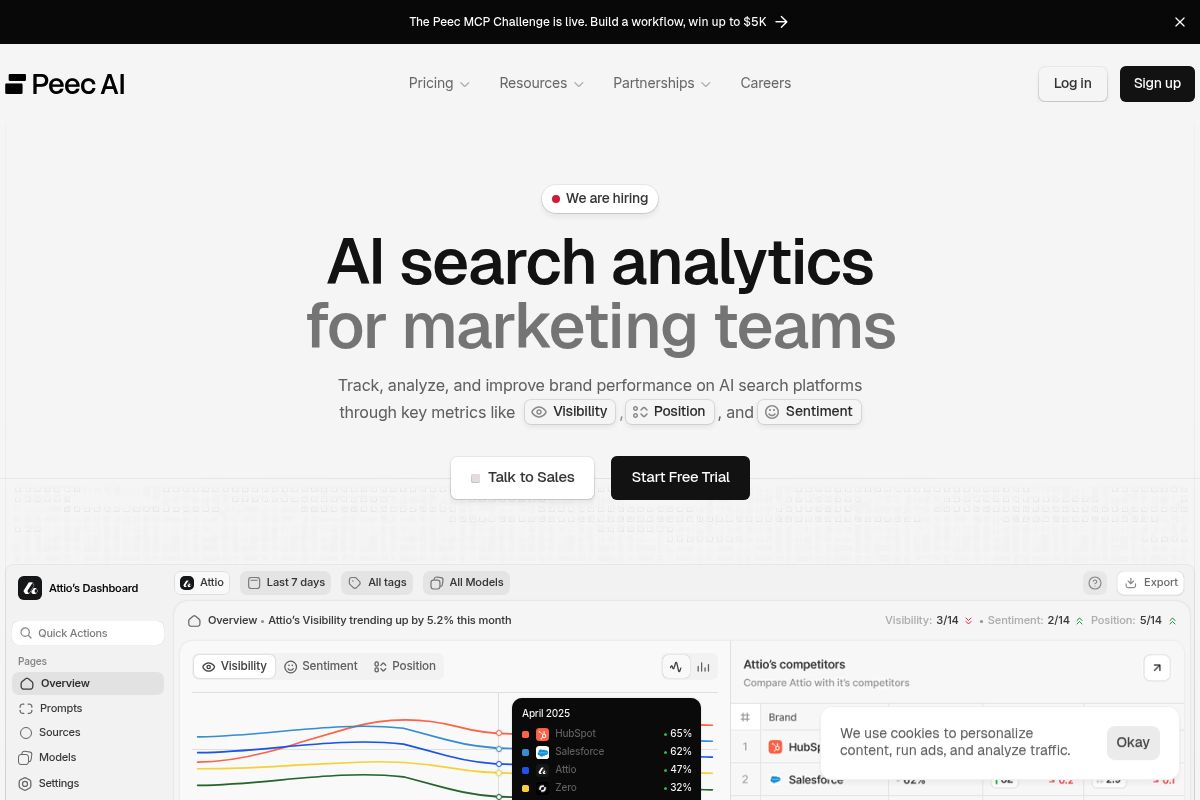
Peec AI is a lightweight visibility tool designed for teams that want quick, clear insights into how their brand appears across major AI platforms like ChatGPT, Claude, and Perplexity. It avoids complexity and focuses on straightforward monitoring of mentions, sentiment, and visibility trends, making it ideal for agencies and startups.
Read: Peec AI Review: Features, Pricing, Pros, and Cons
Key Features
| Feature | Description |
|---|---|
| AI Platform Tracking | Monitors ChatGPT, Claude, Perplexity and others |
| Brand Monitoring | Tracks how AI systems represent brands |
| Sentiment Insights | Evaluates tone in AI-generated responses |
| Visibility Tracking | Measures presence across AI outputs |
| Simple Dashboard | Easy reporting for quick analysis |
Pros
Peec AI is simple, lightweight, and easy to use, making it ideal for teams that need quick insights into AI visibility, sentiment, and brand monitoring without complexity.
Cons
It lacks advanced capabilities like AI content creation, GEO workflows, or deep optimisation tools, making it more suited for monitoring than execution.
Read:10 Best Peec AI Alternatives you should know in 2026
9. AIClicks — Best for Prompt-Level AI Insights
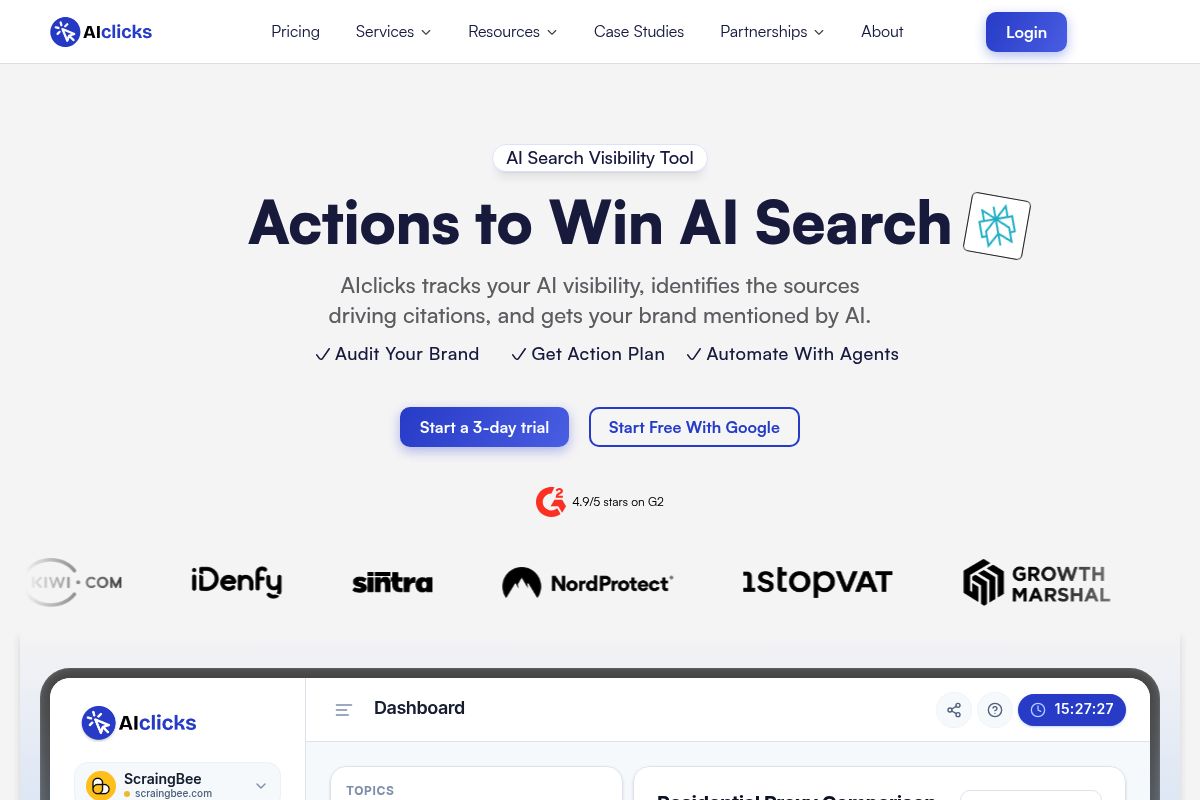
AIClicks analyses which prompts trigger brand visibility in AI responses. It helps identify gaps where competitors appear but your brand does not. The focus is on understanding visibility patterns at the query level. It’s best for refining GEO strategy through prompt-level insights.
Key Features
| Feature | Description |
|---|---|
| Prompt Analysis | Tracks how queries trigger brand mentions |
| Brand Visibility Tracking | Monitors AI-generated brand appearances |
| Competitor Benchmarking | Compares brand performance vs rivals |
| Citation Tracking | Identifies sources influencing AI answers |
| GEO Support | Helps improve generative optimisation strategy |
Pros
AIClicks delivers deep prompt-level insights and competitor intelligence, making it useful for improving GEO strategy and AI visibility performance.
Cons
It is mainly analytics-driven and lacks strong content creation or automation features, making it better suited for insights than full execution workflows.
10. TurboAudit — Best for Page-Level AI Diagnostics
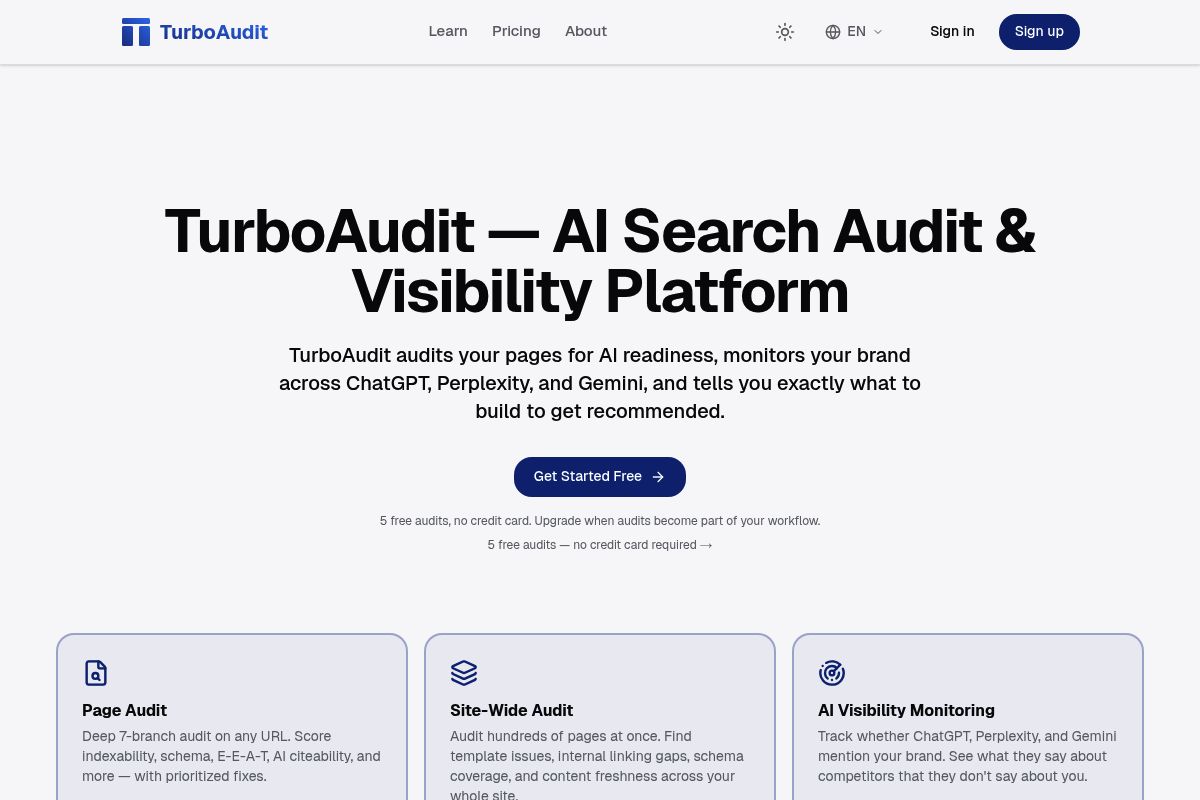
TurboAudit examines AI visibility issues at the page and URL level. It identifies why certain pages are not being surfaced in AI-generated results.
The tool focuses heavily on technical SEO signals and crawlability analysis.
It’s best for diagnosing and fixing technical issues affecting AI visibility.
Key Features
| Feature | Description |
|---|---|
| Page-Level Audits | Detects AI visibility issues per URL |
| Technical SEO Analysis | Evaluates structure and optimisation signals |
| Missed Prompt Detection | Finds gaps where competitors appear instead |
| Competitive Benchmarking | Compares page-level visibility |
| AI Reporting | Summarises insights in structured dashboards |
Pros
TurboAudit is strong for technical SEO and AI visibility diagnostics, helping teams fix page-level issues affecting AI search performance.
Cons
It is mainly diagnostic and lacks content creation, automation, or full GEO execution capabilities, making it better for analysis than end-to-end optimisation.
Conclusion
Indexly stands out as the most complete AthenaHQ alternative for teams that want both visibility tracking and execution in a single workflow.
For enterprise-scale needs, Profound leads in depth and analytics, while tools like Peec AI and Otterly AI serve lightweight monitoring use cases.
The brands that start building AI search visibility now will have a compounding advantage in two years. Whether you choose our #1 pick Indexly or another alternative, the key is starting today to secure your position in the AI-first future of search.
FAQs
What makes these AthenaHQ alternatives better than AthenaHQ itself?
These alternatives often provide better value through transparent pricing, broader platform coverage, or specialized features. For example, Indexly has SEO + AI visibility automation, while Otterly AI offers the most accessible entry point. Many alternatives avoid AthenaHQ's complex credit system and provide clearer, more predictable pricing models that scale with your actual usage.
Do I need a dedicated AI visibility tool if I already use traditional SEO tools?
There's a real difference between monitoring-only tools and execution-led platforms. Know which one you actually need before you buy . Traditional SEO tools track Google rankings but miss AI citations entirely. Since AI Overviews now appear in 48% of searches, up from 34.5% in December 2025 , dedicated AI visibility tracking has become essential for staying competitive.
Which AI platforms should these tools monitor to be considered comprehensive?
Platform coverage should include how many AI search engines the tool monitors, with ChatGPT, Perplexity, Google AI Overviews, Gemini, and Claude being the five major platforms . The best alternatives track 6-10+ platforms, including emerging engines like DeepSeek and Grok. Don't settle for tools that only monitor one or two major platforms.
Can these tools actually improve my AI search visibility, or just monitor it?
If AI visibility is a genuine strategic priority and not just a reporting metric, you want a platform that covers the full loop: discover where you stand, understand why, and have the tools to fix it without switching tabs . Tools like Indexly and ContentMonk provide content creation alongside monitoring, while others focus purely on tracking. Matching the tool to your actual workflow needs is critical.