
Looking for better Peec AI alternatives? You’re tracking AI visibility, but turning that data into actual growth—more citations, better brand positioning, stronger presence in LLM answers—is still a challenge. That’s where most tools fall short.
They show rankings, mentions, and prompts, but leave teams to figure out optimisation, content creation, and GEO execution on their own. The result? Slower workflows, unclear priorities, and missed opportunities in AI search.
Modern marketing teams need more than reporting. They need tools that connect AI search analytics, prompt tracking, citation tracking, and brand sentiment directly to action—so they can improve visibility, not just measure it.
In this blog, we break down the best Peec AI alternatives in 2026—platforms built to help you move from insight to execution and actually grow your presence across AI answer engines.
Why Look for Peec AI Alternatives?
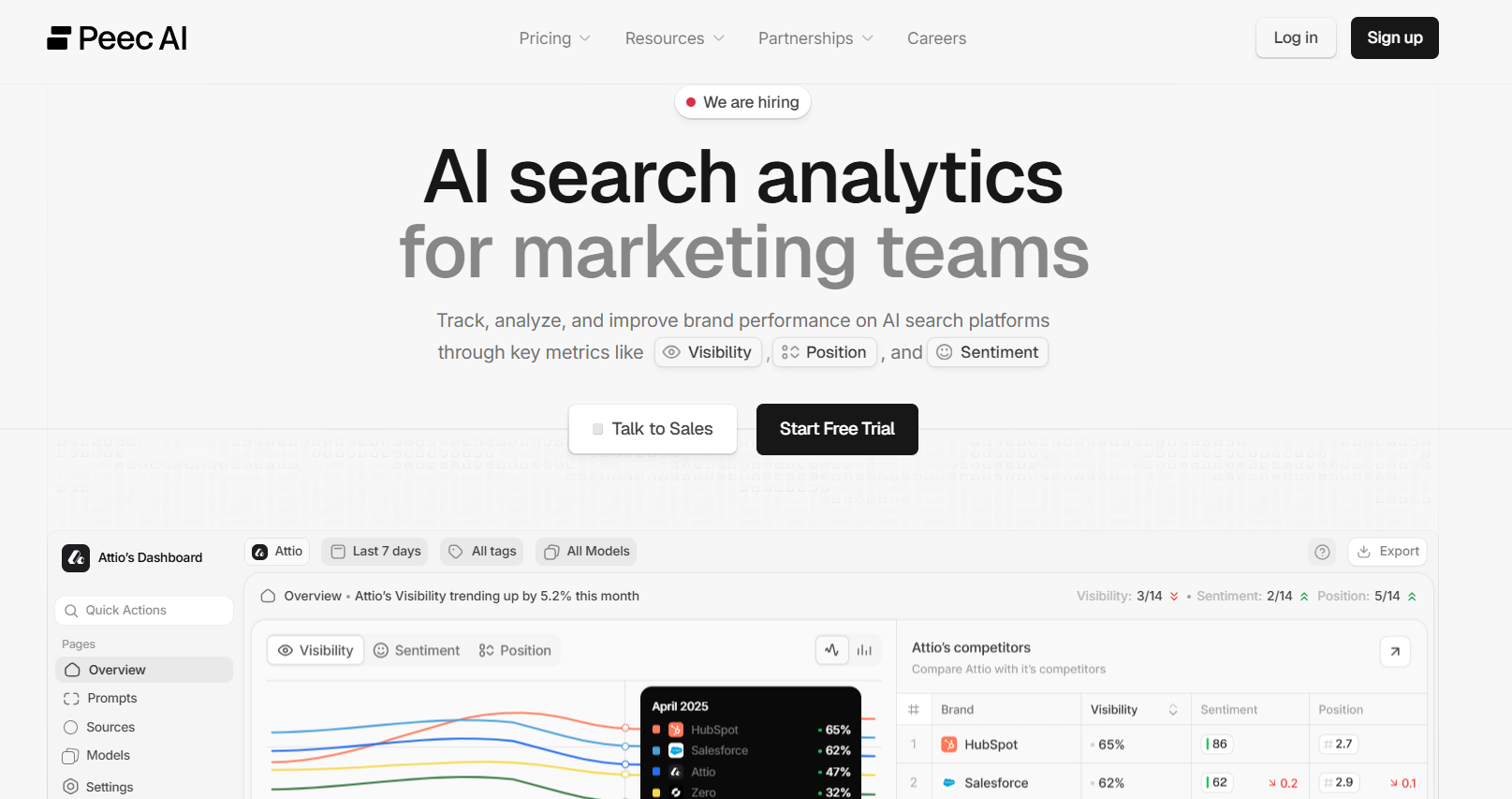
Peec AI offers useful AI search visibility tracking, but teams often run into limits when trying to turn insights into action. While it shows where a brand appears in AI-generated results, it doesn’t always clearly explain why those rankings or citations happen, leaving users to manually interpret the data and figure out the next steps. It also lacks built-in tools for content creation or direct SEO execution, meaning improvements must be handled outside the platform.
There are also concerns around data depth and usability. Niche or low-volume queries can be less reliable, and updates may not always feel fully real-time. Competitive sentiment tracking is limited, and filtering or managing large datasets can be time-consuming. Overall, Peec AI is strong for visibility monitoring, but less suited for teams that need prioritisation, automation, and clear ROI-driven workflows.
Read: Peec AI Review: Features, Pricing, Pros, and Cons
Peec AI Alternatives
1. Indexly — Best All-in-One AI Visibility, SEO & GEO Execution Platform
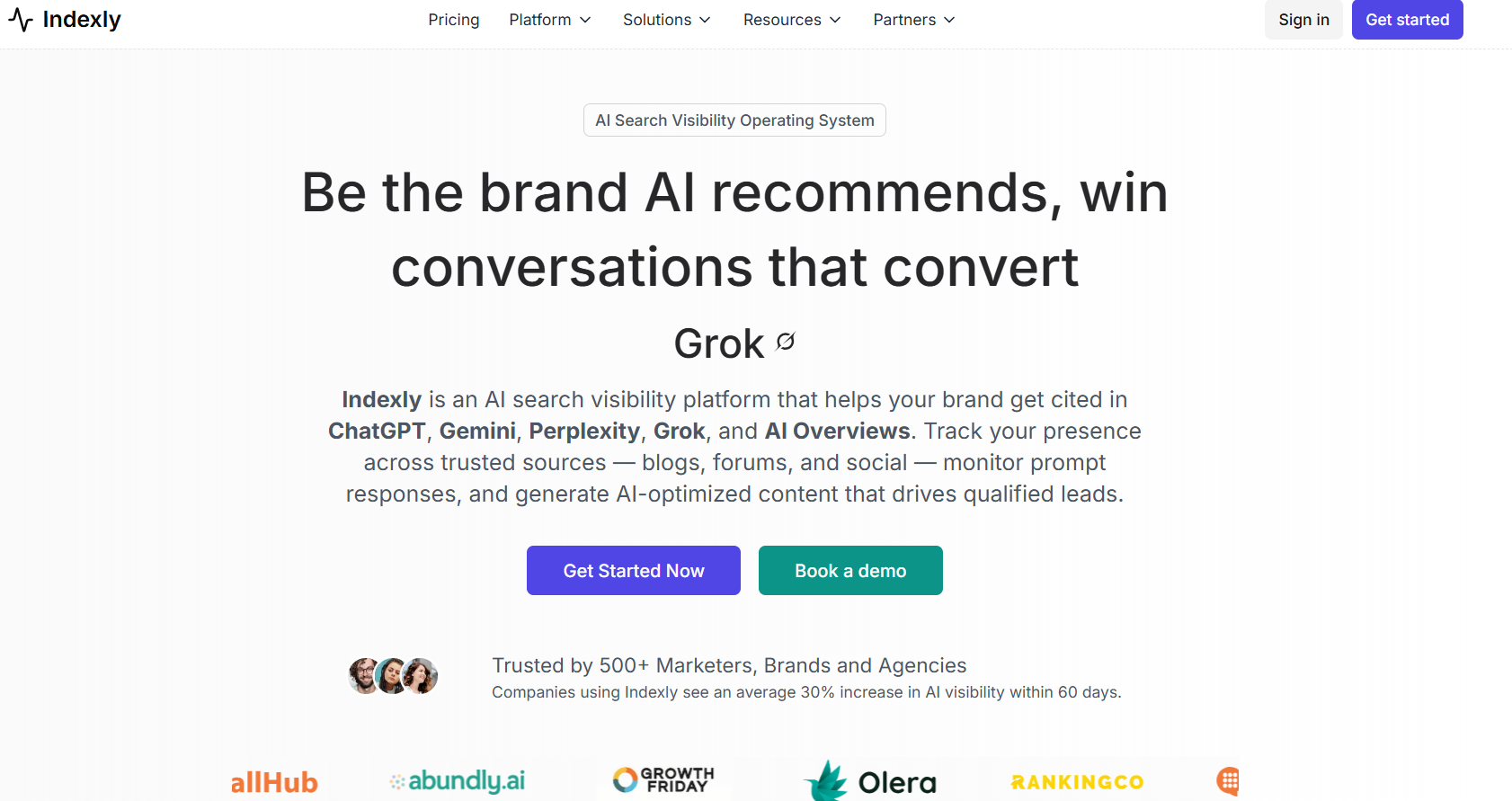
Built for teams that want to move from insight to execution, Indexly is an AI search visibility platform that helps marketing teams, brands, and agencies not just track but actively improve how they appear across AI answer engines like ChatGPT, Claude, Gemini, and Perplexity.
Unlike Peec AI, which mainly focuses on visibility reporting, Indexly connects insights directly to execution. It combines AI visibility tracking, SEO intelligence, citation tracking, prompt opportunity discovery, and generative engine optimisation (GEO) in one workflow.
Instead of just showing where you appear, Indexly helps you improve it continuously. It identifies missing brand mentions in AI answers, highlights competitor-driven prompts, and surfaces content gaps that need to be created or optimised.
Key Features
| Feature | Description |
|---|---|
| AI Readiness Audit | Assesses how well a brand is positioned for discovery across AI-driven platforms. |
| Brand Visibility Tracking | Measures how frequently and in what contexts a brand is featured in AI-generated outputs. |
| Brand Sentiment | Evaluates the tone used by AI systems when referencing a brand (positive, neutral, or negative). |
| Prompt Opportunities | Surfaces high-intent queries where a brand has the potential to gain exposure. |
| Citation Tracking | Analyzes where content is referenced in AI answers and highlights gaps between your brand and competitors. |
| Website Audit | Detects technical SEO issues that may impact site performance and discoverability. |
| Keyword Opportunities | Identifies valuable keyword gaps and growth opportunities for organic visibility. |
| Backlink Opportunities | Pinpoints potential link-building sources to strengthen domain authority. |
| Indexation Tracking | Monitors how efficiently web pages are discovered and indexed by search engines. |
| Brand Hub | Acts as a central workspace for managing brand insights and visibility data. |
| Content Dashboard | Offers a consolidated view of content performance and optimisation opportunities. |
| Integrations | Enables seamless connection with external tools for publishing and workflow automation. |
| Autopilot System | Automatically handles content creation, optimisation, and publishing based on data signals. |
| Content Opportunities (SEO + AEO) | Recommends topics optimized for both traditional search engines and AI-driven answer platforms. |
| LinkedIn Content Engine (Upcoming) | Creates and refines LinkedIn content using visibility and engagement insights. |
| YouTube Content Engine (Upcoming) | Generates video ideas aligned with search demand and AI-driven trends. |
| PR & Outreach Module (Upcoming) | Helps identify media placements and outreach opportunities to boost brand authority. |
Pros
Indexly combines AI visibility tracking, SEO intelligence, and content execution in one system. It removes tool fragmentation by allowing teams to go from insight to published content quickly. The automation layer continuously improves visibility and rankings over time.
Cons
Still a newer platform with evolving capabilities. Some enterprise-level features are under development. Requires slight onboarding for advanced GEO workflows.
Best For
Marketing teams and agencies that want AI visibility tracking + SEO execution + content automation in one platform.
2. Profound — Best for Enterprise AI Search Intelligence
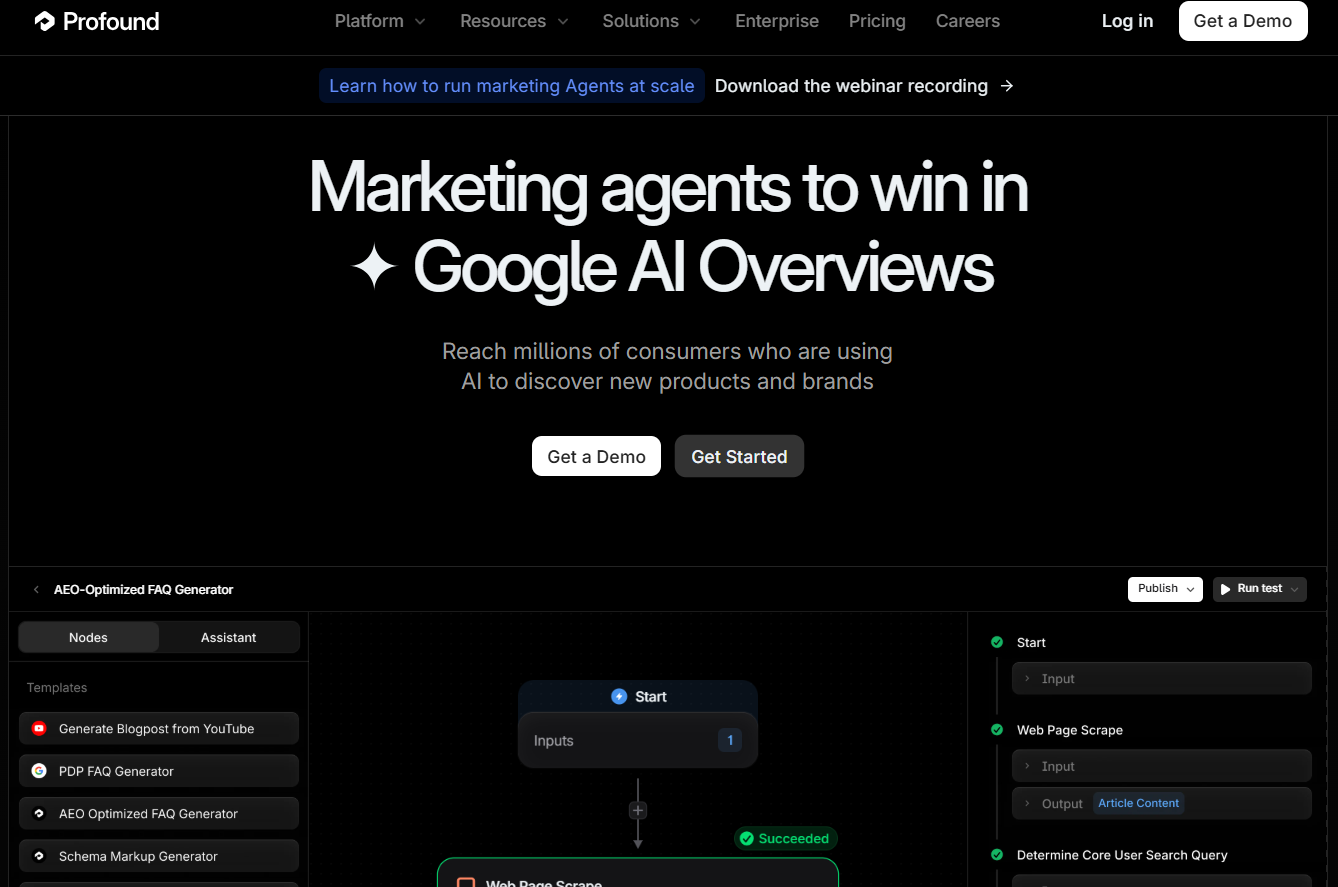
Built for enterprise teams that need deep, structured AI search intelligence, Profound focuses on how and why brands appear across AI answer engines like ChatGPT, Perplexity, and Gemini—combining high-accuracy monitoring with prompt demand insights and competitive visibility analysis.
Unlike Peec AI, which is primarily reporting-focused, Profound is designed for deep intelligence use cases. It helps teams understand not just where they appear in AI answers, but why they appear there and how competitors are being prioritised in AI-generated results.
Key Features
| Feature | Description |
|---|---|
| Prompt Intelligence | Tracks AI search demand and query patterns |
| LLM Visibility Tracking | Monitors ChatGPT, Gemini, Perplexity responses |
| Citation Analysis | Identifies sources used in AI answers |
| Competitive Benchmarking | Compares brand visibility vs competitors |
| Historical Data Tracking | Long-term AI visibility trends |
| Share-of-Voice Metrics | Measures brand presence in AI responses |
Pros
Profound delivers highly accurate and enterprise-grade AI visibility data with strong depth in prompt intelligence and competitive benchmarking. It is ideal for understanding AI search behaviour at scale and identifying strategic gaps in visibility.
Cons
It is expensive and primarily designed for enterprise users. It lacks content creation or execution tools, making it a purely analytics-focused platform. Smaller teams may find it complex and overpowered for basic use cases.
Best For
Large enterprises and advanced marketing teams focused on AI search intelligence, prompt analytics, and competitive visibility tracking.
Read: Profound AI Review: Features, Pricing, Pros, and Cons
3. AthenaHQ — Best for GEO (Generative Engine Optimisation)
Built specifically for generative engine optimisation (GEO), AthenaHQ focuses on improving how often and where your brand gets cited in AI-generated answers—helping teams optimise content for better visibility, relevance, and inclusion across LLM responses.
Unlike Peec AI, which mainly tracks AI visibility, AthenaHQ goes further by helping teams actively optimise it. It combines AI visibility tracking with content generation workflows, allowing users to understand performance gaps and directly improve content based on AI search behaviour.
Key Features
Pros
AthenaHQ is strong for teams focused on improving AI visibility through structured GEO workflows. It combines tracking and content creation, making it useful for turning insights into optimised output. It also provides solid competitive intelligence for AI search positioning.
| Feature | Description |
|---|---|
| GEO Optimisation | Improves ranking in AI-generated answers |
| AI Content Generation | Creates LLM-optimised content |
| LLM Visibility Tracking | Monitors brand presence in AI systems |
| Citation Tracking | Tracks where AI sources brand mentions |
| Competitive Analysis | Benchmarks visibility vs competitors |
| Content Gap Analysis | Identifies missing topics and opportunities |
Cons
Pricing is on the higher side for smaller teams. The platform has a learning curve, especially for users new to GEO concepts. It also lacks the simplicity of lightweight AI tracking tools.
Best For
Marketing teams focused on generative engine optimisation, AI content workflows, and structured visibility improvement.
Read: AthenaHQ Review 2026: Features, Pros, and Cons
4. Promptwatch — Best for LLM Prompt-Level Tracking
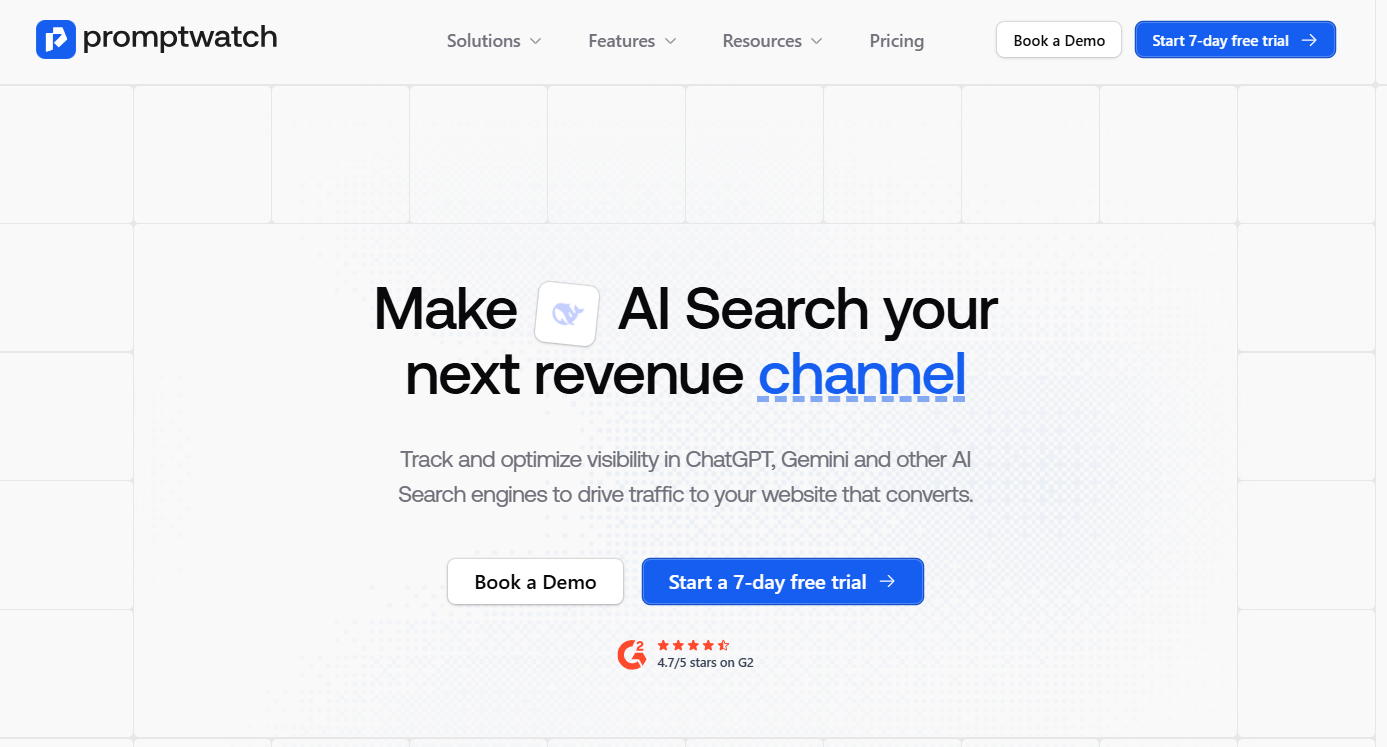
Built for teams that want granular insight into AI search behaviour, Promptwatch focuses on prompt-level intelligence—showing exactly which queries trigger brand mentions and how responses change across different inputs.
Unlike Peec AI, which primarily reports visibility at a high level, Promptwatch goes deeper into prompt-level analysis. It helps teams see which exact queries trigger brand mentions, track according to personas, which competitors are being surfaced, and how AI responses change based on different prompt variations.
Key Features
| Feature | Description |
|---|---|
| Prompt Tracking | Monitors LLM queries and responses |
| AI Visibility Analytics | Tracks brand presence in AI outputs |
| Citation Tracking | Identifies sources used in responses |
| Competitor Monitoring | Compares visibility across prompts |
| Prompt Performance Insights | Shows which queries drive mentions |
Pros
Promptwatch offers strong precision in prompt-level tracking, making it ideal for understanding how AI systems respond to different queries. It is simple, lightweight, and easy to use for teams focused on visibility analysis. It also provides clear insight into competitor presence across AI prompts.
Cons
It does not include content creation or SEO execution features. Reporting and dashboards are relatively basic compared to enterprise tools. It is best suited for analysis rather than full AI search optimisation workflows.
Best For
Teams focused on prompt tracking, AI visibility analytics, and understanding LLM response behaviour.
Read: Promptwatch Review 2026: Features, Pros, and Cons
5. Writesonic — Best for AI Content Creation at Scale
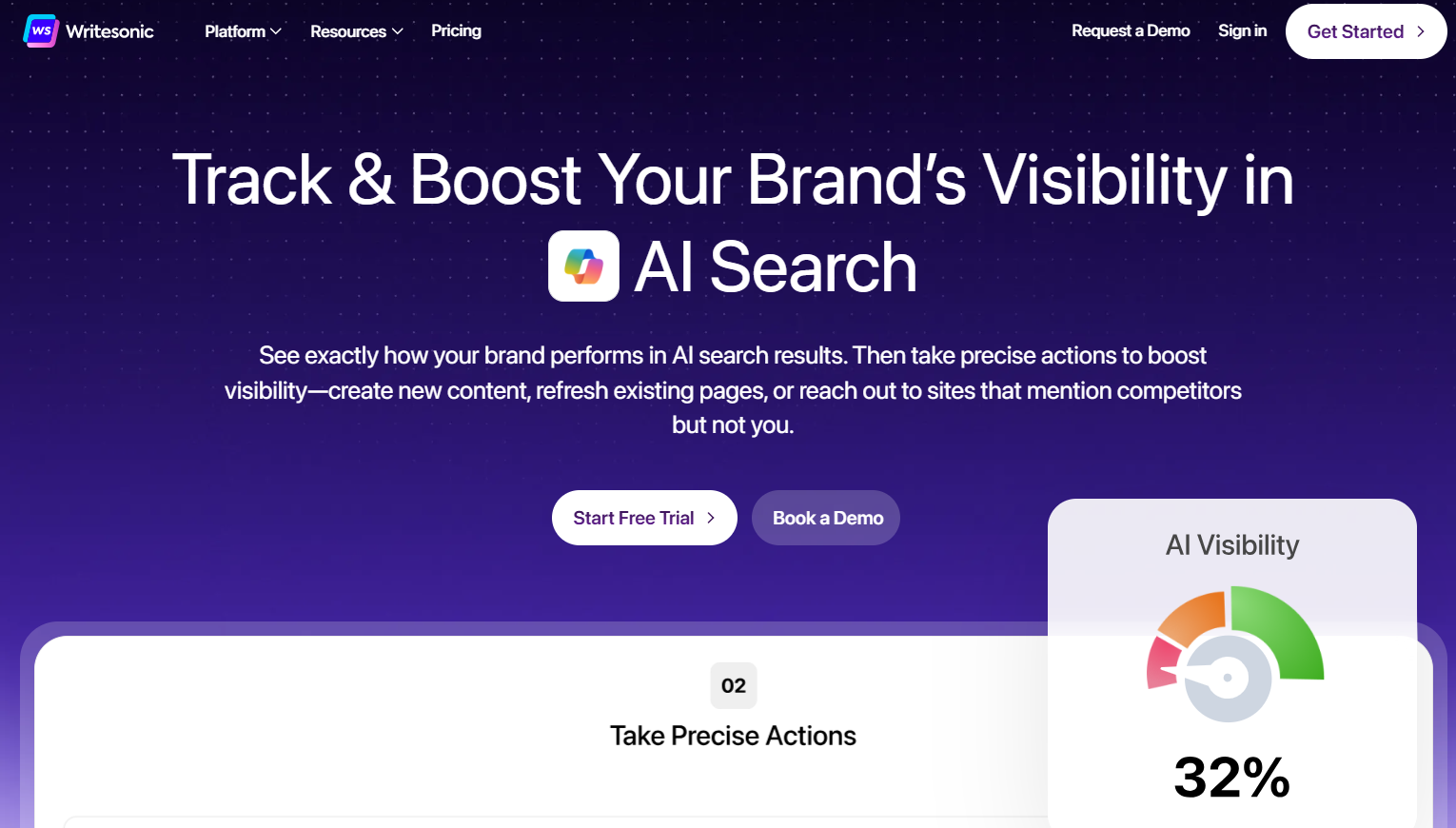
Built for speed and scale, Writesonic focuses on content production—helping teams generate blogs, landing pages, and marketing copy quickly to support SEO and AI visibility strategies.
Unlike Peec AI, which focuses on AI visibility tracking, Writesonic is purely execution-focused. It does track AI search performance or citations. It helps teams generate large volumes of marketing content that can be used to support SEO and organic growth strategies.
Key Features
| Feature | Description |
|---|---|
| AI Blog Writer | Generates long-form SEO articles |
| Marketing Copy Tools | Creates ads, emails, and landing pages |
| Content Templates | Pre-built writing structures |
| Brand Voice Control | Maintains tone consistency |
| SEO Optimization | Improves keyword alignment |
| Multiformat Generation | Supports multiple content types |
Pros
Writesonic is fast and highly efficient for generating marketing content at scale. It is easy to use and helps teams produce SEO-friendly content in minutes. It is especially useful for startups and content teams looking to increase output without expanding resources.
Cons
It does include AI visibility tracking, citation analysis, or GEO optimisation features. Content often requires manual editing for accuracy and depth. It is not suitable for teams focused on AI search analytics or prompt tracking.
Best For
Teams focused on AI content creation, SEO writing, and marketing copy generation at scale.
6. SE Ranking — Best Hybrid SEO + AI Visibility Platform
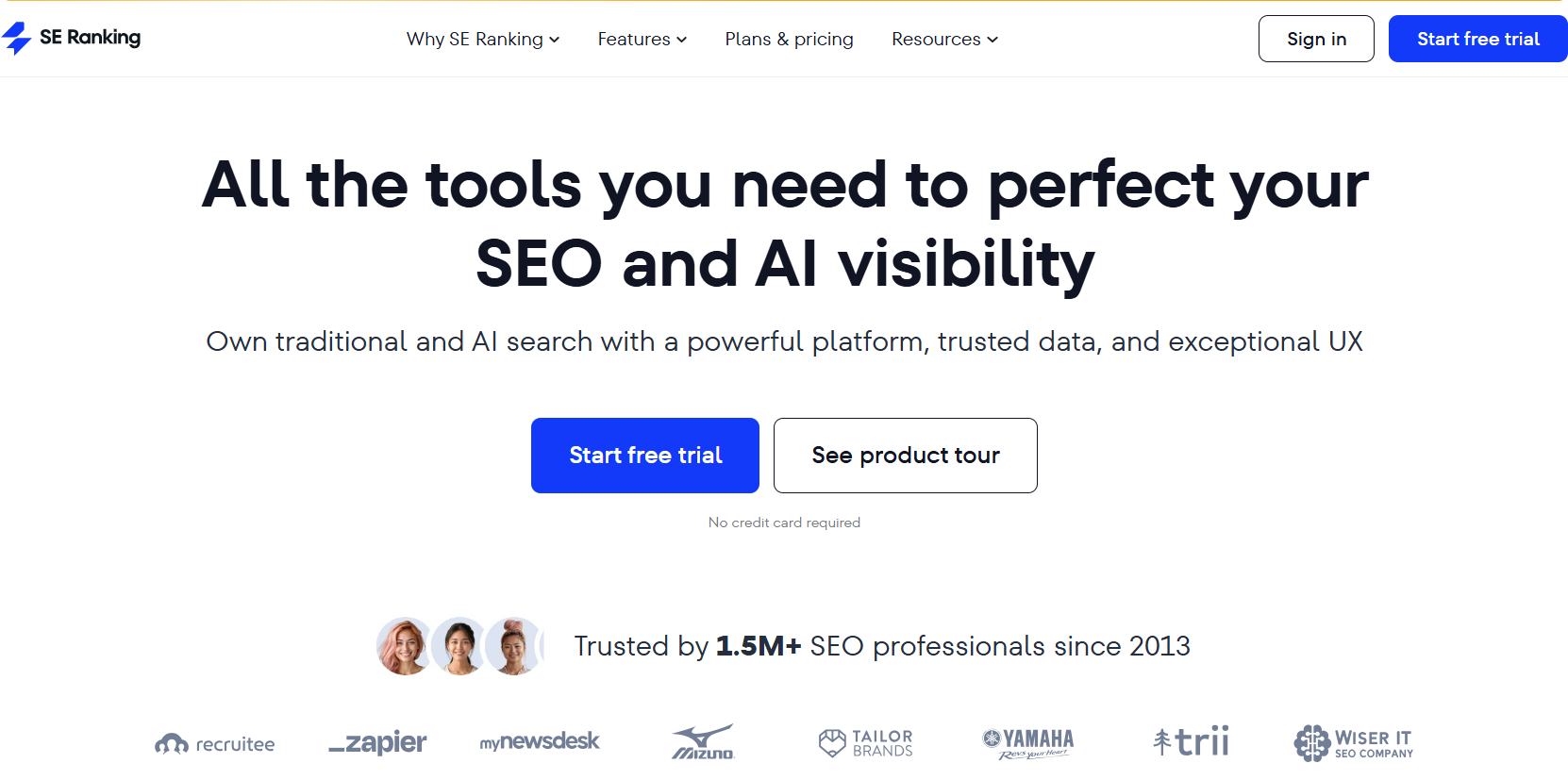
Designed as a bridge between traditional SEO and AI search, SE Ranking combines keyword tracking, site audits, and competitor research with emerging AI visibility insights in one platform.
Unlike Peec AI, which focuses only on AI search analytics, SE Ranking combines classic SEO tools with emerging AI search tracking. This makes it useful for teams transitioning from traditional SEO into AI-driven search environments.
It helps users track keyword rankings, monitor competitors, and now also understand how brands appear inside AI answer engines.
Key Features
| Feature | Description |
|---|---|
| Keyword Tracking | Monitors search engine rankings |
| AI Visibility Tracking | Tracks LLM-generated mentions |
| Site Audit | Technical SEO analysis |
| Competitor Research | SEO benchmarking |
| Reporting Tools | Agency-ready dashboards |
| Rank Monitoring | Tracks SERP changes |
Pros
SE Ranking is reliable, mature, and widely used in the SEO industry. It offers strong traditional SEO capabilities along with basic AI visibility tracking, making it a practical hybrid tool. It is also cost-effective compared to enterprise AI platforms.
Cons
AI visibility features are still secondary and not as advanced as dedicated GEO tools. It lacks deep prompt tracking and AI citation intelligence. Execution features for AI content optimisation are limited.
Best For
SEO teams and agencies expanding into AI search tracking alongside traditional SEO workflows.
Read: Top 10 Best LLM Brand Visibility Tools to Dominate AI Search in 2026
7. Otterly AI — Best Budget AI Visibility Tracking Tool
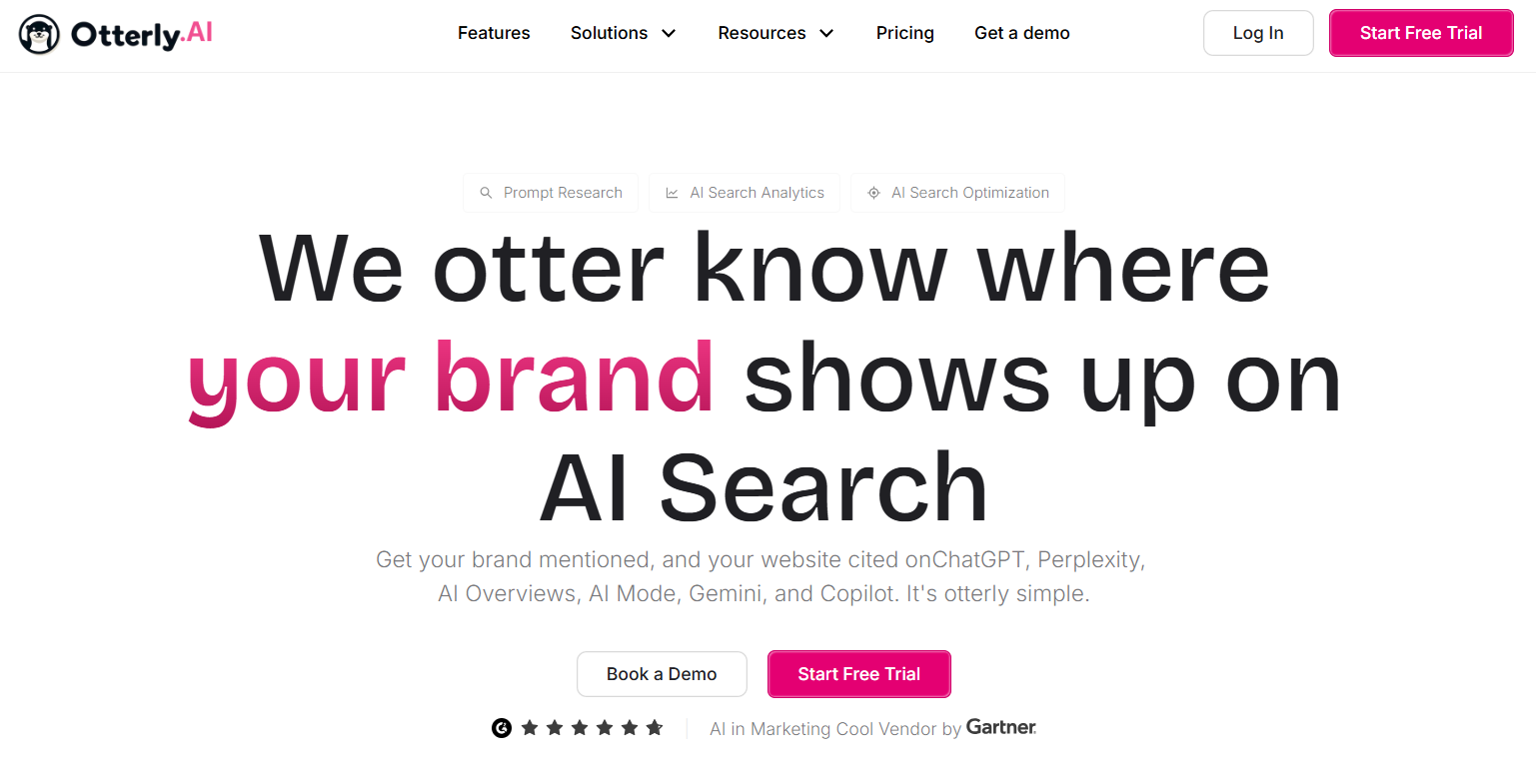
Built for simplicity and affordability, Otterly AI offers a lightweight way to monitor brand mentions across AI-generated responses without the complexity of advanced platforms.
Unlike Peec AI, which offers broader analytics, Otterly AI is built for basic AI search monitoring and citation tracking without complexity. It helps smaller teams understand how often their brand appears in AI-generated responses.
Key Features
| Feature | Description |
|---|---|
| AI Visibility Tracking | Monitors LLM mentions |
| Citation Tracking | Tracks source references |
| Brand Monitoring | Tracks AI appearances |
| Prompt Tracking | Basic query analysis |
| Reporting Dashboard | Simple visibility insights |
| Multi-Platform Coverage | ChatGPT, Perplexity, Copilot |
Pros
Otterly AI is simple, affordable, and easy to use. It provides quick insights into AI visibility without requiring setup or technical expertise. It is ideal for teams testing AI search tracking for the first time.
Cons
It lacks advanced features like GEO optimisation, content creation, or deep prompt analytics. Reporting is basic, and it is not suitable for enterprise-level analysis or execution workflows.
Best For
Small teams and startups needing basic AI visibility tracking and citation monitoring.
Read: 10 Best AI Search Visibility Platforms for Brands 2026
8. LLMrefs — Best for AI Keyword & LLM Ranking Tracking
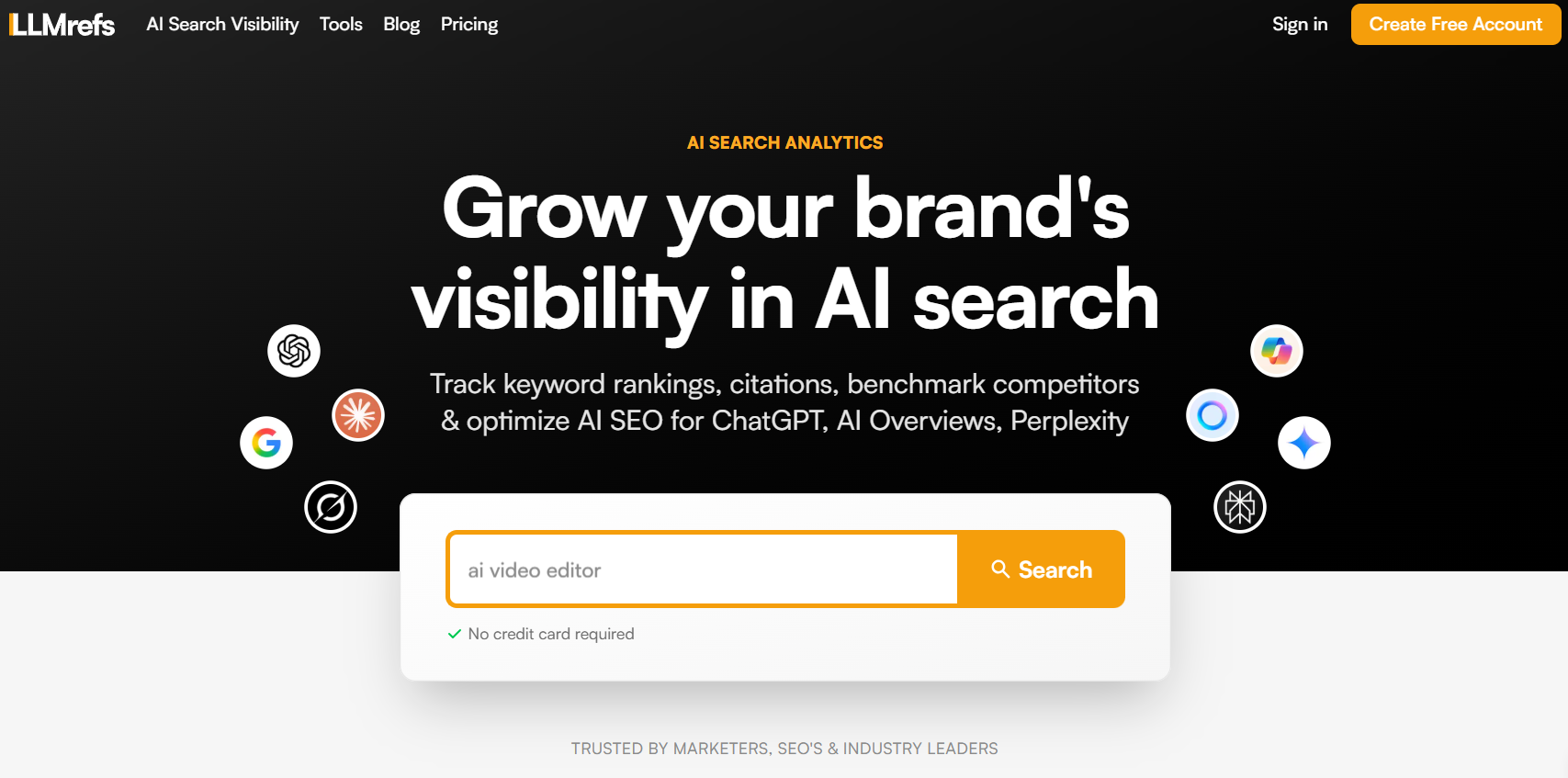
Focused on keyword-driven visibility, LLMrefs tracks how specific terms perform across AI models—helping teams understand ranking patterns, prompt impact, and visibility trends across regions.
Unlike Peec AI, which focuses on general visibility reporting, LLMrefs is more keyword-driven. It helps teams understand how specific terms and prompts influence brand presence inside AI-generated answers and how that visibility changes over time.
Key Features
| Feature | Description |
|---|---|
| AI Keyword Tracking | Monitors keyword performance in LLMs |
| LLM Visibility Score | Measures brand presence strength |
| Global Tracking | Multi-country visibility analysis |
| Competitor Benchmarking | Compares AI rankings |
| Prompt Dataset | Uses real AI queries |
| Trend Analysis | Tracks visibility changes over time |
Pros
LLMrefs is simple, affordable, and effective for tracking AI keyword visibility at scale. It provides structured data across multiple AI platforms and is useful for benchmarking performance across regions. It is especially valuable for SEO-focused teams transitioning into AI search tracking.
Cons
It lacks content creation, GEO optimisation, and execution tools. Insights are more analytical than actionable, requiring external tools for implementation. Advanced sentiment or citation depth is limited.
Best For
SEO teams focused on AI keyword tracking, LLM ranking analysis, and cross-region visibility monitoring.
9. BrandLight — Best for Enterprise AI Brand Monitoring
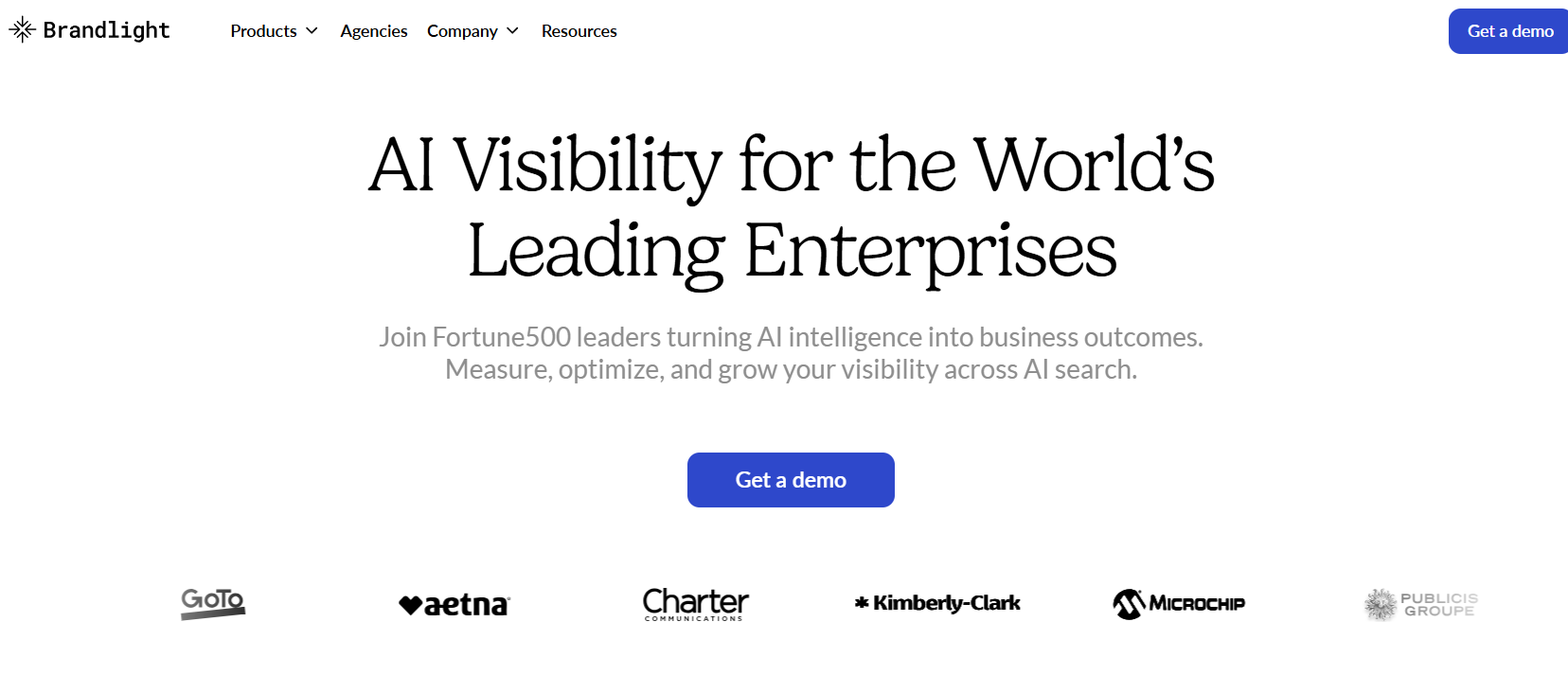
Built for enterprise brand governance, BrandLight focuses on monitoring sentiment, controlling brand representation, and managing how organisations appear across AI-generated responses.
Unlike Peec AI, which is more analytics-focused, BrandLight is designed for enterprise-level brand control and monitoring across multiple AI systems and business units.
Key Features
| Feature | Description |
|---|---|
| Brand Monitoring | Tracks AI-generated brand mentions |
| Sentiment Analysis | Measures tone of AI responses |
| Citation Tracking | Identifies AI sources |
| Enterprise Dashboards | Multi-brand visibility views |
| AI Commerce Signals | Tracks buying intent signals |
| Governance Tools | Brand control across AI systems |
Pros
BrandLight offers strong enterprise-grade monitoring with deep focus on brand sentiment and governance. It provides structured visibility across multiple AI platforms and is suitable for large organisations managing multiple brands. It is highly reliable for reputation monitoring.
Cons
It is expensive and not suitable for small or mid-sized teams. It lacks content creation and GEO execution capabilities. Setup and onboarding can be complex due to its enterprise nature.
Best For
Large enterprises needing AI brand monitoring, sentiment tracking, and governance across multiple AI systems.
10. Airefs — Best for Source-Level AI Citation Transparency
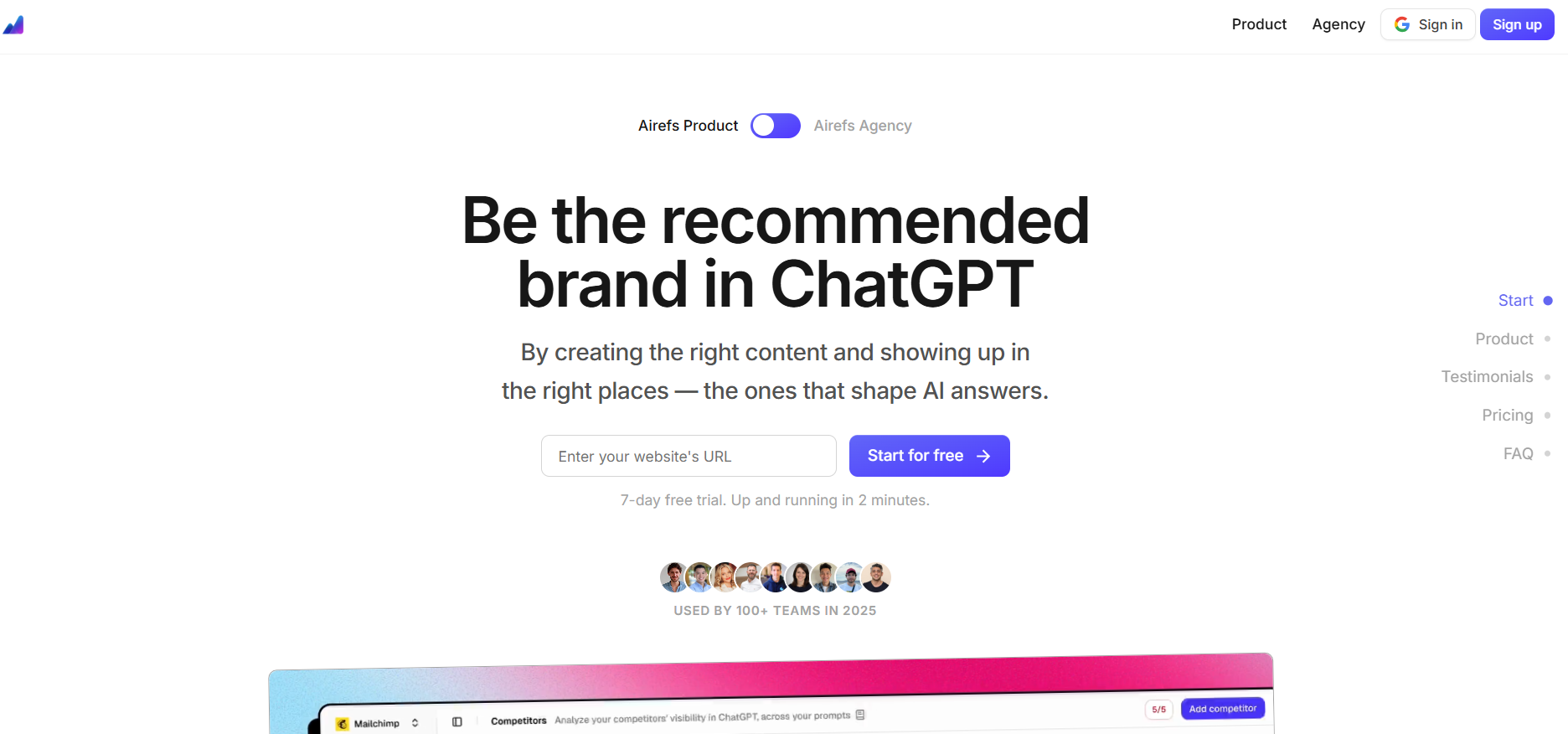
Focused on citation-level transparency, Airefs is an AI visibility and citation tracking platform focused on identifying the exact sources used by AI systems when generating responses. It provides deep transparency into how content is selected and referenced by LLMs.
Unlike Peec AI, which shows visibility at a summary level, Airefs goes deeper into source-level citation tracking and content influence mapping. It helps teams understand which pages, forums, or articles are driving AI mentions.
Key Features
| Feature | Description |
|---|---|
| Source Tracking | Identifies AI citation sources |
| AI Visibility Monitoring | Tracks LLM mentions |
| Content Gap Analysis | Finds missing topics |
| Reddit Tracking | Monitors community influence |
| Citation Insights | Source-level breakdown |
| Optimization Signals | Actionable improvement ideas |
Pros
Airefs provides strong transparency into how AI systems generate responses and which sources influence them. It is useful for understanding content authority gaps and improving citation frequency. It also offers actionable insights for content optimisation.
Cons
It has limited platform coverage compared to enterprise tools. It does not include content creation or GEO automation features. Reporting depth is moderate compared to advanced AI visibility platforms.
Best For
Teams focused on AI citation tracking, source-level visibility insights, and content authority optimisation.
| Tool | Best For | Core Strength | Weakness | Execution Capability |
|---|---|---|---|---|
| Indexly | All-in-one execution | SEO + GEO + automation | Still evolving | ✅ High |
| Profound | Enterprise intelligence | Deep prompt & visibility data | Content workflows | ✅ High |
| AthenaHQ | GEO optimisation | Citation & content optimisation | Learning curve | ⚠️ Moderate |
| Promptwatch | Prompt-level insights | Query-level tracking | No content tools | ❌ None |
| Writesonic | Content creation | Fast content generation | No deep level AI visibility tracking | ✅ High (content) |
| SE Ranking | SEO + AI hybrid | Traditional SEO tools | Limited AI depth | ⚠️ Moderate |
| Otterly AI | Budget tracking | Simple + affordable | Basic features | ❌ Low |
| LLMrefs | Keyword tracking in LLMs | Keyword-based visibility | Limited execution | ❌ None |
| BrandLight | Enterprise brand monitoring | Sentiment + governance | Expensive | ❌ None |
| Airefs | Citation transparency | Source-level insights | Limited automation | ❌ Low |
Conclusion
Choosing the right Peec AI alternative comes down to what you need most—insight, execution, or a mix of both.
If you want a platform that goes beyond tracking and actually helps you improve AI visibility, create content, and execute GEO strategies, Indexly is the strongest all-in-one choice. It’s built for teams that want to move fast from insight to action without juggling multiple tools.
If your priority is deep AI search analytics, prompt tracking, and competitive intelligence, tools like Profound or Promptwatch are a better fit. They help you understand how answer engines and LLM prompts drive visibility.
For content creation at scale, Writesonic is a solid option, while SE Ranking works well if you need a hybrid of traditional SEO and AI search tracking. Budget-conscious teams can start with Otterly AI, and enterprises focused on brand sentiment tracking and governance can look at BrandLight.
If your goal is to actually grow your presence across AI answer engines—not just measure it—Indexly is worth trying. It connects AI search analytics, prompt tracking, citation tracking, and content execution into one workflow so you can continuously improve visibility and performance.
FAQs
What are the best Peec AI alternatives in 2026?
In 2026, popular Peec AI alternatives include Indexly, Profound, AthenaHQ, Promptwatch, Writesonic, SE Ranking, Otterly AI, LLMrefs, BrandLight, and Airefs. These platforms address different aspects of AI search visibility such as prompt tracking, citation monitoring, sentiment analysis, and generative engine optimisation. Some tools focus mainly on analytics, while others combine visibility tracking with SEO and content creation for end-to-end workflows.
Why are teams exploring alternatives to Peec AI?
Many users are shifting away from Peec AI because it primarily focuses on reporting AI visibility rather than improving it. Modern alternatives offer more advanced capabilities like prompt-level insights, citation analysis, SEO integration, and automated content workflows. As AI-driven search evolves, teams increasingly prefer platforms that provide both insights and actionable execution features.
Can AI visibility platforms improve presence in AI answers?
While these tools don’t directly control AI rankings, they help improve visibility by identifying opportunities to increase mentions and citations in AI-generated responses. Platforms with GEO optimisation, content recommendations, and prompt analysis guide teams on how to adjust content strategy for better inclusion in AI answers over time.
What should I consider when choosing a Peec AI alternative?
An effective alternative should include AI visibility tracking, prompt monitoring, citation analysis, and brand sentiment insights. More advanced platforms also offer SEO integration, GEO optimisation, keyword gap analysis, and content generation features. The strongest tools combine both analytics and execution, allowing teams to not only track AI visibility but also actively improve it.