
Can’t find the right Scrunch alternatives? As AI search becomes a key driver of brand discovery, teams are moving beyond basic visibility tracking toward platforms that don’t just measure performance—but actively help improve it across AI-generated answers.
Scrunch AI provides visibility data across LLM platforms, but many agencies and growth teams struggle to turn those insights into clear, actionable SEO and content decisions without adding extra complexity. This has led to rising demand for tools that connect AI visibility directly with execution, content strategy, and measurable outcomes.
This blog explores the 10 best Scrunch AI alternatives in 2026 that improve AI visibility tracking, execution speed, and overall performance impact.
ChatGPT's share of global search traffic grew 740% in 12 months, creating new requirements for brands to track, optimise, and maintain their presence across AI platforms.
Read: Scrunch AI Review: Features, Pricing, Pros, and Cons
Why Look for Scrunch Alternatives?
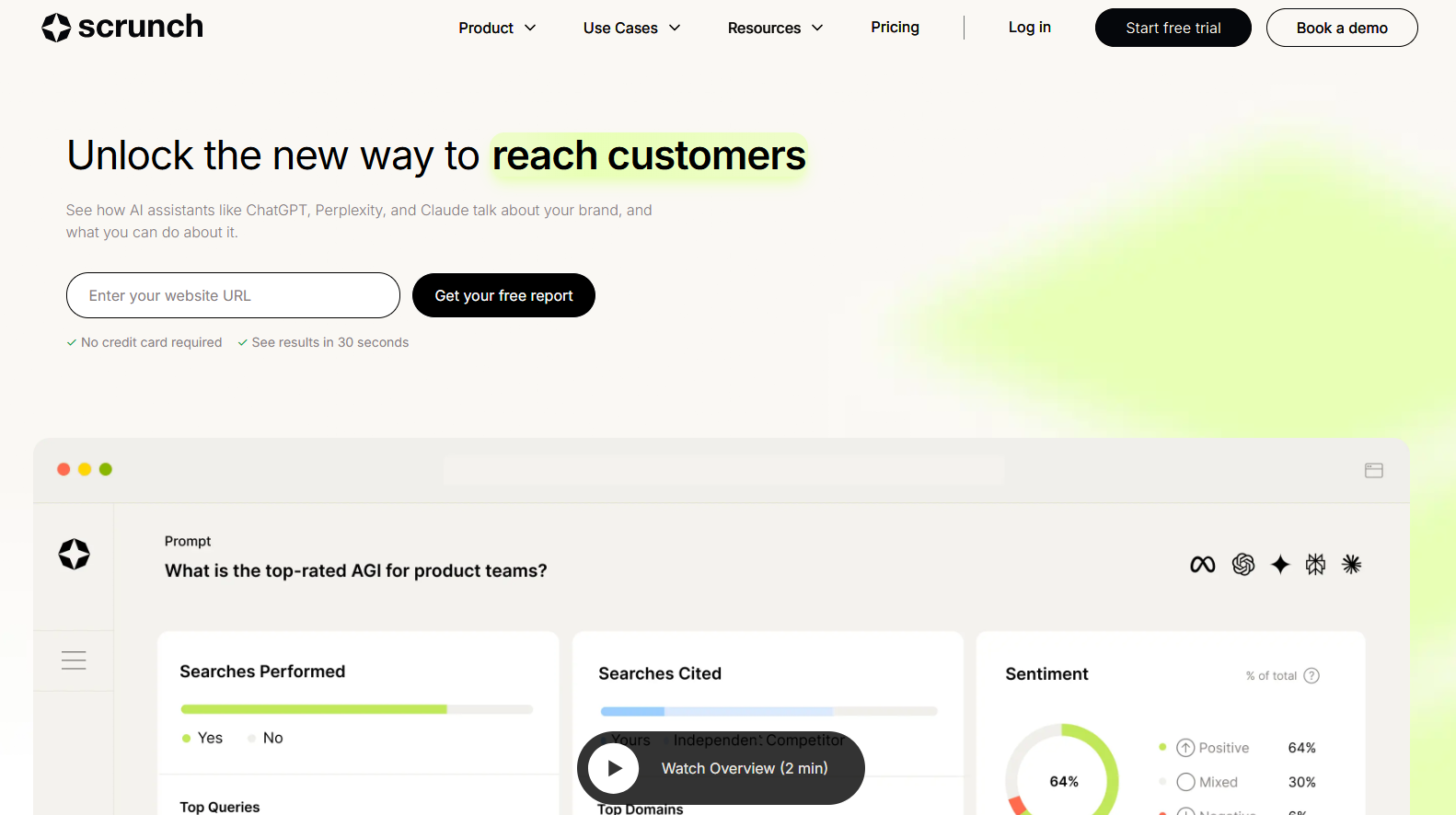
Scrunch AI offers AI visibility tracking, but as SEO and LLM visibility needs scale, its limitations become harder to ignore.
First, accuracy. It relies on inferred prompts instead of real user queries, which can weaken intent understanding and discovery insights.
Second, speed. Data updates are typically weekly, not real-time—slowing down prompt tracking, citation monitoring, and rapid optimisation cycles.
Third, usability. Key insights often take multiple steps to access, while onboarding and reporting workflows feel heavier than they need to be.
Fourth, execution. Scrunch is primarily diagnostic. It surfaces visibility gaps, but doesn’t help teams fix them through content creation, SEO updates, or structured optimisation.
Finally, cost. Premium entry pricing makes it less accessible for smaller teams focused on GEO and fast growth.
As a result, teams are shifting toward Scrunch alternatives that combine AI visibility tracking with execution—connecting insights directly to content opportunities, SEO workflows, GEO optimisation, and automated publishing.
Read: PeecAI vs Scrunch
1. Indexly — Best for Complete AI Search Visibility Platform
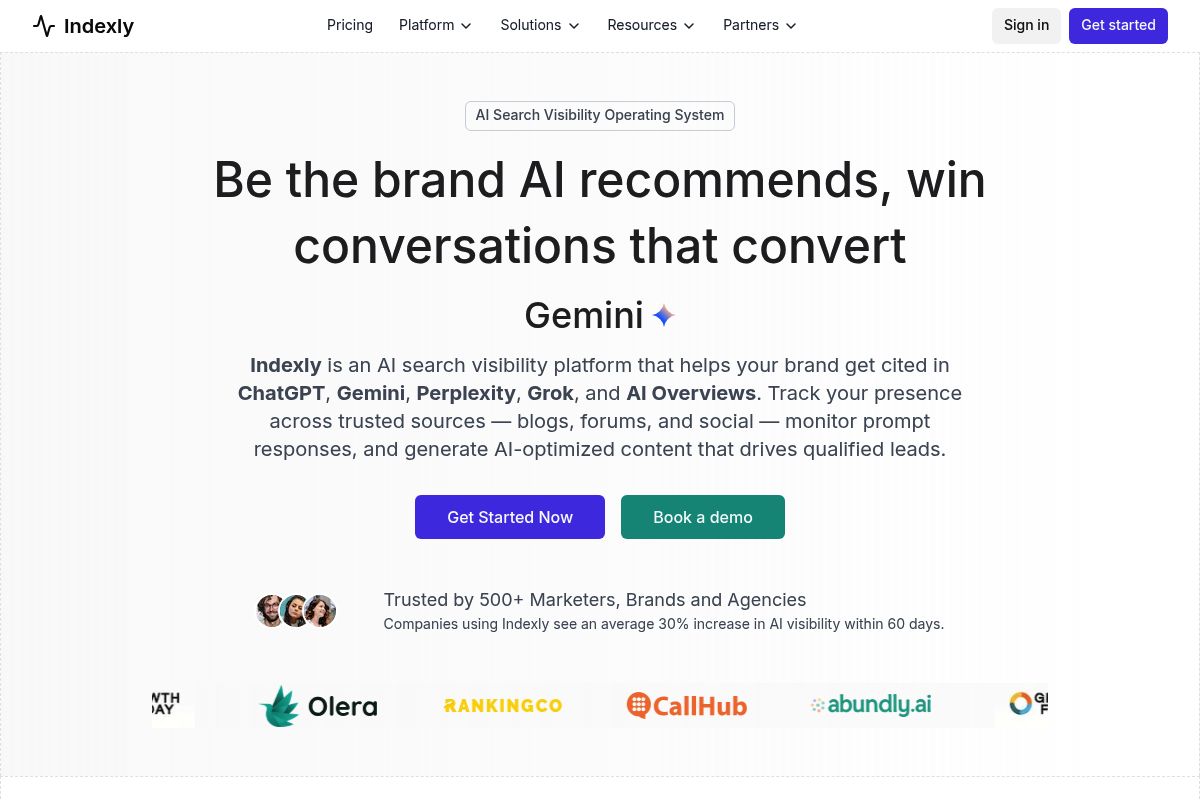
Indexly is an AI visibility platform that helps brands understand and improve how they appear across AI answer engines and search platforms. It combines AI visibility tracking, SEO intelligence, and content automation in a single system, allowing teams to move directly from insights to execution. Unlike tools that only track prompts or keyword rankings, Indexly connects visibility insights to real optimisation actions.
Key Features
| Feature | Description |
|---|---|
| AI Readiness Audit | Evaluates how visible and discoverable a brand is across AI systems. |
| Brand Visibility Tracking | Monitors how often and where a brand appears in AI-generated responses. |
| Brand Sentiment | Analyzes how AI platforms describe a brand (positive, neutral, or negative). |
| Prompt Opportunities | Identifies high-intent AI queries where a brand can gain visibility. |
| Citation Tracking | Shows where and how often content is cited in AI answers, including competitor vs. brand gaps. |
| Website Audit | Identifies technical SEO issues affecting performance and visibility. |
| Keyword Opportunities | Finds ranking gaps and high-value keywords for growth. |
| Backlink Opportunities | Highlights potential backlink sources to improve domain authority. |
| Indexation Tracking | Tracks how quickly and effectively pages are indexed by search engines. |
| Brand Hub | Central dashboard for managing brand content and visibility insights. |
| Content Dashboard | Provides an overview of content performance and opportunities. |
| Integrations | Connects with external platforms for publishing and workflow management. |
| Autopilot System | Automates content creation, optimisation, and publishing based on signals. |
| Content Opportunities (SEO + AEO) | Identifies topics for both search engines and AI answer engines. |
| LinkedIn Content Engine (Upcoming) | Generates and optimises LinkedIn posts based on visibility insights. |
| YouTube Content Engine (Upcoming) | Suggests and creates video topics based on AI and search demand. |
| PR & Outreach Module (Upcoming) | Helps identify media and PR opportunities to improve brand authority. |
Best For: Best for marketing teams, agencies, and growing brands needing a unified system for AI visibility tracking, SEO execution, and content automation.
Pros and Cons
- Pros: Free tier available, unified SEO and AI visibility platform, transparent pricing, and comprehensive AI crawlability tools.
- Cons: As a newer platform, it has a smaller user base compared to legacy tools and may lack some of the highly specialized, advanced features found in niche enterprise software.
Read: Best AI Search Visibility Platforms for Agencies 2026
2. Radarkit — Best for Real-World AI Answer Tracking
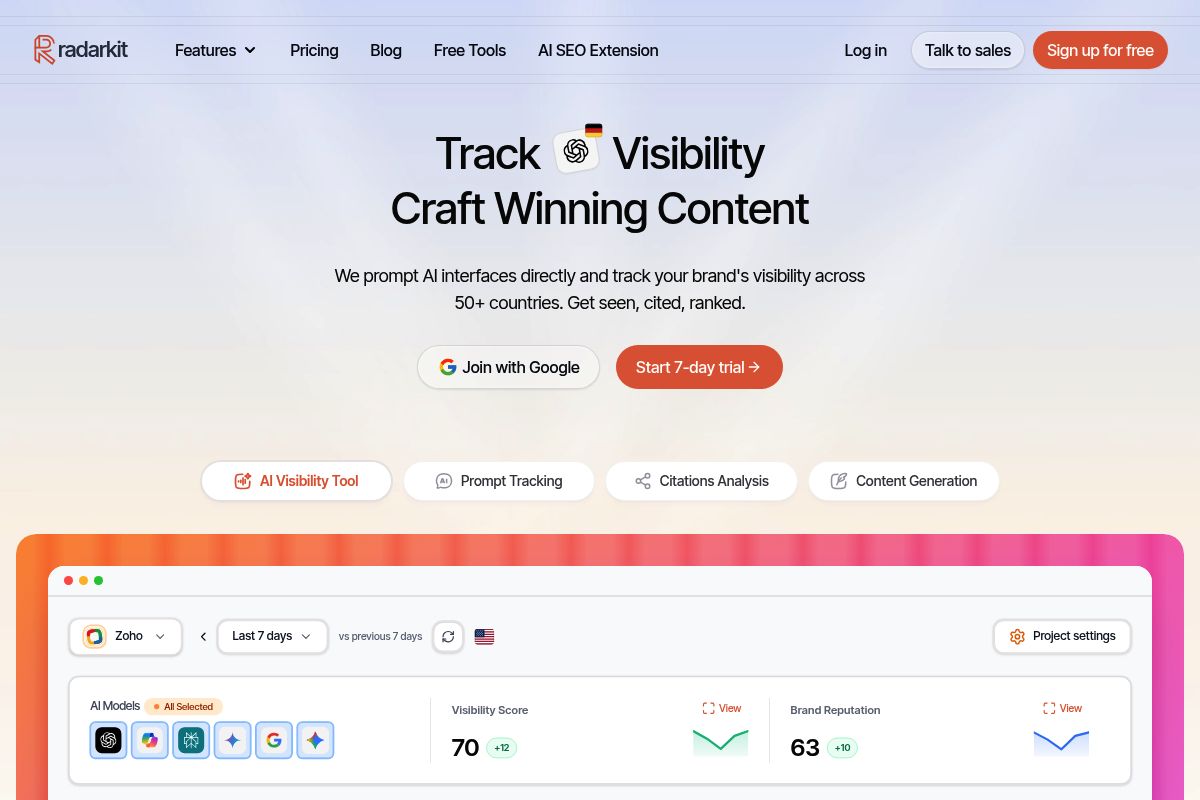
Radarkit is a leading AI search visibility platform designed to track brand presence across major AI assistants like ChatGPT and Gemini. It uses browser-based agents that interact with real chat interfaces, providing data that mirrors actual user experiences more accurately than API-based methods.
This makes it a powerful tool for teams focused on answer engine optimisation, which is the process of making content more likely to be used in AI-generated answers.
Key Features
| Feature | Description |
|---|---|
| Browser-based tracking | Monitors real AI interfaces like ChatGPT, Gemini, Perplexity, and Copilot to capture authentic user-facing results. |
| Prompt-level analytics | Tracks specific user prompts and AI responses to provide detailed visibility insights. |
| Competitive benchmarking | Compares your brand’s AI visibility performance against competitors in real-time dashboards. |
| GEO-ready insights | Provides actionable recommendations to improve Generative Engine Optimisation (AI visibility in LLM responses). |
| Source attribution | Identifies exact sources cited in AI-generated answers and tracks brand mentions across them. |
| Trend analysis | Tracks visibility changes over time with historical data and performance visualization. |
Best For: Best for agencies and mid-size teams needing accurate, real-world AI answer tracking and competitive insights.
Pros and Cons
- Pros: High data accuracy due to its browser-based tracking methodology, competitive pricing for its feature set, strong analytics depth, and actionable GEO insights.
- Cons: Lacks built-in AI content writer features and has smaller platform coverage compared to some larger, enterprise-focused alternatives.
3. Profound — Best for Enterprise-Grade AI Visibility
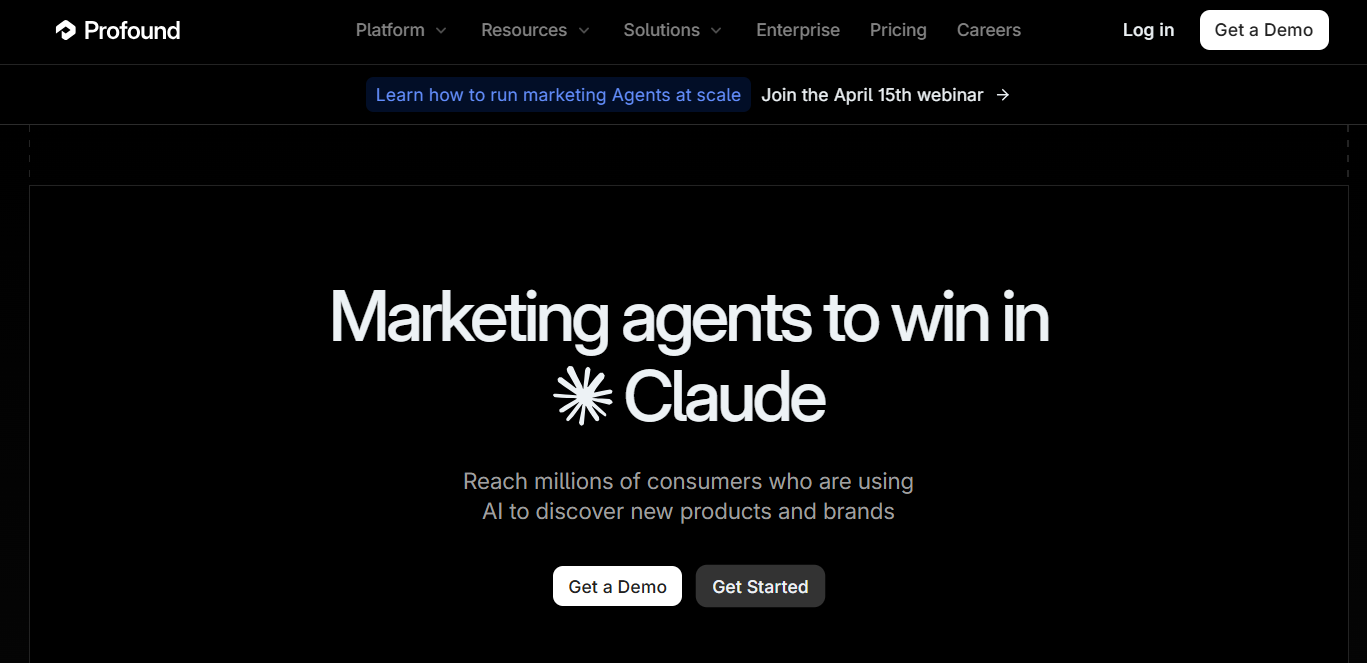
Profound is an enterprise-grade AI visibility platform designed to monitor brand appearances across major AI search engines like ChatGPT, Perplexity, and Google AI Overviews.
It provides exceptional data transparency by using front-end consumer interface monitoring, establishing it as a top choice for organisations seeking rigorous data methodology. This approach ensures that the data reflects what actual users see, rather than relying on potentially limited API calls.
Key Features
| Feature | Description |
|---|---|
| Prompt Volume Intelligence | Provides data on AI search demand to understand what users are asking in generative AI systems. |
| Front-end Monitoring | Tracks real user interfaces of AI tools to capture accurate, user-facing outputs and improve LLM visibility. |
| Content Optimization Recommendations | Offers actionable insights to improve content so it is more likely to be cited in AI-generated responses. |
| Competitive Intelligence | Benchmarks AI visibility against competitors and identifies gaps and new content opportunities. |
| Enterprise Security (SOC 2) | Ensures high-level data security compliance suitable for enterprise use cases. |
| Custom Implementation | Supports tailored setups for complex organizational requirements. |
| Historical Data Tracking | Provides over 12 months of data for trend analysis and long-term AI visibility insigh |
Best For: Best for large enterprises requiring deep data accuracy, prompt intelligence, and SOC 2–grade compliance.
Pros and Cons
- Pros: Industry-leading prompt volume data, enterprise security, data transparency, strong competitive intelligence
- Cons: Premium pricing, limited entry-level options, enterprise-focused feature set
4. AthenaHQ — Best for Strategic Generative Engine Optimization (GEO)
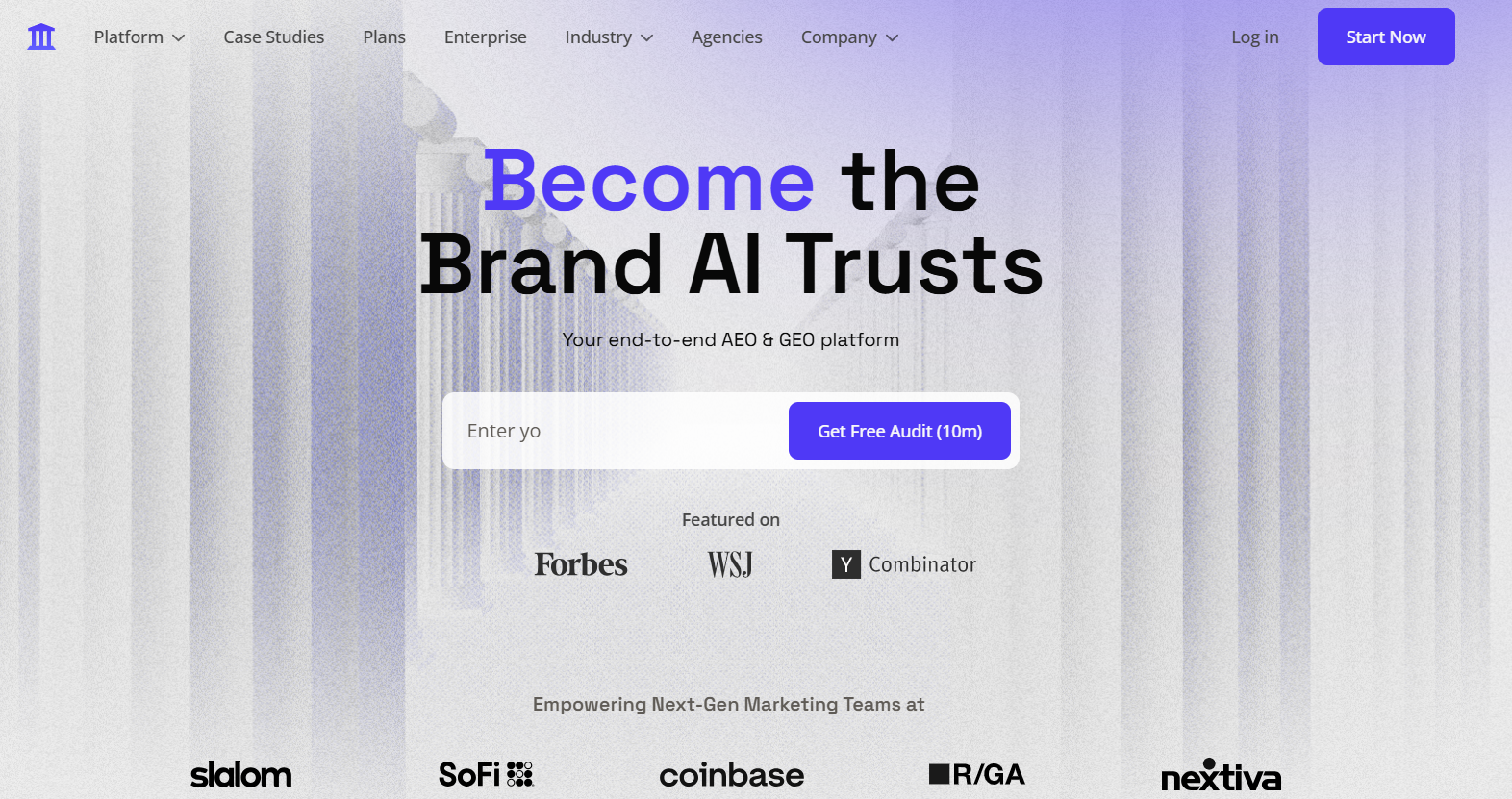
AthenaHQ is an AI-powered generative engine optimization (GEO) platform designed to enhance brand presence in AI-driven search. It provides detailed citation tracking, which is the process of monitoring brand mentions across major AI models like ChatGPT, Claude, and Perplexity, offering a complete picture of your AI visibility.
Key Features
| Feature | Description |
|---|---|
| AI platform coverage (8+) | Tracks LLM visibility across ChatGPT, Perplexity, Google AI Overviews, Gemini, Claude, Copilot, and Grok. |
| Content optimization workflows | Uses built-in tools and an AI content writer to improve citations and uncover new content opportunities. |
| Revenue attribution | Links AI visibility metrics to conversions and revenue impact for performance tracking. |
| Unlimited team seats | Enables organization-wide collaboration without per-user pricing limits. |
| Action center | Provides prioritized recommendations to improve AI visibility and brand sentiment. |
| Competitive gap analysis | Identifies where competitors are cited in AI answers and where your brand is missing. |
Best For: Best for teams focused on GEO optimization, content workflows, and collaborative AI visibility growth.
Pros and Cons
- Pros: Extensive coverage of major AI platforms, built-in content optimization tools for answer engine optimisation, unlimited team seats for collaboration, and strong case studies proving effectiveness.
- Cons: The starting price of $295/month may be a significant investment for smaller businesses, and there is currently no free trial to test the platform.
Read: AthenaHQ Review 2026: Features, Pros, and Cons
5. LLMrefs — Best for Simple AI Keyword Tracking
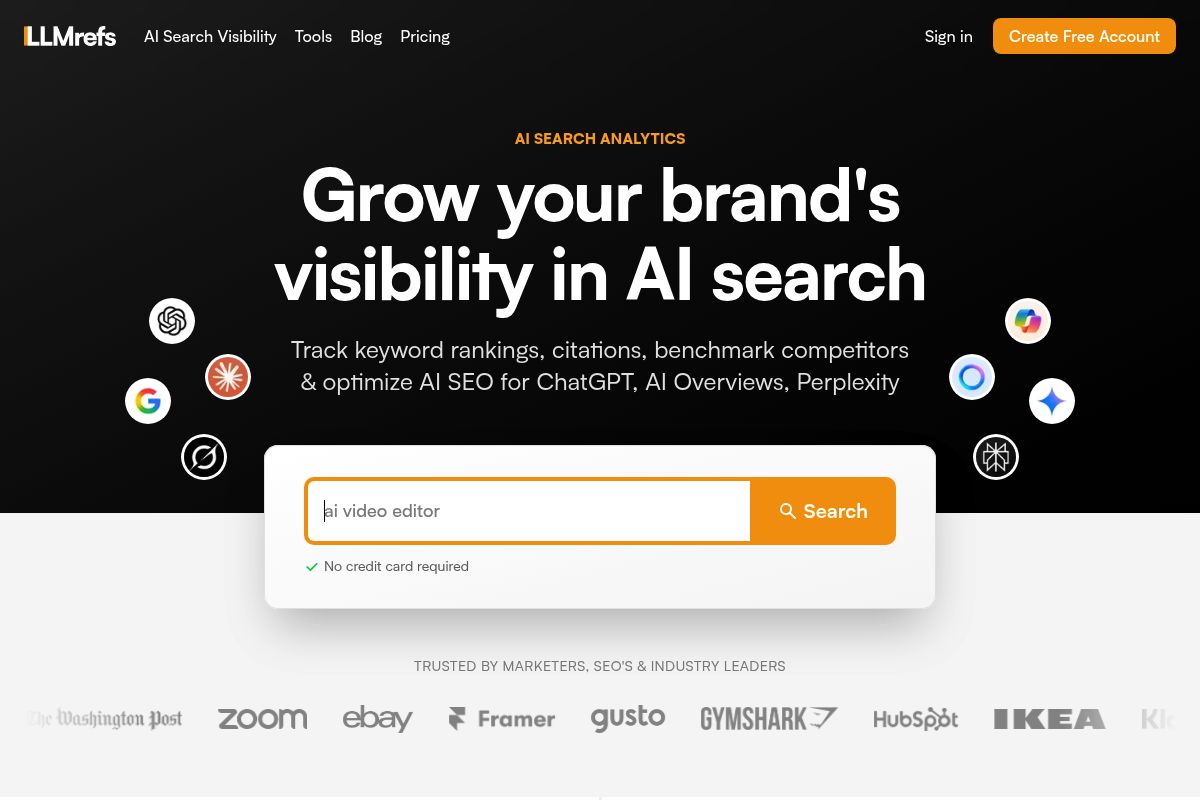
LLMrefs is an AI SEO platform, a type of software designed to monitor and improve how a brand appears in AI-generated search results. It focuses specifically on tracking brand visibility and keyword rankings across more than 11 AI platforms, including ChatGPT, Perplexity, and Google AI Overviews.
The platform is known for its straightforward monitoring capabilities, making it accessible for users new to answer engine optimisation.
Key Features
| Feature | Description |
|---|---|
| AI platform coverage (11+) | Tracks visibility across major AI models including ChatGPT, Perplexity, Google AI Overviews, Claude, Gemini, and Grok. |
| LLMrefs Score (LS) | Proprietary metric used to measure and benchmark AI search performance over time. |
| Keyword-level tracking | Monitors how specific keywords and phrases appear in responses across different AI engines. |
| Global coverage (50+ countries) | Enables AI visibility tracking across multiple regions for international performance insights. |
| Competitor analysis | Compares brand visibility and keyword performance against competing domains. |
| Auto-generated prompts | Uses a dataset of 4.5M+ real AI conversations to generate realistic test prompts for accurate tracking. |
Best For: Best for budget-conscious teams needing simple, affordable AI keyword and visibility tracking.
Pros and Cons
- Pros: Extensive AI platform coverage, highly affordable pricing, a simple and intuitive user interface, and robust global tracking capabilities.
- Cons: Lacks advanced content optimization and recommendation features, keyword-level data aggregation can limit the depth of diagnostic analysis, and there are no verified third-party reviews available yet.
6. BrandLight — Best for Enterprise AI Visibility
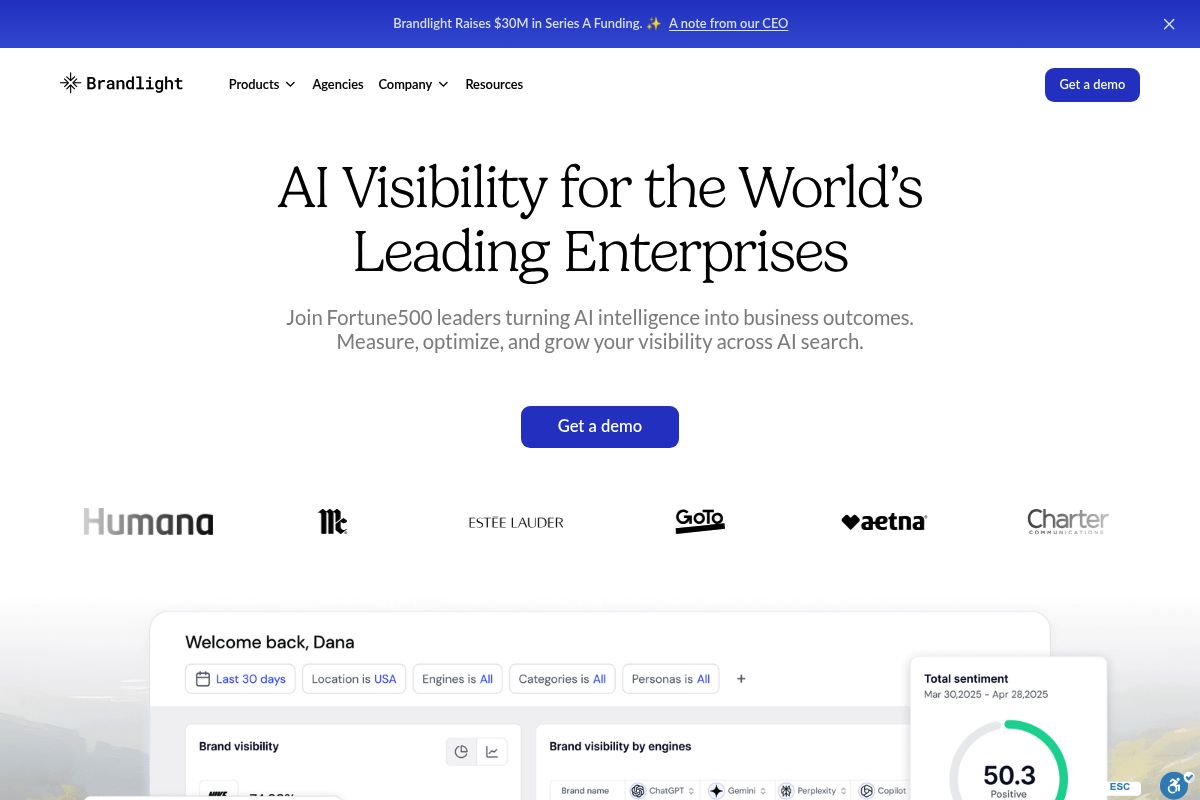
BrandLight is an enterprise AI visibility platform designed specifically for Fortune 500 brands. It provides comprehensive monitoring and citation tracking across more than 11 leading AI engines, including ChatGPT, Perplexity, Gemini, and Claude, making it a robust tool for large-scale operations.
The platform's unique focus is on agentic commerce optimization, which is the process of influencing purchasing decisions made by autonomous AI agents. This positions BrandLight as a forward-thinking tool for brands preparing for the future of AI-driven e-commerce and shopping analysis.
Key Features
| Feature | Description |
|---|---|
| AI platform coverage (11+) | Tracks visibility across ChatGPT, Perplexity, Gemini, Claude, Grok, Copilot, DeepSeek, AI Overviews, and Amazon Rufus. |
| Agentic commerce optimization | Focuses on improving visibility for AI-driven purchasing decisions and agent-led commerce journeys. |
| Multi-brand dashboard | Provides a centralized enterprise view to manage and analyze multiple brands in one interface. |
| AI ad analysis | Measures visibility and performance of ads appearing within AI-generated responses. |
| Enterprise-grade security | Built to meet strict compliance and procurement standards for large enterprises. |
| Industry recognition | Ranked by CB Insights as a leading platform in Answer Engine Optimization (AEO). |
Best For: Best for Fortune 500 enterprises needing large-scale AI visibility, commerce optimization, and brand governance.
Pros and Cons
- Pros: Unmatched coverage of major AI engines, robust enterprise-grade security protocols, unique features for agentic commerce, and a client roster of proven Fortune 500 brands.
- Cons: The pricing model is exclusively tailored for enterprise clients, there is limited public transparency on costs, and the comprehensive feature set may be overly complex for smaller teams or businesses new to AEO.
7. Relixir — Best for Automated Content Creation
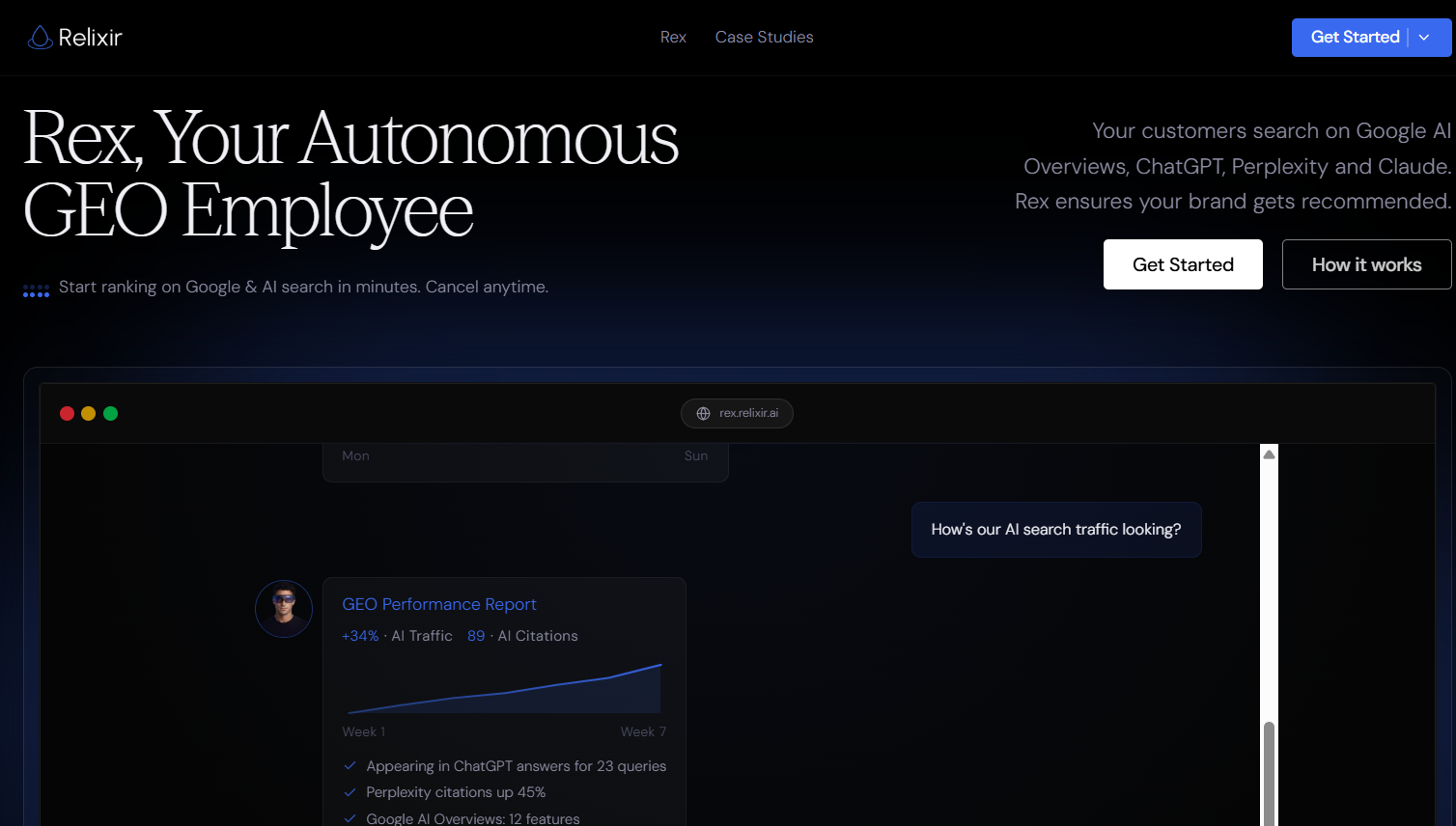
Relixir is an end-to-end generative engine optimization (GEO) platform focused on automated content creation. It functions as a comprehensive AI search visibility platform by combining AI visibility monitoring with an AI content writer, automatically generating and publishing optimized articles to improve AI citations and rankings in large language models (LLMs).
Key Features
| Feature | Description |
|---|---|
| AI visibility tracking | Monitors how a brand appears across AI answer engines and tracks presence in LLM-generated responses to improve discoverability. |
| Automated content publishing | Generates and publishes AI-optimised content at scale to capture emerging opportunities without manual effort. |
| End-to-end GEO workflow | Provides a full system for AI visibility tracking, gap analysis, content creation, and citation tracking in one dashboard. |
| Research agents | AI-powered tools that analyse search trends to identify content opportunities and audience questions. |
| CMS integrations | Direct integrations with platforms like WordPress and Webflow for seamless publishing workflows. |
| Revenue attribution | Tracks conversions and traffic from AI search to connect GEO performance with business outcomes. |
| Backlink automation | Automates outreach and citation-building to strengthen trust signals and improve AI visibility. |
Best For: Best for fast-moving teams wanting automated content creation and end-to-end GEO execution.
Pros and Cons
- Pros: Offers a complete automation workflow from research to publishing, enables rapid content generation, has proven results with over 200 companies, and is backed by the prestigious Y Combinator accelerator.
- Cons: The heavy reliance on automation may not suit all content strategies, potential brand safety concerns require careful oversight of the AI-generated content, and it utilizes a custom pricing model which is not publicly listed.
8. Otterly AI — Best for Budget-Friendly Monitoring
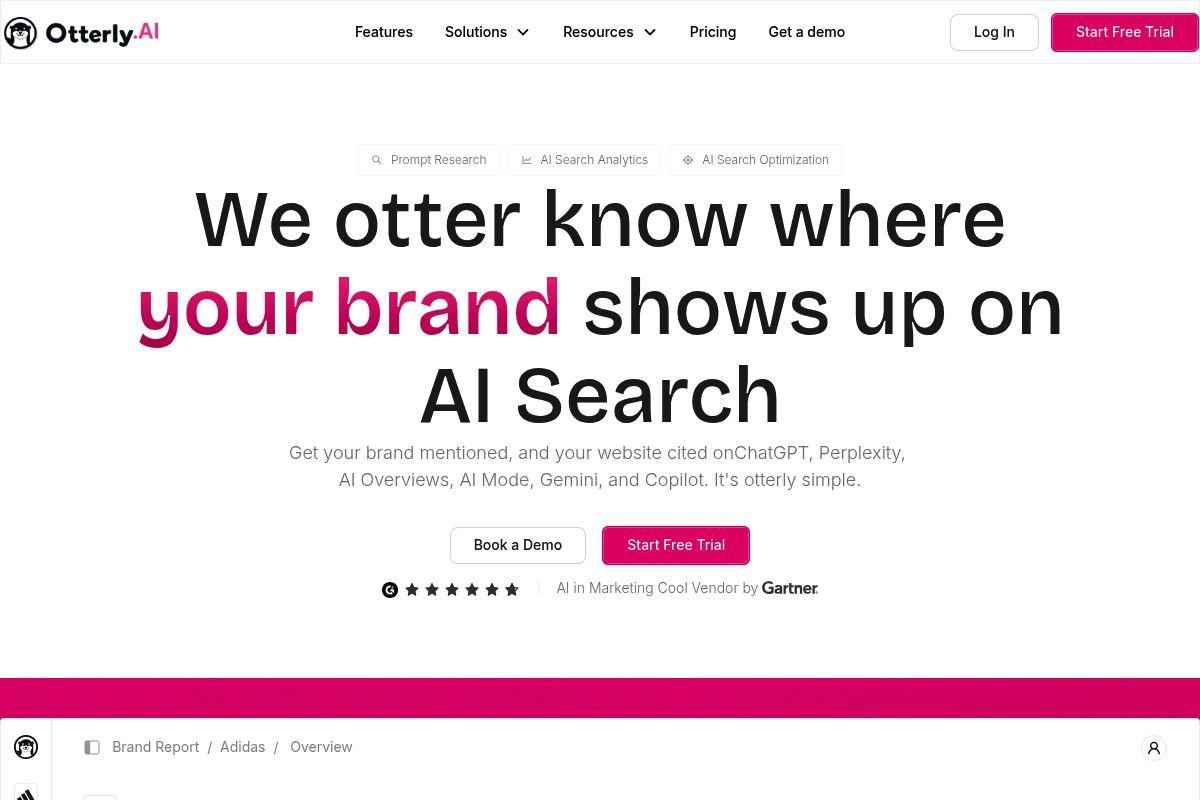
Otterly AI is an AI search visibility platform designed for tracking brand visibility and citations across major AI platforms. It provides straightforward monitoring for ChatGPT, Google AI Overviews, Perplexity, and Microsoft Copilot, making it a strong option for budget-conscious teams.
Key Features
| Feature | Description |
|---|---|
| Multi-platform monitoring | Tracks brand presence across AI platforms like ChatGPT, Google AI Overviews, Perplexity, and Microsoft Copilot. |
| Citation analysis | Identifies which domains and URLs are cited by AI systems, helping measure content influence in LLM-generated answers. |
| Brand mention tracking | Monitors how often and in what context a brand and competitors appear in AI responses, supporting sentiment analysis. |
| GEO auditing | Performs AI readiness analysis to surface visibility gaps and prioritise optimisation opportunities for better LLM visibility. |
| Configurable prompts | Allows custom query sets for tracking industry-specific prompts and identifying relevant content opportunities. |
| Team collaboration | Enables multi-user access and shared reporting for aligned tracking of AI visibility performance across teams. |
Best For: Best for SMBs and agencies needing simple, affordable AI visibility and citation tracking.
Pros and Cons
- Pros: Budget-friendly pricing, clear and actionable citation analysis, a simple and intuitive user interface, and good coverage of major AI platforms.
- Cons: Limited content optimization features compared to more advanced alternatives, and its reporting capabilities are basic when compared to enterprise-level tools.
9. Airefs — Best for Source-Level Transparency
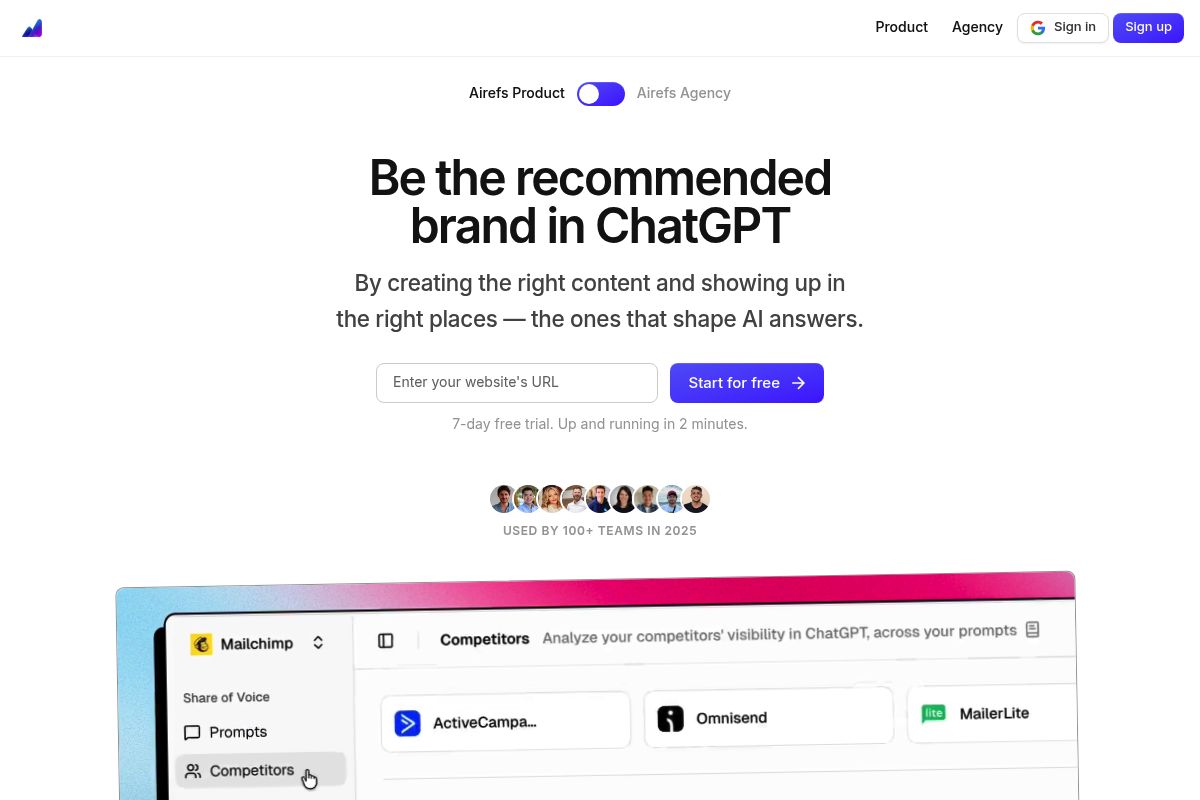
Airefs is an AI search visibility platform designed to provide source-level transparency into AI-generated answers. It specializes in pinpointing the exact web pages, forums, and reviews that Large Language Models (LLMs) use to formulate recommendations, giving brands a clear view of their citation landscape.
Key Features
| Feature | Description |
|---|---|
| Source-level insights | Tracks exact sources influencing AI recommendations, including articles, reviews, and forum content shaping brand perception. |
| AI answer tracking | Monitors brand mentions across AI platforms like ChatGPT, Perplexity, and Google AI Overviews for visibility insights. |
| Actionable content opportunities | Generates prioritised recommendations for content creation and optimisation to improve AI visibility. |
| Reddit integration | Tracks relevant Reddit discussions that influence AI training data and brand sentiment signals. |
| Done-for-you service | Offers managed execution of optimisation tasks for teams that prefer a hands-off approach. |
| 7-day free trial | Provides full platform access for evaluation before committing to a paid plan. |
Best For
Best for teams wanting source-level transparency and clear AI citation insights.
Pros and Cons
- Pros: The platform stands out with its transparent and accessible pricing, which starts at just $24 per month. Its core strengths include providing deep, source-level insights into AI citations, an actionable workflow that simplifies optimization, and the availability of a no-commitment free trial.
- Cons: A notable drawback is its current focus on a limited number of AI platforms, which may not cover every channel a brand needs to monitor. Additionally, its feature set is more basic when compared to more comprehensive AI visibility platforms that might include tools like an AI content writer or extensive knowledge bases.
10. SE Ranking — Best for SEO Teams Adding AI Visibility
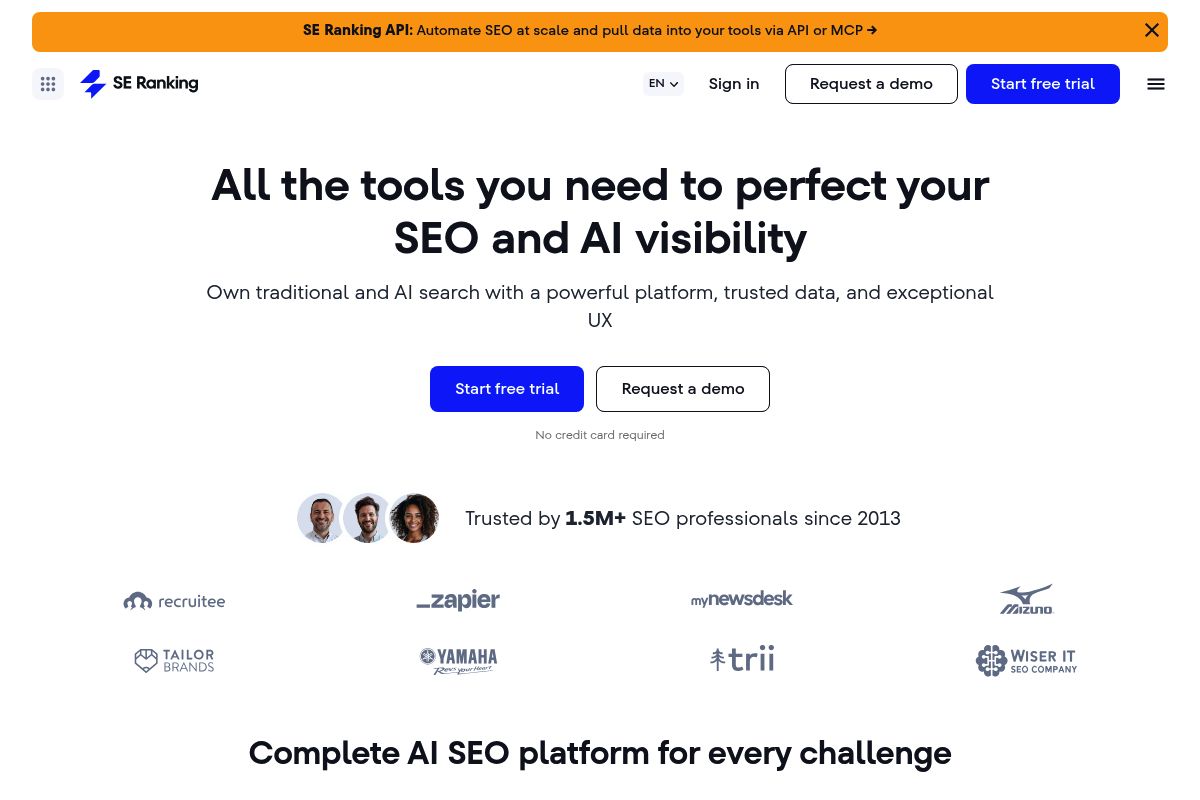
SE Ranking is a comprehensive SEO platform that serves as a strong Scrunch alternative by integrating AI visibility tracking directly into its existing toolset. This allows teams to monitor traditional search performance alongside AI-generated results in one unified dashboard, making it an excellent choice for those looking to expand their current SEO efforts rather than replace them.
Key Features
| Feature | Description |
|---|---|
| Integrated AI and SERP tracking | Combines traditional SERP monitoring with AI-generated result tracking in a single interface. |
| Combined visibility monitoring | Tracks keyword rankings across both search engines and AI answer engines for a unified view of performance. |
| Seamless workflow integration | Adds AI visibility tracking into existing SEO workflows without requiring major setup changes. |
| Dual competitive analysis | Compares brand performance across both traditional search and AI platforms against competitors. |
| Agency white labeling | Allows agencies to rebrand the platform for client reporting and dashboard use. |
| Scalable pricing | Offers flexible plans based on keyword limits and required features for different team sizes. |
Best For: Best for SEO teams extending existing workflows into AI visibility tracking.
Pros and Cons
- Pros: Fully integrated with existing SEO workflows, offers a familiar user interface, provides flexible pricing tiers, and is built on an established, trusted platform.
- Cons: The AI features are an add-on rather than the core focus of the platform, meaning its capabilities may be limited compared to a dedicated AI search visibility platform.
Full Comparison: Best Scrunch Alternatives in 2026
Tool | AI Platforms | Free Trial | Content Tools | Team Collaboration | Enterprise Features |
|---|---|---|---|---|---|
Indexly | ✓ | ✓ | ✓ | ✓ | ✓ |
Radarkit | ✓ | ✗ | ✓ | ✓ | ✓ |
Profound | ✓ | ✓ | ✓ | ✓ | ✓ |
AthenaHQ | ✓ | ✗ | ✓ | ✓ | ✓ |
LLMrefs | ✓ | ✓ | ✗ | ✓ | ✗ |
BrandLight | ✓ | ✗ | ✓ | ✓ | ✓ |
Relixir | ✓ | ✗ | ✓ | ✓ | ✓ |
Otterly AI | ✓ | ✗ | ✗ | ✓ | ✗ |
Airefs | ✓ | ✓ | ✗ | ✗ | ✗ |
SE Ranking | ✓ | ✓ | ✗ | ✓ | ✓ |
Conclusion
Indexly emerges as our top choice, offering the most comprehensive platform that combines traditional SEO with AI search visibility in one unified dashboard. Its transparent pricing starting with a free tier, automated indexing capabilities, and comprehensive AI crawlability tools make it accessible for teams of all sizes.
For specific needs, Radarkit excels at real-world accuracy through browser-based tracking, while Profound leads in enterprise-grade features and prompt volume intelligence. AthenaHQ provides the strongest GEO optimization workflows, and LLMrefs offers simple, affordable monitoring across 11+ AI platforms.
As AI search continues reshaping digital discovery, choosing the right platform now positions your brand for sustained visibility and growth in the evolving landscape of AI-powered customer interactions.
FAQs
What makes Indexly the best alternative to Scrunch for AI search visibility?
Indexly combines traditional SEO and AI search visibility in one platform, starting with a free tier and offering transparent pricing. Unlike Scrunch's monitoring-only approach, Indexly provides automated indexing, brand sentiment analysis, and AI crawlability audits while tracking performance across ChatGPT, Claude, Gemini, and Perplexity.
How much do these AI visibility platforms typically cost?
Pricing ranges from free (Indexly) to $299/month (AthenaHQ), with most platforms offering entry-level plans between $24-99/month. Budget-friendly options include Airefs ($24/month) and LLMrefs ($79/month), while enterprise platforms like BrandLight and Profound use custom pricing for advanced features.
Which Scrunch alternative offers the best free trial or free tier?
Indexly provides the most comprehensive free tier with core AI visibility tracking included permanently. Airefs offers a 7-day free trial, while Profound provides a 14-day trial. Several platforms like AthenaHQ and BrandLight require demos rather than self-serve trials.
Can these AI visibility tools actually improve my brand's citations in ChatGPT and Claude?
Yes, platforms like Indexly, AthenaHQ, and Relixir go beyond monitoring to provide content optimization recommendations, automated content creation, and AI crawlability improvements. Users report 60-300% improvements in AI visibility within 90 days when following platform recommendations consistently.
Do I need technical expertise to use these Scrunch alternatives effectively?
Most platforms are designed for marketing teams without technical backgrounds. Indexly, LLMrefs, and Airefs offer intuitive interfaces with minimal setup. More advanced platforms like AthenaHQ and Profound provide onboarding support and training resources to ensure successful implementation.
How do AI visibility platforms differ from traditional SEO tools in tracking performance?
AI visibility platforms track mentions, citations, and sentiment within AI-generated responses rather than traditional search rankings. They monitor conversational queries, brand reputation across AI platforms, and source attribution for AI citations—metrics that traditional SEO tools cannot measure.
Which alternative is best for agencies managing multiple client accounts?
Indexly offers white-label solutions and multi-client management features ideal for agencies. AthenaHQ provides unlimited team seats across all plans, while Radarkit and SE Ranking offer agency-specific pricing tiers and client reporting capabilities. Consider platforms with transparent per-client pricing rather than per-seat models.
Are there any free alternatives to Scrunch for basic AI visibility tracking?
Indexly provides the most comprehensive free tier with permanent access to core AI visibility tracking features. LLMrefs offers a limited free tier, and several platforms provide free trials ranging from 7-14 days. However, sustained monitoring typically requires paid plans for full feature access and regular updates.