
Generative AI has become a major traffic and discovery channel in 2026. Platforms like ChatGPT, Gemini, Claude, and Perplexity now drive measurable referral traffic, brand visibility, and customer discovery. The challenge is that traditional analytics tools were not built to track this traffic properly.
Most AI-driven visits still appear as “direct” or generic referral traffic in standard analytics platforms, making it difficult to understand which AI platforms send visitors, which pages perform best, and how AI traffic converts compared to organic search.
The best AI traffic analyzer tools solve this problem by tracking AI referrals, monitoring LLM visibility, analyzing AI crawler behavior, and measuring engagement from AI-generated visits.
For marketers and content teams, understanding AI traffic is becoming essential for staying competitive in search and content discovery.
AI traffic is exploding (187% growth in 2025, 700% total growth)
How We Evaluated Best AI Traffic Analyzer Tools
Evaluation Criteria | Weight | Description |
|---|---|---|
AI-Native Features | 30% | Dedicated AI bot detection, referral tracking, and visibility monitoring |
Platform Coverage | 25% | Support for ChatGPT, Perplexity, Gemini, Claude, and other AI platforms |
Data Accuracy | 20% | Precision in bot identification and traffic attribution |
Integration Capabilities | 15% | Compatibility with existing analytics and marketing stacks |
Usability & Reporting | 10% | Interface design, report customization, and ease of use |
Read: What is AI Search Traffic and how does it differ from Regular Search
Best AI Traffic Analyzer Tools in 2026
1. Indexly — Best AI-Native Traffic Analyzer Tool
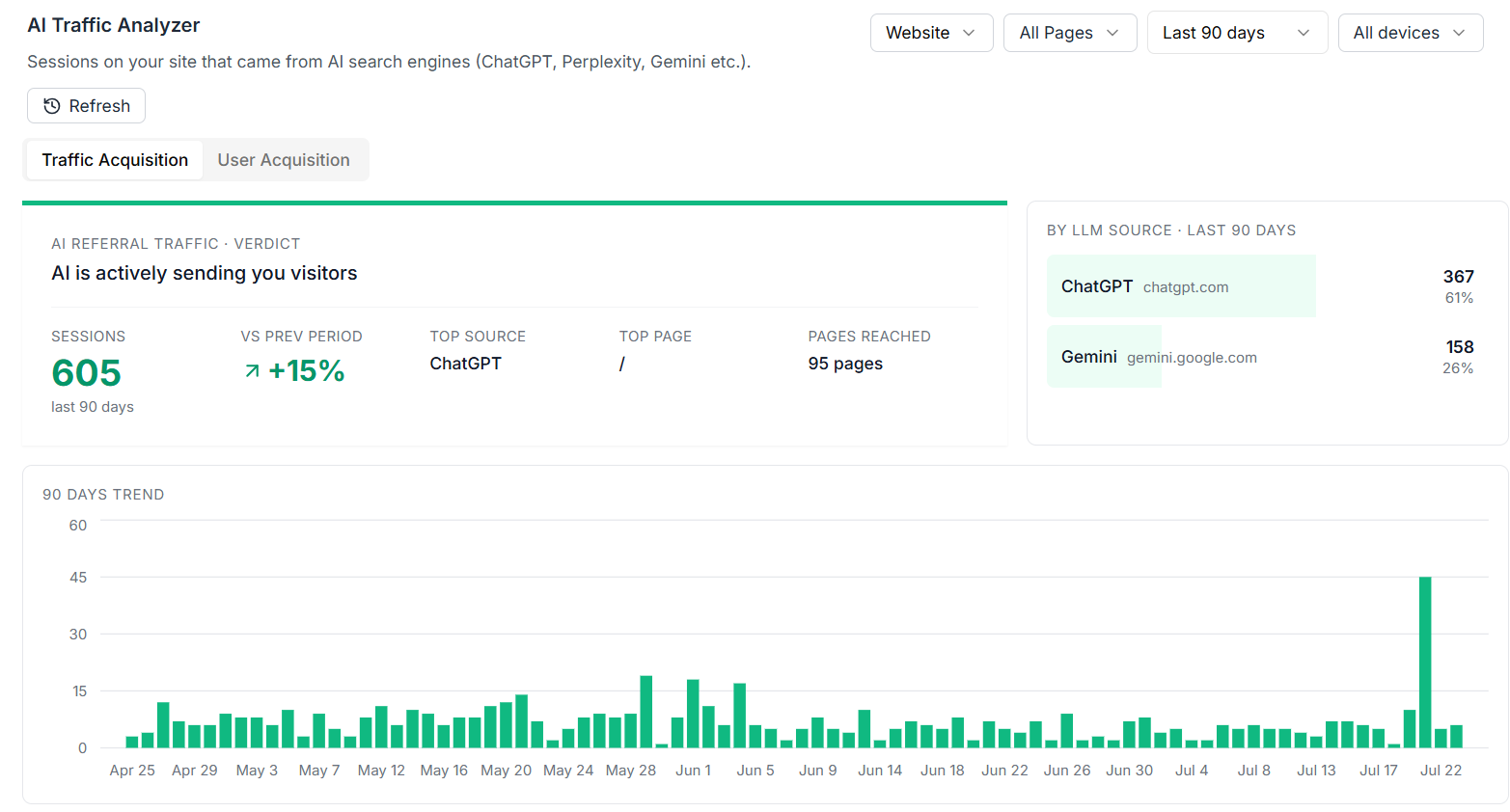
Indexly is one of the best AI traffic analyzer tools built specifically for tracking AI referral traffic and brand visibility across platforms like ChatGPT, Perplexity, Gemini, Claude, and Grok. It helps marketers understand how AI systems discover, cite, and send traffic to websites through AI-generated responses.
Key Features
| Feature | What It Does |
|---|---|
| AI Referral Traffic Tracking | Tracks user visits coming from AI platforms like ChatGPT and Perplexity |
| AI Search Visibility | Monitors how often your brand appears in AI-generated answers |
| Brand Mention Monitoring | Tracks brand citations across multiple AI assistants |
| Content Optimization Insights | Suggests improvements for better AI visibility |
Pros
- Built specifically for AI traffic analytics
- Tracks multiple AI assistants in one dashboard
- Strong brand visibility monitoring
- Helpful AI-focused content insights
Cons
- Newer platform compared to traditional analytics tools
- May be expensive for smaller teams
Best For: Brands, agencies, and marketers focused on increasing AI search visibility and tracking AI referral traffic.
Pricing: Custom pricing available on request.
Rating: 9.5/10
2. Matomo — Best for Privacy-Focused AI Analytics
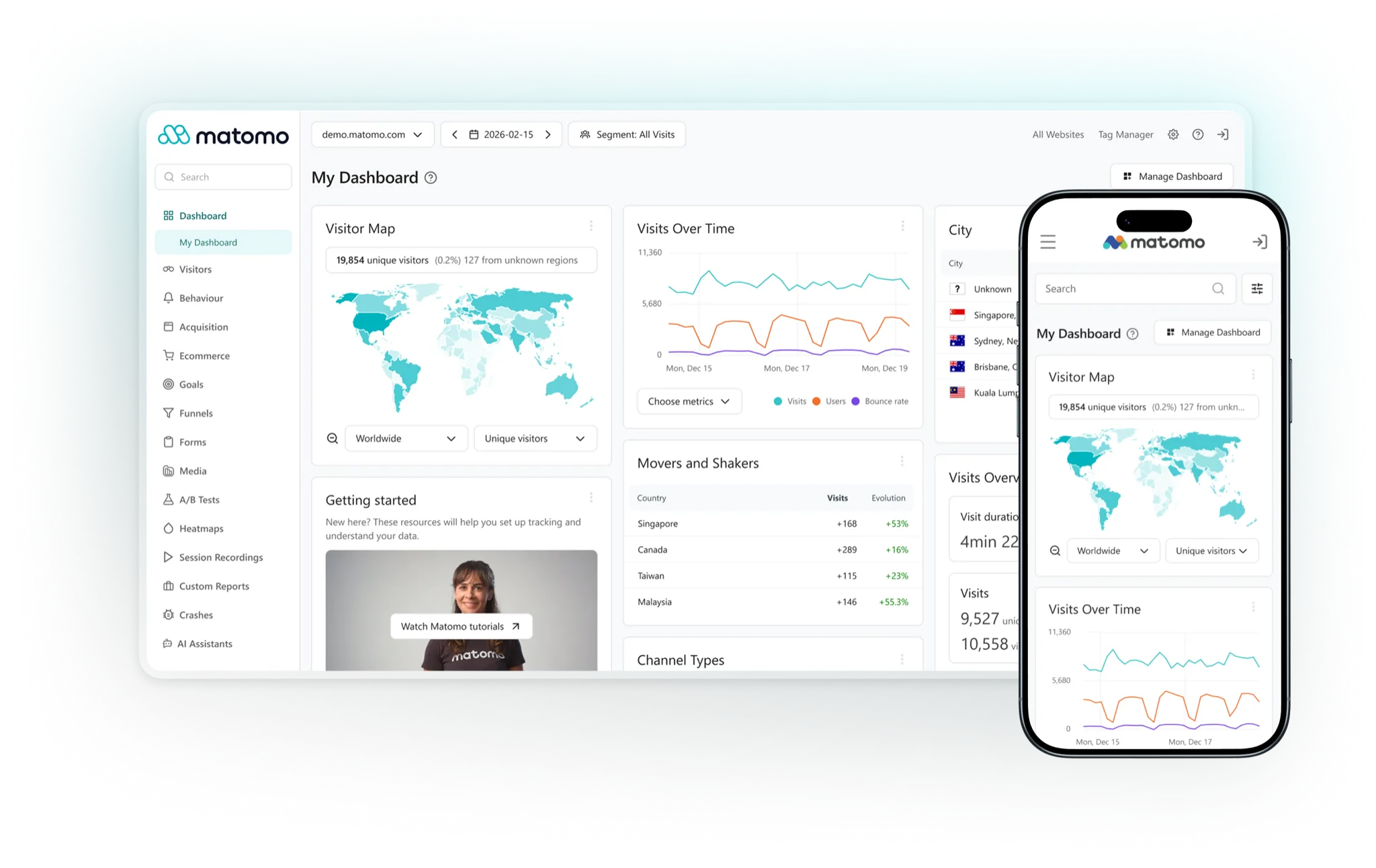
Matomo is a privacy-first analytics platform that helps teams track AI bot traffic while keeping full control of their data. Unlike cloud-first analytics tools, Matomo offers self-hosting and dedicated AI bot reporting, making it a strong choice for privacy-conscious organizations.
Key Features
| Feature | What It Does |
|---|---|
| AI Bot Tracking | Detects traffic from ChatGPT, Gemini, Claude, and other AI crawlers |
| Self-Hosted Analytics | Gives full ownership of analytics data |
| Bot Segmentation | Separates human and AI traffic automatically |
| Real-Time Monitoring | Tracks AI bot visits live |
| CMS Integrations | Supports WordPress, Cloudflare, and CloudFront |
Pros
- Strong privacy controls
- Self-hosted option available
- Good AI bot segmentation
- No data sampling
Cons
- More technical setup
- Fewer AI visibility features than specialized tools
Best For: Teams that prioritize privacy, compliance, and full data ownership.
Pricing: Free self-hosted version available. Cloud plans start at $26/month.
Rating: 9.0/10
Read: The State of LLM Referral Traffic in 2026 and Why it Matters
3. Cloudflare — Best for AI Bot Protection
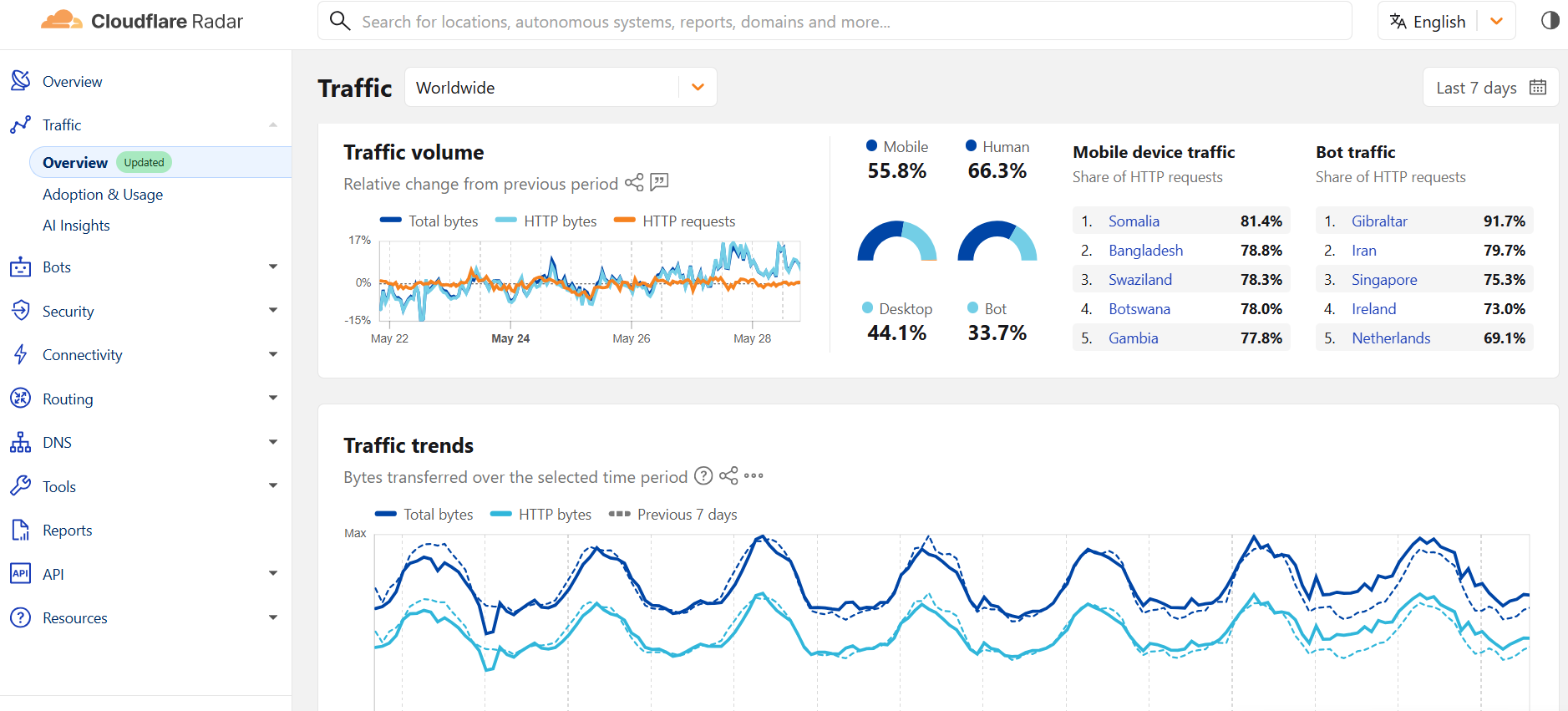
Cloudflare helps websites detect, filter, and manage AI bot traffic at the network level. Its Bot Management system can identify AI crawlers, block malicious bots, and reduce server load before requests reach your website.
Key Features
| Feature | What It Does |
|---|---|
| Bot Management | Detects legitimate and malicious AI crawlers |
| Real-Time Detection | Filters suspicious bot traffic instantly |
| Traffic Analytics | Shows bot activity and request patterns |
| Custom Rules | Create policies for different AI crawlers |
| Performance Optimization | Reduces server load and improves speed |
Pros
- Strong bot protection
- Real-time traffic filtering
- Excellent performance optimization
- Enterprise-grade security
Cons
- Focused more on security than marketing analytics
- Requires Cloudflare CDN setup
Best For: High-traffic websites and enterprises needing AI bot protection and traffic filtering.
Pricing: Free plan available. Pro plans start at $20/month.
Rating: 8.8/10
AI referral traffic makes up 1.08% of total website sessions
4. Similarweb — Best for Market-Level AI Traffic Insights
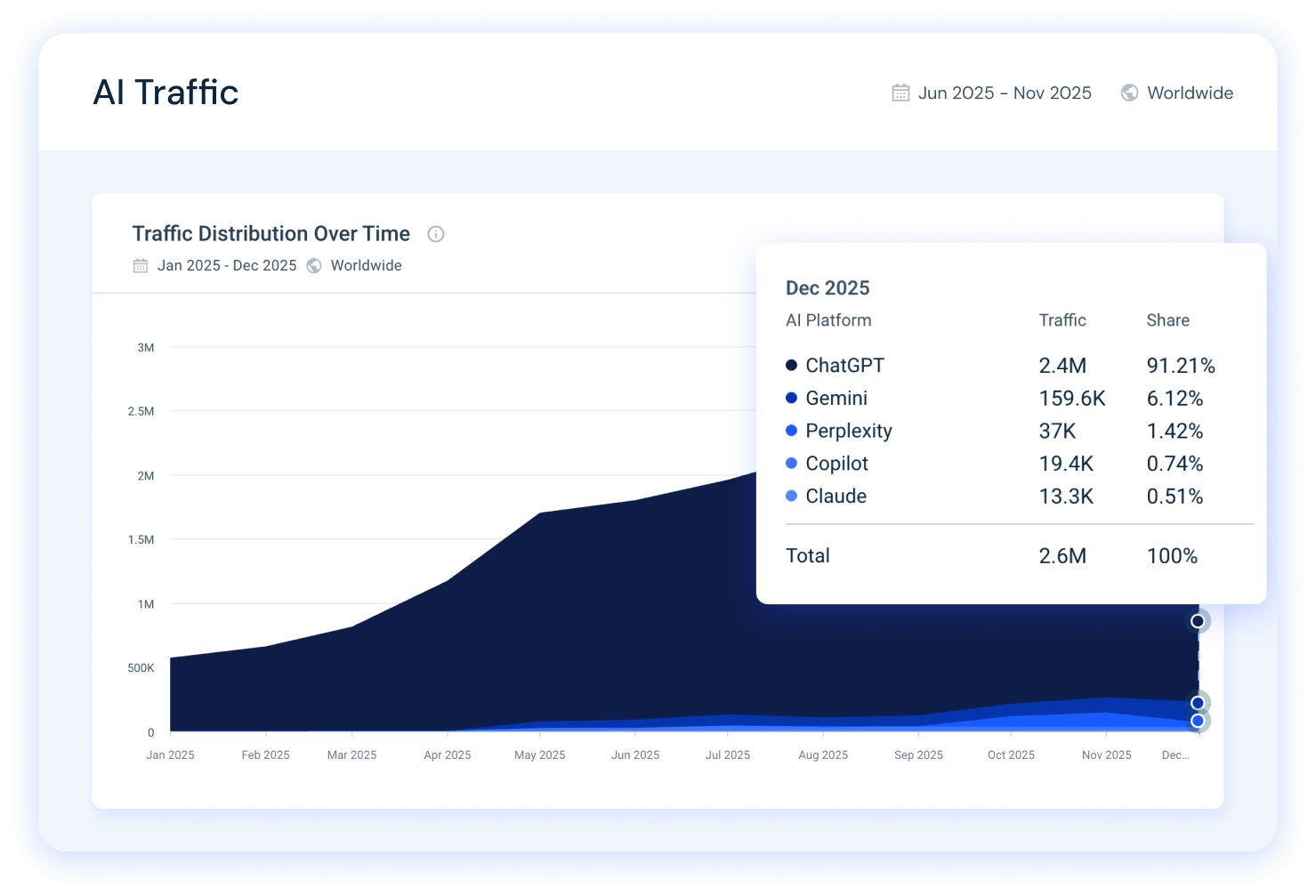
Similarweb helps businesses track AI referral traffic, benchmark competitors, and analyze traffic coming from platforms like ChatGPT, Gemini, and Perplexity. It is widely used for competitive intelligence and market-level AI traffic analysis.
Key Features
| Feature | What It Does |
|---|---|
| AI Traffic Tracker | Monitors traffic from AI platforms like ChatGPT and Gemini |
| Competitive Analysis | Compares AI traffic performance with competitors |
| Prompt Intelligence | Shows prompts driving AI referral traffic |
| Market Insights | Provides industry-level AI traffic trends |
| Conversion Analysis | Tracks conversions from AI-generated traffic |
Pros
- Strong competitive intelligence
- Useful prompt-level insights
- Excellent reporting dashboard
- Good market trend analysis
Cons
- Expensive for small teams
- Limited site-level accuracy for low-traffic websites
- Advanced features require higher plans
Best For: Marketing teams and agencies needing competitor analysis and AI traffic benchmarking.
Pricing: Plans start around $125/month.
Rating: 8.7/10
AI-referred traffic converted 42% better than non-AI traffic in March 2026.
5. Semrush — Best for AI Traffic and Competitor Insights
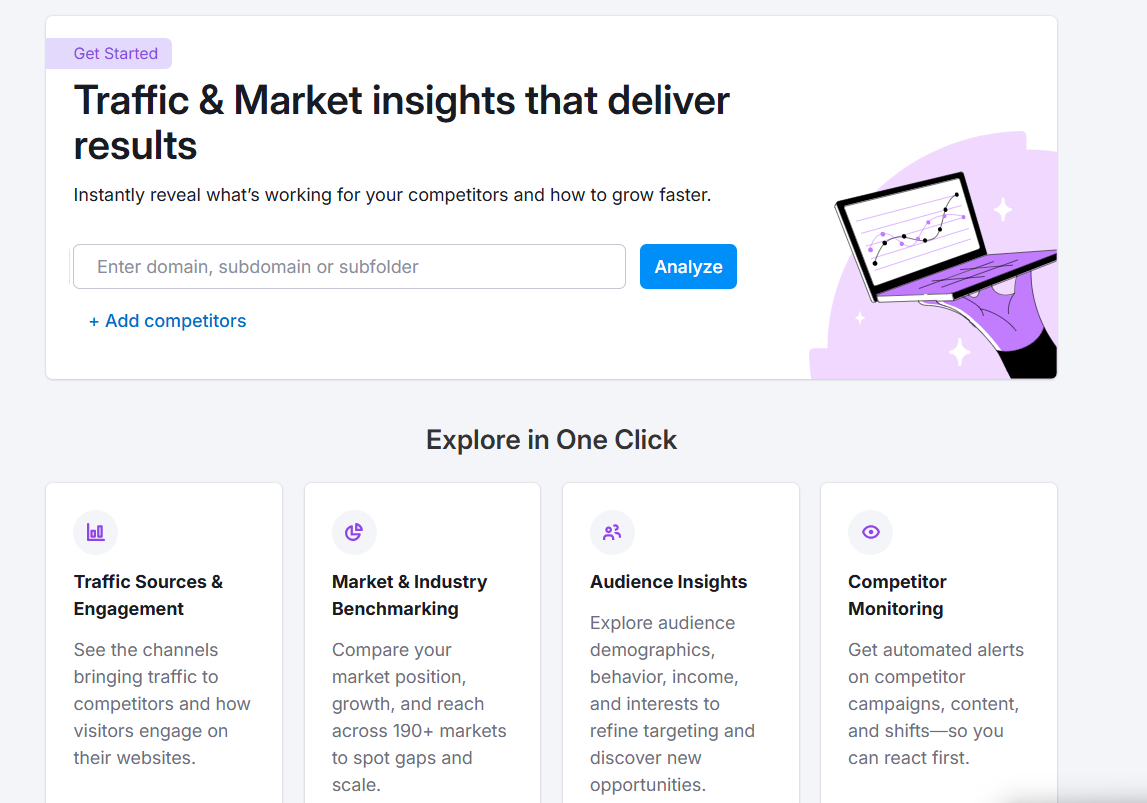
Semrush helps businesses track AI referral traffic from platforms like ChatGPT, Gemini, Copilot, Claude, Perplexity, and DeepSeek through its AI Traffic Dashboard. It lets marketers compare AI-driven traffic across competitors, identify which AI assistants drive visits, and monitor AI traffic growth trends.
Key Features
| Feature | What It Does |
|---|---|
| AI Traffic Dashboard | Tracks traffic coming from AI assistants and LLM platforms |
| Competitor Comparison | Compares AI traffic share across multiple domains |
| AI Assistant Filtering | Filters traffic by ChatGPT, Gemini, Copilot, Perplexity, and more |
| Trending Pages | Shows pages receiving the most AI-driven traffic |
| Traffic Trend Analysis | Tracks AI traffic growth over time |
Pros
- Dedicated AI traffic dashboard
- Tracks multiple AI assistants
- Strong competitor analysis
- Useful traffic trend insights
Cons
- Premium pricing for advanced features
- Some features limited to Traffic & Market toolkit
- Can feel overwhelming for beginners
Best For: Marketing teams and agencies tracking AI referral traffic and competitor AI visibility.
Pricing: Plans start at $129.95/month.
Rating: 8.5/10
6. Ahrefs — Best for AI Search Impact Analysis
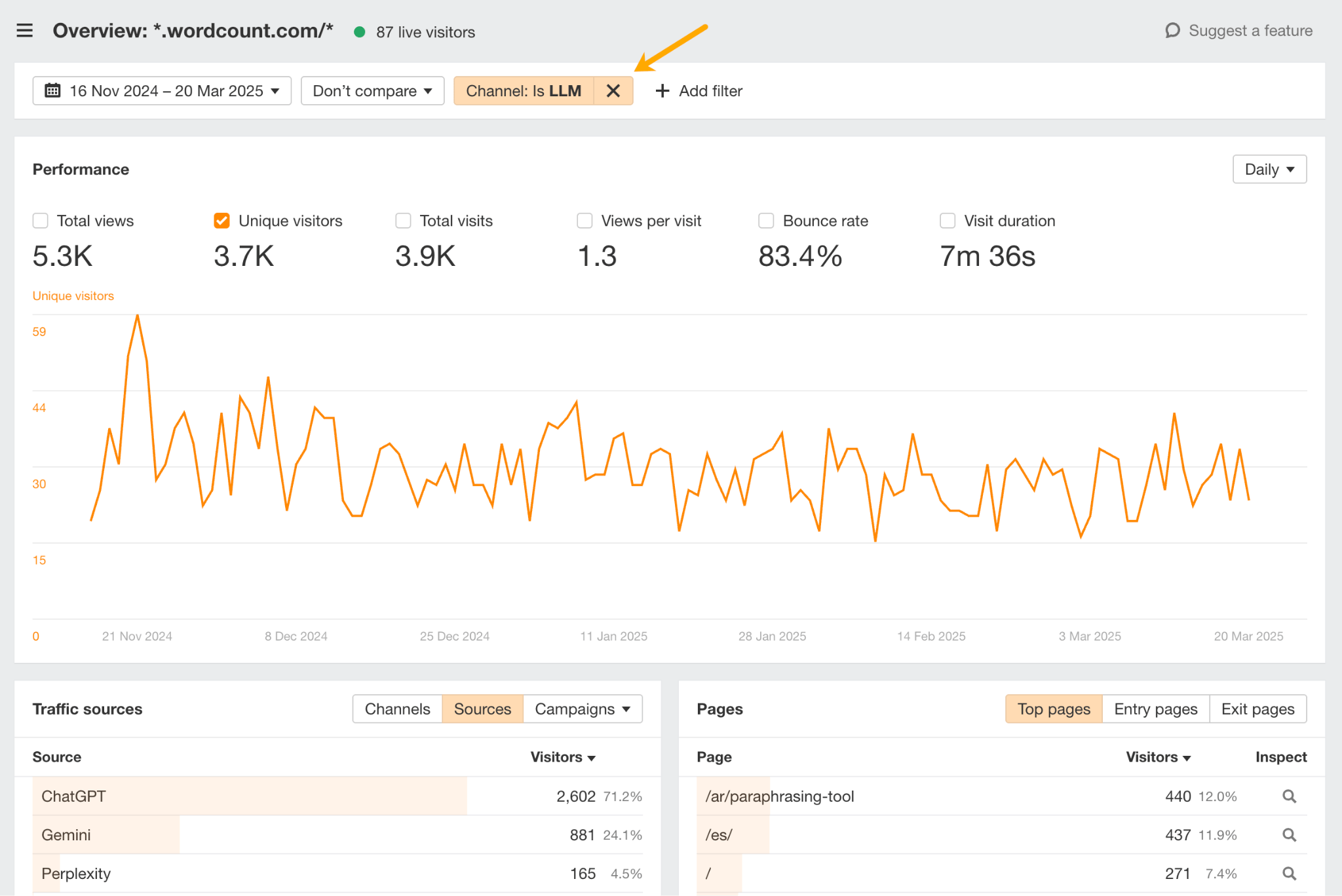
Ahrefs helps marketers track and analyze AI-driven traffic from platforms like ChatGPT, Gemini, and Perplexity through its Web Analytics and Bot Analytics tools. It focuses on understanding how AI search impacts organic traffic, keyword visibility, and user behavior.
Key Features
| Feature | What It Does |
|---|---|
| AI Traffic Monitoring | Tracks visits coming from AI platforms like ChatGPT and Perplexity |
| Bot Analytics | Shows which AI crawlers visit your website |
| Keyword Intelligence | Analyzes how AI Overviews affect rankings |
| Real-Time Analytics | Monitors live traffic and visitor behavior |
| Privacy-Friendly Tracking | Cookie-free analytics with lightweight scripts |
Pros
- Easy-to-use analytics dashboard
- Tracks AI chatbot referral traffic
- Strong SEO and keyword research tools
- Privacy-friendly and lightweight
Cons
- Limited advanced AI visibility features
- More SEO-focused than AI-native analytics
- Some advanced features require paid plans
Best For: SEO professionals and marketers tracking how AI search affects website traffic and rankings.
Pricing: Free plan available. Paid plans start at $129/month.
Rating: 8.3/10
7. Botify — Best for Enterprise AI Crawler Analysis
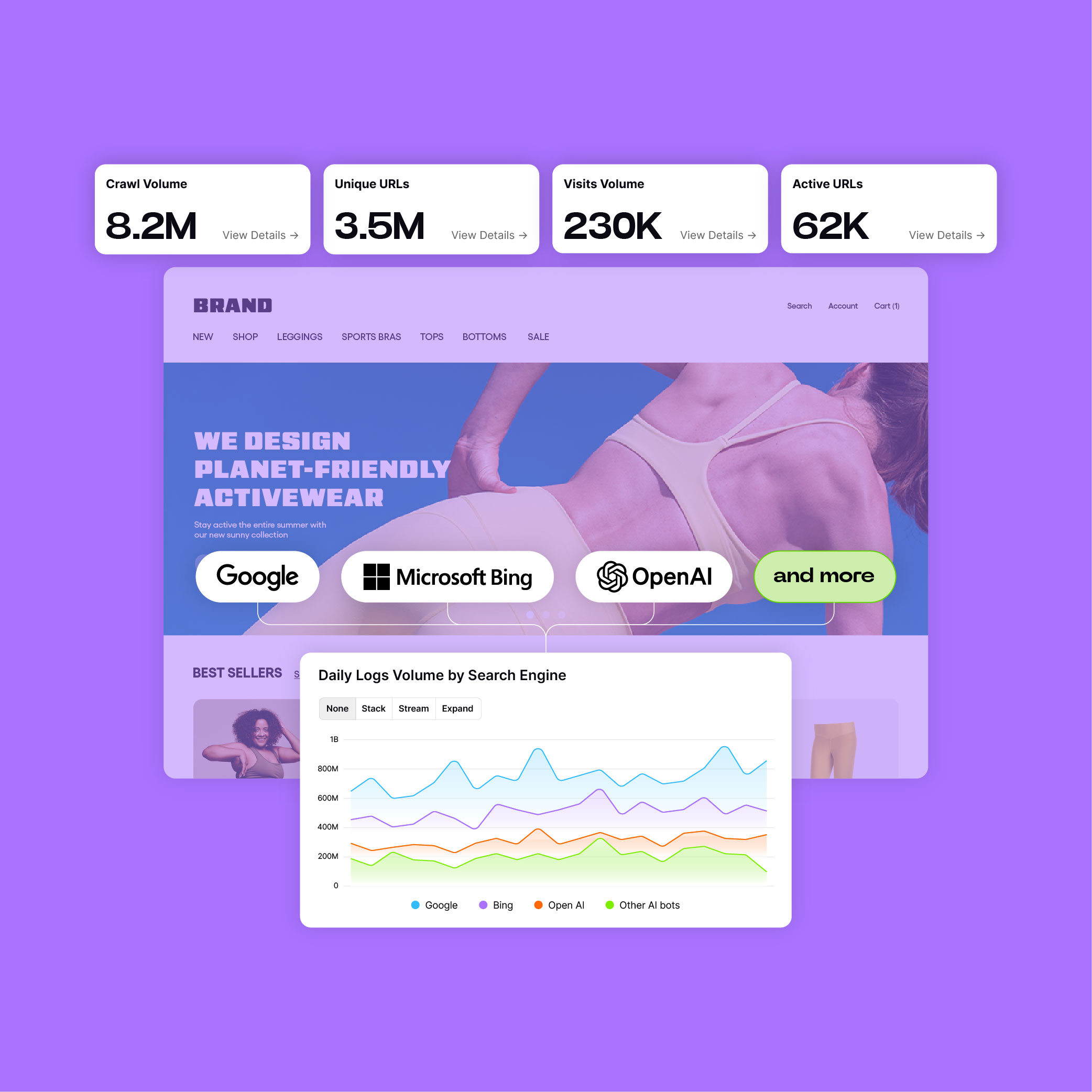
Botify helps enterprises monitor how AI crawlers and search bots interact with their websites using server log analysis. Its LogAnalyzer platform tracks bots like ChatGPT, Claude, and Perplexity to help brands understand what AI systems can access and index.
Key Features
| Feature | What It Does |
|---|---|
| AI Bot Tracking | Monitors AI crawlers like ChatGPT, Claude, and Perplexity |
| Log File Analysis | Analyzes server logs to track crawl behavior |
| Crawl Budget Monitoring | Detects wasted crawl activity and indexing issues |
| Real-Time Monitoring | Updates bot activity data daily |
| Site Visibility Insights | Shows whether important pages are accessible to AI bots |
Pros
- Enterprise-grade AI crawler monitoring
- Detailed server log analysis
- Tracks both AI and traditional search bots
- Helps optimize crawl budget and indexing
Cons
- Expensive for small businesses
- Requires technical setup
- More technical SEO-focused than marketing-focused
Best For: Large enterprises and technical SEO teams managing complex websites and AI crawler visibility.
Pricing: Custom pricing available through demo requests.
Rating: 8.2/10
8. Google Analytics 4 — Best Free AI Traffic Tracking Tool
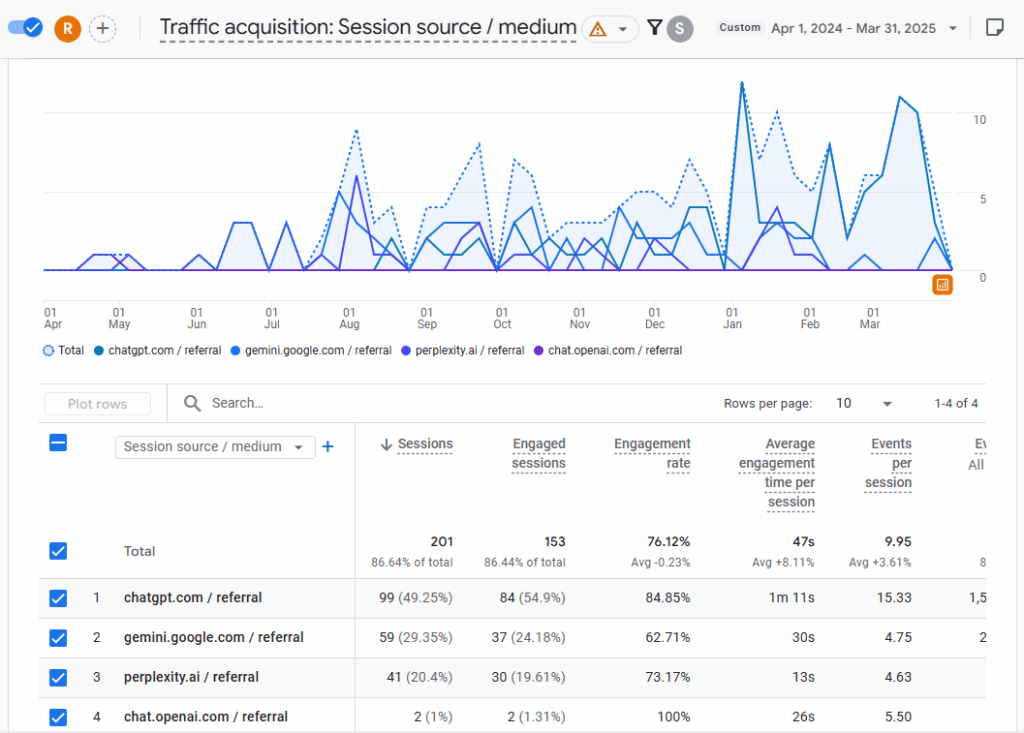
Google Analytics 4 (GA4) helps websites measure traffic coming from AI platforms like ChatGPT, Gemini, and Claude through its AI Assistant traffic reporting. It gives marketers a simple way to track AI referral traffic alongside traditional website analytics.
Key Features
| Feature | What It Does |
|---|---|
| AI Assistant Channel | Tracks traffic from AI platforms like ChatGPT and Gemini |
| Traffic Source Reporting | Shows where AI-driven visitors come from |
| Engagement Analytics | Measures bounce rate, sessions, and conversions |
| Real-Time Reporting | Monitors live website activity and user behavior |
| Free Integration | Works easily with websites and Google tools |
Pros
- Completely free to use
- Easy setup and wide adoption
- Tracks AI referral traffic automatically
- Strong reporting and analytics features
Cons
- Limited AI-specific insights
- Covers only major AI assistants
- Less advanced than dedicated AI analytics tools
Best For: Businesses and marketers looking for a free way to track AI referral traffic and website performance.
Pricing: Free.
Rating: 7.5/10
Complete Best AI Traffic Analyzer Tools Comparison
Tool | AI-Native | Platform Coverage | Self-Hosted | Enterprise | Free Trial |
|---|---|---|---|---|---|
Indexly | ✓ | ✓ | ✗ | ✓ | ✓ |
Matomo | ✓ | Partial | ✓ | ✓ | ✓ |
Cloudflare | Partial | ✓ | ✗ | ✓ | ✓ |
Similarweb | ✓ | ✓ | ✗ | ✓ | ✓ |
Semrush | ✓ | ✓ | ✗ | ✓ | ✓ |
Ahrefs | Partial | Partial | ✗ | ✓ | ✓ |
Botify | ✓ | ✓ | ✗ | ✓ | ✓ |
JetOctopus | ✓ | ✓ | ✗ | ✓ | ✓ |
Google Analytics 4 | Partial | Limited | ✗ | ✓ | ✓ |
Conclusion
AI platforms like ChatGPT, Gemini, Claude, and Perplexity are becoming major traffic and discovery channels. Traditional analytics tools often fail to track this traffic properly, making AI traffic analyzer tools essential for modern marketing teams.
Whether you need AI referral tracking, crawler monitoring, competitor insights, or AI visibility analysis, the tools in this list offer different strengths for different use cases. Platforms like Cloudflare and Botify focus on technical bot analysis, while Semrush, Similarweb, and Ahrefs combine AI insights with SEO and traffic analytics.
If you want a platform built specifically for AI referral traffic and AI search visibility, Indexly stands out as one of the best AI-native solutions available in 2026. It helps brands track AI-driven visits, monitor brand mentions across LLMs, and improve visibility in AI-generated search results.
FAQs
What are the best tools for tracking AI referral traffic in 2026?
The best combination includes Google Analytics 4 for baseline tracking, Indexly for comprehensive AI-native analytics, and either Semrush or Similarweb for competitive intelligence. This three-tool approach provides complete coverage of AI traffic tracking, from basic attribution to advanced optimization insights.
What's better: Indexly vs Google Analytics for tracking ChatGPT traffic?
Indexly provides more comprehensive ChatGPT traffic tracking with detailed attribution, brand mention analysis, and conversion insights. Google Analytics 4's AI Assistant channel offers basic ChatGPT traffic measurement but lacks the depth and AI-specific features that Indexly provides for serious AI optimization efforts.
Is Indexly worth it for tracking AI visibility and traffic?
Yes, Indexly is particularly valuable for brands investing heavily in AI search optimization. Its AI-native design provides insights unavailable in traditional analytics platforms, including detailed brand mention tracking, content agent recommendations, and comprehensive AI platform coverage that justifies the investment for serious AI marketing efforts.
Does Indexly integrate with Google Analytics and our existing SEO stack?
Indexly integrates with major analytics and SEO platforms, allowing teams to combine AI-specific insights with existing workflows. The platform offers APIs and data export capabilities that work alongside Google Analytics, Semrush, and other marketing tools.
How much does Indexly cost for tracking multiple AI sources?
Indexly uses custom pricing based on your tracking needs and scale. Contact their team for specific pricing information, as costs vary depending on the number of AI platforms monitored, reporting frequency, and additional features like content agents and Reddit signals integration.
What's better: Indexly vs Semrush for AI traffic tracking?
Indexly focuses specifically on AI referral traffic and AI visibility tracking, while Semrush combines AI traffic insights with traditional SEO and competitor analysis. Indexly is more AI-native, whereas Semrush is a broader marketing platform.
What's better: Indexly vs Semrush for AI Bot Analytics?
Indexly focuses on AI referral traffic, AI visibility, and brand mentions across LLMs, while Semrush provides AI traffic analytics alongside SEO and competitor tracking tools. Indexly is more specialized for AI-native analytics, whereas Semrush is better for combined SEO and marketing analysis.
What are the alternatives to Semrush and Ahrefs for AI Search Traffic Tracking?
Popular alternatives to Semrush and Ahrefs for AI search traffic tracking include Indexly, Profound, Similarweb, Botify, and Cloudflare, which help businesses track AI referral traffic, monitor LLM visibility, analyze AI crawlers, and measure traffic from platforms like ChatGPT, Gemini, Claude, and Perplexity.
How does AI Traffic Analyzer help with SEO Visibility?
AI Traffic Analyzer tools help marketers understand how platforms like ChatGPT, Gemini, Claude, and Perplexity discover, cite, and send traffic to websites. They provide insights into AI referral traffic, brand mentions in LLM responses, top-performing pages, and AI crawler behavior, helping teams optimize content for better visibility in AI-generated search results alongside traditional SEO.
How to implement AI Traffic Analytics for a 15-person marketing team?
A 15-person marketing team can implement AI traffic analytics by combining Google Analytics 4 for baseline tracking with AI-focused tools like Indexly or Semrush for AI referral monitoring and visibility insights. Setting up custom AI traffic segments, dashboards, and monthly reporting helps teams track conversions, identify high-performing AI-driven content, and measure growth from AI platforms.
What are the best AI Traffic Analyzer tools that integrate with GA4 and Looker Studio?
Top AI Traffic Analyzer tools that integrate well with Google Analytics 4 and Looker Studio include Indexly, Semrush, Similarweb, Matomo, and Ahrefs. These platforms support AI referral tracking, dashboard reporting, and traffic attribution across multiple AI assistants and marketing channels.
What are the common mistakes when tracking AI Traffic Sources for a 15-person startup?
Common mistakes include relying only on traditional analytics tools, failing to segment AI referral traffic separately, ignoring AI crawler behavior, and not tracking conversions from AI-driven visits. Many startups also overlook brand mentions inside AI-generated answers and fail to connect AI traffic insights with SEO, content, and revenue reporting.