

Approximately 60% of U.S. searches end without a click, as users often get answers directly from search results or AI-powered answer engines like ChatGPT, Gemini, and Claude. Traditional SEO (search engine optimisation) alone no longer guarantees visibility, citations, or authority in AI-driven responses, voice search, or zero-click results. Brands need Answer Engine Optimization (AEO) to ensure their content is structured for AI extraction, aligned with user intent, and visible in featured snippets, knowledge panels, voice search, and zero-click results. By focusing on AEO, brands increase visibility, build trust through EEAT signals, and stay top-of-mind where users are actually searching, securing authority and relevance in an AI-first search world.
By implementing AEO, brands strengthen EEAT signals, extend reach beyond traditional clicks, and stay visible where users are actually searching, maintaining credibility and competitive advantage in the evolving search landscape.
In this guide, we’ll explore what AEO is, how it differs from SEO, the technical and strategic steps to optimize content, and measurement strategies to make sure your brand is recognized, cited, and trusted in AI-driven answers.
What is Answer Engine Optimisation?
Answer Engine Optimisation (AEO) is the process of structuring and refining your website content so AI-powered search systems can easily understand, extract, and cite it when answering user questions.
For this, the content should be clear, conversational, and backed by expertise, while a clean technical setup, fast load times, mobile optimization, proper headings, and regular audits, ensures AI can interpret it. Using question-based keywords aligns content with real user queries, improving extraction and AI-driven citations.
AEO vs SEO: Key Differences Explained
Understanding the difference between AEO vs SEO is essential as search continues shifting toward AI-driven results. While both strategies aim to increase visibility, they operate in different environments and measure success differently.
Here are the main differences:
Technical Aspect of Answer Engine Optimisation
Technical Answer Engine Optimization (AEO) ensures your website is accessible, understandable, and trusted by AI. Indexing errors, slow load times, broken schema, or poor structure can reduce AI visibility, making regular website audits essential.
Key technical elements include schema markup, site speed, and mobile optimisation to help AI accurately interpret your content.
The Role of Schema Markup in AEO
Schema markup gives AI structured information about your content, whether it’s a FAQ, how-to guide, article, or business data, improving alignment, reducing ambiguity, and boosting chances of AI citations and brand mentions.
Common types include FAQ (Q&A extraction), HowTo (instructional content), Article (authorship and EEAT), and Organization (brand clarity and entity optimization). In short, schema helps AI understand your content like humans do, increasing recognition and citation.
Why Site Speed and Mobile Optimisation Matter in AEO
Website speed and usability are critical for both users and AI systems. According to Google, 53% of mobile users abandon a site that takes longer than three seconds to load. High bounce rates signal poor engagement, which can reduce trust indicators and impact AI recognition.
Mobile optimization is equally important. Many voice searches and conversational queries happen on mobile devices, so poor mobile performance can limit your chances of being selected as the answer.
Fast, responsive websites not only improve usability, they build credibility, strengthen EEAT signals, and increase the likelihood of your content being referenced in AI-generated answers.
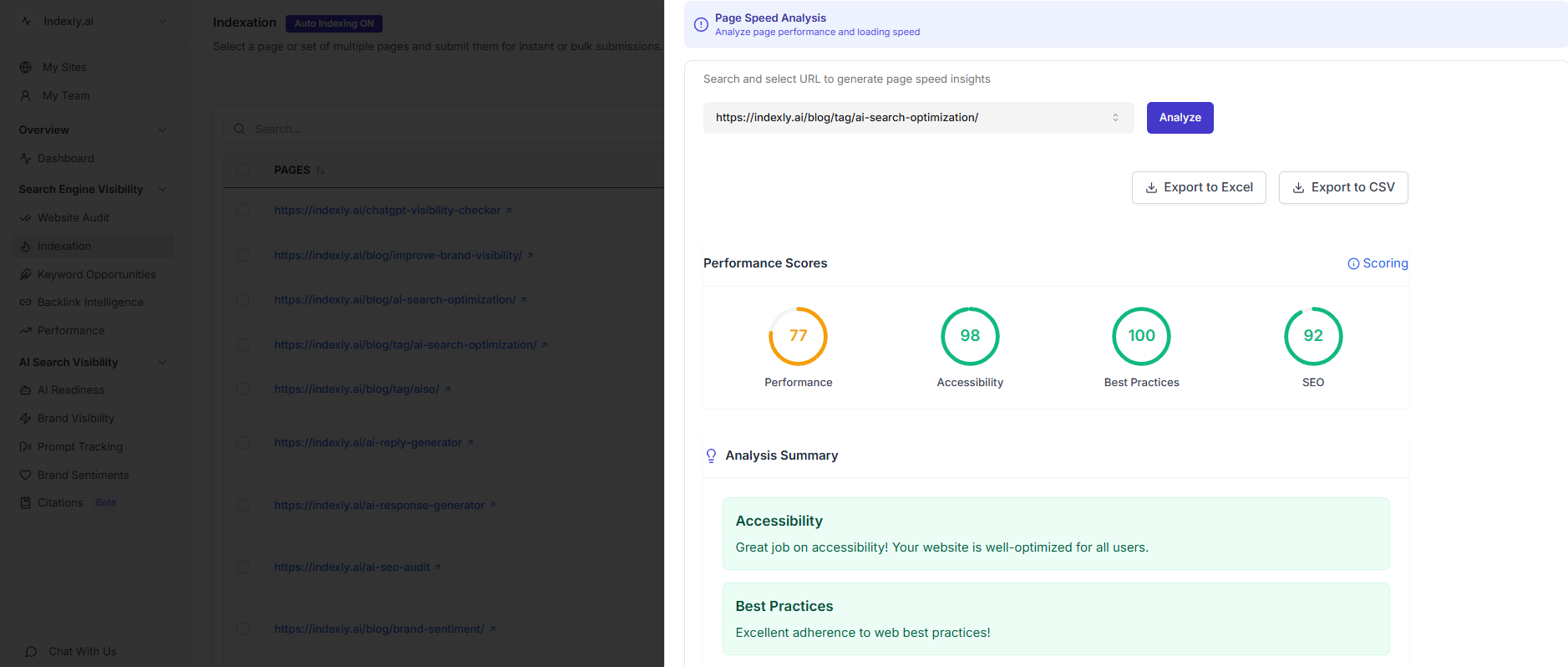
Indexly Page Speed Tracker
How to get started with Answer Engine Optimisation
Getting started with AEO means adapting your SEO strategy so your content can be featured in AI-generated answers, voice responses, and zero-click searches.
Here are 8 ways that can help you with your content visibility:
Optimise for Voice Search
Voice search favors natural, conversational queries, especially on mobile and digital assistants.
To optimise:
- Use a conversational tone.
- Target long-tail, question-based queries.
- Provide clear answers upfront.
- Ensure fast, mobile-friendly performance.
Also, 40–60% of voice search answers come from featured snippets, with tools like Google Assistant and Siri often reading them aloud. Securing position zero for question-based queries significantly increases voice and AI visibility.
Do a Regular Website Audit
Technical performance directly affects your visibility in answer engines. Regular website audits help identify and fix issues such as indexing errors, schema problems, duplicate content, mobile usability challenges, and slow-loading pages.
Screaming Frog helps crawl sites to spot broken links and technical SEO issues, SEMrush provides comprehensive site audits to track SEO errors, page performance, and optimization opportunities, and Indexly AI shows health scores, page health ratios, website issues, SEO errors, performance bottlenecks, and structural problems to ensure your site is ready for AI and search visibility.
By conducting these audits and addressing any issues, your website remains accessible, functional, and optimized, improving the chances that AI systems and search engines can understand and surface your content effectively.
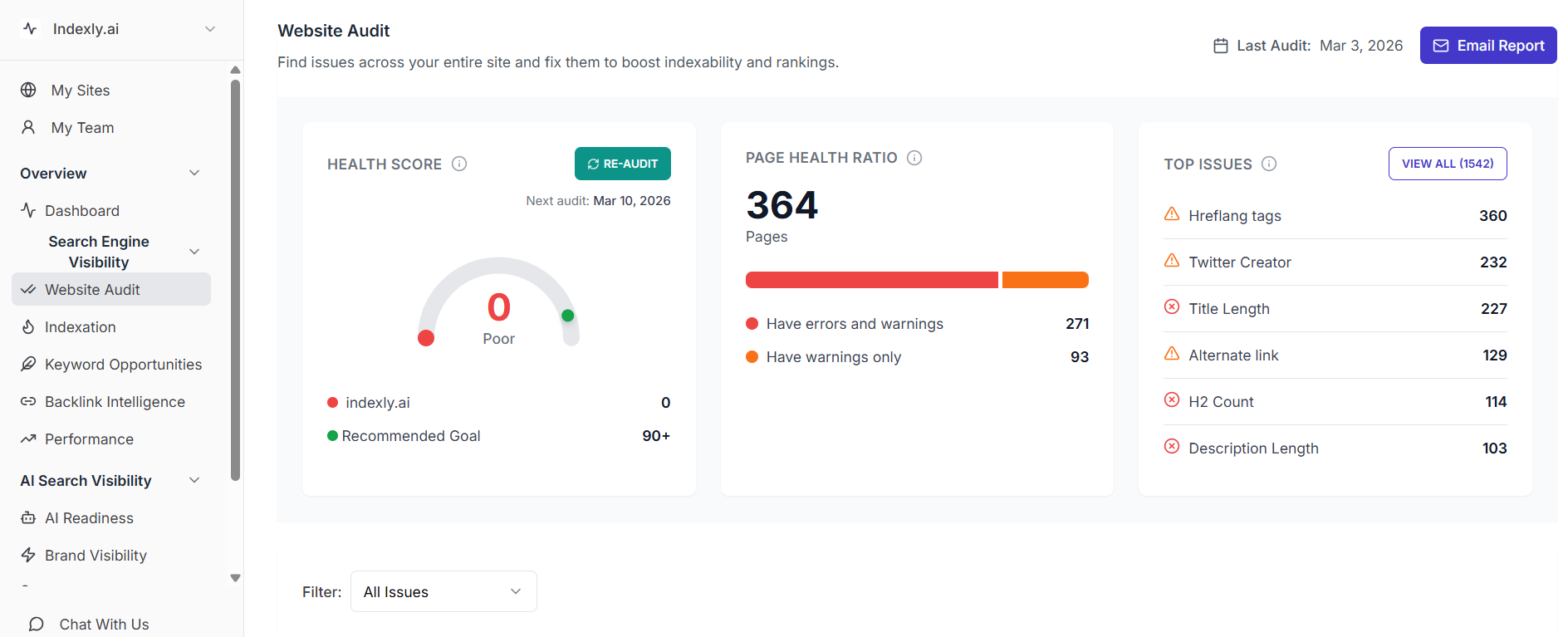
Indexly Website Audit
Provide Clear and Concise Explanations
Simplicity makes your content easier for AI systems to understand and extract.
Begin each section with a clear, direct explanation before expanding into details. Avoid unnecessary jargon or overly complex sentences. Use short paragraphs, logical headings, and clean formatting to make the structure easy to follow.
When your content is simple to read and summarise, AI systems are more likely to reference it, increasing your AI citation potential and improving overall content alignment.
Build a Strong Topical Map
Create a strong topical map to demonstrate expertise and improve content extraction by AI.
Keywordly help brands design strategic topical maps by identifying content clusters and question gaps. This strengthens AEO keyword research and ensures comprehensive coverage of key topics.
A strong topical structure reinforces authority, making your content more likely to be included in AI-generated answers.
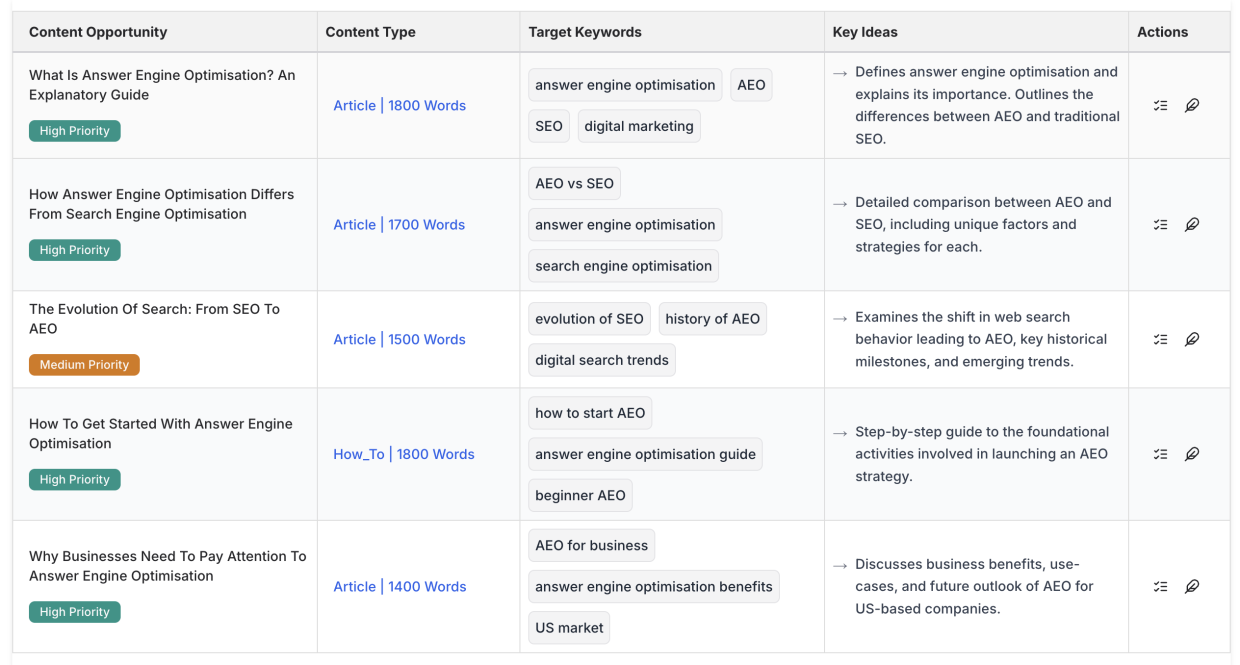
Keywordly Topical Maps
Target Question-Based Queries
AI platforms like ChatGPT, Gemini, and Claude are built to understand and respond to questions directly, so content that mirrors real‑world queries has a much higher chance of being extracted, summarized, and shown in AI responses.
People don’t type short keyword fragments in AI chat, they ask full questions (“How do I…” “Why does…” “What is…”). Structuring content around these natural queries makes it easier for AI to recognize intent and deliver your content as the answer.
Provide the answer immediately at the top of the section, then expand with supporting detail. AI models are more likely to extract and surface perfectly formatted question‑answer pairs.
Use multiple variations of the same question and answer to cover different ways users might phrase it.
Optimise for AI Citation
Provide original research, proprietary data, or expert perspectives. Highlight author credentials and experience to signal credibility. AI systems prioritize authoritative, trustworthy content when selecting sources to reference.
Maintain well-structured headings, bullet points, and concise paragraphs. Clean formatting makes it easier for AI to extract precise answers, improving your content’s chance of being cited in summaries, voice responses, and featured snippets.
Strengthen Entity Optimisation
To strengthen your entity use your brand name, products, and topic associations consistently across your website and external mentions. Apply Organization, Product, and related schema to define your brand’s identity clearly. This helps AI recognize who your brand is and what it represents, improving citation and visibility.
Connect related content across your site to show relationships between topics. Creating pillar pages and supporting clusters demonstrates depth and authority. AI systems use these connections to understand expertise, making your brand more likely to appear in relevant answers.
Earn mentions from authoritative sites, industry publications, and trusted blogs. Build topical authority with comprehensive coverage, FAQs, and guides. These signals increase AI confidence, positioning your brand as a trusted source in summaries, featured snippets, and knowledge panels
Demonstrate Strong EEAT Signals
Experience, Expertise, Authoritativeness, and Trustworthiness (EEAT) are key to both SEO and AEO, helping ensure content is credible and reliable.
You can reinforce EEAT by publishing expert-authored content and displaying detailed author credentials to showcase authority. Sharing case studies or research and citing reliable sources further demonstrates expertise and trustworthiness.
Being transparent about your organization: its mission, values, and contact details, builds audience confidence. Since AI systems prioritize trustworthy content, strong EEAT signals are essential for effective AEO.
Why Brands need to pay Attention to AEO
People still use traditional search engines, but many, especially younger users and office professionals, turn to answer engines like ChatGPT, Gemini, and Claude to get quick, clear answers without clicking through multiple sites. This makes it important for brands to be visible in the places where people are actually looking for information.
Having SEO visibility alone isn’t enough anymore. If your brand isn’t optimized for Answer Engine Optimization (AEO), it might not appear in featured snippets, knowledge panels, voice responses, or AI-generated summaries, which means you could miss out on potential customers or clients. AEO ensures your content is recognized and presented as the answer users need, keeping your brand in front of your audience no matter how they search.
Brands need to make sure they are seen everywhere users expect answers, or risk losing attention and business. They must be visible in the below components.
Featured Snippets
“Position zero” results like featured snippets are one of the most prominent opportunities for your brand to stand out in search. These highlighted answers appear above standard organic listings and can dramatically boost your brand’s visibility and engagement when your content is selected. By optimizing your pages for snippet eligibility, your brand’s answers are more likely to be displayed concisely, putting your expertise front and center in search results.
Knowledge Bars
Knowledge bars and panels present structured summaries about entities, including your brand, products, or leadership, directly within search results. When your brand is included in a knowledge panel, it reinforces credibility and builds recognition, ensuring users associate authority and trust with your company, even if they don’t click through to your website.
Zero‑Click Searches
With the rise of zero-click searches, where users get answers without visiting a website, your brand’s presence in AI summaries, instant answers, and rich SERP features is essential. Optimizing for AEO ensures that your brand remains visible and top-of-mind, even when users don’t interact directly with your site.
Public Relations (PR) and Brand Authority
Implementing AEO strategies strengthens your brand authority and enhances PR impact. When your brand’s content is frequently surfaced and referenced in AI-driven search results, it builds trust and credibility. This results in higher-quality brand mentions and citations, positioning your company as a reliable, authoritative source of information in your industry.
By optimizing for snippets, knowledge panels, and zero-click answers, brands achieve the following benefits:
Business Benefits of AEO
AEO offers benefits for U.S. companies:
- Brand Visibility – Ensures presence in AI-driven results and search features, even for zero-click queries.
- User Engagement – Delivers accurate, contextually relevant answers that satisfy user needs, support authoritative citations, and build trust in your brand.
- Credibility and Authority – Aligns with EEAT and structured data practices, reinforcing trustworthiness.
- Competitive Advantage – Helps brands stay ahead as AI-powered search and voice queries become mainstream.
How To Measure Answer Engine Optimisation
Measuring the effectiveness of Answer Engine Optimization (AEO) goes beyond traditional SEO metrics like page rank or clicks. With AI-driven search becoming a primary way users get answers, often without visiting websites, brands need to track metrics that reflect visibility, authority, and user perception in AI-generated results. Indexly offers a suite of tools that help companies evaluate and optimize their AEO performance, providing actionable insights for strategic decision-making.
Brand Visibility
Brand Visibility tracking measures how often your brand appears and is cited on AI-powered platforms like ChatGPT, Claude, Gemini, and Perplexity. Benefits include comprehensive visibility to see how frequently AI surfaces your brand, competitive analysis to compare your presence against rivals and identify gaps, and traffic insights to capture engagement from AI-driven searches that traditional analytics may miss.
Click here to check your site’s brand visibility
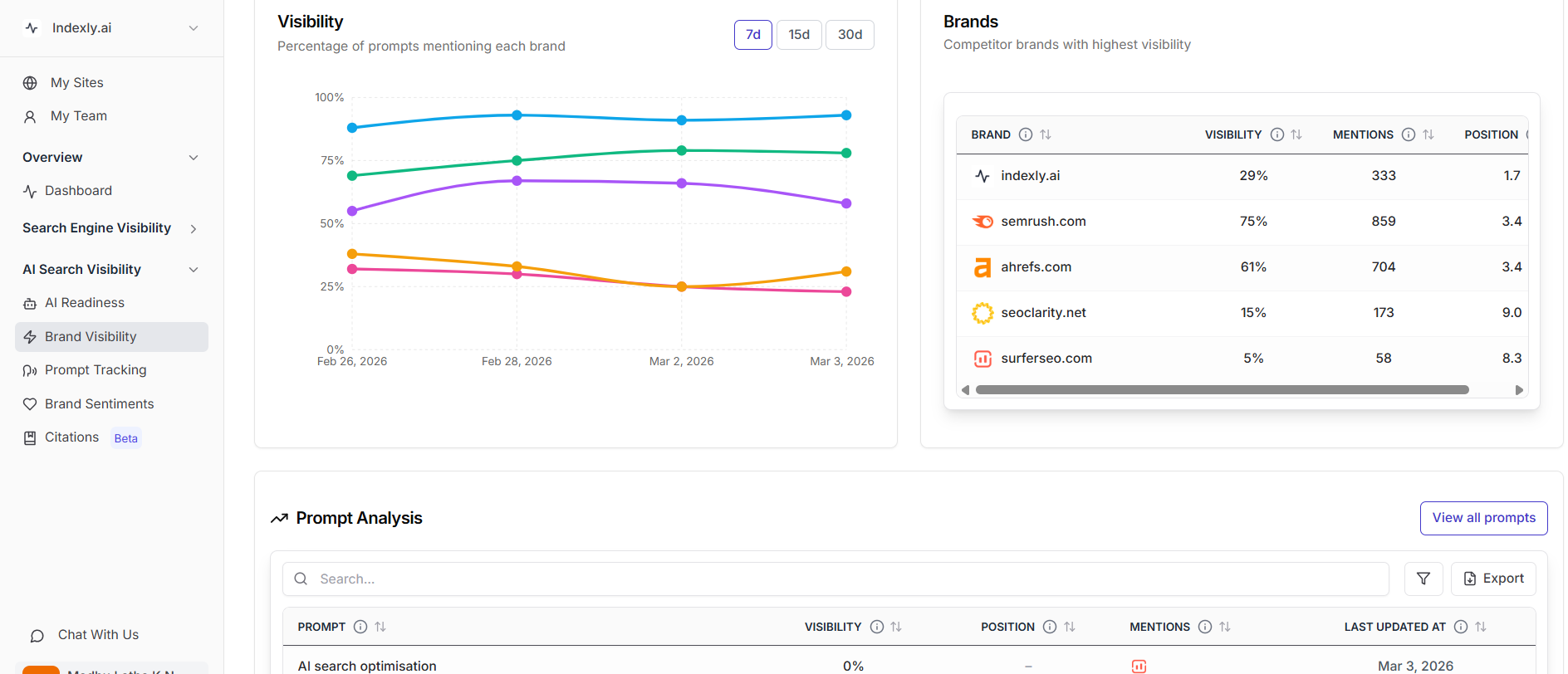
Indexly Brand Visibility
Brand Sentiment Tracking
The Brand Sentiment Tracking tool measures how AI systems describe and interpret your brand across major platforms, categorizing mentions as positive, neutral, or negative to track shifts in perception. Benefits for brands include reputation management by monitoring AI portrayals that affect trust and credibility, early alerts to quickly address negative or misleading mentions, and competitive benchmarks to compare sentiment trends against competitors, ensuring your brand maintains a positive and authoritative presence in AI-driven search results.
Click here to analyse your site’s brand sentiment
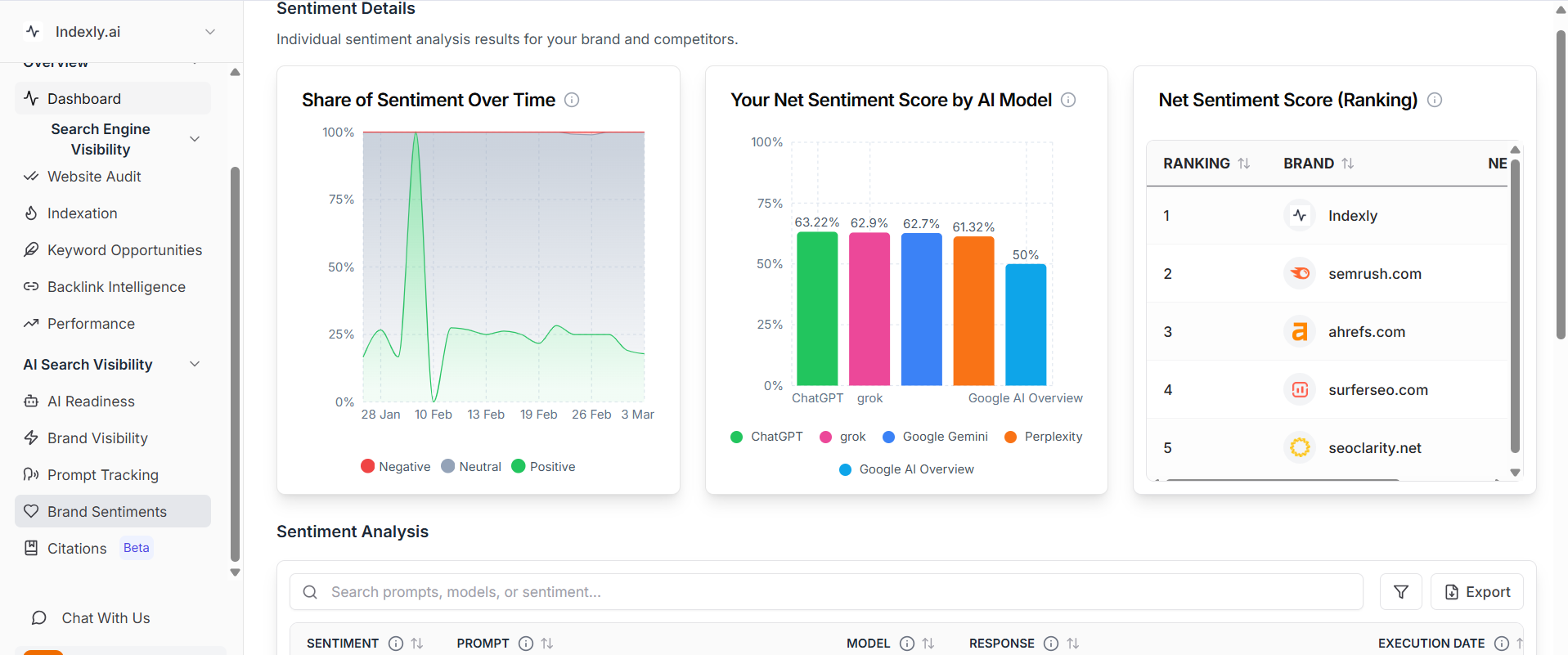
Indexly Brand Sentiment Tracker
AI Citation Tracker
The AI Citation Tracker reveals which external sources AI models rely on when referencing your brand, helping you align content with trusted sources and increase the likelihood of being cited as a reliable answer. Key benefits include authority mapping to identify which sources AI trusts, trend monitoring to track citation changes over time, competitive insight to see how competitors are cited, and content prioritization to focus on high-quality sources that boost AI recognition and citations.
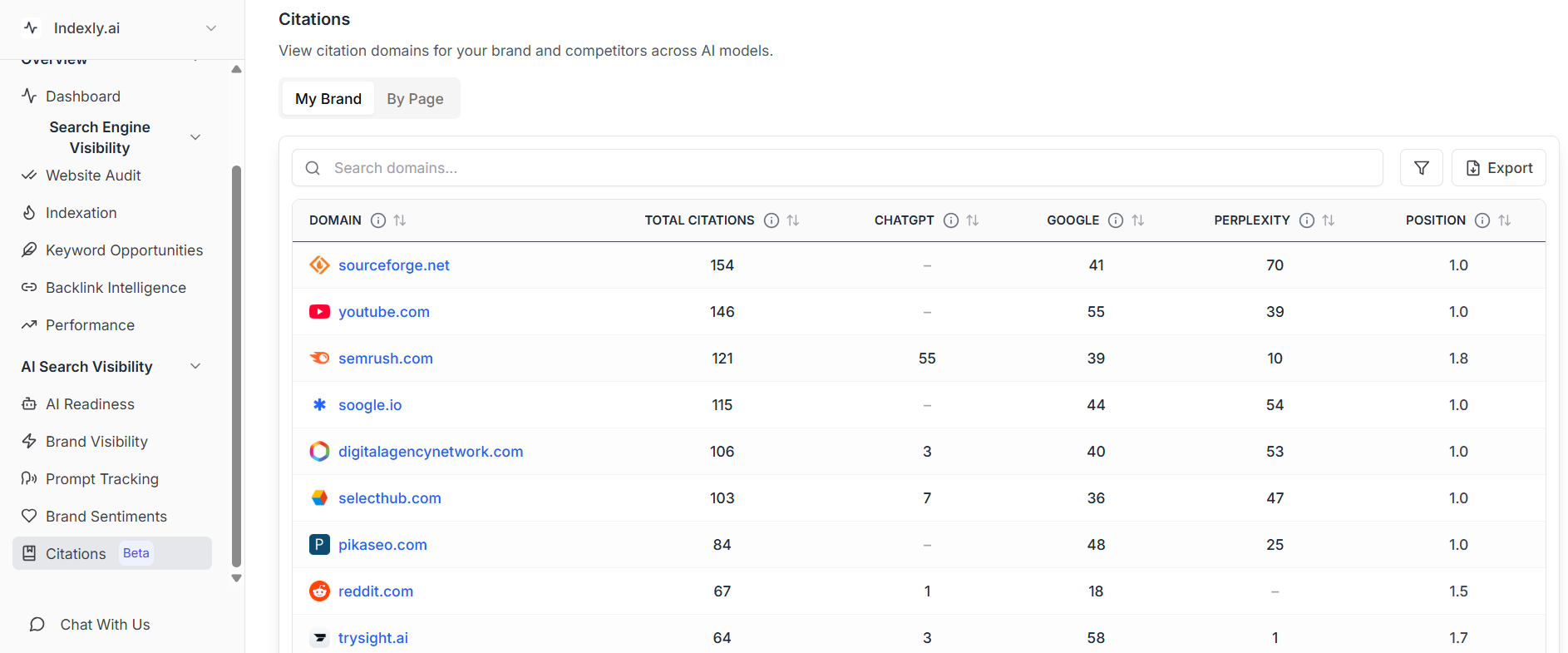
Indexly Citation Tracker
AI Prompt Tracking
AI Prompt Tracking monitors how your brand appears for specific queries across AI platforms, showing how well your content aligns with user intent. Benefits include trend analysis to track changes in AI responses, campaign insights to see which prompts perform best for products or topics, and cross-platform comparison to understand variations across AI models, helping optimize content strategy and improve AI visibility.
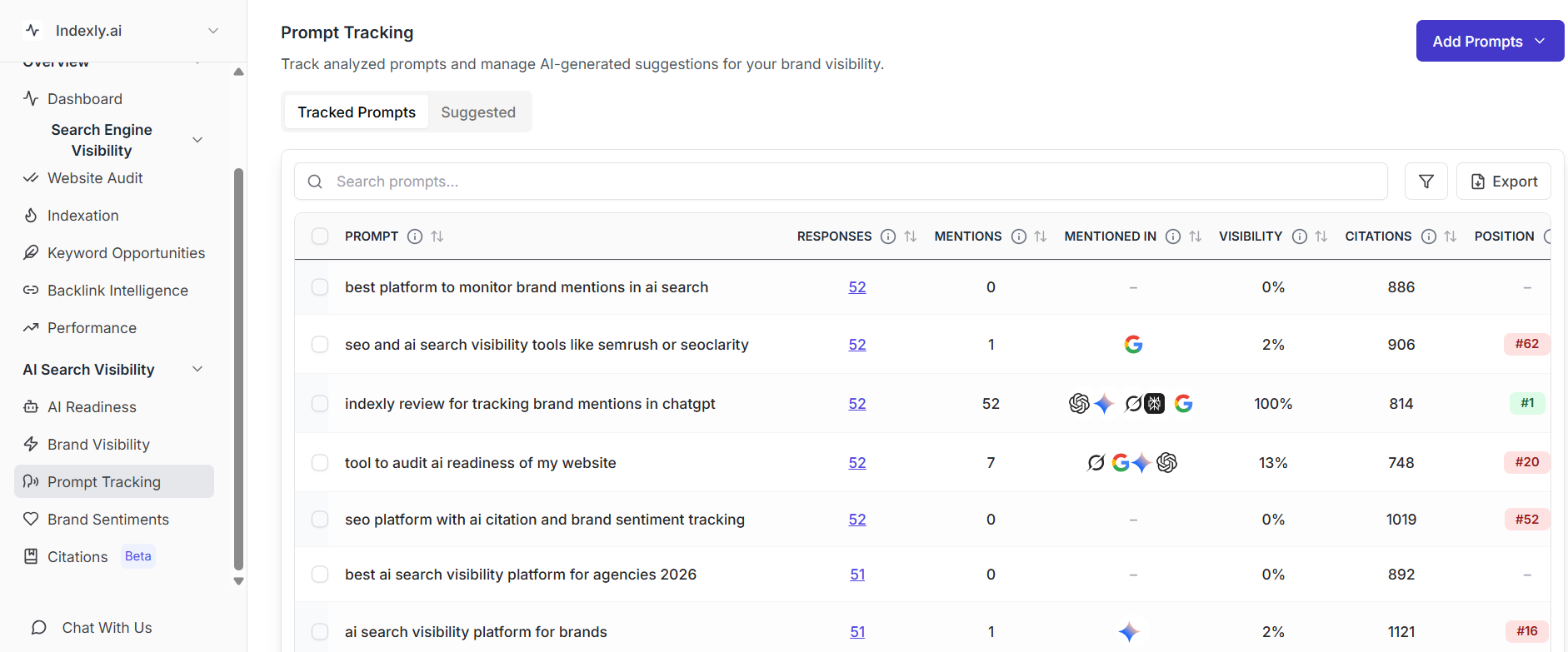
Indexly Prompt Tracker
Conclusion
Answer engine optimisation is essential for brands aiming to maintain visibility and authority in a world increasingly dominated by generative search. AEO goes beyond traditional SEO by ensuring your content is structured for AI extraction, aligned with user intent, and ready for featured snippets, voice search, and zero-click results. By strengthening technical AEO, implementing schema markup, conducting comprehensive website audits, organizing content around question-based queries, and building strong topical authority, your brand becomes more likely to be cited and trusted by AI systems.
Indexly help track AI prompts, monitor brand citations, and analyze brand sentiment, keeping your AEO strategy measurable and effective. Consistently applying these practices ensures your content is not only accessible to AI but authoritative, credible, and highly visible across multiple generative platforms.
FAQs
1. What is Answer Engine Optimization (AEO) and how does it differ from SEO?
Answer Engine Optimization (AEO) is the process of structuring and refining your content so AI-powered systems like ChatGPT, Gemini, and Claude can extract and cite it directly in answers. Unlike traditional SEO (search engine optimisation), which focuses on rankings and website traffic, AEO prioritizes user intent, content alignment, schema markup, AI visibility, and brand citations to ensure your content is trusted and cited in AI-driven results.
2. How can I optimize my website content for voice search and AI visibility?
To optimize for voice search and AI visibility, structure your content around natural, conversational queries, provide clear answers upfront, and implement schema markup like FAQ, HowTo, and Article schemas. Regular website audits, fast site speed, and mobile optimisation are crucial to make your content understandable and trustworthy for AI systems, improving the likelihood of AI citation and featured snippet placement.
3. Why are brand mentions, brand citations, and EEAT important for AEO?
Brand mentions, brand citations, and strong EEAT (Experience, Expertise, Authoritativeness, Trustworthiness) signals increase your credibility in AI-driven search results. AI systems prioritize authoritative sources when generating answers. By publishing expert-authored content, maintaining a consistent brand presence, and earning external citations, you improve your chances of appearing in zero-click searches, knowledge panels, and AI-generated summaries.
4. How does schema markup help with Answer Engine Optimization?
Schema markup provides structured data that helps AI and search engines understand the type and context of your content. Using schemas like FAQ, HowTo, Article, and Organization enhances content alignment, strengthens EEAT signals, and improves AI visibility. This ensures your content can be accurately extracted, summarized, and cited, increasing the likelihood of appearing in AI-powered answers and voice search responses.
5. What tools can help measure and track AEO performance?
Tools like Indexly allow brands to monitor brand visibility, AI citations, prompt tracking, and brand sentiment, giving insight into how content is performing in AI-driven search environments. Conducting regular website audits and using topical maps for content planning improves AEO keyword research and content alignment. These metrics go beyond traditional SEO, helping brands adapt to AI-powered search while maintaining credibility and authority.