
The way people discover brands is expanding beyond search results into AI-generated answers, where visibility depends on how often your brand is mentioned, cited, and interpreted by different platforms.
Tools like Peec AI and Semrush address this challenge from different directions. Peec AI focuses specifically on tracking how brands appear across AI-driven environments, while Semrush brings AI visibility into a broader system that also covers SEO, content, and competitive analysis.
This blog explores how each platform approaches visibility, what they offer in practice, and which type of team each tool is best suited for.
What Is Peec AI?
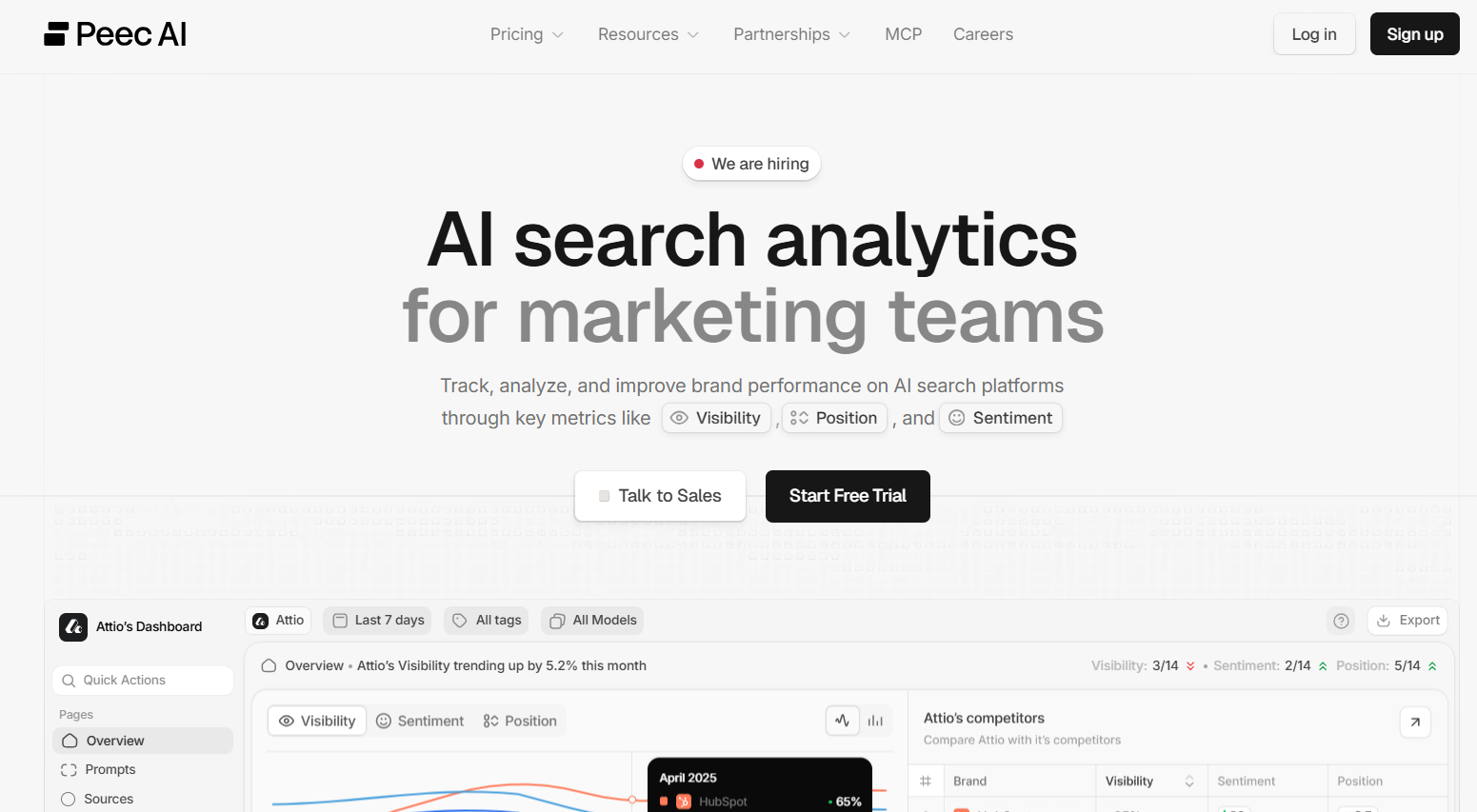
Peec AI is an AI search analytics platform built for marketing and SEO teams trying to figure out where their brand shows up in the new world of generative AI. It focuses on Generative Engine Optimisation (GEO) and Answer Engine Optimisation (AEO)—essentially, how to get your content noticed when AI systems are generating answers.
The platform does one job and does it well: tracking your brand's presence, citations, and sentiment across ChatGPT, Perplexity, Google AI Overviews, and other AI engines. For brands realising that AI visibility is becoming as important as Google rankings, this is the tool to watch.
Read: Peec AI Review: Features, Pricing, Pros, and Cons
What Is Semrush?
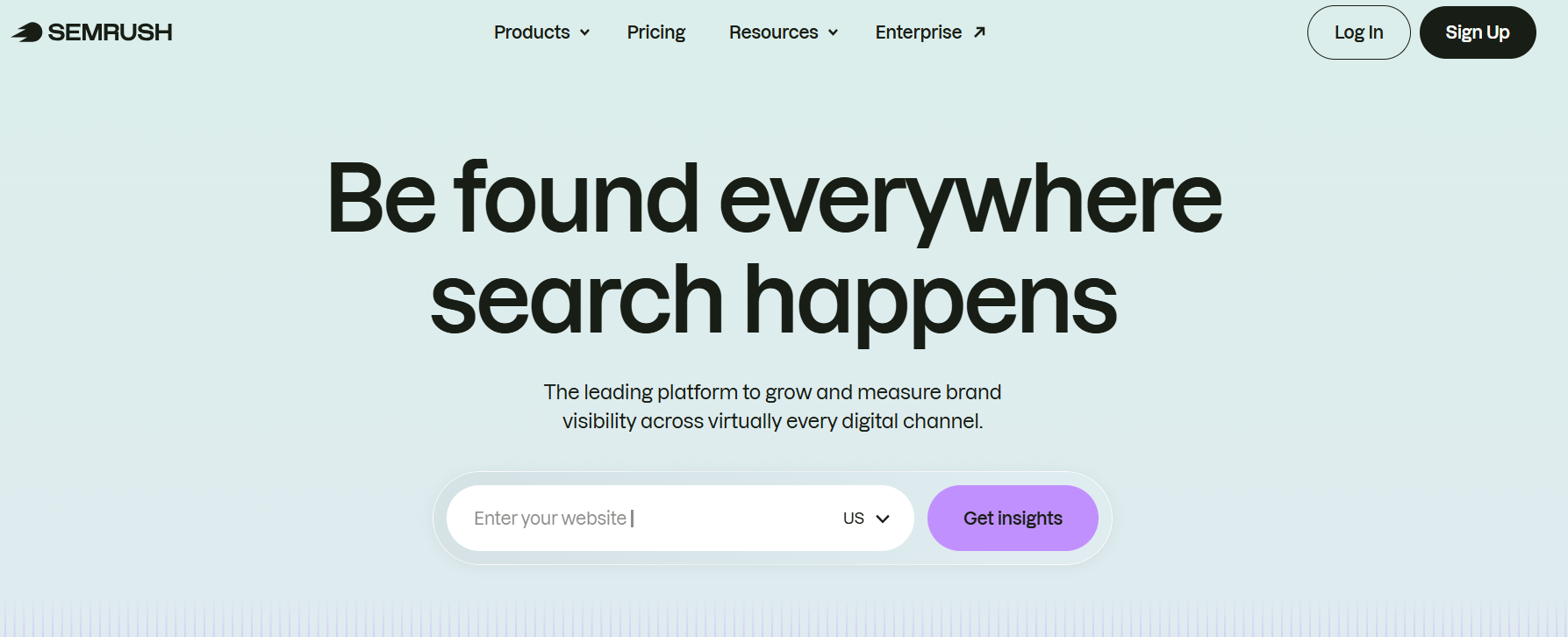
Semrush is an all-in-one platform that helps businesses manage their online presence across search engines, content platforms, social media, and beyond. It's packed with tools for SEO, AI search visibility, competitor analysis, advertising, and content optimisation, all accessible from a single dashboard.
The platform lets you handle everything from technical site audits, AI visibility, to full content campaigns, making it the go-to choice for teams that manage multiple marketing channels under one roof.
Read: Semrush Review 2026: Features, Pros, and Cons
Feature Comparison: Deep Dive
AI Search Visibility Tracking
Peec AI tracks visibility, position, and sentiment. This approach is crucial for actually understanding brand perception rather than just knowing you exist somewhere in the results. The platform delivers comprehensive, real-time monitoring across ChatGPT, Perplexity, Gemini, Microsoft Co-pilot, Google's AI Mode, and AI Overviews, with detailed breakdowns of every source citation.
Semrush's AI Visibility Toolkit reaches into ChatGPT, SearchGPT, Google's AI Mode, Gemini, and Perplexity, offering brand performance reports, sentiment analysis, and competitive perception metrics. The catch? Data refreshes weekly, not daily.
Winner: Peec AI takes this one. More AI engines, real-time data, and deeper prompt-level insights designed specifically for AI search optimisation make it the clear choice for teams that live and breathe AI visibility.
Traditional SEO Capabilities
Peec AI doesn't touch traditional SEO. You won't find keyword research, Google rank tracking, technical audits, or backlink analysis here—and that's by design. The platform is focused on AI; it doesn't pretend to be something it's not.
Semrush is a powerhouse in the traditional SEO space. The platform brings over a decade of refined SEO tools under one roof: keyword research that rivals dedicated tools, technical SEO monitoring that catches what others miss, and backlink analysis that goes deep. If you need to optimise for Google, Semrush has your back.
Winner: Semrush dominates here. There's no competition—Peec AI simply doesn't offer traditional SEO at all.
Read: 10 Best Peec AI Alternatives you should know in 2026
Pricing and Value
Peec AI's Starter plan runs $95/month, while the Advanced plan is $495/month with Looker Studio integration. One real limitation: the Starter plan's 50-prompt cap can feel tight if you're trying to cover your entire brand footprint, and monitoring additional AI engines means additional costs of $20-30 per engine.
Semrush pricing ranges from $117.33/month (Pro plan, billed annually) to $416.66/month (Business plan, billed annually), with the Guru plan at $208.33/month being the sweet spot for many teams. Here's the gotcha: AI Visibility features cost an extra $99/month on top of whatever plan you're on. So that "affordable" Pro plan suddenly gets pricier when you add AI tracking.
Read: Semrush Review 2026: Features, Pros, and Cons
Winner: Peec AI for pure AI visibility work—you get more focused value per dollar. But Semrush's Guru plan is hard to beat if you actually need SEO, content, and AI visibility working together. It's a classic trade-off between specialised and comprehensive.
Read: Understanding Peec AI Pricing: A Complete Overview
Ease of Use and Learning Curve
Peec AI keeps things simple. Set your prompts, check your visibility data and act on the insights. The interface doesn't overwhelm you with features you don't need. Setup takes minutes, not hours, and the suggested prompts feature helps you discover angles you hadn't considered. This is what happens when a tool has one job and does it well.
For Semrush, the learning curve is real—experienced SEO professionals navigate it fine, but if you're new to SEO or data analysis, you'll spend your first few weeks figuring out which insights matter. The platform is built for people who know what they're looking for.
Winner: Peec AI by a mile. If you hate onboarding and love getting answers immediately, Peec AI is your answer. If you're comfortable with complexity and want deep functionality, Semrush rewards the learning investment.
Customer Support and Community
Peec AI offers something unusual: direct Slack access to the founding team. This isn't a chatbot or a support queue—you're talking to the actual people who built the platform. Users consistently talk about this in reviews, calling it "amazing" and citing direct team access as a major differentiator. For a relatively new platform, this level of access is remarkable.
Semrush provides standard enterprise support (phone, email, chat) backed by extensive documentation and Semrush Academy, which produces genuinely useful content on SEO, AEO, and digital marketing. The educational materials are solid, and the blog content on AI optimization is actually worth reading. You get resources and knowledge, but not the personal touch.
Winner: Peec AI for support quality and accessibility. Semrush wins on self-serve educational content. If you value human connection and direct expert access, Peec AI is unmatched. If you prefer learning independently, Semrush's academy is excellent.
Integration and Workflow Capabilities
Peec AI's native Looker integration is genuinely useful for teams already living in Google's analytics ecosystem. You can build custom dashboards in Looker Studio (free) that pull directly from your Peec AI data. The platform also integrates with marketing stacks through APIs, data exports, and connectors, making it easy to feed insights into your existing workflows.
Semrush's App Center is a marketplace of third-party integrations that extends the platform's capabilities. The integrated approach means you can manage content creation, competitor tracking, and SEO audits all from one dashboard, with extensive API access on higher plans for custom workflows. It's ecosystem thinking rather than point-tool thinking.
Winner: Semrush for integrations. The App Center and built-in workflow capabilities give you more options for connecting everything together. Peec AI integrates well but has fewer native connections.
Data Accuracy and Refresh Rates
Peec AI uses UI scraping—essentially, it programmatically simulates real user interactions with AI tools to extract data directly from what users actually see. This approach captures real-world accuracy that reflects actual user experiences rather than relying on API estimates that might miss nuance. The near real-time refresh means you're seeing what's happening now, not what happened last week.
Semrush updates AI visibility data weekly while refreshing traditional SEO metrics more frequently. The platform leverages its massive proprietary dataset built over years of operation, which is valuable but means you're looking at older snapshots for AI data.
Winner: Peec AI for data freshness and accuracy. Real-time data and UI scraping methodology give you a more honest picture of how AI systems are actually treating your brand right now.
Pricing Comparison
Plan | Peec AI | Semrush | Key Differences |
|---|---|---|---|
Entry Level | $95/month (Starter) | $117.33/month (Pro, annual) | Peec AI focuses on 50 prompts for AI tracking; Semrush's Pro includes a full traditional SEO toolkit. |
Mid-Tier | $295/month (Professional) | $208.33/month (Guru, annual) | Peec AI expands to 150 prompts; Semrush's Guru adds content marketing and historical data. |
Enterprise | $495/month (Advanced) | $416.66/month (Business, annual) | Peec AI's Advanced includes Looker integration; Semrush's Business adds API access and higher limits. |
AI Add-ons | $20-30 per additional AI engine | $99/month for the AI Visibility Toolkit | Peec AI charges per engine; Semrush charges a flat fee to unlock AI features. |
Value Analysis: For pure AI visibility, Peec AI offers better-focused value. You're not paying for features you don't need. For comprehensive marketing work, Semrush's Guru plan is genuinely hard to beat—the content tools, SEO capabilities, and historical data justify the premium, especially if you're running an agency. The real question is whether you need just AI visibility or if you're managing the full marketing stack.
One more consideration: Semrush's Guru plan is the sweet spot for teams needing content and SEO tools in one place, while Peec AI shines if you're purely focused on AI search performance.
Who Should Choose Peec AI?
- Teams with a pure AI visibility focus: If you're a marketing team or agency that wants clean, dedicated AI data without complexity, Peec AI is your answer. You get what you pay for—nothing more, nothing less.
- Fast-moving startups and tech companies: AI search visibility is often critical for developer tools, SaaS platforms, and technical products. Peec AI's unlimited seats per plan make it ideal for growing teams without constant billing headaches.
- Budget-conscious teams needing specific insights: You don't need to pay for a comprehensive SEO suite if you only care about AI visibility. Peec AI lets you skip the features you'll never use.
- Organizations with research-heavy workflows: If your team needs to deeply understand why certain brands appear in AI answers and which topics drive visibility, Peec AI's prompt-level insights are exactly what you need.
Who Should Choose Semrush?
- Full-stack digital marketing agencies: If you're managing multiple client accounts across SEO, content, and PPC, Semrush's integrated approach saves you from juggling separate tools and dashboards.
- Enterprise marketing teams: When you need traditional SEO, content marketing, PPC, and AI visibility all working together in one system, Semrush's unified platform simplifies workflows and reporting.
- Established businesses with diverse marketing needs: If content marketing, PPC research, and social media features matter alongside SEO, Semrush eliminates the need for multiple subscriptions scattered across your tech stack.
- Data-driven marketers comfortable with complexity: If you love comprehensive data and don't mind a steeper learning curve, Semrush rewards deep exploration with powerful insights.
What About Other Alternatives?
Alternative | Best For | Starting Price | Key Advantage |
|---|---|---|---|
Unified SEO + AI visibility | $49/month | Indexly combines AI search visibility tracking across ChatGPT, Claude, Gemini, Grok, and Perplexity with traditional SEO tools—a hybrid approach for brands wanting both. | |
Otterly AI | Basic AI brand monitoring | $29/month | Early users love Otterly's simplicity—it shows you where your brand appears in AI search results without overwhelming complexity. |
Profound | Enterprise-grade AI optimization | $99/month (Starter) | Profound spans monitoring, auditing, optimization, and AI-generated content—built specifically for large enterprises managing complex AI visibility strategies. |
Ahrefs | Best-in-class traditional SEO | $129/month | Ahrefs has the most comprehensive link database on the market and is widely considered the gold standard for backlink analysis and SEO research. |
Note about Indexly: Indexly takes a hybrid approach, helping brands get mentioned in both Google and AI search results. This platform covers both traditional and AI visibility. Indexly bridges that gap at a lower price point than either Peec AI or Semrush alone.
Final Verdict: Peec AI vs Semrush
Peec AI vs Semrush: Which Platform Do You Actually Need in 2026? The answer isn't about which is "better"—it's about what you're actually trying to accomplish. Peec AI is a well-funded, well-built platform that excels at one mission: delivering daily AI visibility data with exceptional customer support. It tells you exactly where your brand stands in ChatGPT, Perplexity, and other AI engines, but it doesn't create content or optimize for Google.
Semrush with comprehensive tools spanning SEO, content, PPC, and now AI visibility as part of a larger ecosystem. Choose Peec AI if AI search is your obsession and you want focused excellence. Choose Semrush if you're managing the full marketing spectrum and need everything connected.
For more context, you might explore how Peec AI compares to other AI analytics tools, other Peec AI alternatives worth considering, or a broader pricing comparison of AI visibility tools in 2026.
FAQ
Can I use Peec AI and Semrush together?
Absolutely. Many organizations do exactly this—they use Semrush for comprehensive SEO and marketing work, then add Peec AI on top for deeper, real-time AI visibility insights. This "best of both worlds" approach lets you leverage Semrush's SEO capabilities for your website while getting granular AI analytics from Peec AI to shape your brand narrative in generative AI. It's an investment, but it works.
Which platform is better for agencies managing multiple clients?
Both serve agencies well, but differently. Peec AI offers unlimited seats at no extra cost and lets you add team members to workspaces without per-user fees, which is a serious advantage for growing agencies. Semrush provides more robust client reporting and project management features built into the platform itself. If you're managing mostly AI visibility clients, Peec AI's pricing is more forgiving. If you're managing full-service SEO and marketing clients, Semrush's integrated reporting saves time.
How accurate is AI search visibility tracking compared to traditional SEO?
Different tools, different accuracy approaches. Peec AI uses UI scraping to simulate real user interactions with AI tools, capturing what actually appears to users rather than relying on API estimates that might miss context. This method is arguably more honest about real brand perception than traditional keyword tracking, which fluctuates based on algorithm changes and user location. Both have value—they're just measuring different things.
Do I need technical expertise to use either platform effectively?
No, but the bar is different for each. Peec AI is designed to be approachable, guiding users through exactly what needs to happen, which is especially valuable if you're new to AI SEO or data analysis. Semrush, by contrast, is built for experienced SEO professionals and assumes you understand SEO fundamentals. If you're starting from scratch, Peec AI is friendlier. If you already know SEO, Semrush's learning curve becomes manageable.
What's the minimum viable setup for tracking AI search visibility in 2026?
Most brands should actively monitor ChatGPT, Google AI Overviews, and Perplexity, as these three platforms represent a significant portion of current AI search activity and user engagement. Both Peec AI and Semrush track these essential engines, so either gives you a solid foundation. Start there, then expand as you understand where your brand actually matters in AI.
Which platform provides better ROI for content marketing teams?
Semrush generally delivers better ROI for content-focused teams. The Guru plan's Content Toolkit, historical data, and white-label reports justify the premium from day one. Solo practitioners focused on keyword research and audits will find the Pro plan covers most of what they need. Peec AI provides crucial direction for AI-focused content strategy but lacks the actual content creation and optimization tools that Semrush offers. If you're writing content, Semrush helps you optimize it. If you're researching where to focus, Peec AI shows you the AI visibility gaps.