
In 2026, brand reputation can shift in an instant. A trending Reddit post, negative customer review, viral social media discussion, or even an AI-generated recommendation from platforms like ChatGPT can quickly influence how people perceive your business. That’s why brand sentiment tracking tools are now a must-have for companies that want to protect their reputation and stay competitive.
Today’s brand sentiment tracking tools use AI-driven sentiment analysis, natural language processing, and real-time monitoring to analyze conversations across social media, news websites, forums, review platforms, and AI search engines. Instead of simply tracking mentions, they help businesses understand the emotions and opinions behind those conversations.
In this blog, we’ll explore the 15 best brand sentiment tracking tools for 2026, highlighting their key features, strengths, and ideal use cases so you can find the best solution for your business needs.
The global sentiment analysis software market is projected to reach US$ 10.1 billion by 2033, growing at a 16.8% CAGR from 2026. This helps justify why sentiment tracking tools are a growing category.
Best AI Sentiment Trackers for B2B Saas in 2026
1. Indexly — Best for AI Search Optimization
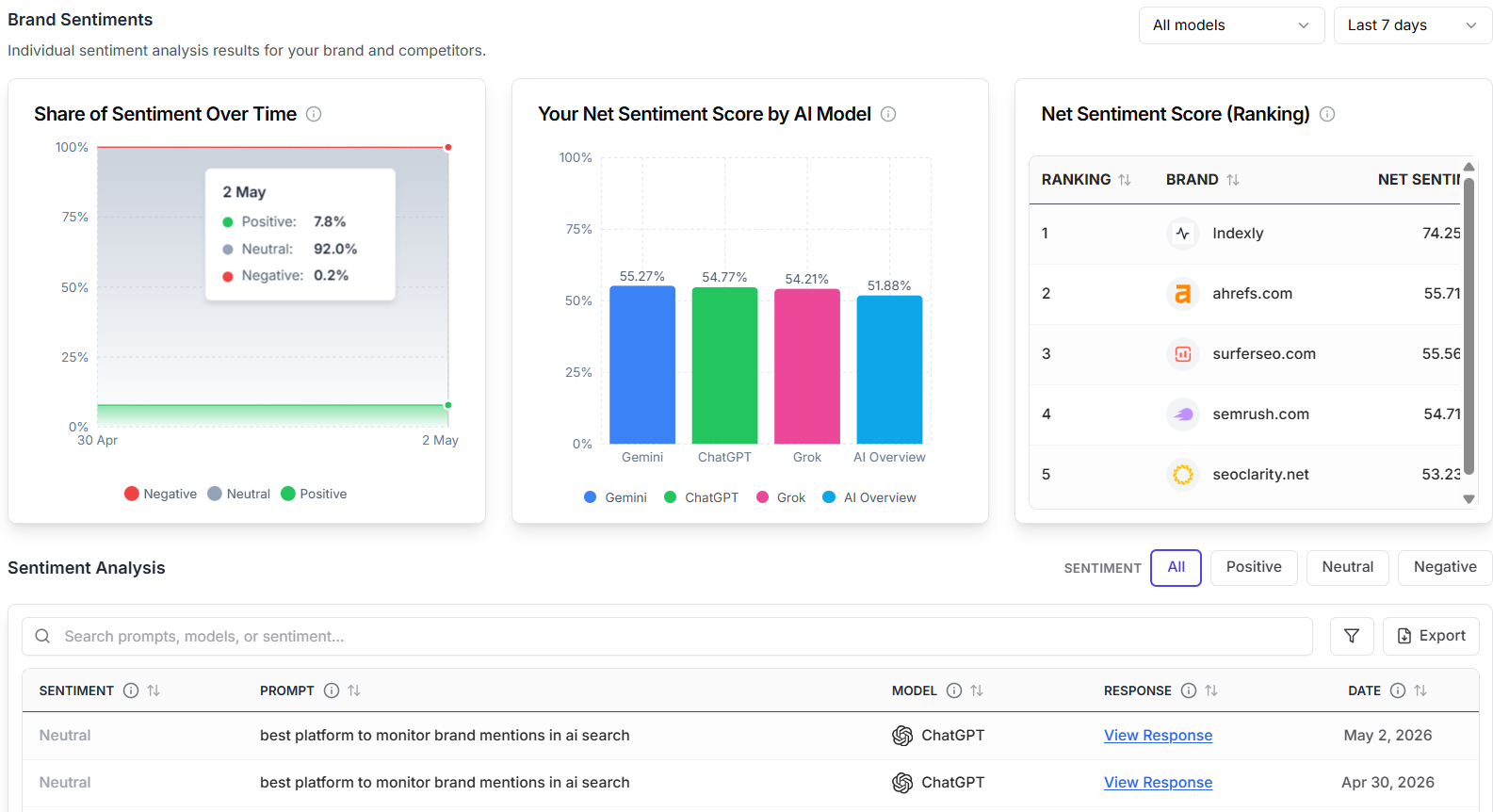
Indexly is an AI-native brand sentiment tracking platform designed for monitoring visibility across ChatGPT, Perplexity, Reddit, and AI-powered search platforms. It helps brands understand how AI systems discuss their products, competitors, and industry topics.
The platform combines sentiment analysis, AI search monitoring, and competitor tracking in one dashboard. It also provides Reddit signals, real-time alerts, and share-of-sentiment analytics. Indexly is especially useful for SaaS companies, agencies, and AI-first brands focused on conversational search visibility.
Key Features
| Feature | Description |
|---|---|
| AI Search Analytics | Monitor how AI platforms like ChatGPT, Perplexity, and Gemini discuss your brand and competitors. Tracks how your company appears in AI-generated answers and conversational search experiences. |
| Brand Sentiment Analysis | Analyze overall public perception of your brand using AI-powered sentiment analysis across reviews, social media, forums, and online mentions. |
| Positive, Negative & Neutral Sentiment Tracking | Automatically categorize conversations and mentions into positive, negative, and neutral sentiment to understand audience reactions in real time. |
| Net Sentiment Score | Measure the balance between positive and negative mentions to calculate an overall brand sentiment score and track reputation trends over time. |
| Share of Sentiment | Compare your brand sentiment against competitors by measuring the percentage of positive, neutral, and negative conversations across channels. |
| Reddit Signals | Track and influence discussions on Reddit, a major source of consumer opinion and AI training data that shapes conversational outputs about your brand. |
| Advanced Analytics | Comprehensive reporting on brand mentions, audience engagement, sentiment trends, and competitive positioning for deeper reputation insights. |
Pros and Cons
- Pros: Unique AI search focus, comprehensive analytics for sentiment intelligence, forward-thinking approach to search optimization.
- Cons: Newer market category requiring customer education, premium pricing for advanced features.
2. Brandwatch — Best for Enterprise Social Intelligence
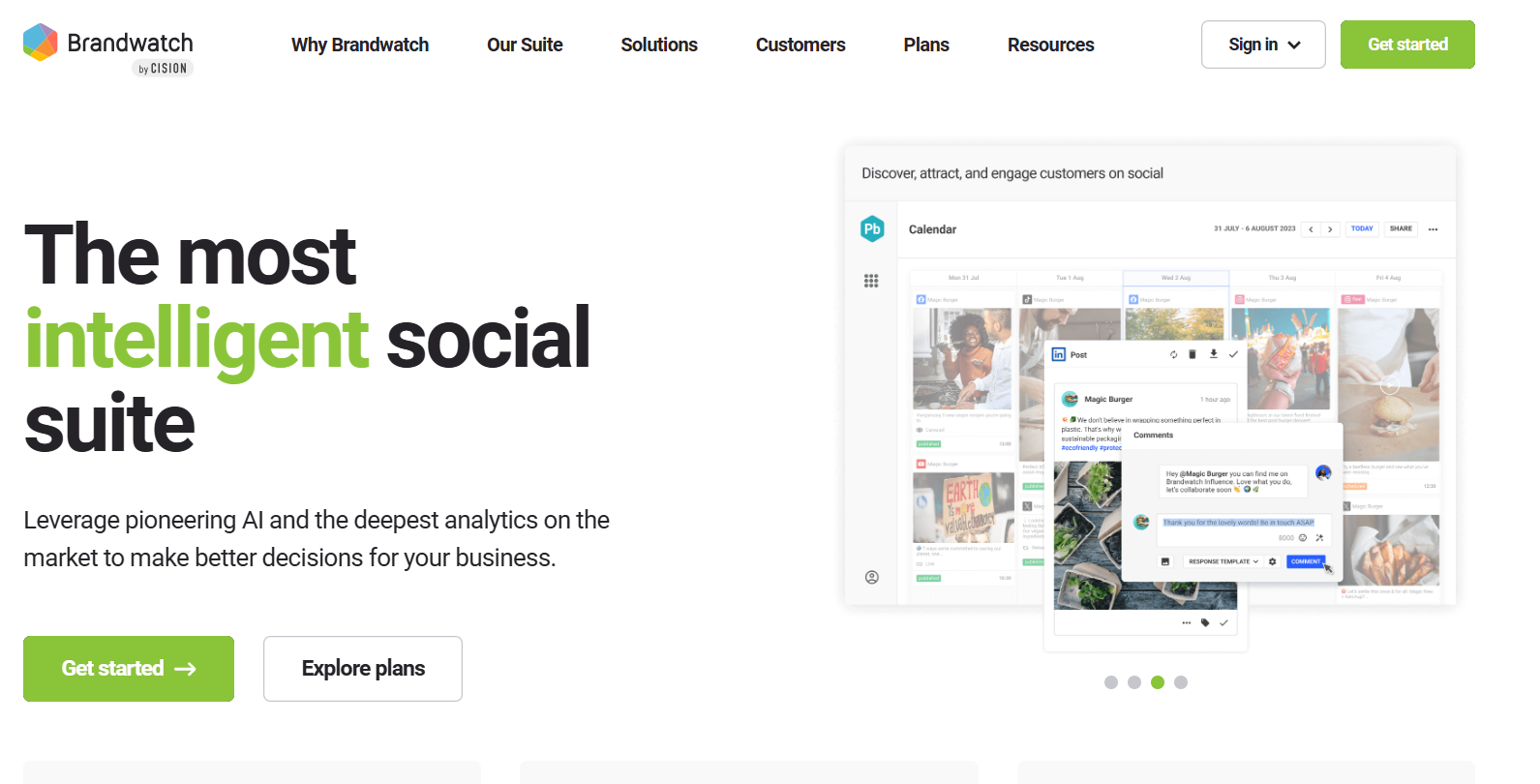
Brandwatch is built for large-scale social listening and enterprise consumer intelligence. It tracks millions of online conversations across social platforms, blogs, forums, and news websites.
The platform focuses heavily on trend analysis, emotion detection, and historical reporting. Its customizable dashboards make it useful for enterprise research and reputation monitoring. Brandwatch is widely used by global brands with advanced analytics needs.
Key Features
| Feature | Description |
|---|---|
| Massive Data Coverage | Monitors over 100 million sources, including major social media platforms, news sites, blogs, and forums globally, ensuring no conversation about your brand is missed. |
| Historical Analysis | Access to years of historical data allows for in-depth trend identification and analysis of how brand sentiment has evolved over time. |
| Advanced AI | Utilizes sophisticated, AI-powered sentiment classification that includes nuanced emotion detection, offering a more granular view than basic tools. |
| Custom Dashboards | Features highly flexible reporting and visualization tools that allow teams to build dashboards tailored to their specific KPIs and brand health metrics. |
| Crisis Detection | Provides automated early warning systems for potential reputation threats, allowing teams to react quickly to negative sentiment spikes. |
Pros and Cons
- Pros: Unmatched data coverage from millions of sources, highly sophisticated analytics with emotion detection, and proven enterprise-grade reliability and security.
- Cons: Significant high cost barrier for smaller companies and a complex implementation process.
For more on this topic, you'll find valuable context in our articles on best prompt tracking tools and our comprehensive look at the 11 best AI citation tracking tools.
3. Sprout Social — Best for All-in-One Social Management

Sprout Social combines social media management, engagement, publishing, and sentiment tracking in one dashboard. Teams can monitor audience reactions while managing campaigns and customer interactions across multiple platforms.
The platform includes collaboration tools, reporting features, and AI-based sentiment tagging. It is designed for marketing teams that want social management and analytics together. Sprout Social works especially well for growing brands and mid-sized teams.
Key Features
| Feature | Description |
|---|---|
| Integrated Workflow | Sentiment monitoring is integrated with publishing and engagement tools for seamless brand tracking. |
| Smart Inbox | Automatically tags messages as positive, negative, or neutral for faster responses. |
| Advanced Analytics | Provides reports on sentiment trends, engagement, and brand insights. |
| Team Collaboration | Enables teams to coordinate responses with workflow and assignment tools. |
| Competitive Benchmarking | Compares your brand sentiment with competitors to measure market position. |
Pros and Cons
- Pros: Unified platform for publishing and analytics, excellent user experience, strong analytics and reporting integration.
- Cons: Per-user pricing can become expensive for larger teams, advanced listening features often require higher-tier plans.
4. IBM Watson Natural Language Understanding — Best for Enterprise NLP
IBM Watson Natural Language Understanding is a text analysis platform focused on deep AI and natural language processing capabilities. It analyzes customer feedback, emotions, intent, keywords, and sentiment from large datasets. Businesses can build custom industry-specific models and integrate them directly into enterprise workflows.
The platform also supports multilingual analysis and enterprise-grade security. IBM Watson is best suited for organizations needing advanced NLP customization.
Key Features
| Feature | Description |
|---|---|
| Advanced NLP | Uses deep learning for accurate sentiment and emotion detection. |
| Custom Models | Supports training industry-specific sentiment classifiers. |
| Multi-language Support | Analyzes sentiment in 13+ languages. |
| API Integration | Easily integrates with existing applications. |
| Enterprise Security | Provides enterprise-grade security and compliance. |
Pros and Cons
- Pros: Highly customizable, enterprise-grade security, powerful API.
- Cons: Requires technical expertise, complex setup, premium pricing.
5. Brand24 — Best for Budget-Friendly Monitoring
Brand24 is an affordable social listening tool designed for real-time brand monitoring and sentiment tracking. It collects mentions from social media, blogs, forums, reviews, and news sites in one dashboard.
The platform includes alerts, influencer tracking, and customizable reporting features. Its simple interface makes it easy for smaller teams to monitor online conversations. Brand24 is popular among startups, agencies, and growing businesses.
Key Features
| Feature | Description |
|---|---|
| Real-time Monitoring | Sends instant alerts for brand mentions across multiple channels. |
| Sentiment Analysis | Uses AI to classify mentions as positive, negative, or neutral. |
| Influencer Identification | Identifies influencers and high-reach accounts discussing your brand. |
| Mobile App | Provides push notifications for important brand discussions on the go. |
| Custom Reports | Creates customizable PDF reports for sharing insights and campaign results. |
Pros and Cons
- Pros: Highly affordable pricing tiers, intuitive and user-friendly interface, comprehensive coverage across numerous online channels.
- Cons: Lacks some of the deep, advanced analytics found in enterprise-level tools, and reporting customization options are relatively basic.
For additional context on scaling these tools, explore our resources on AI visibility tools for small businesses and our detailed AI visibility tracking tools pricing comparison for 2026.
6. Mention — Best for Real-Time Alerts

Mention is built for fast brand monitoring and instant mention alerts. It helps businesses stay updated on online conversations and identify reputation changes as they happen.
The platform is especially useful during launches, campaigns, or high-visibility events where quick responses matter. With real-time tracking and sentiment insights, teams can react faster and manage brand discussions more effectively.
Key Features
| Feature | Description |
|---|---|
| Instant Alerts | Receive real-time notifications for brand mentions across 1B+ sources, including social media, news sites, and forums. |
| Impact Scoring | Prioritizes responses by measuring the influence and reach of each source. |
| Boolean Search | Uses advanced search operators to filter irrelevant results and improve sentiment accuracy. |
| Review Platform Coverage | Monitors key review sites like G2, Capterra, and Yelp for brand sentiment insights. |
| Team Collaboration | Includes workflow and assignment tools for efficient team response management. |
Pros and Cons
- Pros: Exceptional speed, strong review site coverage, flexible search capabilities.
- Cons: Steep pricing jump for advanced features, limited analytics depth.
7. Hootsuite — Best for Combined Social Publishing and Sentiment Tracking
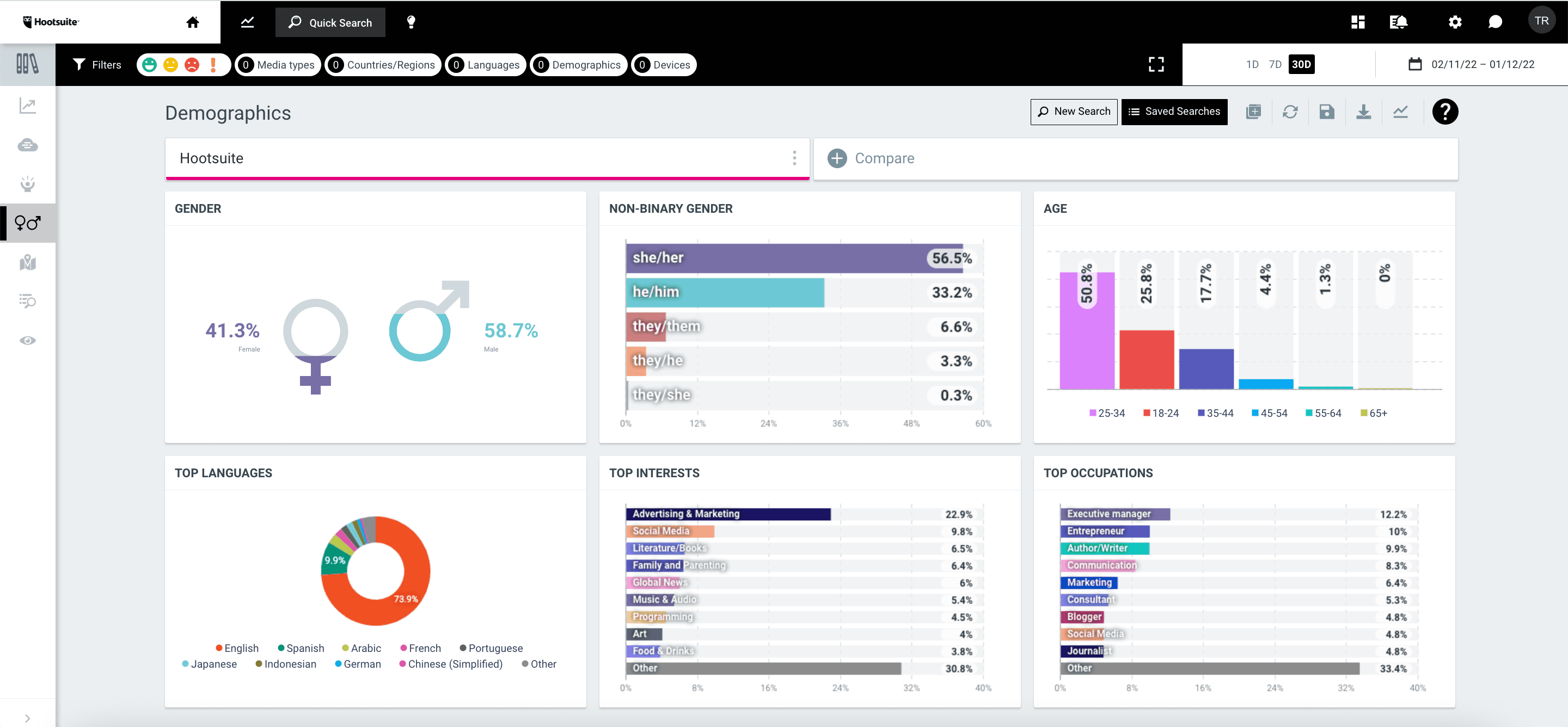
Hootsuite is a social media management platform that combines publishing, engagement, analytics, and sentiment monitoring in one place. It allows businesses to manage multiple social accounts while tracking audience reactions and brand perception. Teams can schedule content, monitor mentions, and collaborate within a centralized workflow. Hootsuite is ideal for organizations seeking unified social management and listening tools.
Key Features
| Feature | Description |
|---|---|
| Unified Dashboard | Manage publishing, analytics, and sentiment monitoring from one centralized platform. |
| AI-Powered Insights | Uses AI-driven sentiment analysis with up to 90% accuracy to classify conversations as positive, negative, or neutral. |
| Extensive Integrations | Connects with 100+ apps, including CRM systems, creative tools, and analytics platforms. |
| Visual Analytics | Tracks brand mentions in images and videos to measure visual brand presence. |
| Trend Forecasting | Uses 90-day predictive analytics to identify emerging trends and potential crises early. |
Pros and Cons
- Pros: All-in-one solution, extensive integrations, proven reliability.
- Cons: Less specialized sentiment features, interface complexity.
8. Awario — Best for Affordable Social Listening
Awario is a budget-friendly social listening platform built for tracking large volumes of online mentions. It monitors social media discussions, competitor mentions, and customer conversations in real time.
The platform includes Boolean search filters, sentiment analysis, and lead generation features. Awario is known for offering generous mention limits at lower pricing tiers. It works well for startups, small businesses, and agencies needing scalable monitoring.
Key Features
| Feature | Description |
|---|---|
| High Volume Monitoring | Tracks up to 30,000 new mentions per month, even on entry-level plans. |
| Boolean Search | Uses advanced search operators like AND, OR, and NOT for precise queries. |
| Leads Feature | Identifies social posts where users seek product recommendations or competitor alternatives. |
| Sentiment Analysis | Uses AI to classify mentions as positive, negative, or neutral to track brand perception. |
| Competitive Analysis | Monitors competitor mentions, share of voice, and public sentiment trends. |
Pros and Cons
- Pros: Excellent value for the price, generous mention quotas on all plans, unique social lead generation features.
- Cons: The user interface is less polished than premium competitors, and real-time alerts can have a slight delay.
For additional insights on scaling these solutions, check out our guide on AI visibility tools for small businesses and our comprehensive AI visibility tracking tools pricing comparison for 2026.
9. Lexalytics — Best for Advanced Text Analytics
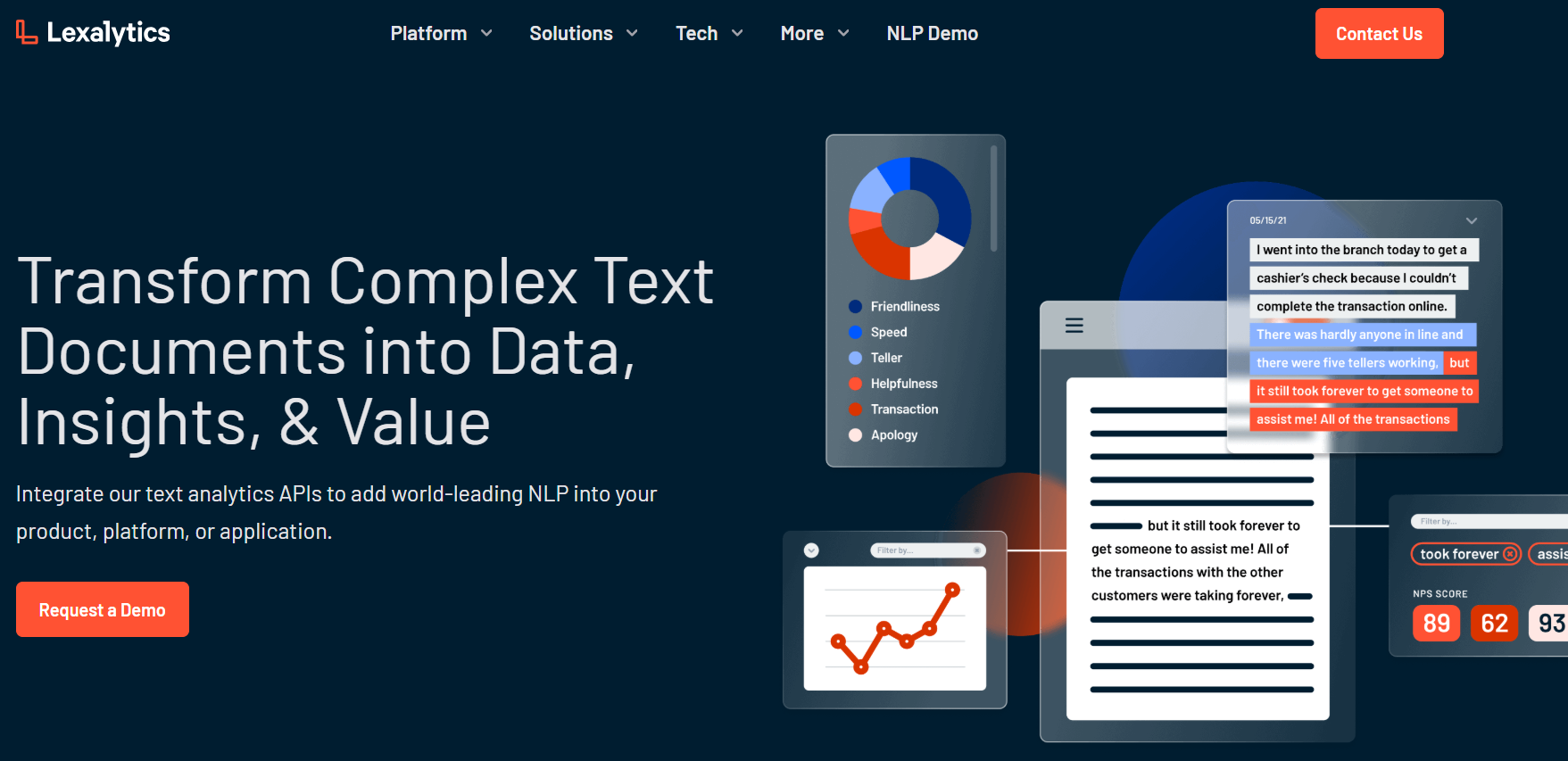
Lexalytics is an enterprise text analytics platform designed for detailed sentiment and language analysis. It processes reviews, support tickets, and customer feedback using deep linguistic parsing.
The platform supports entity-level sentiment tracking, multilingual analysis, and industry-specific AI models. Businesses can also deploy it on-premise for stronger security and compliance control. Lexalytics is ideal for enterprises requiring highly customized analytics workflows.
Key Features
| Feature | Description |
|---|---|
| Advanced NLP Engine | Uses deep linguistic parsing to detect phrase-level sentiment and emotional tone. |
| Industry Models | Offers customizable AI sentiment models tailored for industries like finance, healthcare, and hospitality. |
| Multi-language Support | Analyzes text in 25+ languages with cultural nuance detection for better accuracy. |
| On-premise Deployment | Supports on-premise installation for enhanced enterprise security and data control. |
| Entity-Level Analysis | Tracks sentiment for specific people, products, or features mentioned in the text. |
Pros and Cons
- Pros: Highly sophisticated analysis, industry customization, on-premise options.
- Cons: Complex implementation, requires technical expertise, premium pricing.
10. Talkwalker — Best for Visual Sentiment Tracking
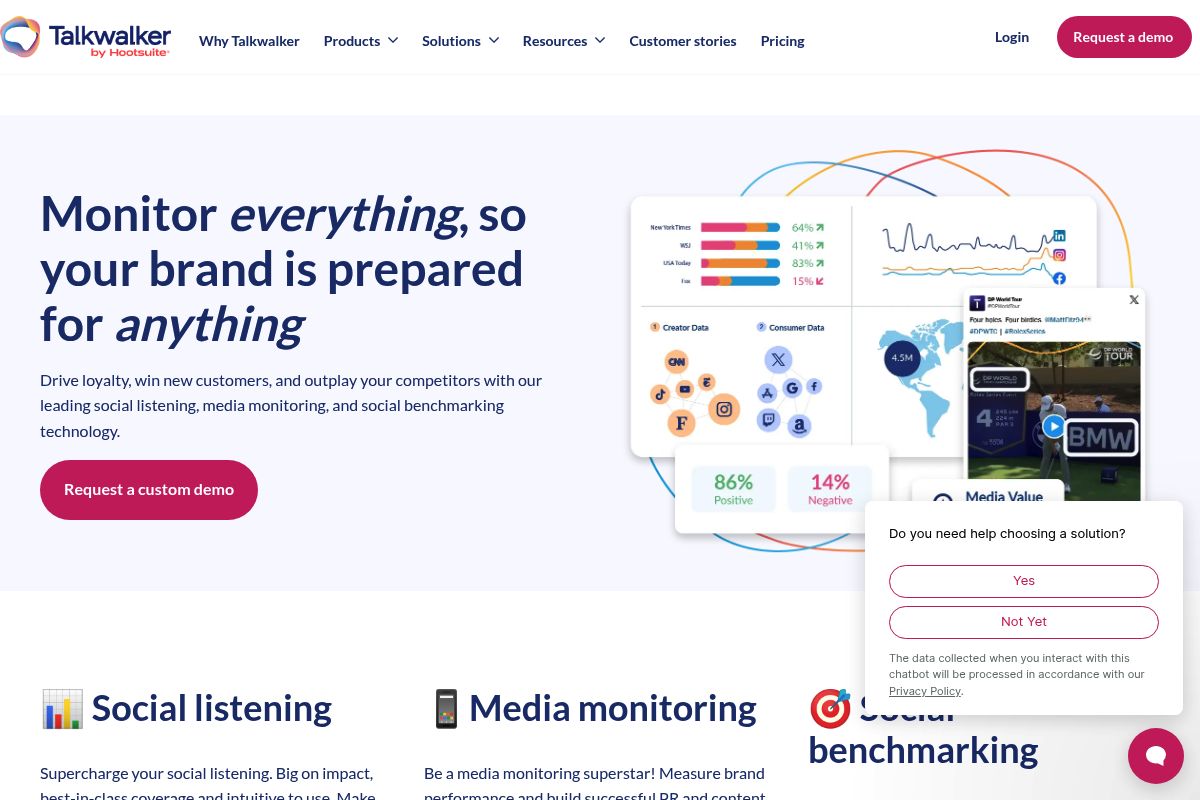
Talkwalker specializes in visual listening, predictive analytics, and large-scale media monitoring. It can detect logos, products, and brand mentions inside images and videos across digital channels.
The platform also analyzes online discussions, trends, and consumer reactions using AI-powered insights. Its predictive tools help brands identify emerging risks and reputation shifts early. Talkwalker is commonly used by enterprises and global marketing teams.
Key Features
| Feature | Description |
|---|---|
| Visual Recognition | Uses visual listening to detect brand logos, objects, and scenes in images and videos, uncovering hidden mentions and sentiment insights. |
| Predictive Analytics | Uses historical data and AI to forecast trends, crises, and mention volume up to 90 days ahead. |
| Blue Silk AI | Includes AI-powered tools like natural language queries and conversation clusters to identify themes and sentiment drivers. |
| Comprehensive Coverage | Monitors social media, news, blogs, forums, TV, radio, and podcasts for a complete view of brand sentiment. |
| Customer Data Integration | Combines proprietary data, such as surveys and support tickets, with public data for unified customer sentiment analysis. |
Pros and Cons
- Pros: Advanced visual listening, predictive analytics, and comprehensive media coverage.
- Cons: Premium pricing, complex setup, steep learning curve.
11. Meltwater — Best for Global Media Monitoring
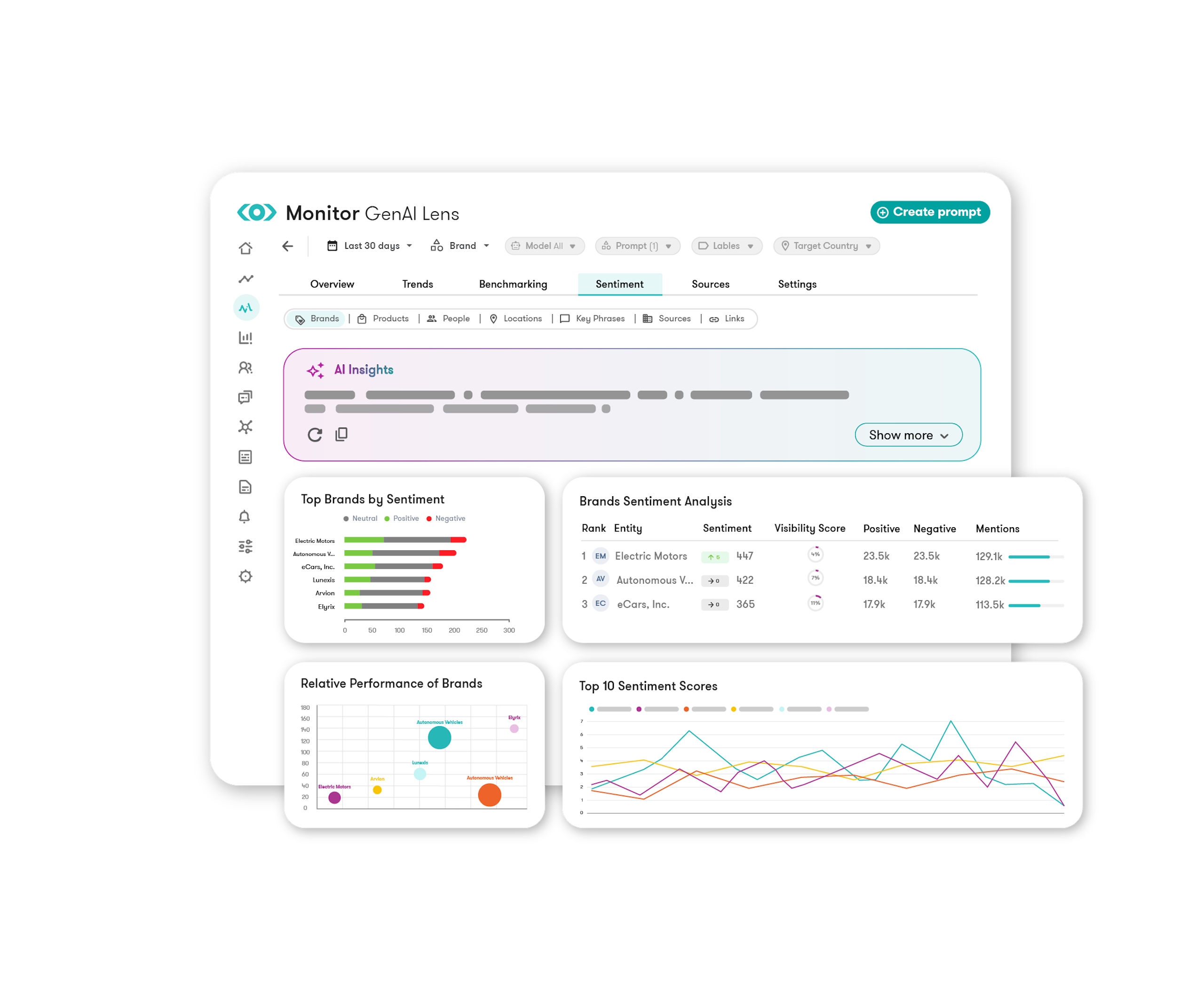
Meltwater is a media intelligence platform focused on monitoring brand coverage across digital and traditional channels. It tracks mentions from news sites, social media, podcasts, blogs, and broadcast media worldwide.
The platform provides sentiment analysis, competitor benchmarking, and PR reporting tools. Businesses can monitor reputation trends and campaign performance across multiple regions. Meltwater is best suited for enterprise PR and communications teams.
Key Features
| Feature | Description |
|---|---|
| Global Media Monitoring | Tracks brand mentions across millions of news sources, blogs, social platforms, podcasts, and broadcast media worldwide. |
| AI Sentiment Analysis | Automatically classifies mentions as positive, negative, or neutral and detects sentiment trends over time. |
| PR & Media Insights | Measures campaign performance, media impact, and share of voice across channels. |
| Real-time Alerts | Sends immediate notifications when mention volume spikes or sentiment shifts occur. |
| Competitive Benchmarking | Compares brand visibility, sentiment, and media presence against key competitors. |
Pros and Cons
- Pros: Broad global coverage, AI-powered sentiment analysis, and strong competitive benchmarking.
- Cons: Premium pricing, complex interface, and enterprise-focused platform.
12. YouScan — Best for Visual Social Listening
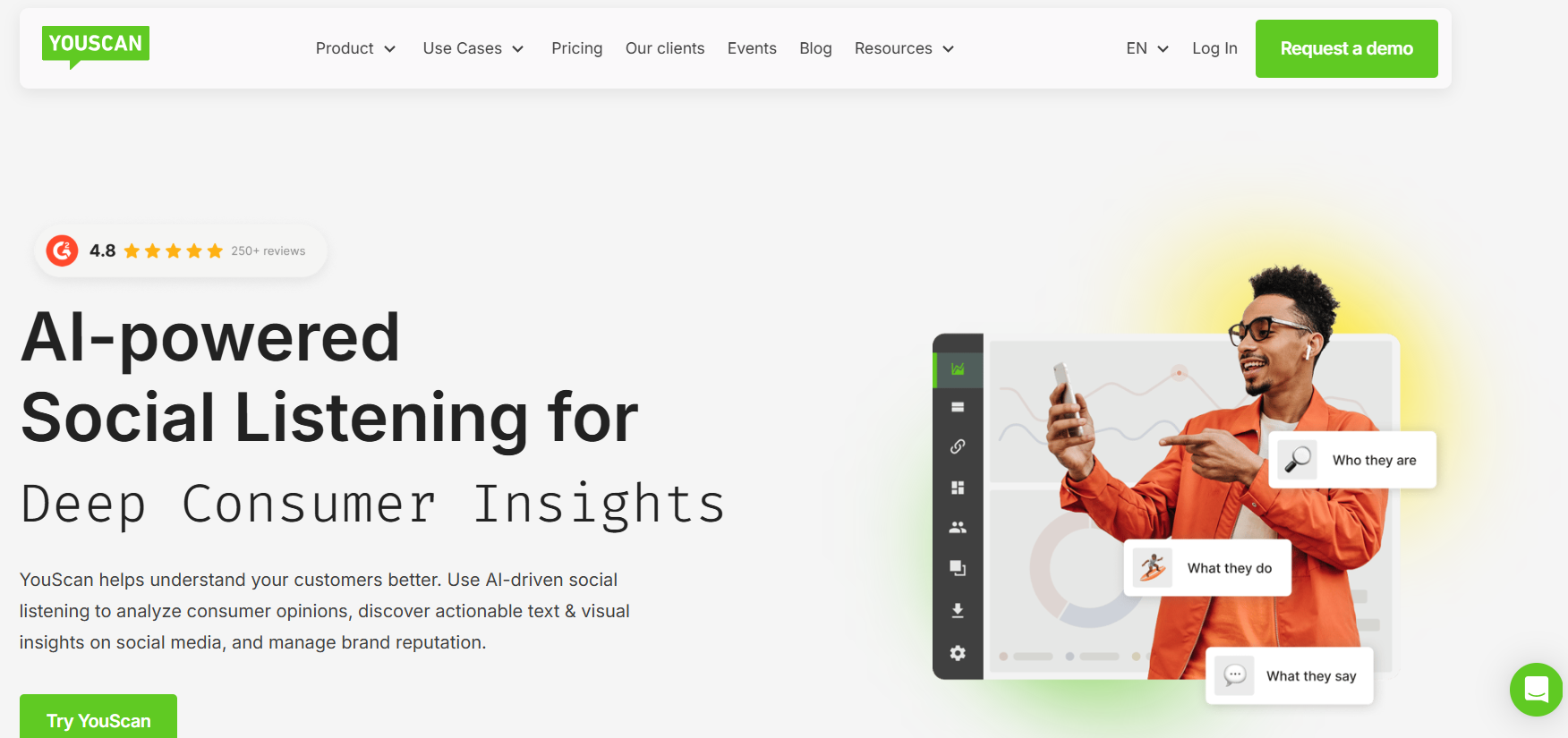
YouScan combines image recognition with social listening to track visual brand mentions online. It detects logos, products, and branded content across images, videos, and user-generated posts.
The platform also analyzes audience sentiment and engagement behavior across social channels. Its visual tracking capabilities make it especially useful for consumer-facing brands. YouScan is commonly used in retail, fashion, and lifestyle industries.
Key Features
| Feature | Description |
|---|---|
| Visual Recognition | Detects brands, logos, and products in images and videos. |
| Social Listening | Monitors conversations across social media and online platforms. |
| Sentiment Analysis | Evaluates the emotional tone behind mentions and posts. |
| User-Generated Content Tracking | Tracks how users showcase brands in real-world content. |
| Audience Insights | Reveals engagement patterns and audience behavior trends. |
Pros and Cons
- Pros: Advanced image recognition, strong visual sentiment tracking, and powerful social listening insights.
- Cons: Heavy focus on visual analytics, learning curve, and higher pricing for advanced features.
13. NetBase Quid — Best for Consumer & Market Intelligence
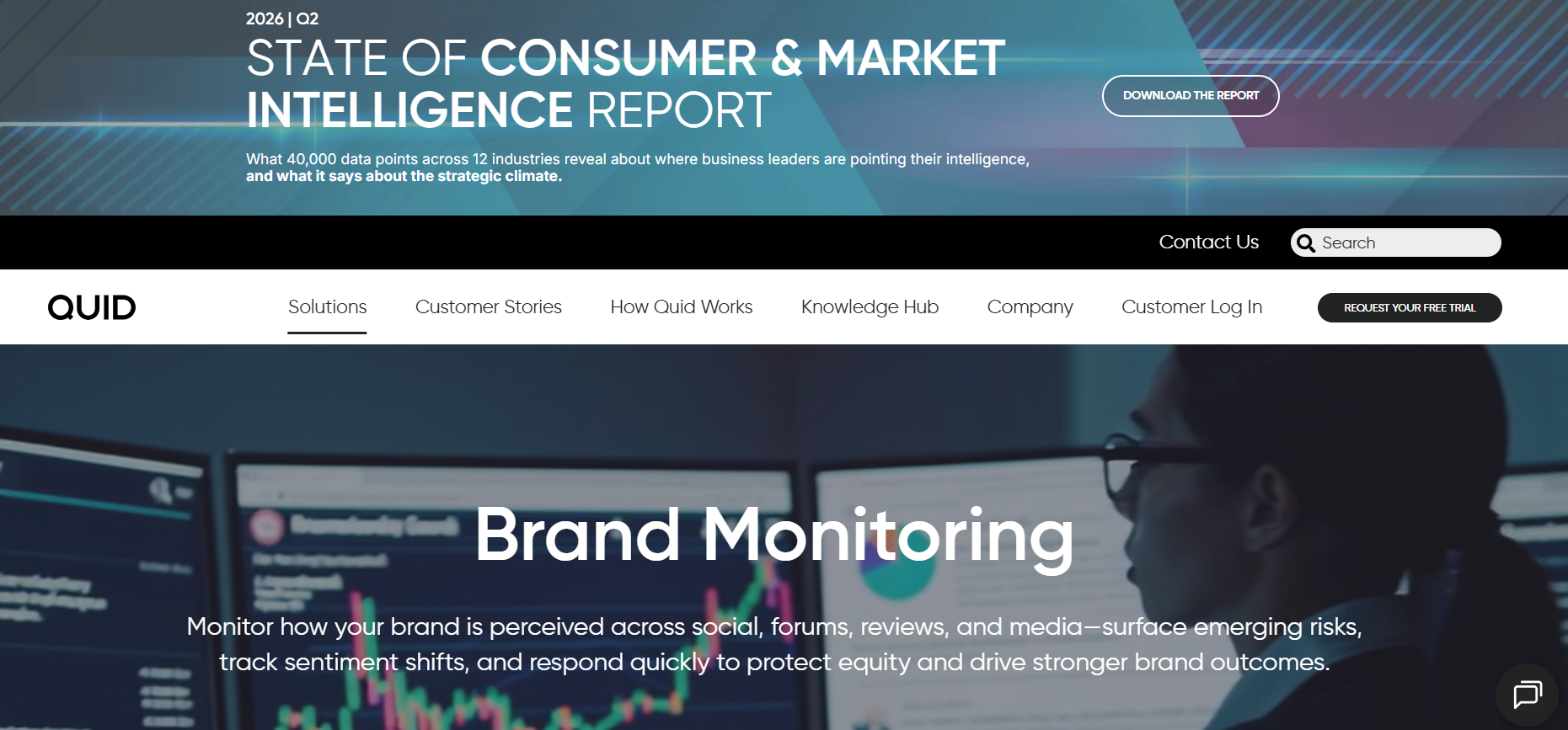
NetBase Quid combines sentiment tracking with market intelligence and consumer trend analysis. It processes large datasets from social media, news sources, and review platforms to reveal emerging patterns.
The platform helps businesses analyze customer opinions alongside broader industry shifts. It also includes visualization tools for reporting and strategic decision-making. NetBase Quid is designed for enterprises focused on research and market insights.
Key Features
| Feature | Description |
|---|---|
| AI Sentiment Analysis | Uses AI to interpret customer opinions from large datasets. |
| Market Intelligence | Combines sentiment data with broader market research insights. |
| Trend Detection | Identifies emerging topics, themes, and shifts in consumer behavior. |
| Data Processing | Analyzes large volumes of social, news, and review data efficiently. |
| Insight Visualization | Converts complex data into clear visual reports for decision-making. |
Pros and Cons
- Pros: Advanced AI sentiment analysis, strong market intelligence, deep trend and behavioral insights.
- Cons: High pricing, complex platform, and steep learning curve.
14. Pulsar — Best for Audience Intelligence & Cultural Insights
Pulsar focuses on audience behavior, cultural trends, and conversation analysis across digital channels. It helps brands understand why audiences react to topics instead of only measuring sentiment scores.
The platform includes audience segmentation, trend tracking, and visual reporting tools. Teams can analyze online communities, interests, and behavioral patterns in detail. Pulsar is useful for marketing and research teams studying audience dynamics.
Key Features
| Feature | Description |
|---|---|
| Audience Segmentation | Divides users into groups based on behavior, interests, and engagement patterns. |
| Cultural Insights | Analyzes cultural context to explain why audiences feel a certain way. |
| Conversation Tracking | Monitors discussions across multiple online channels. |
| Data Visualization | Turns complex insights into clear, visual dashboards. |
| Trend Identification | Spots emerging topics and shifts in audience sentiment early. |
Pros and Cons
- Pros: Strong audience segmentation, valuable cultural insights, clear data visualization.
- Cons: Limited real-time monitoring, onboarding required, resource-intensive for small teams.
15.Mentionlytics — Best for AI-Driven Brand Intelligence
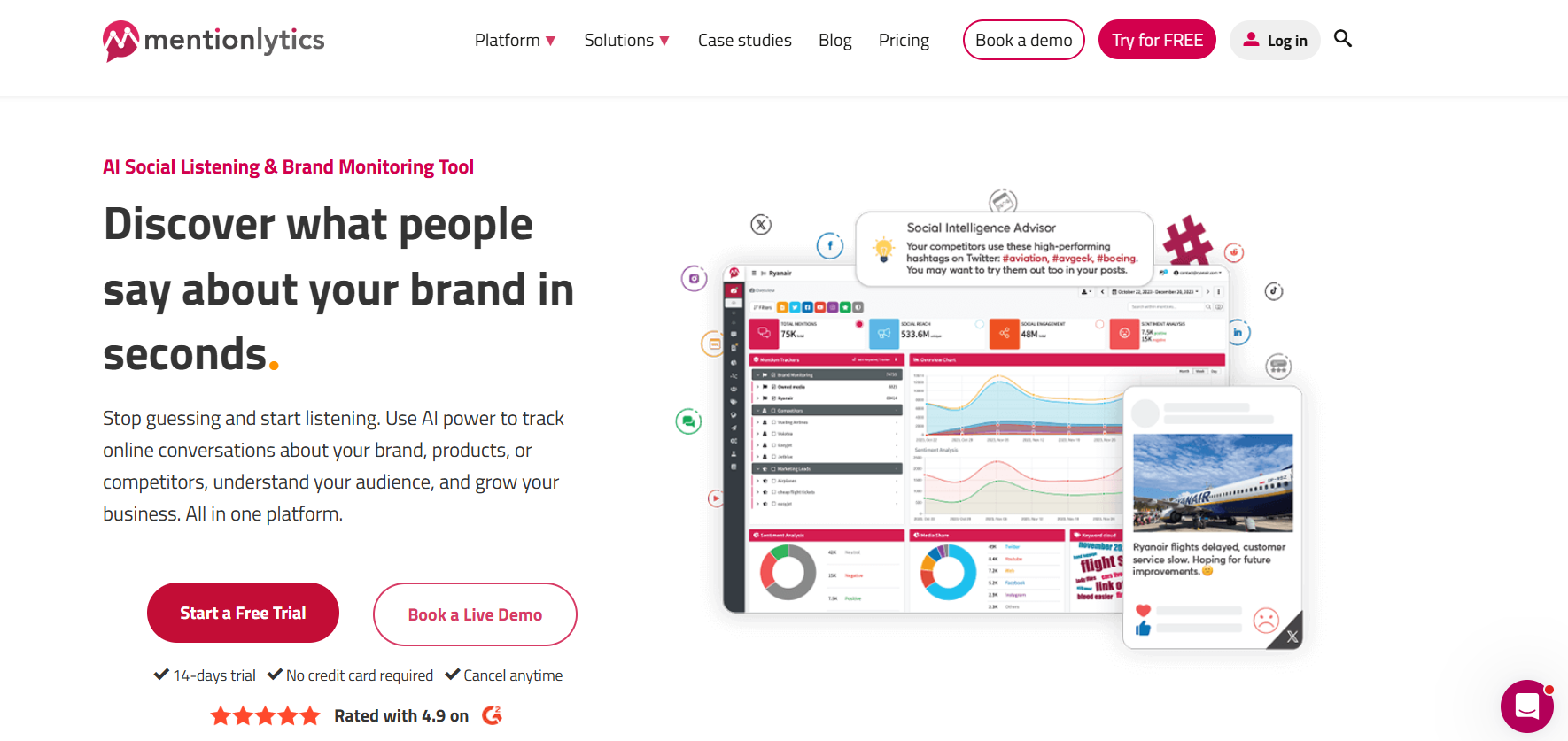
Mentionlytics is an AI-based monitoring platform that tracks brand mentions across social networks, blogs, forums, and news websites. It combines sentiment analysis with competitor tracking and automated reporting features.
Businesses can monitor conversations, identify influencers, and measure online visibility from one dashboard. The platform is designed to simplify reputation monitoring with straightforward analytics and alerts. Mentionlytics works well for teams looking for easy-to-use brand monitoring software.
Key Features
| Feature | Description |
|---|---|
| AI Monitoring System | Collects and analyzes mentions from multiple online channels. |
| Sentiment Classification | Detects and categorizes mentions as positive, neutral, or negative. |
| Influencer Identification | Highlights key users and voices talking about your brand. |
| Competitor Tracking | Compares your brand visibility and sentiment with competitors. |
| Automated Reporting | Creates clear, ready-to-use reports for analysis and decision-making. |
Pros and Cons
- Pros: Easy to use, automated AI insights, and quick actionable reporting.
- Cons: Limited enterprise customization and less advanced analytics features.
Full Comparison Table
| Tool | AI Sentiment | Alerts | Competitor Tracking | Multi-language | Visual Tracking | Predictive Analytics | AI Search |
|---|---|---|---|---|---|---|---|
| Indexly | ✅ | ✅ | ✅ | ❌ | ❌ | ✅ | ✅ |
| Brandwatch | ✅ | ✅ | ✅ | ✅ | ❌ | ✅ | ❌ |
| Sprout Social | ✅ | ✅ | ✅ | ✅ | ❌ | ❌ | ❌ |
| IBM Watson NLU | ✅ | ❌ | ❌ | ✅ | ❌ | ❌ | ❌ |
| Brand24 | ✅ | ✅ | ✅ | ✅ | ❌ | ❌ | ❌ |
| Mention | ✅ | ✅ | ✅ | ✅ | ❌ | ❌ | ❌ |
| Hootsuite | ✅ | ✅ | ✅ | ✅ | ✅ | ✅ | ❌ |
| Awario | ✅ | ✅ | ✅ | ✅ | ❌ | ❌ | ❌ |
| Lexalytics | ✅ | ❌ | ✅ | ✅ | ❌ | ❌ | ❌ |
| Meltwater | ✅ | ✅ | ✅ | ✅ | ❌ | ❌ | ❌ |
| Talkwalker | ✅ | ✅ | ✅ | ✅ | ✅ | ✅ | ❌ |
| YouScan | ✅ | ✅ | ✅ | ❌ | ✅ | ❌ | ❌ |
| NetBase Quid | ✅ | ❌ | ✅ | ❌ | ❌ | ❌ | ❌ |
| Pulsar | ✅ | ❌ | ❌ | ❌ | ❌ | ❌ | ❌ |
| Mentionlytics | ✅ | ✅ | ✅ | ❌ | ❌ | ❌ | ❌ |
What to look for when choosing an AI Sentiment Tracking Tool?
When choosing an AI sentiment tracking tool, focus less on “basic sentiment scoring” and more on how well it reflects real-world AI-driven perception across platforms.
- Wide data sources: Covers Reddit, reviews, forums, news, and AI platforms like ChatGPT and Gemini
- Deeper sentiment understanding: Recognizes sarcasm, nuance, and explains the reason behind sentiment
- AI search visibility: Tracks how often and how your brand appears in AI-generated responses
- Time-based tracking: Shows how sentiment evolves over time with trends and shifts
- Competitor benchmarking: Compares your brand sentiment with key competitors
- Key theme detection: Finds recurring topics like pricing issues, support feedback, or product gaps
- Action-focused insights: Converts analysis into practical recommendations for improvement
- Reliable data handling: Filters noise and prioritizes trustworthy, relevant signals
- System integrations: Works with SEO, analytics, or reporting tools for smoother workflows
Conclusion
The best brand sentiment tracking tools in 2026 go beyond basic mention monitoring with AI-powered analytics and real-time insights. Indexly stands out for its focus on AI search optimization and conversational AI visibility, while Brandwatch remains a leading enterprise solution.
For integrated social management, Sprout Social is a strong choice, while Brand24 and Awario offer affordable monitoring for smaller teams. The best tool ultimately depends on your goals, whether that’s AI visibility, crisis management, competitor tracking, or enterprise analytics.
Frequently Asked Questions
What is Indexly sentiment tracking pricing and what's included?
Indexly pricing depends on monitoring needs and typically includes AI sentiment analysis, Reddit tracking, competitor monitoring, alerts, and analytics dashboards. Contact their sales team for exact pricing.
Is Indexly worth it for tracking brand sentiment?
Yes. Indexly is valuable for brands focused on AI search visibility and conversational AI platforms like ChatGPT and Perplexity.
Which AI tool is best for sentiment analysis?
Brandwatch is best for enterprises, Indexly for AI search monitoring, IBM for NLP customization, and Brand24 for budget-friendly tracking.
How to set up a brand sentiment tracking system for AI tools?
Monitor social media, Reddit, reviews, and AI search engines using tools like Indexly or Brandwatch, then configure alerts, keywords, and sentiment dashboards.
What are the best AI sentiment analysis software for enterprises?
Top enterprise solutions include:
- Brandwatch
- Talkwalker
- Meltwater
- IBM
- NetBase Quid
These platforms provide advanced AI analytics, predictive insights, multi-language support, and enterprise-grade reporting.
How do companies measure brand sentiment?
Companies use metrics like positive vs negative mentions, Net Sentiment Score, review ratings, share of voice, and customer feedback to measure public perception.
What are the best sentiment analysis tools for startups?
Startups often choose affordable and easy-to-use platforms such as Brand24, Awario, Mentionlytics, and Mention. These platforms provide real-time alerts, sentiment monitoring, competitor tracking, and social listening without the high costs associated with enterprise solutions.
What are the best AI reputation monitoring tools?
Leading AI reputation monitoring tools include Indexly, Brandwatch, Talkwalker, Meltwater, and YouScan. These platforms help businesses track brand conversations, monitor AI-generated recommendations, analyze customer sentiment, and detect reputation risks across digital channels.
How can agencies offer AI brand monitoring services?
Agencies can use AI monitoring tools to track client mentions across social media, Reddit, reviews, news sites, and AI platforms like ChatGPT. Services often include sentiment reporting, competitor tracking, and reputation monitoring using tools like Indexly.
What are the best Social Listening Platforms for AI Search Era Marketing?
Indexly is best for AI visibility tracking, while Brandwatch and Talkwalker lead in enterprise social listening and predictive analytics.
Brandwatch vs AI-Native Sentiment Tracking Tools: What is the difference?
Brandwatch focuses on traditional enterprise social listening, while AI-native tools like Indexly specialize in monitoring AI-generated conversations and search visibility.
How accurate is AI-powered sentiment analysis compared to manual monitoring?
Modern AI sentiment analysis tools achieve around 88–95% accuracy, offering faster and more scalable monitoring than manual analysis.
What is the best alternative to Brandwatch for AI sentiment?
For AI-native sentiment tracking, Indexly is a strong alternative to Brandwatch because it monitors AI platforms like ChatGPT and Perplexity. Other alternatives include Talkwalker for enterprise analytics and Brand24 for affordable monitoring.
What are AI sentiment dashboards for CMOs?
AI sentiment dashboards help CMOs track brand reputation, customer sentiment, competitor trends, and AI search visibility in real time. Platforms like Indexly and Brandwatch combine social listening, sentiment analysis, and reporting into one dashboard.