
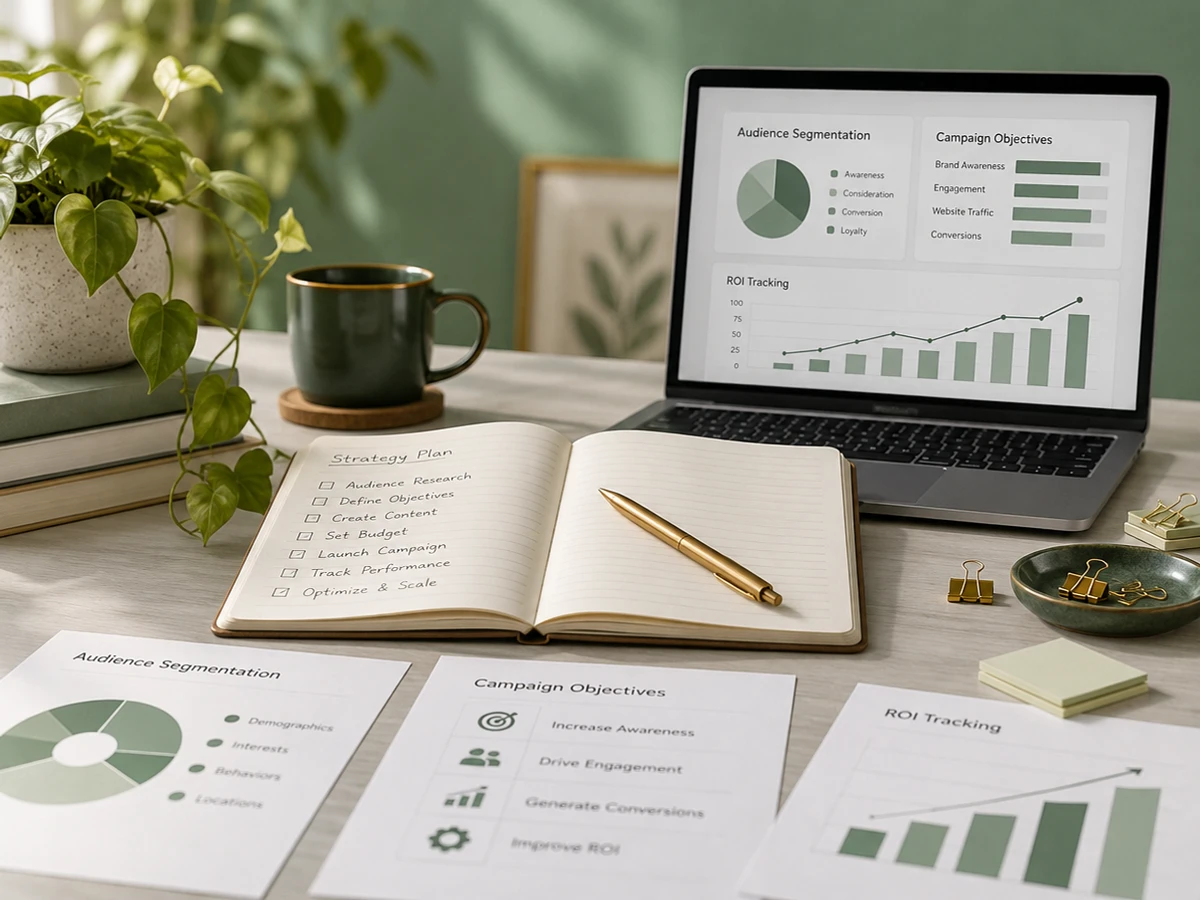
how to create a ChatGPT Ads strategy for brand managers and growth teams | November 5, 2026 | Indexly Editorial Team | 3-4 weeks to build and launch | Beginner
What You'll Learn
ChatGPT ads are now a real option for brands, but buying placements without a plan can backfire. This guide provides a practical 2026 framework: auditing how ChatGPT describes your brand, setting objectives beyond clicks, configuring OpenAI Ads Manager, launching brand-safe campaigns, and measuring share of voice and sentiment alongside paid results. Your ad spend should reinforce how ChatGPT already talks about you, not work against it. You will learn:
- How ChatGPT Ads work in 2026, including placement, bidding, and eligibility rules.
- How to tie paid campaigns to brand sentiment and share-of-voice tracking.
- A 5-step framework from audit to launch to ongoing measurement.
- The most common and costly ChatGPT Ads mistakes brand teams make, and how to avoid them.
Prerequisites: a U.S. business entity, a website with analytics access, a defined target audience, and basic familiarity with CPM (Cost Per Mille, or Cost Per Thousand impressions) and CPC (Cost Per Click).
Why a ChatGPT Ads Strategy Matters in 2026
ChatGPT advertising is no longer a thought experiment. OpenAI began showing ads to logged-in adult users on the Free and ChatGPT Go tiers in the United States on February 9, 2026, and opened a self-serve Ads Manager to US businesses on May 5, 2026. By late August, OpenAI said ChatGPT Ads had reached a $1 billion annualized revenue run rate in under 200 days, with tens of thousands of advertisers, and availability expanded to more than 40 countries. OpenAI has also said it eventually intends to let advertisers target ChatGPT's 1.2 billion weekly users once ads roll out globally.
For brand managers, the stakes reach beyond media spend. AthenaHQ's State of AI Search 2026 report found the average brand mention rate across AI engines is just 17.2%, while leading companies reach far higher. Forrester data shows 70% of marketers say AI visibility is a top priority for their CMO or CEO, but only 30% have named a discrete owner for answer-engine visibility. A ChatGPT Ads strategy that ignores organic sentiment and share of voice shows only half the picture.
Most published guides target performance marketers chasing conversions. Brand managers need a different lens: paid visibility that reinforces, rather than contradicts, how ChatGPT already talks about the brand.
Key Takeaway: ChatGPT Ads connect paid visibility with organic AI perception. Done well, your spend reinforces how ChatGPT describes your brand and gives leadership a clear answer on AI visibility. For supporting data, see ChatGPT Ads Measurement: Reasoned Intent (2026).
The Process at a Glance
| Step | Action | Time | Outcome |
|---|---|---|---|
| 1 | Audit current AI visibility and sentiment baseline | 2-3 days | Documented share-of-voice and sentiment baseline |
| 2 | Define objectives and audience segments | 1-2 days | Clear KPI set tied to brand and pipeline goals |
| 3 | Set up Ads Manager and brand-safe creative | 3-5 days | Verified account with approved, on-brand ad assets |
| 4 | Launch, target, and budget campaigns | 1 day to launch, 2 weeks to learn | Live campaigns with early performance signal |
| 5 | Track share of voice, sentiment, and ROI | Ongoing, weekly review | Closed-loop dashboard linking spend to AI perception |
Total time to first live campaign: about 2-3 weeks, with measurement running continuously after launch.
Step 1: Audit Your Current AI Brand Visibility and Sentiment Baseline
What You're Doing
Before you spend a dollar, find out what ChatGPT already says about you. Paid placements work best alongside an organic perception you understand, so this audit covers your brand, your competitors, and your category.
How to Do It
- Compile 50 to 100 prompts your buyers realistically type into ChatGPT, covering discovery, comparison, and "best X for Y" questions.
- Run those prompts manually or through an AI visibility platform like Indexly, and record whether your brand is mentioned, cited, or recommended, and in what tone.
- Calculate baseline AI share of voice: (your brand mentions ÷ total brand mentions across the same prompt set) x 100.
- Note the sentiment pattern. Is your brand described as a leader, as an alternative, or not at all?
- Document which competitors ChatGPT favors and why. Look for gaps in content, reviews, or forum presence driving those citations.
Best Practices
- Segment prompts by funnel stage (awareness, comparison, decision). Sentiment and citation rates can differ sharply between them.
- Re-run the audit weekly, at the same time, so you can spot drift instead of relying on a single snapshot.
What Done Looks Like
You have a dated, repeatable baseline for AI share of voice and a clear read on sentiment, captured before any ad dollars are committed.
Example
| Metric | Your Brand | Category Leader |
|---|---|---|
| AI Share of Voice (ChatGPT) | 9% | 34% |
| Sentiment on mention | Neutral/mixed | Positive, "recommended" |
| Citation source type | Owned content only | Earned media + reviews |
The first audit often stings. A 9% share next to a 34% leader is uncomfortable, but it tells you paid ads alone will not fix perception. Earned citations and sentiment work must run in parallel, and Indexly's citation gap analysis can help you find those gaps before you set objectives.
Key Takeaway: Establish your AI share of voice and sentiment baseline before launching. Tools like Indexly show how ChatGPT perceives your brand and competitors today. For a more detailed walkthrough, see ChatGPT Ads and Citations in AI Answers: What We Know ....
Find your AI Share of Voice
Measure your Share of Voice compared to your competitors
Measure your AI SoVStep 2: Define Campaign Objectives and Audience Segments for ChatGPT Ads
What You're Doing
Turn audit findings into specific, measurable targets so ChatGPT Ads spend supports brand equity, not just click-through rate.
How to Do It
- Choose a primary objective: awareness (impressions near category prompts), consideration (clicks to comparison content), or conversion (direct response through OpenAI's Measurement Pixel and Conversions API).
- Set a secondary brand KPI, such as a target AI share-of-voice lift or sentiment improvement, and track it alongside your media KPI.
- Define audience segments using conversational context rather than only keywords. OpenAI's Ads Manager targets users based on conversational context, not just search keywords.
- Exclude sensitive categories from the start. Ads are not eligible near sensitive or regulated topics such as health, mental health, and politics.
- Set a realistic budget floor. Self-serve access lets any U.S. business create and launch ChatGPT ad campaigns without an agency relationship or a minimum spend, so the decision is about what you can afford to learn from.
Common Mistakes
Mistake 1: Setting only conversion KPIs and ignoring sentiment. You may win clicks while ChatGPT's organic answers still describe your brand negatively.
Mistake 2: Copying a Google Ads keyword list into ChatGPT targeting. It usually underperforms because the platform matches intent and context, not exact-match terms.
What Done Looks Like
A one-page brief lists your primary objective, brand KPI target, audience segments, exclusions, and budget range, signed off by both brand and growth stakeholders.
Key Takeaway: Weight brand equity metrics like AI share-of-voice lift and sentiment alongside media KPIs, and build audiences around conversational context.
Step 3: Set Up OpenAI Ads Manager and Build Brand-Safe Creative
What You're Doing
Create your advertiser account, verify your business, and produce creative that meets ChatGPT's format and brand-suitability standards. A clean setup saves painful rework later.
How to Do It
- Create an account at ads.openai.com and complete business verification.
- Install conversion tracking before launch. OpenAI provides a Measurement Pixel for web pages, a Conversions API for server-to-server events, and an image tag.
- Design creative with placement in mind. Ads appear as clearly labeled, sponsored boxes at the bottom of a ChatGPT response, not woven into the answer itself.
- If you plan to run the newer visual format, prepare image assets. OpenAI is adding visual display ads that appear alongside images users ask ChatGPT to generate.
- Connect a measurement partner. The current list includes AppsFlyer, Triple Whale, Adjust, DV Rockerbox, Northbeam, Branch, Singular, Kochava, Airbridge, and Tenjin.
- If brand safety is a priority, watch the pilots. OpenAI is developing brand suitability evaluation pilots with DoubleVerify and Integral Ad Science.
Best Practices
- Write creative that reads like a helpful continuation of an answer, not a banner ad. Users are mid-conversation, not mid-scroll.
- Keep messaging consistent with how your brand appears in organic answers from the Step 1 audit. Paid and organic should reinforce each other.
What Done Looks Like
Your account is verified, tracking fires correctly in a test event, and every creative asset has been checked against ad policy and brand voice guidelines.
Key Takeaway: Verified business details, working tracking, and creative that fits the conversational context protect brand safety and keep paid messaging consistent with organic perception.
Step 4: Launch, Target, and Budget Your ChatGPT Ad Campaigns
What You're Doing
Your plan meets real spend. Start conservatively, gather data, and resist committing a full-quarter budget on day one.
How to Do It
- Choose a bidding model. Campaigns run on a second-price auction, bought by impressions (CPM), by clicks (CPC), or optimized for conversions.
- Set a conservative daily budget for the first two weeks so the platform can learn before you scale.
- Launch in approved audience segments and check delivery daily for the first 72 hours.
- Track cost trends. Reporting shows CPMs fell from $60 at launch to as low as $25, and minimum spend requirements dropped from $250,000 to $50,000 earlier in 2026, before self-serve removed the floor entirely.
- Expand geographically only after performance stabilizes. Availability now spans more than 40 countries, through OpenAI's Ads Solutions team and agency and technology partners.
Common Mistakes
Mistake: Scaling budget before the two-week learning window closes. You lock in inefficient bids before the auction has enough signal to optimize delivery.
What Done Looks Like
Campaigns are delivering impressions or clicks at a stable cost, and at least one full reporting cycle is complete before you raise the budget.
Example
Early self-serve advertisers, including Best Buy, Lowe's, and VistaPrint, concentrated spend in research-heavy purchase categories. That fits OpenAI's stated view that ChatGPT ads work best at moments of active decision-making rather than passive browsing.
Key Takeaway: Start conservatively, let the learning phase run, and scale only into audiences and geographies with stable performance. For related guidance, see How To Choose The Best AEO Platform For Your Marketing Team In 2026 Step By Step Guide.
Step 5: Track Share of Voice, Sentiment, and ROI Across AI Engines
What You're Doing
This ongoing step closes the loop between ChatGPT spend and the brand metrics that justify the budget: share of voice, sentiment, and citation share.
How to Do It
- Re-run your Step 1 prompt set weekly or biweekly to track AI share-of-voice movement against baseline.
- Use a dedicated platform such as Indexly to automate prompt tracking and citation gap analysis. At a minimum, track ChatGPT, Google AI Overviews, and Perplexity, since these three platforms handle the vast majority of AI-assisted commercial queries in 2026.
- Compare paid performance against organic sentiment. Rising ad click-through with flat or declining organic sentiment usually signals a messaging mismatch.
- Report results carefully. Share of voice varies enormously by engine. The same brand, on the same query set, can show Perplexity at 28-38%, ChatGPT at 10-16%, Gemini at 12-20%, and Claude at 3-7%.
- Feed citation gaps back into content and PR planning, so paid spend is backed by earned mentions.
Best Practices
- Report AI share of voice per engine, not as one blended number. A blended figure can hide weak performance on a single platform.
- Pair quantitative share-of-voice tracking with a qualitative sentiment review every reporting cycle.
What Done Looks Like
A recurring dashboard shows AI share of voice, sentiment trend, and ad performance side by side, reviewed on the same cadence as paid media reporting.
Key Takeaway: Ongoing measurement across multiple AI engines is what justifies ChatGPT Ads spend. A dedicated platform like Indexly keeps performance data and content decisions in one place.
What to Do After Launching Your ChatGPT Ads Strategy
Phase 1 (Weeks 1-4): Stabilize and benchmark. Confirm tracking accuracy, let campaigns exit the learning phase, and set up a repeatable weekly share-of-voice report.
Phase 2 (Months 2-3): Expand and refine. Scale budget into audiences and geographies with strong ad performance and improving organic sentiment. Cut segments where paid clicks don't translate into citation or sentiment lift.
Phase 3 (Ongoing): Integrate brand and growth reporting. Fold AI share-of-voice and sentiment into standard brand health reporting alongside traditional media metrics, so ChatGPT visibility gets the same governance as any other channel.
Resources You'll Need
| Resource | Role | Requirement | Price |
|---|---|---|---|
| Indexly | AI search visibility, prompt tracking, citation gap analysis, sentiment, and content agents | Required | Paid, plans vary |
| OpenAI Ads Manager | Campaign creation, bidding, and delivery for ChatGPT Ads | Required | Pay-per-auction (CPM/CPC) |
| Triple Whale or AppsFlyer | Conversion measurement and attribution for ChatGPT Ads | Recommended | Paid, plans vary |
| DoubleVerify or Integral Ad Science | Brand suitability evaluation for ad placements | Optional | Paid, enterprise pricing |
See also, see What ChatGPT Ads Reveal About Your Competitors' Strategy.
Common Plateaus & How to Break Through
Ads perform well, but AI share of voice doesn't move
Likely cause: Ad clicks drive site traffic, but ChatGPT's organic answers still lean on third-party citations, reviews, and earned content your paid campaign never touches.
Fix: Run a parallel content and citation program. Indexly can help close citation gaps, using them as input for GEO-optimized articles, Reddit signals, and LinkedIn presence.
Campaign costs rise faster than expected
Likely cause: Auction dynamics are still maturing. CPMs reported down from $60 at launch to as low as $25 as competition and inventory evolved.
Fix: Re-benchmark budgets monthly rather than locking in a fixed CPM assumption. Test both CPM and CPC bidding to see which is more efficient for your category.
Sentiment stays flat or negative despite rising visibility
Likely cause: More impressions and citations don't guarantee positive framing. Your brand may be mentioned often but described inaccurately or unfavorably.
Fix: Review the actual language ChatGPT uses when it mentions you, not just the mention count. Then correct the outdated or negative source material feeding those answers.
No clear owner for AI visibility inside the organization
Likely cause: Forrester found 70% of marketers treat AI visibility as a top priority, but only 30% have defined a discrete owner. ChatGPT Ads often end up split across paid media, SEO, and PR with no one accountable for the whole picture.
Fix: Assign one owner for the combined ChatGPT Ads and AI share-of-voice function, reporting through a single dashboard instead of three disconnected tools. For more troubleshooting advice, see ChatGPT Ads Are Coming: A 2026 Guide for Marketers and ....
Conclusion
A ChatGPT Ads strategy for brand managers and growth teams in 2026 treats paid placements as one input into a broader AI visibility system, not a standalone channel. The five steps in this guide give you a repeatable way to justify and optimize spend against outcomes leadership cares about.
Key Takeaways
- A working strategy combines OpenAI's self-serve platform with ongoing AI share-of-voice and sentiment tracking. Paid spend alone is not enough.
- The biggest differentiator is connecting ad performance to how ChatGPT already describes the brand organically. Tools like Indexly can help you close citation gaps.
- Your next step: run the Step 1 audit this week so you have a baseline before your next budget cycle is approved.
FAQ
How do I create a ChatGPT Ads strategy for brand managers in 2026?
Audit your current AI share of voice and sentiment in ChatGPT. Define objectives that pair media KPIs with brand KPIs, and set up a verified account in OpenAI's Ads Manager at ads.openai.com. Launch conservative test campaigns with proper conversion tracking, then review share of voice and sentiment weekly using a platform like Indexly.
When did ChatGPT Ads officially launch?
OpenAI began showing ads to logged-in adult users on the Free and ChatGPT Go tiers in the United States on February 9, 2026. A self-serve Ads Manager followed for U.S. businesses, and availability had expanded to more than 40 countries by late August 2026.
How much do ChatGPT Ads cost?
Campaigns run through a second-price auction, with bidding by impressions (CPM), clicks (CPC), or conversions. Reported CPMs fell from around $60 at launch to as low as $25, and the earlier minimum spend requirement has been removed with self-serve access.
Do ChatGPT Ads affect the answers ChatGPT gives?
No. OpenAI has said ads are clearly labeled as sponsored, appear below a response rather than inside it, and do not influence how ChatGPT answers the underlying question.
What is a good AI share of voice for my brand on ChatGPT?
Benchmarks vary by engine and category. A strong AI share of voice often falls in the 15 to 25 percent range, and category leaders frequently exceed 35 percent. With the average brand mention rate across AI engines around 17 percent, even modest gains represent meaningful competitive movement.
How is AI share of voice different from traditional share of voice?
Traditional share of voice tracks ad spend or media coverage. AI share of voice measures how often an AI engine mentions, cites, or recommends your brand compared with competitors, across real user prompts. Because answers change, it requires ongoing prompt tracking rather than a single campaign report.
Can small businesses afford to run ChatGPT Ads?
Yes. The self-serve Ads Manager removed the earlier minimum spend requirement, so any verified U.S. business can launch campaigns with a small daily budget and no agency relationship.
How do I measure ROI from a ChatGPT Ads campaign?
Connect OpenAI's Measurement Pixel or Conversions API to your website, and consider a third-party attribution partner such as Triple Whale or AppsFlyer. Evaluate results alongside brand metrics like sentiment and share-of-voice change, since conversion volume alone won't show brand equity impact.
This guide was compiled from publicly available OpenAI announcements and third-party industry research, current as of November 2026. ChatGPT Ads features, pricing, and availability change often, so verify current details at ads.openai.com before finalizing budgets.