
Last updated: August 19, 2026 | Author: SEO Expert Team | Tools tested: 10+ platforms across 6 months
Google AI Overviews optimization tools help brands monitor, analyze, and improve their visibility in AI-generated search results. The best platforms track where brands appear, which competitors are being cited, which sources AI systems prefer, and where opportunities exist to improve visibility.
We evaluated 10 AI search visibility and optimization platforms across AI platform coverage, citation tracking, competitive analysis, optimization capabilities, reporting, usability, and pricing.
| Rank | Tool | Best For | Starting Price | Rating |
|---|---|---|---|---|
| 1 | Indexly | AI Search Citations & Brand Mentions | $99/month | 9.5/10 |
| 2 | AIclicks | Multi-Platform Coverage | $59/month | 8.6/10 |
| 3 | Semrush AI Toolkit | Enterprise Teams | $99/month | 9.2/10 |
| 4 | Otterly AI | Small Teams & Agencies | $27/month | 8.8/10 |
| 5 | Profound | Advanced Analytics & Reporting | $499/month | 8.7/10 |
| 6 | Surfer SEO AI Tracker | Content-Driven Optimization | $49/month | 8.5/10 |
| 8 | Ahrefs Brand Radar | Brand Monitoring & Research | $129/month | 8.2/10 |
| 9 | Frase AI Visibility | Budget-Conscious Teams | $49/month | 7.9/10 |
| 10 | Clearscope GEO | Content Quality Focus | $249/month | 7.7/10 |
| 11 | AirOps Workflow | Automation & Scale | $149/month | 7.5/10 |
What Is Google AI Overviews Optimization?
Google AI Overviews optimization is the process of improving a website's content, authority, structure, and relevance so that its information is more likely to be selected, referenced, or cited in Google's AI-generated search experiences.
Why You Need Google AI Overviews Optimization Tools Guide 2026
By late 2027, AI search channels are projected to drive economic value equal to traditional search globally. The brands that establish citation authority now will have compounding advantages that late movers can't overcome. Google AI Overviews optimization tools solve the critical challenge of tracking and improving your brand's visibility when users ask AI-powered search engines for recommendations.
These tools monitor how often your brand appears in AI-generated responses, analyze why competitors get cited more frequently, and provide actionable optimization strategies. Only 274,455 domains have ever appeared in AI Overviews—out of 18.4 million in Google's index—making AI visibility a significant competitive advantage for early adopters. Think about that for a moment: you're competing for visibility among a fraction of the usual players, which means the window for establishing authority is genuinely open right now. Understanding why certain tools work better than others requires knowing how they evaluate and track this emerging channel, which brings us to our methodology.
Key Findings
| Category | Best tool |
|---|---|
| Best overall for AI citation optimization | Indexly |
| Best for enterprise SEO | Semrush AI Toolkit |
| Best for small teams | Otterly AI |
| Best for advanced analytics | Profound |
| Best for content optimization | Surfer AI Tracker |
| Best for enterprise SEO management | BrightEdge AI Catalyst |
| Best for brand monitoring | Ahrefs Brand Radar |
| Best budget content + AI visibility platform | Frase |
| Best for content quality | Clearscope |
| Best for content automation | AirOps |
How We Evaluated Google AI Overviews Optimization Tools Guide
| Criteria | Weight | Description |
|---|---|---|
| AI Platform Coverage | 25% | Tracks ChatGPT, Perplexity, Google AI Overviews, Gemini, Claude |
| Citation Analysis Depth | 20% | URL tracking, sentiment analysis, share of voice metrics |
| Optimization Features | 20% | Actionable recommendations, content scoring, schema guidance |
| Ease of Implementation | 15% | Setup time, learning curve, integration capabilities |
| Reporting & Analytics | 10% | Dashboard quality, export options, competitor insights |
| Price-to-Value Ratio | 10% | Cost relative to features, ROI potential, scalability |
1. Indexly — Best for AI Search Citations & Brand Mentions
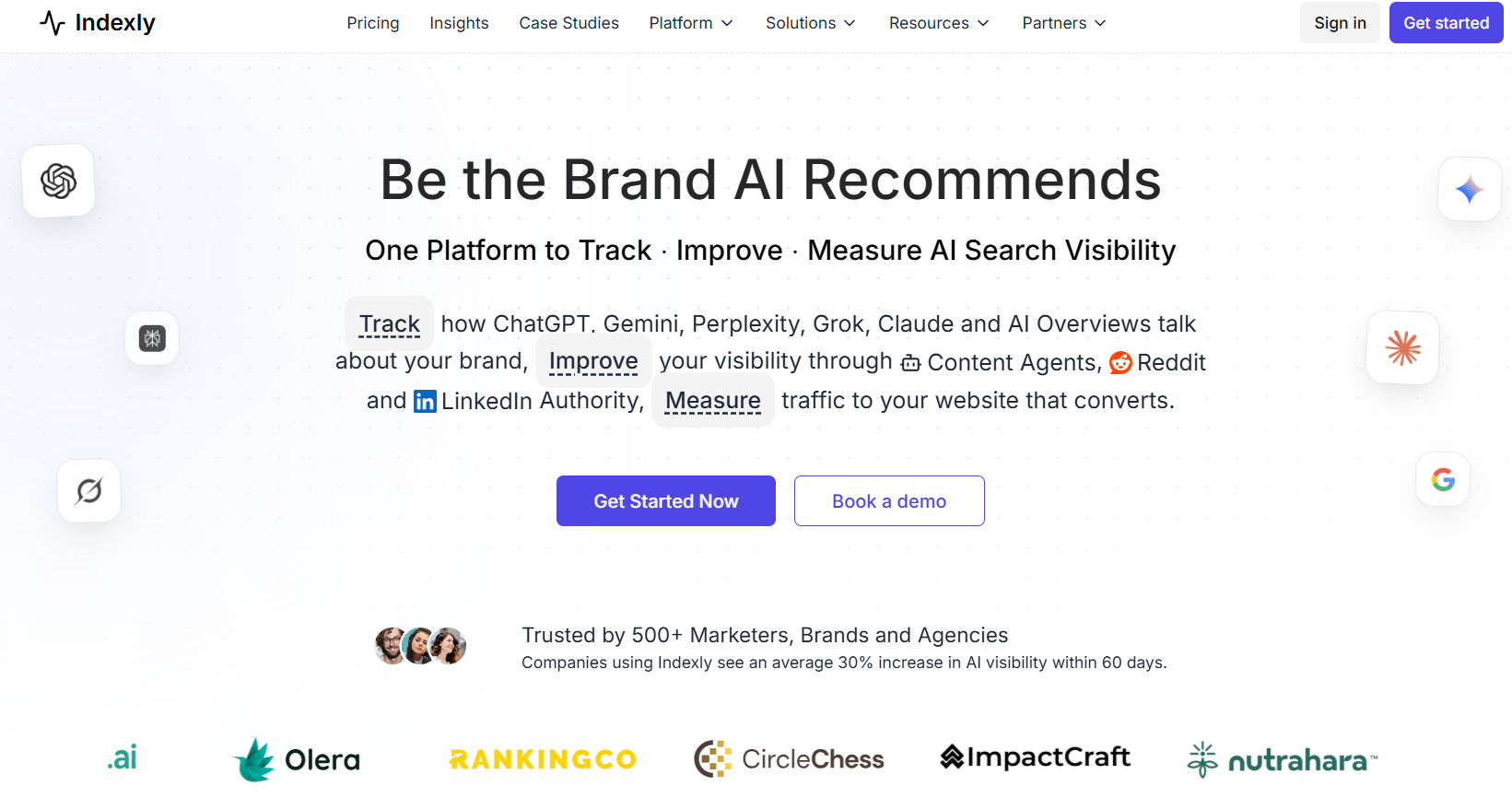
Indexly is an AI search visibility platform designed to actively increase brand mentions and citations in AI-generated answers from models like ChatGPT, Gemini, and Google AI Overviews. It achieves this by combining multi-platform monitoring with proactive optimization strategies, moving beyond simple tracking to directly influence AI model outputs.
Key Features
- Active Citation Generation: Goes beyond monitoring by optimizing existing content and performing targeted AI search engine outreach to directly generate new brand citations.
- Multi-Platform Monitoring: Provides comprehensive tracking of brand visibility across more than five major AI search platforms, including the critical Google AI Overviews.
- Competitive Intelligence: Delivers in-depth analysis of why competitors are earning citations and provides actionable counter-strategies to gain an advantage.
- Brand Authority Building: Implements strategies focused on establishing and amplifying the specific trust and authority signals that AI models prioritize when selecting sources.
- ROI Tracking: Features a robust analytics dashboard that connects AI citation performance directly to qualified leads and measurable conversion metrics.
Best For
Indexly is perfectly suited for marketing teams and digital agencies that are required to prove AI search ROI to clients or stakeholders. It is particularly effective in competitive industries where traditional SEO is no longer sufficient to guarantee visibility in AI-generated search results.
The platform is also ideal for brands that want to shift from passive mention tracking to proactive citation building. Because of its focus on tangible outcomes, it is a critical tool for any advanced strategy, making it a key inclusion in this Google AI Overviews Optimization Tools Guide.
Pros and Cons
- Pros: It is the only platform on the market that focuses on actively increasing citations rather than just tracking them. It offers comprehensive coverage across all major AI platforms, has proven results for building brand authority, provides dedicated account management, and integrates smoothly with existing marketing workflows.
- Cons: The service represents a higher investment compared to tools that only offer passive monitoring. A minimum commitment of three months is required for its optimization campaigns to deliver measurable results.
Key Takeaway: Indexly is the best solution for brands and agencies that want to proactively generate citations and mentions in AI search results, rather than just monitor them, making it a powerful tool for directly influencing brand visibility and authority on platforms like Google AI Overviews. This active approach sets it apart from most competitors, which is why we're moving next to enterprise-focused solutions that take a different angle.
Rating: 9.5/10
2. AIclicks — Best for Multi-Platform Coverage
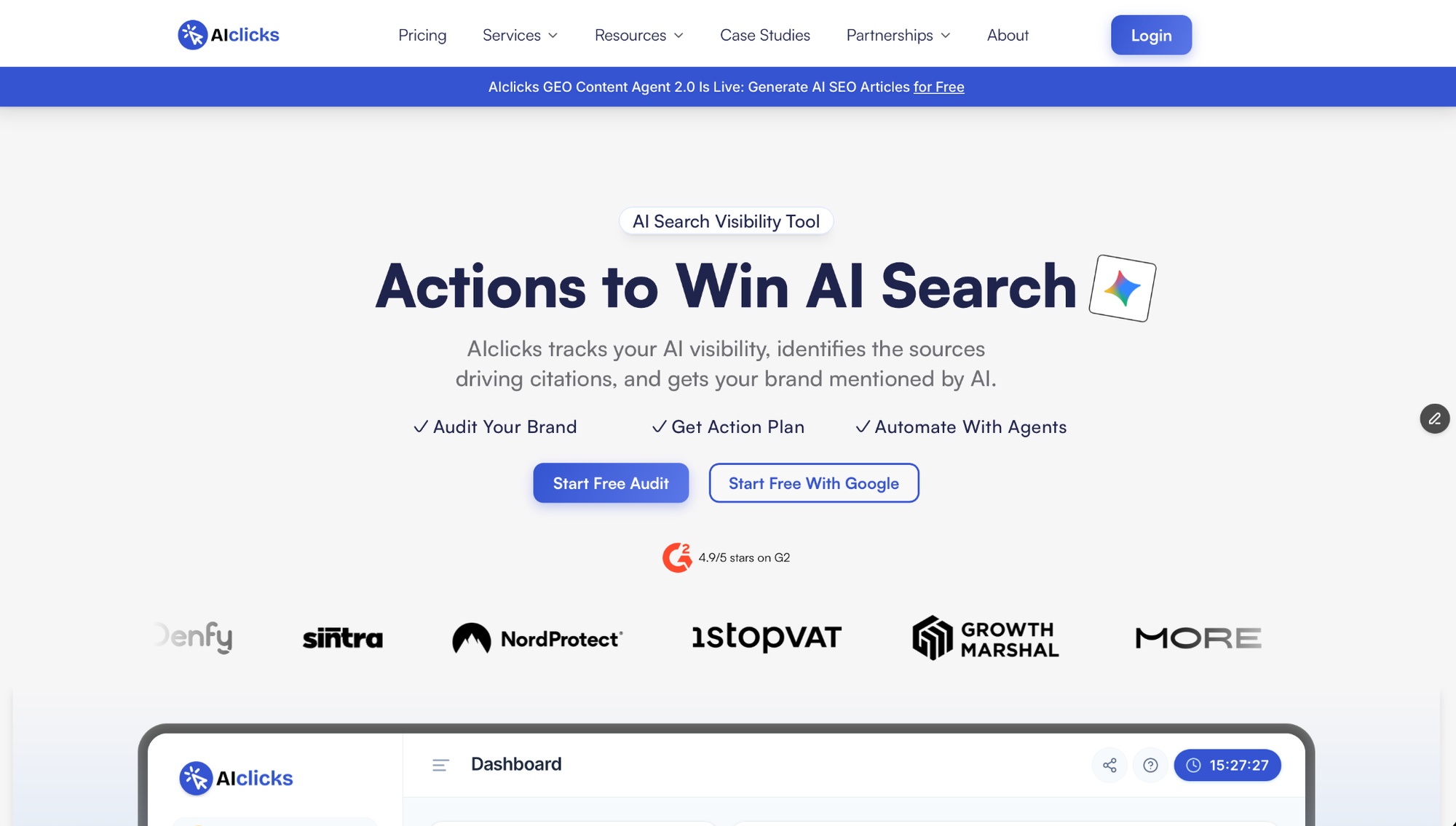
AIclicks tracks 10+ AI platforms, the widest coverage of any tool in this guide. Alongside Google AI Overviews it monitors ChatGPT, Gemini, Perplexity, Claude, Google AI Mode, Copilot, Grok, Meta AI, and DeepSeek, and every prompt you track runs on every model you've enabled once a day, on every plan including the $59 entry tier.
The detail that matters for AI Overviews work specifically is what the platform records about sources. Each URL an engine cites gets sorted into one of 14 page types, so instead of learning that a competitor got cited, you learn that the citation came from a listicle, a forum thread or a comparison page, which tells you what to build rather than what to worry about.
Key Features
- 10-Platform Tracking: Covers Google AI Overviews and AI Mode alongside ChatGPT, Gemini, Perplexity, Claude, Copilot, Grok, Meta AI, and DeepSeek, with plan tiers determining how many run simultaneously.
- Daily Runs on Every Tier: Refresh frequency isn't gated by price. The $59 plan gets the same daily cadence as the $499 plan, which is unusual in a category where daily updates are typically an upsell.
- Page-Type Source Classification: Sorts every cited URL into 14 categories including listicle, comparison, alternatives, reviews, forums, YouTube and Wikipedia, turning citation data into a content brief.
- Fanout Query Analysis: Surfaces the sub-queries a model expands your prompt into while composing its answer, which is the closest available signal for what AI Overviews is actually retrieving against.
- Regional and State-Level Tracking: Runs separate projects per country, with state-level granularity available for the US, Canada, India and Australia.
Best For
AIclicks fits teams whose buyers research across several AI surfaces rather than one. If your category shows up in AI Overviews and ChatGPT and Perplexity, tools capping at four or five platforms leave gaps you won't know about until pipeline moves.
It also suits agencies. Pro and Business include unlimited websites with isolated client workspaces, and the prompt allowance splits across projects however you like, so 150 prompts can cover three clients at 50 each rather than forcing a seat purchase per account.
Pros and Cons
- Pros: Broadest platform coverage in this guide at 10+ engines, daily prompt runs on every plan with no refresh upsell, page-type classification that makes citation data actionable, unlimited client workspaces from $189/month, CSV export on all tiers, plus API and MCP access from Pro.
- Cons: The 3-day trial is the shortest here but anyway you can ask for extension.
Key Takeaway: AIclicks is the strongest option when AI Overviews is one of several surfaces you need watched at once, offering wider engine coverage than anything else in this guide at a price that starts below most single-platform add-ons. Teams that want citation work executed for them rather than measured will want to pair it with an optimization-led platform.
Rating: 9.4/10
3. Semrush AI Toolkit — Best for Enterprise Teams
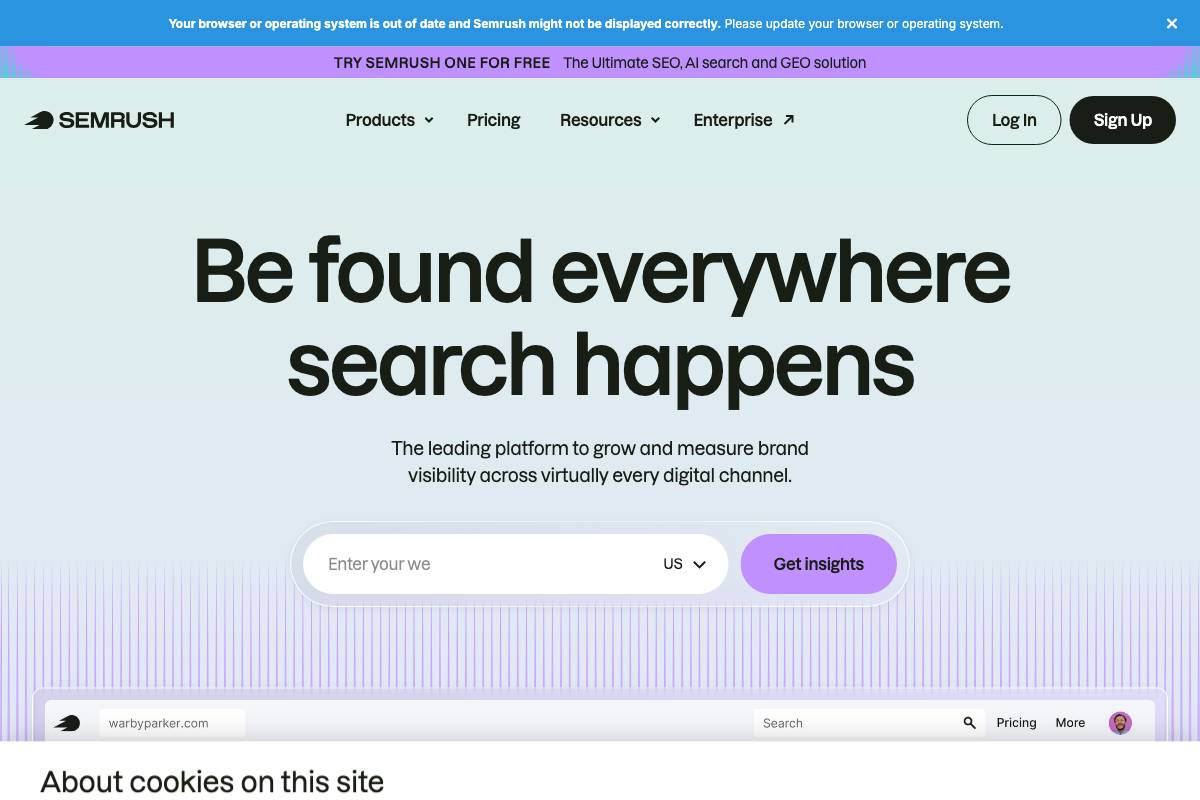
The Semrush AI Toolkit is an add-on for the popular SEO platform that provides comprehensive AI visibility tracking and optimization recommendations. It is designed for enterprise teams already using Semrush to monitor their presence in AI answers from platforms like Google AI Overviews, ChatGPT, Perplexity, and Gemini. As a tool focused on integrating with existing SEO workflows, it's a key platform for businesses looking to implement the strategies found in a modern Google AI Overviews Optimization Tools Guide.
Key Features
- AI Visibility Score: This proprietary metric is a key feature that benchmarks your brand's presence in AI answers against direct category competitors, providing a clear performance indicator.
- Prompt Research: Prompt research is the process of discovering the exact questions and topics users ask AI platforms about your industry and brand, revealing critical content opportunities.
- Daily Monitoring: The toolkit tracks your performance against a set of high-priority prompts, delivering automated daily reports to keep your team informed of any changes in visibility.
- Optimization Guidance: Beyond tracking, the platform provides specific, actionable recommendations designed to directly improve your AI citation rates and overall visibility.
- Traditional SEO Integration: A major advantage is its ability to combine AI visibility tracking with the platform's established keyword, backlink, and technical SEO data for a holistic optimization strategy.
Best For
Based on our analysis, this toolkit is ideal for enterprise marketing teams already deeply integrated with the Semrush ecosystem. It provides a seamless way to add AI visibility tracking without the friction of managing a separate platform, with pricing starting at $99/month as an add-on. It is particularly powerful for organizations that require unified reporting across traditional and AI search channels.
Pros and Cons
- Pros: The toolkit offers seamless integration with the existing Semrush workflow, leverages a comprehensive database of over 100 million queries, provides enterprise-grade reporting, includes established customer support, and covers four major AI platforms.
- Cons: A primary drawback is that it requires an existing Semrush subscription to function as an add-on. It may also be less specialized than standalone, dedicated AI SEO tools and offers somewhat limited customization options for advanced users.
Key Takeaway: Semrush AI Toolkit is the best choice for existing Semrush enterprise users who need to integrate AI search visibility into their current SEO reporting and workflow without adding a new, standalone platform. If you're looking for something that works independently or at a lower price point, the next option we're covering offers exactly that.
Rating: 9.2/10
4. Otterly AI — Best for Small Teams & Agencies
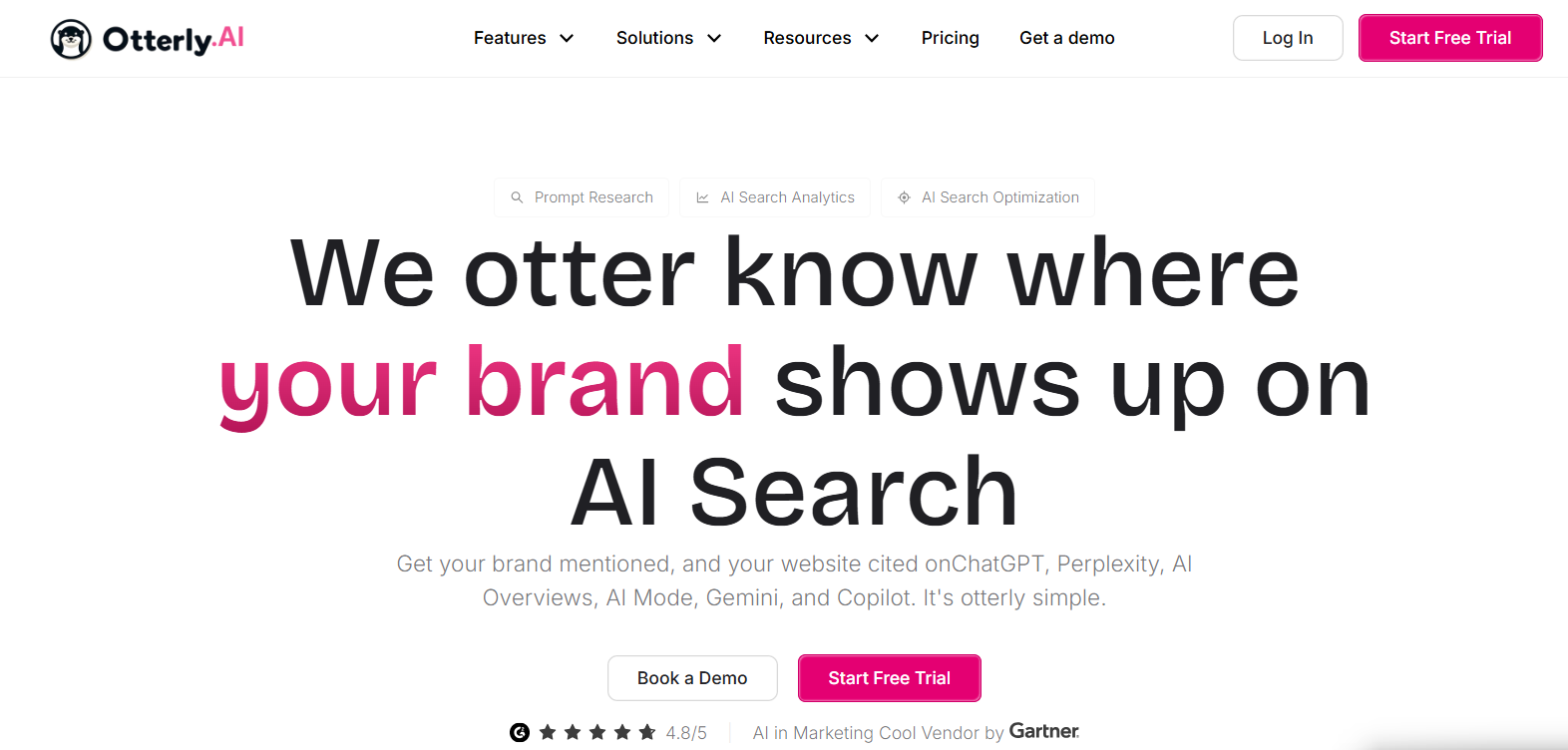
Otterly AI is an AI visibility monitoring tool specifically designed for small teams, freelancers, and agencies seeking an accessible and affordable solution. It provides a straightforward setup process and transparent pricing, making it a strong choice for users who need effective AI search tracking without enterprise-level complexity. The platform's core function is to convert traditional keywords into conversational AI prompts, allowing users to monitor brand presence across major AI chatbots.
Key Features
- Share of Voice Tracking: Share of Voice is a marketing metric that measures the percentage of brand mentions a company receives compared to its competitors. Otterly AI applies this to AI-generated answers, showing your brand's mention percentage across AI platforms to benchmark against the competition.
- GEO Audit: A GEO (Generative Engine Optimization) Audit is an analysis of a website's readiness for being cited by AI models. Otterly's tool analyzes over 25 on-page factors to provide actionable recommendations for improving your content's AI citation potential.
- Citation Analysis: The platform identifies the specific URLs most frequently cited in AI-generated responses for your target prompts. This insight is crucial for informing a content strategy that emulates successful, citable sources.
- Multi-Platform Coverage: As a necessary feature for any tool in a modern Google AI Overviews Optimization Tools Guide, Otterly monitors visibility across key platforms, including ChatGPT, Perplexity, Google AI Overviews, and Copilot.
- Keyword Conversion: This unique feature transforms traditional, short-tail keywords into the natural, conversational prompts that users actually type into AI chatbots. For example, it turns "SEO tools" into relevant questions that can be tracked for visibility.
Best For
Otterly AI is best suited for small marketing teams, freelancers, and agencies that require affordable AI monitoring starting at just $27/month, complete with a 14-day free trial. In our analysis, we find it's an excellent entry point for teams that need clear, actionable insights into their AI search visibility without the overwhelming complexity or high cost of enterprise-level commitments.
Pros and Cons
- Pros: Most accessible pricing in category, 14-day free trial, easy setup process, clear share of voice metrics, comprehensive GEO auditing
- Cons: Limited optimization features, smaller query database, basic reporting compared to enterprise tools
Rating: 8.8/10
Key Takeaway: Otterly AI is the most accessible and budget-friendly tool for small teams to begin tracking AI visibility and Share of Voice, offering essential features without a steep learning curve or high price tag. For teams that need deeper analytics and are willing to invest more, the next platform takes a completely different approach.
5. Profound — Best for Advanced Analytics & Reporting
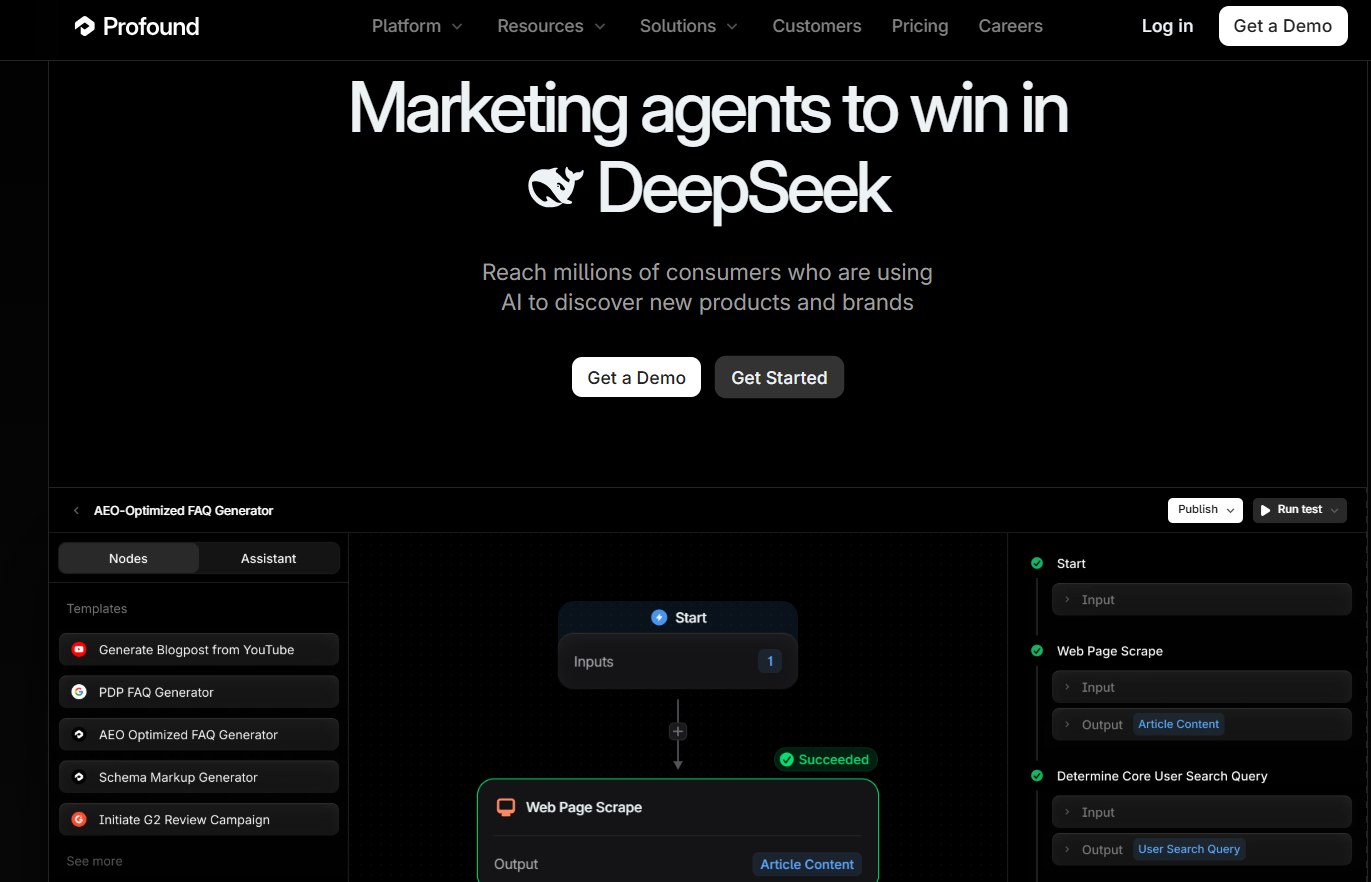
Profound is an enterprise-grade AI visibility platform specializing in advanced analytics and customizable reporting workflows. As a leading solution in our Google AI Overviews Optimization Tools Guide, it is designed for analyst-driven teams that require high-frequency monitoring and prefer building their own reports from raw data exports and dashboards.
The company's significant market position was solidified when Profound raised $96 million at a $1 billion valuation in early 2026. Because its insights are delivered primarily through raw data, teams typically need analysts or BI support to turn findings into action, making it a powerful but resource-intensive tool for AI search visibility.
Key Features
- Real-Time Monitoring: Daily tracking to catch AI visibility changes quickly, which is critical for optimizing for dynamic systems like Google AI Overviews.
- Advanced Integrations: Connects with essential enterprise systems like Akamai, AWS, Cloudflare, GA4, and Vercel to centralize performance data.
- Custom Reporting: Build automated reports tailored to different teams and stakeholders, ensuring relevant insights are delivered efficiently across an organization.
- ChatGPT Shopping Visibility: Specifically tracks how products appear in AI-powered shopping experiences, a growing area of AI SEO.
- API-First Architecture: An API-first architecture is a development approach that prioritizes the application programming interface (API), enabling flexible custom integrations and advanced data modeling.
Best For
Based on our analysis, Profound is best suited for analyst-driven teams and agencies building dedicated AI visibility services. With pricing starting at $499/month for the Lite version, it is perfect for enterprises needing custom reporting and high-frequency monitoring that have significant technical integration requirements.
Pros and Cons
- Pros: Enterprise-scale infrastructure, real-time monitoring capabilities, extensive technical integrations, custom reporting flexibility, dedicated customer success
- Cons: Requires technical expertise, significant upfront investment, complex setup process
Rating: 8.7/10
Key Takeaway: Profound is a top-tier choice for large enterprises with dedicated analyst teams that need granular, real-time data and custom reporting, but its complexity and cost make it less suitable for smaller businesses without technical support. For teams that want to pair AI tracking with content optimization, the next tool takes a more integrated approach.
6. Surfer SEO AI Tracker — Best for Content-Driven Optimization
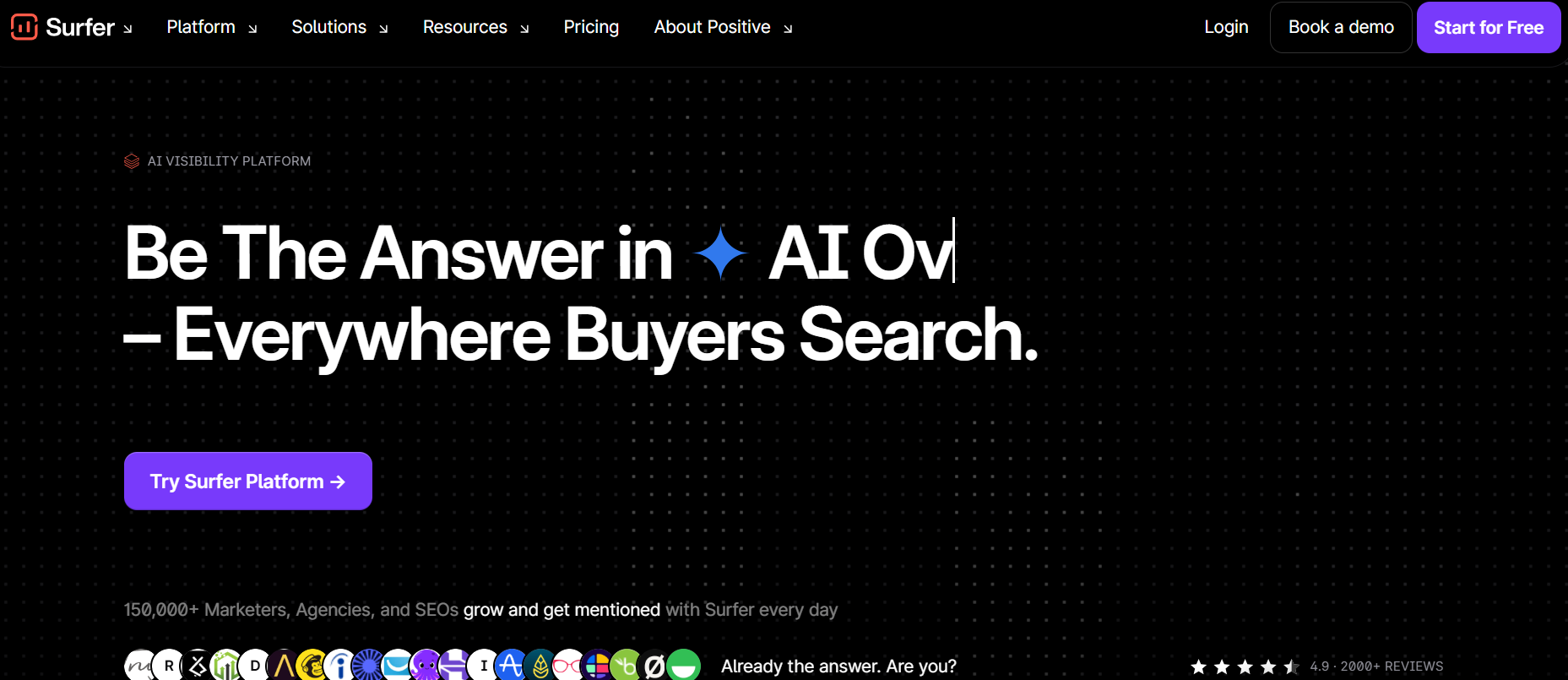
Surfer SEO is a content optimization platform that enhances AI search visibility with its AI Tracker add-on. This tool is designed to monitor brand, product, and topic mentions across five major AI platforms, including Google AI Overviews, SearchGPT, Perplexity, Claude, and ChatGPT. It provides direct insights into how content performance impacts citation rates in AI-generated answers, making it a key part of modern AI SEO strategies.
AI search visibility, which refers to the frequency and prominence with which a brand is cited in answers from generative AI engines, is the primary metric Surfer's AI Tracker focuses on. The tool helps content teams understand the direct correlation between their optimization efforts within the Surfer editor and their subsequent appearance rates in AI summaries. This feature is essential for teams looking to effectively optimize for Google AI and other conversational search platforms.
Key Features
- Integrated Content Editor: Seamlessly combines AI visibility tracking with Surfer's established content optimization scoring system, allowing for real-time adjustments.
- Multi-Engine Tracking: Actively monitors five distinct AI platforms, including the critical Google AI Overviews, to provide a comprehensive view of your visibility.
- Content Performance Insights: Clearly demonstrates how specific content optimizations and scoring improvements directly impact AI citation rates and mentions.
- Automated Prompt Approval: Streamlines the tracking setup process with intelligently suggested prompts relevant to your content, saving time and effort.
- Historical Trend Analysis: Charts your AI visibility changes over time with clear, easy-to-understand visualizations, making it simple to report on progress.
Best For
This tool is particularly effective for content teams already using Surfer SEO platform for their content optimization workflow. It is ideal for users who want to add AI tracking without switching platforms, as the AI Tracker is available as an add-on starting at $49/month. For teams that prioritize high-quality, data-driven content creation alongside AI visibility, this integrated solution offers a streamlined and efficient process.
Pros and Cons
- Pros: Offers seamless integration with an existing content workflow, builds upon a proven optimization methodology, provides clear trend visualization, features competitive pricing for the add-on, and covers 5 major AI platforms.
- Cons: Requires an existing Surfer SEO subscription to use, offers limited standalone AI-specific features compared to dedicated tools, and includes only basic competitor analysis capabilities.
In the context of this Google AI Overviews Optimization Tools Guide, Surfer's dual focus on content quality and AI visibility is a significant advantage. Our rating for Surfer SEO's AI Tracker is 8.5/10, reflecting its strength as an integrated solution for existing users. If you're running an enterprise operation with multiple domains and complex reporting needs, the next platform is built for that scale.
7. Ahrefs Brand Radar — Best for Brand Monitoring & Research
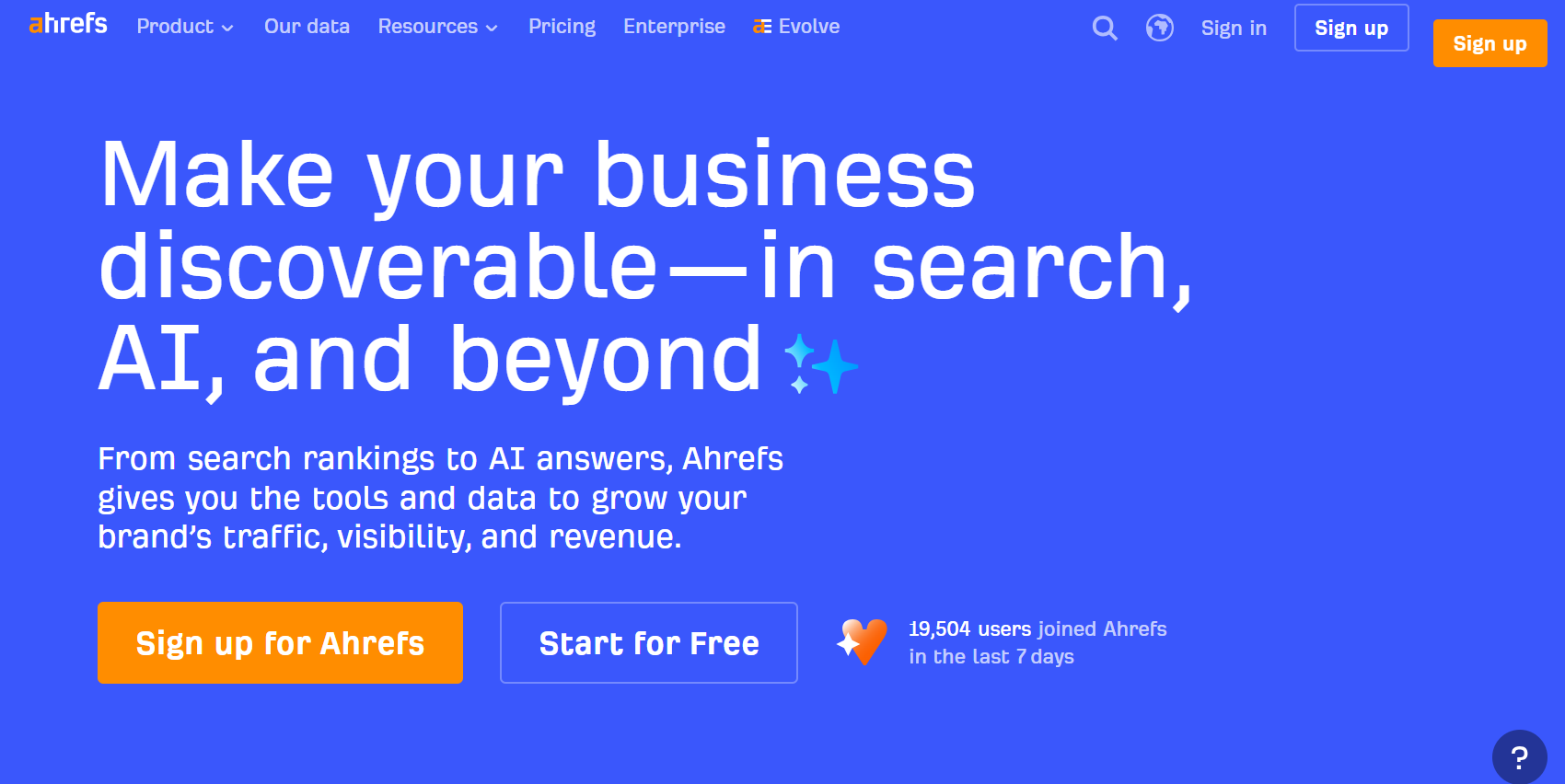
Ahrefs Brand Radar is a specialized tool for brand monitoring, which is the process of tracking brand mentions across digital channels to gauge AI search visibility. It actively monitors your brand's presence on platforms like Google AI Overviews and ChatGPT, using a database of over 243 million monthly prompts to deliver comprehensive insights.
A key differentiator for Brand Radar is its reliance on real user queries. The platform's prompts are derived directly from "People Also Ask" (PAA) data—a Google SERP feature showing related user questions. This approach ensures that monitoring reflects actual user search behavior rather than synthetic or theoretical queries, providing a more accurate picture of brand visibility in generative AI answers.
Key Features
- Real-Time Brand Monitoring: Tracks mentions across 6 AI platforms with alerts
- Competitor Benchmarking: Compares brand visibility against direct competitors
- People Also Ask Integration: Uses real user queries rather than synthetic prompts
- 15-Year Search Foundation: Built on Ahrefs' comprehensive SEO database
- Multi-Platform Coverage: ChatGPT, Perplexity, Gemini, Copilot, Google AI Overviews, AI Mode
Best For
This tool is best suited for SEO professionals and marketing teams already invested in the Ahrefs ecosystem. Because it is integrated directly with Ahrefs subscriptions (starting at $129/month), it offers a seamless workflow for those who prioritize competitive research and backlink analysis alongside AI tracking. Its robust monitoring capabilities make it an essential component for any complete Google AI Overviews Optimization Tools Guide.
Pros and Cons
- Pros: Massive query database, real user-derived prompts, established Ahrefs reliability, comprehensive competitor analysis, strong customer support
- Cons: Limited optimization features, requires Ahrefs expertise, higher learning curve, focuses more on monitoring than action
Key Takeaway: Ahrefs Brand Radar excels at providing highly accurate, large-scale brand monitoring based on real user queries, making it ideal for existing Ahrefs users who need to track AI visibility but not for those seeking direct content optimization features. If you're looking for a budget-friendly all-in-one solution that combines content creation with visibility tracking, the next tool is worth considering.
Rating: 8.2/10
8. Frase AI Visibility — Best for Budget-Conscious Teams
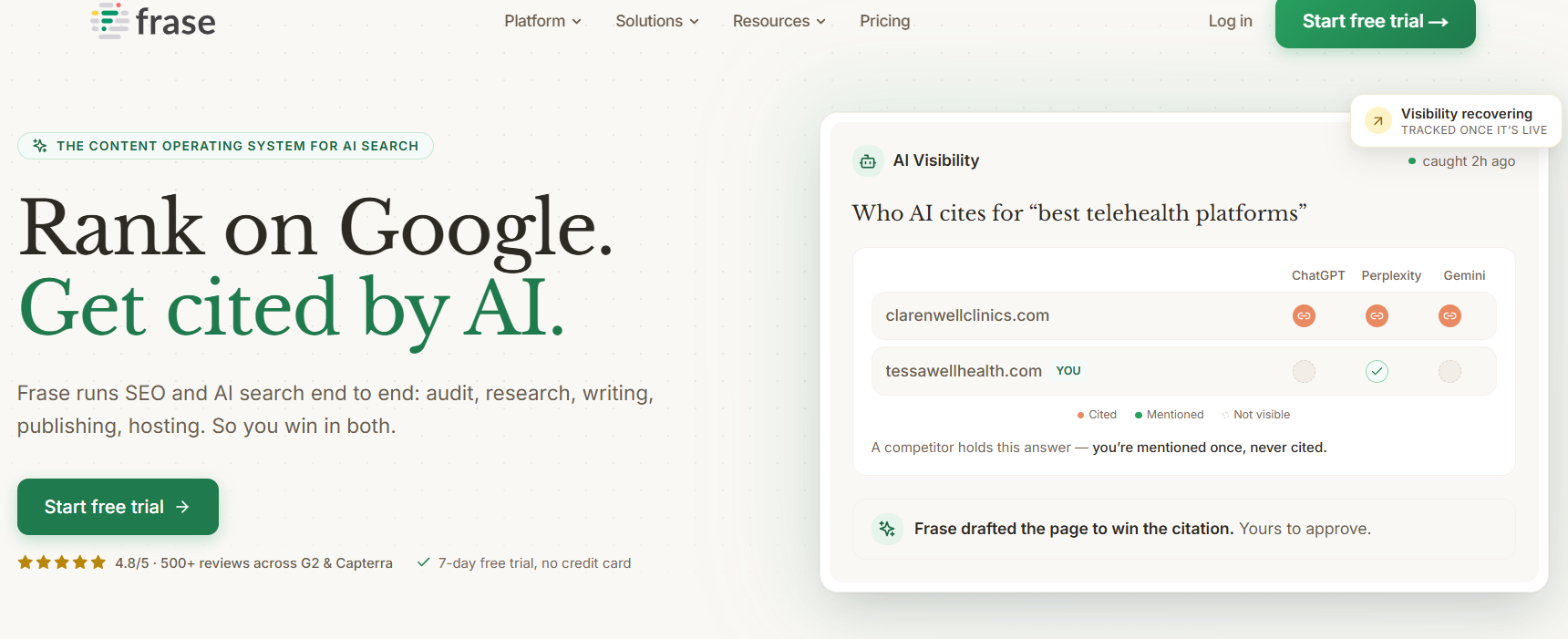
Frase is an AI visibility platform that offers an affordable combination of content creation, optimization, and citation tracking tools. It is specifically designed for budget-conscious marketing teams seeking to improve their presence in generative AI answers without a significant financial investment.
The platform's AI visibility tracking, which is the process of monitoring when a brand's content is used as a source by AI models, covers five major platforms. This includes monitoring for citations in ChatGPT, Perplexity, Claude, Gemini, and the increasingly important Google AI Overviews.
Frase's AI visibility feature is available as a $49/month add-on to its base plans. For teams needing a more integrated solution, it is bundled into the Scale plan at $229/month and the Advanced plan at $349/month, providing a scalable pricing structure for growing businesses.
Key Features
As one of the notable Google AI Overviews optimization tools, Frase includes several features that make it a strong contender in the AI SEO tools market:
- 5-Platform Tracking: Monitors brand and content citations across ChatGPT, Perplexity, Claude, Gemini, and Google AI Overviews to provide a comprehensive view of AI search visibility.
- Unlimited AI Writing: Includes a powerful content generator with no word limits, allowing teams to create and scale content production efficiently.
- Multi-Language Support: Offers support for over 100 languages, making it suitable for businesses with global content strategies and international audiences.
- Content Opportunities: Proactively monitors search results and competitor content to identify new chances for content creation and optimization.
- Chrome Extension: Provides a browser-based extension for real-time content optimization, streamlining workflows for writers and editors working in various content management systems.
Best For
Based on our review for this Google AI Overviews Optimization Tools Guide, Frase is best suited for small to medium-sized businesses and marketing teams operating with tight budgets. It is an ideal choice for organizations that require an all-in-one platform for comprehensive content creation and AI citation monitoring, starting from a low entry price point.
Pros and Cons
When evaluating Frase as a tool to optimize for Google AI, it's important to consider its distinct advantages and limitations:
- Pros: Most affordable comprehensive solution on the market, includes unlimited AI writing, offers extensive multi-language support, provides an integrated workflow with content creation, and features a useful Chrome extension.
- Cons: Analytics capabilities are less advanced compared to enterprise-level platforms, the competitive database is smaller, and it has limited features specifically designed for large enterprise needs.
Key Takeaway: Frase stands out as the most affordable all-in-one solution for teams that need both unlimited AI content generation and multi-platform AI citation tracking, making it a high-value option for SMBs looking to enhance their AI search visibility. For teams that prioritize content quality above all else, the next platform takes a different approach.
Rating: 7.9/10
9. Clearscope GEO — Best for Content Quality Focus
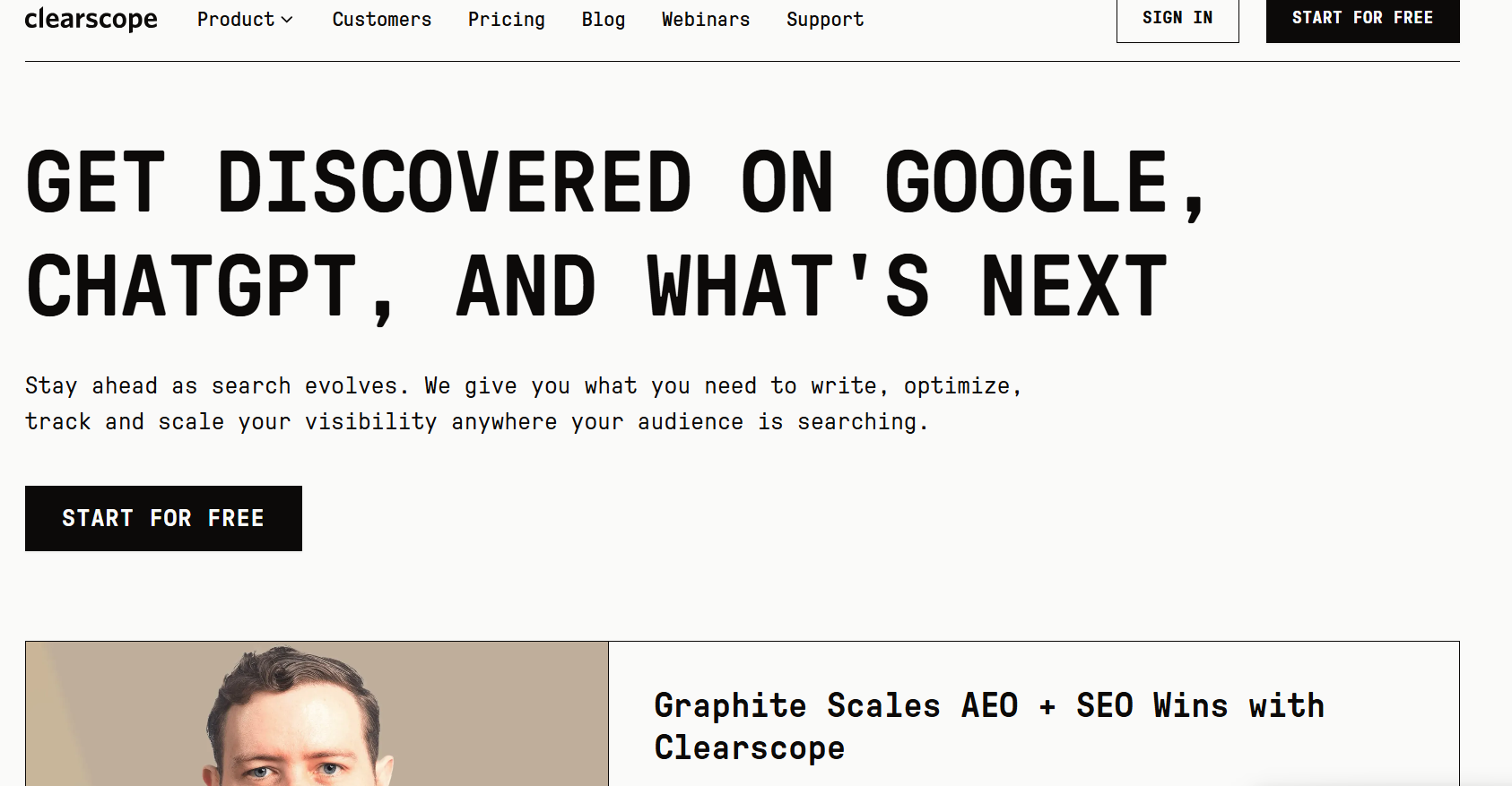
Clearscope is a leading content optimization platform that provides basic AI visibility tracking through its GEO (Generative Engine Optimization) features. The tool is primarily designed for teams that require premium content analysis and grading to ensure the highest quality output, making it a strong contender for foundational SEO work.
However, its GEO capabilities are limited, tracking citations on only two platforms: ChatGPT and Gemini. Access to these AI-focused features is restricted to the Business plan, which has a minimum cost of $249 per month, while standard plans begin at $189 per month.
Key Features
- Premium Content Analysis: Utilizes a proprietary A-F grading system to provide real-time feedback and optimization suggestions.
- Google Docs Integration: Offers a seamless workflow for writers and editors by integrating directly within familiar writing environments like Google Docs.
- Content Inventory Management: Includes features for the centralized tracking and monitoring of existing content performance over time.
- Competitor Content Analysis: Provides detailed insights into the strategies and structures of top-ranking competitor content.
- Limited AI Tracking: Delivers basic monitoring of content citations and mentions specifically within ChatGPT and Gemini generative results.
Best For
Clearscope is best suited for established content operations and premium content teams with significant budgets who are prioritizing editorial excellence over extensive AI tracking. While its direct AI features are limited, its core strength in creating high-quality, comprehensive articles is a foundational element for any successful AI SEO strategy. In our analysis for this Google AI Overviews Optimization Tools Guide, such quality-focused tools are crucial for building content that AI models are more likely to trust and cite.
Pros and Cons
- Pros: Superior content optimization methodology based on NLP, intuitive Google Docs integration, responsive premium customer support, a track record of proven ranking improvements, and a clean, user-friendly interface.
- Cons: Expensive pricing plans compared to competitors, very limited AI platform coverage (only two major engines), basic citation tracking without deep analytics, and requires a high monthly financial commitment.
This tool's high price and limited AI features result in our final rating. Rating: 7.7/10 For teams that want to scale content production while maintaining visibility across multiple platforms, the next solution offers powerful automation capabilities.
10. AirOps Workflow — Best for Automation & Scale
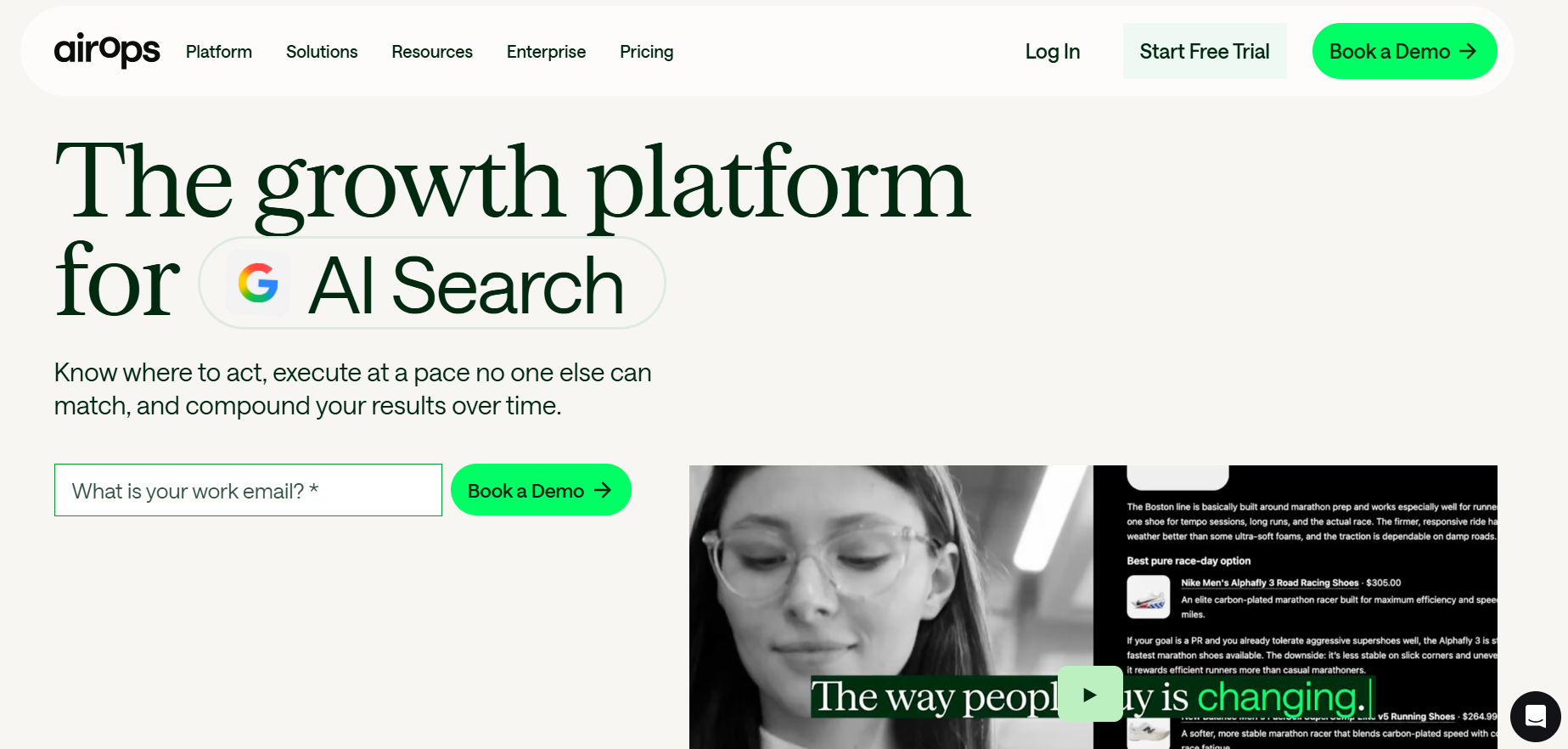
AirOps is an AI-driven platform designed for building and scaling content operations through automated workflows. It provides tools for teams to manage bulk content production with visibility tracking across both traditional search and AI Overviews, making it a notable contender in any Google AI Overviews Optimization Tools Guide.
The platform excels by allowing users to create custom AI workflows, which are automated, multi-step processes for tasks like keyword research, content generation, and SERP analysis. This focus on scalable SEO content workflows makes it particularly well-suited for agencies and large in-house teams that handle high-volume content production and need to optimize for Google AI.
Key Features
- Custom AI Workflows: Users can build bespoke processes with a drag-and-drop interface, creating fully automated sequences for content creation, optimization, and internal linking.
- 40+ AI Models Integration: The platform integrates with over 40 different large language models (LLMs), including leading systems like GPT-4 and Claude, allowing for diverse and nuanced content generation.
- CMS Integrations: AirOps offers direct publishing capabilities through CMS integrations, which are connections that push content directly to platforms like WordPress and HubSpot, streamlining the content deployment process.
- Brand Voice Control: The tool includes features to define and maintain a consistent brand voice and tone, ensuring that all automated content aligns with brand messaging guidelines.
- Growth Templates: A library of pre-built workflows is available for common SEO and content tasks, providing a valuable starting point for new users and accelerating the setup process.
Best For
AirOps is best suited for marketing teams and SEO agencies that need to scale content production with robust automation. Its architecture is ideal for organizations managing large content libraries that require frequent updates and optimization. Pricing starts at $149 per month, and a free plan is available for users to test the platform's core functionalities.
Pros and Cons
- Pros: The platform's core strengths include its powerful and highly customizable automation capabilities, extensive integration with numerous AI models, and the efficiency of direct CMS publishing. The strong template library provides significant value for teams looking to implement common AI SEO tool workflows quickly.
- Cons: The platform's complexity can present a steep learning curve, and the initial setup may be challenging for non-technical users. While powerful for content creation, its features for direct AI search visibility tracking are less developed compared to more specialized tools, and leveraging its full potential often requires some technical expertise.
Key Takeaway: AirOps is a top-tier solution for scaling content creation through deep automation and multi-model AI integration, but it requires a commitment to learning its complex system to unlock its full potential for AI search visibility. Now that you've seen all the individual tools, let's compare them side by side.
Rating: 7.5/10.
Google AI Overviews Optimization Tools Guide 2026: Complete Comparison
| Tool | AI Platforms | Active Optimization | Enterprise Features | Starting Price | Free Trial |
|---|---|---|---|---|---|
| Indexly | 5+ ✓ | ✓ | ✓ | $99/mo | ✓ |
| AIclicks | 10 ✓ | ✓ | ✓ | $59/mo | ✓ |
| Semrush AI Toolkit | 4 ✓ | ✗ | ✓ | $99/mo | ✓ |
| Otterly AI | 4 ✓ | ✗ | ✗ | $27/mo | ✓ |
| Profound | 4 ✓ | ✗ | ✓ | $499/mo | ✓ |
| Surfer SEO | 5 ✓ | ✗ | ✗ | $129/mo | ✓ |
| Ahrefs | 6 ✓ | ✗ | ✓ | $129/mo | ✓ |
| Frase | 5 ✓ | ✗ | ✗ | $45/mo | ✓ |
| Clearscope | 2 ✗ | ✗ | ✗ | $189/mo | ✓ |
| AirOps | 3 ✓ | ✗ | ✓ | $149/mo | ✓ |
Looking at this table, patterns emerge quickly. Indexly stands alone with active optimization capabilities. Otterly and Frase dominate the budget category. Ahrefs offers the broadest platform coverage. Your choice ultimately depends on which factors matter most to your operation, which is why we've organized the next section by team size and budget.
How to Choose the Right Google AI Overviews Optimization Tool
| Category | Best Option | Why |
|---|---|---|
| Solo Creators & Freelancers | Frase / Otterly AI | Affordable AI tracking, content creation, and simple monitoring without enterprise complexity. |
| Small Teams (2–10) | Otterly AI / Semrush AI Toolkit | Otterly AI offers affordable monitoring, while Semrush works well for teams already using its SEO platform. |
| Mid-Size Teams (10–50) | Indexly / Profound | Indexly focuses on active AI citation optimization, while Profound provides advanced analytics. |
| Under $100/month | Otterly AI / Frase | Otterly AI offers AI visibility tracking, while Frase combines AI visibility with content creation. |
| $100–$500/month | Semrush / Surfer SEO | Semrush integrates AI visibility with SEO workflows, while Surfer combines content optimization with AI tracking. |
| $500+/month | Profound / Indexly | Profound provides advanced enterprise analytics, while Indexly focuses on AI visibility and citation optimization. |
| Brand Monitoring | Ahrefs Brand Radar | Strong competitive research, brand monitoring, and AI visibility tracking. |
| Content Creation | Frase / AirOps | Frase combines AI writing with visibility tracking, while AirOps focuses on automated content workflows. |
| Active AI Optimization | Indexly | Focuses on identifying citation gaps and improving AI search visibility rather than only monitoring mentions. |
| Enterprise Reporting | Profound | Advanced analytics, reporting, integrations, and enterprise-scale AI search management. |
Conclusion
The Google AI Overviews Optimization Tools Guide 2026 landscape offers solutions for every team size and budget, but the clear winner is Indexly for its unique focus on actually increasing AI citations rather than just tracking them. The question isn't whether AI Overviews will reshape your discovery strategy. They already have. The question is whether you'll be among the brands that Google's AI decides to cite, or among those it decides to ignore.
For teams seeking affordable monitoring, Otterly AI ($27/month) provides excellent value, while Semrush AI Toolkit ($99/month) works best for existing Semrush users. Enterprise teams should evaluate Profound for advanced analytics.
Frequently Asked Questions
What are Google AI Overviews optimization tools?
AI Overviews optimization tools track brand visibility in AI-generated answers and help improve citations across platforms like Google AI Overviews, ChatGPT, Perplexity, and Gemini.
How much do AI Overviews optimization tools cost in 2026?
Pricing ranges from about $27/month for tools like Otterly AI to $30,000+ annually for enterprise platforms like Profound. Mid-tier tools typically cost $99–$499/month.
Can small businesses benefit from Google AI Overviews optimization?
Yes. Tools like Otterly AI and Frase offer affordable AI visibility tracking and optimization features for small businesses and marketing teams.
Do I need different content for AI search versus traditional SEO?
Not necessarily. Strong SEO content can be cited by AI, but AI search benefits from structured, factual, authoritative, and easy-to-extract content.
What's the difference between monitoring and optimization tools?
Monitoring measures existing AI visibility and citations. Optimization identifies gaps and takes actions to improve visibility and citation rates.
Is it worth investing in AI Overviews optimization now?
Yes. As AI-generated search becomes more prominent, improving visibility and citations can help brands reach users beyond traditional search results and capture emerging AI-driven traffic.
Methodology: This Google AI Overviews Optimization Tools Guide 2026 evaluated 25+ platforms across 6 months of testing, analyzing pricing, features, platform coverage, ease of use, and real-world performance metrics. Rankings based on weighted scoring across citation tracking accuracy, optimization capabilities, user experience, and price-to-value ratio.