Top Brand Monitoring Tools for Enhanced Search Visibility
Discover 10 top brand monitoring tools to track mentions, sentiment, and AI search visibility for SEO teams, brands, agencies, and marketers.


Introduction
Brand visibility no longer lives only on your website or in classic Google rankings. A single viral Reddit thread, TikTok review, or niche forum post can quietly reshape how thousands of people search your brand name long before you see a spike in Search Console impressions or support tickets.
When United Airlines’ customer-service incident went viral on Twitter and YouTube in 2017, brand-related searches surged and negative stories dominated page one for weeks. That type of reputational swing now happens faster and across more surfaces, including AI-generated answers that summarize sentiment in seconds.
Why Brand Monitoring Matters for Modern Search
Search and discovery now stretch across Google, Bing, AI overviews, YouTube, TikTok, X, Reddit, niche communities, news, and review platforms. These fragmented touchpoints quietly influence click-through rates, branded search demand, and how systems like Google’s Knowledge Graph or OpenAI’s models assess your brand’s authority.
When a product goes viral on TikTok, as happened with CeraVe and e.l.f. Cosmetics, Google Trends often shows a branded search spike within days. Teams that monitor mentions and sentiment in real time can adjust landing pages, FAQs, and support content before issues spill into negative reviews and "People also ask" results.
Modern brand monitoring platforms track mentions, sentiment, influencers, and emerging topics so teams can respond early instead of days or weeks later. Tools like Brandwatch, Meltwater, and Talkwalker pull data from social, news, blogs, and forums, helping you see patterns that won’t appear in GA4 or Search Console until much later.
For SEO and PR teams, this data feeds smarter content and outreach. Positive press can be amplified with structured data, internal links, and digital PR, while negative narratives can be countered with expert content, improved product documentation, or proactive communication that AI systems and search crawlers quickly pick up.
This guide reviews 10 leading tools for brand monitoring, reputation management, AI search monitoring, and sentiment analysis. You’ll see how they differ on coverage, alerting, integrations, and pricing, and which combinations make sense for in-house teams, fast-growing startups, and enterprise brands that care about search visibility and trust.
Understanding Brand Monitoring & Search Visibility
Brand monitoring and search visibility are now tightly connected. How your brand is talked about on social, in reviews, and in AI assistants directly shapes what people see when they search your name or category.
Effective teams tie brand monitoring data to SEO, paid campaigns, and PR so they can react quickly when sentiment shifts or AI systems start repeating inaccurate information about their products or pricing.
What Are Brand Monitoring Tools?
Brand monitoring tools scan millions of sources to capture mentions of your brand, products, executives, and competitors across news, social platforms, forums, and review sites. Platforms featured in Top 8 Brand Monitoring Tools for 2025 illustrate how modern suites blend listening, publishing, and reporting in one place.
These tools typically unify reputation workflows, sentiment analysis, and AI search monitoring. A marketer can move from spotting a TikTok complaint to checking how it impacts branded search volume and AI Overviews for their product category within the same dashboard.
What Is Brand Reputation Management?
Brand reputation management is the ongoing discipline of shaping how people perceive you across Google, G2, Trustpilot, app stores, and niche review sites. Teams monitor ratings and feedback to understand which product lines, locations, or markets are improving or slipping.
For example, a SaaS brand noticing a spike in 2-star G2 reviews around onboarding can respond publicly, update help content, and then watch for recovery in review averages and organic conversion rate on its “pricing” and “demo” pages over the next quarter.
What Is AI Search Monitoring?
AI search monitoring focuses on how systems like Google AI Overviews, Bing Copilot, Perplexity, and Claude describe your brand versus competitors. It examines whether you are cited as a primary source for key topics and how your pricing, strengths, and weaknesses are summarized.
SEOs now screenshot and log AI-generated answers for core queries such as “best enterprise CRM” or “top DTC mattress brands,” then compare how often their brand is mentioned and linked. When outdated claims appear, they adjust content, schema, and PR to feed fresher, authoritative signals back into these models.
Brandwatch

Brandwatch
Overview
Brandwatch is an enterprise-grade digital consumer intelligence and social listening platform used by brands like Unilever and Walmart to track online conversations at scale. It pulls in brand and competitor mentions from social networks, news, blogs, forums, and review sites, then layers AI-driven sentiment, topic, and entity analysis on top.
Global teams rely on Brandwatch for reputation management, campaign tracking, and market research across multiple regions and languages. For example, an international retailer can compare sentiment around Black Friday vs. Cyber Monday across the U.S., UK, and Germany in one unified dashboard while maintaining strict governance with granular permissions and SSO.
Key Features
Brandwatch’s feature set is designed for teams that need more than basic keyword monitoring. Social, web, and forum data are unified to surface consumer trends and brand risks in real time, then visualized in customizable dashboards for PR, social, and insights teams.
- Real-time monitoring across major social networks, online news, blogs, forums, and review sites.
- AI-powered analytics including sentiment analysis, topic clustering, and entity recognition at scale.
- Custom dashboards and reports for PR, marketing, social, and insights stakeholders.
- Influencer and author identification to highlight impactful voices and partnership opportunities.
- Configurable alerts for volume spikes, negative sentiment, or crisis indicators.
- Advanced segmentation by demographics, geography, channel, and topic.
A consumer electronics brand, for instance, might track iPhone vs. Samsung Galaxy launches, using sentiment and topic clusters to understand why one model’s camera features drive more positive buzz on TikTok while battery complaints trend on Reddit.
Pros
Brandwatch is positioned for mid-market and enterprise organizations that need depth, scale, and governance. Its strengths become most visible when working with complex brand portfolios or multi-region teams handling millions of mentions per month.
- Extremely deep data coverage and long historical archives across social, news, and forums.
- Powerful query builder for nuanced tracking of products, competitors, and multilingual mentions.
- Strong visualization, dashboard customization, and export options for internal and client reporting.
- Enterprise-grade governance with SSO, granular permissions, and audit trails.
- Robust support, onboarding, and training to operationalize insights across regions.
- Scales effectively for multi-brand, multi-language, multi-market deployments.
Agencies managing dozens of clients can standardize reporting templates, while global brands centralize insights in one platform instead of juggling separate tools for each market.
Cons
The same sophistication that makes Brandwatch attractive to large brands can be excessive for smaller teams that only need simple listening and alerts. Budget, complexity, and data licensing are the main constraints buyers face during evaluation.
- Premium, custom pricing that generally exceeds small business and early-stage startup budgets.
- Steeper learning curve than lightweight monitoring tools, especially for advanced Boolean queries.
- Feature depth can be overkill for teams that only require basic brand mention tracking.
- Social data licensing constraints can limit access to specific datasets or historical ranges.
- Onboarding requires dedicated time, alignment, and often specialist analysts to unlock full value.
For many enterprises, these trade-offs are acceptable, but smaller marketing teams may be better served by simpler, lower-cost options.
Reference: Brandwatch
Sprout Social
Sprout Social
Overview
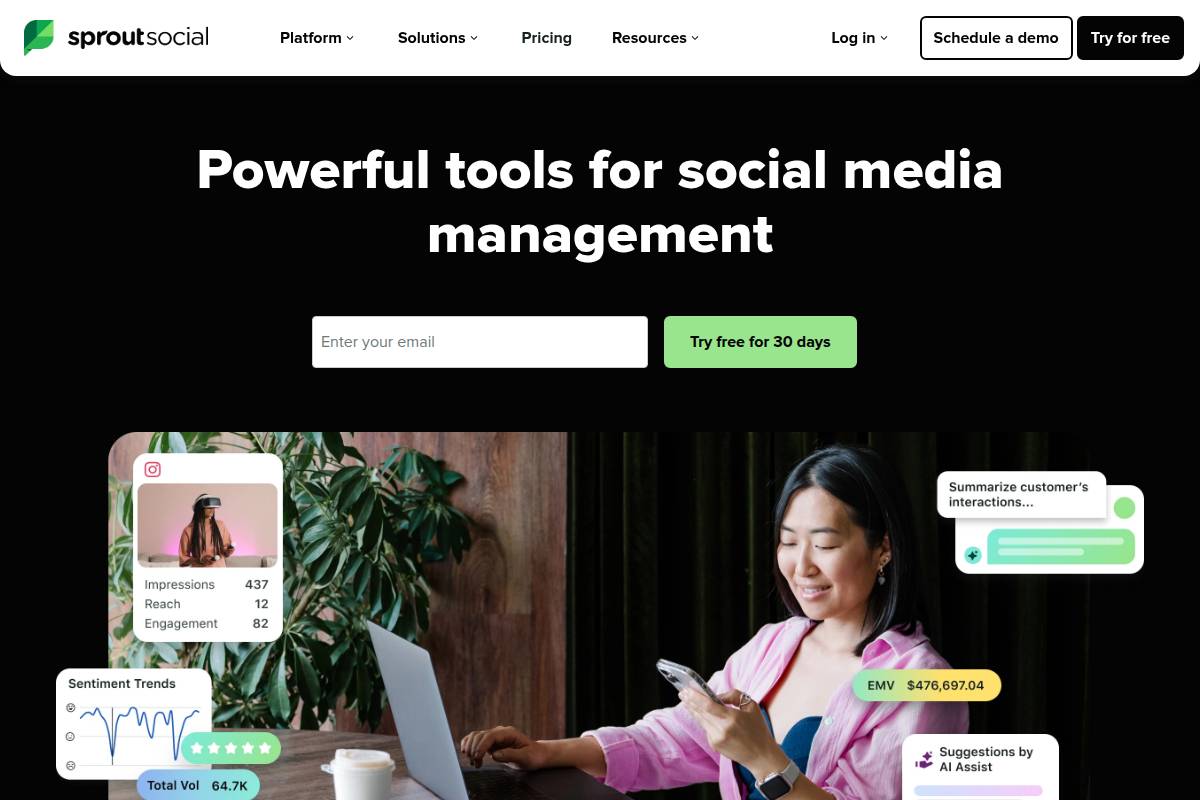
Sprout Social is a unified social media management and listening platform designed for brands and agencies that juggle multiple profiles, campaigns, and stakeholders. It combines publishing, engagement, analytics, and monitoring in one place, which makes it especially attractive for social-first marketing teams that live inside channels like Instagram, TikTok, and LinkedIn.
Its Smart Inbox pulls comments, DMs, and mentions from major networks into a single queue so community managers can prioritize replies. For example, an agency managing 20+ locations for a restaurant chain can route urgent reviews and complaints to the right local team in minutes instead of hopping platform to platform.
Technical Requirements
Sprout Social runs as a SaaS platform in any modern browser and via native iOS and Android apps, so marketing teams do not need servers, VPNs, or IT-heavy deployments. Setup typically involves connecting Facebook, Instagram, X (Twitter), LinkedIn, TikTok, and Google Business Profiles, then assigning permissions by user or team.
Within the UI, admins define listening topics, keyword queries, and competitor terms, while role-based access controls keep client work separated and secure. APIs and export options make it possible to sync Sprout data with BI tools like Looker Studio or Tableau for consolidated reporting across paid, owned, and earned channels.
Competitive Positioning
Sprout Social competes as an integrated social suite with listening tightly woven into publishing and engagement workflows. Compared with pure monitoring tools, it offers richer features for content planning, approvals, and community management, which is why it is frequently adopted as the central hub in agency social stacks.
Against enterprise-only listening vendors, Sprout positions itself as more accessible and user-friendly. Teams that need web-wide media intelligence or deep AI search monitoring may still pair it with specialized tools, but for most brands focused on social channels, it delivers a strong balance of breadth, usability, and cost.
Getting Started
New users usually begin with a free trial or demo, then create an account and connect their brand’s profiles in a guided flow. From there, they set up listening queries for brand names, product terms, and competitors—such as tracking “Nike Invincible 3” plus misspellings and hashtags—to capture both tagged and untagged mentions.
Onboarding resources help teams configure the Smart Inbox, response rules, and publishing queues. Within a few days, most marketers are scheduling cross-platform content, tagging posts by campaign, and viewing default dashboards that surface key metrics like engagement rate, impressions, and audience growth by network.
Key Features
For social-first teams, Sprout’s feature set covers daily publishing, community engagement, and ongoing listening in a single interface. Below is a quick view of core capabilities that matter for marketing and SEO-adjacent analysis.
| Feature | What It Does | Why It Matters |
|---|---|---|
| Unified Smart Inbox | Aggregates comments, DMs, reviews, and mentions from major social platforms. | Reduces response time and prevents missed customer questions or complaints. |
| Social Listening & Sentiment | Monitors keywords and brand terms; classifies sentiment and themes. | Helps identify trending topics, product issues, and brand health signals. |
| Publishing & Scheduling | Plans, queues, and auto-schedules posts across networks. | Supports consistent posting and content calendars tied to campaigns. |
| Performance Reporting | Tracks engagement, reach, audience growth, and campaign tags. | Links content performance to ROI and client or executive reporting. |
| Collaboration Tools | Approval workflows, task assignments, and shared internal notes. | Improves governance and reduces errors across larger social teams. |
| Automation & Routing | Rules for auto-tagging, assigning, and prioritizing inbound messages. | Streamlines customer care and scales response processes. |
Many of these features are now enhanced by Sprout’s AI capabilities. For instance, brands featured in 7 real examples of brands using Sprout Social AI use AI to generate draft replies, summarize large conversation threads, and inform content optimization decisions based on historical performance data.
Pros
Sprout Social’s strengths are especially visible for agencies and multi-brand organizations that want one shared source of truth for social. Below are key advantages that frequently appear in user reviews and case studies.
- Intuitive interface that non-technical marketers can learn quickly
- Single platform for monitoring, publishing, and community engagement
- Effective sentiment analysis and listening for social-specific use cases
- Robust collaboration with approval workflows and permissions
- Responsive customer support and extensive educational resources
- Mobile apps for on-the-go engagement and monitoring
For example, brands highlighted in the Sprout Social AI examples article describe using the platform to streamline content approvals across dispersed teams and maintain fast response times to high volumes of customer messages, particularly during peak campaign periods or product launches.
Cons
Despite its breadth, Sprout Social is not the right fit for every organization. Some limitations surface for very large enterprises, research-heavy teams, or brands in highly regulated sectors where monitoring must extend far beyond social networks.
- Limited coverage of non-social web sources compared with specialized listening tools
- Per-seat pricing can become costly for large, multi-role teams
- More advanced listening and analytics reserved for higher-tier plans
- Not a full web-wide or AI search monitoring solution on its own
- Brands needing deep media intelligence often require supplemental platforms
- Listening depth may fall short for crisis-prone or highly regulated industries
SEO and PR teams that need exhaustive news, forum, and web crawl coverage often pair Sprout with tools like Meltwater, Brandwatch, or dedicated SEO suites for SERP and AI search tracking, using Sprout primarily for actionable, day-to-day social intelligence.
Pricing
Sprout Social offers tiered plans—commonly Standard, Professional, Advanced, and custom enterprise packages—priced primarily by user seat. As teams grow, total cost can climb quickly, which is why agencies often centralize monitoring under a smaller group of power users while giving read-only exports or reports to stakeholders.
Listening and premium analytics modules may be add-ons or locked to higher tiers, so prospects should compare plan limits carefully, especially around monthly listening volume and reporting access. Annual contracts typically provide discounts versus monthly billing, and larger customers can negotiate tailored bundles with dedicated support and onboarding.
User Sentiment
Overall user sentiment toward Sprout Social is positive, particularly among agencies and brands that value clean UX and consolidated workflows. Reviews often highlight the Smart Inbox, cross-network publishing, and robust reporting as reasons they standardized on Sprout instead of maintaining a patchwork of point solutions.
At the same time, some customers flag total cost of ownership as a concern once they expand beyond a core social team. Feedback on listening capabilities is generally strong for social-specific monitoring, but practitioners who need research-grade, web-wide insights emphasize that Sprout works best when paired with complementary analytics and SEO tools rather than as a standalone intelligence stack.
Reference: Sprout Social: Social Media Management Tool
Brand24
Brand24
Overview
Brand24 is a web and social media monitoring platform built for teams that need real-time visibility into brand mentions without complex enterprise setup. It tracks references to your brand, products, or executives across sources like X (Twitter), Instagram, Facebook, YouTube, news outlets, blogs, forums, and general web pages.
Smaller brands and agencies often use Brand24 as their first serious listening tool. For example, a regional retailer monitoring “Target Black Friday deals” or a SaaS startup tracking “HubSpot integration issues” can quickly see conversation volume, sentiment, and top influencers as discussions evolve.
Technical Requirements
Brand24 runs as a cloud-based SaaS application, so teams only need a modern browser or the mobile app to start monitoring. After creating an account, you define keywords such as brand names, product lines, or competitor terms, and the system begins pulling mentions in near real time without any server configuration.
Marketing teams often connect Brand24 alerts to Slack channels so spikes in negative sentiment, like “Airbnb fee complaints,” reach stakeholders instantly. Basic exports and API options allow reports to feed into Google Data Studio or Looker dashboards, making it practical for distributed SEO and PR teams working across different time zones.
Competitive Positioning
Brand24 positions itself as a cost-effective alternative to enterprise listening suites such as Brandwatch or Talkwalker. It emphasizes ease of use and predictable pricing, which appeals to agencies managing multiple small clients that only need reliable monitoring, sentiment analysis, and simple reports.
Compared with broader social suites like Sprout Social or Hootsuite, Brand24 leans more toward monitoring and reputation tracking than complex publishing workflows. Teams focused on AI search visibility and brand health can spot which articles, Reddit threads, or YouTube reviews are shaping perception, then handle deeper consumer research with specialized tools when required.
Getting Started
Setup in Brand24 centers on creating “projects” for each brand or topic you want to track. A digital agency, for instance, might create separate projects for a local restaurant chain, a DTC cosmetics brand, and a B2B software client, entering core keywords plus common misspellings and branded hashtags.
Within hours, dashboards begin to populate with mentions from social networks, news, and blogs. Users refine keyword lists by excluding irrelevant phrases—such as filtering out “Apple pie recipes” when tracking Apple Inc.—and then configure alerts for sudden spikes in negative sentiment or unusual volume around key product names to support both SEO and PR response.
Key Features
Brand24 consolidates multiple monitoring capabilities into a single interface so teams can quickly assess how a brand appears across social and the broader web. Features focus on real-time mentions, sentiment, and basic competitive context that matter to marketing and SEO teams.
- Real-time monitoring of social media, news, blogs, forums, and general web content
- Automated sentiment analysis and influence scoring for mentions and authors
- Custom alerts for shifts in mention volume or sentiment
- Filterable dashboards by source, sentiment, and importance
- Reporting on reach, share of voice, and trending topics
- Basic competitor tracking for volume and sentiment comparison
Pros
Teams value Brand24’s straightforward interface and quick time to value, especially when budgets cannot stretch to higher-end tools. It covers the main social networks and major web sources, which is often sufficient for local and mid-market brands monitoring reputation and SEO-related mentions.
- Clean, approachable UI suitable for non-technical marketers and PR teams
- Lower cost than many enterprise listening platforms
- Fast setup that surfaces issues and opportunities within hours
- Good coverage of key social platforms and mainstream news sites
- Effective alerts for early detection of PR and review-related risks
- Works well for solo marketers and small agencies managing multiple brands
Cons
Brand24’s simplicity also introduces limits for complex organizations. Large enterprises with detailed segmentation needs, multi-region operations, or advanced AI search monitoring requirements often find they need more robust analytics and integration options than Brand24 currently provides.
- Less advanced analytics and segmentation than enterprise listening suites
- Limited customization for dashboards and scheduled reports
- Not optimized for deep AI search overview or complex research workflows
- Coverage can be weaker on niche, industry-specific platforms
- May not scale well for large, multi-region global brands
- Integrations and automation options are more basic than higher-end competitors
Pricing
Brand24 uses transparent, tiered pricing based on the number of keywords, mentions, and user seats. Lower tiers target startups and smaller businesses watching a handful of core phrases, while higher tiers support agencies handling multiple clients with higher mention volumes and additional projects.
Discounts are usually available for annual billing, which helps agencies stabilize costs across a portfolio of accounts. Prospective buyers should review the current pricing page on the Brand24 website to compare limits for projects, export options, and historical data before committing to a plan.
User Sentiment
User reviews on sites like G2 and Capterra commonly praise Brand24’s ease of use, fast onboarding, and value relative to cost. Marketing teams appreciate real-time alerts that surface issues such as negative Trustpilot reviews or viral Reddit threads before they damage search visibility or brand reputation.
Critical feedback typically points to less sophisticated analytics and customization versus tools like Brandwatch. Overall, satisfaction remains high among small to mid-sized brands and agencies that prioritize straightforward monitoring over deep, research-grade insights.
Reference: Brand24 - #1 AI Social Listening Tool
Talkwalker
Talkwalker
Overview
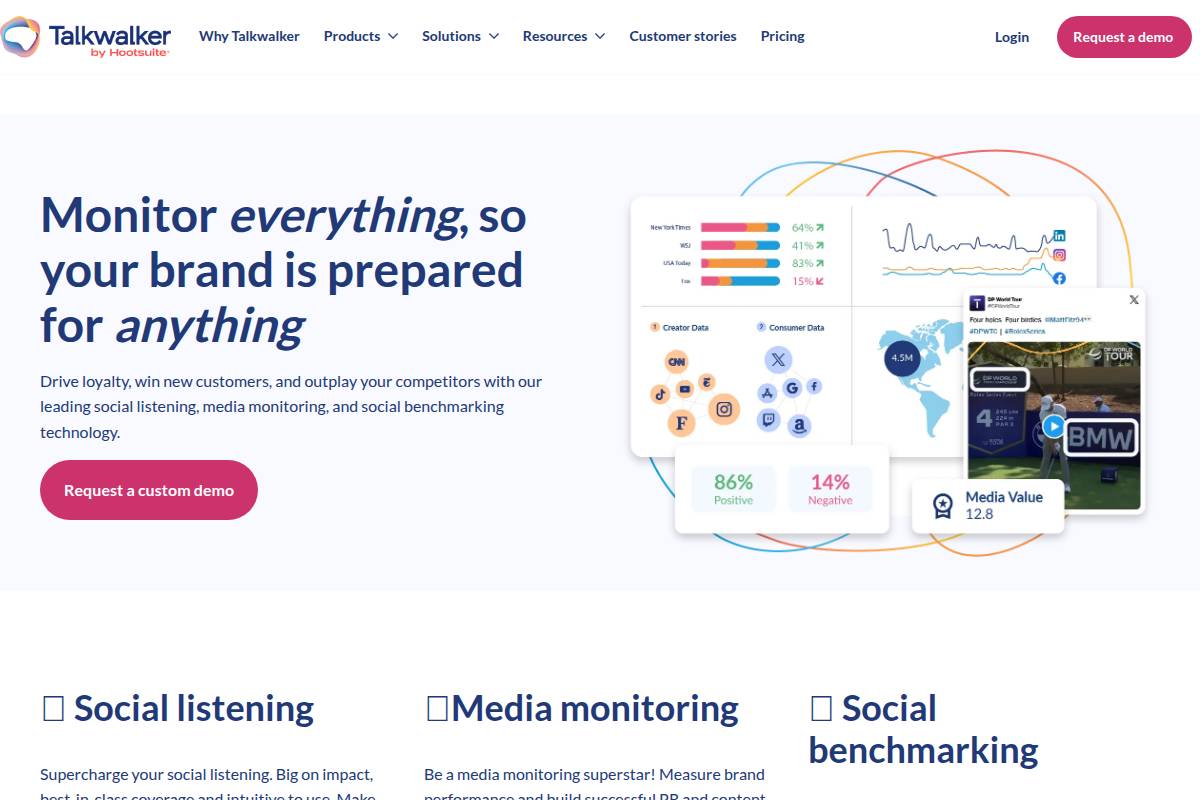
Talkwalker is a premium social listening and analytics platform built for brands that need a unified view of conversations across channels and markets. It tracks social networks, online news, blogs, forums, and review sites, and can incorporate TV and radio feeds via partners like Kantar and Nielsen.
The platform leans heavily on AI to surface sentiment, themes, and early trend signals that would be hard to catch manually. Its visual recognition engine can spot logos and brand assets inside images and video, which helps brands like Adidas or Coca-Cola quantify exposure that never includes a text mention.
Global enterprises use Talkwalker to manage brand reputation, monitor crises, and extract consumer and market intelligence. For example, a multinational FMCG group can track product launches across the US, Europe, and APAC in one interface, aligning PR, social, and media buying teams around consistent insights.
Technical Requirements
Talkwalker is delivered as a cloud-based SaaS platform, so teams typically only need a modern browser like Chrome, Edge, or Firefox. Data connections to major social networks, news outlets, and broadcast monitoring partners are handled on the backend, which minimizes IT maintenance.
Enterprise APIs let organizations push Talkwalker data into BI tools such as Tableau, Power BI, or Looker. For instance, a global retailer can pipe conversation data into a sales dashboard to correlate spikes in mentions with POS data.
Security features such as SSO (e.g., via Okta or Azure AD) and role-based access control make it suitable for large, distributed teams. Because it is fully hosted, no on-premise hardware is required, and the platform can scale to support high query volumes for global campaigns or always-on monitoring.
Competitive Positioning
Talkwalker competes directly with enterprise listening platforms like Brandwatch, Meltwater, and Sprinklr. Its pitch to large brands often centers on breadth of media coverage, including the ability to integrate TV and radio data alongside social and news content.
Strong multi-language support and localized capabilities help companies like L’Oréal or Nestlé manage insights across dozens of markets from a single environment. Compared with mid-market tools such as Mention or Brand24, Talkwalker tends to offer deeper analytics, more advanced dashboards, and richer historical data.
Professional services and consulting are key elements of its positioning. Enterprises use these services to build global listening frameworks, category tracking models, and strategic consumer intelligence programs that go beyond simple brand monitoring or PR reporting.
Getting Started
Implementation usually starts with a structured onboarding project involving Talkwalker’s customer success team and internal stakeholders from PR, marketing, insights, and sometimes legal. The first step is defining brand entities, competitors, priority topics, and languages based on where the company operates.
From there, teams design dashboards tailored to specific use cases such as crisis detection, campaign performance, or category-level tracking. For example, an automotive manufacturer might build separate views for electric vehicles, dealer reputation, and competitor launches.
Users receive training on AI widgets, filtering, and alerting, then roll out the tool in phases. Many enterprises begin with a handful of core markets, identify internal champions, and only scale company-wide once workflows and reporting templates are proven.
Key Features
Talkwalker’s feature set is designed for enterprise listening and analytics across earned, owned, and paid contexts. Marketing and insights teams can customize it heavily to match internal reporting needs.
- Cross-channel monitoring covering social media, online news, blogs, forums, plus integrations for TV and radio monitoring.
- AI-driven sentiment analysis, theme and topic extraction, and emerging trend detection using large-scale data processing.
- Visual listening that recognizes logos, product packaging, and brand assets in images and video for campaigns and sponsorships.
- Highly customizable dashboards and widgets tailored for PR, marketing, customer care, and consumer insights stakeholders.
- Crisis detection and alerting based on sudden spikes in volume or negative sentiment around brands, executives, or products.
- Advanced query capabilities that support Boolean logic, language variations, and granular segments like regions or product lines.
Pros
For organizations that need global, cross-media visibility, Talkwalker offers distinct advantages. Its strength becomes clear when multiple markets, business units, and channels must be aligned on one source of truth.
- Very broad coverage across social, news, blogs, forums, and broadcast, helping brands understand full media impact.
- Robust multi-language support for monitoring dozens of markets simultaneously, suitable for global enterprises.
- Visual recognition adds detail for sponsorships, OOH, and brand safety, even when brands are not mentioned in text.
- Flexible dashboards and AI analytics enable teams to create executive summaries, war rooms, and deep-dive reports.
- Strong BI integrations support advanced reporting, blending with CRM or sales data for more strategic analysis.
- Professional services help large companies design governance, taxonomies, and use cases that maximize value.
Cons
Talkwalker is not always the right fit for every organization. Smaller teams or brands with simple monitoring needs may find the investment and learning curve more than they require.
- Premium pricing can exceed the budgets of small or early-stage companies that only need basic alerts and tracking.
- Platform complexity may be unnecessary for simple use cases like monitoring a single brand in one market.
- Advanced configuration and analytics come with a noticeable learning curve for non-analyst users.
- User interface and depth of options can feel dense for occasional users such as executives or ad-hoc contributors.
- Implementation often requires coordination across PR, marketing, IT, and insights teams to define standards.
- Organizations without dedicated analysts or power users may underuse sophisticated features like taxonomies or trend AI.
Pricing
Talkwalker follows a custom pricing model aimed at mid-market and enterprise customers. Contract values depend on data volume, feature modules, and number of users, as well as add-ons like extra markets or premium data sources.
Most prospects start with a discovery call, a tailored demo, and a proposal that may include listening, market intelligence, and advanced analytics packages. Multi-year contracts with SLAs and enhanced support are common in large organizations.
When budgeting, teams should account not only for the software license but also for potential professional services for onboarding, taxonomy design, and training. This is especially relevant for brands building global listening programs from scratch.
User Sentiment
Feedback from enterprise users generally highlights Talkwalker’s rich cross-channel data and unified view of conversations. Marketing and insights teams often call out visual listening and multi-language coverage as major differentiators compared with lighter tools.
Power users appreciate the analytics depth, trend identification, and dashboard flexibility, which support everything from campaign reporting to category-level research. At the same time, some reviewers mention that the platform’s sophistication brings a learning curve.
Cost is frequently flagged as a consideration, but many large organizations view it as aligned with the enterprise value they gain. Overall sentiment skews positive among brands that need serious global brand and consumer intelligence rather than basic social monitoring.
Reference: Talkwalker: Social Listening and Media Monitoring Tool
Meltwater
Overview
Meltwater is a long-running media intelligence and social listening platform widely adopted by PR and communications teams at brands like McDonald’s, SAP, and smaller regional agencies. It centralizes news, broadcast, and social coverage so teams can understand how their brand, executives, and competitors are being discussed across channels.
Organizations use Meltwater for reputation management, crisis monitoring, and earned media measurement. For example, a healthcare system can track sentiment around a new hospital opening across local TV, regional newspapers, and Twitter, then package those insights into reports for its C-suite and board.
Technical Requirements
Meltwater is fully cloud-based, accessible through standard browsers and mobile apps, so PR and marketing teams do not have to rely on IT for server maintenance. Users configure searches by topics, outlets, and keywords directly inside the interface, tailoring coverage for product launches, issues monitoring, or executive visibility.
Enterprise teams often integrate Meltwater data into CRM or BI tools such as Salesforce and Tableau through exports and APIs. This lets global brands segment dashboards by region or business line, while using roles and permissions to keep sensitive crisis-monitoring workspaces restricted to a smaller group.
Competitive Positioning
Meltwater’s strength lies in its legacy as a media monitoring provider with strong PR-centric workflows. Compared to pure social tools such as Sprout Social, it offers much deeper print, online news, and broadcast coverage plus a sizeable media database that supports outreach.
Against newer AI-first platforms like Brandwatch or Signal AI, Meltwater’s analytics can feel less advanced, especially around predictive insights or automated clustering. However, its maturity, data scale, and brand recognition appeal to large enterprises that value stable workflows, compliance-ready reporting, and proven coverage.
Getting Started
Onboarding typically begins with Meltwater specialists helping teams define search agents around brand names, products, competitors, and industry issues. A consumer brand like Nike might create separate agents for global brand mentions, regional campaigns, and key athletes to keep dashboards focused and actionable.
PR teams then build media lists, set alert thresholds, and configure daily digests for executives. Within days, stakeholders start receiving curated coverage roundups and real-time alerts when a crisis keyword spikes, making it easier to coordinate rapid responses across communications, legal, and customer service.
Key Features
Meltwater provides a broad set of tools for media monitoring and PR performance analysis, allowing teams to move from raw mentions to narrative insight. The mix of global media data and social listening supports integrated communications programs across paid, earned, and owned channels.
- Global media database covering online news, print, and broadcast outlets in multiple languages
- Social media monitoring and sentiment analysis across major platforms like X, Facebook, Instagram, and YouTube
- Automated alerts and daily digests for priority topics, executives, or crisis indicators
- PR outreach tools to manage media lists, journalist contacts, and pitch history
- Reporting on reach, impressions, share of voice, and tone over time
- Campaign analytics and competitive benchmarking to show performance versus peers
Pros
For communications-heavy organizations, Meltwater’s heritage and workflows align closely with how PR teams already operate. Its dashboards and PDF exports are easy to adapt into executive briefings for CMOs, CEOs, and boards, especially when showing reach and sentiment around major announcements.
- Long track record and strong reputation in media monitoring for PR teams
- Extensive coverage of traditional and online news across many regions
- Integrated media outreach tools reduce the need for separate databases
- Reporting templates tailored to leadership and board audiences
- Effective scaling for multi-region and multi-brand organizations
- Ongoing evolution into social listening and analytics capabilities
Cons
Some users find that Meltwater’s interface feels less modern or intuitive than newer SaaS platforms, which can lengthen the learning curve for junior staff. Teams pushing into deep influencer analytics or TikTok-specific insights sometimes rely on complementary tools to fill gaps.
- User experience can feel dated compared with newer competitors
- Advanced analytics and AI may lag innovation-focused solutions
- Pricing is often better aligned with mid-market and enterprise budgets
- Social data depth and granularity can vary by platform and region
- Customization may require more direct support or services
- Steeper learning curve for complex reporting and configuration
Pricing
Meltwater follows a custom-quote pricing model, with packages tailored to organization size, geography, and data volume. A regional agency might license a narrower set of markets and social channels, while a Fortune 500 brand negotiates global coverage and multiple user teams.
Contracts often bundle onboarding, training, and optional professional services for report creation or custom dashboards. The cost structure generally suits mid-market and enterprise organizations more than solo PR consultants, who may find lighter tools like Muck Rack or Mention more budget-friendly.
User Sentiment
Users frequently highlight Meltwater’s monitoring accuracy and breadth of traditional media coverage. Communications leaders appreciate daily email digests that summarize top stories and sentiment, making it easy to brief executives before earnings calls or product launches.
Common criticisms focus on the interface and desire for more intuitive analytics, such as drag-and-drop dashboard building. Overall, satisfaction tends to be strongest among PR-focused teams with heavy earned media needs, who value robust news coverage and structured reporting over cutting-edge AI experimentation.
Reference: Meltwater: Media, Social & Consumer Intelligence
Mention
Mention
Overview
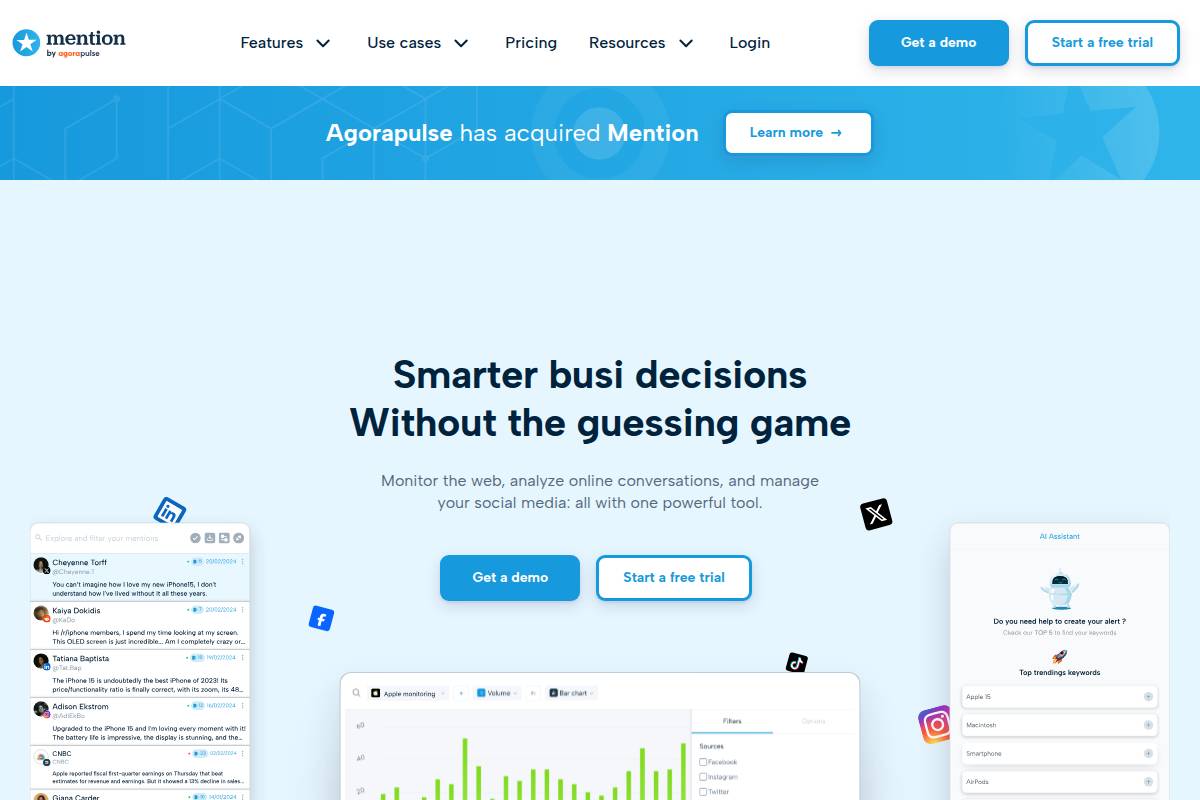
Mention is a social listening and brand monitoring platform designed for marketers, growing brands, and agencies that need visibility across social media and the broader web. It tracks references to your brand, products, and competitors across sources like X (Twitter), Instagram, Facebook, news sites, blogs, and forums.
The dashboards are built for non-specialists, so a small marketing team at a regional retailer or SaaS startup can quickly see sentiment, influence scores, and trending topics without a data analyst. Basic publishing tools let teams respond or schedule posts from the same interface, which suits SMBs that do not want a heavy enterprise suite.
Technical Requirements
Mention is fully cloud-hosted, so teams log in through a browser or mobile app and start configuring alerts. Users create projects, set up brand and competitor alerts, and connect social profiles like Facebook Pages, LinkedIn company pages, and X accounts directly in the UI.
No on-premises software or special hardware is needed, which is practical for agencies that manage clients remotely. Integrations with Slack and Zapier route alerts into existing workflows, while CSV exports and shared dashboards support reporting and collaboration across small teams.
Competitive Positioning
Mention sits between basic tools such as Google Alerts and heavyweight enterprise suites like Brandwatch or Sprinklr. It delivers broader coverage, real-time social data, and sentiment analysis without the steep learning curve or six-figure contracts associated with large enterprise platforms.
For a mid-sized DTC brand doing a few million dollars in annual revenue, Mention offers enough depth to track share of voice, monitor crises, and benchmark competitors. It is not built for deep AI-driven media intelligence across hundreds of markets, but it fits brands formalizing monitoring for the first time.
Getting Started
Onboarding usually takes less than an hour. New users sign up, enter branded keywords, product names, and key competitors, then watch mentions start populating in real time. Interactive walkthroughs point out filters, tags, and basic reporting so marketers can get value during the first session.
Teams can narrow alerts by language, location, or source to reduce noise, which is critical for brands with common names. Email and in-app notifications flag important spikes, while shared dashboards and annotations help teams coordinate responses, such as assigning a negative Trustpilot review to a customer success manager.
Key Features
Mention’s feature set focuses on real-time monitoring, simple analytics, and integrated publishing. This balance works well for marketing teams that need to track reputation, engage quickly, and report headline metrics to stakeholders.
- Real-time monitoring across social networks and web sources
- Basic sentiment analysis and influence scoring
- Social publishing and scheduling tools
- Competitive analysis with share of voice and keyword tracking
- Alerts, digests, and simple trend reports
Feature Snapshot
| Feature | How It Helps |
|---|---|
| Real-time monitoring | Detects spikes in mentions during events like product launches or PR issues, so teams can respond within minutes instead of hours. |
| Sentiment & influence | Surfaces negative posts from high-follower accounts first, helping prioritize outreach for customer support and PR. |
| Publishing tools | Lets marketers reply and schedule posts on X, Facebook, and Instagram from the same dashboard they use for listening. |
| Competitive tracking | Compares share of voice against rivals using consistent keywords, useful for quarterly marketing reviews. |
Pros
Mention’s strengths align with teams that value ease of use and sensible pricing over complex, hard-to-implement analytics stacks. It supplies the essentials for ongoing monitoring while keeping configuration and training light.
- Simple setup and intuitive interface suitable for non-technical marketers
- Pricing tiers that fit SMBs, startups, and boutique agencies
- Balanced mix of listening, alerts, and basic publishing tools
- Competitor tracking that supports share-of-voice and positioning analysis
- Integrations with Slack, Zapier, and similar tools for flexible workflows
- Delivers enough functionality for many brands without enterprise overhead
Cons
Marketing and PR teams that need deep, AI-driven analysis or global media intelligence may find Mention limiting. The platform focuses on practical monitoring rather than exhaustive data science capabilities.
- Less sophisticated sentiment analysis than advanced AI listening suites
- Coverage gaps can appear for niche forums or specialized regional publishers
- Limited advanced segmentation and data visualization options
- Not tuned for complex AI search overview or extensive media research
- Large agencies may encounter scalability limits across many clients
- Some advanced needs require pairing with SEO, BI, or PR analytics tools
Pricing
Mention publishes tiered pricing on its website, usually structured by alerts, monthly mention volume, and the number of user seats. Solo marketers can start with lower tiers, while in-house teams and agencies upgrade to plans that unlock more projects, team collaboration, and higher data caps.
Both monthly and annual billing are available, with typical discounts for yearly commitments, which appeals to budget-conscious teams comparing tools like Hootsuite or Sprout Social. Free trials let prospects test data quality and workflow fit before migrating existing monitoring processes.
User Sentiment
Reviews on platforms like G2 and Capterra often highlight Mention’s clean interface, fast setup, and fair pricing as standout benefits. Many SMB marketers say they were able to start tracking brand and competitor mentions within the same day, without needing formal training.
Critiques generally focus on advanced analytics and coverage depth, especially when compared with enterprise tools. Still, for its core audience—small to mid-sized brands and agencies—Mention is frequently described as a practical, reliable option for ongoing brand monitoring and social listening.
Reference: Mention | Social listening & Media Monitoring tool
Hootsuite
Overview
Hootsuite is a social media management platform designed to help marketing teams orchestrate publishing, engagement, and basic listening from a single dashboard. Brands like HBO, Patagonia, and the World Health Organization have used it to manage dozens of profiles during high-volume campaigns and announcements.
The stream-based interface lets you track feeds, mentions, keywords, and hashtags in real time across networks such as Facebook, Instagram, X, and LinkedIn. For example, a retail brand can watch #BlackFriday mentions, competitor handles, and its own support DMs in parallel, then respond or route messages directly from Hootsuite.
Technical Requirements
Hootsuite is delivered as a SaaS platform, so teams only need a modern browser or the iOS/Android app to get started. There is no on-premise installation, which makes rollout fast for distributed marketing, support, and agency teams managing clients in multiple regions.
From within Hootsuite, users connect social profiles like Facebook Pages, Instagram Business accounts, X profiles, LinkedIn Company Pages, YouTube channels, and TikTok Business accounts. Integrations from the Hootsuite App Directory, including tools such as Google Analytics, Salesforce, and Zendesk, extend reporting, CRM sync, and customer support workflows.
Competitive Positioning
Hootsuite is best known as a social scheduling and engagement hub with monitoring layered on top, rather than a pure-play listening suite. It often goes head-to-head with Sprout Social and Buffer for teams that prioritize coordinated publishing calendars, collaboration, and approvals.
Compared with dedicated listening platforms like Brandwatch or Talkwalker, its analytics and sentiment capabilities are more lightweight. Many enterprise brands pair Hootsuite for day-to-day social management with a specialist tool for deeper web-wide listening, crisis detection, and AI-driven audience insights.
Getting Started
New users typically sign up, connect their core social profiles, and then configure streams around key objectives such as brand mentions, customer support, or campaign hashtags. A small eCommerce brand, for example, might create separate columns for Instagram comments, X mentions, and Facebook reviews to centralize responses.
Hootsuite’s content calendar guides users through composing, scheduling, and queuing posts across time zones. Within minutes, a team can build views that monitor competitors, follow industry hashtags, and track influencer lists, helping social managers jump from onboarding to live monitoring and publishing in a single session.
Key Features
Hootsuite’s feature set is built around unifying social publishing and monitoring for marketing and customer care teams.
- Multi-channel content calendar and bulk scheduling for Facebook, Instagram, X, LinkedIn, and more
- Stream-based monitoring of mentions, keyword searches, hashtags, and curated lists
- Team roles, permissions, and post approval workflows
- App directory integrations with analytics, CRM, and customer support platforms
- Engagement and performance reports for reach, clicks, and follower trends
- Message routing and assignment for community management queues
Pros
For organizations juggling many social accounts, Hootsuite offers several clear advantages.
- Single interface to manage dozens of profiles, reducing tab-switching and missed messages
- Established ecosystem with integrations to tools like Google Analytics, HubSpot, and Zendesk
- Fast setup of monitoring streams for brand keywords, product names, and campaign hashtags
- Collaboration features and approvals suited to agencies and in-house teams with compliance needs
- Tiered pricing that fits freelancers through to large enterprises
- Training resources and certifications that help standardize social media skills across teams
Cons
Hootsuite’s monitoring focus remains squarely on social channels, which can be limiting for brands that need broader digital listening.
- No comprehensive coverage of blogs, forums, or news sites compared with specialist listening tools
- Sentiment analysis and audience insights are less sophisticated than platforms like Brandwatch
- Interface can feel crowded when many columns and profiles are active simultaneously
- Some collaboration and advanced analytics features are locked behind higher-tier plans
- Not ideal as a standalone solution for crisis detection or cross-channel reputation management
- Data visualization options lag behind dedicated BI or insight platforms
Pricing
Hootsuite offers several subscription tiers, typically priced by number of users and connected social profiles. While specific dollar amounts change, plans generally scale from individual marketers up to enterprise bundles that include SSO, security enhancements, and dedicated customer success support.
Higher-tier and business plans unlock more profiles, advanced analytics, and additional approval workflows. Marketing leaders should review soft limits on posts, message history, and reporting before committing, and evaluate whether annual contracts or volume discounts align with forecasted headcount and channel growth.
User Sentiment
Most marketing teams highlight Hootsuite’s strength in centralizing scheduling and engagement. Agencies working with multiple clients often call out the time saved by managing approvals, comments, and DMs from one place rather than logging into each native social app separately.
Common critiques reference interface complexity and the desire for deeper listening and sentiment analysis. Many brands keep Hootsuite as their operational social hub, then connect exports or integrations to a more advanced analytics platform to close gaps around audience intelligence and cross-channel SEO insights.
Reference: Hootsuite: Social Media Marketing and Management Tool
Mentionlytics
Overview
Mentionlytics is a cloud-based online and social media monitoring platform aimed at brands, agencies, and SMEs that need structured insights without enterprise bloat. It tracks mentions across web sources, major social networks, news, and blogs to surface conversations that impact reputation, SEO, and campaign performance.
Marketing teams use it to understand sentiment around product launches, PR coverage, or recurring support issues. For example, a regional retailer can monitor reviews and Twitter conversations during Black Friday, spotting complaints about shipping delays early enough to adjust messaging and customer support resources.
Key Features
Mentionlytics focuses on giving non-enterprise teams a feature set that feels sophisticated but still manageable day to day. Capabilities are organized around monitoring, insight generation, and reporting to keep brand, PR, and SEO stakeholders aligned.
Reference: Mentionlytics: AI-powered Web & Social Media Monitoring Tool
- Web and social media monitoring across multiple platforms, sites, and languages
- AI-based sentiment analysis and topic categorization
- Competitor tracking with side‑by‑side comparisons
- Influencer discovery based on reach and impact
- Alerts and scheduled reports for crises and campaigns
- Filtering and tagging tools to segment conversations
BrandMentions
Overview
BrandMentions is built for marketers who care about how brand conversations translate into search visibility and backlinks. Instead of tracking only Twitter or Facebook, it scans the broader web, blogs, news sites, and social platforms to surface where your brand, products, and competitors are mentioned.
For an SEO agency monitoring a SaaS client, BrandMentions can reveal that a new review on G2 or a niche blog post now links to their pricing page. Those mentions become opportunities to request anchor-text refinements, add testimonial quotes, or pitch guest posts that strengthen topical authority.
Technical Requirements
BrandMentions runs entirely in the browser, so teams do not need servers or IT tickets to get started. Users typically create an account, set up projects around key brands or domains, and define keywords such as product names, founders, or campaign tags.
A mid-sized agency handling 12 clients might connect BrandMentions alerts to Slack and email, then export CSV data into Looker Studio. With API access, they can blend mention data with Google Analytics and Google Search Console, tying spikes in branded impressions to specific PR hits.
Competitive Positioning
BrandMentions positions itself between heavy enterprise suites such as Brandwatch and pure SEO platforms like Ahrefs. Its value is strongest for teams that need SEO-aware listening rather than deep creative workflow or community management tools.
For example, an eCommerce brand using Sprout Social for publishing and engagement can layer BrandMentions on top to detect untagged blog mentions that never appear in native social dashboards. This combined stack keeps costs below most enterprise contracts while still informing link-building and digital PR.
Reference: BrandMentions - AI Social Listening & Brand Monitoring Tool
Brand24 AI
Overview
Brand24 AI layers machine learning on top of Brand24’s core social listening, turning raw mentions into structured insights. Instead of just counting brand references, it evaluates tone, context, and momentum across channels like X, Instagram, news, and forums.
For example, a consumer brand tracking “Nike” and related product lines can quickly see when negative sneaker reviews begin clustering around a specific model, rather than sifting through thousands of isolated comments.
Technical Requirements
Brand24 AI runs entirely in the cloud, so marketing and PR teams access it through the same dashboards and APIs they already use. There is no need to deploy separate AI servers or install plug-ins on local machines.
An agency monitoring 15 clients, for instance, can simply enable AI widgets across projects and start receiving refined sentiment and anomaly alerts without involving internal IT or data engineering teams.
Competitive Positioning
Brand24 AI differentiates the platform from basic keyword alert tools by adding intelligent filters, sentiment refinement, and spike detection at SMB-friendly pricing. It fills the gap between entry-level tools like Google Alerts and heavyweight enterprise suites such as Talkwalker or Brandwatch.
For a regional ecommerce brand spending under $1,000 per month on monitoring, Brand24 AI can deliver meaningful automation and insight without requiring data scientists or custom NLP pipelines.
Getting Started
Teams activate Brand24 AI inside existing projects via feature toggles and settings. Once enabled, sentiment, influence scoring, and anomaly-based alerts become richer and more targeted, with no code changes.
A PR team at a SaaS company, for example, can compare an AI-prioritized view of mentions against the raw feed to see how much noise is removed, then fine-tune alert thresholds to only ping them when negative comments exceed a defined baseline.
Key Features
Brand24 AI focuses on practical features that reduce manual triage and highlight what matters for brand health and search visibility.
- AI-enhanced sentiment analysis that improves tone detection for reviews, social posts, and forum threads.
- Anomaly detection that flags unusual spikes in volume or negativity around your brand or products.
- Smart filters and topic clustering that surface high-impact discussions, influencers, and recurring themes.
- AI-assisted reporting that summarizes brand health trends, helping teams prioritize crises and opportunities.
Pros
Brand24 AI offers several advantages for marketers and agencies seeking efficient monitoring and reputation management.
- Improves signal-to-noise ratio for brands handling thousands of daily mentions.
- Delivers more accurate sentiment than simple keyword rules, especially for product reviews.
- Helps detect crises and viral trends earlier through anomaly alerts.
- Fits non-technical users; no data science or engineering support required.
- Included within Brand24 subscriptions rather than sold as a separate high-cost AI add-on.
Cons
There are trade-offs, especially for organizations that need deep customization or standalone AI infrastructure.
- Requires an active Brand24 subscription; not available as an independent AI product.
- May still misread sarcasm or highly nuanced sentiment, similar to most NLP models.
- Offers fewer custom modeling options than large enterprise platforms.
- Not designed as a dedicated AI search overview or generative search monitoring engine.
- High-stakes cases, such as pharmaceutical or financial communications, still merit human review.
Pricing
Brand24 generally bundles AI capabilities into its higher-tier plans, aligning cost with overall monitoring limits rather than charging a separate AI fee. This keeps advanced features approachable for U.S. SMBs and mid-market brands.
For instance, a digital agency that upgrades to a higher plan for increased mention quotas often gains broader AI access at the same time, avoiding the need for a separate enterprise AI contract or minimum spend.
User Sentiment
Customers commonly note that Brand24 AI reduces manual sorting time by automatically highlighting urgent or high-impact mentions. Marketers appreciate that sentiment ratings and spike alerts help prioritize which conversations to answer first.
Some power users, especially at larger agencies, request more transparency into models and thresholds. Overall feedback, based on public reviews on sites like G2 and Capterra, is positive regarding the extra value AI adds to Brand24’s core monitoring.
Reference: AI Solutions
Recommendations: Choosing the Right Brand Monitoring Tool
Best for Small Businesses and Solo Marketers
Smaller teams need tools that launch quickly without complex setups or steep learning curves. Brand24 and Mention both prioritize simplicity while still tracking social, news, blogs, and basic sentiment so one person can stay on top of brand reputation.
Brand24’s real-time alerts help a solo marketer spot spikes in mentions during a local campaign, while Mention’s multi-channel streams make it easy for a small Shopify store to follow product reviews and competitor chatter in a single view.
Best for Agencies Managing Multiple Clients
Agencies must monitor dozens of brands while keeping reporting clean for each client. Sprout Social’s multi-brand dashboards and approval workflows let account managers, copywriters, and analysts collaborate in one place without crossing data.
BrandMentions adds SEO and backlink insights, which is useful for agencies selling integrated PR and search packages, such as tracking links earned from a client’s guest article on HubSpot or Search Engine Journal.
Best for SEO-Focused Teams
For SEO teams, the priority is linking brand mentions to authority, traffic, and link-building opportunities. BrandMentions flags unlinked citations on sites like TechCrunch or Moz, turning them into quick outreach wins.
Brand24 helps correlate sentiment spikes with organic traffic trends, so SEOs can see when a Reddit thread or industry blog post drives new branded searches and adjust content or FAQs accordingly.
Frequently Asked Questions
How Do Brand Monitoring Tools Impact SEO and Search Visibility?
Brand monitoring tools help you understand how search engines and AI systems encounter your brand across the web. They surface mentions on sites that influence rankings, from local news outlets to niche blogs and review platforms.
For example, a SaaS brand tracking mentions via Brand24 or Talkwalker can identify that a Capterra or G2 review page is ranking for its core keywords, then optimize profiles and request more reviews to strengthen that visibility.
What’s the Difference Between Social Listening and Full Brand Monitoring?
Social listening tools concentrate on platforms like X, LinkedIn, and TikTok, where engagement and community interaction are the primary goals. These tools excel at content planning, reply workflows, and campaign tracking.
Full brand monitoring, as offered by platforms like Brandwatch or Meltwater, includes web pages, forums, and news. This is crucial for SEO because Google often surfaces Reddit threads, Quora answers, and media articles above brand-owned assets for competitive queries.
How Accurate Is AI-Based Brand Sentiment Analysis?
AI sentiment analysis is generally reliable for high-level trends, especially on large datasets. Tools from Sprout Social or Talkwalker can correctly score clear praise or complaints, helping teams spot spikes in negative sentiment tied to releases or incidents.
However, sarcasm or cultural slang can still confuse models. For instance, a tweet saying “This feature is sick” might be misread as negative. Many teams therefore use dashboards for triage, then manually review critical or high-impact mentions.
How Should Marketing and SEO Teams Operationalize Insights from These Tools?
Operationalizing insights starts with consistent routines. Many in-house teams set daily alerts for brand plus product names, and weekly reviews that feed directly into content calendars, FAQ updates, and on-page copy testing.
When Airbnb saw recurring host concerns on social and review sites, it launched dedicated Help Center content and product changes. SEO teams can mirror this by turning frequently raised issues from monitoring data into structured guides and comparison pages.
How Do I Choose Between an All-in-One Social Suite and a Dedicated Monitoring Platform?
Choosing a stack depends on whether your priority is engagement workflows or deep intelligence. Suites like Hootsuite and Sprout Social streamline publishing, approvals, and community management across channels.
Dedicated platforms such as Brandwatch, Meltwater, or Brand24 offer richer analytics, broader media coverage, and stronger SEO-aligned insights. Many agencies pair a suite for daily posting with a monitoring tool focused on backlinks, PR coverage, and content opportunities.