How to Improve Brand Visibility Across Search & AI
Boost brand visibility in search and AI with a practical framework for SEO, content, and technical strategy built for modern marketing teams.


Your brand can dominate organic search, yet vanish the moment a customer asks an AI assistant for recommendations. As search results blend with AI summaries, answer engines, and conversational interfaces, visibility is no longer just about rankings—it’s about being recognized, understood, and surfaced as a trusted entity across multiple touchpoints.
This article breaks down how to strengthen brand visibility across both search engines and AI-driven experiences by aligning entity signals, sharpening content strategy, tightening technical SEO, and building a measurement framework that reflects reality—not vanity metrics. Expect to invest in consistent optimization, cross-channel coordination, and ongoing refinement rather than one-off quick fixes.
In a world where the search bar is becoming a chat box, brands that treat SEO and AI search visibility as a single, unified discipline will own the next decade of discovery—while everyone else fights over yesterday’s rankings.
Reference: What I learned for improving brand's AI search visibility in ...
Introduction
The new landscape of search and AI
Search is no longer just ten blue links on a Google results page. Users now get answers from AI overviews, Bing Copilot, Perplexity, and assistants embedded in tools like Slack and Notion, often without ever clicking through to a website.
When Google launched AI Overviews in 2024, publishers like Bankrate and CNET reported traffic drops on informational queries where AI summarized content directly. At the same time, brands like Mayo Clinic and NerdWallet gained visibility because their content was cited and linked inside those AI summaries.
This shift means you’re competing not only for rankings, but for inclusion and attribution inside AI-generated answers, chat responses, and multi-modal results across devices.
What this guide will help you achieve
This guide gives you a practical framework to strengthen brand visibility across both classic search results and AI-driven experiences. You’ll learn how to earn mentions in AI overviews, optimize for conversational queries, and structure content so models can easily understand and quote it.
We’ll cover how to align messaging, content design, schema markup, and analytics with AI search behavior—without abandoning what still works in SEO. For example, we’ll connect topic clustering and E‑E-A-T improvements with how systems like Google’s Gemini and OpenAI’s models select sources.
Who this guide is for
This guide is designed for marketing teams focused on demand generation and brand awareness, agencies managing multi-channel visibility, and SEO professionals updating playbooks for AI overviews and assistants.
Whether you’re running paid and organic for a B2B SaaS company like HubSpot, protecting a consumer brand like Patagonia, or advising clients on local search, you’ll find strategies and examples you can adapt to your budget, team size, and tech stack.
1. Clarify Your Brand Visibility Goals in a Search & AI World
Define brand visibility across modern surfaces
Brand visibility is no longer limited to blue links on a Google results page. Your brand can surface in SERPs, AI Overviews, Bing Copilot, and assistants like ChatGPT and Gemini, each with different rules for how content is displayed and credited.
Separate impression-based visibility (your brand name appearing in a product carousel or map pack) from cited visibility, where an AI model actually references and links to your site. Retail brands working with Plug and Play have improved exposure in AI search by structuring product data and content so models can surface and attribute it in responses, as highlighted in AI search enhances LLM brand visibility.
Include multi‑modal surfaces in your definition: images in Google Images, Shorts on YouTube, and local packs for queries like “Nike store near me.” Each surface may require different content formats and schema to consistently display your brand.
Map visibility goals to the customer journey
Visibility without context often leads to vanity metrics. Tie every appearance in search and AI to a specific stage of the customer journey so you can prioritize the results that actually drive revenue or loyalty.
At awareness, target broad discovery queries such as “best running shoes for flat feet” where AI summaries and listicles can introduce your brand. At consideration, focus on comparison queries such as “Hoka vs Brooks for marathon training” and ensure AI assistants can pull credible pros/cons from your pages. For conversion, your goal might be owning “buy + [product]” in both traditional SERPs and AI commerce modules.
Don’t ignore advocacy. Encourage reviews, UGC, and thought leadership that assistants can reference when users ask, “Is [brand] trustworthy?” or “Which SEO agency is best for B2B SaaS?”
Identify core branded and non-branded territories
Start by listing your branded terms: company name, product lines, key executives, and branded frameworks. For example, HubSpot protects visibility around “HubSpot CRM,” “HubSpot Academy,” and leadership names like “Dharmesh Shah.” These are defensive keywords where you should dominate both SERPs and AI citations.
Then map non‑branded territories that reflect your category and customer problems: “marketing automation for startups,” “how to measure AI search visibility,” or “retail product feed optimization.” Segment every term by intent—informational, commercial, transactional, and navigational—so you can match content types to queries.
A simple table in a spreadsheet or SEO tool like Semrush or Ahrefs can help you tag intent and note where AI assistants currently pull answers from competitors instead of your brand.
Benchmark current visibility across channels
Before setting ambitious goals, establish a baseline. Track where you currently appear on Google, Bing, YouTube, and major retail or travel engines. Measure share of voice for your priority terms and note whether you show up in featured snippets, People Also Ask, video results, or local packs.
Then, manually test AI interfaces: ask Gemini, ChatGPT, and Bing Copilot 20–30 of your top queries. Record how often your brand is mentioned, cited, or linked. The Plug and Play article on improving brand visibility in AI search engines notes that retail brands use this kind of benchmarking to spot missing product data and content gaps.
Use these insights to set specific targets—such as “increase AI-cited visibility for top 50 non‑branded terms by 30% in 6 months”—and to prioritize high‑impact content and schema updates.
2. Build a Strong Brand & Entity Foundation for Search and AI
2. Build a Strong Brand & Entity Foundation for Search and AI
Treat your brand as a search entity
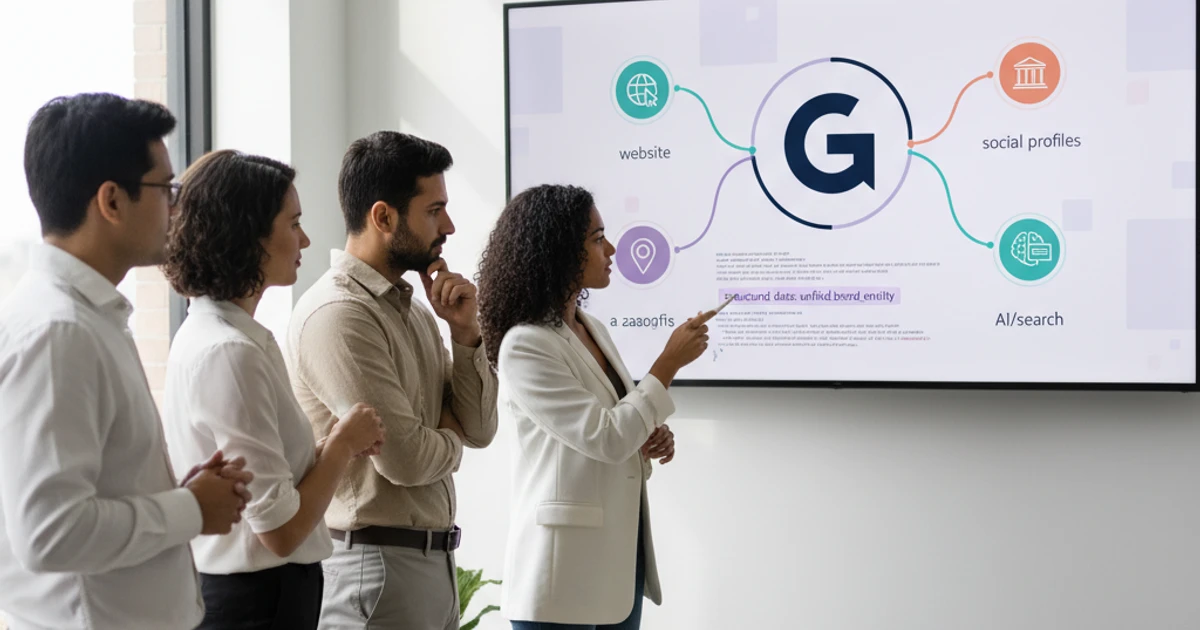
Search engines and AI systems store your brand as an entity with attributes (name, category, location) and relationships (parent company, founders, products). Think of it like a structured profile in Google’s Knowledge Graph or Microsoft’s knowledge store, not just a collection of pages.
Align naming and descriptions so they’re unambiguous. For example, "Apple" succeeds because results clearly distinguish Apple Inc. (technology) from apples (fruit) using categories, founders, and ticker symbol AAPL. Mirror this by keeping your company name, category labels, and short description identical across your site, LinkedIn Page, and Crunchbase profile.
Optimize owned properties for consistent signals
Your website, social profiles, and author bios are primary training data for both search and LLMs. Treat them as a unified brand system rather than isolated assets. Start by auditing homepage copy, About page, LinkedIn, X, and YouTube descriptions side by side.
Use the same brand name, tagline, and category phrasing across each. HubSpot, for example, consistently describes itself as “customer platform” and “CRM platform” in titles, bios, and headers, which reinforces those topical associations in search and AI responses.
Claim and standardize key business listings
Local and branded queries often pull directly from business listings and data aggregators. Claim your Google Business Profile, Bing Places, Apple Business Connect, and key vertical directories like Yelp, G2, or TripAdvisor depending on your industry.
Standardize NAP (name, address, phone), categories, and hours everywhere. A Moz Local study (pre-2024) has repeatedly shown NAP consistency as a core local ranking factor. Inconsistent suite numbers, old phone lines, or outdated categories can fragment your entity and confuse both maps and knowledge panels.
Use structured data to encode brand context
Structured data turns your website into a machine-readable source of truth. Implement Organization or LocalBusiness schema to define your name, logo, sameAs social links, and contact points directly in your HTML.
Brands like Nike and Walmart use schema to connect their domains to official profiles on Instagram, YouTube, and apps in app stores. This helps Google and AI systems confirm that all those profiles represent a single entity, strengthening your Knowledge Panel and branded search visibility.
Reference: How to Build Entity Authority for AI Search
3. Conduct Modern Keyword & Topic Research for SEO and AI Search
Move from keywords to topics and intents
Modern SEO and AI search optimization start with understanding topics and intents, not just individual keywords. Instead of chasing “best CRM” as a single phrase, group related ideas like “sales pipeline,” “customer retention,” and “CRM implementation costs” into one topic cluster.
Segment each cluster by intent: informational (“what is a CRM”), problem-solving (“how to fix duplicate records in HubSpot”), and purchase-driven (“Salesforce vs HubSpot pricing”). This mirrors how large language models interpret context and helps your brand appear in multi-step AI answers.
Identify visibility opportunities across query types
Once topics are defined, identify where your brand can own more real estate. Map branded queries like “Shopify SEO guide” or “Ahrefs pricing” to strengthen authority and ensure AI search correctly associates facts with your brand.
Then layer in category and competitor terms (e.g., “Klaviyo alternatives,” “email marketing tools for ecommerce”) and problem-based queries that surface early pain points. This mix positions you for both classic SERPs and richer AI search brand visibility opportunities.
Leverage AI-assisted tools for patterns and clustering
AI-assisted keyword tools like Semrush’s Keyword Clustering, Ahrefs, and AlsoAsked help you group thousands of queries into logical clusters. Analyze “who,” “what,” “why,” and “how” formulations to see how people actually phrase questions around your product.
Compare these clusters against your existing content. If many “how to” questions around “B2B SaaS onboarding” lack a comprehensive resource on your site, that’s a clear gap and a priority content play for both search and AI-generated answers.
Prioritize topics with realistic ranking and AI inclusion
Not every cluster is worth chasing first. Evaluate difficulty scores, SERP quality, and required authority to decide where you can realistically rank and be referenced in LLM responses. A newer brand might focus on long-tail topics like “HIPAA-compliant appointment reminders for dentists” instead of broad “healthcare software.”
Build a roadmap that balances low-competition wins with a few strategic, harder pillars. As you improve technical accessibility—such as removing JavaScript blockers and clarifying URLs as recommended in AI Search Enhances LLM Brand Visibility – Optimize Now—your chances of earning both rankings and AI citations increase across that roadmap.
Reference: How to Conduct Effective Keyword Research in the Modern ...
4. Create Authority-Building Content that Surfaces in AI and Search

4. Create Authority-Building Content that Surfaces in AI and Search
Develop a balanced content strategy
To surface in both AI answers and traditional search, your content mix needs to reflect the full customer journey. That means combining deep education, problem-solving resources, and pages that clearly lead to a purchase or lead submission.
For example, HubSpot pairs broad informational guides on “what is inbound marketing” with comparison pages and product-led templates that capture demand once intent is higher.
Structure content for snippets and conversational answers
AI systems and Google’s featured snippets favor content that is easy to parse. Use short intros, descriptive H2/H3s, and one-sentence definitions near the top so models can lift concise answers.
Pages like NerdWallet’s credit card reviews win snippets by using tables, bullet lists, and direct statements such as “The best card for travel rewards is…” within the first screen.
Embed E-E-A-T signals in your content
Show real experience and expertise by attributing content to named specialists, adding bylines with credentials, and referencing hands-on tests or client results.
Wirecutter, owned by The New York Times, explains how its team tested products and links to sources, which reinforces trust for both readers and AI systems.
Reference: How to Build Topical Authority & Win in AI Search
5. Implement Technical SEO & Structured Data for AI Search Optimization
Strengthen crawlability, indexability, and performance
AI search systems depend on clean, well-structured technical foundations. If search engines struggle to crawl or render your pages, your content is unlikely to be surfaced in AI-powered overviews or summaries.
Start by auditing crawlability with tools like Google Search Console and Screaming Frog. Ensure your robots.txt and XML sitemaps allow access to key revenue pages, like /products/ and /pricing/. When HubSpot reduced thin parameter URLs and fixed blocked JavaScript resources, it saw more stable index coverage and stronger visibility for strategic pages.
Then optimize performance and Core Web Vitals. Google has highlighted that improving LCP and CLS can correlate with better visibility; for example, eBay reported faster page loads led to a measurable lift in organic sessions. Fix broken links, redirect chains, and misconfigured canonicals so AI crawlers see a clear, consistent site structure.
Deploy schema markup to add machine-readable context
Structured data helps search and AI systems understand entities, relationships, and page purpose without guesswork. Well-implemented schema can unlock rich results and make your brand easier to reference in AI answers.
Use Organization, Product, FAQ, HowTo, Article, and Review schema where relevant. For instance, Best Buy uses Product and Review markup so search engines can extract prices, ratings, and availability directly. B2B SaaS brands can mirror this by marking up feature pages and customer stories with Product and Review data.
Validate your schema using Google’s Rich Results Test and keep it aligned with on-page content. A mismatch between marked-up ratings and visible reviews can trigger manual actions or loss of rich snippets, reducing your eligibility for AI-enhanced previews.
Reinforce topical clusters through internal linking
AI-driven search favors sites that demonstrate depth and authority around specific topics. Internal links are one of the strongest signals you control to show how content within a cluster connects.
Design hub or pillar pages that summarize each core theme—such as “Enterprise SEO Strategy”—and link out to detailed guides, case studies, and tools. Backlinko’s internal linking around its “SEO techniques” pillar page is a strong example of how to cluster deep tactical articles under one authoritative hub.
Use descriptive, keyword-relevant anchor text like “technical SEO audit checklist” rather than “click here.” This clarifies relationships for both crawlers and AI models that rely on link context to infer what each page is about.
Monitor indexing, rich results, and AI-preview behavior
Optimizing once is not enough; you need feedback loops to see how search engines and AI surfaces are actually using your content. Continuous monitoring reveals where technical or structured data changes are paying off.
Track index coverage, crawl stats, and page experience reports in Google Search Console, and review log files to see how often Googlebot and Bingbot hit your key sections. When Shopify doubled down on structured data, they closely watched growth in rich snippets and FAQ results to validate their approach.
Where available, observe how your content appears in Google’s AI Overviews or Bing Copilot. Note which pages are frequently cited, which snippets are extracted, and whether your brand is named. Use those insights to refine schema, internal links, and on-page clarity so AI systems consistently select your content as a trusted source.
Reference: Five Key Technical SEO Factors for AI Search (GEO)
6. Leverage Off-Site Brand Signals and Reputation for Greater Visibility
6. Leverage Off-Site Brand Signals and Reputation for Greater Visibility
Earn quality backlinks in your niche
High-quality backlinks function as third-party endorsements that help both search engines and AI systems validate your authority. Focus on sites your audience already trusts, not just any domain with a high Domain Rating.
For example, a B2B SaaS company earning links from HubSpot, G2, and Harvard Business Review signals far more topical authority than dozens of links from general web directories. Prioritize editorially earned links through guest insights, expert quotes, and research contributions.
Avoid buying links or using private blog networks. Google’s 2024 spam updates have penalized manipulative schemes, causing some sites to lose over 40% of organic traffic. Sustainable link building comes from relationships, thought leadership, and helpful content.
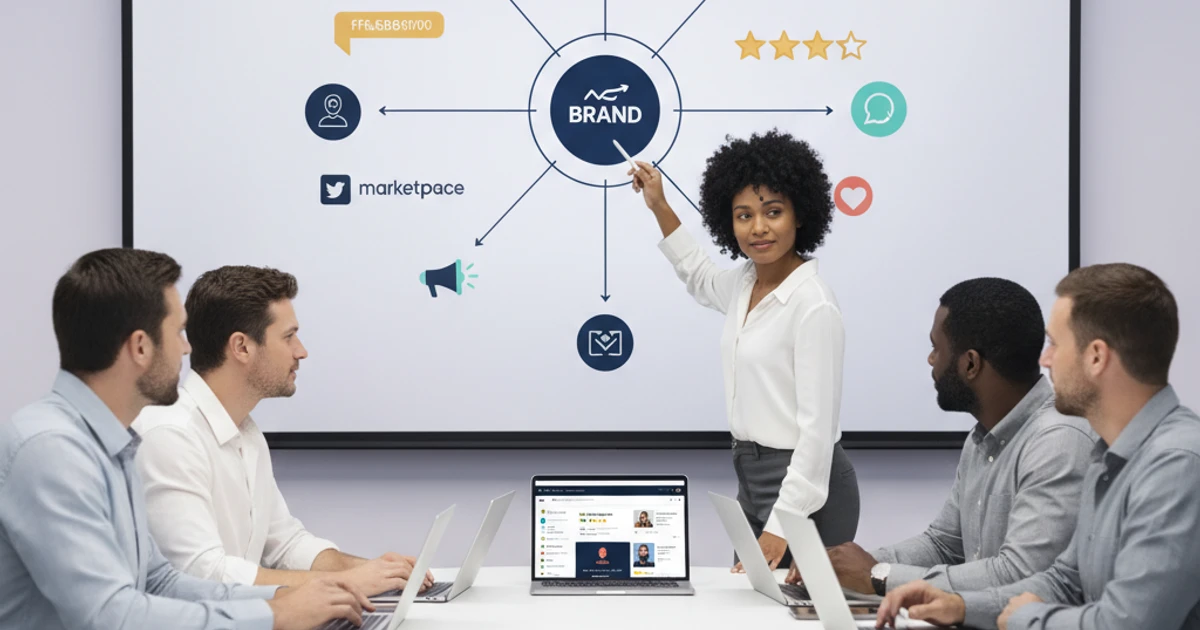
Strengthen presence on reviews, directories, and marketplaces
Review platforms and vertical directories are often the first places users and AI systems encounter your brand. A half-complete profile on G2, Yelp, or Houzz weakens both trust and relevance.
Fill out every field on major platforms in your space—such as G2 and Capterra for software, or Thumbtack and Angi for local services. Use consistent descriptions, categories, and value propositions that mirror your on-site messaging.
Keep pricing, service areas, and product specs current. Outdated listings drive higher bounce rates and inconsistent data, which can confuse search engines about what you actually offer.
Encourage and manage reviews, ratings, and UGC
Reviews, ratings, and user-generated content feed into both traditional ranking systems and AI-generated answers. Brands like Airbnb and Amazon show how powerful detailed reviews are for conversion and discovery.
Build simple programs to request reviews after key milestones—such as post-purchase emails or in-app prompts, following FTC and platform guidelines. Respond publicly to feedback on Google Business Profile, Trustpilot, and industry-specific sites to show accountability.
AI models increasingly surface sentiment and common themes from reviews. A pattern of unresolved complaints about support or quality can weaken perceived reliability, even if your technical SEO is strong.
Integrate PR, social, and influencer activity with search goals
PR, social, and influencer campaigns often create the mentions and links that algorithms interpret as brand authority. Align these efforts with your priority keywords and entities instead of treating them as isolated channels.
For instance, when Notion launched major product updates, it coordinated media coverage on TechCrunch, YouTube creator reviews, and Twitter threads that all reinforced terms like “project management” and “knowledge base.” This helped solidify how search systems categorize the brand.
When planning campaigns, provide partners with preferred anchor text, key talking points, and links to cornerstone content. This improves both referral traffic and your brand’s entity strength across search and AI surfaces.
Reference: 6 Ways to Leverage Signals in Marketing
7. Optimize for AI Assistants, Zero-Click, and SERP Feature Dominance
Understand how AI overviews and chat select sources
AI overviews and chat systems tend to favor sources that are clear, structured, and authoritative. They pull from pages that provide concise definitions, step-by-step explanations, and well-marked sections using headings and schema.
Study how Google’s AI Overviews, Bing Copilot, and Perplexity cite content in your niche. For example, Ahrefs and HubSpot often appear because their guides use strong H2/H3 structures, table of contents, and schema markup, making it easy for AI to extract reliable snippets.
Create content for common question patterns
AI assistants are driven by conversational queries, so your content should mirror how people ask questions. Build sections that directly answer who, what, why, and how questions in short, skimmable blocks.
For a B2B SaaS brand, create H3s like “What is lead scoring?” or “How does lead scoring work in HubSpot?” followed by a 2–3 sentence answer, then deeper detail. This structure helps you win both featured snippets and AI-generated answer citations.
Compete for key SERP features
Target SERP features that matter for your keywords: featured snippets, People Also Ask, and video carousels especially influence AI responses. Google often reuses snippet content inside AI Overviews.
Use FAQPage schema for common questions, descriptive titles like “Local SEO Checklist for Restaurants (2024)” on YouTube, and image alt text that explains concepts. BrightLocal, for instance, dominates local SEO SERPs by pairing detailed guides with screenshots and charts that surface in image search.
Experiment with assistant-specific optimizations
Design sections that sound like direct answers an assistant would read aloud. Short, fact-rich paragraphs such as “Shopify is an e-commerce platform that powers over 4.4 million live websites” are easy for AI to quote.
Add conversational FAQs like “How do I integrate Stripe with Shopify?” and provide a 3–4 step process. Then test content that mirrors real prompts users might speak into Siri, Alexa, or Gemini, such as “best email marketing tools for small e‑commerce brands under $100/month.” This helps assistants map your brand to high-intent tasks.
Reference: Here are 7 SEO trends for 2026: 1. Diversifying traffic ...
8. Measure, Test, and Continually Improve Brand Visibility Strategies
Define cross-channel visibility KPIs
Visibility only matters if you can measure how it contributes to business outcomes. Start by defining KPIs that connect SEO, AI search experiences, and on-site behavior into one view.
For example, track impressions and click-through rate from Google Search Console, share of voice in SEMrush or Similarweb, and where possible, citations in Google AI Overviews or Perplexity for branded terms. Then link these to sessions, qualified leads, and revenue in GA4 or your CRM so visibility is evaluated on impact, not just volume.
Track branded and non-branded performance
Branded and non-branded queries play very different roles in the funnel, so they need separate reporting. Non-branded terms like “best project management software” often drive discovery, while branded queries like “Asana pricing” indicate high intent.
Build dashboards that show how users move from generic queries to branded searches and then to conversions. For instance, track how many first-touch visits come from “email marketing platform” before converting later on “Klaviyo demo” to understand true multi-touch impact.
Use experimentation to improve outcomes
Testing lets you turn visibility data into better performance. Start with high-impression, low-CTR pages and A/B test titles and meta descriptions using tools like Google Optimize (legacy) or Optimizely.
Experiment with FAQ schemas, concise summaries, and clearer headings to increase inclusion in AI overviews and answer boxes. HubSpot, for example, has repeatedly restructured pillar pages and FAQs to improve featured snippet share and saw organic leads rise when snippets shifted to their content.
Create a recurring reporting and optimization cadence
Visibility is not a one-time project; it’s an operating rhythm. Establish a monthly reporting cycle with shared Looker Studio or Power BI dashboards that surface trends, AI overview presence, and keyword shifts.
Use these reviews to agree on 2–3 prioritized experiments and fixes for the coming month. A common mistake is producing reports that no one acts on—bake optimization tasks into sprint planning so content, SEO, and paid teams continuously refine what’s working and retire what isn’t.
Reference: 8 Essential Brand Awareness Metrics You Should Measure
Conclusion: Turning Brand Visibility into a Durable Competitive Advantage
Integrate traditional SEO with AI-era visibility
Brand visibility is no longer confined to classic SERPs. Marketing teams must optimize for Google Search, AI Overviews, Gemini, ChatGPT, Perplexity, and even platform-specific search like YouTube and TikTok. Treat every surface where people ask questions as a potential visibility channel, not just the ten blue links.
For example, HubSpot structures blog posts for featured snippets while also publishing concise FAQ-style content that surfaces in AI assistants. This dual approach keeps them present whether a user clicks a result or receives an AI-generated summary.
Focus on entities, authority content, and structure
Search engines and AI models think in entities, not just keywords. Strengthening your brand entity means aligning website copy, Knowledge Panel data, schema markup, and off-site profiles like LinkedIn and Crunchbase so they all tell the same story.
Shopify’s detailed documentation, author bylines, and Organization schema make it easy for Google and AI systems to understand who they are, what they do, and why they’re authoritative in ecommerce.
Commit to ongoing experimentation and measurement
Visibility is now a continuous R&D function. Teams should run structured experiments across titles, schema types, content formats, and answer summaries, then track effects on impressions in Search Console, branded search volume, and assisted conversions in analytics.
For instance, SEMrush often A/B tests new content templates and monitors changes in featured snippet win rate and brand query growth, then standardizes what works across their library.
Adopt a phased implementation approach
A phased roadmap keeps teams aligned and reduces risk. Start with quick wins: clarify brand messaging on your homepage, tighten title tags, and ensure your organization, product, and FAQ schema are correctly implemented.
Then move into deeper work such as entity reconciliation (e.g., fixing inconsistent brand naming), technical cleanup, and strategic authority plays like original research, PR placements, and podcast appearances that reinforce your brand in AI training data.
FAQs About Improving Brand Visibility Across Search & AI
How long does it take to see results from brand visibility strategies in search and AI?
Timelines depend heavily on your competitive landscape, current domain authority, and how quickly you implement changes. A SaaS brand moving from a Domain Rating 20 to 40 can often see noticeable organic lift in 4–6 months, while an established publisher like HubSpot may see impact within weeks due to existing authority.
Technical and on-page fixes usually move the needle first. For example, when Backlinko fixed crawl issues and improved internal linking, they reported double‑digit traffic gains within a few weeks. In contrast, authority growth and AI visibility—such as being cited in Google’s AI Overviews—typically require 3–9 months of consistent content, digital PR, and entity work.
Why is entity-based optimization so important for AI search optimization?
AI systems like Google’s Knowledge Graph and Bing’s Satori lean on entities—people, brands, places, and products—and how they relate. When your brand is clearly defined as an entity, models can confidently surface you in synthesized answers, similar to how Wikipedia and WebMD are repeatedly cited for medical queries.
Strong entity signals—via Organization schema, consistent NAP data, and mentions on authoritative sites—help connect your brand to key topics and locations. That increased clarity elevates your odds of appearing in AI-generated snippets, local packs, and knowledge panels for high‑intent queries in your niche.


