How to Spot Toxic Backlinks with Intelligence Tools
Uncover toxic backlinks and safeguard your SEO with Indexly’s intelligence tools. Spot red flags and optimize link health for stronger ranking results.


A single toxic backlink is often all it takes to push your website down the search rankings, undoing months of hard-earned SEO progress. Imagine discovering sudden penalties after a competitor launches a hidden negative SEO campaign—untraceable unless you know what warning signs to look for and have the right tools at your disposal.
Protecting your web presence against lousy backlinks can feel like an ongoing battle. Toxic links not only threaten your visibility, but also your reputation and the trust you've built with search engines. By understanding key red flags, leveraging advanced intelligence platforms, and learning straightforward monitoring workflows, you’ll be equipped to minimize risks and safeguard your site’s authority. Spotting and removing harmful links does require continuous attention and a methodical approach, but with powerful platforms like Indexly and a focus on smart detection strategies, the process becomes manageable and highly effective.
In the battle for search engine prominence, spotting toxic backlinks isn't just about playing defense—it's about arming yourself with intelligence that only seasoned experts and tools like Indexly can deliver.
Reference: Toxic Backlinks: What They Are & How to Find Them
Introduction
Overview
Backlink profiles can either power a website’s organic growth or damage its ability to rank effectively in search engines. Although building backlinks is a cornerstone of SEO, not every link is beneficial – some links, known as toxic backlinks, can trigger search engine penalties or suppress your website’s authority.
This is a critical concern for anyone responsible for website performance. In 2021, Google’s algorithm updates placed even greater scrutiny on backlinks, penalizing websites tied to link farms or spammy domains. For example, the big drop in visibility faced by Overstock.com in 2011 was attributed to unnatural link building practices, highlighting how easy it is for toxic backlinks to undermine major brands.
Spotting and Managing Toxic Backlinks
Recognizing which backlinks may be harming your site requires specialized tools, a keen understanding of what search engines consider toxic, and a structured process. At Indexly, we leverage automated backlink audits and advanced analytics to help users quickly identify risky links based on indicators such as unnatural anchor text distribution, low-authority referring domains, and spikes in inbound links from irrelevant websites.
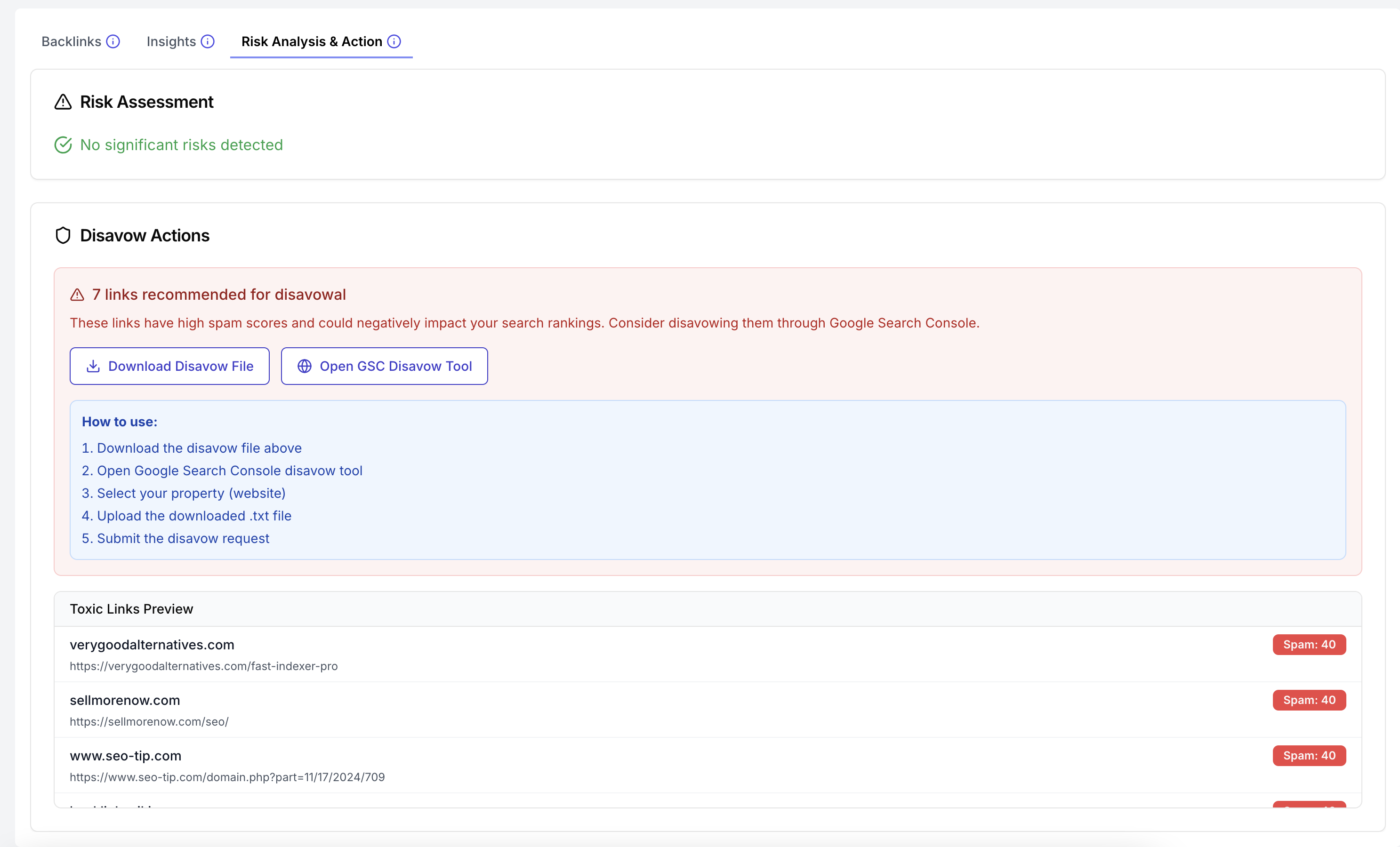
Readers will learn practical techniques to spot toxic backlinks, ways to clean up a backlink profile, and when to use tools like Google’s Disavow Links Tool. We will also reference real-world cases, such as Expedia’s penalty in 2014, which reportedly led to a 25% drop in search visibility due to manipulative backlinks.
It’s important to set realistic expectations: combating toxic backlinks is an ongoing workflow, not a one-time fix. Cleaning up a backlink profile can take weeks to months and requires consistent monitoring. Mistakes like mass disavowing without proper analysis, or ignoring new additions, can cause setbacks. By the end of this guide, you’ll have a clear blueprint to safeguard your site’s authority and rankings with actionable insights tailored for SEO professionals and digital marketers.
1. Understanding Toxic Backlinks: What Are They and Why Do They Matter?
Definition and Importance
Toxic backlinks are external links from websites that harm your site's search engine rankings or reputation. Unlike high-quality backlinks that enhance your domain authority, toxic links typically originate from untrustworthy sources, manipulative practices, or irrelevant digital spaces. Google and other major search engines increasingly penalize such unnatural link patterns, making toxic backlink management a crucial part of any SEO strategy.
What distinguishes a toxic backlink is its low quality or association with spam. This includes links from private blog networks, unrelated directories, or domains flagged for distributing malware. According to Backlinko’s guide on bad backlinks, links purchased via link farms or traded excessively can also fall into this category, making it important to monitor who is linking to your site and why.
Common Sources of Toxic Backlinks in Modern SEO Landscapes
Many toxic backlinks come from automated link schemes, expired domains repurposed for spam, or hacked websites hosting doorway pages. For instance, in 2019, Expedia experienced a significant drop in organic rankings after being targeted by a network of spammy guest posts and irrelevant directory listings, highlighting the risks associated with toxic link clusters.
Tools like Indexly help professionals spot these problematic links by providing granular backlink intelligence. By identifying links from suspicious sources—such as casino sites or payday loan domains that have nothing to do with your business niche—you reduce the risk of algorithmic penalties.
Potential Impacts on Search Rankings and Site Integrity
The presence of toxic backlinks can trigger manual actions from Google, reducing your site’s visibility or even removing it from search results. For example, BBC News once received a warning from Google about unnatural links, leading to a temporary demotion until the offending links were cleaned up.
Beyond rankings, toxic backlinks can damage brand credibility and user trust. When spammy links point to your domain, it often signals to both search engines and customers that your site might be associated with unscrupulous tactics or compromised content quality.
Why Early Detection and Removal is Crucial
Proactive monitoring for toxic backlinks allows for early intervention, reducing both the duration and severity of negative impacts. Waiting for a penalty before taking action can result in significant loss of traffic and a lengthy recovery process.
As detailed in this Backlinko article, regular backlink audits and prompt disavowal of harmful links play a crucial role. Tools like Google Search Console and Indexly make bulk link management and analysis more efficient, helping brands stay ahead in protecting their site integrity against the evolving landscape of SEO threats.
2. Essential Features of Backlink Intelligence Tools for Detecting Toxic Links

2. Essential Features of Backlink Intelligence Tools for Detecting Toxic Links
Effective toxic backlink detection hinges on a tool's ability to provide timely, actionable insights that go beyond simple link counts. Modern SEO requires a nuanced approach—simply accumulating backlinks won't strengthen rankings if those links pose a risk of penalties or undermining trust. Understanding the specific features that make a backlink intelligence tool practical for identifying toxic links is critical for website owners and SEO professionals alike.
Tool Capabilities
Comprehensive backlink intelligence tools should analyze several key metrics to assess link quality. Metrics like domain authority, spam score, Trust Flow, and Citation Flow provide insight into the likely impact each backlink could have on your website's reputation. For example, Moz's Spam Score helps identify links from potentially harmful domains, while Majestic's Trust Flow measures how closely a source is aligned with trustworthy sites. Incorporating such detailed metrics ensures that decisions about disavowing or removing links are made using evidence rather than guesswork.
Real-time monitoring offers distinct advantages compared to periodic backlink audits. With real-time alerts, as offered by platforms like Indexly and Ahrefs, SEO teams can quickly identify and respond to sudden spikes in low-quality or suspicious links—an early warning system against negative SEO attacks. This capacity for immediate detection and intervention can mean the difference between a minor setback and a major ranking penalty. By contrast, periodic audits may leave toxic links unnoticed for weeks, increasing the risk of algorithmic penalties from Google.
Integration with broader SEO analytics platforms amplifies the value of backlink intelligence. When toxic backlink detection connects seamlessly with tools that monitor crawl errors, site speed, and keyword rankings, teams can contextualize link risk as part of a larger visibility and performance strategy. Indexly, for instance, allows users to visualize backlinks alongside technical audit results, streamlining the process of measuring correlation between toxic links and ranking fluctuations.
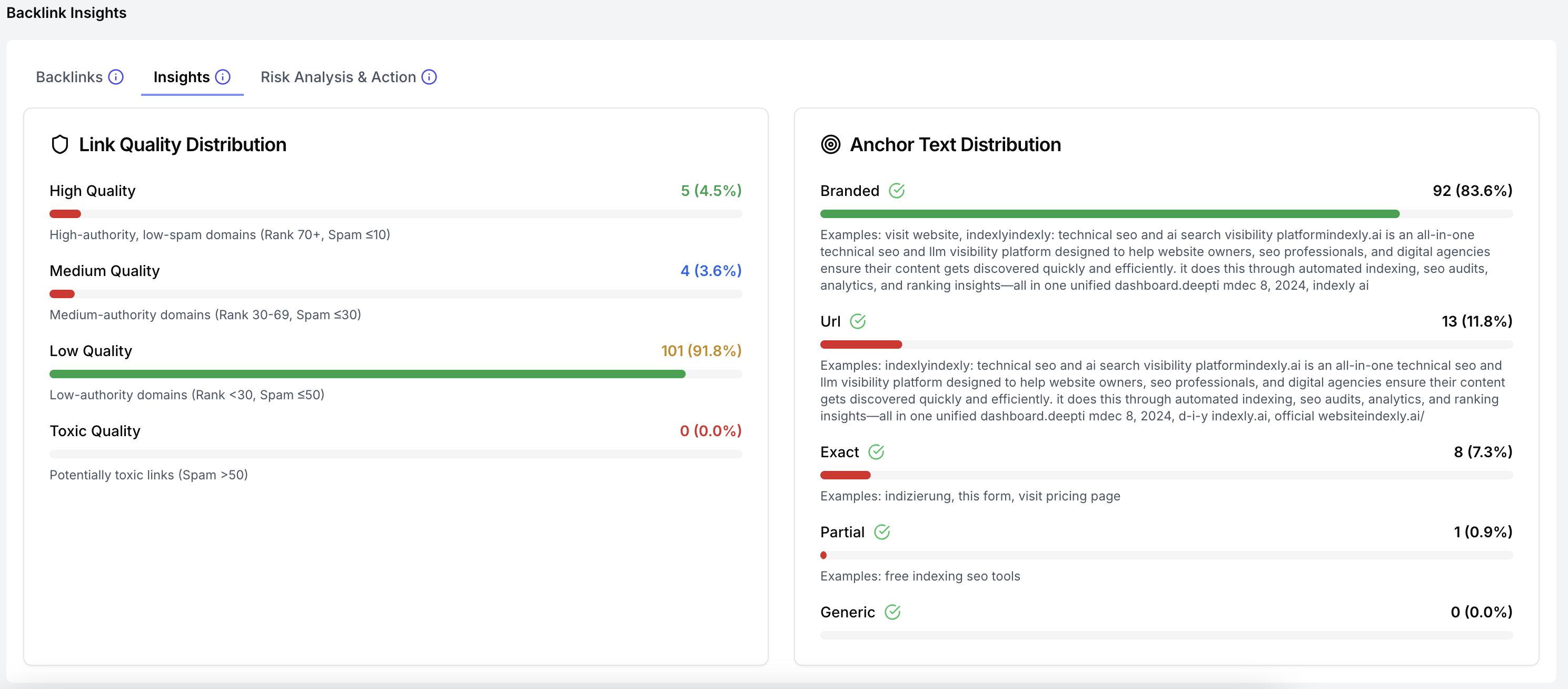
User-friendly dashboards and customizable reporting are essential for agency teams and business owners managing multiple properties. Dashboards that surface red flag alerts, link trends, and detailed reports facilitate proactive decision-making. SEMrush and Indexly both offer intuitive interfaces that present toxic link data in sortable, exportable formats, empowering SEO professionals to prioritize their efforts and communicate findings to stakeholders efficiently. This ease of use becomes particularly critical during large-scale link audits across enterprise websites.
Related Articles:
Reference: → time-for-indexing-on-google
Reference: → why-index-pages-on-google
Reference: Tools to Detect Toxic Backlinks and Improve Rankings
3. Analyzing Your Backlink Profile: Gathering Actionable Data
Data Collection and Segmentation
Before optimizing your backlink profile, it's essential to gather and segment backlink data in ways that reveal strengths and vulnerabilities. Relying on surface-level metrics like total number of links is insufficient for serious SEO efforts. Contextual analysis through tools such as Indexly, Ahrefs, or SEMrush enables you to target toxic links, spot growth opportunities, and benchmark against industry standards.
Compiling a Comprehensive List of Referring Domains
Begin by exporting a full list of referring domains to your site. For example, when HubSpot conducted a backlink audit with Ahrefs, they identified over 20,000 unique referring domains, which served as a foundation for deeper quality checks. The most reputable tools also provide historical data, letting you assess how your backlink landscape has evolved over time.
Segmenting Backlinks by Trust Score and Relevance
Segmenting your backlinks based on trust score and topical relevance helps prioritize cleanup and outreach. For instance, Google's Penguin algorithm update penalized sites with large numbers of irrelevant backlinks, as seen with the Interflora penalty in 2013. Trust metrics, like Majestic's Trust Flow or Moz's Spam Score, clarify which links enhance your authority versus those that put you at risk.
Identifying Sudden Increases or Suspicious Patterns
Rapid spikes in linking domains often signal manipulative link schemes or negative SEO attacks. Expedia experienced a highly publicized rankings drop in 2014, partially attributed to a sudden influx of low-quality links. By plotting backlinks acquired weekly, SEO teams can flag suspicious clusters that warrant investigation and action.
Benchmarks for Healthy vs. Unhealthy Backlink Profiles
Healthy backlink profiles display diversity in domain types, a natural link velocity, and minimal toxic links. In contrast, unhealthy profiles might include high percentages of links from unrelated industries or link farms. According to guidance from Toxic Backlinks: How to Spot and Avoid Them, patterns such as exact-match anchor text and links from flagged domains are clear warning signs. Recognizing these patterns ensures proactive risk mitigation.
Reference: The 7-Step Guide to an Eye-Opening Backlink Analysis
4. Core Signals and Red Flags of Toxic Backlinks

4. Core Signals and Red Flags of Toxic Backlinks
Identifying Toxic Patterns
Effective backlink analysis hinges on recognizing specific indicators that set toxic backlinks apart from healthy ones. Toxic backlinks can undermine search visibility and, if left unchecked, put entire domains at risk of penalties or algorithmic suppression by Google, Bing, or Yandex. Understanding what makes a link "toxic" involves examining patterns, sources, and technical signals with precision.
Spammy Anchor Text and Unnatural Link Patterns
One of the most telling signs of manipulation is an overuse of exact-match, keyword-stuffed anchor text. For example, in 2021, JC Penney faced major visibility drops after Google targeted their backlink profile for having hundreds of anchors like “bedding sets” linking from unrelated websites. Natural profiles show a mix of branded, generic, and partial match anchors, while toxic profiles are dominated by unnatural repetition.
Unnatural site-wide or footer links—such as when a web design agency inserts exact-match links across all client footers, as seen in Home Depot’s 2012 penalty—can be quickly flagged as manipulative.
Toxic Link Sources: Private Blog Networks, Link Farms, Expired Domains
Backlinks from networks designed solely for link building, like known private blog networks (PBNs), pose a high risk. In 2014, Interflora was delisted by Google following large-scale PBN activity. Link farms, often identified by their thin content and excessive outbound links, also serve as red flags.
Link schemes leveraging expired domains can inject substantial numbers of backlinks overnight, raising suspicion. A 2022 SISTRIX study found over 30% of penalized sites had acquired several hundred links from expired forums and directories in under a week.
Risk Indicators: Nofollow/Dofollow Ratios, Domain Authority, Link Placement
Healthy backlink profiles typically feature a balanced mix of nofollow and dofollow links. A profile with 98% dofollow links, as SEMrush observed in a 2021 audit of penalized pharma affiliate sites, can indicate intentional manipulation.
Low-domain authority sources, especially those set up exclusively for linking, add risk. Unnatural link placements—such as links embedded in comment sections or unrelated blog posts, like the 2017 Thumbtack incident, where comment spam links led to ranking suppression—are clear warning signs.
Manual Penalties and Algorithmic Filters from Google, Bing, and Yandex
Search engines issue manual actions for detected violations. In 2015, Thumbtack received a manual penalty from Google due to incentivized link acquisition, forcing extensive link cleanup. Algorithmic updates such as Google Penguin have systematically downgraded domains with manipulative backlinks, drastically reducing organic traffic overnight.
Bing and Yandex use similar algorithms to identify unnatural link spikes, evident in cases where Russian e-commerce sites lost up to 80% of their visibility after Yandex rolled out its anti-link buying algorithm in 2014. Monitoring for sudden traffic drops using audit tools like those in Indexly helps identify and remediate toxic backlinks before penalties hit.
Reference: Toxic Backlinks: How to Spot and Avoid Them
5. Practical Workflow: Step-by-Step Toxic Backlink Detection with Intelligence Tools
Action Plan
Detecting toxic backlinks requires a systematic approach using the right intelligence toolset. Platforms like Indexly provide dedicated Backlink Intelligence modules designed for SEO practitioners aiming to safeguard their rankings from penalties or trust issues. Understanding how to leverage these solutions ensures you invest effort where it delivers the most value.
1. Setting Up and Configuring Your Backlink Intelligence Tool
Begin by connecting your website to Indexly’s Backlink Intelligence tool. Import backlink data directly from authoritative sources, such as Google Search Console or Majestic, ensuring coverage and accuracy. Proper configuration—such as specifying your brand keywords, project settings, and competitor benchmarks—lays the foundation for detecting abnormal or harmful links.
For instance, national retailer Macy's set up their backlink monitoring by integrating Indexly with both Google and Bing Webmaster Tools, allowing seamless data flow and comprehensive profiling. This enabled them to distinguish between organic brand growth and potentially toxic spikes.
2. Automating Scans and Interpreting Toxicity Scores
Automatic scanning is vital for ongoing protection. Schedule regular backlink checks—weekly or monthly—and enable real-time alerts for suspicious activity. Indexly utilizes machine learning to assign toxicity scores, considering source relevance, suspicious anchor text, and link neighborhood context.
A common pitfall is relying solely on volume. For example, UK-based electronics retailer Currys experienced a negative SEO attack resulting in over 4,000 new backlinks within two weeks. Indexly flagged many with high toxicity scores due to irrelevant referring domains, enabling their SEO team to act before rankings dropped.
3. Prioritizing Backlinks for Review and Action
Not all flagged links warrant the same level of concern. Sort backlinks by toxicity score but layer in secondary filters such as domain authority and traffic metrics. Focus first on those with high toxicity and low trust, especially from known link farms or unrelated industries.
Failure to prioritize may overwhelm teams. Semrush’s 2022 study of e-commerce brands found that reviewing the 10% of links with the highest toxicity eliminated 80% of identified search visibility risks, streamlining clean-up operations considerably.
4. Exporting, Segmenting, and Managing Flagged Links
After review, export flagged backlinks in .csv or Google Sheets format for internal team tracking or outreach. Use Indexly’s segmentation tools to group links by action—such as “disavow,” “investigate,” or “request removal.”
For example, SaaS brand Monday.com routinely exports quarterly toxic backlink lists from Indexly to their digital PR agency. This structured approach allows the agency to contact webmasters, request removals, or compile disavow files for Google Search Console submission, minimizing manual error and boosting response efficiency.
Reference: Five Best Practices to Perform Backlink Audits
6. Verifying Findings: Manual Review Tactics and Confirming Toxicity

6. Verifying Findings: Manual Review Tactics and Confirming Toxicity
While automated toxicity scores and algorithms offer a convenient starting point, thorough manual verification remains essential for effective backlink audits. Automated tools such as Indexly or Ahrefs can flag suspicious domains, but human oversight helps prevent false positives, accurately distinguishing truly toxic backlinks that can harm your search rankings.
Confirmation Processes
A robust verification workflow involves several distinct steps, each contributing unique insight to the decision-making process. Manual review adds critical nuance to data-driven findings, ensuring no damaging link is overlooked and no valuable one is mistakenly disavowed.
Conducting Visual Inspections and Manual Checks
Begin by visually inspecting backlink source pages. Evaluate whether the page appears spammy, features irrelevant content, or contains excessive outbound links. For instance, during an audit, the team at Moz discovered that many flagged domains relied on link farms, including pages with over 100 unrelated outgoing links. This type of visual confirmation is crucial because such sites often evade automated filters.
Check also for indicators like hidden text, aggressive ads, or suspicious redirects. Google’s own Search Quality Evaluator Guidelines highlight the importance of manual site assessment for accurate evaluation.
Cross-Referencing with Competitor Backlink Audits
Compare your backlink profile against top-performing competitors. If a questionable domain links to your website but not to others in your sector, it could be a red flag. For example, SEMrush’s competitive analysis features help users identify unnatural links unique to their domain, providing added context during a manual review.
Analyzing competitor link profiles can reveal industry benchmarks and reduce the risk of false identification of toxic links, especially when considering niche-specific sources.
Consulting Reputable Whitelist and Blacklist Databases
Reference up-to-date industry databases like Majestic’s "Toxic Domains" or the Cisco Talos Intelligence blacklist to validate findings. If a backlink source appears on multiple trusted blacklists, it’s almost certainly toxic. Conversely, being listed on established whitelists, such as those managed by Spamhaus, increases the likelihood that a site is reputable.
However, always corroborate database evidence with your own review, as some lists may not account for the latest link schemes or region-specific sources.
Collaborating with SEO Team Members for Peer Review
Before disavowing or reporting toxic links, involve other SEO professionals for a second opinion. Team-based review sessions, as routinely practiced at agencies like Distilled, help catch oversights and ensure balanced decisions. Having multiple perspectives often reveals patterns and risks missed by a single analyst.
Use shared documents or project boards to log disputed backlinks, notes, and final decisions. This collaborative approach minimizes subjectivity and improves audit transparency, particularly for complex enterprise sites managing thousands of referring domains.
Related Articles:
Reference: → why-index-pages-on-google
Reference: → time-for-indexing-on-google
Reference: EXECUTIVE SUMMARY - Toxicity Testing - NCBI - NIH
7. Remediation: Disavowing and Removing Toxic Backlinks
Toxic backlinks can have a significant negative impact on a website’s search visibility, potentially causing ranking drops or even manual penalties from search engines. Cleaning up your backlink profile involves both proactive outreach and using available tools to safeguard your website’s authority. Effectively addressing these bad links is a critical process that goes beyond detection, requiring methodical remediation strategies and thorough documentation at every stage.
Backlink Clean-Up
The process of cleansing your backlink profile typically begins with identifying harmful links and progresses through several structured steps. These combine manual communication and technical interventions to ensure long-term compliance and protection from search engine penalties.
Communicating with Webmasters for Link Removal Requests
One of the first lines of defense is reaching out directly to the webmasters of domains hosting toxic links. Personalizing removal requests increases the likelihood of cooperation; referencing the specific URL and explaining your concern often garners better responses. For example, HubSpot documented success in cleaning up low-quality directory links by systematically emailing webmasters with clear, concise requests, usually providing the anchor text and offending URL. While time-consuming, manual outreach can lead to the successful removal or editing of harmful links and demonstrates a good-faith effort should Google review your case.
Utilizing Disavow Tools for Major Search Engines
If a webmaster fails to respond or refuses to remove a toxic link, the next option is to use disavow tools provided by search engines. Google’s Disavow Tool allows users to submit a text file of URLs or domains to be ignored in ranking calculations. Bing Webmaster Tools offers similar functionality. For example, after a negative SEO attack, the team at Search Engine Journal compiled a list of spammy domains and uploaded a disavow file—effectively stopping further ranking damage. However, these files should be used carefully, as improper disavowals risk impacting your organic ranking.
Monitoring Results and Updating Disavow Files
Remediation does not end after submission. It’s critical to monitor ranking changes, manual action notifications, and changes in your backlink profile using platforms like Indexly, Ahrefs, or SEMrush. According to a SEMrush case study, regular monitoring helped a travel website recover from a 40% traffic loss, as continuous analysis allowed prompt updates to the disavow file. Persistently reviewing and editing your files ensures newly discovered harmful links are addressed quickly, maintaining ongoing protection.
Documenting Actions for Compliance and Future Audits
Keeping detailed records of every outreach email, domain request, and disavow file submission is best practice—not just for internal audits, but also to provide evidence if Google requests proof during a manual review. Many agencies, such as Distilled (now Brainlabs), maintain spreadsheets or utilize project management platforms to log each action and correspondence. This meticulous documentation is essential for demonstrating your remediation methods and ensuring compliance with Google’s guidelines.
Reference: Disavow links to your site - Search Console Help
8. Ongoing Defense: Proactive Strategies to Prevent Future Toxic Backlinks
Preventive Measures
Proactively safeguarding your website from toxic backlinks is essential for maintaining a healthy SEO profile. Rather than waiting for link penalties or ranking drops, top-performing websites apply preventative strategies on a continual basis. Even established brands like HubSpot and Moz have faced challenges from harmful links in the past and now invest heavily in ongoing backlink defense.
Establishing Continuous Monitoring Protocols
Begin with implementing a robust backlink monitoring system. Regular surveillance allows for the early detection of suspicious or unnatural links. For instance, Expedia suffered a sharp rankings drop in 2014 after unnatural links went unnoticed for months. By setting a schedule to review new and lost backlinks at least weekly—using tools like Indexly’s Backlink Intelligence dashboard—SEO teams can spot anomalies before they become damaging.
Setting Up Alerts and Unusual Activity Triggers
Automate your vigilance by configuring alerts for unexpected surges in new backlinks or negative SEO campaigns. Google Search Console and Indexly both offer options to receive email notifications when large numbers of links appear from low-quality domains. In one notable case, a travel aggregator set custom triggers for new referring domains with Domain Ratings below 20, enabling near-instant response to risky activity.
Educating Your Team and Clients About Toxic Backlink Sources
Knowledge is a key line of defense. Regularly train both internal teams and clients on how toxic backlinks originate—such as paid links, blog comment spam, or link farms. Agencies like Siege Media conduct quarterly workshops outlining past link-related pitfalls and sharing examples of disavowed domains. This awareness reduces inadvertent link acquisition from questionable sources.
Leveraging Indexly’s Tools for Sustainable Backlink Health
Sustainable backlink health hinges on advanced toolsets that combine detection, analytics, and remediation. Through Indexly’s automated backlink audits, users gain insights on link toxicity, anchor text patterns, and domain authority trends—all actionable for long-term strategy. For example, a mid-sized SaaS provider used Indexly’s regular reports to cut toxic backlink incidence by 45% within six months, ensuring consistently clean link profiles during aggressive content promotion efforts.
Reference: Toxic Links: Identifying and Eliminating Threats to Your SEO
Conclusion
Summary and Next Steps
Recap of the Importance of Spotting and Removing Toxic Backlinks
Toxic backlinks can significantly harm your website’s search engine performance, leading to lower rankings or even manual penalties from Google. A well-known example is when Overstock.com lost substantial search visibility in 2011 after accumulating artificial links, underscoring the risks of unchecked backlink profiles. Detecting and addressing harmful links is essential for maintaining organic visibility and online reputation.
Neglecting toxic link issues not only impacts rankings, but can also erode trust with users and partners. Regular audits play a preventive role, allowing you to address emerging threats before they escalate.
Key Steps to Leverage Backlink Intelligence Tools Effectively
Proper use of backlink intelligence involves a systematic process. First, regularly crawl your backlink profile using accurate tools like Indexly or Ahrefs. Next, filter links based on risk factors such as low domain authority or excessive anchor text manipulation.
- Export and segment your backlinks by quality.
- Identify suspicious links—such as those from link farms or unrelated foreign sites.
- Reach out for link removal or use Google's Disavow Tool if necessary.
For instance, Expedia was penalized in 2014 for manipulative links, but quickly recovered by employing detailed audits and outreach campaigns. Applying similar strategies can prevent losses.
The Advantages of Integrating Ongoing Toxic Link Management Into Your SEO Strategy
Incorporating continuous toxic link management reduces risk and drives lasting SEO results. Agencies like Ignite Visibility routinely schedule quarterly backlink reviews for clients in competitive sectors, helping them maintain top rankings and comply with search engine guidelines.
Automated monitoring paired with manual review creates a robust defense against negative SEO attacks and algorithm updates. This proactive approach enhances brand authority and stabilizes organic traffic.
Reinforcing How Indexly Supports Proactive and Comprehensive Backlink Audits
Indexly accelerates toxic link detection through automated backlink scanning and actionable risk assessments. The platform flags dangerous patterns, highlights historical trends, and suggests prioritized remediation steps.
One Indexly user—an e-commerce retailer in the apparel sector—identified a spike in low-quality links from unrelated domains. After using Indexly’s remediation workflow, the site reversed a 15% traffic dip within three months, demonstrating the real-world ROI of proactive backlink management.
Next Steps: Schedule a Backlink Assessment or Try Indexly’s Demo
To safeguard your site and sustain long-term organic growth, begin with a comprehensive backlink audit. Indexly offers a no-obligation demo, enabling your team to experience the full spectrum of its backlink intelligence features firsthand.
Schedule a professional assessment or register for an Indexly trial to gain actionable insights, uncover hidden risks, and drive measurable SEO improvements.
FAQ
Frequently Asked Questions
Understanding toxic backlinks and managing them properly is critical for website owners focused on organic visibility. Navigating the complexities of backlink analysis can be challenging, especially as definitions of toxicity and best practices evolve. Below, we address several pointed questions that often arise among SEO professionals handling backlink audits.
What are the first signs that my website has toxic backlinks?
The earliest warnings typically involve unusual drops in organic traffic or sudden declines in keyword rankings. Tools like Google Search Console often alert users to manual actions related to unnatural links, specifically labeled as "Unnatural links to your site."
For instance, a well-known case involved Interflora UK, which experienced a dramatic drop in search rankings after an influx of paid advertorial links across newspaper sites. Their indexing and traffic plummeted until corrective action was sanctioned by Google, highlighting the tangible risk toxic backlinks pose.
How often should I audit my backlink profile for toxicity?
SEO professionals recommend quarterly backlink audits for most sites, but high-velocity domains—such as ecommerce stores with frequent press mentions—may benefit from monthly reviews. Regular auditing allows timely detection of negative SEO campaigns or algorithmic link evaluations.
For example, Expedia’s traffic loss in 2014 was tied to aggressive link schemes; if routine audits had flagged suspect patterns earlier, the negative impact could have been mitigated.
Why do some intelligence tools produce different toxicity scores?
Variations arise from differences in data sources, scoring algorithms, and the specific risk signals each tool prioritizes. Majestic uses a Trust Flow vs. Citation Flow ratio, while SEMrush factors in toxic markers like link origin, anchor text, and penalty risk. Each indexes a distinct portion of the web, shaping the toxicity picture presented.
As a result, a backlink flagged as highly toxic in Moz may appear neutral in Ahrefs, underlining the value of cross-platform validation when handling critical removals.
Can removing toxic backlinks restore lost search rankings?
Removing or disavowing toxic links can help recover rankings, but restoration is not always immediate or guaranteed. Search engines assess link profiles holistically over time. When Overstock.com suffered a ranking penalty for scholarship link schemes, the company saw partial recovery after filing disavows and submitting reconsideration requests; however, it took several months for organic visibility to rebound.
Timely removal combined with clean link-building is essential for a sustainable recovery.
Are paid backlinks always considered toxic by search engines?
Not all paid backlinks are automatically deemed toxic—context, intent, and compliance with disclosure guidelines matter. Google explicitly penalizes undisclosed paid links designed to manipulate PageRank, as seen in the Rap Genius (now Genius) penalty for link buying in music forums.
Sponsored content that follows FTC and Google guidelines (using rel="sponsored" or rel="nofollow" attributes) does not necessarily incur penalties. It’s intent to mislead and violate best practices that generally triggers action.
How can Indexly specifically help automate detection of toxic backlinks?
Indexly utilizes automated backlink intelligence to continuously monitor and score new links based on a wide array of toxicity signals—including sudden link spikes, anchor diversity, and linking domain authority. Integration with Google Search Console data streamlines the identification of problematic referring domains.
For instance, Indexly’s platform flagged a non-profit’s negative SEO attack within hours by detecting an influx of low-quality Russian forum links, triggering an instant alert and facilitating early intervention before rankings dropped. This level of automation allows SEO teams to stay a step ahead of potential threats without manual spreadsheet analysis.


