Best AI Search Engines for Marketers and SEO in 2026
Discover 2024’s best AI search engines and SEO tools for marketers, brands, and agencies to boost visibility, research, and content.


Introduction
The New Search Reality for Marketers and SEOs
Search has shifted from returning blue links to delivering synthesized answers, and that shift is reshaping how SEO and marketing teams work. Instead of skimming dozens of URLs in Google, Bing, or YouTube, strategists now contend with tools like Perplexity, ChatGPT, and Gemini that summarize research, surface entities, and highlight patterns in seconds. That speed can be an advantage, but it also creates a new form of information overload: too many AI summaries, not enough validated insight.
Modern AI search combines generative models with semantic and entity-aware indexing to interpret intent, cluster topics, and prioritize concepts over exact-match keywords. For example, when Ahrefs or Semrush users research "AI content strategy for ecommerce," newer AI layers infer product taxonomy, user personas, and potential conversion paths, not just keyword variations. This guide compares leading AI search engines and AI SEO tools for 2026, with a focus on concrete workflows for brands, agencies, and in-house SEO teams managing real campaigns and revenue targets.
What Are AI Search Engines and Who Needs Them?
What Are “Best AI Search Engines,” AI Search Platforms, AI SEO Tools, and AI-Powered Search Engine Comparison?
AI search engines use machine learning, NLP, and large language models to understand intent and context, then return synthesized answers instead of just blue links. Tools like Perplexity and Arc Search, highlighted in HubSpot’s 9 best AI search engines for marketers, pull from multiple sources to create concise responses and citations.
AI search platforms rely on semantic matching, vector search, and conversational interfaces, which is useful when researching complex topics like “first‑touch vs. multi‑touch attribution for B2B SaaS.” AI SEO tools then layer on SERP analysis, entity mapping, and competitive gaps so teams can see why competitors rank and where to build topical authority.
Who Needs These Tools?
These tools matter most for teams that live in search data. SEO specialists at agencies like Siege Media or Aira can mine thousands of SERPs, group keywords by intent, and build clusters for entire content pillars in hours instead of weeks.
Content and growth teams at brands such as Shopify or HubSpot can pair AI search with AI SEO tools to plan editorial calendars, brief writers, and protect brand privacy while collaborating on large product launch campaigns and PR initiatives.
Perplexity AI
Perplexity AI
Overview
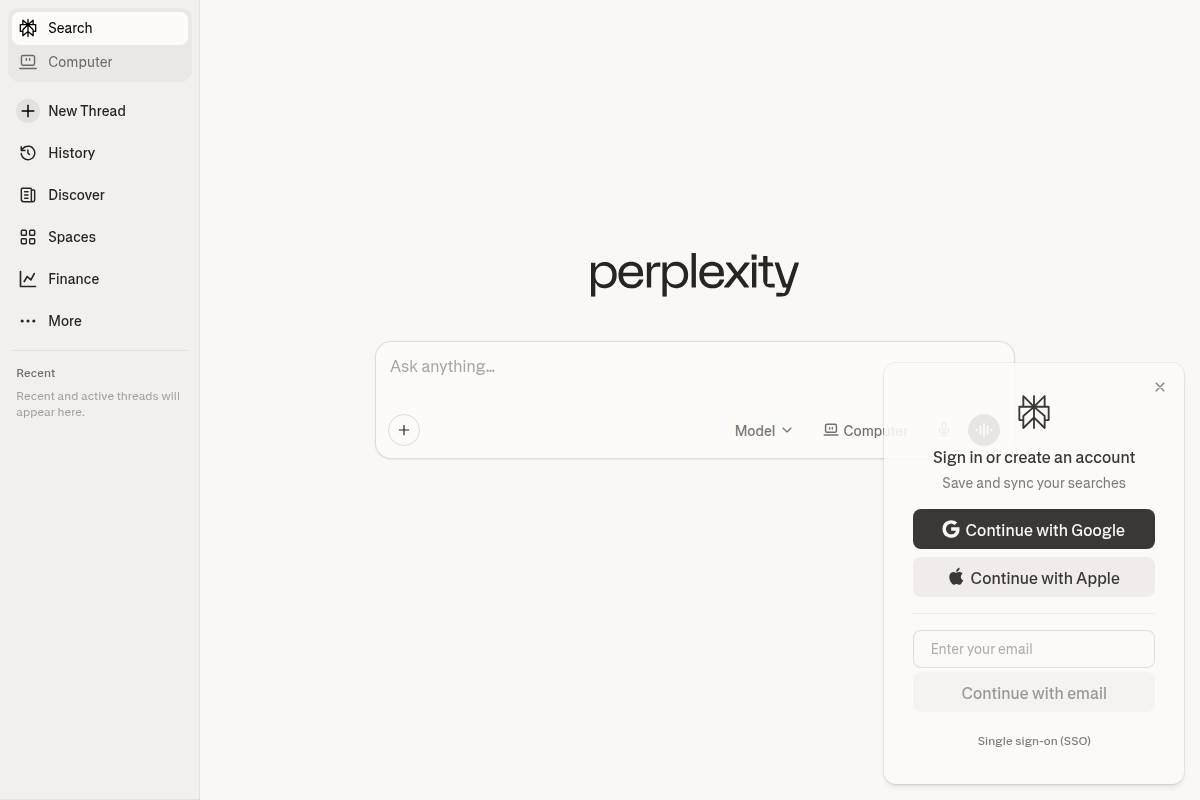
Perplexity AI is an AI-native search engine that blends live web search with large language models to deliver conversational answers. Instead of scanning a list of blue links, marketers get synthesized responses with inline citations pulled from sources like Google Scholar, major news sites, and niche blogs.
The platform supports focus modes such as Academic and Wolfram Alpha, which help with tasks like validating stats for a B2B SaaS report or checking calculations for a performance marketing forecast. SEO teams often use it for rapid topical research, quick SERP understanding, and early-stage content ideation for campaigns.
Key Features
Perplexity AI’s feature set is designed to shorten the gap between a query and an actionable, sourced answer. For content, PR, and SEO teams, this means faster briefs, more credible outlines, and fewer browser tabs to manage.
Features
- Conversational answers with inline citations that link directly to original URLs, so you can verify stats from sources like Statista or the CDC before adding them to a client report.
- Focus modes (Web, Academic, Writing) that tailor depth, tone, and source types—for example, switching to Academic when drafting a whitepaper for a healthcare brand.
- Document upload to question briefs, PDFs, or strategy decks alongside web data, useful when aligning a new blog series with an existing content roadmap.
- Collections/spaces to organize research by client, topic, or campaign, such as keeping all ecommerce holiday trend research in one shared workspace.
- Context-aware follow-ups that refine direction without restating the query, ideal when iterating on angle, audience, or funnel stage for a single topic.
Pros
Marketing and SEO teams value tools that reduce research time without sacrificing accuracy. Perplexity AI is often adopted as a companion to Google Search and traditional SEO suites because it speeds up early discovery and briefing.
Pros
- Fast, high-quality, cited answers that let strategists validate data for pitch decks or content calendars in minutes instead of toggling through 10–15 SERP results.
- Clear view of the information landscape, helping SEOs see which domains dominate a topic before running deeper analysis in tools like Ahrefs or Semrush.
- Low learning curve, so non-technical stakeholders in agencies or in-house teams can self-serve research without training.
- Consistent desktop and mobile experience, making it easy for account managers to prep client talking points on a phone before meetings.
Cons
Despite its strengths for research and ideation, Perplexity AI is not a full SEO platform. Teams still need their core analytics and ranking tools for performance tracking.
Reference: Perplexity AI
Microsoft Copilot (with Bing)

Microsoft Copilot (with Bing)
Overview
Microsoft Copilot (with Bing) is an AI assistant built directly on top of Bing’s search index and the wider Microsoft ecosystem. For marketers, that means chat-style answers powered by live web data rather than a static model, so keyword trends, SERP layouts, and fresh content are reflected in responses.
Compared with tools highlighted in HubSpot’s review of the best AI search engines for marketers, Copilot stands out for its Microsoft 365 alignment. An SEO specialist at a retail brand, for example, can research “Black Friday laptop deals SERP features,” get a SERP-style summary, then draft promo copy directly inside Word using the same Copilot session.
Key Features
Copilot’s features focus on blending live search with content creation. Marketers can run chat-driven queries, inspect cited sources, then convert learnings into briefs, outlines, or image prompts without leaving the browser.
- Chat-driven search from Bing’s real-time index – Ask for “featured snippet opportunities for ‘CRM for small business’” and Copilot surfaces current pages, common questions, and suggested angles based on live SERPs.
- Source citations and previews – Each answer includes links and snippets, letting SEOs quickly review ranking pages, similar to scanning results in tools like Perplexity or Arc mentioned in the HubSpot comparison.
- Microsoft 365 and Designer integration – Teams can refine blog drafts in Word, summarize research in Excel, or generate social ad creatives with Designer for campaigns on LinkedIn and X.
Pros and Cons
For organizations already invested in Microsoft 365, Copilot reduces friction between research, writing, and reporting. At the same time, it is not a replacement for specialized SEO platforms.
Reference: Microsoft Copilot: Your AI companion
| Pros | Cons |
|---|---|
|
|
Google Gemini (with AI Overviews & SGE Features)
Google Gemini (with AI Overviews & SGE Features)
Overview
Google Gemini, formerly Bard, is now the flagship AI model embedded across Google Search, dedicated Gemini apps, and Workspace. For SEOs, its most visible expression is AI Overviews (previously SGE), which appear at the top of the SERP on selected informational and commercial queries.
These summaries pull from multiple sources to create synthesized answers, then link out to cited pages. For example, on a query like “best running shoes for flat feet,” Gemini may surface a multi-paragraph overview ahead of traditional blue links, affecting click-through rates for publishers such as Runner’s World or Nike.
Key Features
Gemini brings several capabilities that matter directly to search visibility, from SERP summaries to content planning support. Teams can use it to understand how Google may be interpreting topics, entities, and user intent before they commit budget to large-scale campaigns.
Reference: Generative AI in Search: Let Google do the searching for you
- AI Overviews in SERPs – Synthesizes answers at the top of Google results for eligible queries, often with follow-up prompts that keep users in the AI experience.
- Gemini chat for ideation – Helps outline blog series, landing pages, and FAQ structures based on target keywords and related entities.
- Multimodal and Workspace integration – Handles text and images, and connects with Docs and Sheets so agencies can turn Gemini outputs into shareable briefs and reports quickly.
You.com
You.com
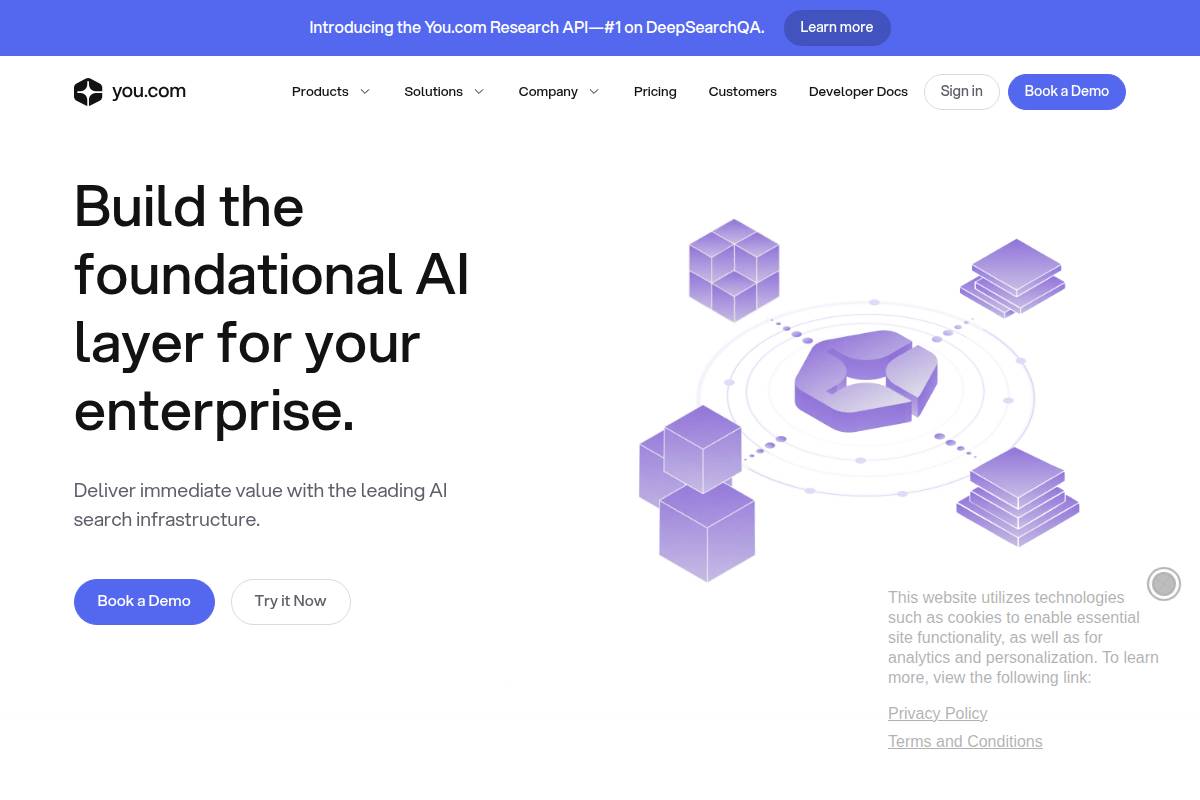
You.com is a privacy-focused AI search engine that blends traditional web results with conversational AI and modular apps. For marketing and SEO teams, it offers an alternative to Google and Bing that reduces tracking while still surfacing rich, research-ready results.
Features like YouChat and YouWrite sit alongside customizable source panels, so a content strategist at a U.S. agency can run keyword research, inspect SERP-like results, and draft blog copy in a single interface.
Key Features
You.com combines AI chat, web search, and a library of apps such as Wikipedia, YouTube, and StackOverflow in one screen. This lets an SEO lead at a SaaS company quickly compare organic results, Quora threads, and documentation snippets without opening multiple tabs.
- AI chat integrated with search results and customizable apps
- YouWrite assistant for blogs, emails, and social copy
- Privacy-focused search with fewer ads and limited tracking
- Pinning of preferred sources to influence ranking and layout
- Developer APIs for embedding AI search into internal tools
For example, a B2B content team can pin news and LinkedIn-related sources to prioritize industry commentary while using YouWrite to outline a 1,500-word comparison piece against competitors like HubSpot or Salesforce.
Pros
You.com’s strongest advantage for marketers is control. Teams can tailor which sources appear, rearrange layout, and balance AI-generated summaries with traditional SERP-style cards. This is useful when comparing branded vs. non-branded queries or analyzing how review sites shape perception.
- High customizability of sources, layout, and search experience
- Unified interface for AI chat, SERPs, and writing tools
- Appealing privacy stance for regulated niches like healthcare and finance
- Effective for research, ideation, and exploratory SEO discovery
Cons
For advanced SEO operations, You.com is better as a research companion than a core analytics platform. It lacks features like rank tracking, technical audits, or large-scale reporting that tools such as Semrush or Ahrefs provide.
- Smaller user base and fewer integrations than Google or Bing
- No deep SEO modules such as position tracking or SERP volatility charts
- Output quality can vary depending on which apps are enabled
Agencies often pair You.com with their existing stack: using it for privacy-conscious research and ideation, while relying on dedicated SEO suites for dashboards and client reporting.
Reference: You.com | AI Search Infrastructure for Enterprise Teams
NeevaAI (Neeva Technology Licensed/Integrated Tools)
NeevaAI (Neeva Technology Licensed/Integrated Tools)
Overview
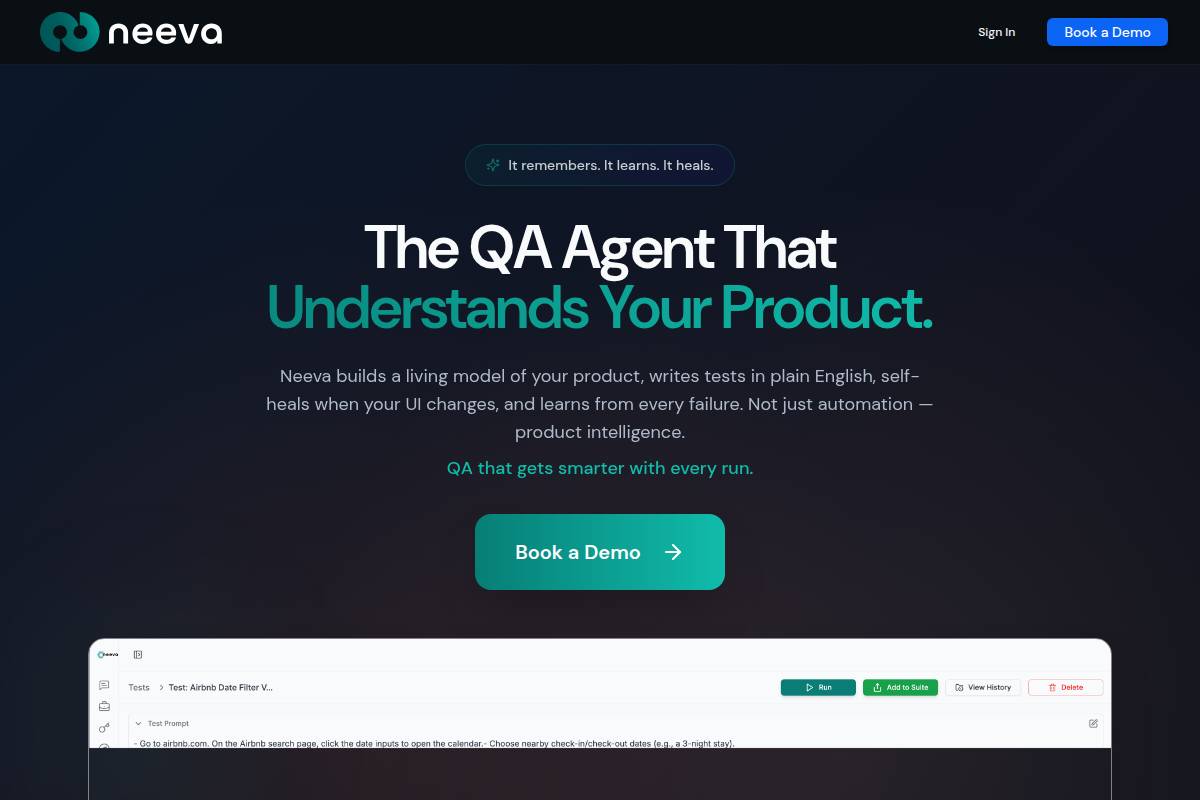
Neeva began as an ad‑free, privacy‑first consumer search engine that layered AI summaries on top of web results, similar in spirit to how Perplexity.ai and You.com work today. Its consumer product shut down in 2023, but the core AI search stack lives on through enterprise and OEM licensing.
For brands, that means NeevaAI often appears behind the scenes, powering vertical or product search rather than as a standalone destination. For example, an ecommerce platform could embed Neeva‑powered search to summarize reviews and specs, or a B2B SaaS vendor could use it to generate AI answer panels over its help center content.
Key Features
NeevaAI is built as infrastructure rather than a marketer‑facing tool, so its value shows up in how well users can find and understand content. It combines indexing, ranking, and LLM summarization to deliver concise answers on top of traditional search results.
- AI summaries and answer panels generated from indexed site or knowledge‑base content
- Privacy‑first ranking without ad or affiliate bias
- Configurable internal search for docs, wikis, and support portals
- Enterprise relevance tuning, filters, and vertical‑specific configuration
- Infrastructure‑level stack that can be embedded into portals, apps, or product search
A SaaS company could, for example, use NeevaAI to power a support search box that surfaces summarized solutions from Zendesk articles, engineering docs, and product manuals in a single panel.
Pros
From a marketing and CX perspective, NeevaAI is about delivering a premium, focused search experience that aligns with privacy‑centric brand positioning. Instead of cluttered SERPs, users get direct, AI‑generated explanations based on your owned content.
- Ad‑free UX that reinforces trust on high‑intent pages like pricing or documentation
- Strong fit for finance, healthcare, and B2B SaaS brands that emphasize data privacy
- Deep customization for specific taxonomies, products, or enterprise knowledge graphs
- Can surface long‑tail documentation that traditional keyword search often buries
An enterprise software vendor, for instance, could reduce support ticket volume by routing users through NeevaAI search that summarizes best‑practice guides and implementation runbooks.
Cons
Marketers should view NeevaAI as infrastructure rather than a direct SEO research tool. It does not replace platforms like Semrush, Ahrefs, or Google Search Console for keyword data, competitive insights, or backlink analysis.
- Requires engineering resources to integrate APIs, configure indexing, and manage auth
- No native keyword tracking, rank monitoring, or content gap reports
- Typically accessed indirectly via SaaS partners rather than a self‑serve UI
This means small marketing teams without developer support may struggle to justify or operationalize a direct integration, even if the search quality is attractive.
Reference: Neeva AI
Algolia NeuralSearch
Algolia NeuralSearch is designed for brands that treat on-site search as a revenue and engagement driver, not just a utility. It blends vector search, keyword matching, and AI ranking so shoppers and readers find what they want in a few keystrokes, whether they type “red running sneakers for flat feet” or a vague query like “Nike gym shoes comfy.”
For marketers and SEO teams, NeuralSearch supports conversion optimization by improving product discovery, content findability, and internal navigation. Strong on-site search can lift revenue per visitor and reduce pogo-sticking from search results back to Google.
Key Features
NeuralSearch stands out by combining relevance, speed, and merchandising control in one stack. It’s built to support large catalogs and complex filters while still delivering sub-50ms responses for search-as-you-type experiences across desktop and mobile.
- Hybrid AI search: Blends vector understanding with keyword rules so queries like “budget 4K TV for gaming” surface the right SKUs even if titles don’t match word-for-word.
- Search-as-you-type: Autocomplete and instant results help eCommerce brands mirror experiences users expect from Amazon.
- Deep analytics: Tracks zero-result queries, click-throughs, and conversions so marketers can spot missed intent and content gaps.
- Personalization & dynamic ranking: Learns from user behavior to boost high-converting products or articles during peak campaigns.
- Built-in A/B testing: Lets teams compare ranking rules, synonyms, or facet configurations without custom experimentation frameworks.
Pros
Algolia NeuralSearch aligns well with eCommerce, SaaS, and media properties where on-site search influences direct revenue or lead quality. For example, large online retailers often use Algolia to handle millions of SKUs with complex filters such as brand, price, size, and availability while keeping UX fast.
- Excellent fit for product discovery and content exploration on high-intent pages like category hubs, knowledge bases, and pricing sections.
- Rich analytics help marketers identify trending searches, thin content areas, and UX friction that impacts conversion.
- Highly performant and scalable, supporting large catalogs and heavy seasonal traffic without major latency spikes.
- Strong developer docs and tooling that reduce integration friction and speed up experimentation cycles.
Cons
NeuralSearch is focused on on-site relevance, not external SEO diagnostics. It does not replace tools like Semrush, Ahrefs, or Google Search Console for SERP analysis, backlink audits, or competitor benchmarking.
Reference: What is neural search and how does it work?
- Requires ongoing engineering resources to manage indexing, schema changes, and relevance tuning for evolving catalogs.
- Does not analyze Google or Bing rankings, so teams still need a dedicated SEO stack for off-site visibility.
- Pricing can rise as record counts, traffic volume, and advanced AI features increase, which can impact margins at large enterprise scale.
FAQ
1. What is an AI search engine and how is it different from traditional search?
AI search engines use machine learning, natural language processing, and large language models to understand what a user really means, not just the exact words they type. Tools like Perplexity and Microsoft’s Copilot aggregate information from multiple sources and generate a synthesized, conversational answer.
Traditional search engines such as classic Google Search largely focus on keyword matching, backlinks, and other ranking signals. They return a list of links, leaving the user to piece together insights manually instead of getting a direct, contextual response.
2. Which AI search tools are best for improving Google rankings?
For ranking-focused work, Ahrefs and Semrush remain core platforms because they surface keyword volumes, backlink profiles, and competitor SERP data tied directly to Google visibility. Agencies use Ahrefs’ Site Explorer and Semrush’s Keyword Gap to spot content gaps and link opportunities.
Content tools like Surfer SEO and Frase then turn these insights into optimized pages by guiding word count, headings, entities, and internal links. For example, SaaS marketers often run high-value blog posts through Surfer’s content editor to align on-page elements with top-ranking competitors.
3. Are AI search platforms safe for handling client or proprietary data?
Security varies widely by provider. Reputable platforms typically offer encryption in transit and at rest, role-based access controls, and clear data usage policies. For instance, Algolia and Elastic emphasize enterprise-ready security features in their documentation.
When working with sensitive client data or healthcare and finance accounts, teams often favor private instances or VPC deployments. Enterprise AI suites from Microsoft Azure or Google Cloud extend options like customer-managed keys and SOC 2 or ISO 27001 compliance to meet stricter governance requirements.
4. Can AI search engines replace human SEOs and content strategists?
AI search engines and AI SEO tools are best treated as accelerators. They excel at large-scale keyword clustering, SERP analysis, and first-draft content generation. For example, a strategist might use Frase to draft briefs and outlines in minutes instead of hours.
Human marketers still own brand positioning, messaging nuance, and experimentation. An experienced SEO decides which opportunities deserve budget, which topics support revenue goals, and how to maintain E-E-A-T standards—tasks that current AI systems cannot reliably manage alone.
5. How should marketing teams choose between these AI search tools?
Selection starts with clarifying goals: is the priority faster research, stronger content performance, on-site search, or competitive intelligence? A B2B SaaS team focused on lead gen might pair Semrush for keyword strategy with Surfer SEO for blog optimization.
Tech stack and data sensitivity also matter. Brands embedded in Microsoft ecosystems may lean toward Azure OpenAI and Elastic, while ecommerce retailers needing advanced site search often evaluate Algolia. Many agencies standardize on Ahrefs or Semrush, then layer Perplexity or Frase for AI-assisted ideation and drafting.


