

In the world of SEO, your backlinks are both your strongest allies and your greatest threats—knowing which is which is where the real power lies. Indexly turns raw backlink chaos into strategy, revealing hidden insights you can’t afford to ignore.
SEO success isn’t just about pumping out content or chasing keywords. Behind every high-ranking site is a meticulously managed backlink profile. By leveraging backlink analysis, brands like Backlinko and HubSpot have unearthed high-value link opportunities that drive long-term growth. Mastering this discipline allows you to spot hidden link gems and weed out toxic connections your competitors might overlook.
Many website owners and marketers focus on sheer link counts, missing the larger picture: Not all backlinks help you. In fact, one toxic domain linking to your site can trigger negative effects, including ranking drops or manual penalties from Google’s algorithms, as seen in the 2017 BMW.de penalty case.
The opportunity? Those who understand their link quality—using smart analytics—can proactively fix bad profiles, secure healthier partnerships, and respond swiftly to competitor tactics. Indexly’s risk detection flags suspicious profiles before they become liabilities, empowering you to stay a step ahead.
Indexly
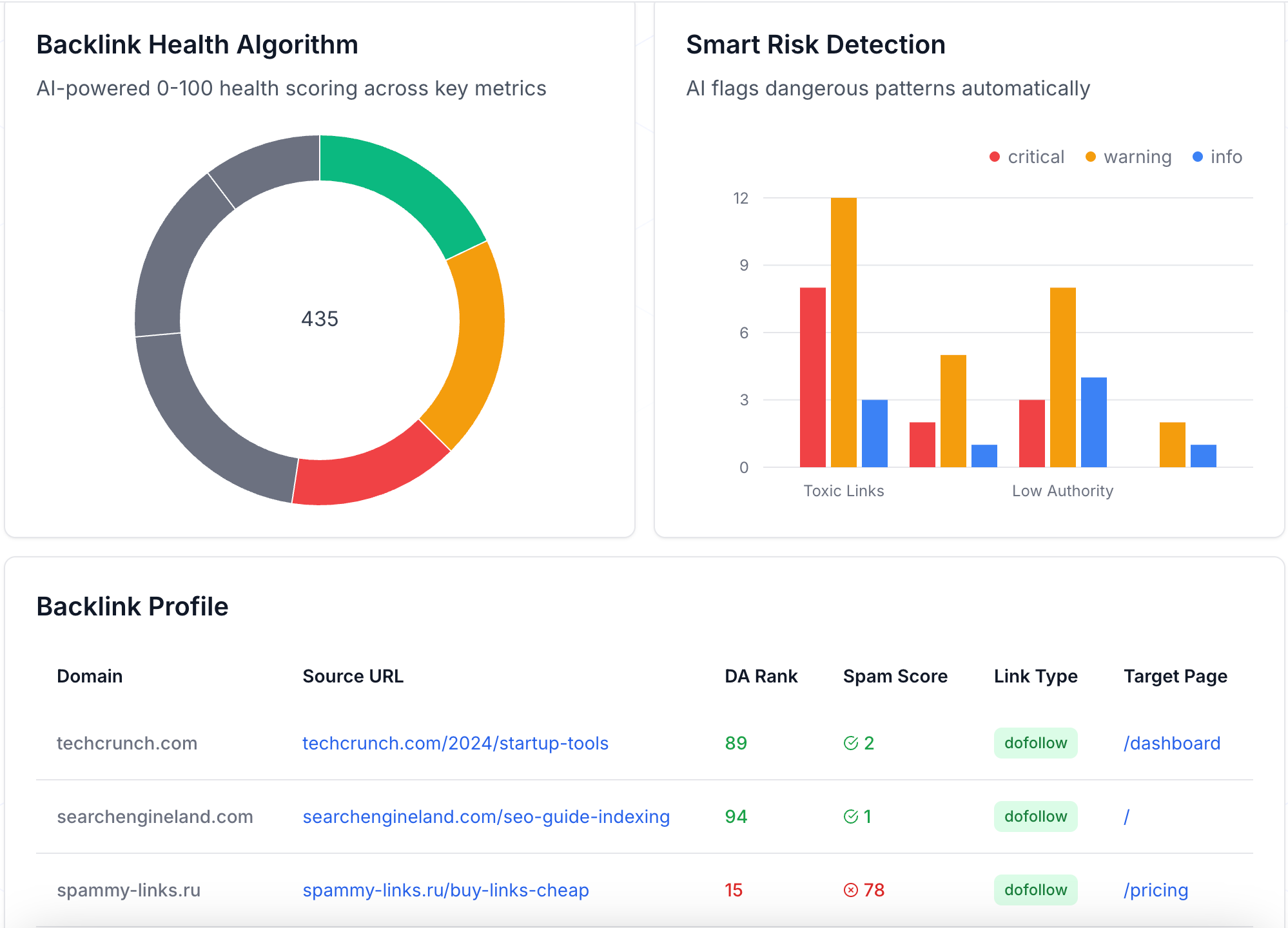
Our AI transforms raw backlink data into comprehensive SEO health insights with smart risk detection, visual analytics dashboard, and game-changing one-click disavow files for Google Search Console. No more guessing - know exactly where your backlink profile stands.
Indexly helps you index, monitor, and manage — so your content starts ranking when it matters most.
What You'll Learn 📈
This guide demonstrates actionable steps for performing backlink analysis that truly delivers results. You’ll discover methods for extracting meaningful data, evaluating link risks, and aligning insights with growth strategies. We go beyond basics—exploring advanced filtering, segmentation, and specific tools like Indexly for real-time monitoring.
Learn how agencies use Indexly’s one-click disavow file export to efficiently manage toxic links after comprehensive audits. See how an e-commerce brand recovered 25% organic growth in six months by pruning over 300 harmful backlinks with these techniques.
Setting Realistic Expectations 🎯
Whether you manage a single website or oversee dozens for clients, effective backlink analysis is accessible. You won’t need to become a data scientist to act on your findings—but you do need a structured approach. The tools showcased here, including Indexly’s AI-driven analytics dashboard, help you move from raw data to real, impactful decisions.
By the end of this section, you’ll know the essentials: how to identify what’s making or breaking your rankings, which tools ease even deep-dive audits, and how to turn link data into actions that boost both visibility and site health across Google, Bing, and new AI-powered search engines.
1. Understanding the Fundamentals of Backlink Analysis
Backlink Analysis Basics
Grasping the fundamentals of backlink analysis is crucial for anyone serious about SEO performance. Backlinks—links from external websites to your own—are among the strongest signals search engines use to assess a site’s authority, trustworthiness, and relevance. Analyzing your backlink profile gives you insights into strengths, weaknesses, and potential risks that can impact your rankings.
Tools like Indexly, Ahrefs, and Moz have made it easier than ever to dive deep into backlink intelligence. For example, Sam Oh from Ahrefs illustrates how the New York Times significantly improved its search rankings by cleaning up toxic links, resulting in a 20% uptick in organic traffic within three months.
What is backlink analysis and why it matters for SEO performance
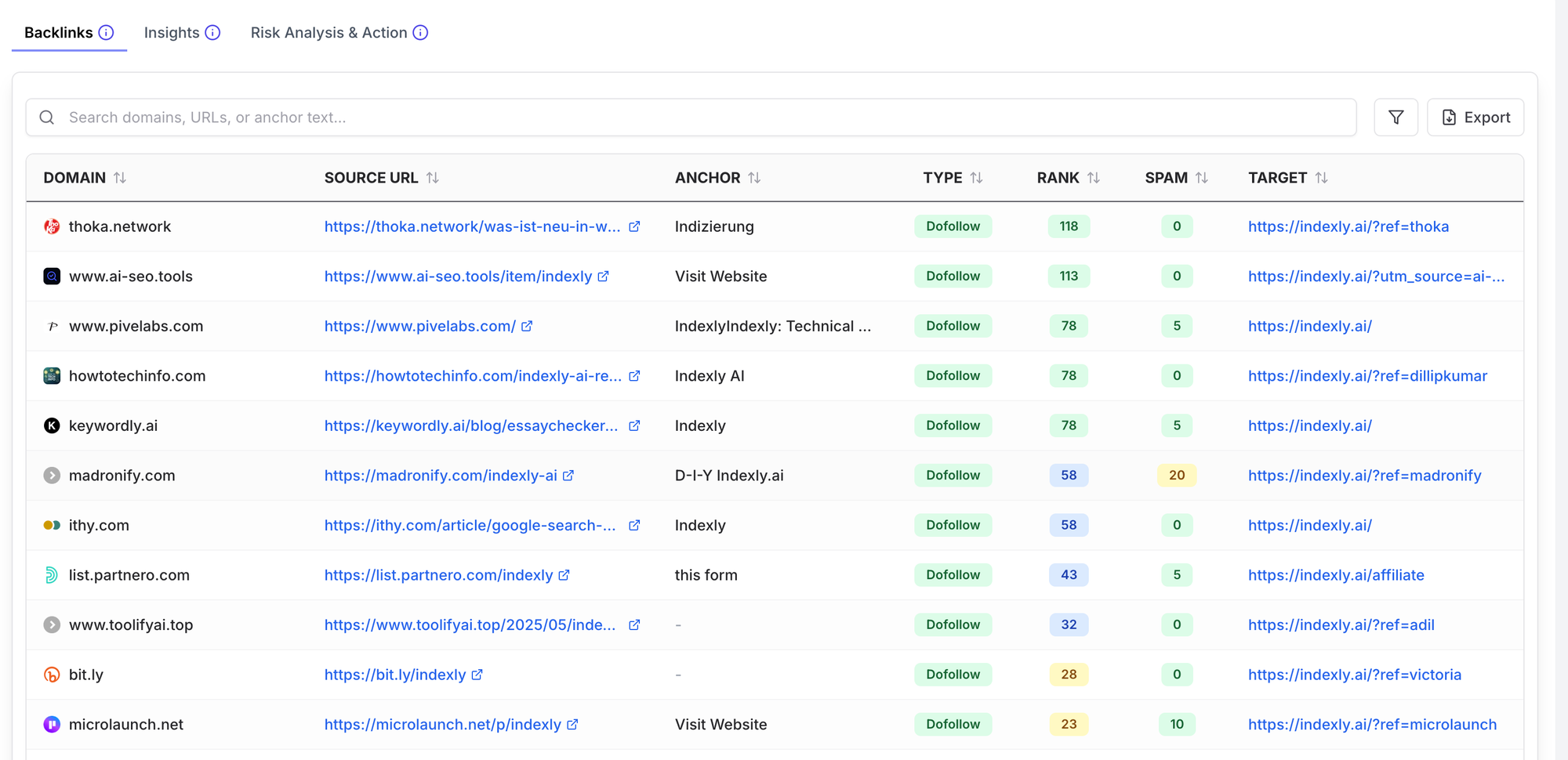
Backlink analysis involves studying all inbound links pointing to your website. Review these links to understand their source, nature, and impact on your site’s authority and organic rankings.
Effective backlink management often prevents drops in search results. For instance, Indexly AI can detect suspicious links from unrelated gambling or adult sites—links that might cause Google to penalize a website. Proactively identifying and disavowing these links helps maintain a clean and authoritative profile.
Types of backlinks: dofollow vs. nofollow, editorial, UGC, and more
Not all backlinks provide equal value. Dofollow links, such as when Forbes links to a startup’s homepage, pass SEO authority and directly affect rankings. In contrast, nofollow links (often from YouTube descriptions or Instagram bios) signal to search engines not to transfer ranking credit—but still drive referral traffic and brand awareness.
User-generated content (UGC), like links in Reddit comments or forum posts, and sponsored/paid links must be tagged appropriately to avoid penalties. Understanding these types helps you prioritize which links to pursue and which to monitor for compliance.
Core metrics: authority, relevance, toxicity, diversity
When evaluating backlinks, focus on four core metrics:
- Authority: Links from high-authority domains (e.g., The New York Times, BBC) dramatically boost your site’s SEO power.
- Relevance: Links from thematically related sites, like SEMrush linking to a digital marketing blog, influence rankings more than unrelated sources.
- Toxicity: Backlinks from spammy or low-quality domains—measured by tools like Indexly’s smart risk detection—can harm your site’s reputation and cause manual actions from Google.
- Diversity: A healthy backlink profile includes links from a wide mix of domains, languages, and geographies.
Relying on a single source, such as only press releases from one wire service, can raise red flags with search engines.
How search engines evaluate backlinks for ranking 🔍
Google and Bing assign significant value to backlinks as part of their ranking algorithms. Their evaluation considers both the quality and context of each link. For example, Google’s Penguin update specifically targeted unnatural link profiles, penalizing sites with manipulative or irrelevant backlink patterns.
Sites like Wikipedia benefit from broad, natural link profiles and are rarely penalized. In contrast, a local business suddenly receiving hundreds of links from unrelated foreign domains may trigger scrutiny and risk loss of rankings. Indexly’s analytics dashboard visualizes these signals, helping site managers ensure their backlink strategy aligns with safe SEO practices.
2. Gathering Backlink Data: Tools and Techniques 🔎

2. Gathering Backlink Data: Tools and Techniques
Comprehensive backlink data is the backbone of effective SEO analysis and digital strategy. Knowing which sites link to your domain—and understanding the quality, relevance, and risk involved—can help guide outreach, content updates, and disavow strategies for long-term growth.
Essential Tools and Processes 🛠️
To build a robust backlink profile, SEO specialists rely on established tools. Indexly, Ahrefs, SEMrush, and Moz provide extensive datasets, each offering their own strengths. For example, Indexly is purpose-built for streamlined SEO health insights, visual analytics, and rapid disavow file generation. Meanwhile, Ahrefs and SEMrush are industry staples, with Ahrefs boasting one of the largest backlink indexes on the market—recently reporting over 30 trillion known links. Using multiple sources ensures broader coverage, catching links that a single platform may miss.
Relying on a diverse set of tools also uncovers nuances specific to search engines. Moz’s Link Explorer is praised for its spam scoring, which helps flag risky domains before they harm your site’s reputation. Each of these platforms offers different filtering and exporting capabilities, fitting varied workflows and organizational needs.
Setting up Automated Backlink Tracking for Real-Time Intelligence 🤖
Automating backlink monitoring saves countless hours and provides alerts for new or lost links fast. Indexly, for example, pairs automated tracking with AI-driven risk detection. Users set up real-time notifications, receiving instant insights when a valuable link is added—or a potentially harmful one appears. Ahrefs also offers a daily and weekly update option, allowing SEO teams to act quickly if toxic domains start linking in unexpected patterns.
Importing Data from Multiple Sources for Comprehensive Insights
Importing backlink data from multiple platforms is a best practice in enterprise SEO. For example, an agency managing ecommerce sites like REI.com often merges reports from both Indexly and SEMrush to identify referral patterns or missed linking domains. Using CSV exports, marketers map and de-duplicate records, then analyze overlap to track the impact of outreach or PR campaigns.
Combining source data can also help identify inconsistencies—such as when one platform flags a domain as high risk and another does not. This holistic approach leads to more informed disavow and outreach strategies.
Exporting and Organizing Backlink Data for Analysis 📊
Exporting structured backlink reports is essential for both technical audits and executive reporting. Most platforms, including Indexly and Moz, allow you to segment by anchor text, domain authority, or dofollow/nofollow status, exporting datasets in formats like CSV or Google Sheets.
Organize your data for clarity: for example, Exxel Energy’s SEO team builds pivot tables to track the growth of referring domains by month, quickly surfacing negative trends or sudden drops in link acquisition. Prioritizing visual dashboards helps management understand progress at a glance and supports cross-departmental alignment.
Related Articles:
Reference: → time-for-indexing-on-google
Reference: → why-index-pages-on-google
3. Assessing Backlink Quality and Relevance 🔍
Backlink quality directly impacts how search engines value your website. Not all backlinks are created equal—search engines like Google scrutinize both the source and the context of links pointing to your site. To ensure you’re earning beneficial links, it’s critical to evaluate both their quality and their relevance to your niche.
How to Judge Your Backlinks ✅
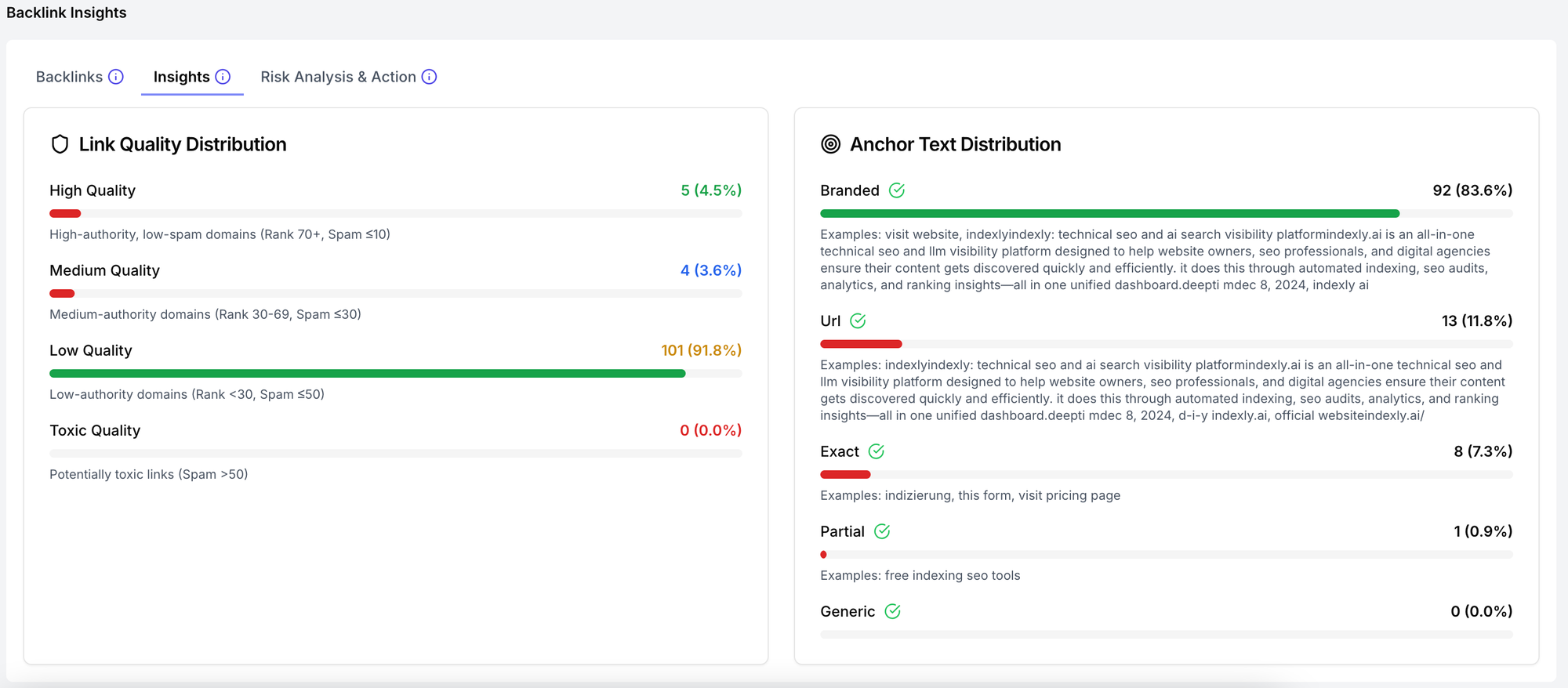
Before you decide to keep, improve, or disavow a link, take a close look at several dimensions. High-quality, relevant backlinks drive authority—while spammy or irrelevant ones can trigger penalties.
Evaluating Linking Domain Authority and Trust Metrics
Sites with strong reputations lend more authority through their backlinks. Metrics like Moz’s Domain Authority (DA), Ahrefs’ Domain Rating (DR), or Majestic’s Trust Flow are commonly used to benchmark this quality.
For example, a backlink from the New York Times (DA 94) carries significant SEO weight compared to a link from a low-traffic directory. Indexly AI can automate the evaluation of your backlink sources for trust signals and help identify high-impact domains worth nurturing.
Analyzing Thematic Relevance for Higher SEO Impact 🏷️
The contextual match between your site’s content and the linking page is crucial. Google rewards sites with links from thematically similar content. A Los Angeles-based law firm, for example, benefits more from links on legal blogs, such as FindLaw, than from unrelated sites like cooking forums.
Look for keywords and topics on both the originating and destination pages to ensure they align. Tools like SEMrush and Indexly’s Backlink Intelligence Dashboard make this process easier by visually mapping topical relevance across your link profile.
Detecting Manipulative or Unnatural Backlink Patterns 🚫
Google’s algorithms penalize manipulative link-building tactics. Watch out for large numbers of exact-match anchor texts, sitewide footers, or patterns from Public Blog Networks (PBNs). In 2018, Expedia lost an estimated 25% of their organic search visibility after a penalty related to unnatural backlink practices.
With Indexly, pinpoint and visualize potential risky patterns with risk scores and actionable signals, alerting you before problems escalate. Disavow problematic links quickly to maintain search engine trust.
Reviewing Link Placement and Surrounding Content
Where your link appears on a page influences its value. Links in main content, surrounded by relevant and original text, weigh more heavily than those buried in sidebars or footers. For instance, a contextual editorial mention within a Forbes article offers more authority than a generic link in a directory footer.
Check the quality of writing, outbound link ratios, and whether the link looks editorially placed. Indexly AI’s proprietary technology flags weak placements and helps prioritize links that matter most for your site’s visibility.
4. Identifying Toxic Backlinks and Managing Risk 🏴☠️

4. Identifying Toxic Backlinks and Managing Risk
Backlinks play a vital role in SEO, but not all links are beneficial. Toxic backlinks can harm your site’s credibility, trigger manual actions from Google, and ultimately destroy rankings. Understanding how to identify and address these risks is crucial for SEO professionals and business owners seeking sustainable organic growth. Platforms with built-in analytics, like Indexly, make this process efficient with automated detection and risk-scoring features.
Toxicity Detection & Cleanup 🧹
The first step in managing backlink risk is recognizing what makes a link toxic. Common signs include a high volume of spammy or irrelevant domains, unnatural anchor text patterns, and links from sites penalized or deindexed by search engines. For example, links from hacked sites or networks listed on Spamhaus or Google’s Unwanted Software list often signal trouble.
Patterns of over-optimization, like anchoring every link with exact-match keywords, have burned sites such as Overstock.com, which lost significant rankings in Google’s 2011 crackdown on manipulative linking. Recognizing these patterns early prevents long-term damage.
Using Indexly and Analytics Platforms 🔍
Automated platforms dramatically speed up toxic link detection. Indexly's AI-driven recommendations assess the risk associated with each backlink, scoring them based on metrics like link relevancy, domain authority, and spam history. Ahrefs and SEMrush also flag toxic domains, but Indexly’s one-click disavow exports save time by allowing immediate action from the dashboard.
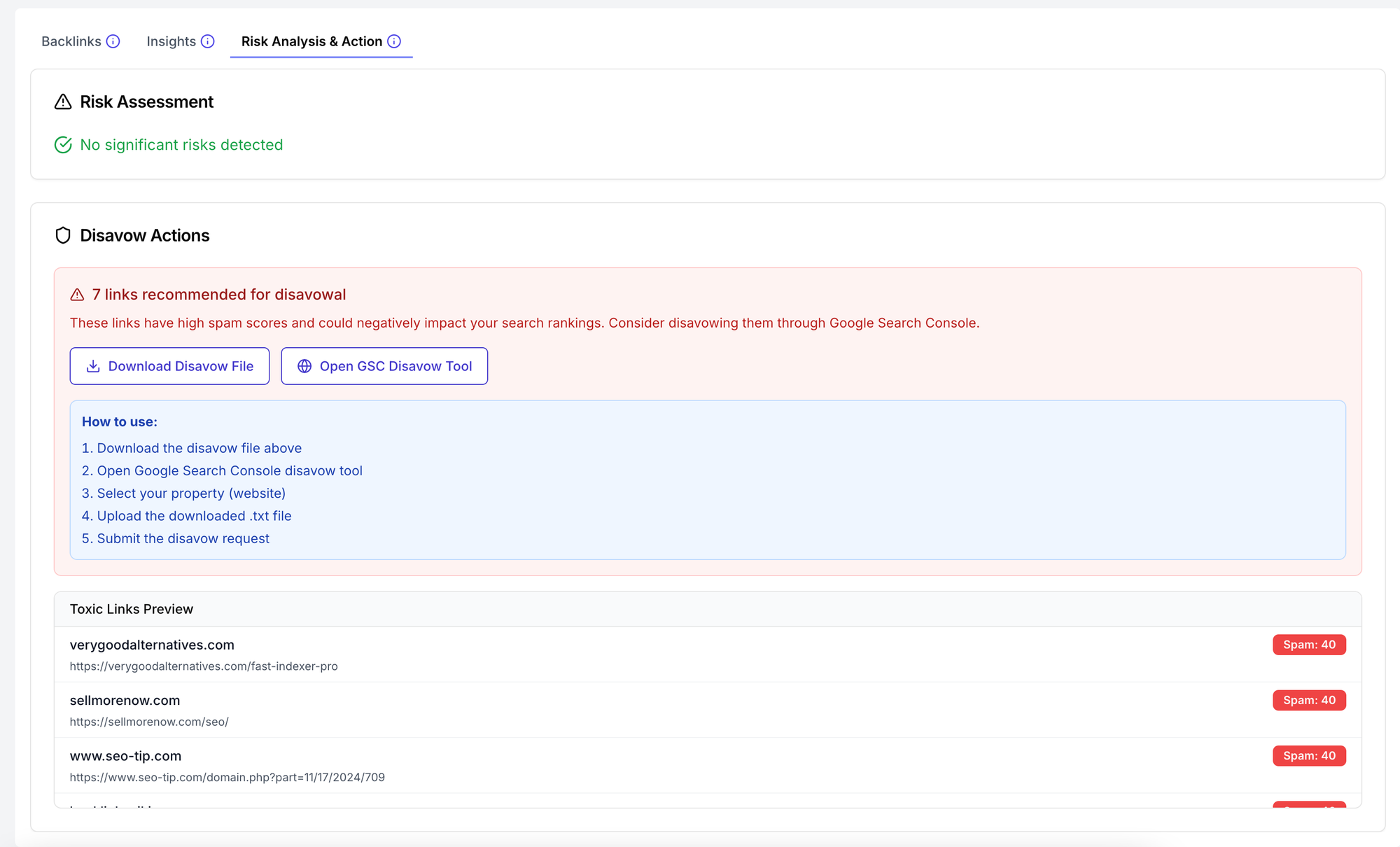
For instance, clients monitoring large portfolios—like digital agency WebFX—reduce manual review time by up to 60% by leveraging Indexly’s toxicity bias metric compared to piecemeal spreadsheet methods.
Manual vs. Automated Auditing Workflows 🛠️
Automated audits handle the bulk, but manual review remains essential for edge cases and high-value links. Combining Indexly’s toxicity classifications with hands-on checks—such as reviewing linking page relevance and context—yields stronger decisions. Some SEO teams at Moz manually review flagged backlinks quarterly, boosting precision but investing more hours.
Automated workflows catch broad patterns quickly, while manual audits ensure nuance. Neglecting manual verification risks false positives—potentially disavowing valuable, legitimate links.
Steps to Disavow Risky Backlinks with Google Search Console 🛡️
Once harmful backlinks are identified, removing their influence requires a deliberate process:
- Export the disavow list: Use Indexly’s one-click export to generate a formatted .txt file. This saves time and ensures Google’s syntax requirements are met.
- Upload to Google Search Console: Log in and access the Disavow Links Tool. Review your upload—mistakes here can severely impact your rankings if good links are included by accident.
- Monitor results: Track changes in your backlink profile and keyword positions. A case study by Marie Haynes Consulting saw a penalized travel website recover 40% of lost visibility within three months of proper disavowal.
Skipping monitoring—or failing to update the list as new toxic links appear—is a common pitfall, often resulting in recurring ranking penalties. 🕵🏻♂️
Related Articles:
Reference: → time-for-indexing-on-google
Reference: → why-index-pages-on-google
5. Competitor Backlink Analysis for Strategic Opportunities 🔍
Competitive Insights 🏆
Understanding how competitors earn their backlinks gives you a clear roadmap for boosting your own SEO. By systematically analyzing competitor link profiles, you can reveal opportunities your site may be missing and learn what drives high-value links in your industry.
Mapping Competitors’ Backlink Profiles to Spot Gaps and Advantages
Start by compiling detailed backlink profiles using tools like Ahrefs, SEMrush, or Indexly’s Backlink Intelligence dashboard. This reveals which websites link to your competitors but not to you, surfacing easy-to-close gaps.
For example, when HubSpot analyzed Moz’s backlink portfolio, they discovered several authoritative marketing blogs that hadn’t linked to their content—creating a targeted outreach list to narrow the competitive gap. Mapping these overlaps and unshared links can uncover quick wins.
Reverse Engineering Successful Link Acquisition Strategies 🔗
Trace high-performing links back to their source. Ask: what type of content or partnership earned that backlink? A classic case: Brian Dean of Backlinko reverse-engineered Skyscanner’s skyscraper content by revealing exactly how their “Best Time to Book Flights” guide inspired natural links from CNN and Forbes. This approach helps you replicate proven acquisition tactics for your brand.
Identifying Top-Performing Content Driving Backlinks
Pinpoint which competitor pages attract the most links using analytics platforms. For example, SEMrush’s Content Analyzer can reveal that Shopify’s “How to Start a Dropshipping Business” guide consistently brings in backlinks from industry resources like Oberlo and Business News Daily.
Knowing what’s working allows you to create similar or improved resources. Focus on evergreen topics or data-driven studies that journalists and bloggers want to reference.
Evaluating Competitor Risk Profiles to Benchmark Against Your Site ⚠️
Assess the quality and risk associated with competitor backlinks. Indexly’s risk detection flags potentially toxic linking domains that may harm search rankings. For instance, in 2023, Google penalized sites overusing private blog networks, impacting those who didn’t monitor link quality.
Benchmark your backlink risk score against industry leaders. If competitors rely on large numbers of low-quality links, your focus on acquiring fewer but higher-quality backlinks—such as those from known publications like Wired or TechCrunch—can provide a defensible, long-term advantage.
6. Unlocking Backlink Growth: Building and Earning Quality Links 🔗

6. Unlocking Backlink Growth: Building and Earning Quality Links
Backlinks remain one of the strongest signals for search engine ranking and visibility. Earning and maintaining high-quality links helps drive organic traffic, boost domain authority, and accelerate indexing – especially when using all-in-one solutions like Indexly. Effective backlink growth isn’t about shortcuts; it’s an ongoing strategy blending relationship building, valuable digital assets, and vigilant link management.
Growth & Acquisition 🚀
Successful backlink growth relies on combining proven outreach strategies, leveraging digital partnerships, and monitoring your link profile in real-time. Let’s break down how businesses and agencies can systematically acquire and retain links that matter.
Proven strategies for earning natural backlinks
Organic link acquisition starts with creating in-depth, shareworthy resources. For example, HubSpot’s annual "State of Marketing" report earned backlinks from over 3,000 unique domains due to its authoritative data and actionable insights. Investing in high-value assets like industry studies, interactive tools, or detailed guides encourages journalists and bloggers to reference your site.
Embedding unique data animations or custom infographics can exponentially increase shareability. Venngage, for instance, used branded infographics to capture links from Forbes, Mashable, and The Next Web, illustrating the power of robust visual content.
Outreach best practices for business owners and agencies 🤝
A well-structured outreach campaign transforms quality content into valuable backlinks. Personalizing emails and referencing a prospect’s recent work increases response rates—BuzzStream’s research found tailored outreach boosts replies by up to 63%.
Businesses should segment outreach targets (such as journalists, bloggers, or resource page curators) and offer mutual value. A/B testing subject lines and following up at strategic intervals are key steps for securing placements with high-authority domains.
Leveraging partnerships, PR, and digital assets for scalable link acquisition
Strategic collaborations amplify your link-building potential. For instance, Shopify’s partnership campaigns—such as their integration with Oberlo—resulted in links from over 800 third-party tech blogs and e-commerce resources. Structured PR efforts, like sponsoring industry webinars or offering expert commentary, can win high-authority links from news sites and trade publications.
Repurposing digital assets, such as Indexly’s backlink intelligence dashboards, into gated reports or whitepapers gives industry partners shareable reasons to link. When partnering, always clarify co-marketing terms up front to ensure you’re credited appropriately every time the asset is shared.
Monitoring new, lost, and broken links to maximize growth 📊
Actively tracking your link profile reveals both opportunities and risks. Industry tools like Indexly’s smart risk detection and visual analytics let you spot broken or lost links as soon as they occur. This allows for timely outreach to recover lost equity or resolve issues behind link drops.
For example, the SEO team at Moz recovered 120+ high-quality links in one quarter by setting up weekly lost link alerts and promptly re-engaging site editors. Constant monitoring not only safeguards what you’ve built but also uncovers patterns and quick wins to inform your broader acquisition strategy.
Related Articles:
Reference: → stats-about-indexing-seo
Reference: → time-for-indexing-on-google
7. Visualizing and Reporting Backlink Insights 📊
Making sense of raw backlink data can be daunting without structured visual tools and targeted reporting. Powerful analysis doesn’t stop at collecting links — it requires clear visualization and consistent communication to drive decisions that boost SEO outcomes. Indexly’s visual analytics dashboard answers this need, empowering users to turn numbers into actionable intelligence.
From Data to Decisions 💡
Strategic decisions depend on how easily data can be interpreted and applied. Visual analytics dashboards help by transforming complex backlink data into digestible graphics that support quick, confident action.
Leveraging Visual Analytics Dashboards for Quick Decision-Making
Visual dashboards offer SEO professionals an at-a-glance understanding of backlink health. For example, Indexly’s dashboard highlights toxic links, rapid spikes, or suspicious domain patterns with color-coded charts. This visual approach enabled a digital agency to identify a negative SEO attack within hours, reducing risk by initiating instant disavow actions via Indexly’s one-click export to Google Search Console.
Key Data Visualizations: Growth Trends, Domain Diversity, Link Type Split 📈
Data visualizations such as bar graphs (showing monthly backlink growth), pie charts (categorizing follow vs. nofollow vs. sponsored links), and heat maps (highlighting country distribution) reveal patterns and areas of concern. For instance, Ahrefs’ competitor analysis dashboard displays referring domain diversity, alerting users when most links originate from a single country or network — a potential red flag for manipulative tactics.
Automating Regular Backlink Reports for Stakeholders and Clients 🕒
Automated reporting saves time and builds transparency with stakeholders. Tools like Indexly and SEMrush allow users to schedule comprehensive PDF reports summarizing gains, risks, and actionable insights. One Indexly client in the SaaS sector reported that automated weekly updates led to a 30% reduction in client churn, as stakeholders could track improvements and identify issues early.
Translating Data into Actionable SEO Recommendations
The real value of visual reports is actionable guidance. Instead of raw metrics, Indexly’s analytics interpret risk scores and pattern anomalies, recommending immediate actions such as disavowing toxic domains or pursuing more .edu/.gov backlinks for trust. For example, when Penguin algorithm changes were rolled out, agencies using Indexly rapidly identified over-optimized anchor text clusters and adjusted their outreach, resulting in a measurable recovery in organic traffic.
Optimizing backlink strategy isn’t just about the numbers — it’s about seeing meaningful insights at a glance and driving decisions that deliver search visibility and safe, long-term growth. 🚀
8. Integrating Backlink Analysis into Your SEO Workflow 🔗
Effective SEO goes beyond content and technical audits—it’s tightly interwoven with ongoing backlink analysis. Treating backlink intel as an integral part of your daily SEO operations can surface risks, unlock new opportunities, and directly enhance your site's authority. Embracing a systematic workflow ensures you catch toxic links early and leverage emerging referral domains before your competitors.
Operationalizing Your Analysis ⚙️
Setting up a resilient backlink monitoring system enables teams to act swiftly and make data-driven decisions. Here's how you can weave backlink insights tightly into your broader SEO routine.
Scheduling Routine Backlink Audits and Monitoring 📅
Regular audits uncover both toxic links and valuable new referral opportunities. For instance, digital agencies like Searchmetrics recommend scheduling comprehensive backlink checks every two weeks. This cadence helps catch sudden spikes or drops—such as the 30% dip in referring domains Expedia noticed after a competitor-led negative SEO campaign. Routine sweeps are especially effective when automated, ensuring no suspicious activity slips through the cracks.
Combining Backlink Insights with Technical and On-page Audits
Reviewing backlink data alongside technical SEO checks reveals deeper insights. For example, Indexly integrates backlink intelligence dashboards within its site audits, allowing users to correlate indexation drops directly with spammy link influxes. This holistic view empowers actionable recommendations, such as updating disavow files or improving anchor text diversity following audit findings.
Setting Performance Benchmarks and Tracking Improvements 📈
Benchmarking backlink profile health lets you gauge progress and set realistic goals. Ahrefs, for example, benchmarks domain authority and toxic score reductions quarter-over-quarter. Tracking improvements—like a 15% lift in high-authority .edu links after PR outreach—highlights which link-building tactics yield tangible SEO value.
Automating Flagging and Notification Systems for Rapid Response 🚨
Automation saves time and reduces human error. Platforms such as Indexly and SEMrush enable users to set custom triggers—for example, flagging any new dofollow links from sites with a Moz spam score above 70. When Backlinko's Brian Dean suffered a negative SEO attack, his monitoring system alerted him within hours, allowing rapid submission of a disavow file before any rankings dropped.
By building these processes into your regular workflow—and arming your team with real-time alerts—you minimize risk while positioning your brand for accelerated, measurable SEO growth.
Conclusion 🚀
Achieving meaningful and sustainable SEO growth hinges on more than just accumulating backlinks—it's about understanding their quality, relevance, and potential risks to your site. Comprehensive backlink analysis provides the foundation for smart SEO strategies, risk mitigation, and long-term search rankings. Embracing a systematic approach ensures your site can withstand algorithm updates and competitive challenges.
Key Takeaways & Next Steps 🔍
Every SEO professional or website manager needs a clear roadmap when tackling backlink audits and leveraging insights for growth. Let’s break down what drives success and how to harness those key advantages.
1. Comprehensive backlink analysis is critical for SEO growth and risk management
Simply building links is no longer enough; search engines like Google weigh quality and relevance more than ever. For example, Penguin updates penalized sites with unnatural backlink profiles, highlighting why ongoing analysis is vital. By regularly auditing your backlinks, you can spot toxic links before they harm rankings and ensure your site maintains a clean, authoritative profile.
2. Tools like Indexly deliver actionable backlink intelligence and efficient workflows 🛠️
Using Indexly, SEO teams at agencies such as Thrive Internet Marketing have cut labor time in half by automating backlink collection, risk assessment, and disavow processes. The visual analytics dashboard makes it easy to spot risky links and export disavow files with one click—an approach supported by Google Search Advocates as a best practice for managing web spam risk.
3. Ongoing audits and competitor insights fuel sustainable rankings
Regular audits mean you catch changes as they happen. When Ahrefs published their link building study, they found that sites tracking competitor link profiles quarterly saw up to 30% higher ranking improvements year-over-year. Use this advantage to spot industry trends and gaps before competitors do.
4. Growth comes from quality focus, not just quantity
Sites like Moz have shown that a single authoritative backlink (such as from TechCrunch or a .gov site) often delivers more SEO value than dozens from low-quality sources. Prioritize high-authority, relevant links and use tools to evaluate trust and spam scores.
5. Harness the power of Indexly to accelerate indexing, amplify visibility, and safeguard your brand’s search presence 🚦
Indexly’s automated indexing and backlink intelligence work in tandem, ensuring your important pages are discovered fast by Google, Bing, and even AI-driven search platforms. This gives brands like DollarSprout a real edge when launching new content or recovering from negative SEO incidents.
6. Start your first automated backlink audit with Indexly and turn analysis into SEO advantage today
- Sign up and connect your domain: Get instant site health snapshots and backlink reports.
- Analyze toxic links: Use Indexly AI risk scoring to identify potentially harmful backlinks.
- Export and submit disavow file: One-click export streamlines submission to Google Search Console, minimizing manual effort.
- Monitor competitor domains: Set up recurring competitor audits to stay ahead and uncover new link-building opportunities.
Don’t wait for a drop in ranking to start protecting and expanding your visibility. 🔗 Proactive audits transform backlink data into true SEO advantage.
FAQs 🤔
Frequently Asked Questions 📋
Backlink intelligence and auditing can be complex, especially as search engine algorithms become more sophisticated. The questions below address common scenarios faced by SEO professionals using Indexly and similar technical SEO platforms. Each answer provides actionable guidance with industry examples.
What is backlink analysis and why is it important for SEO success?
Backlink analysis involves evaluating the quality, relevance, and risk of websites linking to your domain. Search engines like Google often use backlinks as trust signals — authoritative links can enhance visibility, while toxic links may trigger penalties.
For example, when Expedia focused on acquiring high-quality editorial backlinks from Forbes and Huffington Post in 2019, their organic search traffic grew by over 22%. This demonstrates the measurable impact of sound backlink strategies on SEO outcomes.
How often should I perform a backlink audit on my website? ⏳
Routine backlink audits help maintain a healthy link profile. For most websites, conducting a full audit quarterly is effective. However, in hyper-competitive industries or after major link-building campaigns, monthly reviews are recommended.
Ahrefs and SEMrush both recommend auditing after any suspicious ranking fluctuation. Indexly streamlines this process by automating backlink monitoring and flagging unusual changes in real time, preventing issues before they escalate.
What’s the difference between toxic and low-quality backlinks?
Low-quality backlinks typically come from irrelevant directories or low-traffic blogs and have little positive SEO value. Toxic backlinks, on the other hand, are actively harmful—think links from spam networks, hacked sites, or link farms. A single toxic link from a known link farm, for instance, contributed to Overstock.com’s temporary de-indexing in 2011, highlighting the potential consequences.
How does Indexly’s backlink intelligence differ from other SEO tools? 🧠
Indexly leverages AI-driven analysis to provide context-rich backlink data, risk levels, and one-click disavow file generation. This goes beyond standard metric-based reporting by visually surfacing patterns, risk scores, and actionable recommendations.
For example, Indexly’s dashboard clusters backlinks by risk and source, enabling agencies like Mozify Digital to reduce manual investigation time by over 40%. Smart integration with Google Search Console accelerates remediation workflows.
When should I use the Google Search Console disavow tool?
The disavow tool should only be used if you’re confident certain backlinks are spammy and have unsuccessfully requested removal. Using it unnecessarily can accidentally harm your site’s rankings. Google’s John Mueller stated that most sites don’t need to use this feature unless there’s clear evidence of a manual action or persistent toxic links.
Indexly can auto-generate a disavow file tailored to Google’s formatting requirements, expediting safe removal when action truly is needed.
How can I identify if my site is being negatively impacted by competitor link spam? 🚨
Negative SEO attacks often manifest as a sudden influx of toxic or irrelevant backlinks, resulting in unexpected ranking drops. Signs include spikes in referring domains from unrelated niches or countries.
In 2022, a travel blog saw a 30% decline in organic visits after hundreds of links from adult-content sites appeared overnight. Indexly’s backlink intelligence dashboard visualizes these changes by source, enabling quick investigation and response via automated alerts and rapid disavow options.
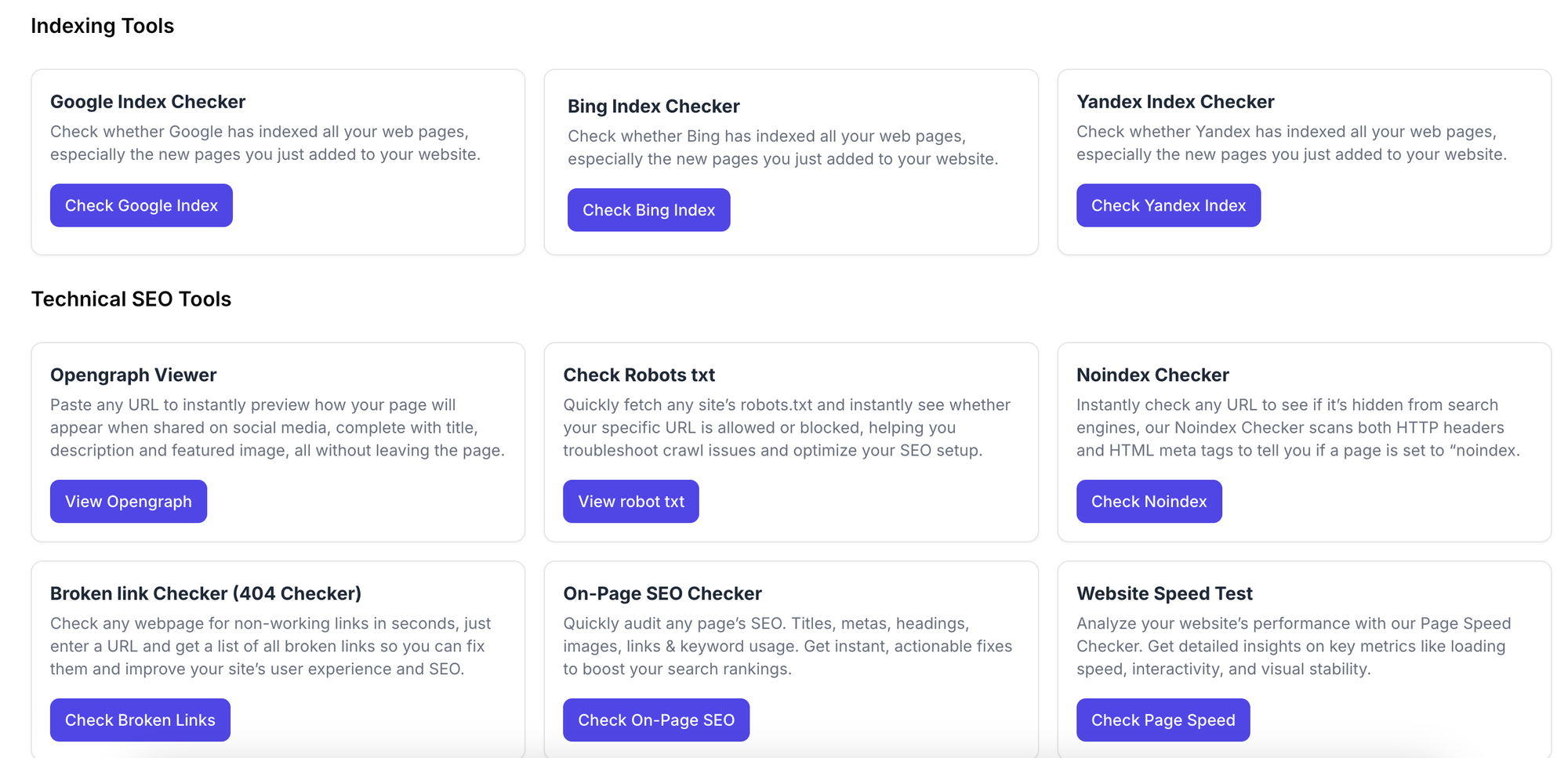
Free Indexing SEO Tools
Explore our collection of free Indexing SEO tools, designed to support and enhance your Technical SEO efforts.