Top 10 AI SEO Audit Tools: How do AI audits differ from traditional SEO audits?
Discover 2026’s top AI SEO audit tools—and how Indexly helps teams track rankings, AI mentions, and visibility end-to-end.


The 2026 SEO Landscape
SEO in 2026 stretches far beyond classic Google blue links. Brands now fight for visibility across Google, Bing, TikTok search, Amazon product results, niche vertical engines like Booking.com, and AI-native experiences such as Perplexity and ChatGPT search integrations.
Search journeys are deeply personalized by intent, behavior, and context. Google’s continuous updates, Bing’s AI-powered results, and TikTok’s interest graphs all reshape rankings in near real time, forcing teams to optimize for multiple SERP types and content formats simultaneously.
Challenges for Modern SEO Teams
Marketing and SEO teams are drowning in fragmented data. Classic SERPs, AI answer engines, and AI snapshots each surface different brand mentions, making it difficult to understand where a brand is visible, misattributed, or missing altogether.
For global organizations with multi-domain and multi-language properties, manual SEO audits simply do not scale. Enterprise brands like Adobe or HubSpot manage thousands of URLs and localized experiences, and they need consistent visibility into technical health, content quality, and how AI models describe their brand.
Why AI SEO Audit Tools Are Essential
AI SEO audit tools use machine learning to interpret complex crawl data, search performance, and entity coverage at scale. Platforms apply pattern recognition to discover systemic issues, such as thin content clusters or missing schema on high-value pages.
Instead of static, quarterly audits, these tools run continuous checks for AI-readiness, technical regressions, and content gaps. They prioritize issues by revenue impact, helping teams focus on fixes that protect conversions, brand perception, and AI search visibility.
What This Article Covers
This article defines what AI SEO audit tools are and which teams benefit most, from lean in-house marketers to agencies supporting dozens of client sites. You will see how different solutions address technical SEO, content optimization, and enterprise-scale governance.
We will break down 10 leading AI-powered SEO audit platforms, then show how to pair them with Indexly to monitor AI search mentions, citations, and branded snapshots end-to-end, so you can align audits with measurable visibility and revenue outcomes.
What Are AI SEO Audit Tools?
Definition
AI SEO audit tools are platforms that use machine learning, automation, and large-scale data analysis to evaluate how well a site can be discovered and interpreted by both traditional search engines and AI-driven experiences. They go beyond basic checklists to interpret patterns across content, links, and user intent.
Modern solutions like Sintra AI, Semrush, and similar platforms reviewed in the best AI SEO audit tools for 2026 post automate everything from crawl diagnostics to AI-readiness scoring. Indexly fits into this category by assessing whether your brand is visible, correctly cited, and contextually understood across both classic SERPs and AI-generated answers.
Core Capabilities
These tools typically combine large-scale crawling, data warehousing, and AI models to surface issues that actually affect traffic and revenue. Instead of forcing teams to dig through thousands of line-item errors, they cluster patterns and rate them by business impact.
For example, a retailer using Semrush or an autonomous agent like Sintra AI may discover that 15% of high-intent category pages are non-indexable, costing an estimated six figures in annual revenue. Platforms like Indexly layer on entity and schema analysis, highlighting missing product, review, or author markup that can limit visibility in AI overviews and rich results.
AI Search–Specific Focus
What distinguishes AI SEO audit tools from legacy suites is their explicit focus on AI-driven search experiences—Google’s AI Overviews, Bing Copilot, Perplexity, and chatbot-like interfaces that synthesize answers instead of just listing links. These systems rely heavily on entities, citations, and consistent brand signals across the web.
Tools highlighted in the AI SEO audit tools for 2026 guide track where a brand is cited inside AI-generated answers, how often it is recommended, and what sentiment surrounds those mentions. Indexly extends this by monitoring AI search mentions over time, flagging gaps where competitors are cited as sources while your brand is either omitted or referenced only weakly in generative results.
Who Needs AI SEO Audit Tools?
AI SEO audit tools matter for any team whose visibility now depends on both classic Google results and AI-generated answers from engines like Google Search Generative Experience, Perplexity, and ChatGPT. As these experiences pull from different sources, brands need clearer ways to see where they appear, how they’re cited, and what’s missing.
Platforms like Indexly centralize this by tracking AI search mentions, citations, and rankings alongside traditional SEO metrics. That unified view helps brands protect search share, correct misinformation, and prioritize the highest-impact fixes across teams.
Marketing Teams and Brand Leaders
Marketing and brand leaders need a high-level view of how their story shows up across every search surface. AI SEO audits reveal whether branded narratives, messaging pillars, and positioning are reflected in AI answers—not just in blue links.
For example, a CMO at HubSpot would want to see how often their brand is cited in AI summaries for “CRM software” and whether those summaries mirror their value props, pricing tiers, and core differentiators.
How Audits Support Strategic Decisions
These leaders also need reporting that connects visibility to real outcomes like pipeline and revenue. If an AI SEO audit shows that AI-generated answers reference a competitor three times more often for high-intent queries, that becomes a budget and messaging issue, not just an SEO task.
Indexly-style dashboards can overlay AI visibility with Salesforce or HubSpot data, so a VP of Marketing can see whether improved share of voice in AI answers correlates with MQL growth, deal velocity, or reduced paid search dependency.
SEO Professionals and Specialists
SEO specialists go deeper, joining crawl data, Core Web Vitals, and log files with how pages actually surface in SERPs and AI responses. Traditional tools highlight issues like 404s or missing canonicals; AI SEO audits expose which of those issues materially affect AI answer inclusion.
For instance, an SEO lead at Shopify might discover that product education pages with better internal linking and structured data are disproportionately cited in AI answers compared with older blog posts.
From Raw Data to Prioritized Fixes
AI models thrive on clarity and structure, so SEOs benefit from predictive insights that show likely impact before making changes. If an audit predicts that adding FAQ schema and refining headings on 50 URLs could increase AI citation share by 20%, that becomes a prioritized sprint.
By automating log-file analysis and clustering queries by AI intent, platforms like Indexly help SEOs move from reactive troubleshooting to proactive experimentation, testing how changes influence both rankings and AI-generated responses.
Digital Agencies
Agencies juggle multiple clients, each with different CMS setups, budgets, and expectations. AI SEO audit tools give them a standardized, scalable framework to evaluate traditional SEO health and AI search visibility side by side.
A B2B-focused agency working with clients like ZoomInfo and Drift could instantly benchmark which brand appears more often in AI summaries for “B2B intent data” and use that gap to shape quarterly SEO and content roadmaps.
Client-Ready Reporting and Collaboration
Agencies also need reports that C-level stakeholders can consume in minutes. White-labeled, executive-ready views that translate technical issues into projected traffic, pipeline, or support deflection resonate far more than raw audit dumps.
Integrated tasks and comments let agency strategists assign fixes to client dev or content teams, track completion, and then report back on how AI visibility metrics improved—turning SEO retainers into clearly attributable value.
Product, Content, and Growth Teams
Product and growth teams increasingly treat search and AI answers as part of the user journey. They want to know whether customers reach product pages, support docs, or knowledge base articles via AI results, and what information is highlighted.
For example, Notion’s product team would care whether AI summaries emphasize collaboration features or only note note-taking, because that shapes user expectations and trial behavior.
Improving UX and Self-Serve Journeys
AI SEO audits help content and UX teams refine information architecture so the right documentation surfaces, both in search and inside AI experiences. If audits show that troubleshooting content rarely appears in AI answers, support leaders may restructure help centers or add clearer headings.
By aligning product copy, support articles, and onboarding flows with how people phrase queries, teams can reduce support tickets and improve activation rates—using data from Indexly-style audits as an ongoing feedback loop.
Related Articles:
Reference: → time-for-indexing-on-google
Reference: Which LLM & AI tool gives the best SEO audits & ...
Indexly
Indexly
Overview
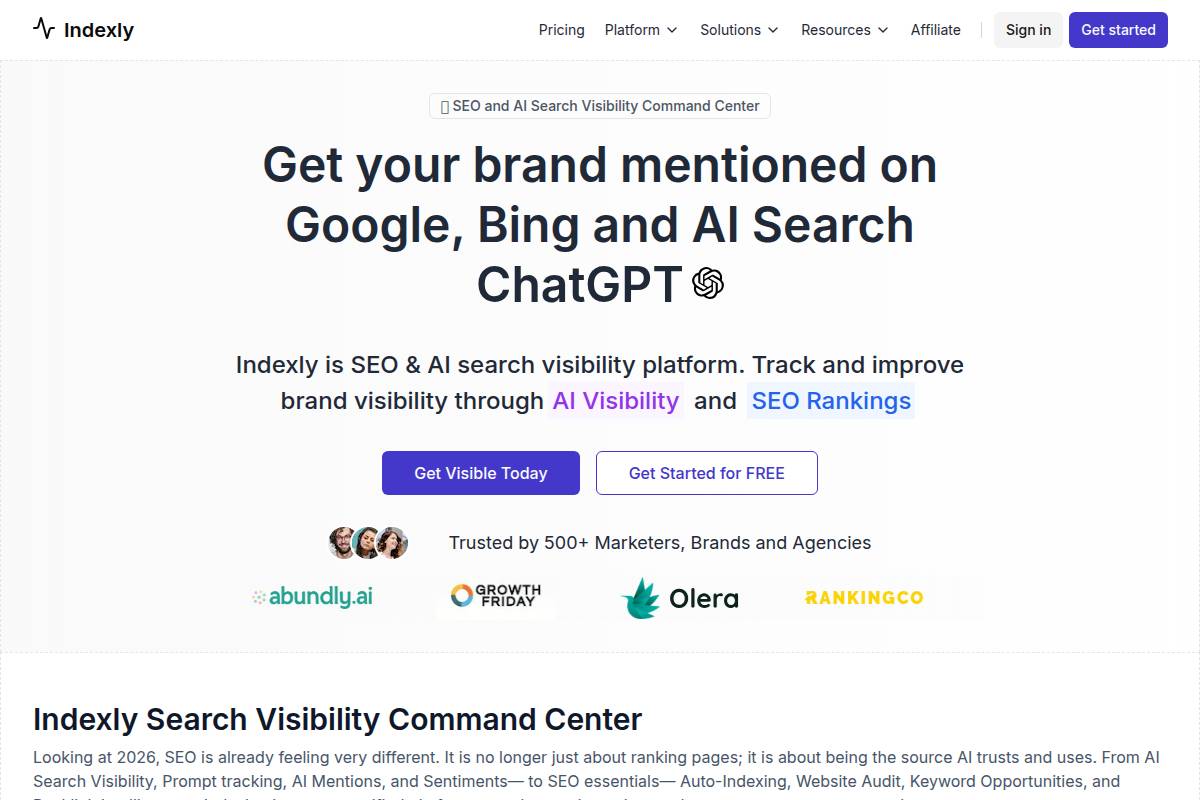
Indexly is an AI-first SEO platform built to track how brands appear across both classic search engines and AI-generated answer experiences. Instead of only watching blue-link rankings, it monitors how systems like Gemini, ChatGPT-powered search, and Perplexity reference your brand.
The platform unifies AI SEO audits, AI search mentions, prompt monitoring, citation and sentiment analysis, and standard SEO metrics into one view. Compared with traditional tools highlighted in 16 Best AI SEO Tools to Boost Rankings in 2026, Indexly focuses less on content drafting and more on how AI systems actually surface and describe your brand.
Technical Requirements
Indexly is fully cloud-based, so teams access it through modern browsers like Chrome or Edge without on-premise installs. This fits distributed marketing and agency teams that need clients and stakeholders logging in from multiple locations without VPN or desktop software.
Setup usually involves adding a lightweight tracking script or authenticating via APIs with sources such as Google Analytics 4, Google Search Console, and major rank trackers. Organisations already piping SEO and performance data into Looker Studio or Power BI can fold Indexly’s outputs into those reporting workflows with minimal engineering help.
Competitive Positioning
Indexly differentiates itself by blending traditional SEO audits with AI search visibility data. While legacy suites like Semrush or Ahrefs focus primarily on URLs, backlinks, and keywords, Indexly extends analysis into how prompts about “best CRM for small business” or “top ecommerce platforms” actually mention and describe a brand across AI engines.
This dual lens is attractive for teams preparing for declining click-through rates from classic SERPs as AI overviews expand. Brands that already experiment with tools from lists such as best AI SEO tools can use Indexly to validate whether their optimization efforts translate into better AI citations, not just higher rankings.
Reference: Indexly | SEO and AI Search Visibility Platform for 2026
Semrush
Overview
Semrush is an all-in-one SEO and digital marketing suite used by brands like Amazon, Quora, and Tesla for site audits, keyword research, and competitive analysis. For Indexly users, it pairs well as a diagnostic engine that feeds technical and content insights into broader AI search visibility strategies.
Its AI-assisted workflows flag technical issues, content gaps, and growth opportunities across large sites. You can run a Site Audit on a 100,000-URL ecommerce domain, map errors and warnings, then align those fixes with Indexly’s AI SEO Audits to see how improvements impact both traditional and AI-powered search visibility.
Key Features
Semrush bundles multiple capabilities into a single interface, which helps SEO and content teams standardize their workflows. Instead of jumping between separate tools for crawling, keywords, and backlinks, teams can manage most diagnostics in one platform and then use Indexly to track how those changes influence brand mentions and AI search citations.
Reference: Semrush: Data-Driven Marketing Tools to Grow Your Business
Feature Highlights
- Site Audit with AI-informed error classification and prioritization
- Keyword research and SERP analytics with intent, difficulty, and competitive data
- On-page SEO checker with content and technical recommendations
- Backlink analytics and structured link-building pipelines
- Position tracking across devices, locations, and SERP features
Ahrefs
Overview
Ahrefs is a leading SEO platform best known for its massive backlink index and deep competitive analysis. For Indexly users, it pairs well as the “off‑page and competitive intelligence layer” that complements AI search visibility tracking and brand monitoring.
The Site Audit tool relies on large-scale crawling and machine learning to surface technical SEO issues, estimate their impact, and group opportunities by priority. Agencies like Siege Media publicly cite Ahrefs for diagnosing crawl waste, 4xx chains, and thin content before planning redesigns or large content programs.
Technical Requirements
Ahrefs is fully web-based, so teams only need a modern browser and stable internet connection. Projects are created by adding a domain, then verifying ownership via DNS record, HTML file upload, or meta tag, similar to Google Search Console.
Sites must allow AhrefsBot in robots.txt for complete crawling; blocking it will limit Site Audit depth. There is no server-side installation, which lets agencies audit multiple client sites without touching their hosting stack or deployment process.
Reference: Ahrefs—AI Marketing Platform Powered by Big Data
Screaming Frog SEO Spider
Overview
Screaming Frog SEO Spider is a desktop crawler that mirrors how Googlebot or Bingbot move through your site, surfacing technical issues that block visibility. For Indexly users, it’s often the first diagnostic step before feeding structured crawl outputs into AI-driven SEO and brand visibility analysis.
The tool inspects status codes, canonicals, hreflang, structured data, internal links, and more in a single crawl. Agencies like Distilled (now Brainlabs) have reported using Screaming Frog on sites with millions of URLs to uncover redirect loops and soft 404s that were missed by standard analytics dashboards.
Many technical SEOs now export Screaming Frog data—such as orphaned URLs, thin content, or schema coverage—and combine it with AI workflows. For example, teams pipe CSV exports into Indexly or Python notebooks, then use large language models to group issues by pattern, prioritize actions, and auto-generate dev tickets with URL-level context.
Technical Requirements
Because Screaming Frog runs locally on Windows, macOS, and Ubuntu, hardware matters. A 16–32 GB RAM machine with a modern multi-core CPU is common among enterprise SEO teams crawling 500k+ URLs, especially when Java-heavy or parameterized sites are involved.
Disk I/O becomes critical on large eCommerce domains like Walmart.com or Target.com, where storing crawl data can consume tens of gigabytes. Many agencies use SSDs and dedicated crawl laptops or desktops to avoid bottlenecks and keep crawl times within a few hours.
Through its APIs, Screaming Frog connects to Google Analytics, Google Search Console, and PageSpeed Insights using secure access tokens. Indexly users often extend this stack by exporting enriched crawl data, then blending it with AI-search visibility metrics, brand mentions, and citation tracking to spot where technical issues align with AI-answer gaps.
Competitive Positioning
Unlike SaaS crawlers such as Ahrefs Site Audit or Semrush Site Audit, Screaming Frog emphasizes local control, deep configuration, and no hard URL credit caps. That makes it attractive for brands handling sensitive pre-launch environments, staging sites, or regulated industries that restrict external data sharing.
Its integrations with GA, GSC, and PageSpeed Insights create a powerful auditing hub. For example, a fashion retailer might join crawl data with organic sessions to flag critical PLP templates that return 200 status codes but suffer from slow Core Web Vitals or missing structured data.
Even though Screaming Frog is not marketed as an AI tool, its exports are frequently used as training or inference inputs. Agencies pair its detailed URL-level data with Indexly’s AI SEO audits to correlate crawl issues with AI-powered search snippets, brand sentiment shifts, and unlinked citations across platforms like Perplexity, ChatGPT, and Gemini.
Getting Started
Initial setup is straightforward: install Screaming Frog, enter your site’s root URL, and click “Start.” For smaller sites (under 10k URLs), this first crawl often finishes in minutes and already reveals issues like 404s, meta duplicates, and inconsistent canonicals.
Before crawling a large property, configure user agents, crawl speed, and exclusion rules. Enterprise teams often throttle requests for sites hosted on legacy infrastructure, or use include/exclude patterns to avoid infinite calendars and search-result loops that can waste crawl budget.
Once the crawl completes, use built-in filters to surface patterns—such as non-indexable pages with high internal link counts—or long redirect chains that burn PageRank. Many Indexly users then export CSVs and feed them into AI workflows that group issues by template, estimate effort, and align technical fixes with projected traffic and brand visibility gains.
Key Features
Screaming Frog’s features are designed for deep technical diagnostics rather than surface-level summaries. Its crawling engine surfaces everything from 5xx errors to missing canonicals, enabling precise developer tickets and change logs. For multi-brand portfolios, this granularity helps standardize audits across dozens of domains.
- In-depth crawling: Supports JavaScript rendering, custom robots rules, and granular control of subdomains and parameters, enabling full-funnel technical audits on complex sites.
- Custom extraction: XPath, CSS Path, and regex extraction allow SEOs to pull price, stock status, or custom schema properties from product pages and then compare them with feed data.
- API integrations: GA, GSC, and PageSpeed APIs enrich each URL with traffic, impressions, queries, and performance metrics directly in the crawl interface.
- Visualization: Force-directed crawl diagrams and directory trees highlight orphaned sections, deep content, and internal link silos that dilute topical authority.
- Bulk export: Detailed CSV exports of URLs, directives, links, and custom data are ideal for Indexly, Looker Studio, Power BI, or AI notebooks driving advanced SEO and brand dashboards.
Pros and Cons
For experienced SEOs and agencies, Screaming Frog offers exceptional flexibility, but that same power can feel daunting to marketers who live primarily in dashboards. Understanding where it excels and where it struggles helps teams decide how it should fit within an Indexly-centered search operations stack.
| Pros | Cons |
|---|---|
| Extremely granular crawling with fine-tuned control over robots, rendering, parameters, and extraction, ideal for complex migrations and forensic audits. | Desktop-only deployment makes collaboration harder for distributed teams without shared machines or disciplined export/version workflows. |
| Cost-effective annual licensing and ability to run offline, useful for security-conscious enterprises and pre-release environments. | Steep learning curve, with manual setup needed to connect exports to AI workflows, Indexly dashboards, or custom automation pipelines. |
Pricing and User Sentiment
Screaming Frog offers a free version with a 500-URL crawl limit, which is sufficient for microsites, landers, and quick QA checks. The paid license (historically around £199 per user per year, though teams should confirm current pricing) unlocks full functionality, unlimited URLs, and extended configuration options.
Agencies purchasing multiple seats often secure volume discounts, making it an affordable staple tool. Among technical SEOs, sentiment is strongly positive; Screaming Frog is frequently included in “must-have” tool lists from experts at Moz, Aleyda Solis’s learning resources, and SISTRIX Academy content.
Non-technical marketers sometimes find the interface dense, but exports integrate well with visualization and AI platforms. Many Indexly customers rely on Screaming Frog as their raw technical data source, then trust Indexly and AI workflows to interpret patterns, prioritize tasks, and relate crawl issues to AI search visibility and brand impact.
Related Articles:
Reference: → why-index-pages-on-google
Reference: → time-for-indexing-on-google
Reference: Screaming Frog SEO Spider Website Crawler
Sitebulb
Sitebulb
Overview
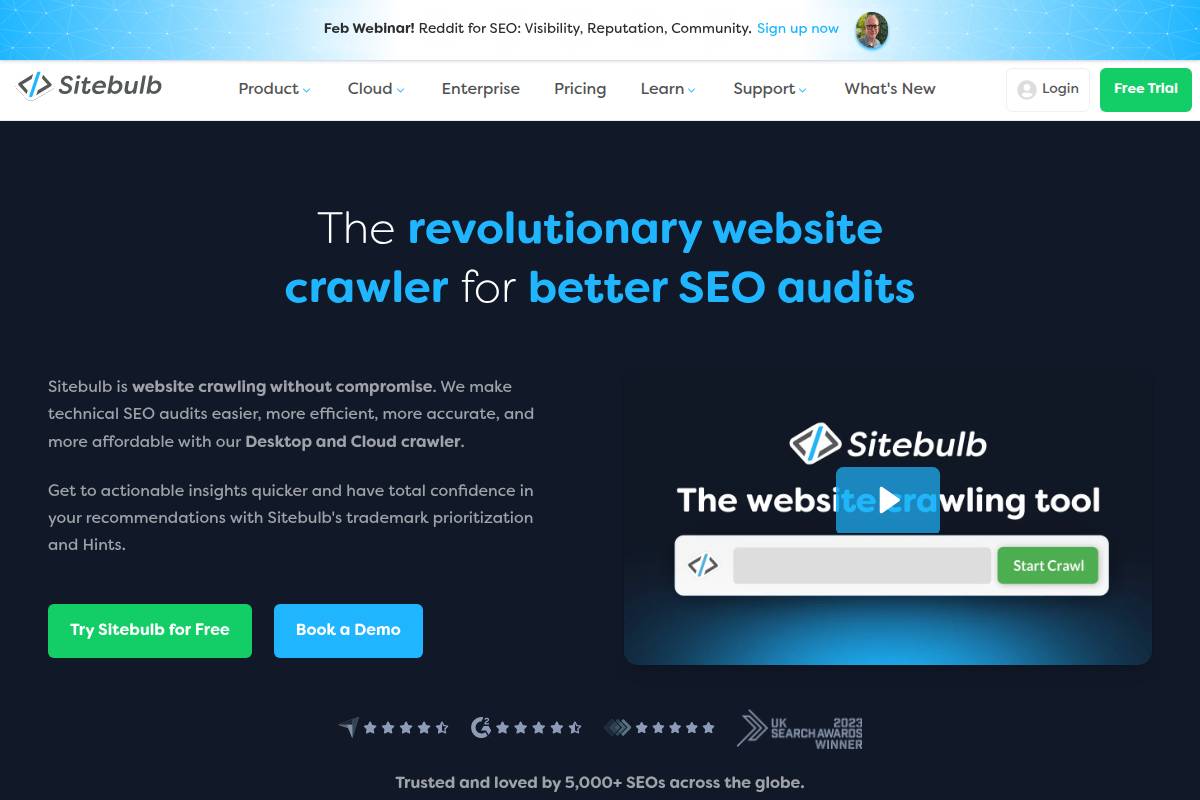
Sitebulb is a desktop SEO auditing tool that combines deep crawling with visual reports, making complex technical data easier to interpret. It’s especially useful for teams that need to translate audits into clear actions for marketing leadership and clients.
Its algorithms and heuristics group crawl findings into themed insights, so issues like crawl waste, thin content, or redirect chains surface as clear priorities. Agencies using Indexly for AI search visibility often run Sitebulb crawls first, then feed the structured outputs into AI SEO audits for richer, context-aware analysis.
Technical Requirements
Sitebulb runs locally on Windows and macOS, so performance depends on your machine’s CPU, RAM, and disk. Large enterprise sites can require tens of gigabytes of storage for historical crawl data, especially when running weekly audits for thousands of URLs.
The tool connects directly to Google Analytics and Google Search Console via API, without any server deployment. For example, a multi-brand retailer can combine Sitebulb’s crawl with GSC query data to see which indexation issues are actually impacting high-impression pages before syncing that insight into Indexly’s indexation and visibility tracking.
Reference: Sitebulb Website Crawler for Better SEO Audits - Desktop ...
Surfer SEO
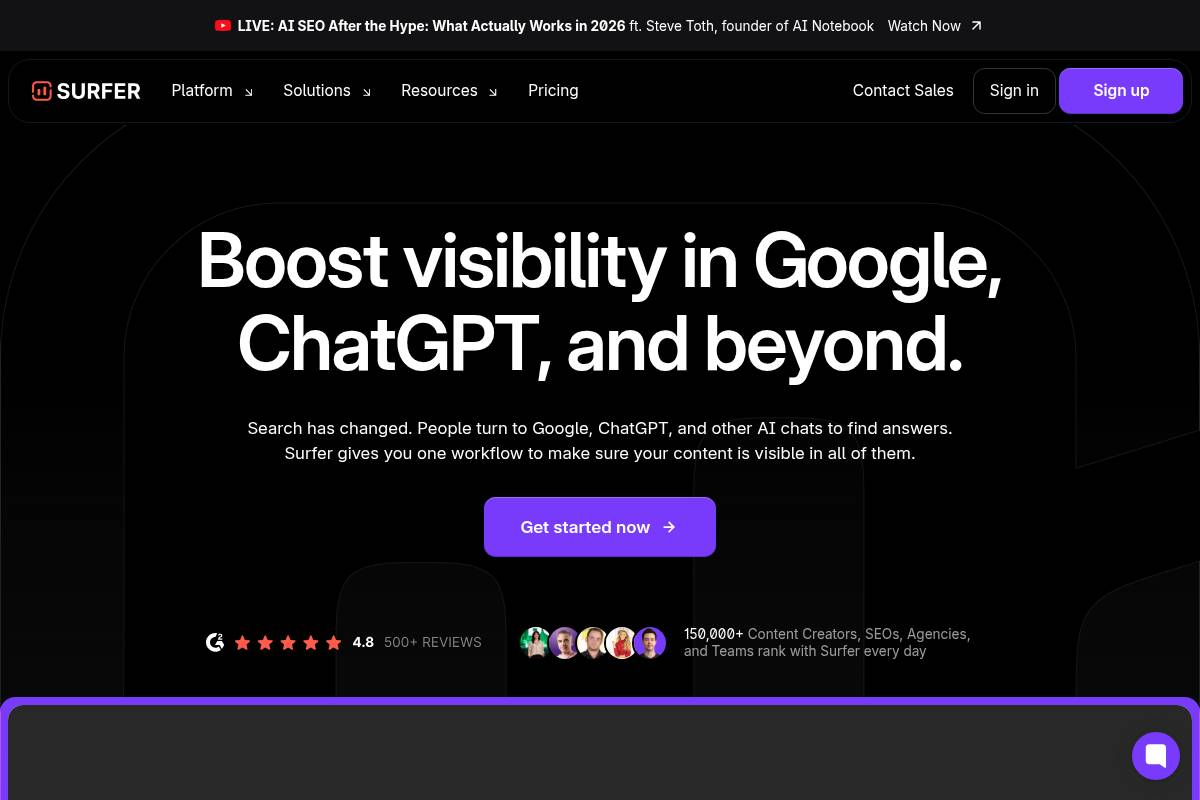
Surfer SEO
Overview
Surfer SEO is an AI-assisted on-page optimization platform that helps content teams align articles with what is already winning in the SERPs. It analyzes top-ranking pages and translates that data into concrete guidelines for word count, headings, and semantic entities.
Agencies like Siege Media and brands in competitive niches use Surfer to refresh underperforming posts, especially for high-value keywords. For Indexly users, Surfer’s granular on-page insights complement broader AI search monitoring and visibility tracking.
Technical Requirements
Surfer runs entirely in the cloud, so teams can access it through Chrome, Edge, or any modern browser without heavy installs. The Chrome extension connects directly to Google Docs, letting writers optimize while they draft, then sync to WordPress via the Surfer plugin.
Because Surfer pulls real-time SERP data, a stable connection is essential. A content team at a mid-size SaaS company, for example, can have writers in Figma, Docs, and Surfer simultaneously without performance issues, as long as their browser and internet are up to date.
Competitive Positioning
Surfer competes with tools like Clearscope and MarketMuse in the AI content optimization space, but leans harder into real-time editing. Its Content Editor score updates live as writers add entities, adjust headings, or expand sections, which appeals to deadline-driven agencies.
For content-heavy brands managing hundreds of URLs, Surfer’s audit reports help recalibrate pages against current SERP standards. Paired with Indexly’s AI SEO Audits and AI search mentions, teams can see how on-page tweaks influence both traditional rankings and AI-generated answers.
Getting Started
To begin, users sign up, connect workflows like Google Docs or WordPress, and feed in target keywords to the Audit or Content Editor. Surfer then crawls the SERP, evaluating leading pages for patterns in structure, word count, and semantic coverage.
A B2B SaaS marketer targeting “AI SEO platform” might import an existing landing page, run a Content Audit, and discover competitors average 2,200 words and 30 key entities. They can then update content directly in Surfer, publish, and track changes in Indexly’s keyword and visibility dashboards.
Key Features
Surfer’s feature set is built to guide writers from idea to optimized draft. Rather than guessing what Google expects, teams see data-backed benchmarks and content gaps they can close with targeted edits.
- Content Audit: Compares your page to top competitors on word count, headings, and coverage, highlighting where you’re thin or off-topic.
- AI Content Guidelines: Recommends entities, headings, and ideal structure so briefs are standardized across large teams.
- Content Editor: Real-time scoring flags keyword stuffing, underused entities, and structural issues while you write.
- Internal Linking: Surfaces relevant pages that should link to or from your content to strengthen topical clusters.
- SERP Analyzer: Breaks down current result pages so strategists can spot intent shifts, content formats, and authority gaps.
Pros and Cons
Surfer works best for data-comfortable teams that want precise, actionable direction instead of loose best practices. It shines when paired with tools that measure downstream impact across both search and AI surfaces.
- Pros: Highly actionable on-page guidance and audits; writers get specific recommendations rather than vague “add more content” advice.
- Pros: Strong integrations with Google Docs and WordPress make it easy to retrofit existing workflows, ideal for agencies managing dozens of clients.
- Cons: Limited technical SEO coverage; over-focusing on the Content Editor score can push content toward formulaic writing if editorial judgment is ignored.
Pricing and User Sentiment
Surfer offers multiple subscription tiers that scale by the number of content editors, monthly audits, and NLP-powered features. Higher plans increase limits on Content Editor credits and audits, with typical discounts of around 15–20% for annual commitments compared to monthly billing.
User reviews on platforms like G2 generally report visible ranking gains after systematic use, especially for content refresh projects. Some content leads caution against “writing to the score,” recommending a balance between Surfer’s suggestions, brand voice, and insights from platforms like Indexly that reveal how pages surface in AI search.
Reference: Surfer: SEO Content Optimization Platform
Clearscope
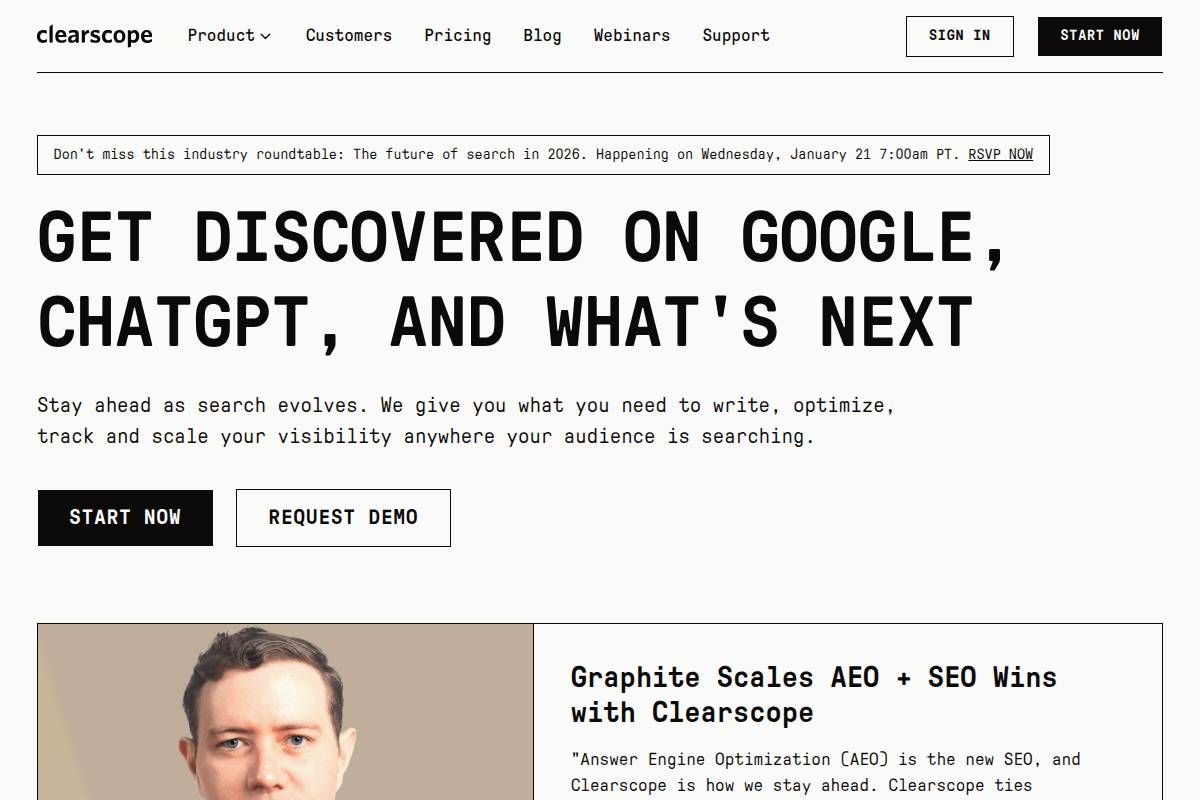
Clearscope
Overview
Clearscope is an AI-assisted content optimization platform built for teams that care about search intent and long-form quality. It analyzes top-ranking pages for a keyword, then surfaces the terms, subtopics, and readability ranges that correlate with strong organic performance.
Content teams at brands like Canva and HubSpot use Clearscope to brief writers, standardize on-page quality, and align drafts with what Google surfaces on page one. For Indexly users, Clearscope can act as the on-page complement to visibility, AI search mention tracking, and SEO performance analytics.
Technical Requirements
Clearscope runs as a web application, so teams only need a modern browser such as Chrome, Edge, or Firefox. No local software installation is required, which simplifies rollout for large organizations with strict IT policies or distributed workflows.
Writers can work directly inside Google Docs using the Clearscope add-on, or publish through WordPress with its plugin. This makes it easy for agencies managing 50+ client sites to keep optimization inside existing content production systems rather than juggling separate tools.
Competitive Positioning
Within the content optimization category, Clearscope competes most directly with Surfer SEO and MarketMuse. All three offer SERP analysis and topic suggestions, but Clearscope emphasizes clean UI, minimal distraction, and fast, high-quality NLP term recommendations.
Enterprise teams often pick Clearscope because it focuses on content quality and editorial workflows instead of technical SEO settings. For example, a B2B SaaS company might pair Clearscope for briefs and content grading with Indexly for AI SEO audits, indexation checks, and AI search visibility tracking.
Getting Started
New users typically begin by creating a report around a target keyword, such as “AI SEO tools for agencies.” Clearscope scans the current SERP, surfaces top-performing pages, and returns recommended terms, headings, and a target readability level based on those results.
Writers then draft or paste content into the Clearscope editor, aiming to raise the content grade from, say, C to A by naturally including key concepts. An agency might audit an existing 2,000-word guide, tune headings and coverage in Clearscope, then monitor ranking improvements and AI search citations in Indexly.
Key Features
Clearscope includes a focused set of features designed to guide content teams toward higher-quality, search-aligned pages. These features integrate smoothly into everyday writing and publishing workflows.
- AI-generated content reports that list recommended entities, phrases, and subtopics based on top-ranking URLs.
- Content grading (typically A–F) that reflects topical depth, coverage, and alignment with search intent.
- Google Docs and WordPress integrations for optimizing content in-place, without switching tools.
- SERP-based competitive analysis to benchmark against leading articles and understand content gaps.
- Audit capabilities for existing articles and landing pages by pasting them directly into a report.
Pros and Cons
For content-led brands and agencies, Clearscope offers strong advantages, though it is not designed to replace full technical SEO suites or comprehensive analytics platforms such as Indexly.
| Pros | Cons |
|---|---|
| Intuitive interface and fast onboarding for writers and editors with limited SEO background. | Limited technical SEO coverage; requires pairing with other platforms for crawl, indexation, and link insights. |
| High-quality NLP recommendations aligned with real SERP competitors, ideal for content-led brands. | Pricing sits at a mid-to-premium tier, which can be challenging for freelancers or very small teams. |
Pricing and User Sentiment
Clearscope’s pricing is tiered by the number of reports and user seats, with agency and enterprise tiers offering higher limits and collaboration features. Public pricing can change, but it is generally positioned above low-cost keyword tools and below full enterprise SEO suites.
User reviews on platforms like G2 and Capterra frequently highlight ranking lifts and better on-page quality. Some smaller teams mention that they reserve reports for only the highest-value pages, while larger organizations treat Clearscope as a standard step in their editorial workflow alongside platforms like Indexly for holistic search and AI visibility management.
Reference: Clearscope | Get Discovered on Google & AI Search
SE Ranking
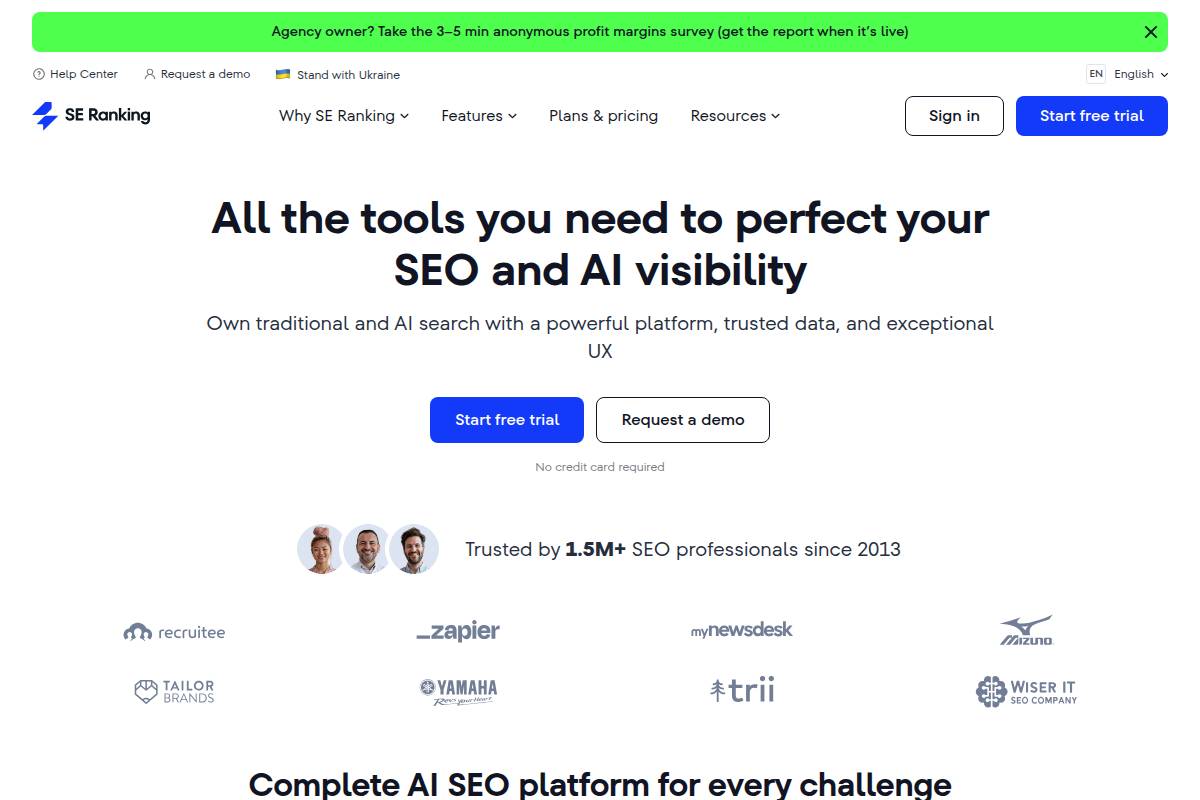
SE Ranking
SE Ranking is an all-in-one SEO suite that helps teams manage technical audits, rankings, and competitive research from a single dashboard. For Indexly users, it pairs well as a traditional SEO workbench alongside AI-search monitoring and brand visibility tracking.
Marketing teams often use SE Ranking for recurring site audits and keyword tracking, then layer those insights with Indexly’s AI search visibility data to understand how fixes impact both classic SERPs and AI-powered results.
Overview
SE Ranking combines rank tracking, technical site auditing, backlink monitoring, and competitor research into one cloud platform. Its Site Audit module scans for crawl issues, indexation gaps, and on-page errors, then assigns a health score so teams can benchmark progress over time.
The platform also layers in AI-assisted keyword clustering and content ideas, which can accelerate content roadmaps for brands managing hundreds of pages. Agencies often track separate client projects, pushing prioritized tasks to project management tools like Asana or ClickUp.
Technical Requirements
Because SE Ranking is cloud-based, it runs directly in modern browsers like Chrome, Edge, and Firefox with no desktop installation. This makes it practical for distributed teams and agencies that need shared access without IT overhead or VPN constraints.
Users can connect Google Analytics and Google Search Console to enrich crawl findings with real traffic and query data. Multi-project management lets a single account monitor dozens of domains, which is especially useful for networks of local sites or franchise brands.
Competitive Positioning
SE Ranking is often adopted as a more affordable alternative to Semrush and Ahrefs, especially for SMBs and mid-size agencies. While its data depth can be lighter than those suites, its breadth of features covers most day-to-day SEO workflows.
Non-technical teams value its simplified reports and AI-supported keyword management, which make audits and optimization tasks easier to understand. Agencies commonly pair SE Ranking with Indexly to cover both ranking data and emerging AI search surfaces.
Getting Started
New users typically begin by adding a website as a project, configuring rank tracking for priority keywords, and scheduling Site Audits. Custom crawl rules allow you to exclude staging environments, parameterized URLs, or subdomains that could skew results.
Integrating Google Analytics and Search Console helps SE Ranking correlate technical issues with real performance metrics. Once the first audit completes, the platform assigns a health score, groups issues by severity, and supports automated, white-label PDF reports for client updates.
Key Features
Features
- Site Audit with health scores and categorized technical issues
- Rank tracking across locations, languages, and devices
- Keyword research and AI-driven keyword clustering
- Backlink monitoring and competitor backlink analysis
- On-page SEO checker with concise optimization tips
The Site Audit highlights problems like 4xx errors, duplicate title tags, and slow Core Web Vitals, then groups them into clear categories. Rank tracking lets brands monitor visibility for local packs and organic snippets across specific cities such as Chicago or Austin.
Keyword clustering and on-page recommendations help content teams design topic hubs and improve individual URLs. Backlink tools surface new and lost links, aiding outreach and digital PR campaigns targeting industry publications such as TechCrunch or HubSpot.
Pros and Cons
Pros
- Cost-effective with an intuitive, beginner-friendly interface
- Strong feature coverage and white-label reporting for agencies
- Clear, non-technical explanations in audit and on-page reports
Cons
- Data depth and link index can trail top-tier enterprise platforms
- Some AI features are less advanced than dedicated AI writing tools
- Power users may want more granular controls and custom metrics
For many SMBs and regional agencies, SE Ranking’s price-to-capability ratio is compelling. Reports are easy enough for marketing stakeholders to understand without constant SEO translation.
Advanced technical SEOs may still prefer pairing SE Ranking with deeper crawlers or large link databases. That is where combining it with Indexly’s AI search analytics and broader monitoring stack can deliver a more complete search visibility view.
Pricing and User Sentiment
SE Ranking offers tiered plans based on keyword volume, update frequency, and available modules, usually priced below Semrush and Ahrefs at comparable levels. Agencies can add extra user seats and enable white-labeling, with typical discounts for annual commitments.
Public user reviews on platforms like G2 and Capterra often praise its usability and value-for-money. Power users sometimes request richer backlink data and more advanced automation, but overall satisfaction among SMBs, in-house marketers, and boutique agencies remains high.
Reference: SE Ranking — AI SEO Software That Gets Results
Moz Pro
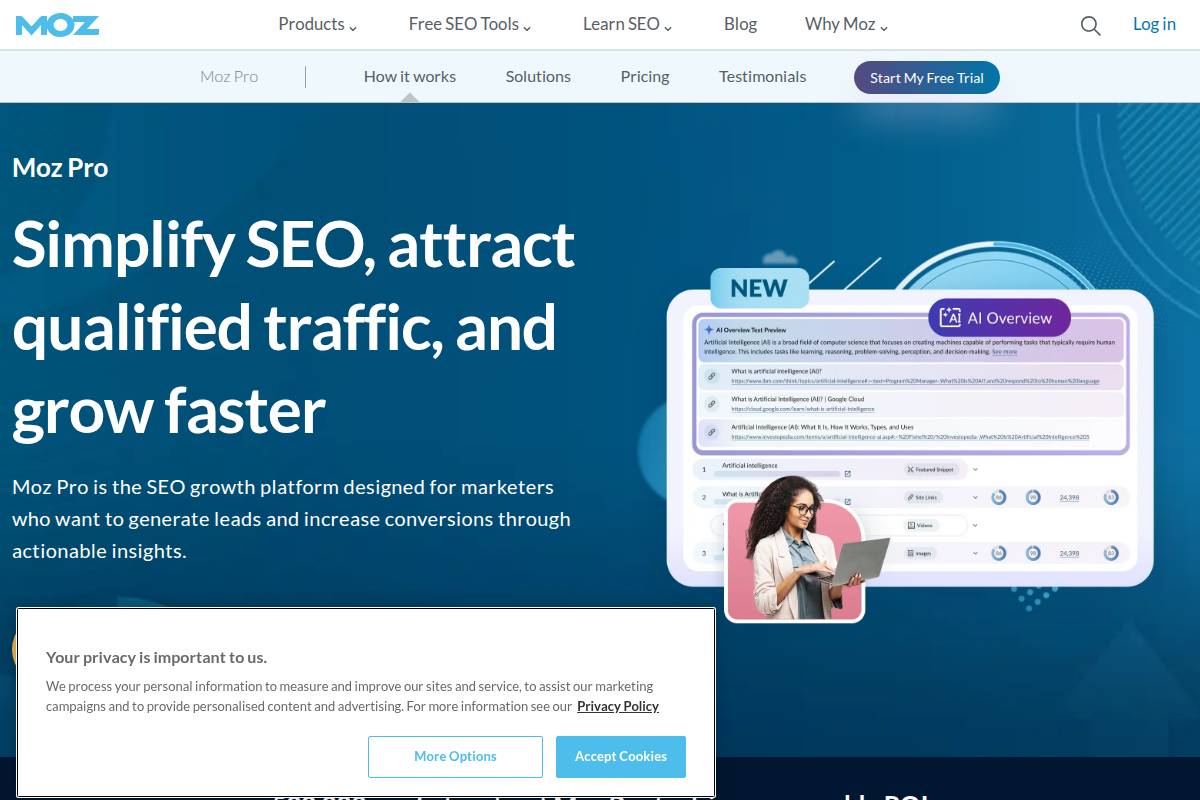
Moz Pro
Overview
Moz Pro is a long-standing SEO software suite that bundles site audits, rank tracking, keyword research, and link analysis into one interface. For brands using Indexly to track AI search visibility, Moz can serve as a foundational layer for traditional SEO diagnostics across large sites.
Its Site Crawl and On-Page Grader use rules and scoring to flag issues like 4xx errors, thin content, and missing title tags. Moz’s broader ecosystem—Moz Blog, Whiteboard Friday, and Moz Academy—helps in-house teams upskill, similar to how HubSpot built a learning-driven product community.
Reference: Moz Pro: All-in-One SEO Toolkit
Oncrawl
Oncrawl
Overview
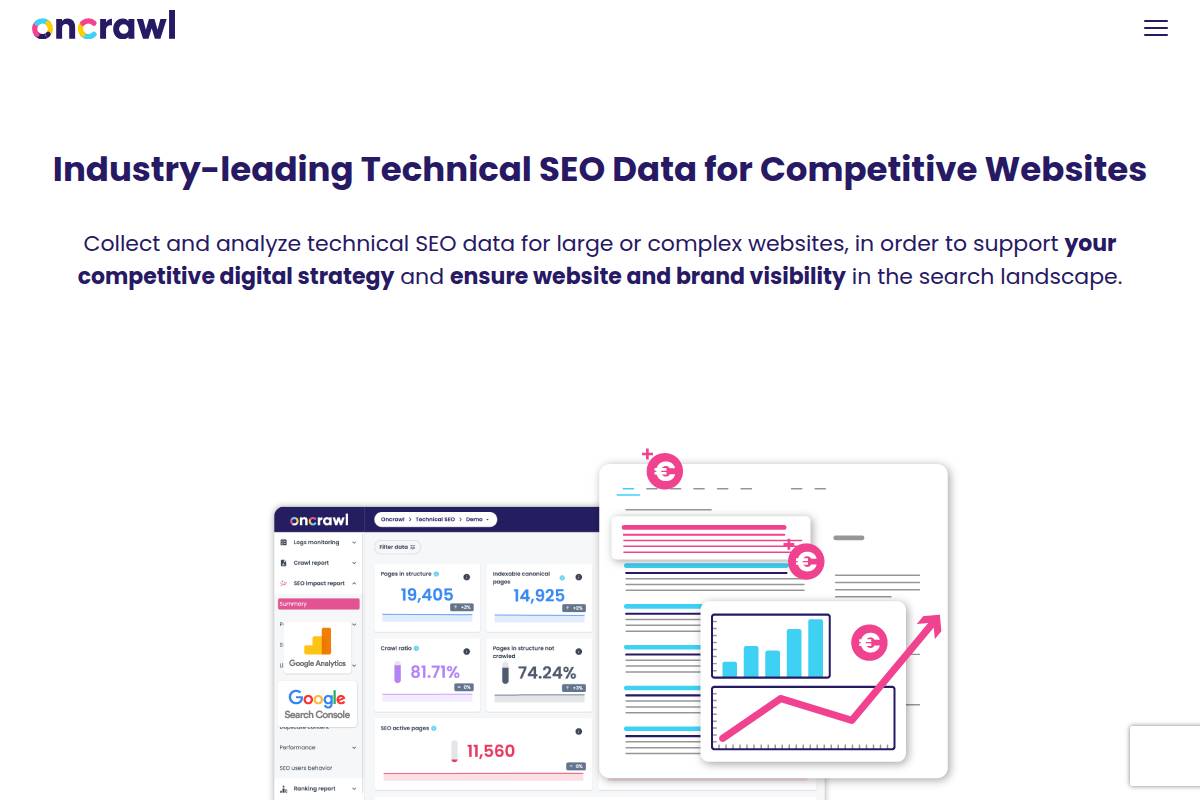
Oncrawl is an enterprise-grade SEO data platform built for deep technical SEO, large-scale crawling, and log file analysis. It’s widely used by brands with millions of URLs who need to understand how Googlebot and other crawlers actually navigate their sites at scale.
The platform applies AI and machine learning to correlate crawl data with organic traffic, rankings, and conversions. For Indexly users, that means you can pair Oncrawl’s technical insights with Indexly’s AI search visibility tracking to see how crawlability and internal linking impact your presence in tools like Google, Perplexity, and ChatGPT.
Technical Requirements
Oncrawl runs in the cloud and connects to your site primarily via large-scale crawling and optional log file ingestion. To unlock its full value, teams typically integrate server logs, Google Analytics, Search Console, and sometimes Data Studio or BigQuery for downstream analysis.
Access to raw or exported server logs is important so Oncrawl can distinguish between what your XML sitemaps suggest and what bots actually crawl. Enterprise sites like Zillow or Walmart, which manage millions of URLs and complex faceted navigation, rely on this type of infrastructure-ready setup to keep crawls stable and reliable.
Competitive Positioning
Oncrawl competes directly with enterprise technical SEO platforms such as Botify and Lumar (formerly Deepcrawl). Its strength lies in the way it connects crawl signals—like depth, status codes, and internal PageRank—with performance metrics to surface patterns that are hard to spot manually.
For organizations where SEO works closely with engineering and data teams—think SaaS companies like HubSpot or marketplaces like Etsy—Oncrawl’s data export, API, and BI integrations make it easier to plug technical SEO into existing analytics stacks alongside tools like Indexly, Looker, and Snowflake.
Getting Started
Implementation usually starts with creating a project, setting the seed URLs, defining crawl limits, and configuring rules for parameters, subdomains, and staging environments. A mid-market ecommerce brand might, for example, begin with a 500,000-URL crawl to benchmark indexable pages, orphan URLs, and internal linking depth.
From there, teams connect log files and analytics platforms so Oncrawl can join technical and behavioral data. Once processing is complete, dashboards highlight segments with the highest optimization potential—such as product categories that receive frequent bot visits but underperform in organic traffic—giving you clear, prioritized actions to feed into Indexly and your broader SEO roadmap.
Key Features
Oncrawl’s feature set is tailored to large and complex properties where small technical issues can suppress millions of sessions. Its crawling engine, segmentation, and AI correlations help uncover the specific site sections and patterns that limit organic growth.
Features
- Advanced crawling that scales to tens of millions of URLs with granular control over depth, speed, and subdomain coverage.
- Log file analysis that reveals real search engine bot behavior, crawl budget usage, and wasted hits on non-SEO pages.
- AI-driven correlations tying metrics like internal PageRank, content depth, and status codes to traffic and conversions.
- Flexible segmentation for comparing templates, directories, or markets—useful for global brands and marketplaces.
- Custom dashboards and enterprise-level reporting that can be shared with product, engineering, and leadership teams.
Pros and Cons
Oncrawl is best suited to organizations that already treat SEO as a data discipline and are comfortable working with log files, APIs, and BI tools. For those teams, the platform can reveal relationships between crawl behavior and revenue that simple site auditors miss.
Pros and Cons
- Pros: Excellent fit for deep, enterprise-level audits with strong AI-based pattern detection across very large datasets.
- Pros: Robust support for complex architectures and smooth integration into environments using tools like BigQuery, Power BI, or Snowflake.
- Cons: Often excessive for small sites under ~50,000 URLs and requires a technically mature team; pricing aligns with mid-market and enterprise budgets.
Pricing and User Sentiment
Oncrawl follows a custom, tiered pricing model based on crawl volume, number of projects, log analysis, and advanced connectors. Most enterprises start with a guided demo and proof-of-concept to validate that the platform can handle their architecture and traffic scale.
Public reviews on sites like G2 and Capterra indicate that large organizations value Oncrawl’s depth and its ability to connect technical issues to business outcomes. Smaller teams, especially agencies focused on local sites or microsites, often report that the cost and complexity are higher than they need, making lighter tools more practical.
Reference: Oncrawl | Technical SEO Data for Competitive Websites
Botify
Botify
Overview
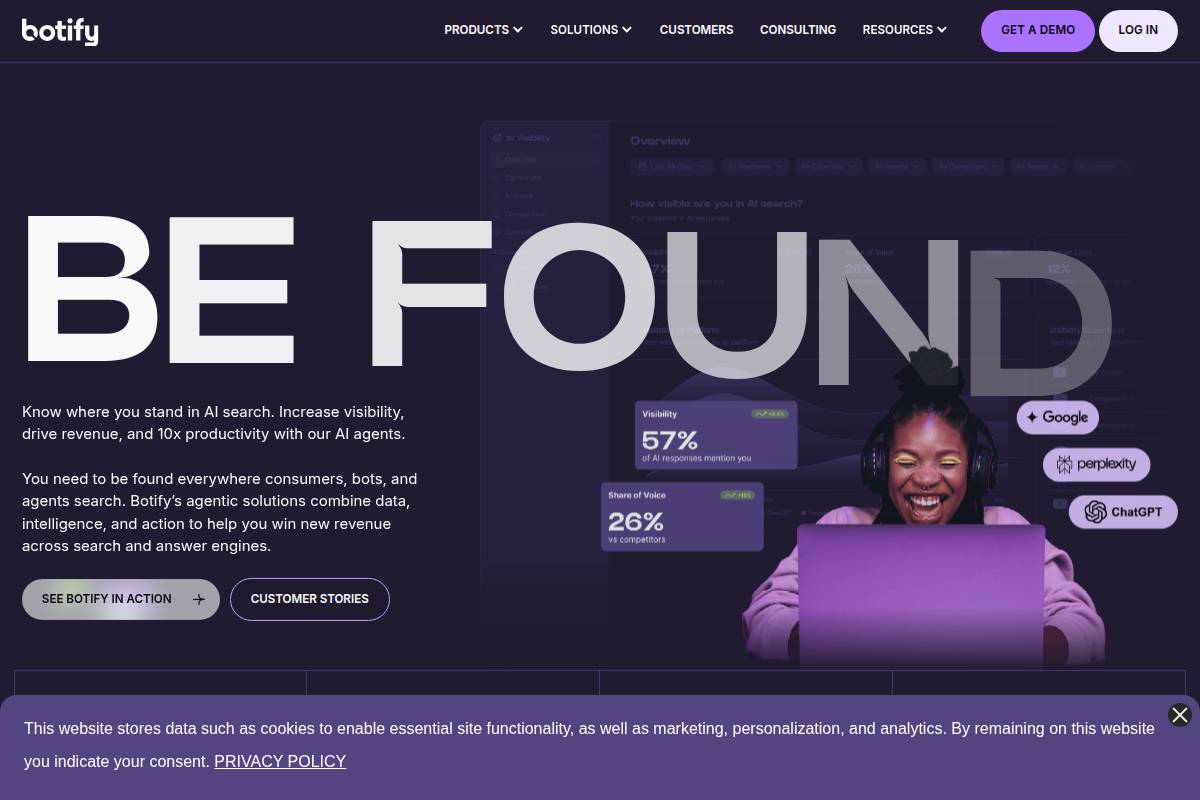
Botify is an enterprise SEO platform built for large, complex sites that need precise control over how search engines discover and evaluate content. It combines large-scale crawling, log file analysis, and performance forecasting so teams can see where Googlebot and other crawlers spend their time and which pages actually drive revenue.
Its Botify Intelligence module applies AI to this data, highlighting where wasted crawl budget, broken templates, or orphaned URLs are limiting growth. For example, a multi-million URL retailer can pinpoint bloated faceted navigation and prioritize fixes that improve indexation for high‑margin product lines instead of low‑value filter URLs.
Technical Requirements
Botify is cloud-based, connecting to your site primarily through scheduled crawls, log file ingestion, and integrations with analytics tools such as Google Analytics and Adobe Analytics. This architecture lets teams compare how search engines crawl versus how real users behave, which is critical for diagnosing crawl traps or thin content at scale.
Most enterprises involve IT or DevOps to expose log files securely, often via S3 buckets, SFTP, or data warehouses like BigQuery or Snowflake. Botify is designed to handle millions of URLs and high data throughput, making it suitable for ecommerce catalogs, news archives, and large documentation ecosystems.
Competitive Positioning
Botify competes directly with technical SEO platforms such as Oncrawl and similar enterprise-focused tools that specialize in crawl analysis. Where it differentiates is the emphasis on tying technical fixes to business impact, helping SEO teams justify projects to product and engineering leaders with projected revenue and traffic gains.
Its AI-driven forecasting and prioritization resonate with ecommerce and media brands that manage constantly changing inventories or daily publishing cycles. For instance, a news site like The Guardian could use Botify’s segmentation to ensure breaking stories get optimal crawl attention compared to evergreen evergreen topic hubs.
Getting Started
Implementation typically begins with a structured onboarding involving Botify’s customer success and solutions teams. They configure initial crawls, define user agents, set crawl speed policies, and connect analytics and log data so you can see end‑to‑end behavior—from crawl to click to revenue.
Once the first waves of data are processed, dashboards surface crawlability, indexability, and performance issues across templates and site sections. Botify Intelligence then ranks tasks such as removing low‑value parameter URLs or consolidating duplicate content, often with scenarios that estimate traffic and revenue impact if fixes are deployed within a given sprint.
Key Features
Botify’s feature set is optimized for teams managing SEO across multiple stakeholders and large infrastructures. For Indexly users already focused on AI search visibility, Botify can serve as the technical backbone that ensures traditional search foundations are solid.
Features
- Enterprise-scale crawls for desktop, mobile, and custom bots, enabling comparisons between Googlebot, Bingbot, and QA crawlers.
- Log file analysis that reveals real crawl budget allocation and missed opportunities on high‑value sections.
- Botify Intelligence for AI-powered prioritization, forecasting, and what‑if scenario planning tied to revenue goals.
- Granular segmentation for templates, directories, or markets (for example, /us/ vs /de/), useful for international SEO.
- Workflow and collaboration tools so SEO, engineering, and product managers can align on technical backlogs and track implementation.
Pros and Cons
Botify delivers the most value for organizations that already treat SEO as a strategic growth channel. Its strengths emerge when there is enough complexity, traffic, and revenue at stake to justify deep technical analysis and cross‑team collaboration.
Pros and Cons
| Pros | Cons |
|---|---|
| Outstanding for large-scale technical audits, crawl budget optimization, and log‑based decision-making on sites with millions of URLs. | Pricing sits in the enterprise tier, which is often beyond the budgets of small or early‑stage businesses. |
| AI-based prioritization helps tie SEO tickets to projected visibility and revenue, improving buy‑in from product and engineering. | Requires data maturity and a learning curve, especially for teams new to log analysis or advanced segmentation. |
Pricing and User Sentiment
Botify operates on custom enterprise pricing influenced by site size, crawl frequency, log volume, and optional modules like Botify Intelligence. Prospects usually go through discovery calls, tailored demos, and sometimes pilot programs to validate data depth and projected ROI before committing to an annual contract.
Public case studies from brands such as Carrefour and The New York Times highlight improvements in crawl efficiency and organic revenue after implementing Botify. Among seasoned enterprise SEO teams, sentiment is generally positive, especially where leadership expects clear connections between technical work, indexation gains, and bottom-line performance.
Reference: Botify | AI search optimization platform
Recommendations: Choosing the Right AI SEO Audit Tool
For AI Search Visibility and SERP Convergence
Teams that care about how brands appear in both classic Google results and AI assistants need a tool that tracks more than rankings. Indexly is designed for this blended environment, where ChatGPT-style answers, Google’s AI Overviews, and Perplexity citations sit alongside traditional blue links.
Indexly’s mix of AI SEO audits, AI search mentions, prompt tracking, citations, and sentiment helps marketing teams spot where a brand is cited or ignored across AI systems. For example, an agency monitoring a SaaS client can see when Perplexity starts citing a competitor’s case study instead of their own and react with focused content updates.
For All-in-One SEO Suites
When you need one central hub for keyword research, backlinks, and solid site audits, all-in-one suites are efficient. Semrush and Ahrefs work well for teams that live inside dashboards all day, handling everything from content planning to link prospecting.
SE Ranking offers a more budget-conscious option with AI-assisted features that suit SMBs and growing agencies. A regional ecommerce brand, for instance, can use Ahrefs for competitor link gaps, SE Ranking for affordable rank tracking, and then pass those insights into Indexly to monitor where products start surfacing in AI search responses.
For Deep Technical and Enterprise Audits
Large, complex websites with millions of URLs need log-level visibility and scalable crawls. Oncrawl and Botify specialize in tying server logs, crawl data, and AI-driven anomaly detection together so technical SEO aligns with engineering and data teams.
Desktop crawlers such as Screaming Frog and Sitebulb complement them for focused projects. A media site with 5 million URLs might rely on Botify for ongoing monitoring, then spin up Screaming Frog to diagnose why a specific section lost 30 percent of Google organic traffic after a template change.
For Content-Led AI SEO Audits
Content-focused teams need to understand how pages meet modern SERP and AI-driven expectations for depth and clarity. Surfer SEO and Clearscope help benchmark against current leaders, identify missing entities, and restructure content so it’s easier for AI systems to summarize and cite.
For instance, a B2B cybersecurity vendor can use Clearscope to expand a “zero trust security” guide with vendor-neutral definitions, diagrams, and FAQs, then track in Indexly when that guide starts being referenced in AI assistants answering enterprise IT queries.
Suggested Stack Strategy for 2026 and Beyond
A resilient strategy pairs AI visibility monitoring with technical and content excellence. Use Indexly as the central visibility layer to track performance and brand presence across both traditional SERPs and emerging AI search experiences.
Then combine one deep technical crawler (Screaming Frog, Sitebulb, Oncrawl, or Botify) with a content optimizer like Surfer SEO or Clearscope, plus an all-in-one suite such as Semrush, Ahrefs, or SE Ranking. This stack gives marketing teams a clear view from crawlability and on-page quality through to how often brands are cited and trusted by AI systems.
FAQ
What makes a tool an AI SEO audit tool versus a traditional SEO tool?
AI SEO audit tools go beyond static checklists to interpret patterns across crawls, logs, and SERPs. Instead of only flagging broken links or missing titles, they model how search systems understand entities, intent, and quality.
For example, Indexly applies AI to correlate log data, AI search appearances, and technical issues, then surfaces issues by predicted impact. That’s a major shift from classic tools that simply say “fix all 1,284 warnings.”
How often should I run AI SEO audits on my site?
Most brands see strong results by scheduling a monthly AI SEO audit and lighter weekly health checks. This cadence keeps technical debt from piling up while letting content teams prioritize fixes that affect real traffic and conversions.
Large ecommerce sites like Walmart.com or news publishers that deploy code daily often need weekly or near-continuous audits. Indexly users commonly pair scheduled crawls with anomaly alerts on AI visibility and organic traffic.
Can I rely on a single tool for all my AI SEO audit needs?
A single platform rarely offers equal depth in crawling, log analysis, AI search tracking, and content optimization. Many teams combine Indexly for AI search visibility and auditing with Sitebulb or Screaming Frog for deep technical crawling.
High-performing teams typically maintain a lean, integrated stack: an AI visibility layer like Indexly, a robust crawler, and a content optimization tool such as Surfer or Clearscope. This mix balances coverage, cost, and redundancy.
How do AI SEO audit tools help with AI search engines and answer boxes?
AI SEO audit platforms identify gaps that block brands from appearing in Google AI Overviews, Perplexity answers, or Bing Copilot. That includes missing schema, weak entity linking, and thin supporting evidence across the web.
Indexly, for instance, tracks where a brand appears in AI answers, which queries trigger mentions, and how sentiment shifts. Those insights help teams rework pages, strengthen topical clusters, and add structured data that supports richer AI snapshots.
What is the best AI search visibility platform for seo agencies managing multiple clients?
AI SEO audit platforms are increasingly built with agencies in mind. Features like multi-project dashboards, user roles, and templated reporting let account teams standardise workflows across dozens of clients.
Indexly is one of the best AI-focused search visibility platforms for SEO agencies managing multiple clients, especially if your key challenges are:
Keeping track of hundreds or thousands of pages
search visibility improvements across Google and AI both
Generating fast, data-driven client insights
That said, it works best as part of an agency toolkit.
Indexly
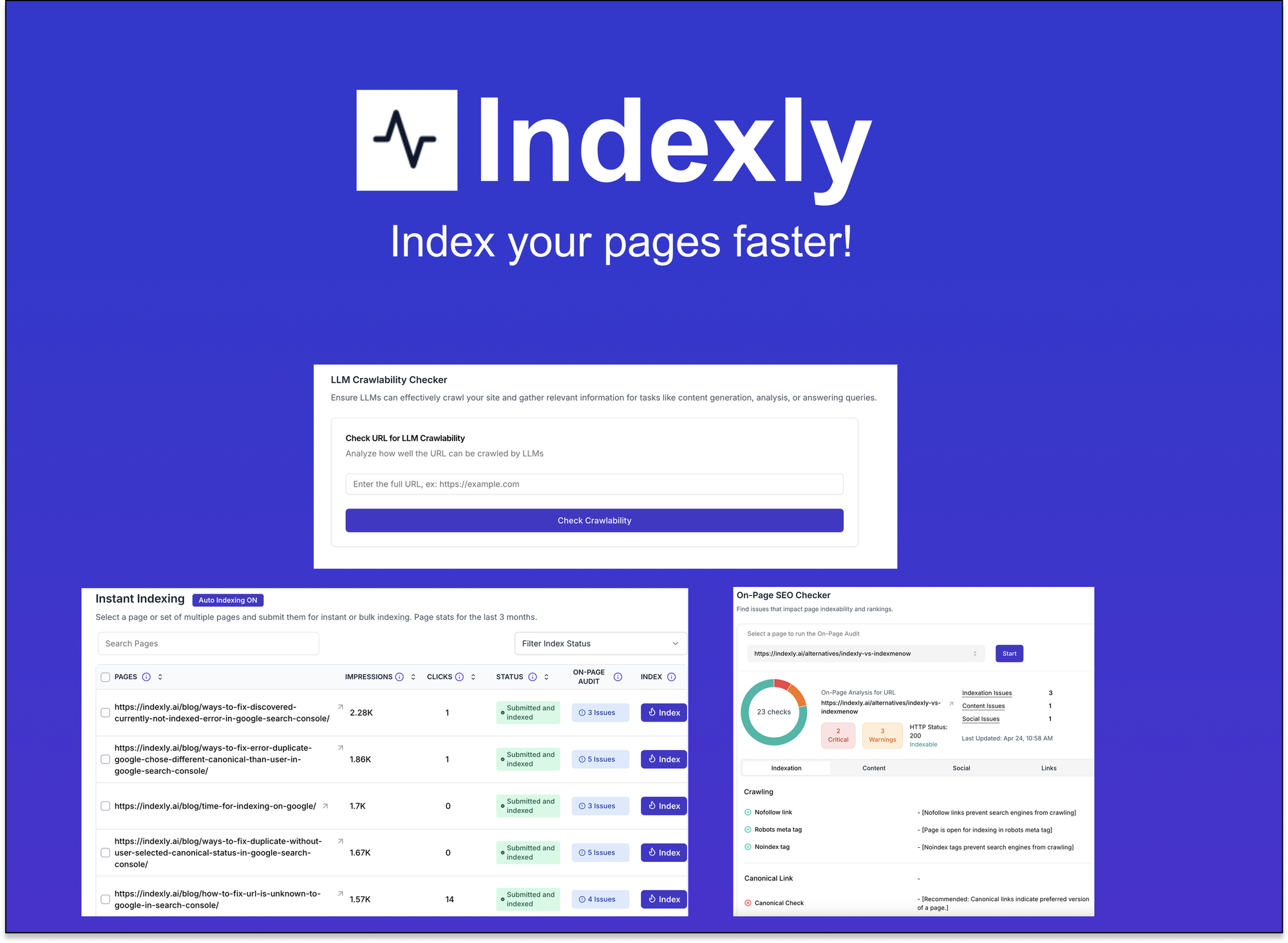
Indexly is your complete indexing and SEO visibility platform — Enable auto-indexing on Google, Bing & Yandex, LLMs (ChatGPT, Perplexity, Claude), Technical SEO, powerful Keyword Monitoring & user-friendly website analytics.
Indexly helps you index, monitor, and manage — so your content starts ranking when it matters most.