AI Search Tracking: Boost Your Brand’s Search Visibility
Discover how AI search tracking reveals where your brand appears in AI answers, boosts SEO visibility, and guides smarter marketing decisions.


Your brand might dominate traditional rankings, yet vanish inside AI-generated answers and chat-based search results where customers increasingly make decisions. Organic traffic reports and classic position tracking barely scratch the surface of what’s really happening in these new search experiences.
AI search tracking reveals where and how your brand appears in AI overviews, snapshots, and conversational answers—so you can spot missed opportunities, benchmark visibility against competitors, and prioritize content that AI systems actually surface. It takes focused analysis, ongoing monitoring, and strategic optimization, but the payoff is clearer influence across AI-powered search journeys.
In a world where AI decides which brands get seen and which get sidelined, AI search tracking is no longer an SEO add-on—it’s the control room where modern marketers, brands, and agencies either command visibility or surrender it to the algorithm.
Reference: AI Search Visibility Tool: Optimize for ...
1. Understanding AI Search Tracking and AI Search Visibility
Defining AI Search Tracking in Modern Search
AI search tracking is the practice of monitoring how often your brand, products, and content appear inside AI-generated answers, summaries, and chat results. Instead of only checking where you rank for a keyword, you’re watching when tools like Google’s AI Overviews or Bing’s generative answers surface your pages as part of their responses.
This includes tracking citations, inline mentions, and source links within AI overviews, assistants, and copilots. For example, an ecommerce brand might track how often its guides are cited in Perplexity or ChatGPT for queries like “best running shoes 2025,” even if users never see the full SERP.
The focus is your presence in AI answers that users consume before or instead of classic organic results. A SaaS company, for instance, may appear in multiple AI summaries about “best CRM for small business” yet receive fewer clicks, making visibility inside the answer itself a critical metric.
How AI Search Visibility Differs from Traditional Organic Rankings
Traditional visibility has centered on where your page appears on a SERP—such as ranking in the top 3 blue links for “project management software.” Tools like Semrush and Ahrefs have historically measured success by those positions and estimated click-through rates.
AI search visibility is about whether your brand is included, how prominently it is cited, and the context in which it appears within AI-generated responses. For example, an AI answer might mention Asana, Trello, and Monday.com, but only link to Asana’s comparison guide, giving Asana outsized exposure.
A site can maintain strong organic rankings while losing real-world exposure if AI answers fully satisfy user intent. Many publishers reported traffic drops after Google AI Overviews tests in 2024, even though their Search Console rankings looked stable, because users stopped scrolling to organic links.
Types of AI-Powered Search Experiences
AI-powered search now extends far beyond a single results page. One major category is AI overviews or generative summaries that sit above or within search results, such as Google AI Overviews or Bing’s AI answers, which blend information from multiple domains into one synthesized block.
Another category is chat-based search, where users ask conversational questions and refine them over multiple turns. Microsoft Copilot in Bing Chat or Perplexity AI, for example, can answer “outline a B2B SaaS SEO strategy” while citing 4–10 different sources in one thread.
Productivity copilots are the third layer. Tools like Microsoft 365 Copilot, Arc browser’s Browse for Me, and Brave’s Leo can surface web content directly inside documents, slides, or the browser sidebar, pulling in brand information without the user ever visiting a traditional SERP.
Why AI Search Tracking Is Becoming a Critical SEO Discipline
User behavior is shifting toward AI-generated answers that resolve questions in a single view. Studies from SparkToro and Similarweb showed that over 50% of Google searches were already zero-click even before broad AI Overviews, suggesting that more intent is being satisfied without a site visit.
This creates a real risk of losing visibility, leads, and revenue even while legacy metrics look healthy. A B2C publisher might see stable impressions and positions in Google Search Console but a 20–30% decline in clicks as AI panels answer “how to clean white sneakers” without requiring a click.
AI search tracking is emerging as a core layer of SEO that complements keyword and traffic analysis. Teams are beginning to log when and how their brand is cited in tools like Gemini, ChatGPT, and Perplexity, then adapt content—structured data, expert quotes, and topical depth—to increase inclusion rates in those AI answers.
2. How AI Is Transforming Search Engine Performance Tracking
From Ten Blue Links to Blended and Generative Results
Search results have shifted from simple “ten blue links” to complex layouts mixing ads, image packs, FAQs, and now AI-generated overviews. On Google, SGE-style summaries and Bing’s AI answers can occupy most above-the-fold space, pushing traditional organic listings below the scroll.
For example, a query like “best CRM for small business” can show a long AI summary, product cards, and ads before the first organic listing. That means SEO teams must track visibility across these layers, not just where a URL ranks in classic results.
New Visibility Layers: AI Snippets, Citations, and Chat References
AI snippets are generated text blocks that pull from multiple sources and often display clickable citations. These source cards function much like featured snippets or knowledge panels, creating new, premium visibility slots.
Experiments documented in What 4 AI search experiments reveal about attribution and buying decisions show that brands repeatedly cited across an AI chat thread tend to be added to user shortlists, even when those users never click a traditional organic result.
Limitations of Legacy Rank Tracking in AI-First Search
Conventional rank trackers rarely record whether your site is referenced in AI answers or long-form chat. A URL might “rank” #3, yet the user spends all their time interacting with an AI module and never sees that listing.
These gaps explain why AI search rarely appears in analytics, even though it heavily influences trust and purchase intent, as highlighted in the same Search Engine Land experiments. Relying only on average position and organic sessions can hide significant drops in brand visibility.
Key Metrics to Track for AI Search Performance
AI-era performance tracking should include an inclusion rate: how often your brand appears as a cited source for priority queries. Teams can also log prominence signals such as citation order, whether your logo or favicon displays, and how often the brand is re-mentioned in multi-turn chat.
To connect this visibility to outcomes, correlate AI citations with assisted conversions, branded search uplift, and engagement on cited content. For instance, if a B2B SaaS brand gains AI citations for “SOC 2 compliant CRM” and later sees a spike in high-intent demo requests from that segment, AI exposure is likely accelerating pipeline.
3. Identifying the AI Search Journeys That Matter for Your Brand
3. Identifying the AI Search Journeys That Matter for Your Brand
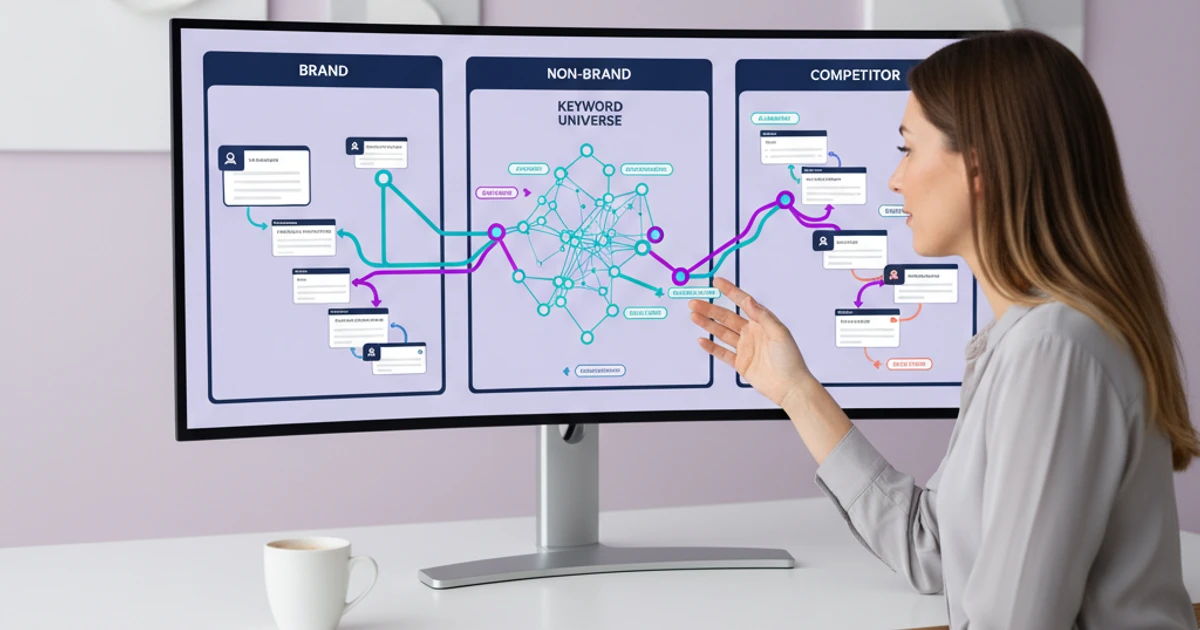
Mapping Customer Journeys to AI Search Behaviors and Intents
AI search journeys mirror the classic funnel, but with more natural language and follow-up questions. At the awareness stage, users tend to ask broad, educational prompts like “what is zero-trust security” or “how does CRM help B2B sales,” which often trigger AI overviews in Google and Bing.
Marketing teams can mine support tickets, live chat logs, and sales call transcripts in tools like Gong or HubSpot to see how people really phrase these questions. Tie those phrases to intents: informational ("how does"), comparison ("vs" or "best"), and transactional ("pricing," "discount," "get started"). For example, Shopify likely maps “how to start an online store” (awareness) to “Shopify vs WooCommerce” (consideration) and “Shopify pricing for small businesses” (decision) across AI-driven results.
Prioritizing High-Value Queries Across AI Overviews and Chat Search
Not every AI-triggered query deserves the same effort. Focus on high-intent topics where AI answers can directly influence revenue, such as “best business checking account for startups” for Chase or “G Suite migration services cost” for Google partners.
Segment these by product lines and audience. A SaaS company like HubSpot might track separate AI journeys for “marketing automation software,” “sales CRM,” and “customer service platform,” each mapped to SMB, mid-market, and enterprise segments. Use tools like Semrush, Ahrefs, and Google Search Console impressions for queries that often surface AI overviews to build that priority list.
Related Articles:
Reference: → time-for-indexing-on-google
Reference: → why-index-pages-on-google
Reference: The three AI research modes redefining search
4. Selecting AI-Powered SEO Tools for Robust Search Tracking
Core Capabilities to Look For in AI-Powered SEO Platforms
AI visibility tools should tell you not just where you rank, but whether you are present inside AI-generated summaries on Google, Bing, and Perplexity. Platforms highlighted in 11 Best AI Search Visibility Tools 2026 emphasize this distinction between classic rankings and AI answer presence.
Look for software that can programmatically check thousands of URLs and keywords to see if your pages are cited, where the citation appears in the answer block, and the surrounding context. For example, a retailer like Best Buy might track 5,000 product queries to confirm whether their buying guides are linked within Google AI Overviews or replaced by publisher content.
Tools That Surface Citations in AI Answers and Chat Experiences
Effective platforms emulate real user prompts inside AI-enhanced SERPs, then log which domains are referenced in both one-shot answers and follow-up chats. Some tools in the best AI search visibility tools report can capture the full layout of AI responses, including link cards and citations.
Prioritize solutions that store screenshots or structured JSON of AI answer blocks so your team can audit changes over time. Agencies managing brands like HubSpot or Airbnb use these archives to show clients how AI-generated explanations evolve after content refreshes or technical SEO improvements.
Reference: 11 Best AI SEO Tools for B2B SaaS Growth Teams
5. Implementing an AI Search Tracking Framework
5. Implementing an AI Search Tracking Framework
Setting Up Baselines for AI Search Visibility Across Engines
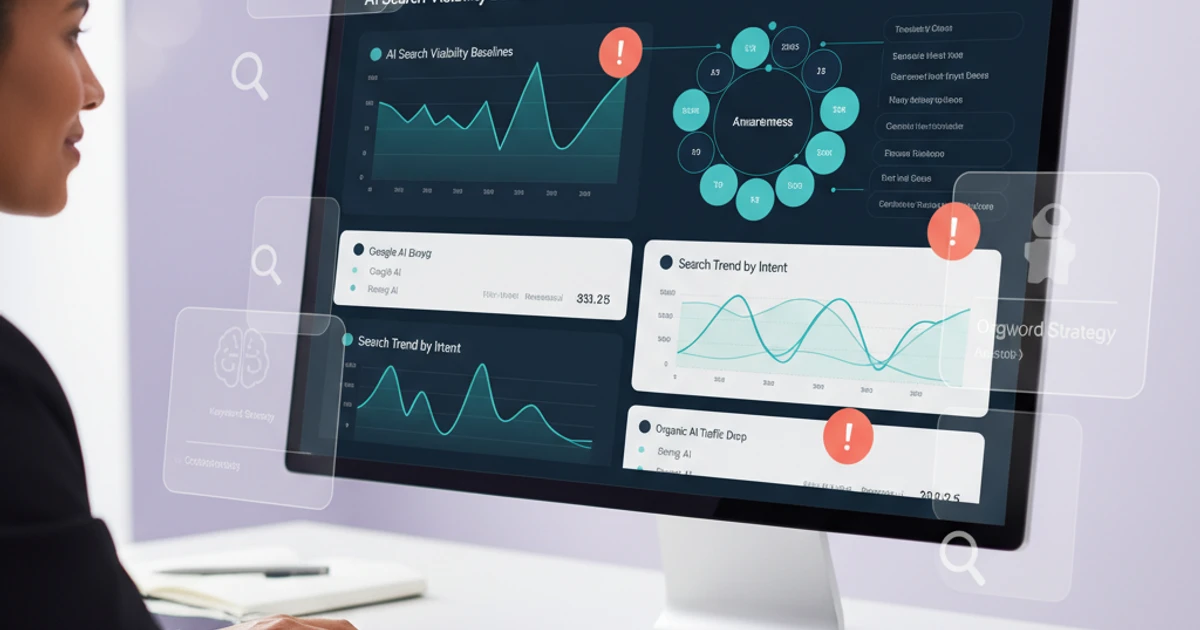
A robust AI search tracking framework starts with clear baselines across major engines such as Google’s AI Overviews, Perplexity, ChatGPT, and Bing Copilot. Before optimizing, you need to understand how often your brand is already being cited, for which topics, and in what positions within the AI-generated responses.
For example, a B2B SaaS brand might track 150 priority queries in Semrush, then manually review how often those URLs appear in Perplexity and Google AI Overviews. Record inclusion rate, citation rank (e.g., first cited source vs. buried in “learn more” links), and which content types win citations—blog posts, docs, or product pages.
Designing Dashboards for AI Search Performance Tracking
Once baselines are set, consolidate them in dashboards so SEO and content teams can see AI visibility at a glance. Tools like Looker Studio or Power BI can connect exports from Semrush, GA4, and custom AI-scraping scripts that capture citation data from engines like Perplexity and Bing Copilot.
Segment visualizations by engine, topic cluster, funnel stage, and query type. For instance, an ecommerce brand could track AI inclusion for “best running shoes for flat feet” vs. branded queries, with alerts if first-position citations drop more than 20% week over week for high-ROAS categories.
Tagging and Segmenting Queries by Journey Stage and Intent
To make AI visibility data actionable, tag each tracked query by journey stage and search intent. Map awareness queries like “what is zero trust security” to TOFU, consideration queries like “Okta vs Microsoft Entra comparison” to MOFU, and high-intent phrases such as “Okta enterprise pricing” to BOFU.
Add intent tags—informational, comparative, navigational, transactional—so you can see where you underperform. If AI engines rarely cite your brand on comparative queries, that’s a cue to build head-to-head pages, like HubSpot does with detailed “HubSpot vs Salesforce” content that often appears in AI-style summary results.
Establishing Monitoring Cadences and Alert Thresholds
AI search ecosystems shift quickly, but not every brand needs daily tracking. Enterprise software providers might review AI inclusion weekly, while a news publisher could require near-daily checks because AI summaries change as stories evolve. Pick a cadence that matches your category’s volatility and your team’s capacity.
Define alert thresholds for priority topics, such as a 15–25% drop in AI inclusion on key commercial queries or losing first-citation status for core products. Route alerts into Slack or Jira so SEO, content, and product marketing can respond with updates, technical fixes, or new pages when visibility dips in AI-generated answers.
Related Articles:
Reference: → why-index-pages-on-google
Reference: → time-for-indexing-on-google
Reference: The Ultimate 5-Step AI Search Framework for Hotels
6. Content and On-Page Strategies to Improve AI Search Visibility
Structuring Content to Be Easily Consumed by AI Models
AI systems like Google’s Search Generative Experience and ChatGPT rely on clean structure to understand and quote your content. Pages that mirror good technical documentation often surface more prominently in AI answers.
Use descriptive H2–H4 headings, short paragraphs, and bullet lists to isolate key ideas. For example, HubSpot’s blog breaks guides into clearly labeled sections and bullets, which makes it easy for AI models to extract precise, on-topic snippets.
Place direct, factual answers near the top of the page. A B2B SaaS company explaining “What is customer churn rate?” should open with a one-sentence definition, followed by a simple formula, then examples and context below. This structure gives AI a clean, quotable answer while preserving depth for human readers.
Using Entities, Schema, and Topical Depth to Earn AI Citations
AI models lean heavily on entities and relationships to evaluate authority. Explicitly naming brands, products, people, and locations helps them connect your content to wider knowledge graphs.
For a page targeting “Shopify SEO,” reference entities like Shopify, Google Search Console, and apps such as Yoast SEO. Mark up the page with schema types like Article or HowTo, including properties for author, organization, and relevant FAQs.
Build topic clusters around core themes. For instance, a digital agency might publish a pillar guide on “AI search optimization,” supported by deep articles on schema markup, entity optimization, and AI answer snippets. This network of pages signals expertise and gives AI multiple entry points to cite your brand.
Reference: 6 easy ways to adapt your SEO strategy for stronger AI ...
7. Technical and Off-Page Signals That Influence AI Visibility

7. Technical and Off-Page Signals That Influence AI Visibility
How Technical SEO Impacts AI Search Discovery and Eligibility
AI-driven results still rely on the same foundations as traditional organic search: if search engines cannot crawl or index your pages, your content is unlikely to be surfaced in AI answers. Clean architecture and clear hierarchies help systems like Google’s Search Generative Experience map topics to the right URLs.
Review your robots.txt and meta robots to confirm key pages are not blocked, especially high-value assets like product categories or guides. Sites built heavily on JavaScript frameworks such as React or Angular should test rendering with tools like Google’s URL Inspection and Screaming Frog’s JavaScript crawler to avoid content hidden behind client-side rendering.
Sound canonicalization and simple, descriptive URL structures make it easier for AI systems to choose the correct version of a page. For example, HubSpot’s /blog/ topic clusters and internal links create a clear content hierarchy that signals primary resources, helping search engines and AI features identify definitive sources.
Role of Site Performance, Crawlability, and Structured Data
Performance and crawl efficiency strongly influence how often and how deeply your site is scanned, which in turn affects AI visibility. Faster pages with solid Core Web Vitals send signals of quality user experience, something Google has publicly tied to ranking and indexing priorities.
Use tools like PageSpeed Insights and WebPageTest to reduce Largest Contentful Paint and Cumulative Layout Shift on key landing pages. Brands such as Walmart reported conversion lifts after performance optimization, which indirectly supports better engagement signals that AI systems can factor into ranking models.
Crawlability remains essential. Maintain XML sitemaps segmented by content type and ensure internal links surface critical pages within three clicks of the homepage. Implement structured data (e.g., Product, FAQ, HowTo, Organization) so AI systems can interpret entities, pricing, and intent—for instance, schema on Best Buy product pages helps search engines extract specs and availability more reliably.
E‑E-A-T (Experience, Expertise, Authoritativeness, Trust) for AI
AI systems increasingly weight E‑E‑A‑T signals when deciding which domains to reference or summarize. Demonstrating real experience and subject-matter expertise is especially important for YMYL topics like finance and health.
Include detailed author bios with credentials, such as “CPA with 10+ years in small business tax,” and link to LinkedIn or professional profiles. Sites like Healthline highlight their medical review board and editorial policy pages, which help search and AI systems recognize verified expertise behind the content.
Reinforce authority with citations from reputable domains, media mentions, and industry memberships. For example, a cybersecurity firm referenced by Gartner or Wired gains strong off-page trust signals. Pair this with transparent sourcing, last-updated timestamps, clear privacy policies, and accessible contact details so algorithms can confidently treat your site as a reliable source to surface in AI overviews.
Leveraging Digital PR and Backlinks to Boost AI Trust Signals
Off-page signals like backlinks and brand mentions remain critical indicators of trust and authority for AI-driven search. High-quality links from relevant, authoritative domains tell algorithms that your content is worth referencing and citing.
Invest in digital PR campaigns that earn coverage in niche publications, podcasts, and data-driven stories. For instance, Backlinko’s large-scale SEO studies attracted links from Moz, Search Engine Journal, and hundreds of blogs, significantly amplifying its perceived authority in search and AI surfaces.
Focus on topical relevance: a SaaS analytics company securing links from sites like Segment, Amplitude, or Mixpanel’s blogs will see stronger topical reinforcement than from generic directories. As AI systems select citations for overviews or answer panels, domains with consistent, high-quality off-page signals are more likely to be chosen as trusted sources.
Related Articles:
Reference: → why-index-pages-on-google
Reference: → time-for-indexing-on-google
Reference: AI Search Optimization: 7 Signals Your Content Is Invisible
8. Measuring Impact and Iterating on Your AI Search Strategy
Connecting AI Search Visibility to Traffic, Leads, and Revenue
AI answer visibility only matters if it translates into measurable business outcomes. Start by tagging landing pages frequently cited in Google’s AI Overviews or Perplexity answers, then track organic sessions, assisted conversions, and lead quality in tools like Google Analytics 4 and HubSpot.
For example, a B2B SaaS brand might see demo requests from AI-cited comparison pages convert at a 25% higher rate than other organic leads. Compare performance before and after AI-focused optimizations, and use multi-touch attribution models in GA4 or Adobe Analytics to understand how AI exposure contributes across the full journey.
Running Experiments to Test AI-Focused SEO Changes
Treat AI search like any other optimization channel: through structured testing. Select a cohort of pages and adjust schema, headings, and FAQs to better match AI answer patterns, while keeping a similar control group unchanged.
For instance, an ecommerce brand could optimize 50 product guides with FAQPage schema and clearer comparison sections, then track whether those URLs appear more often or more prominently in AI Overviews for “best [product] for [use case]” queries. Document outcomes, then roll out tactics that consistently increase inclusion rates.
Benchmarking Performance vs. Competitors in AI Search
Your AI share-of-voice should be evaluated relative to competitors. Use manual spot checks and emerging tools that track AI citations to see how often your brand, versus rivals like Shopify or Salesforce, is mentioned for core commercial queries.
Identify topics where competitors dominate, such as “best CRM for small business” heavily favoring HubSpot and Zoho in AI answers. Prioritize content refreshes, expert-backed resources, and digital PR for these gaps, focusing efforts where incremental AI visibility can most influence pipeline and revenue.
Building an Internal Playbook for Ongoing AI Search Optimization
Consistency requires a documented playbook that aligns SEO, content, and product marketing. Define steps for identifying high-impact queries, evaluating AI answer sets, and updating on-site content structures and schema.
Create writer guidelines with examples of AI-friendly layouts: concise definitions, evidence-backed claims, and clearly labeled sections like pros/cons or step-by-step instructions. Embed AI visibility checks into quarterly SEO audits and content planning so that tracking AI citations, testing changes, and reporting outcomes becomes part of your standard operating rhythm, not a one-off initiative.
Reference: Top AI Search Metrics You Need to Measure Success
Conclusion: Turning AI Search Tracking into a Competitive Advantage
Key Takeaways for Brands Adopting AI Search Tracking
Traditional SEO metrics like rankings and organic sessions no longer tell the full story. Brands now need to track how often they appear in AI-generated answers from systems like Google’s Search Generative Experience and ChatGPT-powered assistants.
Being cited or linked inside those answers is quickly becoming a signal of authority and trust. Brands that systematically track AI answer share, optimize content for cited status, and test different formats can turn AI search into a repeatable, defensible edge over competitors.
Why Early Investment in AI Search Visibility Compounds Over Time
Early adopters shape the training signals AI systems rely on. For instance, Adobe and HubSpot already appear frequently in AI summaries for design and CRM topics, reinforcing their perceived authority every time users see their names surfaced.
Building structured data, strong information architecture, and expert-led content now reduces the cost of catching up later. As you gather historical AI visibility data and internal benchmarks, each subsequent optimization round becomes faster, more accurate, and easier to justify to leadership.
Aligning Teams Around AI Search as a Strategic Priority
AI search visibility can’t sit in an SEO silo. It demands tight collaboration between SEO, content, analytics, product marketing, and leadership so everyone understands what “winning” in AI answers looks like and how it impacts pipeline or revenue.
Clarify who owns measurement, who implements on-page and technical changes, and who reports outcomes. Some brands run quarterly enablement sessions so copywriters, PR teams, and even sales understand how expert quotes, research reports, and FAQs can feed AI answer inclusion.
Operationalizing AI Search Performance Tracking
To make AI tracking operational, start by selecting tools that monitor presence in AI overviews and chat-like SERP features, then define a small set of KPIs such as AI answer share of voice, citation frequency, and traffic or conversions from those experiences.
Fold these metrics into existing monthly SEO reports and quarterly business reviews. Treat them like a new lens on search performance, and run ongoing experiments—such as revising schema markup or expanding expert commentary—to see what reliably increases AI exposure.
When to Consider External Partners or Specialized AI SEO Support
Many in-house teams lack the bandwidth or AI-specific expertise to build robust tracking and testing frameworks. This is where specialized agencies or consultants focused on AI search and SGE visibility can accelerate progress and reduce missteps.
External partners are especially valuable for enterprises with complex site architectures, compliance constraints, or multi-language properties. When evaluating vendors, prioritize those who can show real examples of AI visibility dashboards, case studies, and methodologies tailored specifically to AI search—not just traditional blue-link SEO results.
FAQs About AI Search Tracking and AI Search Visibility
How Is AI Search Tracking Different from Traditional Rank Tracking?
AI search tracking focuses on how often and how prominently your brand appears inside AI-generated answers, overviews, and chat responses, not only in the classic 10 blue links. Instead of tracking a rank like “Position 3,” you measure whether your page is cited, how many times, and in what context within systems like Google AI Overviews, Perplexity, and Bing Copilot.
For example, a health publisher such as Healthline may still rank top 3 for “symptoms of vitamin D deficiency,” but the real win is being cited as a key source in the AI Overview shown above organic results. AI search tools now simulate these experiences at scale, capturing citations, snippets, and co-mentioned entities across engines.
Why Invest in AI Search Visibility if Traffic Seems Stable?
Stable traffic can hide a shift where AI-generated answers are quietly intercepting queries before users scroll to traditional listings. When Google’s SGE tests expanded in 2023, several ecommerce brands reported flat sessions but lower CTR for informational queries, as users engaged with the overview instead of clicking.
Marketing teams that watch only GA4 or Search Console may miss the early warning. Tracking AI visibility now lets you see when your brand disappears from high-intent answers, giving you time to strengthen content, markup, and E-E-A-T signals before traffic and revenue start to slide.


