5 Steps for Your Content AI Search Optimization: Checklist
Learn AI search optimisation in 5 steps for better content visibility, technical SEO, AI readiness, pillar pages, and brand visibility


AI search optimization is becoming essential as Generative Engine Optimization (GEO) grows in importance and the way users search for information changes. Instead of typing keywords into traditional search engines, people are now asking conversational questions in AI systems like ChatGPT, Gemini, and Claude, which provide direct, synthesized answers rather than a list of links.
This shift means traditional SEO alone is no longer enough. Optimizing your content for AI ensures it is crawlable, interpretable, and retrievable by these platforms, increasing the likelihood it appears in AI-generated responses and boosting your brand’s visibility.
Also, more than 80% of users prefer AI‑powered search tools over traditional search because they find them faster and more efficient at answering questions (Hubspot).
In this blog, we will walk you through a 5-step process to optimize your content for AI and answer engines: strengthening technical SEO, improving AI readiness, optimizing your topical maps with pillar pages and keyword clustering tools, structuring content for answer engines, and monitoring performance with tools like Indexly. Following these steps will prepare your content to perform in generative search environments, increasing both reach and relevance.
What Is AI Search Optimization?
AI search optimization is the process of structuring and technically optimizing content so it can be crawled, indexed, interpreted, retrieved in chunks, and synthesized by AI-powered systems.
- Traditional SEO focuses on ranking positions.
- AI search optimization focuses on inclusion probability inside AI-generated answers.
- It requires more than keywords. It requires clarity, structure, authority, and accessibility.
- Technical SEO ensures your content can be accessed. AI readiness ensures it can be understood. Topical depth ensures it is trusted. Structured formatting ensures it can be extracted.
- When these components align, your content becomes eligible for generative visibility.
Here are the five essential steps to increase your content’s inclusion in AI-generated responses.
Step 1: Strengthen Technical SEO for AI Search Optimization
Generative visibility starts with accessibility. If AI systems cannot properly crawl and index your content, they cannot include it in synthesized responses, making technical SEO the essential first layer of AI search optimization.
Common Technical Errors
Many websites have issues that block AI systems and search engines from crawling and indexing content effectively:
- No indexation
- Broken links
- Duplicate content
- Bad title length
- Poor site architecture
- Excessive crawl depth
- Missing schema markup
When these issues exist, AI systems may struggle to retrieve or evaluate your content. This is particularly important because 58.5% of U.S. Google searches now end without a click, meaning users often get answers directly from AI summaries or search snippets rather than visiting websites (Spark Toro).
How to Optimize for Content AI Crawlability and Indexability
To make your content fully accessible to AI systems:
- Maintain up-to-date XML sitemaps and structured URLs
- Optimize internal linking to reduce crawl depth and highlight important pages
- Fix technical SEO issues such as broken links, duplicate content, and canonical errors
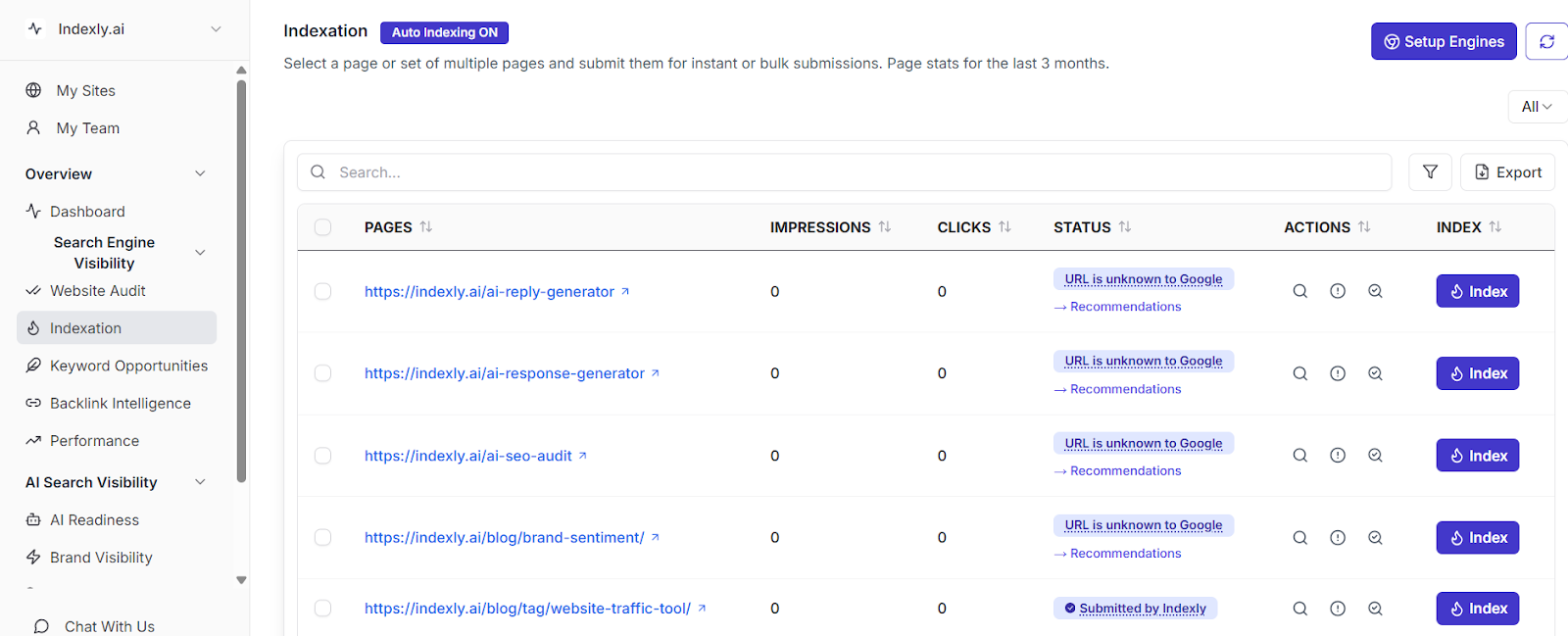
- Monitor page status, detect errors, and prioritize fixes
- Use Indexly AI Indexation feature
How to Optimize for Multi-Modal Support
AI systems increasingly interpret content in multiple formats, but issues like images without alt text, videos without transcripts, unlabeled tables, and missing schema markup can reduce content crawling and AI readiness. These issues also affect website audit results, technical SEO, and brand visibility.
How to Fix:
- Add descriptive alt text to images
- Include video transcripts and captions
- Clearly label tables and charts with headers
- Implement schema markup for articles, products, FAQs, and other content types
How Indexly AI Strengthens Technical SEO
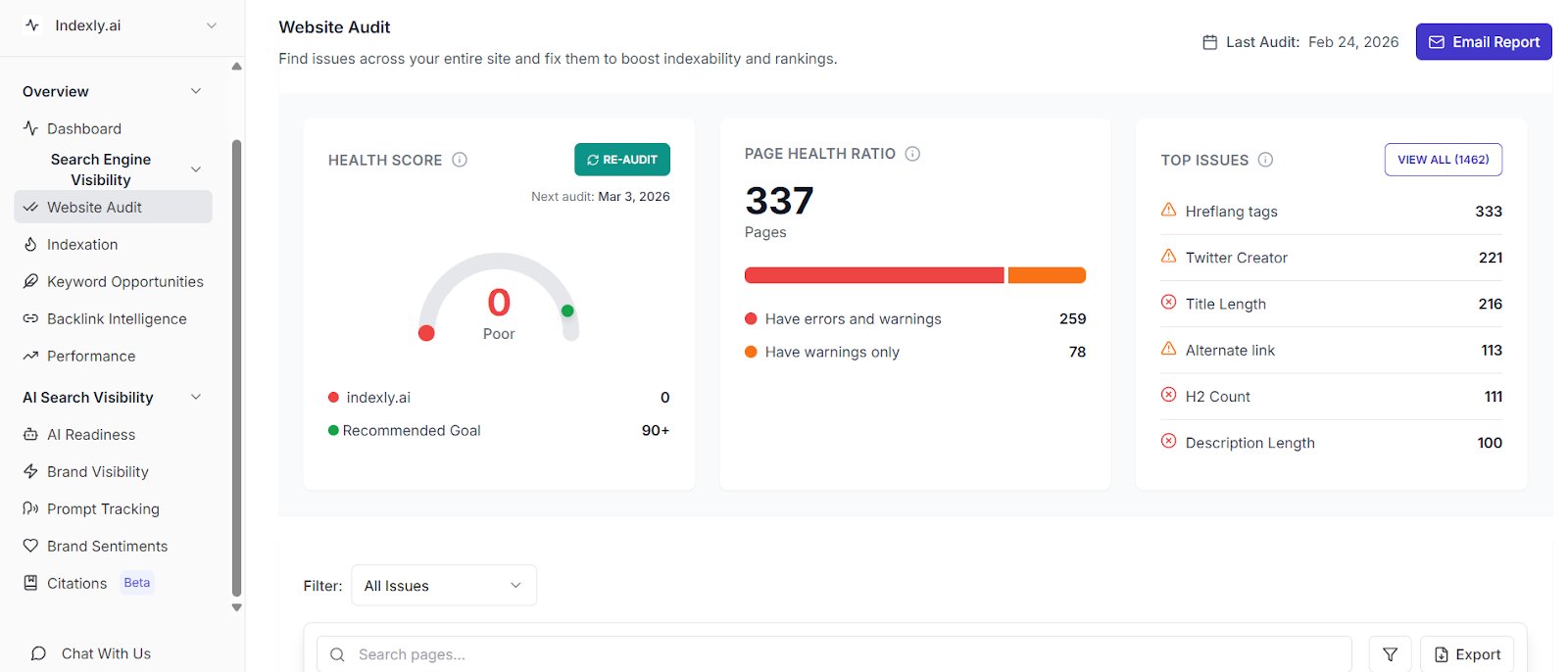
Indexly AI helps improve your website’s technical health by performing a detailed website audit and providing a comprehensive health score, page health ratio, total traffic, etc,. The audit identifies issues that impact crawlability and indexation, including broken links, duplicate content, excessive crawl depth, missing schema markup, and canonical problems.
By highlighting these problem areas and tracking indexation status, Indexly shows exactly what to fix to make your content readable, improve technical SEO, and ensure pages are fully discoverable by AI systems and search engines. This helps maintain strong AI readiness, effective content crawling, and improved brand visibility in generative search results.
Step 2: Improve AI Readiness to Support AI Search Optimization
Once you fix the technical issues and ensure proper crawlability and indexability, the next step is to check whether your content is understandable for AI systems.
AI systems and LLM models crawl and retrieve content differently. They extract information in chunks and look for clear, structured explanations. If your content is too dense, poorly formatted, or unclear, it may not be selected for synthesis.
This is where AI readiness becomes important.
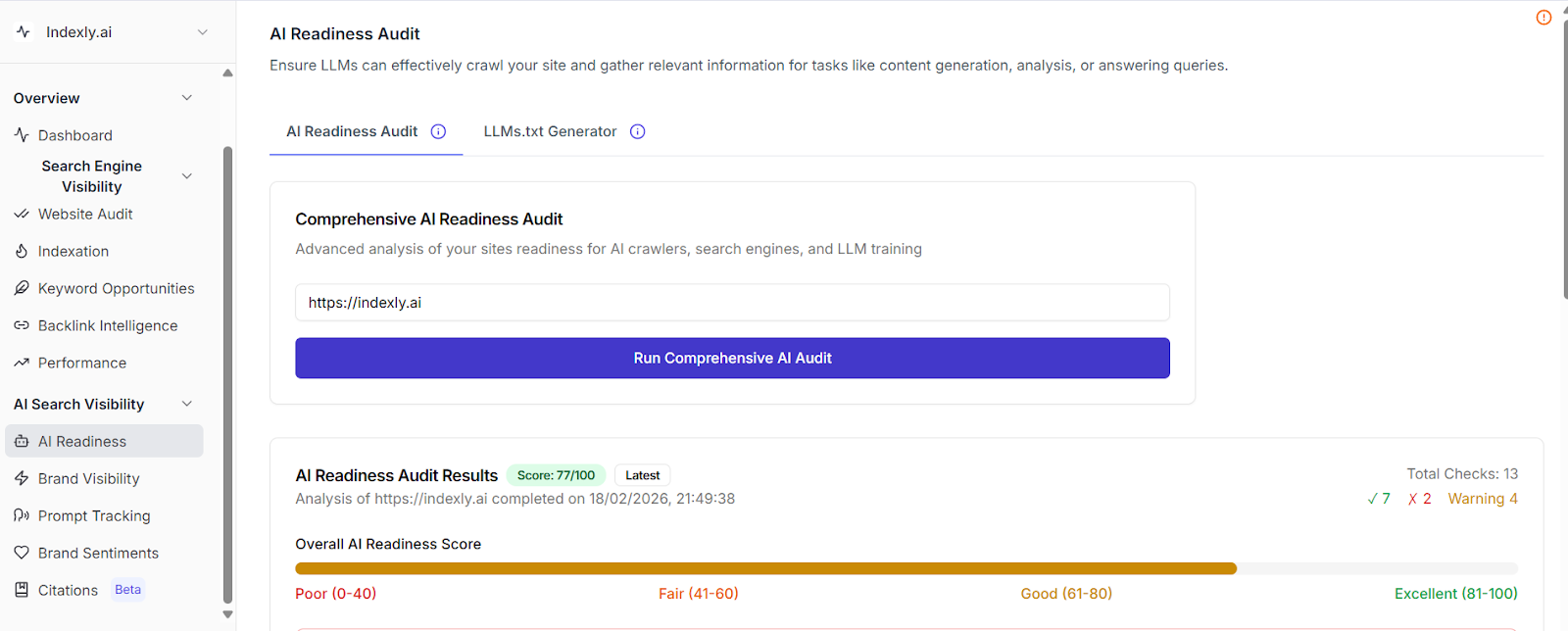
AI readiness gives you insight into whether your content is structured in a way that AI systems can interpret, segment, and use in responses. It evaluates clarity, formatting, logical flow, and definition placement.
To improve AI readiness:
- Use clear and descriptive headings
- Place definitions directly under headings
- Keep paragraphs focused on one idea
- Avoid long, cluttered introductions
- Maintain consistent terminology
- Use Indexly AI’s AI audit feature
Step 3: Optimise your Topical Map (Pillar page vs Cluster page)
Once your content is technically optimized and AI-ready, the next step is building authority across your topic. AI systems don’t evaluate expertise based on a single article, they assess how well your website covers an entire subject area. Shallow or scattered coverage may prevent generative engines from treating your site as a trusted source. That’s why optimizing your topical map with pillar and cluster pages is essential.
Start with a Topical Map
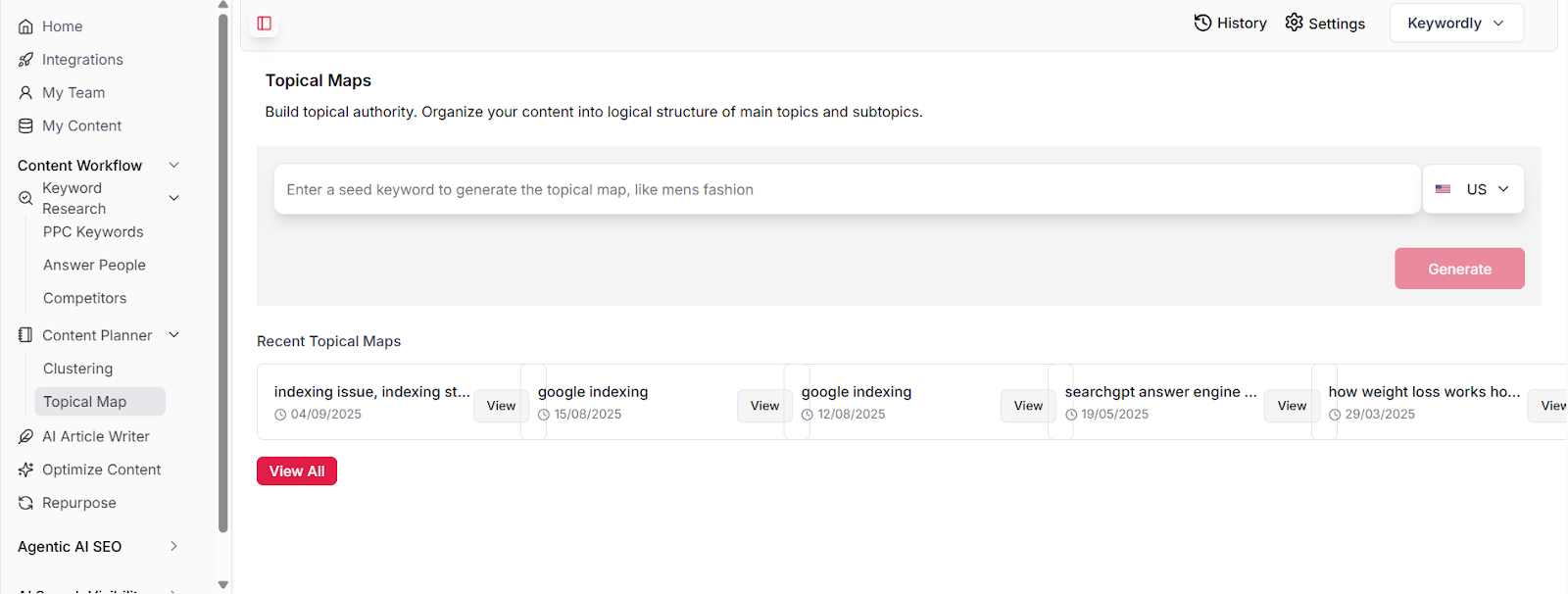
A topical map defines your core subject and organizes it into pillar topics and supporting clusters. The pillar page serves as a comprehensive hub covering the main topic, while cluster pages dive into related subtopics in detail.
This structure helps you identify your main pillar topic, see which subtopics support it, understand logical connections, and spot content gaps. Instead of publishing articles randomly, a well-designed topical map ensures every page contributes to a cohesive, authoritative content ecosystem.Create your topical map
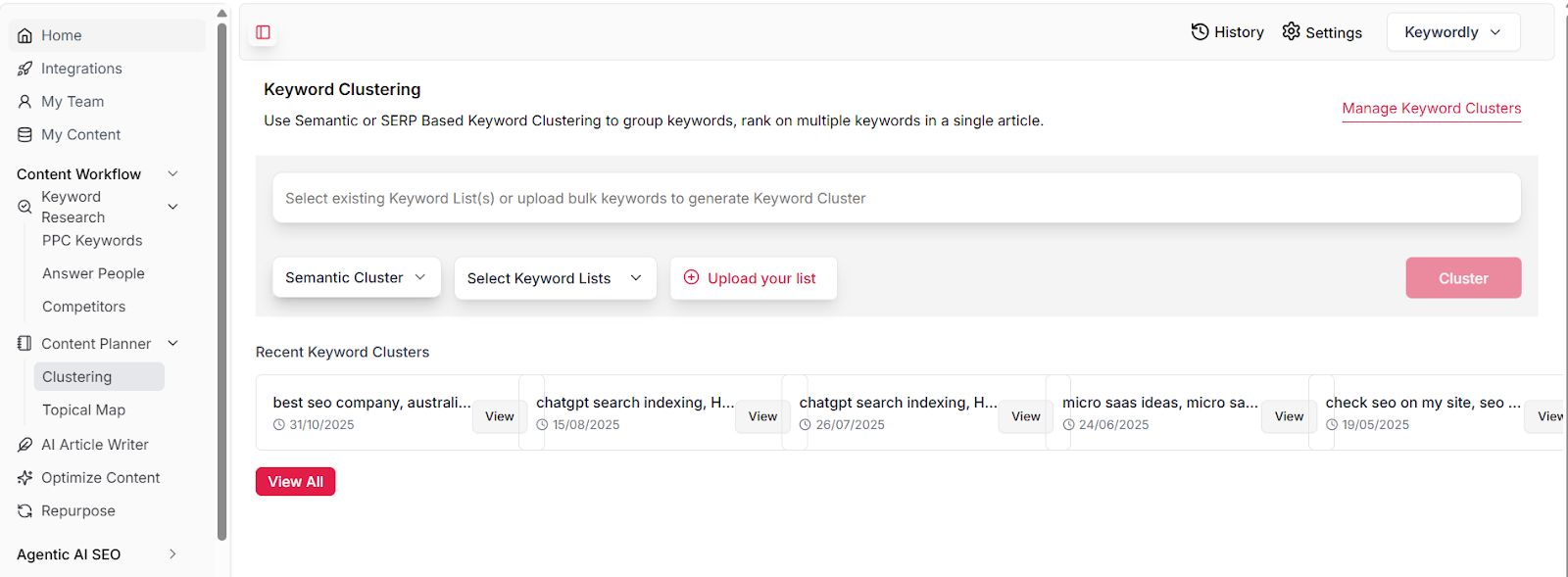
Organize Keywords into Clusters
Using a keyword clustering tool, group related queries by intent and semantic similarity. Benefits include:
- Cluster pages cover similar queries without competing with each other
- Each page has a clear topical focus
- Your content aligns with real user search behavior
Keyword clustering transforms your topical map into intent-driven content networks, rather than isolated posts.
Connect Pillars and Clusters
Each pillar page should be supported by multiple cluster pages. These clusters explore subtopics in depth, link logically to the pillar, connect to other clusters, and reinforce the overall subject area. This creates a strong internal network of content that AI systems recognize, improving your site’s authority and increasing the likelihood of citation in generative search results.
Step 4: Optimise for Answer Engines
To appear in AI-powered answers, your content needs to be structured so AI can easily understand and use it. Generative engines like ChatGPT, Gemini, and Claude don’t process entire articles, they pull short sections to answer questions. That means each section should focus on a single idea and be easy to read on its own.
Use Chunked Answer Prompts
Break your content into small, self-contained chunks under clear headings. Each chunk should directly answer a specific question or explain one concept. This makes it easier for AI to retrieve the information accurately. Answering user queries clearly in chunks helps AI generate answers that reference your content, leading to more brand citations in synthesized responses.
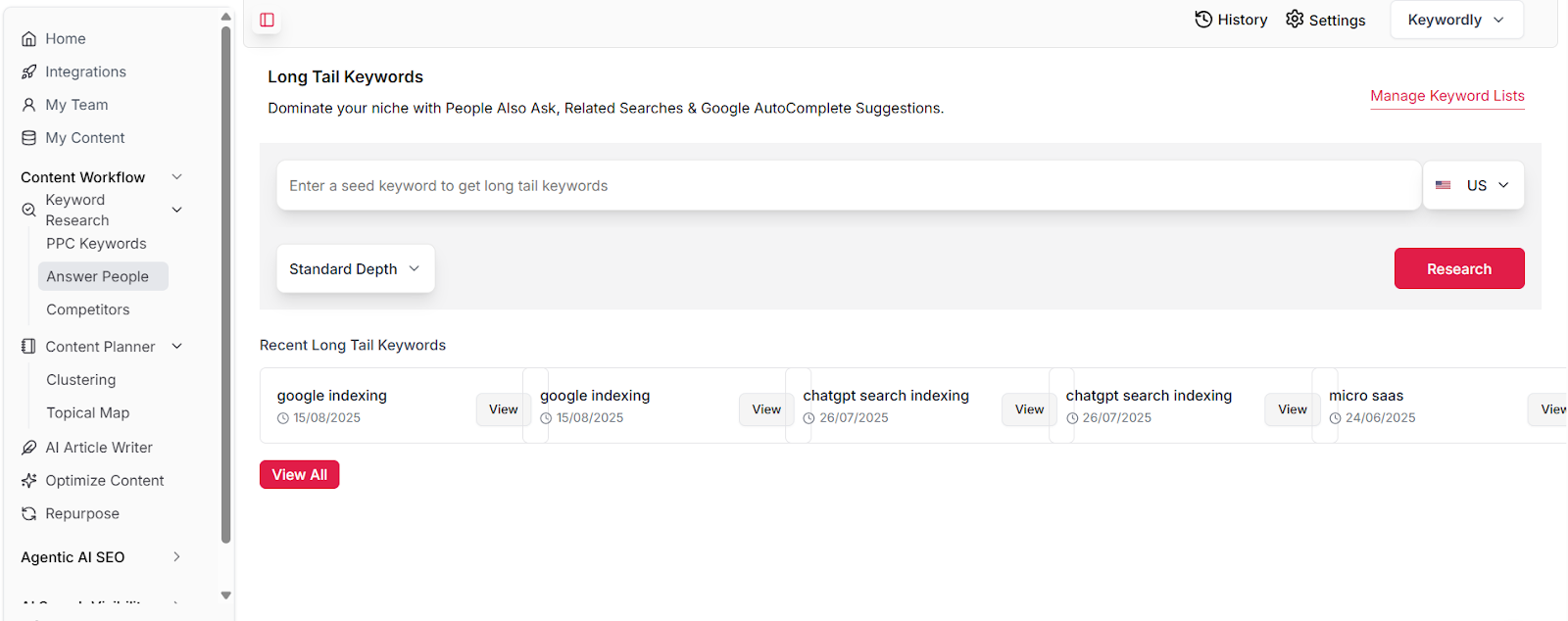
Include Common Questions
Keywordly can help identify common queries, including “People Also Ask” questions, cluster them, and guide content creation so every section addresses real user intent. By leveraging Keywordly, you can make your content more comprehensive, AI-friendly, and aligned with how users naturally ask questions, covering multiple variations of a topic to increase the chances AI will use it in responses.
Step 5: Monitor Your Content AI Search Performance
Once you publish content, you must track how AI systems are using it. Unlike traditional SEO, AI visibility doesn’t show rankings. To succeed, you need to continuously monitor performance and refine your strategy.
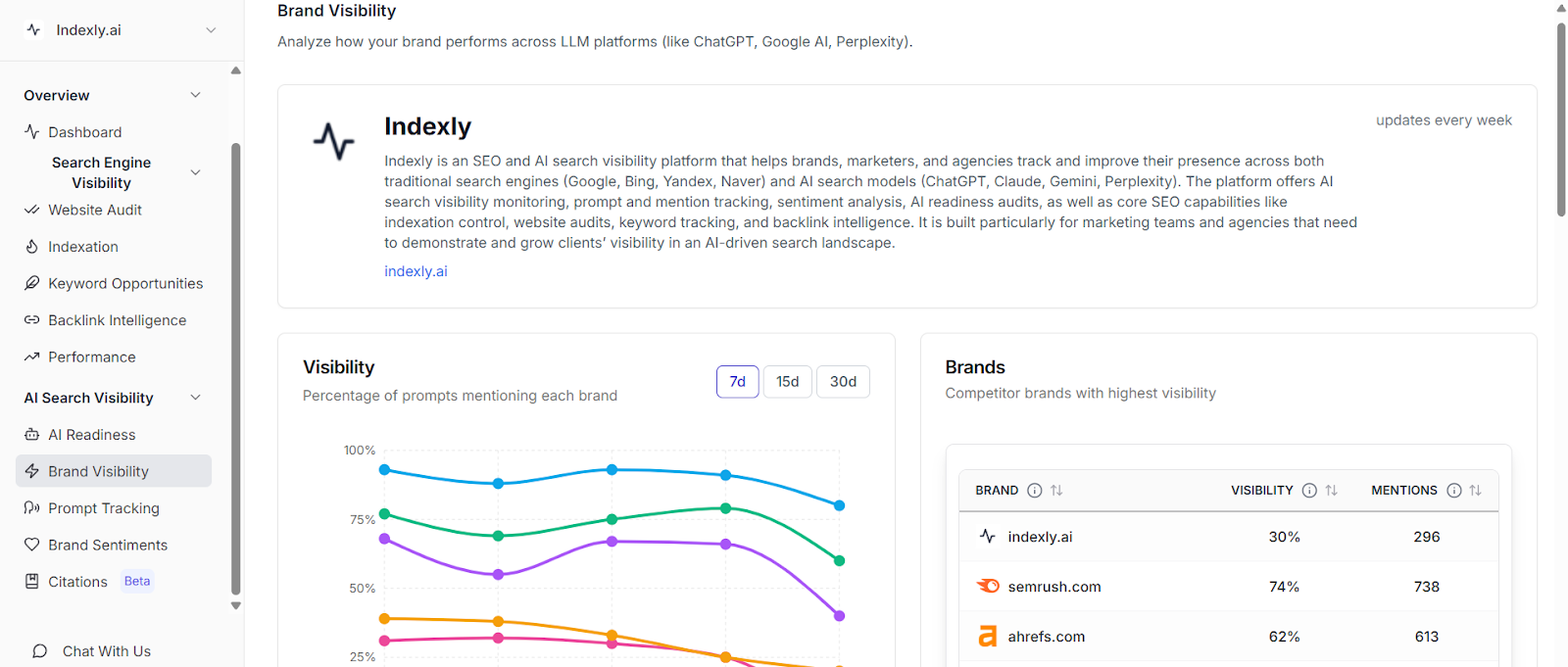
Track Brand Visibility
Monitoring brand visibility ensures AI models recognize your expertise. You can see how often your brand is mentioned, which topics are associated with it, and how your authority is perceived. This helps maintain trust and expand your presence in generative search systems.
Indexly AI’s brand visibility tool
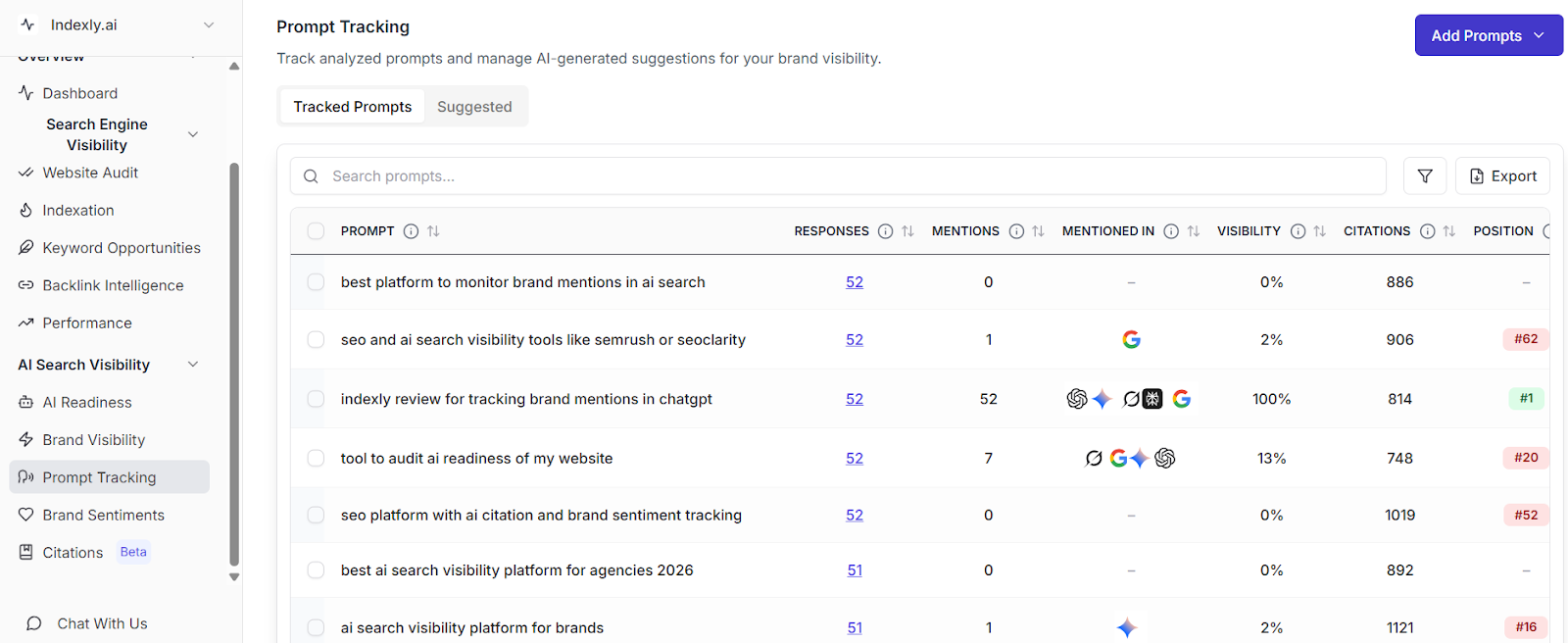
Track Prompts and User Queries
Use prompt tracking to see which questions or prompts are leading AI engines to your content. This shows which sections are performing well and where you may need to improve or add more clarity.
AI Traffic Analyzer
Platforms like Indexly offer an AI traffic analyzer to measure how much traffic your content is generating from AI-powered answers. This helps you understand which topics are most visible and engaging in generative search results.
Performance Dashboard
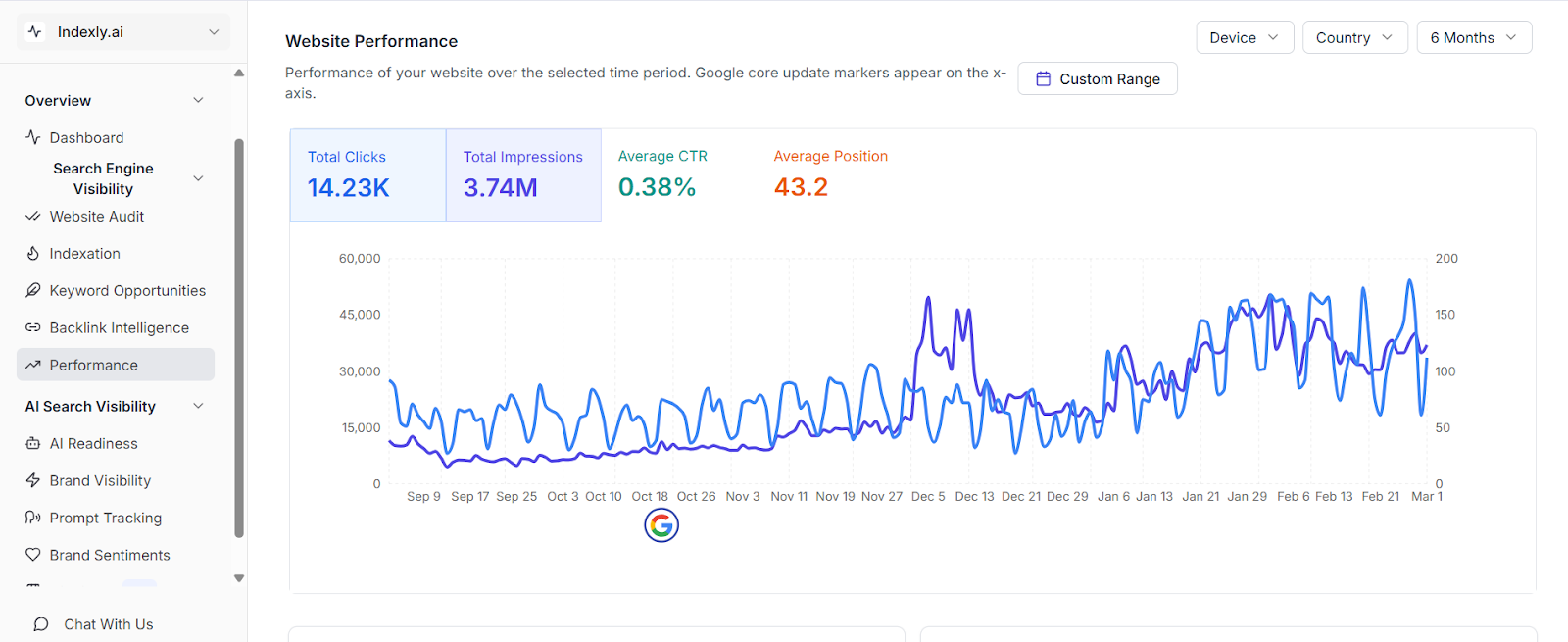
Indexly provides a performance dashboard that consolidates metrics such as clicks, impressions, average CTR, average position, top countries, top keywords, etc.,With this single view, it’s easy to spot gaps, track improvements, and optimize your content systematically.
Click here to check your site performance
Track Brand Citations
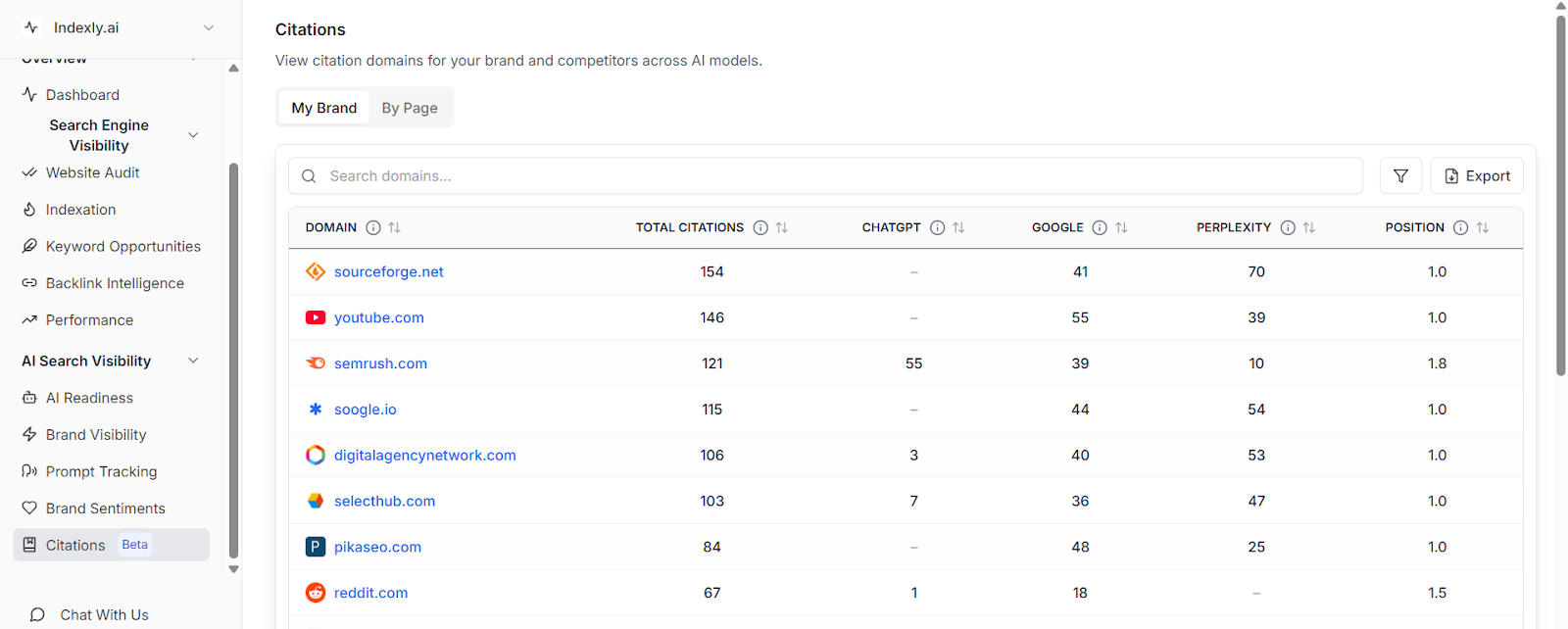
Monitoring where your brand or content appears in AI-generated answers ensures your expertise is recognized. Indexly AI citation tracker tracks citations, helps identify opportunities to strengthen authority and expand coverage across related topics.
Conclusion
Optimizing your content for AI search engines is crucial for maintaining brand visibility and authority in generative search environments. By following the five steps: strengthening technical SEO, ensuring AI readiness, conducting thorough website audits and web page audits, structuring content for answer engines, and continuously monitoring performance, you make your content eligible for AI retrieval and synthesis.
Utilising tools like Indexly to track prompts, monitor brand citations, and analyze AI-driven traffic ensures your strategy stays effective. With consistent application of AI search optimization, your content will not only be accessible and understandable to AI systems but also trusted, authoritative, and visible across multiple generative platforms.
FAQs
What is AI search optimization and how does it relate to website audit and technical SEO?
AI search optimization ensures your content is structured for AI systems to crawl, index, and interpret. Conducting a thorough website audit identifies technical SEO issues like broken links, duplicate content, and crawl errors. Improving technical SEO and performing audits enhances AI readiness, strengthens brand visibility, and ensures content crawling is effective across your site.
How can AI readiness improve brand visibility and content crawling?
AI readiness involves structuring content so AI systems can interpret it efficiently. By enhancing headings, formatting, and logical flow, you support content crawling and improve technical SEO. High AI readiness also increases brand visibility by ensuring generative engines can include your site in AI-generated answers and maintain proper indexing during website audits.
Why are pillar pages and topical maps essential for AI search optimization?
Pillar pages and topical maps organize your content for better internal linking, improving both technical SEO and AI readiness. These structures help AI systems crawl your content effectively during a website audit. Properly implemented pillar pages and topical maps also enhance brand visibility by signaling authority, guiding prompt tracking, and supporting consistent content crawling across your site.
How does prompt tracking help maintain AI search optimization and technical SEO?
Prompt tracking shows which queries drive AI systems to your content. This insight helps refine AI readiness, ensures content crawling is accurate, and supports technical SEO improvements identified in website audits. Effective prompt tracking also increases brand visibility by ensuring your content is cited in generative AI answers and aligns with your pillar pages and topical maps.
How can I monitor AI-driven traffic, brand citations, and content crawling?
Monitoring AI-driven traffic with tools like Indexly AI tracks brand citations, evaluates prompt tracking, and measures how your technical SEO and AI readiness contribute to visibility. Performing regular website audits, maintaining pillar pages and topical maps, and ensuring proper content crawling all work together to increase your content’s inclusion in AI-generated answers and overall brand visibility.


