AI Citations Made Easy: A Guide to Tracking Sources
Learn how AI citations work, why they matter for SEO, and how Indexly helps marketers track, optimize, and grow brand visibility across AI search.

Your brand is already being mentioned in AI answers—even if you’ve never tracked a single citation. Chatbots, AI search results, and answer engines are pulling data from across the web, referencing your content, products, and competitors in ways most analytics dashboards never show.
The challenge is clear: if you can’t see where and how AI is citing you, you can’t influence visibility, authority, or traffic. By understanding what AI citations are, how they affect SEO and brand perception, and how platforms like Indexly surface and measure them, you’ll be able to monitor mentions, optimize content for AI answers, and build a repeatable process for staying visible as AI search keeps evolving.
In an era where AI can remix your brand’s story in a thousand different answers, tracking citations isn’t just about credit—it’s about control. With tools like Indexly turning AI mentions, prompts, and citations into actionable visibility data, marketers finally have a way to see, measure, and shape how machines talk about their brand.
Reference: Best Tips For AI Model Citation Tracking: Guide To Success
Understanding AI Citations and Why They Matter for Modern SEO
What are AI citations?
AI citations are the references that AI systems surface when they generate answers, summaries, or recommendations. Instead of a traditional list of blue links, models like Google’s AI Overviews and Microsoft Copilot show the sources that informed a specific response.
These citations can appear as inline hyperlinks inside the answer, numbered footnote-style references, or expandable source carousels such as Perplexity’s “Sources” panel. For example, when ChatGPT with browsing enabled explains “zero-click searches,” it may cite Search Engine Journal, SparkToro, and a specific brand blog in a compact source block.
How AI citations differ from traditional backlinks and mentions
Traditional backlinks live on static web pages and are evaluated over time by algorithms like Google’s PageRank. AI citations, by contrast, are generated per query, tied directly to user intent and the model’s reasoning for that moment.
They also differ from brand mentions on X, LinkedIn, or PR coverage. A Jasper SEO prompt about “best B2B SEO platforms” might surface Indexly or Semrush as cited sources inside an answer, influencing trust and click intent even if those links do not carry classic link equity.
Where AI citations show up across the AI ecosystem
AI citations are now visible across AI-enhanced search results, standalone assistants, and embedded copilots. Google AI Overviews, Perplexity, and You.com all display multi-source citations directly beneath generated answers.
In conversational tools like ChatGPT, Claude, and Microsoft Copilot, citations typically appear as footnotes or expandable lists anchored to specific sentences. Increasingly, third-party platforms such as Notion AI or Canva’s Magic Write embed LLMs that can reference live URLs, meaning your content can be cited far beyond classic SERPs.
Why AI citation tracking is critical for modern marketers
As more queries are resolved inside AI answers, discovery increasingly happens before a traditional organic click. When an AI result for “best AI SEO tools” consistently cites Indexly alongside Moz and Ahrefs, that visibility shapes perceived authority across the entire funnel.
Tracking AI citations with platforms like Indexly’s AI Citation Tracking and AI Mentions helps marketers monitor brand exposure, protect reputation, and spot content gaps. Seeing that Perplexity cites a competitor’s guide for “AI search visibility” is a direct signal to create or improve content and prompts that win the next wave of AI-generated recommendations.
How AI Systems Select and Display Citations
How AI Models Discover and Evaluate Sources
AI models rely on two distinct layers of information: what they learned during pre-training and what they fetch in real time. Pre-training uses broad web, book, and code datasets to learn language patterns, not to store exact pages for citation. That’s why a large language model can describe SEO strategy but may not remember a specific Indexly article URL.
For live answers, retrieval-augmented generation (RAG) kicks in. Systems like Perplexity and Bing pull in fresh documents based on your query, then generate a summary grounded in those texts. This is where structured, well-labeled pages and strong internal linking help your content get retrieved and considered for citation.
Once documents are retrieved, AI systems run relevance and quality checks before surfacing citations. They look at keyword and entity overlap with the query, content depth, and page structure. Approaches outlined in How to Get Cited by AI: 5 Strategies to Optimize for LLMs emphasize clear headings, focused topics, and evidence-backed claims to signal that a page is safe to quote.
Signals that Influence AI Citation Selection
Authority is one of the strongest signals behind AI citation selection. Systems weigh domain strength (for example, Search Engine Journal vs. a brand-new blog), topic expertise, and author credibility. A cybersecurity guide from Cloudflare is more likely to be cited than a generic marketing blog when a query is security-focused, even if both rank on page one in Google.
Freshness also matters, especially for AI search on rapidly changing topics. For queries like “Google SGE rollout timeline,” models favor posts updated in the last few months. A 2021 article might still rank organically, but a 2024 explainer with clear update timestamps stands a better chance of being chosen as a citation.
Topical depth and entity relevance are key drivers too. Pages that thoroughly cover a narrow topic, use consistent entity names (brand, product, person), and clarify relationships are more “groundable” for AI. Detailed how‑to content with schema, FAQs, and real metrics (for example, “Indexly tracked 2,000+ AI citations across 6 months”) gives systems richer context to anchor answers.
Differences Between Major AI-Driven Platforms
AI-powered platforms surface citations in different ways, which affects how marketers read performance. Google’s AI Overviews blend generated text with inline links and the traditional ten blue links below. Your page might influence the overview without being visually prominent, making it harder to tie AI visibility back to traffic without specialized tracking.
Bing Copilot and Perplexity present citations more prominently alongside conversational answers, often as numbered or inline sources. Users can hover or click to expand each source, so a single article can receive disproportionate attention if it appears in the first two or three slots.
Each platform also applies its own ranking, de-duplication, and formatting logic. Some group multiple URLs from the same domain; others cap how many times one site can appear. Tools like Indexly’s AI Citation Tracking help marketers see which platforms are pulling which URLs, so teams can prioritize content that consistently surfaces across Google, Bing, and Perplexity.
Why Your Brand May Not Be Cited Even When You Rank
Strong organic rankings don’t guarantee your site will be chosen as a primary AI source. A page might sit in positions 1–3 in Google, yet an AI answer leans on a more detailed competitor resource. That disconnect is a core theme in How to Get Cited by AI: 5 Strategies to Optimize for LLMs, which stresses optimizing for clarity and structure rather than rankings alone.
Common blockers include thin content, vague claims without references, weak entity markup, or outdated data. For example, a SaaS pricing page with one paragraph and no FAQs gives models little to quote. A competitor that publishes a 1,500‑word guide explaining pricing tiers, use cases, and examples is more likely to be cited, even if they rank slightly below you.
Competing sites with clearer topical authority can also displace your brand in AI citations. If a niche blog publishes a deep schema‑marked tutorial on “AI search visibility reporting” and Indexly has only a generic feature page, the niche blog may become the canonical AI source. Monitoring AI mentions and citations with a platform like Indexly helps identify these gaps so you can update content, enrich entities, and reclaim citation share.
Building a Foundation for AI Citation Tracking

Building a Foundation for AI Citation Tracking
Before you can influence how AI systems reference your brand, you need a clear foundation for what success looks like and which assets matter most. AI search results, chatbots, and copilots increasingly surface answers without a click, so your brand must be embedded as a trusted source from the start.
Indexly helps you connect traditional SEO performance with AI visibility, but the strategy has to be intentional: define goals, map assets, pick platforms, and measure your current footprint so you can track improvement over time.
Defining your AI citation tracking goals
Effective AI citation tracking starts with a decision: are you aiming for visibility, protection, or revenue? A fintech brand like Stripe might prioritize being cited as an authoritative source for “online payments compliance,” while a D2C brand such as Allbirds might focus on product discovery queries like “sustainable running shoes.”
Clarify whether your main objective is increasing brand presence in AI answers, safeguarding reputation, or supporting pipeline and sales. This determines how you configure Indexly’s AI citation and sentiment dashboards and which teams need to be involved.
Mapping your priority digital assets
AI systems often pull from high-authority, well-structured pages. Start by cataloging mission-critical assets: product and category pages, solution overviews, and support hubs. For example, HubSpot’s comprehensive product pages are frequently referenced for CRM and marketing software definitions because they are structured, detailed, and consistently updated.
Tag your thought-leadership pieces, reports, and FAQs that should shape your perceived expertise. In Indexly, these can be flagged as priority citation targets so you can see when ChatGPT, Google Gemini, or Perplexity reference them by name or URL.
Identifying key AI platforms and use cases
Your audience will not use every AI interface equally. B2B buyers might lean on ChatGPT and Microsoft Copilot during vendor evaluations, while consumer shoppers might see AI Overviews in Google more often. A SaaS company selling to enterprises should map buying-committee questions like “best SOC 2 compliant HR platforms” and test them across these tools.
List high-value queries where your brand must appear as a cited source—category definitions, comparative queries, and problem-solution prompts. Then use Indexly’s prompt tracking to monitor how often you appear and which competitors are being cited instead.
Establishing a visibility baseline
To measure progress, you need a side-by-side view of classic SEO metrics and AI visibility. Start by pulling rankings for your core keyword clusters in Google and Bing. If you’re ranking top 3 for “enterprise password manager” like 1Password often does, compare that with your citation frequency across AI assistants for the same intent.
Indexly can reveal discrepancies, such as strong organic rankings but minimal AI mentions. Those gaps highlight where you may need better structured content, clearer branding, or more authoritative resources so AI systems confidently reference your site as a primary source.
Related Articles:
Reference: Best Tips For AI Model Citation Tracking: Guide To Success
Implementing an AI Citation Tracking Workflow with Indexly
Configuring Indexly for AI citation tracking
Effective AI citation tracking starts with a clean configuration in Indexly so your brand, domains, and products are consistently recognized. Begin by loading your primary domains, branded terms, and high-value product or category names into your workspace so Indexly can reliably match mentions across AI platforms.
For example, a retailer like REI could track “rei.com,” “REI Co-op,” and core categories like “backpacking tents” or “climbing gear” to see where AI systems pull their content in answers about outdoor equipment.
Once entities are defined, structure tracking projects by market, language, or business line for clearer reporting. A SaaS brand might split projects for U.S. English, German, and Spanish markets to compare how Gemini, Copilot, and Perplexity cite their content by region. Customize Indexly views to surface AI citations, source URLs, and prompts so analysts, content teams, and leadership can quickly spot patterns and gaps.
Using AI mentions, prompts, and citation logs
AI mentions and prompt data reveal how users actually encounter your brand in AI-driven search. Indexly’s AI mentions feature shows when ChatGPT, Claude, or Perplexity reference your brand or link to your pages, similar to how the How to Track AI Citations: A Step-by-Step Guide recommends monitoring live AI answers for brand references.
Pair this with prompt and query logs to understand the real questions triggering those mentions, such as “best project management tools for agencies” leading to a ClickUp comparison that cites your content.
Indexly’s citation logs then help you identify which URLs, assets, and topics AI systems source most often. A B2B cybersecurity company might see repeated citations to a ransomware benchmark report or incident response playbook. Those insights can guide content refreshes, schema optimization, and link architecture, ensuring high-citation assets stay authoritative and aligned with emerging AI-generated queries.
Segmenting AI citation data for insight
Raw citation counts are less useful than segmented insights that map to how people search and buy. Use Indexly to break down citations by AI platform so you can see differences between Google’s AI Overviews, Bing’s Deep Search, and Perplexity’s aggregated results for the same topic.
For instance, a hotel chain might notice that Gemini favors sustainability content while Perplexity leans on loyalty-program pages, signaling where to deepen each content type.
Go deeper by segmenting citations by topic cluster, user intent, and funnel stage. A DTC skincare brand could find that early-funnel “what causes acne” queries drive citations to educational blogs, while late-funnel “best retinol serum under $50” prompts surface product pages. Filtering by geography, language, or device helps align AI citation patterns with broader SEO dashboards so channel owners can compare organic traffic, AI visibility, and revenue impact in one view.
Building stakeholder-friendly dashboards and reports
AI visibility can feel abstract to non-specialists, so your Indexly dashboards should translate citation analytics into clear business context. Build high-level views that summarize citation volume, top-cited pages, and sentiment trends so executives can quickly see whether AI systems position your brand positively on key topics.
For example, an online lender could track sentiment around “fees,” “approval speed,” and “customer support” across AI answers and monitor whether branded mentions skew favorable or critical.
Then, create recurring reports that map AI citation metrics to familiar KPIs such as organic sessions, assisted conversions, and pipeline value. Tailor views for SEO leads focusing on gaps versus competitors, for content strategists prioritizing update roadmaps, and for brand teams watching message consistency. This stakeholder-focused reporting turns Indexly into a shared source of truth for how AI search surfaces and shapes your brand’s narrative.
Reference: Top 10 LLM Tracking Tools: Enhance Your Business ...
Optimizing Content to Earn More and Better AI Citations

Optimizing Content to Earn More and Better AI Citations
Structuring content for AI comprehension and citation
AI systems like ChatGPT, Perplexity, and Google’s AI Overviews favor pages that are easy to parse and quote. Clear structure helps these models map your content to specific questions, which increases the odds your brand is cited instead of a competitor.
Use descriptive H2–H4 headings, short paragraphs, and concise summaries at the top of key sections. For example, HubSpot’s blog often opens articles with a 3–4 sentence overview, then breaks each topic with scannable subheads, making it simple for AI to lift a precise, attributed answer.
Embed direct answers to common queries in 1–2 sentence blocks that mirror how users search, such as “What is AI citation tracking?” or “How does Indexly measure AI mentions?” This Q&A-style formatting positions your page as a natural source for AI engines that assemble conversational responses from web content.
Leveraging schema, entities, and sourcing signals
Structured data helps AI systems understand what your page is about and when it’s trustworthy to cite. Implement schema types like Article, FAQ, HowTo, and Product using JSON-LD so Google, Bing, and AI search tools can reliably interpret your content and associate it with specific intents.
Maintain consistent entity naming around your brand, products, and core topics. If you use “Indexly AI Citation Tracking” in titles, schema, and internal links, AI models are more likely to recognize it as a distinct feature instead of a generic phrase, similar to how “Ahrefs Site Explorer” or “Semrush Domain Overview” are treated as clear entities.
Support key claims with outbound links to credible sources, such as Pew Research, McKinsey reports, or official product documentation. These references signal depth and reliability, which can make your page a safer citation target for AI systems that try to avoid low-quality or unsupported content.
Creating topic authority clusters
Building authority clusters tells both traditional search engines and AI that your brand owns a topic. Instead of one page on “AI search visibility,” create a pillar plus multiple focused articles that cover strategy, tools, measurement, and industry examples.
For instance, a pillar guide on “AI Search Visibility for SaaS Brands” can link to subpages on AI mentions tracking, prompt monitoring, and AI sentiment analysis using Indexly data. Each subpage links back to the pillar, creating a clear web of topical relevance that AI models can follow.
Within each cluster, target different intent stages: an educational piece like “What Are AI Citations?” (informational), a comparison such as “Indexly vs Traditional Rank Trackers for AI Search” (navigational), and a conversion-focused page like “Pricing for AI Visibility and Citation Tracking” (transactional).
Refreshing content based on AI citation gaps
AI search behavior shifts quickly, and content that is not refreshed can lose citation share to better-optimized competitors. Use Indexly’s AI Citation Tracking and AI Mentions to surface queries where tools like Perplexity or Claude quote others instead of your brand.
When you see gaps—such as frequent AI answers around “AI search monitoring tools” that omit your product—update existing guides with clearer definitions, new data, and explicit sections that match those AI answer patterns. For example, add a short “Best AI search monitoring tools” section that highlights Indexly with feature-level detail.
Where no page exists, create net-new content tailored to recurring prompts. If Indexly reports repeated AI mentions of “AI brand sentiment tools” featuring Brandwatch or Sprout Social, launch a focused comparison or deep-dive page that explains how Indexly measures AI sentiment across models, making it a strong alternative citation candidate.
Related Articles:
Reference: How to optimize content for AI search engines: A step-by- ...
Monitoring Brand Sentiment and Risk in AI-Generated Answers
Identifying harmful or inaccurate AI citations
As AI overviews and chatbot answers gain prominence on Google, Perplexity, and ChatGPT, inaccurate citations can quietly distort how users perceive your brand. You need a structured way to detect when AI-generated responses misrepresent your products, policies, or performance.
Use Indexly’s AI citation tracking to log answers where your brand appears. For example, if ChatGPT claims your SaaS has “no SOC 2 compliance” based on an outdated blog, that’s a clear risk to B2B sales and security perception.
Watch for AI responses that position competitors as objectively superior using your own misinterpreted benchmarks. If an AI answer says “Ahrefs outperforms [your tool] in every SEO metric” while citing a narrow, old comparison, flag it inside Indexly and capture the query, source, and screenshot.
This context lets your marketing and product teams quickly assess whether clarification content, new case studies, or direct outreach to the platform is needed.
Pay special attention to pricing, compliance, and safety topics. When AI claims “Brand X doubled prices in 2023” or “does not support HIPAA,” legal and PR risk rises immediately.
Set internal rules that any AI mention touching regulated areas (finance, health, security, kids’ products) is reviewed within 24 hours.
Using Indexly’s sentiment and mentions capabilities
Indexly’s AI Mentions and Brand Sentiments features help you move from manual spot-checking to systematic monitoring. Instead of randomly testing prompts, you can see where and how AI systems are talking about your brand at scale.
Start by using sentiment filters to surface negative or mixed-tone mentions across Google AI Overviews, Bing Copilot, and Gemini. This quickly isolates risky narratives that need human review.
Filter logs for branded and high-intent queries such as “Indexly pricing,” “Indexly vs Semrush,” or “best AI SEO platform for agencies.” These queries often sit closest to conversion, so inaccuracies here hit revenue hardest.
Compare trends week over week to see if new angles appear, like “Indexly is only for small businesses,” which might conflict with your enterprise positioning.
Set Indexly alerts for sudden sentiment shifts or spikes in negative mentions. For example, if Perplexity responses turn negative after a TechCrunch article, alerts ensure your team reacts before the narrative hardens.
Route these alerts into Slack or email so marketing, SEO, and customer success all see issues in real time.
Prioritizing issues to correct or escalate
Not every AI mistake deserves the same level of attention. A clear triage framework helps your team stay focused when dozens of small inaccuracies appear across AI search platforms.
Create a simple 1–5 score combining reach (platform traffic), severity (legal/compliance vs cosmetic), and business impact (conversion-stage vs research-stage query).
Prioritize issues that appear on high-visibility surfaces like Google AI Overviews for queries such as “best SEO platforms for enterprises.” If an overview omits your brand or cites outdated capabilities, that’s more urgent than a minor feature description error on a long-tail query.
Reserve escalation for misrepresentations that could affect contracts, regulated claims, or investor confidence, such as false statements about data breaches or discontinued services.
Differentiate between fixable nuances and serious misinformation. A slightly outdated integration list can be corrected with fresh documentation and schema markup.
By contrast, claims that your tool “stores customer passwords in plain text” should trigger immediate coordination with legal, security, and PR, supported by clear public statements.
Creating a feedback and outreach playbook
To respond consistently, build a written playbook that explains who does what when AI platforms get your brand wrong. This reduces ad-hoc reactions and speeds up resolution.
Document standard steps for capturing evidence, verifying accuracy internally, and submitting feedback to Google, OpenAI, or Microsoft using their published reporting forms.
Work with legal, PR, and customer support on unified messaging for severe issues. For instance, if ChatGPT wrongly suggests your fintech product violates FDIC rules, legal can draft language while PR prepares a clarification post and support teams use a canned macro to reassure customers.
Indexly’s logs provide the exact prompts and outputs needed to support those reports and internal escalations.
Strengthen relationships with publishers and data providers that heavily influence AI answers, such as G2, Capterra, or major industry blogs. Encourage accurate, up-to-date profiles, structured data, and clear FAQs that LLMs are likely to ingest.
When you update a critical review or comparison article, track in Indexly how AI mentions shift over the following weeks to confirm your changes are influencing responses.
Reference: How To Monitor & Track Brand Mentions In AI Answers ...
Measuring the Business Impact of AI Citations
Measuring the Business Impact of AI Citations
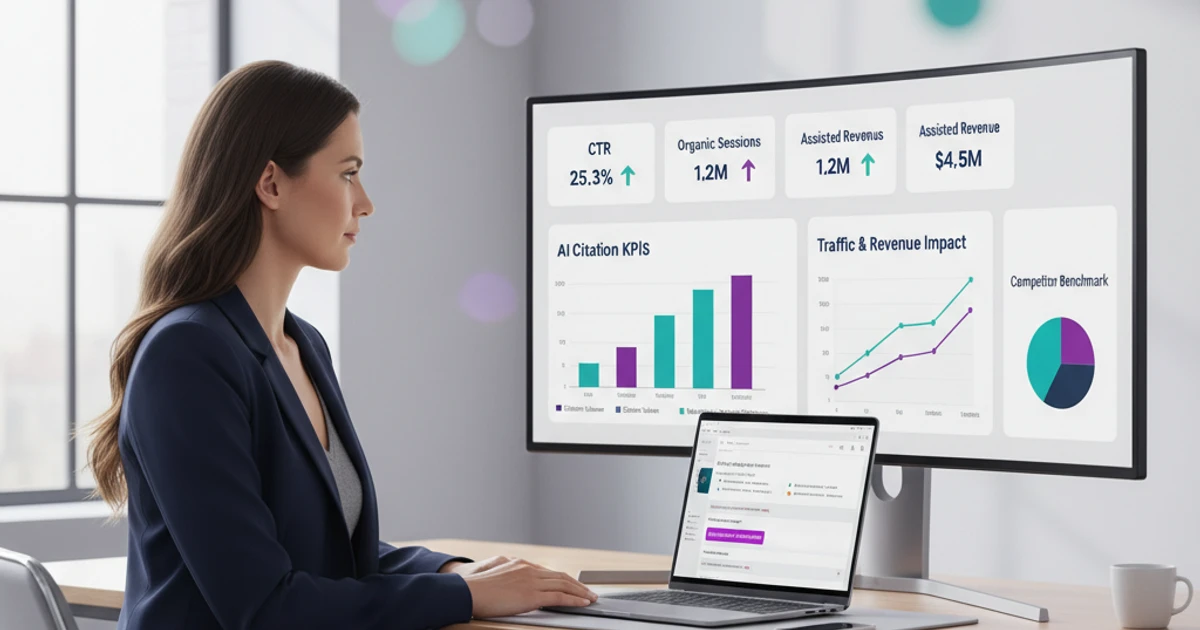
Defining KPIs for AI citation performance
Clear KPIs turn AI citation tracking from a curiosity into a measurable growth lever. With Indexly, you can treat AI answers in tools like ChatGPT, Perplexity, and Gemini as another performance channel, not just a novelty.
Start by tracking citation volume across platforms and topics for branded and non-branded queries. For example, a SaaS brand might aim to increase AI citations for “SOC 2 compliant CRM” by 40% over a quarter, then compare that against content and PR pushes focused on security thought leadership.
Share of voice in AI answers is just as critical. If HubSpot appears in 60% of AI answers for “marketing automation platforms” while your platform appears in 10%, that gap becomes a concrete optimization target. Sentiment KPIs help too: monitor what percentage of mentions are positive or neutral, and set thresholds for investigation if negative framing rises above, say, 15% of total AI citations.
Connecting citations to traffic and revenue signals
AI citations rarely convert in a straight line, so you need directional, multi-signal measurement. Indexly’s AI citation tracking layered with web analytics lets you connect discovery in AI answers to brand and demand outcomes.
Watch for correlations between rising AI citations and lifts in direct traffic, branded search volume, and organic conversions. For instance, after Notion started appearing frequently in ChatGPT responses for “free project management tools,” SEMrush and Similarweb data showed notable branded search growth and higher sign-up velocity, even without major paid campaigns.
Use assisted-conversion attribution in Google Analytics 4 or tools like HubSpot to estimate revenue influenced by AI-driven discovery. Then add qualitative input: ask sales and support teams to log when prospects say, “I found you via ChatGPT” or reference AI-generated comparisons. These anecdotes, captured consistently, bridge the gap between analytics dashboards and real buying behavior.
Benchmarking against competitors and tracking over time
AI citations are inherently comparative: if an AI answer lists five vendors and you are missing, that’s an immediate competitive signal. Benchmarking turns this into an ongoing intelligence stream instead of a one-off audit.
Use Indexly to monitor which competitors are cited for the same prompts and topics. If Perplexity consistently recommends Shopify, BigCommerce, and Wix for “DTC eCommerce platform” while excluding your brand, you’ve identified a content and authority gap. Track share of AI voice monthly, similar to SERP share of voice reporting.
Over a few quarters, patterns emerge. You might dominate AI citations for “enterprise SEO platform” but lag for “AI content optimization.” Those insights should influence product marketing, backlink strategy, and PR focus, guiding where you double down and where you need new content or partnerships to close the visibility gap.
Reporting impact to executives and integrating with SEO strategy
Executives care about risk, revenue, and brand strength, not AI novelty metrics. Position AI citation data through that lens so it slots naturally into existing SEO and growth reporting.
Translate share-of-voice and sentiment metrics into business narratives. For instance: “We increased AI share of voice from 12% to 28% across high-intent prompts, contributing to a 16% lift in organic pipeline from SEO-attributed deals.” Roll Indexly’s AI citation and sentiment reports into your SEO dashboards in Looker Studio or Tableau so leaders see classic rankings, rich results, and AI answer presence in one view.
Use this combined data to inform annual planning and budget allocation. If AI-driven visibility is producing measurable gains in branded demand, you can justify shifting spend toward thought leadership content, digital PR, and technical SEO improvements that reinforce authority across both traditional SERPs and AI-driven answer engines.
Related Articles:
Reference: 5 metrics to measure AI-generated answers' decision ...
Conclusion: Turning AI Citations into a Competitive Advantage
Recapping the new AI visibility landscape
AI-driven answers from tools like ChatGPT, Perplexity, and Google’s AI Overviews now influence how customers discover, compare, and buy long before they see your site. A BCG study found over 70% of consumers trust AI assistants for purchase research across software, travel, and healthcare.
AI citations work like an early-warning system. When Indexly surfaces that ChatGPT cites a competitor’s whitepaper instead of your resource, you see shifting authority before it appears in organic rankings. Ignoring those citations means letting AI systems define your brand narrative without your input.
Key steps to implement AI citation tracking with Indexly
Effective AI citation tracking starts with clarity. Define goals such as “increase branded citations in AI answers by 30% in 6 months,” then map priority assets like pricing pages, comparison guides, and flagship case studies.
With Indexly, teams configure AI Mentions and AI Citation tracking for platforms like ChatGPT and Perplexity, then review logs to spot patterns. Marketing leads can build monthly reports that content, SEO, and PR teams review as a standing agenda item instead of a one-off experiment.
How AI citation insights strengthen your broader strategy
Insights from AI answers feed back into SEO and content planning. If Perplexity consistently cites HubSpot and Ahrefs for “B2B lead scoring frameworks,” your team knows to create deeper, data-backed frameworks and supporting case studies targeting the same topic.
Those same insights guide brand protection. When Indexly flags hallucinated pricing or outdated claims, communications teams can update on-site messaging and publish clarifying pages, helping AI models retrain on accurate, authoritative content that aligns with your positioning.
Next steps for your team
A practical way to start is running a 30-day AI citation audit in Indexly. Track how often your brand appears for top 50–100 commercial and branded queries, who else is cited, and where AI answers misrepresent your offerings or omit you entirely.
From there, set baselines and KPIs—such as share of AI citations versus competitors—and align SEO, content, and brand leaders around a shared 3–6 month roadmap. Treat AI citation optimization as an ongoing discipline that informs both tactical content moves and executive-level growth strategy.
FAQs About AI Citations Tracking
How are AI citations different from traditional SEO backlinks and brand mentions?
AI citations live inside generated answers from tools like ChatGPT, Perplexity, or Google Gemini, not on static pages. When someone asks “best B2B SEO tools,” the model might mention Indexly alongside Semrush or Ahrefs inside the response text.
These mentions influence trust and visibility at the exact moment of user intent. They do not pass PageRank like classic backlinks, so tracking them means monitoring prompts, platforms, and answer context rather than just URL-based links or branded anchor text.
Why should teams start tracking AI citations now?
Generative answers are already diverting clicks from traditional SERPs, as seen with Google’s AI Overviews and Perplexity’s source panels. If AI engines routinely describe your category without naming your brand, you quietly lose demand capture.
Early adopters gain an advantage by learning how AI summarizes their market, competitors, and pricing. Establishing a baseline of mentions and sentiment now makes it easier to prove impact and adjust messaging as these platforms update models and ranking logic.
How can Indexly automate AI citation tracking for different teams?
Indexly centralizes AI mentions, citation logs, and sentiment across engines so marketers can see where and how their brand appears. A SaaS agency can manage multiple clients with shared workflows and dashboards, then export reports for QBRs.
In-house teams can stream Indexly’s outputs into existing BI tools or SEO reporting stacks, aligning AI citation metrics with organic traffic, branded search volume, and revenue attribution for clearer performance insights.


