AI Brand Sentiment Analysis: Boosting Search Visibility
Use AI brand sentiment analysis to uncover SEO opportunities, boost search visibility, and protect your brand’s reputation online.


Your brand might look strong in rankings, but what if the conversations shaping those clicks are quietly working against you? Search engines, review platforms, and AI-driven assistants increasingly weigh not just how often your brand appears, but how people feel when they talk about it.
Connecting AI-powered sentiment analysis with SEO reveals where perception is helping or hurting visibility, from rich results and branded SERPs to how AI summaries present your company. Expect to invest in new workflows, smarter monitoring, and cross-team collaboration as you learn how to interpret sentiment signals, choose the right tools, and turn brand conversation data into search performance gains.
In a world where your brand is judged in search results long before it’s judged on your website, AI-powered sentiment analysis isn’t just reputation management—it’s the competitive edge that determines who gets seen, clicked, and chosen.
Reference: SE Visible — An AI Visibility Tool Made to Empower Brands
1. Understanding AI Brand Sentiment Analysis and Its Impact on Search
What is AI brand sentiment analysis?
AI brand sentiment analysis uses machine learning and natural language processing (NLP) to understand how people feel about your brand at scale. Instead of reading thousands of reviews or social posts manually, models classify text as positive, negative, or neutral and assign scores over time.
Tools like Brandwatch and Sprout Social apply these models to unstructured data from reviews, social media, and support tickets. More advanced setups go beyond simple polarity, detecting emotions like frustration or delight, and aspect-based sentiment around features such as “shipping speed,” “customer support,” or “pricing.”
How AI sentiment monitoring differs from traditional social listening
Traditional social listening tools largely track mentions, hashtags, and keyword volume. AI-driven sentiment monitoring adds nuance by understanding context, irony, and mixed emotions within a single post or review.
For example, an X post saying “Love the iPhone camera, hate the battery life” is split by modern NLP into separate sentiment scores for camera (positive) and battery (negative). This lets brands like Apple or Samsung pinpoint which product attributes are helping or hurting reputation in real time.
Why sentiment matters for AI search visibility and brand discovery
Search engines increasingly fold user satisfaction signals into rankings. High review ratings on Google Business Profiles, strong brand sentiment on Reddit threads, and low bounce rates all hint that users trust and value a brand, which can indirectly support better visibility.
When Google’s AI Overviews or Bing’s Copilot summarize a topic, they often surface sentiment-rich content such as G2 reviews or Trustpilot pages. If a SaaS tool consistently earns 4.7+ stars and glowing comments about support responsiveness, that tone shapes how new users perceive the brand before they ever click through.
Key channels where sentiment signals influence search
Customer reviews on Google, Yelp, Amazon, and industry review sites like Capterra feed directly into SERP features, local packs, and product carousels. A restaurant with 4.8 stars and 1,000+ Google reviews will almost always stand out against competitors with weaker sentiment, even if their websites are similar.
Social platforms (X, TikTok, Instagram), plus communities like Reddit and Quora, are heavily crawled by search engines. Viral TikTok videos about e.l.f. Cosmetics or Reddit megathreads praising Notion can dominate brand-related searches, turning organic sentiment into powerful discovery and click-through drivers.
2. Mapping Sentiment Signals to SEO and AI Search Visibility
How user sentiment shapes click-through rates, dwell time, and engagement
User sentiment acts as a filter before anyone clicks your organic result. When a user sees "Shopify reviews" or "HubSpot pricing" in the SERP, their prior perception of the brand heavily influences which blue link or local listing they choose. A strong brand narrative on social and review platforms often translates into higher organic CTR when your listing appears next to similar competitors.
Positive sentiment also boosts on-site behavior. If users expect quality because they have heard "Canva is easy" or "Slack just works," they are more patient with load times, explore more pages, and are less likely to bounce immediately. Negative buzz, such as persistent complaints about support, can cause fast pogo-sticking back to the SERP and declining CTR over time, even if rankings stay the same.
The role of reviews and ratings in local SEO and branded search results
For local businesses, Google star ratings and review volume are core inputs to local pack prominence. A restaurant with a 4.6 rating from 1,200 reviews will usually outrank a 3.8-rated competitor with 80 reviews within the same area, all else equal. Those stars now appear everywhere: in map results, branded panels, and even "best near me" listicles.
Sentiment inside the reviews shapes whether users click, call, or avoid a listing. A hotel may show prominently for its brand name, but a pattern of “dirty rooms” and “rude staff” in recent reviews will depress conversions compared with a similarly priced competitor whose reviews emphasize “spotless,” “responsive,” and “quiet.” Third-party aggregators like TripAdvisor and Yelp amplify this, often occupying branded SERP real estate with rich review snippets.
How AI-generated summaries and overviews may surface sentiment-rich content
As Google and Bing expand generative AI overviews, they increasingly pull in representative opinions from reviews, forums, and publisher content. Phrases such as “users frequently complain about hidden fees” or “customers love the intuitive dashboard” can appear in AI-generated brand snapshots, shaping perception before a user even reaches your site. These summaries resemble extended review snippets at scale.
Platforms recognized in initiatives like Semrush’s AI Visibility Awards spotlight brands thriving in AI-generated search results often show consistent positive sentiment across multiple sources. That cross-channel trust gives AI systems more favorable material to quote, increasing the odds that generated descriptions highlight strengths, not liabilities.
Identifying sentiment-driven SERP features
Many SERP features now mirror user emotions and recurring themes. "People Also Ask" questions such as “Is Brand X support responsive?” or “Why is Product Y so expensive?” often originate from patterns in searcher frustration or praise. News and Top Stories panels can rapidly surface negative sentiment during PR crises, reshaping brand perception within hours.
User-generated content elements—review carousels, Reddit threads, and Q&A snippets—make those opinions unavoidable on the results page. A SaaS tool might rank first for its brand name, yet a Reddit thread titled "Why I switched from [Brand]" appearing just below can siphon clicks and trust. Monitoring these features helps marketers understand which sentiment narratives are most visible to searchers right now.
3. Building an AI-Powered Brand Sentiment Monitoring Stack

3. Building an AI-Powered Brand Sentiment Monitoring Stack
Core data sources for AI sentiment monitoring
Effective sentiment monitoring starts with a complete, unified view of how people talk about your brand across the web. SEO and brand teams need both public and owned data to understand what’s driving shifts in branded search demand and review-rich SERP features.
Pull public reviews and ratings from Google Business Profiles, Amazon, Trustpilot, G2, and App Store/Google Play. For example, Airbnb mines App Store reviews to spot UX complaints that correlate with drops in app keyword rankings and featured review snippets.
Layer in social media mentions from X, TikTok, Instagram, Reddit, and YouTube comments, along with influencer posts tagged to your brand. Nike, for instance, tracks TikTok and Instagram creator content to detect sentiment swings around new product drops that later show up in branded queries.
Combine this with owned channels like Zendesk or Salesforce support tickets, Intercom or Drift live chat transcripts, NPS survey text, and email feedback. HubSpot’s CX team uses ticket and NPS verbatims to identify recurring product issues that impact “brand + problem” searches and review content on Google.
Choosing AI brand sentiment analysis tools
The right AI stack should handle real customer language at scale, not just star ratings. Prioritize tools that can analyze free-text feedback at the aspect level so you can separate sentiment on price, support, UX, and product quality for SEO insights.
Evaluate platforms like Brandwatch, Sprout Social, Talkwalker, and Chattermill based on language coverage, ability to detect sarcasm, and performance on short-form content such as tweets and TikTok comments. Run pilot tests by manually labeling a sample dataset, then comparing each tool’s precision and recall.
Look for integrations with CRM (HubSpot, Salesforce), helpdesk (Zendesk, Freshdesk), and social listening tools so sentiment feeds into existing workflows. For advanced teams, platforms that support custom model training and taxonomy tagging—such as MonkeyLearn or custom models in Google Cloud Vertex AI—make it easier to export labeled data to SEO and BI dashboards in Looker or Power BI.
Setting up automated sentiment dashboards and alerts
Once data and tools are in place, dashboards turn raw sentiment into decisions. Different stakeholders care about different signals, so role-specific views avoid noise and keep teams focused on metrics that matter to search visibility and brand health.
Create SEO dashboards in Looker Studio or Power BI that correlate sentiment trends with branded search volume, review snippet visibility, and click-through rates on brand queries. Social teams might track sentiment by channel and campaign, while CX monitors support-related topics by product line or location.
Configure alerts in tools like Brandwatch or Slack-integrated monitoring when negative sentiment spikes around a keyword cluster such as “refunds,” “shipping delay,” or a specific SKU. Starbucks, for instance, responds quickly when localized complaints trend on X, reducing the risk those issues dominate Google’s Top Stories or People Also Ask for their brand.
Ensuring data quality, sampling, and coverage across channels and markets
AI sentiment is only as reliable as the data behind it. Without disciplined quality checks, models can misread slang, miss key channels, or skew toward markets that produce more feedback volume.
Audit data pipelines quarterly to confirm that all high-impact review and conversation sources are connected and deduplicated—especially aggregators like Yelp, Booking.com, and niche vertical directories. Spot-check samples across English, Spanish, and other core languages to validate model accuracy on regional slang and industry jargon.
Identify underrepresented markets or channels—such as Spanish-language Facebook reviews or German Trustpilot feedback—and close gaps through new integrations or localized surveys. This prevents biased sentiment views that could misguide your international SEO strategy or lead you to overreact to English-only signals.
Related Articles:
Reference: → time-for-indexing-on-google
Reference: → why-index-pages-on-google
Reference: Creating an AI-powered marketing solution for sentiment ...
4. Turning Sentiment Insights into Brand Reputation Management Actions
Prioritizing high-impact negative sentiment that threatens brand perception
Raw sentiment scores only become valuable when they guide what to fix first. Use AI to cluster negative feedback into themes such as pricing, performance, support, and reliability so you see patterns at a glance. For example, a skincare brand tracking AI search visibility for beauty & personal care brands might spot recurring complaints about “stingy free samples” or “confusing ingredients.”
Rank these themes by reach (volume of mentions), velocity (how fast they’re growing), and SEO risk (whether they appear on high-authority review sites, Reddit, or AI overviews). Create tiered response playbooks—Level 1 for minor complaints handled by community managers, Level 2 for emerging patterns that require CX changes, and Level 3 for issues that trigger PR and legal review.
Responding to reviews and social conversations in a way that supports SEO
Public responses can double as reputation management and on-page SEO. When replying to a 2-star Ulta review about “drying serum,” a beauty brand can acknowledge the issue while naturally reinforcing terms like “fragrance-free vitamin C serum for sensitive skin.” Over time, these keyword-rich responses become indexable brand signals on retailer pages and forums.
Encourage customers to update their reviews after a resolution—Sephora reviewers often revise ratings when brands provide replacements or regimen advice. Maintain transparent, consistent communication on Google Business Profiles, TikTok comments, and brand communities so AI engines pulling brand snippets see a pattern of responsiveness, not silence.
Using sentiment themes to guide PR, crisis communication, and brand messaging
Recurring sentiment themes should inform what you say in public, not just how you fix issues internally. If analysis shows rising anxiety about ingredient safety in hair straightening products, turn that into a content series explaining testing protocols, dermatologist endorsements, and clinical results, supported by an owned FAQ hub.
Monitor spikes in negative language—“burning,” “rash,” “scam”—as early warning signals and pre-draft aligned statements for social, email, and press. At the same time, reinforce positive themes (“long-lasting hydration,” “inclusive shade range”) in ads, product pages, and AI-focused content to increase the odds that models highlight those strengths in conversational answers.
Collaborating across SEO, social, CX, and PR for unified reputation management
Effective reputation management depends on shared visibility. Set up cross-team dashboards that surface sentiment by channel, product, and keyword, then hold bi-weekly reviews where SEO, social, CX, and PR align on the top three issues. For brands tracking mentions across ChatGPT, Gemini, and Perplexity via AI search visibility for beauty & personal care brands, these reviews can highlight which narratives are leaking into AI answers.
Document a governance plan that defines who monitors which sources, who drafts responses, who owns long-form content updates, and when issues escalate to legal or the CMO. This shared playbook keeps messaging consistent across social replies, press statements, and SEO content, preventing fragmented or contradictory responses that confuse both customers and AI systems.
Reference: How Sentiment Analysis Shapes Brand Reputation ...
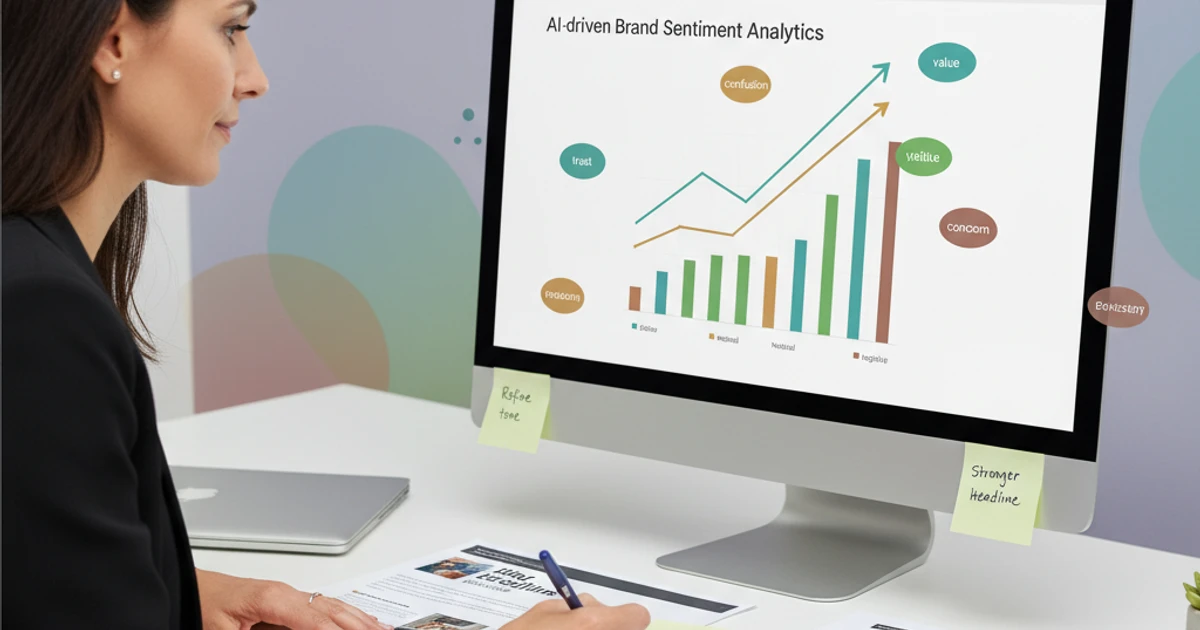
5. Using AI Brand Sentiment Analysis to Optimize Content and SERP Presence
5. Using AI Brand Sentiment Analysis to Optimize Content and SERP Presence
Identifying sentiment gaps and misconceptions to inform new content topics
AI sentiment analysis helps you spot where searchers are confused or disappointed before it shows up as lost traffic or churn. By clustering negative and neutral mentions from reviews, Reddit threads, and G2 feedback, you can see recurring objections and misunderstood features.
For example, HubSpot often mines review data to identify confusion around specific automation features, then publishes feature explainers and “how it really works” posts that target those phrases. Map these issues to keyword data and People Also Ask questions, then create content that directly answers them to improve trust and reduce bounce rates.
Aligning content tone and messaging with positive sentiment drivers
Positive sentiment reveals the language people naturally use when they’re delighted with your brand. Using AI to extract common phrases from 5-star reviews, social comments, and NPS surveys lets you mirror this wording in landing pages and product copy.
Shopify, for instance, leans into customer language like “launch quickly” and “no developer needed” across its marketing site because those phrases appear repeatedly in positive merchant reviews. Aligning tone with these proven drivers can increase conversions and align on-page messaging with what already resonates in the SERP.
Related Articles:
Reference: → why-index-pages-on-google
Reference: AI Sentiment Analysis Tool
6. Leveraging Sentiment Data for Product, CX, and Review Strategy
Mining sentiment for product and service improvement opportunities
Sentiment data becomes far more powerful when you break it down by specific product attributes, support touchpoints, and policies. Aspect-based sentiment analysis lets you see that people don’t just “dislike your app” – they’re frustrated with login friction, unclear fees, or shipping delays.
For example, Amazon uses aspect-level sentiment to surface patterns like “packaging damage” or “battery life” across thousands of reviews, then routes those insights to product and operations teams. You can do the same by sharing ranked lists of top negatives and positives with your roadmap owners and then tracking sentiment shifts after feature releases or policy changes in tools like Qualtrics or Chattermill.
Designing proactive review-generation campaigns based on positive experiences
The best time to ask for a review is right after a clear moment of success. Sentiment analysis across chat logs, NPS comments, and support tickets can reveal those high-satisfaction peaks, such as issue resolution or a successful onboarding milestone.
Slack, for instance, often triggers in-app prompts after a team completes setup and sends a certain number of messages, when sentiment is typically highest. You can mirror this by automating email, SMS, or in-app review requests and prioritizing underrepresented locations or product lines on Google Business Profile and Yelp to strengthen local and long-tail search visibility.
Encouraging user-generated content that reinforces favorable brand sentiment
Positive sentiment shouldn’t stop at reviews; it can fuel a steady stream of user-generated content (UGC) that reinforces your brand narrative in search. Start by identifying customers who consistently express strong positive sentiment in surveys, social comments, or community forums.
Brands like GoPro and Lululemon build entire UGC engines around themes customers already love—adventure footage, fitness progress, and community. You can invite similar advocates to share stories, testimonials, and case studies, then repurpose that content on landing pages, product detail pages, and even structured data to influence how your brand appears in knowledge panels and rich results.
Feeding CX and product teams with structured sentiment insights for continuous improvement
To move beyond ad-hoc insights, sentiment needs to live inside your core CX and product workflows. That means turning unstructured comments into structured metrics that appear alongside churn risk, LTV, and NPS in your dashboards.
HubSpot, for example, integrates sentiment scores into customer health scoring so success teams can prioritize outreach when tone shifts negative across tickets and calls. Create recurring insight reports that map sentiment themes to specific actions—such as simplifying pricing pages or revising onboarding flows—and then close the loop by tracking whether those changes lead to measurable gains in sentiment, review velocity, and branded search performance.
Reference: 6 Ways to Use Sentiment Analysis to Improve Customer ...
7. Measuring the Impact of AI Sentiment Monitoring on Search Performance

7. Measuring the Impact of AI Sentiment Monitoring on Search Performance
Defining KPIs that connect sentiment to SEO and brand visibility
AI sentiment monitoring only proves its value when it’s tied to hard metrics. Start by tracking an overall sentiment score, volume of mentions, and the ratio of positive to negative feedback for your brand across social, reviews, and forums.
For example, a retailer might see positive mentions about “easy returns” spike 30% after a policy change, signaling a message worth amplifying in title tags and meta descriptions.
Connect those sentiment trends to SEO KPIs like organic traffic, impressions, and rankings for branded queries in Google Search Console. If your Net Sentiment improves by 15% and branded clicks rise 12% over the same period, you can start to quantify impact.
Brands like Airbnb closely watch average review ratings and distribution by city; similar monitoring across Google Business Profile, Yelp, and Trustpilot helps you identify locations or product lines dragging down overall visibility.
Tracking changes in branded search volume, CTR, and rankings alongside sentiment trends
To see how sentiment influences search demand, correlate shifts in brand perception with changes in branded search interest using Google Trends and Search Console. A spike in negative Twitter sentiment, for example, often precedes a dip in branded searches and knowledge panel engagement.
When United Airlines faced a PR crisis in 2017, third-party analyses showed a sharp decline in positive mentions and concurrent drops in branded search favorability, highlighting how reputation shock can impact discovery.
Monitor CTR for brand-related queries after major sentiment or reputation initiatives, such as a new sustainability campaign or CEO apology video. If your AI tools flag more positive news coverage and you see a 3–5% CTR lift on brand queries, that’s strong evidence your SERP messaging is resonating.
Also review the stability of branded SERP features—like knowledge panels, “People also search for” entities, and review carousels—to ensure improved sentiment is reflected in rich results over time.
Related Articles:
Reference: → time-for-indexing-on-google
Reference: → why-index-pages-on-google
Reference: The Impact of AI Sentiment Analysis: Benefits and Use Cases
8. Governance, Ethics, and Future Trends in AI Brand Sentiment Analysis
Addressing bias, privacy, and compliance in AI sentiment monitoring
AI sentiment models frequently mirror biases in their training data, which can skew how language from different demographics is interpreted. For instance, research from MIT and Stanford found facial-analysis systems were up to 34% less accurate on darker‑skinned women, highlighting how bias can also surface in text sentiment tied to dialects or slang.
Marketing teams using tools like Brandwatch or Sprout Social should routinely audit samples of flagged “negative” mentions for specific communities, such as Black Twitter or LGBTQ+ forums, to check misclassifications and retrain models where needed.
Compliance is just as critical. When scraping reviews from Yelp or Reddit or ingesting TikTok comments, brands must align with GDPR, CCPA, and each platform’s terms of service. That means honoring user deletion requests, avoiding collection of sensitive attributes, and limiting retention windows so raw user-generated content is not stored indefinitely in analytics warehouses.
Setting internal guidelines for using AI-driven sentiment in decision-making
Clear governance policies prevent overreliance on sentiment dashboards. Define thresholds where AI is advisory only and where human review is mandatory—for example, requiring PR and legal sign‑off when sentiment drops 20%+ in a week or when classifying content related to health, finance, or safety, as Meta does for high‑risk ads.
Document which sources are approved—such as public Twitter/X posts, Google Reviews, and first‑party CSAT scores—and how long each data type can be stored. Then train teams to treat sentiment scores like any KPI: one signal among many, not a single source of truth for changing pricing, messaging, or product features.
How generative AI and conversational search will amplify sentiment signals
Generative engines like ChatGPT, Google Gemini, and Perplexity increasingly summarize consensus opinions across reviews, forums, and social conversations. When users ask “Is Patagonia a trustworthy brand?” or “Is Southwest Airlines reliable?”, these systems surface dominant sentiment patterns, not isolated reviews.
Brands with strong public perception—such as Apple’s 70%+ customer satisfaction scores on many product lines—are more likely to be framed positively in AI‑generated summaries. The risk is that negative narratives, like the 2023 coverage of airline cancellations, can be repeated across thousands of AI queries, locking in a damaging story arc if not actively addressed through improved service and clarified communications.
Preparing your brand for voice, AI assistants, and answer-engine optimization
Voice interfaces and AI assistants compress search into a single spoken answer. When someone asks Alexa or Google Assistant, “Is Shopify good for small businesses?” the assistant leans on structured data, aggregated reviews, and knowledge graphs to respond confidently.
To influence these answers, ensure your brand’s schema markup (Product, Organization, AggregateRating) is clean and consistent across your site, Yelp, Google Business Profile, and major review platforms. Monitor how Microsoft Copilot, Google’s AI Overviews, and ChatGPT currently describe your brand, then refine your content, FAQs, and review acquisition strategy to steadily push overall sentiment—and therefore AI summaries—in a more accurate, positive direction.
Reference: 8 AI Ethics Trends That Will Redefine Trust And ...
Conclusion: Turning Sentiment Intelligence into Search Advantage
Summarizing the link between AI brand sentiment analysis and AI search visibility
AI-driven sentiment analysis converts scattered opinions from reviews, social posts, and forums into structured signals that influence how search engines and AI assistants describe your brand. When large language models summarize your brand for queries like “Is [brand] reliable?” they lean heavily on these sentiment-rich signals.
Brands like Airbnb and Starbucks benefit from strong positive sentiment that feeds engagement metrics, higher click-through rates, and richer SERP features such as FAQs and prominent review snippets. As more users engage positively, AI systems gain confidence to surface your brand in helpful summaries, “people also ask” results, and conversational answers.
Key takeaways and next steps
Treat sentiment data as a core SEO input, not a side metric. Feed review themes and customer language into your keyword research, content briefs, and on-page copy so your pages reflect how people truly talk about your brand and problems. This helps you align with intent and win more qualified clicks.
Next, unify inputs from tools like Brandwatch, Sprout Social, and G2 into dashboards that SEO, PR, and CX teams all use. Run a 60–90 day pilot where you prioritize fixing one dominant negative theme—such as slow shipping or confusing pricing—and track shifts in star ratings, branded CTR, and the tone of AI-generated summaries for brand queries.
FAQs: AI Brand Sentiment Analysis and Search Visibility
How accurate is AI brand sentiment analysis compared to human review, and when should humans step in?
AI sentiment models are highly effective at sorting clear positive and negative feedback at scale, especially across reviews, social posts, and support tickets. Tools like Brandwatch and Sprout Social routinely classify millions of mentions with solid accuracy on straightforward language.
Where AI still struggles is nuance: sarcasm on X, mixed reviews, or culturally specific slang. A tweet like “Love how my flight was ‘on time’ again, thanks” can be misread as positive without human oversight.
Blending Automation With Expert Judgment
Human review should be mandatory for high-impact decisions, such as deciding whether a spike in complaints warrants a product recall or a public statement. When United Airlines faced viral backlash in 2017, brands learned that relying solely on automated dashboards can delay the right PR response.
A pragmatic approach for SEO and brand teams is hybrid: let AI surface patterns and outliers, then route edge cases and crisis-related mentions to specialists. This keeps monitoring always-on while ensuring sensitive brand narratives are interpreted by people who understand context, legal risk, and tone.


